Entre em contato com a DONGHE Company


A fabricação de pedra natural descreve a sequência de operações que converte a rocha sólida sob o solo em lajes, telhas e painéis polidos que você encontrará em bancadas ou faces de construção. Ao contrário da pedra fabricada (ou projetada), que é fundida em mineral triturado e resina, a fabricação de pedra natural nunca forma realmente o material, extrai, corta e finaliza a rocha que já se formou na terra. Este guia descreverá toda essa sequência, desde a face da pedreira até a laje calibrada, com a sala de serra funcionando como um árbitro silencioso que determina, em última análise, quanta pedra comercializável de cada bloco está disponível para venda.
Em resumo: A fabricação de pedra natural envolve a extração de blocos do tamanho dimensional de uma pedreira, o esquadro dos blocos, a serragem de cada um em lajes (usando hoje em dia o fio diamantado em grande medida), depois o tratamento, calibração e acabamento da resina das lajes antes classificação de acordo com os padrões ASTM. É o processo de serragem que é mais influente: o corte de uma serra de fio diamantado é de cerca de 0,35-0,5 mm em comparação com ~3,5 mm da serra coletora de tiro de aço que costumava precedê-lo, o que significa que a diferença de potencial entre um corte de material produtivo ou desperdiçador permanece significativa.
Principais conclusões
- Um bloco de pedreira raramente converte um para um em laje acabada: corte, acabamento de borda e fissuras subtraem da recuperação utilizável.
- A serragem de fio de diamante tornou-se uma espécie de ‘balcão único’ para extração, quadratura de blocos e lajes.
- Só nos EUA, as vendas de pedras ornamentais atingiram cerca de 2,3 milhões de toneladas em 2025, no valor de cerca de $460 milhões (USGS).
- As pessoas pensam...’Pedra projetada mais resistente ao calor e à segurança’ (falso).A proibição de 204 da Austrália de pedra projetada não foi baseada em preocupações de durabilidade.
0,350,5 mm
Kerf fio diamante
10 18 t
Bloco típico da pedreira (~6 m³)
>94%
Recuperação do bloco, fio fino
O que realmente significa fabricação de pedra natural
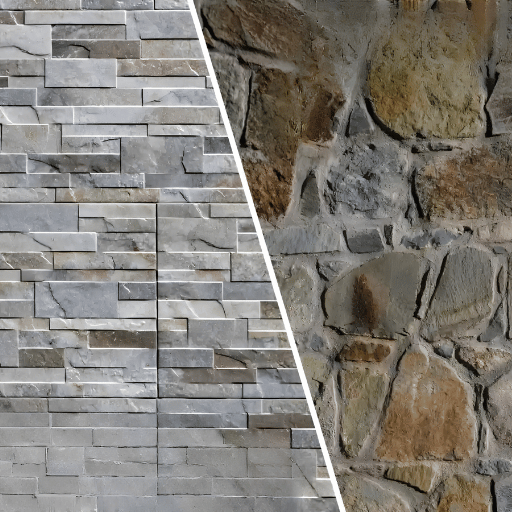
Errar nesta distinção é um erro caro: um comprador que trata uma laje projetada como granito natural pode ser pego, porque o aglutinante de resina muda a forma como a superfície lida com o calor e como ele pode ser reparado Na prática, na DONGHE tratamos a rocha como finita [cada corte em nossas máquinas de serra de fio de diamante de precisão tem que ganhar seu kerf de 0,5 mm, ou o rendimento é perdido para sempre.
A fabricação de pedra natural também é um setor industrial real: só os produtores dos EUA venderam cerca de 2,3 milhões de toneladas de pedra ornamental em 2025, de acordo com Dados USGS.
A fabricação de pedra natural refere-se à arte de converter um bloco de rocha natural, seja granito, mármore, calcário, travertino, ardósia ou quartzito, em pedra de dimensão acabada, como lajes, painéis, telhas ou produtos cortados no tamanho certo Este processo deve ser distinguido da ‘fabricação’, um termo frequentemente mal compreendido, na medida em que nenhuma adição sintética é introduzida, o mineral foi formado ao longo de milhões de anos e as operações subsequentes removem apenas material para elaborar a mercadoria industrial acabada Isso é distinto da pedra sintética ou fabricada (ou projetada) que é um composto incluindo quartzo triturado ou mármore mais aglutinante de resina.
Por que essa diferenciação é relevante do ponto de vista de compras? porque as duas rotas mostram variância em qualidades como funcionalidade, sustentabilidade, reparabilidade e saúde & segurança do trabalhador, que muitas vezes não são descritas ao cliente no ponto de venda Ao contrário de um único bloco cristalino de granito natural que existe como uma peça discreta, uma laje projetada existe como uma ‘matriz’ material que consiste em um ligante de resina (muitas vezes 7101TP3 T) que altera o comportamento sob calor extremo Do ponto de vista de um construtor de máquinas, a característica definidora da rota de pedra natural é que o bloco é finito e caro, então cada corte tem que ganhar seu corte.
💡 Levantamento chave
Pedra natural produzida a partir de rocha existente; pedra fabricada pelos fabricantes composta por mineral e resina.
Da rocha ao bloco: como a pedra natural é extraída
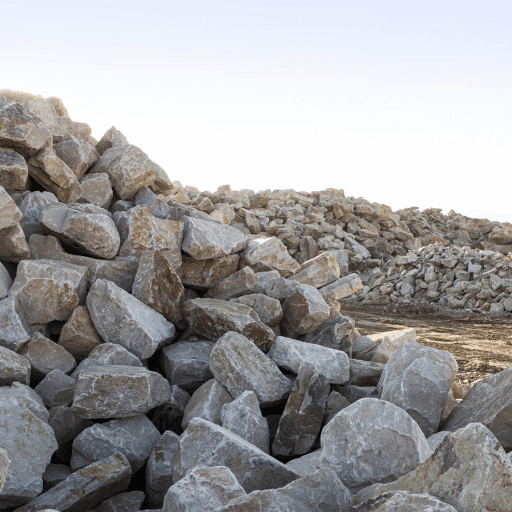
A extração é onde começa a fabricação de pedra natural, e o objetivo é peculiar para uma operação de mineração: ganhar blocos muito grandes, completos e sem rachaduras, em vez de rocha moída; as famosas pedreiras de mármore de Carrara são o exemplo clássico De acordo com uma revisão por pares revisão dos métodos de extração de pedras dimensionais (MDPI, 2023), os produtores têm três maneiras principais de fazê-lo, perfuração e divisão hidráulica, jateamento controlado ou serragem de fio diamantado, e escolhem com base no padrão de fratura e resistência da rocha específica. Um bloco extraído comum tem cerca de 6 m³ (cerca de 200 pés³) e pesa de 10 a 18 toneladas, dependendo da densidade da pedra.
A evolução mais significativa da pedreira ao longo do passado: Os cortes de fio de diamante agora não só secundários s como também os primeiros grandes cortes de divisão e esquadria (squaring cuts) precisamente a mesma tarefa para a qual as serras de arame posteriormente colocam o bloco “A serragem de arame diamante é o principal método tanto de corte primário como secundário assim como de esquadria de blocos em pedreiras de mármore hoje,” de acordo com resultados de levantamento publicados pelo Instituto de Mineração e Metalurgia da África Austral Claro, não há nada meramente cosmético em um bloco limpo e quadrado; cada milímetro de geometria fora do quadrado torna-se material perdido na sala de serra, então a qualidade do bloco na pedreira estabeleceu o teto de rendimento muito antes da sala de serra A mesma física de arame-serra carrega em nossa corte de material duro e quebradiço linhas.
️ Erro comum
Tratar a extração como meramente “extraction” Se a pedra for dividida usando uma ferramenta de diamante e desenvolver microfissuras que só aparecem durante a divisão da laje duas semanas depois, duas etapas do processo depois na sala de serra, então a extração apenas produziu um defeito, não material, que afeta a lucratividade.
A cadeia de conversão de pedreira para laboratório
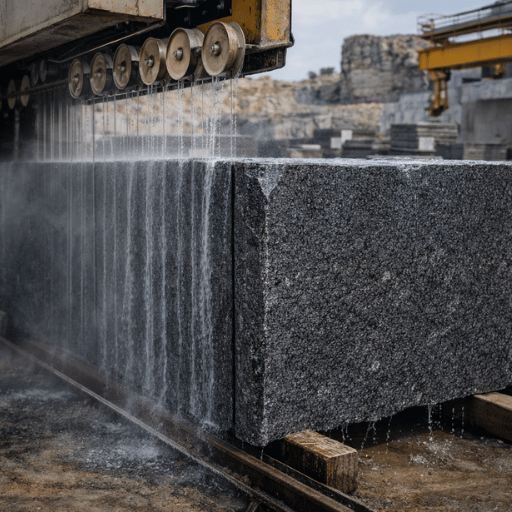
Apresse os estágios iniciais compostos de resíduos, porque cada corte posterior só pode remover o material nunca adicioná-lo de volta (K), que é a razão pela qual a DONG corta uma linha de produção em torno do corte de baixo corte em vez de qualquer serra que se encaixe Uma única escolha de corte descuidada de 3,5 mm no estágio 3 se repete em cada laje do bloco, razão pela qual a etapa de laje tem sua própria família de patentes de máquinas, como projetos de corte de pedra com vários fios.
Como é uma transformação completa, passo a passo Todo o fluxo de produção, desde a embalagem, é facilmente descrito como uma cadeia de processo Leia a coluna na extrema direita para ver onde o material é removido corte isso onde a margem vive ou morre.
| # | Estágio | O que acontece | Equipamento | Perda principal |
|---|---|---|---|---|
| 1 | Extração | Bloco de bancada separado da rocha | Serra de arame, broca, divisor | Fratura rejeita |
| 2 | Quadra de blocos | Corte em um verdadeiro prisma retangular | Serra fio diamante | Aparamento borda |
| 3 | Laje | Corte o bloco em placas brutas (20 lajes brutas de 3 mm) | Multi-fio /serra de gangue | Kerf |
| 4 | Reforçando | Lajes frágeis de resina/malha traseira | Linha de resina, malha | Rejeitar lajes insalubres |
| 5 | Calibração | Moer até espessura uniforme | Linha calibradora | Moagem |
| 6 | Acabamento superficial | Polonês, afiar, chama, ou escova | Cabeças polidoras | Estoque superficial |
| 7 | Corte-à-tamanho | Corte lajes em telhas/painéis | Serra de ponte, jato de água | Desfechos |
| 8 | Classificação de qualidade | Inspecione, teste, classifique para ASTM | Laboratório de testes | Classificação negativa |
| 9 | Embalagem | Lajes de caixa para transporte | Quadros A, pacotes | Quebra de trânsito |
O processo de conversão de dobradiça para Pedreira-para-Láb. O corte de Estágio 3 multiplica um bloco em superfícies vendáveis, mas destrói o volume de lostkerf para sempre (o ponto de lostkerf) dita quais escolhas funcionarão a jusante.
Cortando o bloco: serra de gangue vs serra de fio de diamante vs serra de ponte

Fazendo três máquinas básicas e uma variável definidora Qualquer uma das três tecnologias básicas de corte de pedra (multi-blade gang saws), multi-wire, ou serras de ponte de lâmina única (single-blade bridge saws) pode tecnicamente dividir um bloco A variável decisiva é o kerf, que é dizer, a largura do material cada curso de serra individual aniquila.
| Atribuir | Serra de gangue (tiro de aço) | Serra multi-fio diamante | Ponte viu |
|---|---|---|---|
| Trabalho | Bloco → lajes cruas | Bloco → lajes cruas | Laje → tamanho acabado |
| Largura Kerf | ~3,5mm | 0,350,5 mm | ~5 mm (lâmina) |
| Corte precisão | ±2 mm | ±0,3mm | ±0,5mm |
| Melhor pedra | Mármore macio | Granito + pedra dura | Todos (terminação) |
| Manutenção | Mais alto (chorume, lâminas) | Inferior (somente fio) | Baixo |
| Material salvo | Linha de base | +10 gangue 5% | n/a |
A literatura acadêmica valida o corte com arame. Um estudo em Mineração, Metalurgia e Exploração (2026) relatou que uma serra de arame diamantado produziu três vezes mais superfícies cortadas do que uma serra de aço de múltiplas lâminas com energia de corte comparável, e um estudo de campo de pedreiras de mármore no Uzbequistão e na Itália disse que a tecnologia de arame diamantado reduziu a perda de pedreiras em até 62 por cento, rendendo mais de 94 por cento de cada bloco. A prensa comercial apoia a descoberta; “com máquinas multifio... você obtém um grande rendimento de cada bloco com muito menos manutenção e custo em nossas linhas do que as máquinas de lâmina única.”
Uma serra de fio de diamante é melhor do que uma serra de gangues para pedra?
Para a maioria de pedra dura (hard stone) na velocidade do rendimento, e na precisão Uma serra do multi-fio do diamante remove aproximadamente um sétimo o material pelo corte comparado com uma serra de aço-tiro da gangue (0.35,5 mm contra ~3.5 mm kerf), corta um bloco em uma a três horas em vez de oito a doze, e segura a precisão de ±0.3 mm. As serras da gangue ainda se adequam a alguns mármores macios e ao trabalho de mercadoria de alto volume.
Mas para granito e pedra dura, o corte inferior do fio, a manutenção mais baixa e o consumo de energia mais baixo geralmente ganham com o custo total por metro quadrado vendável. & quot; que é o que nosso serra fio diamante precisão os sistemas são construídos em torno de.
A grade de decisão do método de serragem
- Hard Stone (granito, Quartzito) rendimentos máximos: diamante multi serra fio -thin kerf se justificará.
- Pedra macia, alto rendimento, capa inferior: serra de gang. ainda competitivo quando o desperdício é aceitável.
- Corte de tamanho de lajes acabadas: ponte ou jato de água (como em NÃO um divisor de bloco).
- Para blocos exóticos /de alto valor: o fio diamantado é sempre o único Você simplesmente não pode se dar ao luxo de raspar uma camada.
A equação de rendimento do bloco: por que as toneladas não equivalem às lajes
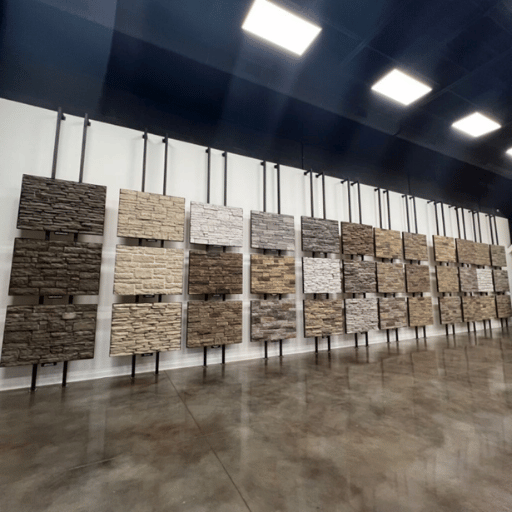
É aqui que o dinheiro é perdido silenciosamente: o risco é que uma fissura oculta ou um corte largo transforme um bloco de 10 toneladas em muito menos placas vendáveis do que a tonelagem implica A razão é estrutural uma gangue de corte de serra de 3,5 mm remove sete vezes a pedra de um corte de fio de 0,5 mm, então as máquinas DONGHE são projetadas para manter um corte fino e preciso na produção e proteger a taxa de recuperação. Modelagem de custos de fio de diamante da Universidade de Ciência e Tecnologia do Missouri trata a recuperação de kerf e blocos como as variáveis centrais na economia de pedreiras.
A sabedoria convencional entre os compradores é que um grande bloco pode ser diretamente transformado em uma grande pilha de lajes Não exatamente A Equação de Rendimento do Bloco é simplesmente: área de laje utilizável = (volume do bloco (passo da laje de Ligação) - perdas de corte - guarnição de borda - rejeitos de fissura Todas essas são subtrações reais que começam a somar.
Exemplo trabalhado
Pegue um bloco quadrado de 3,0 m de comprimento × 2,0 m de altura × 1,8 m de profundidade, lajeado em lajes de 20 mm.
- Cortar a profundidade de 1,8 m em uma laje de 20 mm + passo de corte define quantas lajes você obtém.
- Serra de gangue: Laje de 20 mm + corte de 3,5 mm = passo de 23,5 mm → 1800 ÷ 23,5 → 76 lajes.
- Fio de diamante: Laje de 20 mm + corte de 0,5 mm = passo de 20,5 mm → 1800 • 20,5 20,5 % 87 lajes.
- Isso é 11 lajes extras (~141TP3 T mais) do bloco idêntico, cada um aproximadamente 3,0 m × 2,0 m = 6 m² de pedra vendável, antes da guarnição da borda e qualquer fissura rejeita.
Agora subtraia a realidade: quadrar fora das bordas irregulares (um centímetro ou dois de cada lado), em seguida, rejeitar qualquer laje que revela uma fissura interna, uma vez que se abre As fissuras são uma característica quase inata da pedra, os fabricantes literalmente correr uma mão através de uma laje bruta para sentir por eles, mas uma fissura no lugar errado rebaixar a laje É por isso que duas plantas que correm a mesma pedra pode postar recuperação muito diferente: o kerf que eles escolheram, o quadrado de seus blocos, e quão agressivamente eles classificam toda a pilha acima A lição para um comprador é contundente, uma tonelagem de bloco citado diz-lhe quase nada sobre quantas lajes acabadas ele realmente vai render.
Acabamento de Superfície: Polimento, Brunimento, Flamejamento e Calibração
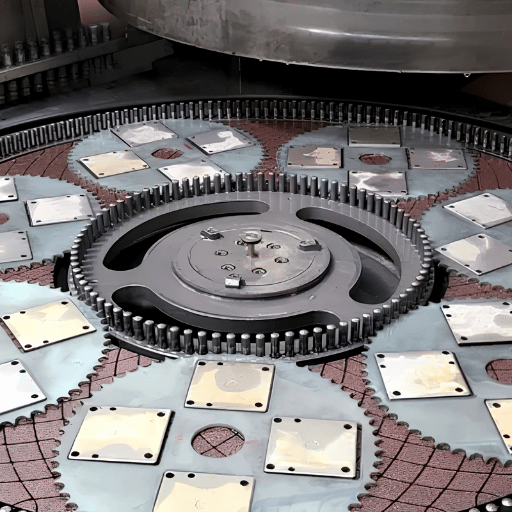
Quando a laje é serrada e calibrada na espessura necessária, é acabada superficialmente, determinando como é e como é empregada É um processo mecânico, progredindo de cabeças de moagem grossas para finas para chama especial, e tratamentos de escova até que o efeito final seja determinado pela aplicação; um worktop de mármore polido espelhado, por exemplo, destacaria e estragaria quando gravado por ingredientes e utensílios de cozinha, enquanto um acabamento inflamado ou afiado no topo de um lance externo de degraus dá uma base mais segura em uma escada molhada.
| Terminar | Método | Olhar | Uso típico |
|---|---|---|---|
| Polido | Cabeças abrasivas finas | Brilhante, reflexivo | Bancadas, apresentam paredes |
| Afiado | Abrasivo médio | Matte, suave | Pisos, áreas de alto tráfego |
| Flamejante | Choque térmico | Áspero, texturizado | Pavimentação externa, escadas |
| Escovado | Escovas abrasivas | Suave, antiquado | Interiores rústicos |
| Martelado | Ferramentas de impacto | Sem caroço, aderente | Superfícies molhadas/externas |
Por que a calibração do acabamento em si é importante, uma pedra com bordas afiadas ou cortadas quadradas até uma espessura uniforme (normalmente 2 cm e 3 cm) plana, encaixará perfeitamente na junta, enquanto espessuras variadas significarão que uma borda da laje ficará orgulhosa sobre o outro criando um efeito “lippage” em um piso acabado Pedras porosas, como mármore e calcário, também são candidatas à vedação - envolve impregnar a laje com um selador impregnador, o que garantirá que, quando colocada, a superfície acabada resista a manchas ao longo de seu ciclo de vida; quando as coisas dão errado, os custos podem ser maiores para um instalador do que na fábrica. O polimento, o brunimento e a martelada também eliminam o pó de sílica respirável, da mesma forma Controles de sílica OSHA isso rege o corte aplicado na linha de chegada.
Controle de Qualidade e Padrões na Fabricação de Pedra
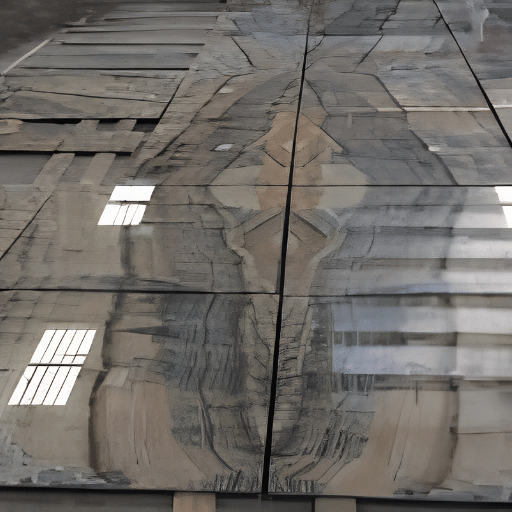
Pular os testes e o risco pousar a jusante: uma laje fora de especificação que racha no local é uma falha cara, porque ninguém verificou a pedra contra seu grau É por isso que a pedra de dimensão acabada é verificada para os limites ASTM e, na produção, contra os controles de sílica abaixo (tolerância mensurável, não sentir.
A pedra acabada de fábrica é testada de acordo com os padrões, não para sentir e tocar, por exemplo, o NSI mapeia cada tipo de pedra de volta a uma especificação ASTM para características físicas que permitem a especificação para todos os tipos e tamanhos de projetos de construção, desde o uso doméstico até a laje industrial. -à laje e cargas pontuais em comparação com uma amostra para simplesmente admirar.
Quais padrões ASTM se aplicam à pedra natural?
Cada tipo de pedra de dimensão comercial tem sua própria especificação ASTM que cobre resistência à compressão mínima, densidade e absorção de água, por exemplo, ASTM C615 (granito) requer absorção de água não superior a 0,401TP3 T em peso, uma densidade mínima de 160 lb/ft³ (2.560 kg/m³) e uma resistência à compressão mínima de 19.000 psi (131 MPa).
| Pedra | Especificação ASTM | Resistência típica à compressão |
|---|---|---|
| Granito | ASTM C615 | 1000 MPa |
| Mármore | ASTM C503 | 80 MPa |
| Calcário | ASTM C568 | 12 por classe 10 MPa (por classe) |
| À base de quartzo | ASTM C616 | 10120 MPa |
| Ardósia | ASTM C629 | Por classe flexural |
O controle de qualidade também se estende à força de trabalho O corte de pedra produz sílica cristalina respirável e os EUA. Padrão de sílica OSHA (29 CFR 1926.1153) a exposição das tampas a um limite permitido de 50 µg/m³ como média de 8 horas, com um nível de ação de 25 µg/m³ que aciona o monitoramento do trabalhador. Como o corte úmido, inerente às serras de ponte e a todo tipo de serra de arame, que funciona com água, é um dos controles de engenharia mais eficazes para poeira de sílica, a saúde do trabalhador está diretamente ligada ao método de corte escolhido pela planta.
Pedra Natural vs Fabricada (Engenharia): Como a Produção Difere
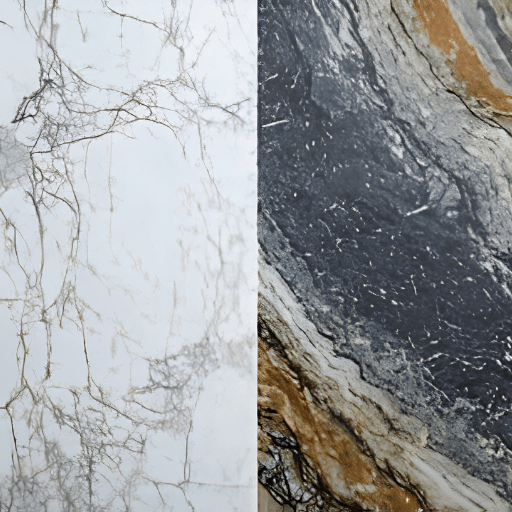
A pedra natural é serrada na rocha, enquanto a pedra fabricada é feita de uma mistura de quartzo ou mármore triturado e resina sintética, colocada em uma prensa e aquecida para formar em formato de laje; o resultado final leva a diferenças em durabilidade e saúde - não devido ao marketing como “engineered” como a escolha superior.
| Fator | Pedra natural | Pedra fabricada (projetada) |
|---|---|---|
| Entrada bruta | Rocha pedrada | Mineral triturado + ~ 7 resina 10% |
| Processo | Extrair, serrar, terminar | Misture, pressione, cure |
| Resistência ao calor | Alto (granito, quartzito) | Baixo, pode queimar |
| Aparência | Único, variável | Uniforme, repetível |
| Sílica na fabricação | Variável (muitas vezes mais baixo) | Muito alto (frequentemente >90%) |
A lacuna de segurança é agora um facto regulamentar, não um debate. Em 1o de julho de 2024, A Austrália se tornou o primeiro país a proibir totalmente a pedra projetadaproibir sua fabricação, fornecimento, processamento e instalação, após um aumento acentuado na silicose acelerada entre os trabalhadores que cortam o compósito com alto teor de sílica, documentado no Jornal Respiratório Europeu. A parte contra-intuitiva: o “quartz” projetado é frequentemente menos resistente ao calor do que o granito natural ou o quartzito, porque seu aglutinante polimérico é o elo fraco que a pedra natural simplesmente não possui.
Perspectivas da indústria: para onde está indo a fabricação de pedra natural
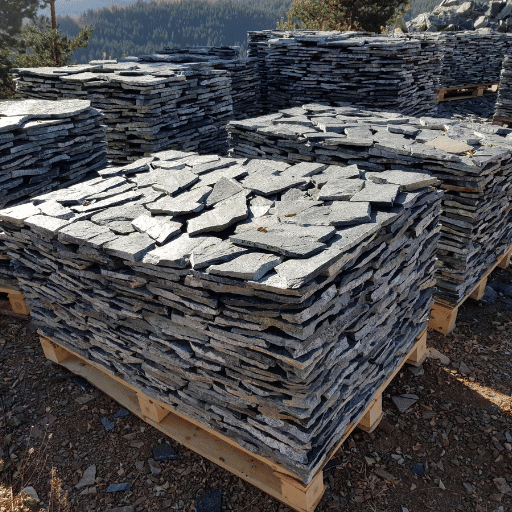
Para um comprador, o risco prático está a ser apanhado de surpresa por estas mudanças, porque as regras e a economia estão a mover-se ao mesmo tempo. A razão para a aquisição: uma fábrica que já funciona com baixo teor de ker, produção com corte húmido, o forma como a DONGHE constrói as suas máquinas de serra de fio de fio (Wire Saw Machines) é a que está em melhor posição para atender às expectativas de documentação e rendimento de sílica de 2026.
Duas forças (o mercado de 4 não) estão remodelando como a pedra natural é fabricada Primeiro, regulamentação: a proibição de 202 pedras projetadas na Austrália e a aplicação mais rigorosa da sílica sob a OSHA estão empurrando a demanda e o escrutínio de volta para a pedra natural, cuja produção de corte úmido e ligante inferior é mais fácil de defender na saúde do trabalhador. Se você estiver especificando ou fornecendo para um projeto de 2026, espere que a documentação de segurança da sílica se torne uma questão de aquisição de rotina, em vez de uma reflexão tardia.
Em segundo lugar, a automação: serras de vários fios de diamante, serras de ponte CNC e corte a jato de água estão cada vez mais deslocando as serras de gangues de polpa, encolhendo simultaneamente a exposição ao corte, ao desperdício e à mão de obra Da perspectiva de um construtor de máquinas de serra de arame, nossa experiência é que o rendimento ganha um corte mais fino em cascata e uma calibração mais apertada levam a metros quadrados mais vendáveis por bloco, que é como a margem de uma planta de pedra é realmente acionada.
Os dados de mercado são contexto, não manchete: o mercado global de pedra natural deverá atingir aproximadamente $43-45 bilhões em 2025-2026, crescendo em cerca de 3,4-4,71TP3 T por ano, e o mercado dos EUA deverá atingir quase $2,76 bilhões até 2030, em um CAGR de ~4,11TP3 T. O mercado de máquinas de processamento de pedra natural, inversamente, deverá crescer significativamente mais rápido, ~5,881TP3 T por ano, para cerca de $39 bilhões até 2035 - um indicador de que o investimento está focado precisamente na automação de corte e acabamento descrita aqui Considere esses números apenas em ordem de magnitude; a história de negócios é kerf, recuperação e sílica.
“A grande vantagem de uma serra multi-fio é a capacidade de obter mais produção da mesma quantidade de tempo, em comparação com uma máquina de lâmina única ou de fio único.”
Perguntas frequentes
Q: Como é feita a pedra natural?
Ver Resposta
A fabricação de pedra natural extrai blocos de rocha, os quadrados e as serras em placas brutas. Cada bloco geralmente é feito com uma máquina de diamante multifuncional. As placas são reforçadas com resina, se necessário, calibradas com uma espessura uniforme, acabadas superficialmente por polimento ou brunimento, cortadas no tamanho certo e classificadas de acordo com os padrões de materiais ASTM antes da embalagem. Nenhum material novo é criado; cada etapa remove apenas a pedra.
Q: Qual é a diferença entre a pedra natural e fabricada?
Ver Resposta
A pedra natural é cortada diretamente da rocha extraída, como granito ou mármore, de modo que cada laje é um único corpo mineral A pedra fabricada (projetada) é um composto fundido a partir de mármore quartzo triturado ou mármore mais aproximadamente 7 01TP3 T resina, depois prensada e curada As diferenças práticas: a pedra natural é mais resistente ao calor porque não tem resina para queimar, enquanto a pedra projetada é mais uniforme, mas libera mais sílica respirável (projetado) a razão pela qual a Austrália a proibiu em 2024.
P: Como um bloco de pedra é cortado em lajes?
Ver Resposta
Um bloco quadrado em uma laje de serra e corte em muitas lajes paralelas em uma configuração Um diamante multi-fio puxa fios de diamante finos através de um kerf de apenas 0,3 diamante puxa o bloco de diamante de um bloco de 0,5 mm e termina um bloco em uma a três horas; uma serra tradicional de aço-shot usa um kerf mais largo de ~ 3,5 mm leva de oito a doze horas Quanto mais fino o kerf, mais lajes você recupera do mesmo bloco.
Q: Quanta pedra natural é desperdiçada durante a fabricação?
Ver Resposta
A recuperação varia com a serra, o esquadro do bloco e as fissuras escondidas dentro dele, mas o último fio de diamante fino pode empurrar a taxa de recuperação além de 94% do bloco, enquanto um corte de serra de gangue mais largo mais o acabamento da borda deixa visivelmente menos pedra vendável do mesmo bloco.
Q: Que máquinas são usadas na fabricação de pedra natural?
Ver Resposta
As máquinas de núcleo são serras de fio diamantado (usadas na pedreira, para esquadrar blocos e para lajear blocos em lajes brutas), serras de gangues para pedra mais macia, linhas de calibração e polimento para espessura e acabamento e serras de ponte do segmento diamantado ou jatos de água para cortar lajes ao tamanho Uma máquina de fio único (monowire) comercializa o rendimento para um controle rígido O fio diamantado tornou-se a espinha dorsal das plantas modernas porque abrange a extração através de lajes com o corte mais baixo.
Q: É a fabricação de pedra natural sustentável?
Ver Resposta
A fabricação de pedra natural está melhorando em duas frentes de sustentabilidade ao mesmo tempo, porque o corte de fio de diamante mais fino significa que muito menos rocha é destruída como resíduo de corte, o que eleva o rendimento de pedra vendável de cada bloco, enquanto o corte úmido captura poeira de sílica respirável na fonte em vez de deixá-la se espalhar pela loja A pedra natural também é um material inerte e de longa vida, sem aglutinante de resina para descartar.
Cortando mais pedras de cada quarteirão?
DONGHE constrói máquinas de serra de fio de diamante otimizadas para baixo kerf e alta recuperação de blocos em granito, mármore e pedra dura, então mais de cada bloco extraído deixa sua planta como laje vendável Converse com nossos engenheiros sobre combinar uma configuração de vários fios ou monowire com seu rendimento e tipo de pedra.
Explore Máquinas de serra de arame de pedra →
Ver Aplicações de Corte
Por que escrevemos isso
Nós construímos máquinas de serra de fio de diamante para pedra, então nós olhamos para a fabricação de pedra natural de dentro da sala de serra, onde o kerf e a recuperação de blocos decidem o lucro Os números de kerf, rendimento e comparação de serra aqui são extraídos de estudos de corte revisados por pares e dados do USGS/OSHA, cruzados com o que vemos nos pisos das plantas, não do marketing de bancada.
Referências e fontes
- Resumos de commodities minerais 2026: Dimension StoneServiço Geológico dos EUA
- 29 CFR 1926.1153 Sílica Cristalina RespirávelAdministração de Segurança e Saúde Ocupacional dos EUA
- Uma revisão dos métodos de extração de pedras dimensionaisMineração MDPI (2023)
- Quais padrões ASTM são relevantes para a pedra naturalInstituto Pedra Natural
- Proibição de pedras projetadas (1o de julho de 2024)SafeWork SA/Trabalho Seguro Austrália
- A proibição da pedra projetada na AustráliaJornal Respiratório Europeu
- Benefícios para uma serra multifioMundo Pedra

![Material de Polissilício: Propriedades, Graus e Usos [Guia]](https://wiresawcutter.com/wp-content/uploads/2026/08/polysilicon-material-featured-768x512.webp "Material de Polissilício: Propriedades, Graus & Usos em Indústrias Solares e Semicondutores 12")

![Material de Polissilício: Propriedades, Graus e Usos [Guia]](https://wiresawcutter.com/wp-content/uploads/2026/08/polysilicon-material-featured-150x150.webp)