Nehmen Sie Kontakt mit DONGHE Company auf


A Siliziumkarbid MOSFET Ist ein Leistungsfeldeffekttransistor, der auf einem 4 H-SiC-Wafer anstelle von Silizium aufgebaut ist, so blockiert er Hunderte bis Tausende Volt über eine viel dünnere Schicht, schaltet schneller und läuft heißer als ein Silizium-MOSFET. Dieser einzelne Materialaustausch ist der Grund, warum SiC-MOSFETs Silizium-IGBTs in EV-Wechselrichtern und Hochfrequenz-Stromversorgungen verdrängenWir kommen aus einem ungewöhnlichen Blickwinkel zu diesem Punkt: DONGHE baut den Diamanten SiC Waferschneidsäge Maschinen, die die Wafer aufschneiden, auf denen diese Geräte hergestellt werden. Der letzte Abschnitt verbindet also den Chip, den Sie zurückkaufen, mit der Boule, als die sie begonnen haben.
Schnelle Spezifikationen: Siliziumkarbid-MOSFET vs. Silizium
| Material | 4 H-SiC (Verbindung aus Silizium + Kohlenstoff) |
| Bandlücke | ~3,26 eV (Si: ~1,1 eV) |
| Kritisches Durchbruchfeld | ~2.8 – 3,0 MV/cm (~10 × Si) |
| Gemeinsame Spannungswerte | 650 V, 1200 V, 1700 V, 3,3 kV+ |
| Torantrieb (Vgs) | ~+15 V ein-/0- bis -4 V aus (datenblattspezifisch) |
| Maximale Sperrschichttemperatur | Bis ~175 °C |
Was ist ein Siliziumkarbid-MOSFET?
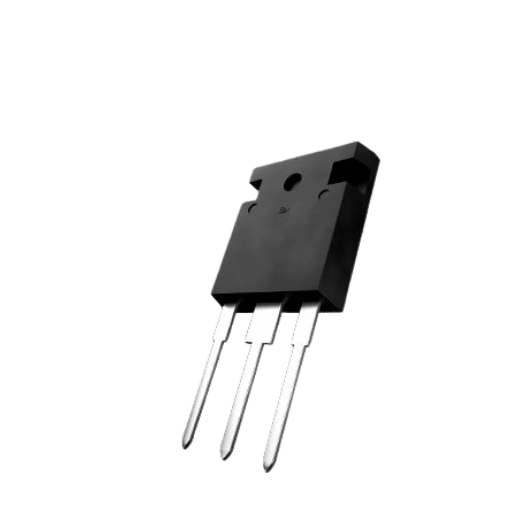
Ein Siliziumkarbid-MOSFET ist ein Metalloxid-Halbleiter-Feldeffekttransistor, der anstelle von herkömmlichem Silizium Siliziumkarbid (SiC) als Halbleitermaterial verwendet. Es ist ein unipolar Gerät: Strom fließt nur durch Mehrheitsträger (Elektronen), ohne gespeicherte Minderheitsladung Schwanz, so dass es sauber und schnell ausschaltet Funktionell schaltet es wie jeder Strom MOSFET, eine Gate-Spannung steuern einen Drain-zu-Source-Kanal, aber der SiC-Kristall lässt den gleichen Chip weit höhere Spannung halten.
Warum sich um die Definition kümmern? denn einen SiC MOSFET wie ein Drop-in Silizium Teil zu behandeln ist der teuerste Anfängerfehler im Power Design: Entweder bezahlt man dafür, dass man Spannung und Temperatur-Kopfraum blockiert, die man nie benutzt, oder man fährt ihn mit der falschen Gate-Spannung und kocht ein Gerät, das ein Mehrfaches kostet, was ein Silizium-Äquivalent bedeuten würde Etiketten hier.
Drei strukturelle Fakten trennen es von einem Silizium-MOSFET. Erstens sind das Substrat und der Driftbereich 4 H-SiC, eine Verbindung aus Silizium und Kohlenstoff statt reinem Silizium. Zweitens ist die spannungsblockierende Driftschicht bei gegebener Bewertung weitaus dünner, da SiC ein viel höheres elektrisches Feld toleriert, was den Widerstand verringert. Drittens fügen die meisten Hochstrom-SiC-MOSFETs einen vierten Pin hinzu, eine Kelvinquelle, um die Gate-Treiber-Rückkehr vom Strompfad zu trennen. Wenn Sie das Upstream-Bild wünschen, sehen Sie unseren Primer an Siliziumwafermaterial und die breitere Arten von Halbleiterwafern Zur Herstellung dieser Geräte verwendet.
Das Material: Warum SiC mit großer Bandlücke die Regeln ändert
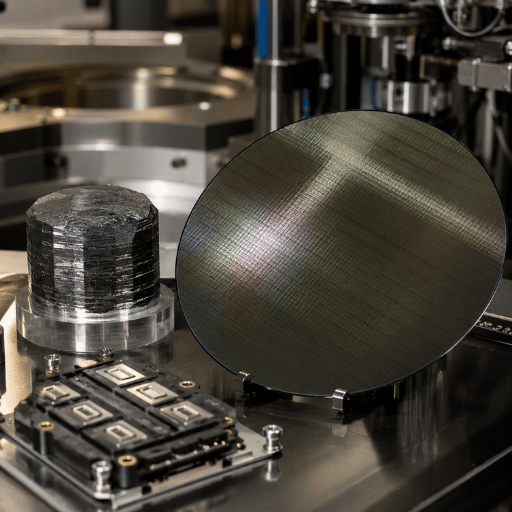
Überspringen Sie die Materialphysik und jede spätere Entscheidung, Spannungsklasse, Gate-Antrieb, Kühlung, verwandelt sich in Rätselraten Was ein Siliziumkarbid-MOSFET dazu bringt, Silizium zu übertreffen, ist das Material, nicht die Schaltung SiC ist ein Halbleiter mit großer Bandlücke, und seine herausragende Eigenschaft ist ein kritisches Durchbruchfeld, das ungefähr zehnmal so groß ist wie das von SiliziumWir nennen die Konsequenz die 10 ̄NFeld-hebel: Da SiC etwa dem Zehnfachen des elektrischen Feldes standhält, bevor es zusammenbricht, kann der Driftbereich, der die Nennspannung blockiert, etwa ein Zehntel so dick gemacht werden, und ein dünnerer Driftbereich bedeutet einen deutlich geringeren Widerstand im Ein-Zustand und einen deutlich geringeren Leitungsverlust die gleiche Sperrspannung.
| Eigentum | Silizium (Si) | 4H-SiC | Was es kauft |
|---|---|---|---|
| Bandlücke (eV) | ~1.1 | ~3.26 | Geringe Leckage bei hohen Temperaturen |
| Kritisches Feld (MV/cm) | ~0.3 | ~2.83.0 | ~10× dünnere Drift → niedrige Rds (on) |
| Wärmeleitfähigkeit (W/cm·K) | ~1.5 | ~3.74.9* | Höhere Stromdichte, einfachere Kühlung |
| Elektronenmobilität (cm²/V·s) | ~1450 | ~900 (unten) | Ein Nachteil, den SiC anderswo überwindet |
| Sättigungsgeschwindigkeit (cm/s) | ~1.0×10⁷ | ~2.0×10⁷ | Schnelleres Umschalten, höhere Frequenz |
* Die thermische Leitfähigkeit wird bei allen Quellen unterschiedlich angegeben (üblicherweise ~3,7 W/cm··K, bis zu ~4,9 W/cm·K bei hochreinem 4 H-SiC); sie variiert mit Polytyp, Dotierung und Temperatur. Grundlegendes Silizium-kritisches Feld von 0,3 MV/cm pro Hinweise zu Geräten mit großer Bandlücke der Virginia Tech; SiC-Materialeigenschaften pro NIH/NCBI-Überprüfung der SiC-Leistungselektronik.
Was ist die Bandlücke von Siliziumkarbid?
Die Bandlücke von 4 H-SiC beträgt etwa 3,26 eV, fast das Dreifache von Silizium ~1,1 eV. Bandlücke ist die Energie, die ein Elektron benötigt, um in die Leitung zu springen, und ein größerer Spalt bedeutet, dass viel weniger Träger thermisch angeregt werden, sodass der Leckstrom während des Hochtemperaturbetriebs niedrig bleibt, weshalb ein Siliziumkarbid-MOSFET die Spannung dort blockiert, wo ein Siliziumgerät ausfallen würde.
Diese große Lücke ist auch der Grund, warum die Körperdiode von SiC einen hohen Spannungsabfall nach vorne aufweist, ein Kompromiss, zu dem wir nach unten zurückkehren. Wichtig ist, dass SiC dies tut Nicht Gewinnen Sie bei der Elektronenmobilität; Seine Massenmobilität ist tatsächlich geringer als die von Silizium, und der Vorteil ergibt sich stattdessen aus Feldstärke, Wärmeleitfähigkeit und Sättigungsgeschwindigkeit.
SiC MOSFET vs. Silizium-MOSFET: Woher die Gewinne kommen
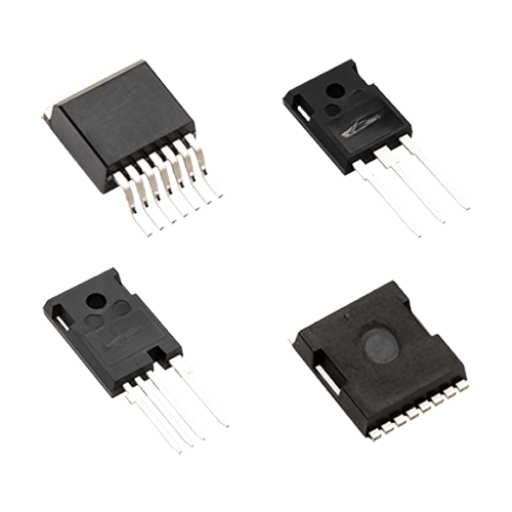
Gegen einen Silizium-MOSFET gewinnt ein SiC-MOSFET an vier messbaren Fronten: geringerer Einschaltwiderstand bei hoher Spannung, geringerer Schaltverlust, weitaus mehr thermische Kopffreiheit und kleinere passive Komponenten Das US-Energieministerium hat einen SiC-Wechselrichter gemessen 991TP3 T-Effizienz gegenüber 961TP3 T für einen vergleichbaren Silizium-Wechselrichter, etwa eine Energieeinsparung von 31TP3 T In derselben Rolle, gemäß seiner Bericht über Breitband-Halbleiter für die Leistungselektronik.
| Parameter | Silizium-mosfet | SiC MOSFET |
|---|---|---|
| Praktische Hochspannungsgrenze | ~900 V, bevor Silizium ineffizient wird | 650 V bis 3,3 kV+ routinemäßig |
| Rds (on) vs. Temperatur | 25°C → 140°C verdoppeln oder verdreifachen kann | Erhöht nur ~1,3 –4 ̄ |
| Schaltverlust / Frequenz | Höherer Verlust, geringere Frequenz | Geringer Verlust, hohe Schaltfrequenz |
| Spannungsabfall der Körperdiode | ~0,7 V | ~4 V (Strafe bei großer Bandlücke) |
| Relative Gerätekosten | Untere | Höher (pro Gerät) |
| Relative Systemkosten | Ausgangswert | Oft niedriger (kleinere Magnetik + Kühlung) |
Diese letzte Reihe ist der Teil, den Käufer rückwärts bekommen Wir nennen es das Device-to-System-Cost-Inversion: Die SiC-Düse kostet fast immer mehr als ein Siliziumteil, dennoch im richtigen Design, Hochspannung, hohe Schaltfrequenz, effizienzgesteuert, die System Weniger kosten kann, weil je schneller das Schalten den Transformator, Induktivitäten und Kondensatoren schrumpft, und je höher der Wirkungsgrad den Kühlkörper schneidet Das ist bedingt, nicht automatisch Bei einem Niederspannungs-kostensensitiven 48 V-Design erscheint die Inversion nicht und ein Siliziumteil gewinnt Behandeln Sie es als Designfrage, nicht als Slogan.
ages Vorteile
- ~10 × Critical Field → Thin Drift, Low Rds (on)
- Geringe Schaltverluste, hohe Frequenz
- Abzweigtemperaturen bis ~200 °C
- Kleinere Passive und Kühlung = höhere Dichte
Einschränkungen
- Höherer Gerätepreis pro Teil
- Spannungsabfall der Körperdiode ~4 V; Gate-Oxid-Zuverlässigkeit zur Verwaltung
- Benötigt eine maßgeschneiderte, höhere Gate-Spannung
- Schnelle dv/dt erhöht EMI
Warum ist SiC besser als Silizium?
SiC ist für Hochspannungs-Hochfrequenz-Leistungsschaltung besser als Silizium, da es durch seine große Bandlücke und sein kritisches Feld von ~10 ̄NF ermöglicht, dass ein dünneres Gerät die gleiche Spannung mit geringerem Widerstand blockiert, während seine höhere Wärmeleitfähigkeit Wärme abführt. Zusammen bedeutet das einen geringeren Leitungs- und Schaltverlust, eine geringere Kühlung und Magnetik sowie einen Hochtemperaturbetrieb. Ein MOSFET auf Siliziumbasis kann nicht mithalten.
Ein ehrlicher Vorbehalt: Für Niederspannungs - oder kostengetriebene Konstruktionen ist Silizium immer noch die rationale Wahl, SiC verdient seine Prämie nur, wenn Spannungs, Frequenz - oder Effizienzziele anspruchsvoll sind Peer-reviewte Arbeiten an 4 H-SiC DMOSFETs dokumentieren genau diesen feld-und-thermischen Vorteil.
SiC MOSFET vs. GaN vs. Silizium-IGBT
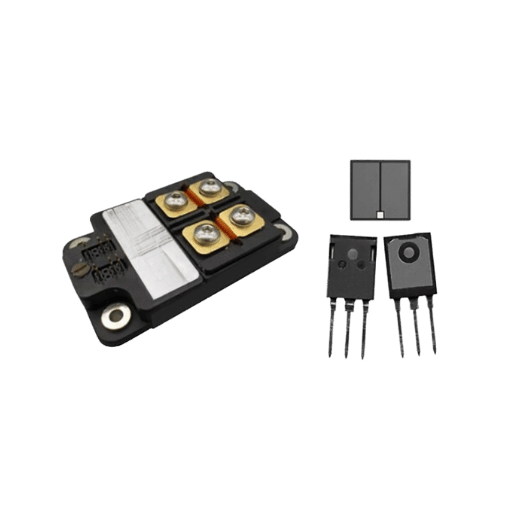
Die ehrliche Antwort auf “welches Gerät mit großer Bandlücke sollte ich verwenden” ist, dass es von Spannung und Frequenz abhängt, keine Technologie gewinnt überall US-amerikanische nationale Labore wie Sandias Power-Electronics-Programm Entwickeln Sie sowohl SiC- als auch GaN-Geräte parallel, ein Zeichen dafür, dass sich die beiden eher ergänzen als miteinander konkurrieren. Galliumnitrid (GaN) führt bei niedriger Spannung und sehr hoher Frequenz; der Siliziumkarbid-MOSFET besitzt das Mittel- bis Hochspannungs-Hochleistungsband; und der Silizium-IGBT überlebt in kostensensitiven Hochspannungsdesigns, bei denen die Schaltgeschwindigkeit weniger wichtig ist.
| Eigenschaft | SiC MOSFET | GaN HEMT | Silizium-igBT |
|---|---|---|---|
| Süßfleckspannung | 650 V 3,3 kV+ | < 650 V | 1,2 kV 6,5 kV |
| Schaltgeschwindigkeit | Schnell (unipolar) | Schnellste | Langsam (Heckstrom) |
| Hochstromleitung | Stark | Beschränkt | Stark |
| Reife/Kosten | Reifung, mittlere Kosten | Neuer, Low-V | Reif, kostengünstig |
Was ist der Unterschied zwischen einem IGBT und einem SiC MOSFET?
Im Kern ist ein IGBT ein bipolares Gerät, während ein SiC-MOSFET unipolar ist Ein Bipolartransistor mit isoliertem Gate injiziert Minoritätsträger, was bei hohem Strom eine starke Leitung ergibt, beim Abschalten jedoch einen “Schwanzstrom” hinterlässt, der Energie verschwendet und die Schaltfrequenz kappt Ein Siliziumkarbid-MOSFET leitet nur mit Elektronen, hat also keinen Schwanzstrom und schaltet mehrmals schneller.
In der Praxis ersetzen Ingenieure Silizium-IGBT-Module durch SiC-MOSFETs, wenn sie höhere Schaltfrequenzen, kleinere Magnetiken und einen besseren Wirkungsgrad wünschen, und behalten IGBTs bei, bei denen die Schaltgeschwindigkeit unwichtig ist, und Kostenregeln im Voraus. Was GaN betrifft, berichten Energieelektroniker häufig, dass die Wahl nicht “SiC gewinnt”ist immer”: Unter 650 V bei sehr hoher Frequenz kann GaN der bessere Schalter sein.
Teams verlieren Monate durch genau diese Nichtübereinstimmung Stellen Sie sich eine Schnellladegruppe vor, die nach einem 1200 V SiC MOSFET greift, weil “Wide-Bandgap” zur Standardantwort geworden ist, als ihr 400 V Bus und 300 kHz Ziel ein Lehrbuch waren, das für eine 650 V GaN-Stufe geeignet war, die schneller geschaltet, kühler gelaufen und weniger gekostet hätte Sie wählten aus dem falschen Grund die richtige Familie, und eine Bank voller übergroßer Kühlkörper bezahlte dafürDas Gerät zuerst auf Busspannung und Frequenz abgleichen; Ruf zwei.
Spannungsklassen und deren Anpassung an Ihre Anwendung
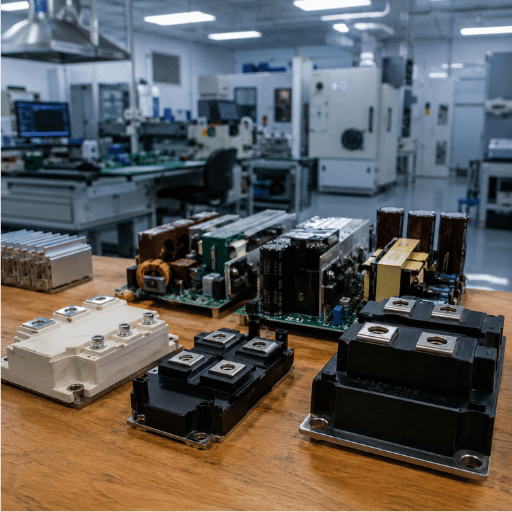
Wählen Sie die falsche Spannungsklasse und Sie zahlen zweimal: Wählen Sie zu niedrig und ein vorübergehender Stoß zerstört das Teil, wählen Sie zu hoch und Sie stranden auf Widerstand und Geld, das Sie nie wiederherstellen SiC MOSFETs werden in diskreten Spannungsklassen verkauft, und wählen Sie einen von Ihrem DC-Bus, nicht das Gerät Als Faustregel derate: Wählen Sie eine Sperrstufe ungefähr 1,52. Ihren Nennbus, damit Transienten das Gerät nie über seine Grenze hinaus drücken Nehmen Sie ein funktioniertes Beispiel: ein 800 V EV-Batteriebus, der auf etwa 50601 TP3 T Gerätenutzung herabgestuft, landet auf einem 1200 V SiC MOSFET. Mittlerweile wird ein 400-V-Bus einem 650-V-Teil zugeordnet; Eine 1500-V-Solarschnur oder Schienenverbindung bringt Sie auf 1700 V oder 3,3 kV.
Die 5-Klasse-Spannungsanwendungsmatrix
Verwenden Sie diese Matrix, um von einer Busspannung zu einer Geräteklasse und ihrer Begleitdiode über die fünf allgemein verwendeten SiC-MOSFET-Spannungsklassen zu gelangen.
| Spannungsklasse | Typischer DC-Bus | Anwendung | Begleitdiode |
|---|---|---|---|
| 650 V | ~400 V | Bordladegeräte (OBC) | SiC Schottky |
| 650 V | ~400 V | 400 V Industrieantriebe | SiC Schottky |
| 1200 V | ~800 V | EV Traktionswechselrichter | SiC Schottky / Körperdiode |
| 1200 V | ~800 V | Solarstrangwechselrichter | SiC Schottky |
| 1200 V | ~800 V | Gleichstrom-Schnellladestationen | SiC Schottky |
| 1700 V | ~1000 100 V | Industriemotorantriebe | SiC Schottky |
| 1700 V | ~1100 V | Energiespeicherwechselrichter | SiC Schottky |
| 3,3 kV | ~1500 V+ | Schienenzug | SiC-Moduldiode |
| 3,3 kV+ | ~1500 V+ | Netz-/Mittelspannungswandler | SiC-Moduldiode |
Energieelektronik-Teams lernen die spöttische Lektion routinemäßig auf die harte Tour. Stellen Sie sich einen Antriebsingenieur vor, der ein 1200-V-Teil für eine 1100-V-Gleichstromverbindung spezifiziert, um ein paar Dollar pro Gerät zu sparen: Auf der Bank läuft es gut, aber das erste harte regenerative Ereignis wirft einen Spannungsanstieg über die Nennleistung hinaus und holt ein ganzes Halbbrückenbein heraus, verbrannt und rauchend, ohne Datenblattlinie, die sie warnte. Ihr Fix war eine Spalte in der Matrix unten, kein neues Gerät.
Hier spielen zwei Diodennoten eine Rolle.
Der SiC MOSFET hat eine Eigenkörperdiode, aber sein ~4 V Vorwärtsspannungsabfall verschwendet Energie in der Rückleitung, so dass viele Konstruktionen eine parallele SiC Schottky-Diode mit einer Rückwärtswiederherstellungsladung von nahezu Null hinzufügen Eine höhere Gerätebewertung gibt Ihnen auch mehr transienten Kopffreiheit als ein IGBT gleicher Nennspannung, weshalb ein SiC MOSFET die in jedem realen Stromversorgungssystem vorhandenen Stöße toleriert Die Hochspannungs-DMOSFET-Strukturen hinter diesen Klassen sind in der dokumentiert IEEE-Aufzeichnung auf 4H-SiC-Leistungsumwandlungsgeräten.
Wo Siliziumkarbid-MOSFETs verwendet werden
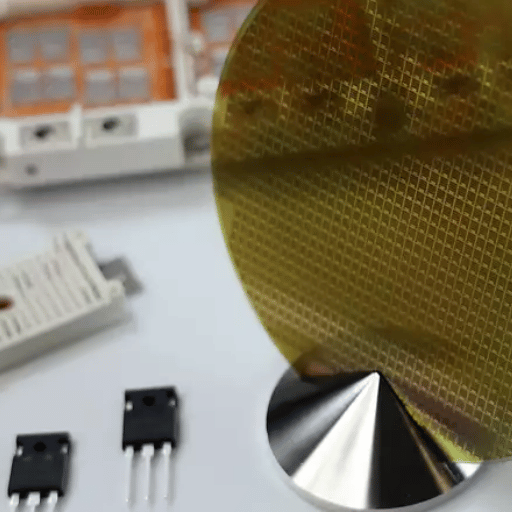
SiC-MOSFETs tauchen überall dort auf, wo Effizienz, Leistungsdichte oder Betriebstemperatur unter Druck stehen. Jede Anwendung wählt SiC aus einem bestimmten, messbaren Grund, nicht aus Prestigegründen, und der Effizienzfall wird von nationalen US-Labors, einschließlich des DOE, dokumentiert Arbeiten an kostenwettbewerbsfähiger SiC-Leistungselektronik.
Betrachten Sie einen konkreten Fall: Ein Automobilteam, das einen 400-kW-Traktionswechselrichter für eine 800-V-Architektur umbaut, tauscht sechs Silizium-IGBT-Module gegen 1200-V-SiC-MOSFET-Module aus. Durch schnelleres Schalten können die Gleichstromverbindungskapazität und der Kühlkreis geschrumpft werden. Die Effizienzsteigerung von ~3% erhöht die tatsächliche Reichweite, und der Wechselrichter verliert Gewicht, derselbe Handel, den Tesla gemacht hat, als es SiC-MOSFETs in den Wechselrichter Modell 3 einführte. Außerhalb des Traktionswechselrichters sind die Hauptziele:
- ✔Bordladegeräte & SchnellladenHöherer Wirkungsgrad und 800 V ultraschnelles Laden.
- ✔Solar- und EnergiespeicherwechselrichterHochfrequente, hocheffiziente Leistungsumwandlung in LLC- und Halbbrücken-Topologien.
- ✔IndustriemotorantriebeKleinere Filter, geringere Nebenleistungsverluste, höhere Zuverlässigkeit bei Temperatur.
- ✔Rechenzentrum / KI-NetzteileDie Leistungsdichte pro Rack treibt den Übergang zu SiC-Stromgeräten und Leistungsmodulen voran.
Entwerfen mit SiC-MOSFETs: Fallstricke für Gate Drive und Layout

Der schnellste Weg, einen guten Siliziumkarbid-MOSFET zu ruinieren, besteht darin, ihn wie ein Siliziumteil anzutreiben. Diese Geräte benötigen einen maßgeschneiderten Gate-Antrieb und ein sauberes Layout; Die folgenden Regeln sind Design-Check-Elemente, keine universellen Konstanten, sondern folgen immer dem spezifischen Datenblatt.
“Die meisten Silizium-MOSFETs erreichen eine niedrige VDS-Sättigung von etwa 8 V bis 10 V zwischen Gate und Source SiC-MOSFETs benötigen jedoch typischerweise 15 V bis 20 V VGS, um eine niedrige VDS-Sättigung zu erreichen”
Ian Poole, Elektronikingenieur & Autor, Elektronikhinweise
Technische Anmerkung
Typisches SiC-Antriebsfenster ist etwa +15 V zum Einschalten und 0 V zum -4 V zum Abhalten, mit einer Kelvin-Quellverbindung, um die Gate-Drive-Rückkehr aus dem Strompfad herauszuhalten Eine negative Off-State-Vorspannung verbessert die Rauschimmunität und verhindert dv/dt-induziertes falsches Einschalten in Halbbrückenbeinen Halten Sie die Gate-Loop-Induktivität und die Quellinduktivität niedrig, verwalten Sie dv/dt mit Gate-Widerstand und validieren Sie anhand der Gate-Ladungs- und Schwellenspannungsgrenzen des Datenblatts. Automobilteile müssen AEC-Q101 erfüllen, die AEC für Breitband-Leitfähigkeitsprüfmodi erweitert; Das LEDEC-K-K-Prüfp hat auch die Breitband-Prüfbarkeitsprüfungsdokumente veröffentlicht.
Ein klassischer Feldausfall zeigt, warum das wichtig ist: Ein Team verwendet einen 0 V / +12 V Silizium-IGBT-Gate-Treiber auf einer SiC-Halbbrücke wiederverwendet, eine schnelle dv/dt-Kante am Schaltknoten koppelt durch die Gate-Drain-Kapazität und drückt das Off-State-Gerät über seinen Schwellenwert, und beide Transistoren leiten gleichzeitig. Dieser Durchschussstrom spitzt durch das Bein und das Symptom ist ein verbranntes Modul auf der Bank, keine Warnung im Datenblatt. Drei Fehler zeigen sich am häufigsten: Wiederverwendung eines IGBT-Gate-Treibers, dessen Spannungsfenster und Strom für SiC falsch sind; Halten des Gates anstelle einer negativen Vorspannung, die Sidt-Paare erfordert ebenfalls Respekt. Zuverlässigkeitsüberprüfungen des Gate-Oxid-Abbaus und der Kurzschlussrauheit Aufzeigen, warum Marge und Qualifikation zählen.
Von SiC Boule zu gerätebereiter Wafer: Die meisten Guides der Foundation überspringen

Jeder Siliziumkarbid-MOSFET beginnt als SiC-Kugel, die in Wafer geschnitten werden muss, und dort lebt unser Shop Als Drahtsäge-OEM mit 10.000+ Schneidkisten und 300+ globalen Clients schneiden wir SiC, Saphir und Silizium, und SiC gehört zu den härtesten Materialien, die kommerziell geschnitten werden Was nachgeschaltete Geräteführer selten erwähnen, ist, dass die nachgeschnittene Qualität des Wafers eine Obergrenze für alles Folgende festlegt.
Auf unserem eigenen Schneidboden steht Beton auf dem Spiel: Eine 150 mm SiC-Kugel steht für Tausende von Dollar Kristall, und wenn sie die Drahtsäge mit hoher Gesamtdickenschwankung verlässt, muss der Kunde mehr von jedem Wafer wegschleifen, nur um eine flache, beschädigungsfreie Oberfläche zu erreichen, wodurch kostenpflichtiges Material in Gülle umgewandelt wird. Deshalb behandeln wir Drahtspannung, Vorschubgeschwindigkeit und Drahtverschleiß als Streckhebel, nicht nur Maschineneinstellungen. Diese Kettenlaufkugel → Schneide/Polieren → Epitaxie → Gerätefehlerherstellung. Wenn eine Mehrdraht-Diamantsäge die Kugel schneidet, hinterlässt sie eine Gesamtdickenschwankvergasung (TTV-Entfern-Schleif) und eine entlattschleif-Schleif-Schicht, die entfällt, wird mehr. Fest abrasives Diamantdrahtschneiden von einkristallinem SiC Bestätigt, wie Slicing-Parameter Schäden unter der Oberfläche antreiben Für die Geräteseite bedeutet dies, je sauberer die Scheibe, desto mehr nutzbare Matrize pro Wafer; für Käufer bedeutet es, dass die Substratqualität ein echter Kostentreiber ist, keine Fußnote Wir gehen tiefer in den Downstream-Schritt in unserem Leitfaden ein Waferverdünnung, und in die Schneidemaschine selbst auf der SiC Waferschneidsäge Seite. Die gleiche Physik gilt für plain Siliziumkarbid, und verbindet sich mit dem weiteren Halbleiterfertigungsverfahren.
Branchenausblick: Was ist der Antrieb für die SiC MOSFET-Einführung
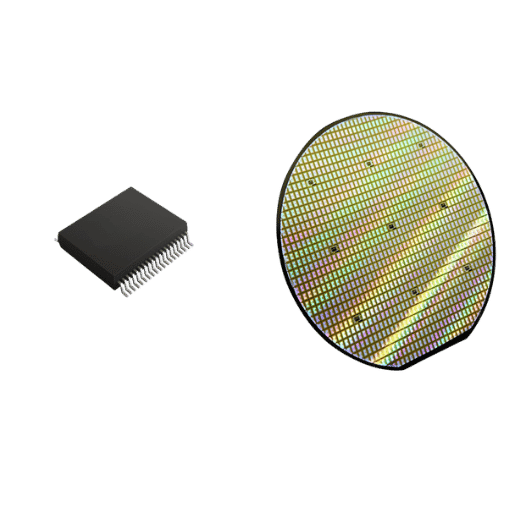
Die entscheidende Kraft hinter der Einführung von Siliziumkarbid-MOSFET ist keine Schlagzeilen-Marktnummer, sondern die Umstellung von 150-mm- auf 200-mm-SiC-Wafer. Die Erhöhung des Waferdurchmessers ergibt ungefähr 2.2× mehr Die pro Wafer In geometrischer Hinsicht ist dies der angebotsseitige Hebel, der SiC in gängigen Kfz-Wechselrichtern endlich mit Silizium konkurrenzfähig macht. Ein Qualifizierer ist wichtig: dass 2,2 × ist Potentialen, nicht garantierte Kostenreduktion, realisierte Einsparungen hängen von Ertrag, Kantenausschluss, Waferbogen und durch Schneiden verursachten Schäden ab, genau da verdient die Waferverarbeitung ihren Halt Die mit dem Automobilzulieferer ZF gebaute 200-mm-SiC-Fab von Wolfspeed in Deutschland ist ein Signal dafür, dass sich die Industrie auf das größere Format festlegt.
Zwei weitere Schichten sind sehenswert: integrierte Leistungsmodule, die SiC MOSFET, Gate-Treiber und Wärmemanagement in einem Paket kombinieren, und die Erweiterung der Automobilqualifikationsstandards für Teile mit großer Bandlücke. Nur im Kontext prognostizieren Markttracker, dass der SiC-Markt für Elektrogeräte in den 2030er Jahren stark wachsen wird, aber ein Käufer sollte nach Wafer-Ökonomie und Qualifikationszeitplänen planen, nicht nach einer einzelnen CAGR-Zahl Vergleichen Sie den vorgelagerten Schneidschritt auf der Siliziumwafer Schneiddraht Säge Seite, um zu sehen, warum 200 mm SiC die Messlatte für die Schnittpräzision anhebt.
Häufig gestellte Fragen
F: Warum ist ein SiC-MOSFET effizienter als ein Silizium-MOSFET?
Antwort anzeigen
Ein Siliziumkarbid-MOSFET ist effizienter, weil sein ~10 ̄ höher kritisches Feld die spannungsblockierende Driftschicht weitaus dünner sein lässt, was den Widerstand und den Leitungsverlust verringert. Da es unipolar ist, schaltet es auch ohne den Endstrom eines IGBT, wodurch der Schaltverlust verringert wird und höhere Frequenzen und kleinere Passive zugelassen werden. Das US-Energieministerium hat einen SiC-Wechselrichter bei 99% gegenüber 96% für Silizium gemessen. In derselben Rolle beträgt die Verstärkung etwa 3%, ein Spielraum, der jede Betriebsstunde zusammenwirkt.
F: Ist ein SiC-MOSFET besser als GaN?
Antwort anzeigen
Es kommt auf Spannung und Leistung an Ein SiC MOSFET ist die bessere Wahl für Mittel - bis Hochspannung (650 V bis 3,3 kV+) und Hochstromanwendungen wie EV-Traktionswechselrichter und Solarstring-Wechselrichter, GaN gewinnt typischerweise unter 650 V und bei sehr hohen Schaltfrequenzen, wie kompakte Schnellladegeräte und DC-DC-Wandler, auch der Crossover ist nicht universell besser eingestellt durch Ihre Busspannung, Frequenz und Strom.
F: Was sind die Nachteile von Siliziumkarbid-MOSFETs?
Antwort anzeigen
Die Hauptnachteile sind ein höherer Gerätepreis als Silizium, ein Vorwärtsspannungsabfall der Körperdiode in der Nähe von 4 V, der Energie in der Rückleitung verschwendet, ein schmaleres und höheres Gate-Antriebsfenster, das einen dedizierten Treiber erfordert, und ein schneller dv/dt, der EMI erhöht. Auch die Gate-Oxid-Zuverlässigkeit und die Robustheit des Kurzschlusses erfordern eine sorgfältige Qualifikation. Die Massenelektronenmobilität von SiC ist sogar geringer als die des Siliziums. Das Gerät gewinnt bei Feldstärke und thermischer Leistung, nicht bei jeder Metrik.
F: Welche Gate-Spannung benötigt ein SiC-MOSFET?
Antwort anzeigen
Die meisten SiC-MOSFETs verwenden etwa +15 V zum Einschalten und 0 V bis -4 V zum Ausschalten, deutlich über den typischen 8-610-V-Werten eines siliziumbasierten MOSFET. Fügen Sie eine negative Aus-Zustands-Vorspannung hinzu und bestätigen Sie dann das genaue Fenster auf dem Gerät Datenblatt.
F: Wer stellt SiC-MOSFETs her?
Antwort anzeigen
Zu den führenden SiC-MOSFET-Herstellern gehören Onsemi, Infineon, Wolfspeed, ROHM und STMicroelectronics, die jeweils die SiC-MOSFET-Technologie in Richtung höherer Spannungsklassen vorantreiben. DONGHE stellt keine MOSFET-Geräte her, wir bauen die Diamantdrahtsägen, auf denen die SiC-Wafer geschnitten werden. Diese Hersteller stellen ihre SiC-basierten Chips her.
F: Wie werden die SiC-Wafer in einem MOSFET hergestellt?
Antwort anzeigen
Ein SiC-Kristall wird zu einer Kugel gezüchtet, dann mit einer Diamant-Mehrdraht-Säge in dünne Wafer geschnitten, geschliffen und flach poliert, mit einer epitaktischen Schicht versehen und schließlich zu Geräten verarbeitet. Da SiC extrem hart ist, werden Qualität in Scheiben geschnitten, Gesamtdicke und Untergrundschäden begrenzt direkt, wie viele nutzbare Die Wafer liefern.
F: Sind SiC-MOSFETs den höheren Preis wert?
Antwort anzeigen
Bei hochspannungskritischen Konstruktionen, ja Effizienz des Systems, kleinere Magnetik, weniger Kühlung, geringere Energieverluste, reduzieren sowohl die Kühl- als auch die Gesamtbetriebskosten über die gesamte Lebensdauer des Wandlers. Unterhalb von etwa 1000 V gewinnt normalerweise ein Teil auf Siliziumbasis an Wert.
Warum wir das schreiben
DONGHE baut Diamant-Mehrdrahtsägen zum Schneiden von Silizium, SiC - und Saphir-Wafern, mit 10.000+ Schneidkoffern auf PlatteWir entwerfen oder verkaufen keine SiC-MOSFETs, unsere Perspektive ist der Wafer darunter, daher werden die Daten hier zu Bandlücke, Spannungsklassen und Gate-Antrieb aus öffentlichen Ingenieur - und Regierungsreferenzen bezogen, während die Slicing - und TTV-Beobachtungen aus unserem eigenen Schneidboden stammen Begutachtet vom technischen Team von Shanghai Donghe Science and Technology Co., Ltd. (DONGHE).
SiC, Saphir - oder Siliziumwafer schneiden und eine sauberere Scheibe benötigen?
Referenzen und Quellen
- Breitbandlücken-Halbleiter für die LeistungselektronikUS-Energieministerium
- Kostengünstige 4 H-SiC-LeistungselektronikUS DOE / OSTI
- Status und Aussichten von SiC Power ElectronicsNIH / NCBI (peer-reviewed)
- 4 H-SiC DMOSFETs für EnergieumwandlungsanwendungenIEEE Xplore
- US 5,614,749, Siliziumkarbidgraben MOSFETUSPTO / Google Patente
- Zuverlässigkeitsdokumente für Stromhalbleiter mit großer BandlückeJEDEC
- SiC Chip Demand Surges (200 mm Wafer Economics)Halbleitertechnik
![Polysiliziummaterial: Eigenschaften, Güteklassen und Verwendungszwecke [Leitfaden]](https://wiresawcutter.com/wp-content/uploads/2026/08/polysilicon-material-featured-768x512.webp "Polysiliziummaterial: Eigenschaften, Sorten und Verwendungszwecke in der Solar- und Halbleiterindustrie 12")

![Polysiliziummaterial: Eigenschaften, Güteklassen und Verwendungszwecke [Leitfaden]](https://wiresawcutter.com/wp-content/uploads/2026/08/polysilicon-material-featured-150x150.webp)