
Get in touch with DONGHE Company


Silicon wafer material is the thin, ultra-pure crystalline disc that nearly every semiconductor device is built on, from the processor in your phone to the power module in an electric car. Yet most explanations stop at “it’s made from sand.” That’s true, but it skips the parts that actually matter when you’re specifying, buying, or slicing wafers: which crystal type to pick, what thickness and flatness you can expect, how an ingot becomes hundreds of mirror-flat discs, and how much costly silicon disappears as dust along the way.
This guide walks through all of it, with real numbers and the standards behind them. We build cutting equipment for hard, brittle materials, so we pay special attention to one stage the encyclopedic guides gloss over: the slicing step, where a surprising share of every ingot is lost to the saw.
Quick Specs: Silicon Wafer Material at a Glance
| Base material | Electronic-grade silicon (EGS), purity 99.9999999%+ (9N–11N) |
| Crystal structure | Monocrystalline (CZ or float-zone) or multicrystalline |
| Common diameters | 100, 150, 200, 300 mm (450 mm still pre-production) |
| Standard thickness | ~525 µm (100 mm) to ~775 µm (300 mm), per SEMI M1 |
| Primary dopants | Boron (p-type), Phosphorus (n-type) |
| Main uses | Integrated circuits, power devices, solar cells, MEMS, sensors |
What Is a Silicon Wafer?
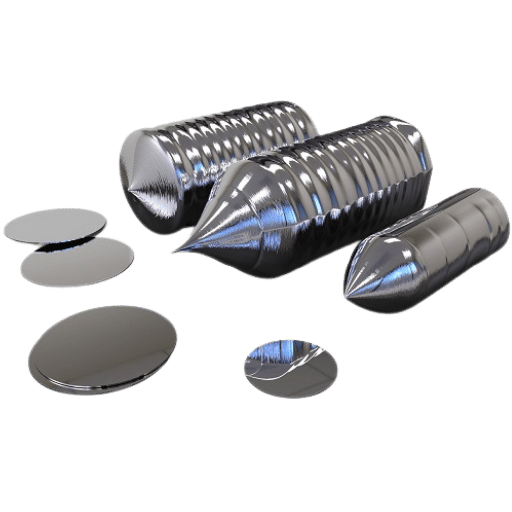
A silicon wafer is a thin slice of a single silicon crystal that serves as the substrate, the foundation, for building electronic components. In electronics, a wafer is a thin slice of semiconductor on and within which transistors, diodes, and interconnects are fabricated layer by layer. The wafer itself does almost nothing electrically until it’s processed; its job is to be flat, clean, and perfectly ordered at the atomic level so that billions of devices can be patterned across its surface.
Silicon earned this role for three reasons: it’s abundant, it forms a stable native oxide (silicon dioxide) that makes an excellent insulator, and its electrical behavior can be tuned precisely by adding tiny amounts of other elements. A single 300 mm wafer can carry thousands of individual chips, each holding billions of transistors. That scale is why the wafer is the unit of currency in chipmaking, fabs measure output in “wafer starts per month,” not chips.
💡 Key takeaway
The wafer is a substrate, not a finished device. Its value comes from flatness, purity, and crystal order — the three properties every later processing step depends on.
What Are Silicon Wafers Made Of?
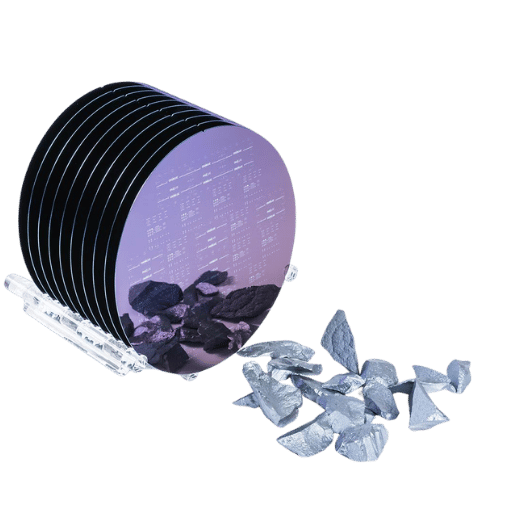
Silicon wafers are made from electronic-grade silicon, one of the purest industrial materials on Earth. Its journey starts with ordinary quartz sand (silicon dioxide), which is reduced in an arc furnace to metallurgical-grade silicon at about 98–99% purity. That’s nowhere near good enough for electronics, so the silicon is converted into a gas (trichlorosilane), distilled, and deposited back as solid polysilicon through the Siemens process. That deposited polysilicon reaches 99.9999999% purity or better, nine to eleven “nines.”
What are silicon wafers made of, exactly?
At the wafer stage, the material is near-pure silicon plus deliberate, trace amounts of a dopant. To put the purity in perspective: 9N silicon allows roughly one foreign atom per billion silicon atoms. That dopant, usually boron for p-type or phosphorus for n-type, is added on purpose during crystal growth, at concentrations measured in parts per billion to parts per million. Those trace atoms are what give the silicon its useful semiconducting behavior; without them, ultra-pure silicon is close to an insulator at room temperature. Sand is abundant worldwide, but the refining, crystal growth, and slicing are what make a finished wafer expensive, not the raw silicon.
Types of Silicon Wafers: Monocrystalline vs. Polycrystalline
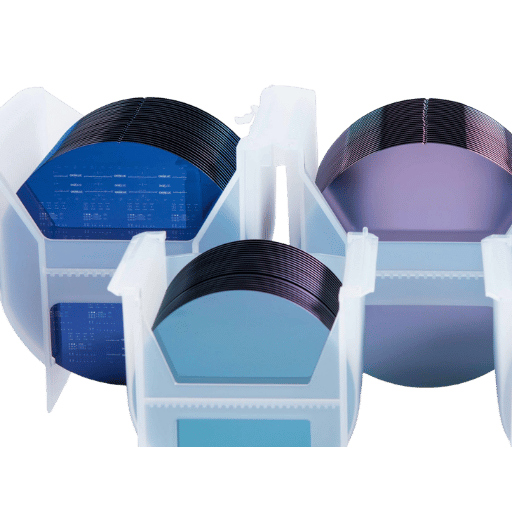
Silicon wafers fall into a few families based on crystal structure and how they’re processed. The most important split is monocrystalline versus multicrystalline, but engineered substrates like SOI and epitaxial wafers matter too.
| Type | Crystal structure | Typical use | Relative cost |
|---|---|---|---|
| Monocrystalline (CZ) | Single continuous crystal | ICs, logic, memory, most chips | High |
| Monocrystalline (float-zone) | Single crystal, higher purity | Power devices, detectors, high-efficiency solar | Highest |
| Multicrystalline | Many grains, visible crystallites | Lower-cost solar cells | Low |
| SOI (silicon-on-insulator) | Silicon / oxide / silicon stack | RF, low-power, automotive chips | Premium |
| Epitaxial | Grown crystal layer on a base wafer | Power, analog, CMOS image sensors | Premium |
What are the three types of silicon wafers?
When people ask for “three types,” they usually mean the three crystal form: monocrystalline (one continuous crystal, used for almost all integrated circuits), polycrystalline / multicrystalline (many small grains, common in budget solar panels), and amorphous silicon (no long-range order, used in thin-film cells and some displays). Doping adds a second axis: any of these can be made p-type with boron or n-type with phosphorus. One frequent and costly mix-up is treating multicrystalline solar silicon as interchangeable with IC-grade monocrystalline, they sit at different purity levels and very different price points, and they aren’t substitutes.
Silicon Wafer Sizes, Thickness, and Specifications
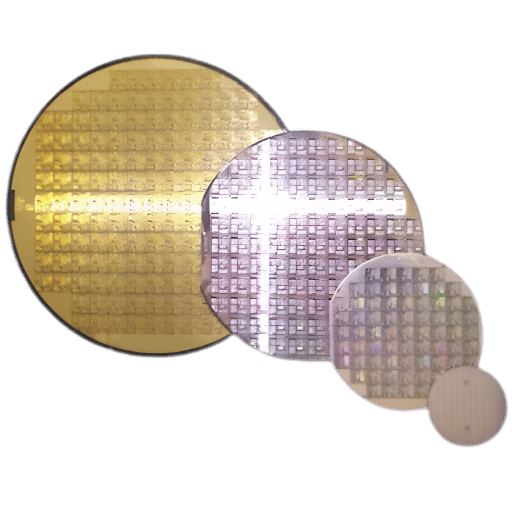
Wafer dimensions aren’t arbitrary. They follow SEMI standards (chiefly SEMI M1) so that fab equipment built anywhere can handle wafers made anywhere. As diameter grows, thickness grows too, because a larger disc need more mechanical stiffness to survive handling without cracking or sagging.
| Diameter | Nominal thickness | Common edge feature |
|---|---|---|
| 100 mm (4″) | ~525 µm | Primary + secondary flats |
| 150 mm (6″) | ~625–675 µm | Flats |
| 200 mm (8″) | ~725 µm | Notch |
| 300 mm (12″) | ~775 µm | Notch |
Beyond diameter and thickness, three flatness parameters do most of the talking on a spec sheet. TTV (total thickness variation) is the difference between the thickest and thinnest points across the wafer. Bow measures how much the center deviates from a reference plane, and warp captures the full peak-to-valley deflection of the median surface. Resistivity, set by dopant concentration, rounds out the core electrical spec. For leading-edge lithography, sub-micron flatness across a 300 mm disc isn’t a nicety; it’s the difference between a sharp printed pattern and an out-of-focus one at the wafer edge.
📐 Engineering Note
Final wafer flatness is capped at the slicing step. A 300 mm wafer specified at low TTV can’t be rescued by polishing alone if the saw left a wavy surface, lapping and polishing remove only a few microns. That’s why slicing TTV, not just polish quality, sets the realistic flatness budget. Plan your thickness allowance (typically tens of microns of stock for lapping/etching/polish) around the as-sliced TTV your saw can hold.
How Silicon Wafers Are Made: From Sand to Ingot
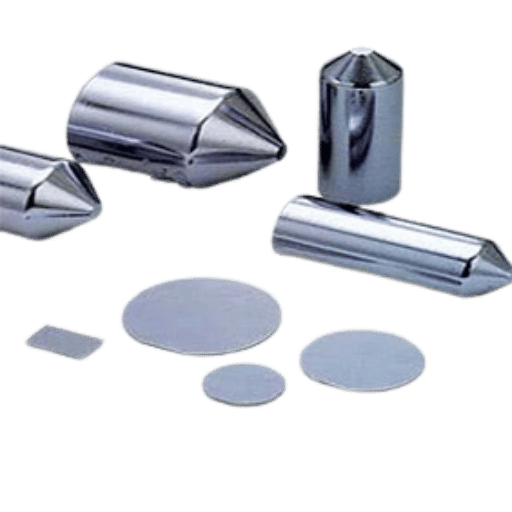
Wafer manufacturing turns purified polysilicon into finished discs, and it starts with growing a single crystal. There are two dominant methods, and the choice has real consequences for purity and price.
The Czochralski (CZ) process melts polysilicon in a quartz crucible, dips a seed crystal into the melt, and slowly pulls and rotates it upward so a single crystal grows downward from the seed. CZ produces the large-diameter ingots that volume chipmaking need, and it’s the workhorse behind most commercial wafers. Its trade-off: the quartz crucible introduces oxygen into the crystal, which limits how high the resistivity can go.
The float-zone method skips the crucible entirely. A polysilicon rod is melted in a narrow moving zone held in place by surface tension, and impurities are swept along as the zone travels. Its payoff is exceptional purity. Float-zone silicon reaches resistivities and purity levels that CZ struggles to match, which is why it’s chosen for power devices and radiation detectors. This is also where a common assumption breaks down: cheaper isn’t always the rule for solar. Research on float-zone silicon for solar cells has demonstrated cell efficiencies near 25% — proof that the purest silicon, not the cheapest, sets the performance ceiling. For background on how crystal growth feeds the broader photovoltaics supply chain, the U.S. Department of Energy maintains a useful overview. For a step-by-step, this illustrated walkthrough of the Czochralski crystal-growth method.
Once the ingot is grown, its ends are cropped, the cylinder is ground to an exact diameter, and a notch or flat is machined to mark crystal orientation. Only then is it ready to be sliced, the step we’ll dig into next.
Slicing and Wafering: How Ingots Become Wafers
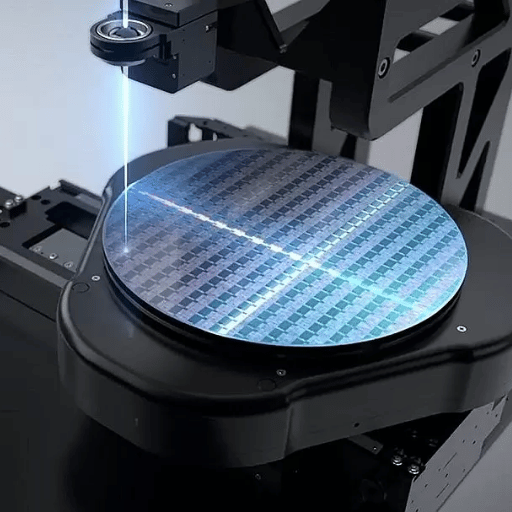
Slicing is where a meter-long silicon ingot becomes hundreds of individual wafers, and where a startling amount of expensive material vanishes. Modern fabs and solar producers slice ingots with a diamond wire saw: a single steel wire coated in fine diamond grit, threaded into a web of hundreds of parallel passes that cut the whole ingot at once.
The Kerf Tax: why a big share of every ingot never becomes a wafer
Here’s the part the “sand to chip” stories skip. Every cut has a width, the kerf, and all the silicon in that kerf turn to dust. Historically, slicing has lost on the order of 40% of the ingot to kerf and saw damage, meaning a large fraction of a costly, ultra-pure crystal never ships as a usable wafer. On thin photovoltaic wafers the math is brutal: when a wafer is roughly 150–180 µm thick and the saw kerf is a sizable fraction of that, you can lose almost as much silicon to the cut as you keep. Slicing, not polishing, often decides how many wafers an ingot yields.
This is exactly why the industry moved from older slurry saws to diamond wire. Slurry sawing left kerf widths around 200–250 µm; modern diamond wire saws for silicon wafer cutting bring that down to roughly 60–80 µm, run faster, and skip the abrasive slurry entirely. An academic review of slicing thin semiconductor wafers (Mechanical Systems and Signal Processing, 2025) reaches the same conclusion: reducing both wafer thickness and wire diameter is the most effective lever for raising yield, because it shrinks the kerf you lose on every pass.
📐 Engineering Note
Wire diameter, feed rate, and wire tension together set both kerf loss and as-sliced TTV. A finer wire save silicon but is more prone to deflection and breakage, so cut parameters are a balance, not a single “best” number. For brittle, high-value crystals, the saw that holds tight TTV at a narrow kerf protect yield twice, once on material saved, once on flatness that survives into the finished wafer.
The same slicing physics applies across hard, brittle materials, sapphire, silicon carbide, and crystalline silicon all behave similarly under a wire saw. That’s why hard and brittle material cutting is treated as one engineering discipline, and why precision diamond wire saw systems are tuned per material.
Wafer Grades and Quality Parameters
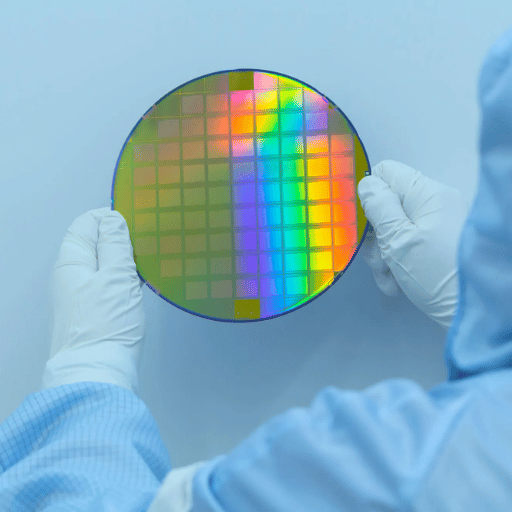
Not every application need a flawless wafer, and paying for one when you don’t is a quiet budget leak. Wafers are sold in grades that trade surface quality for price.
| Grade | Quality | Best for |
|---|---|---|
| Prime | Device-quality; tightest flatness, lowest defects | Production ICs and devices |
| Test | Slightly lower surface quality; minor cosmetic defects, still functional | Process development, R&D |
| Dummy / monitor | Mechanical/process placeholder, not device-grade | Tool tuning, handling tests |
| Reclaim | Reconditioned/stripped and re-polished | Cost-sensitive monitor and test runs |
Engineers frequently over-specify prime-grade wafers for non-critical work, paying device-grade prices to tune a process that a test or reclaim wafer would handle just fine. One simple rule helps: if the wafer becomes a shipped device, buy prime; if it’s a step on the way there, a lower grade usually does the job. Reclaim wafers, prime or test wafers that have had previous layers stripped and the surface re-polished, are widely reused as monitor wafers precisely because they keep fab costs in check without affecting the product. Quality metrics that separate grades are the same ones from the spec sheet: TTV, bow, warp, particle counts, and resistivity tolerance.
Silicon vs. SiC vs. GaN: Choosing a Wafer Material
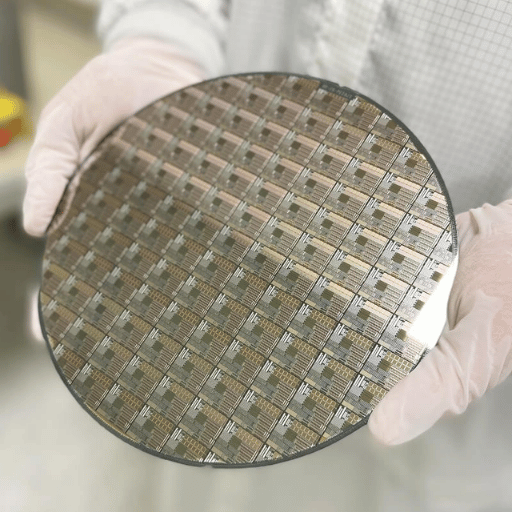
Silicon dominates by volume, but it isn’t the only wafer material, and for some jobs it’s the wrong one. What decides the pick is usually the bandgap, which sets how much voltage and heat a material can take before it stops behaving like a semiconductor.
| Material | Bandgap | Standout property | Best fit |
|---|---|---|---|
| Silicon (Si) | ~1.1 eV (indirect) | Cheap, abundant, mature process | Logic, memory, most chips |
| Silicon carbide (SiC) | ~3.3 eV (wide) | High voltage, high temperature, high thermal conductivity | EV inverters, power electronics |
| Gallium nitride (GaN) | ~3.4 eV (wide) | Fast switching, high frequency | Chargers, RF, power conversion |
| Gallium arsenide (GaAs) | ~1.42 eV (direct) | High electron mobility, light emission | RF, microwave, LEDs/lasers |
| Indium phosphide (InP) | ~1.34 eV (direct) | Infrared optics | Fiber-optic, photonics |
✔ Why silicon still wins most jobs
- Lowest cost per area at scale
- Decades of mature fab processes
- Native oxide makes insulation easy
- Stable up to ~1,400°C in process
⚠ Where wide-bandgap wins
- High-voltage power (SiC) above silicon’s limits
- High-frequency switching (GaN)
- Better heat handling, smaller systems
- Higher material and slicing cost
Quick decision rule: for general logic and memory, silicon is the default. For high-voltage power conversion, EV drivetrains, industrial inverterssilicon carbide wafer cutting saw territory wins on efficiency and heat. For fast chargers and RF, GaN. If you’re weighing SiC specifically, our deeper guide to silicon carbide as a material covers polytypes and properties in detail. These wide-bandgap crystals are even harder and more brittle than silicon, which is why slicing them, like cutting sapphire with a wire sawdemands tighter control of wire and feed.
Applications of Silicon Wafers
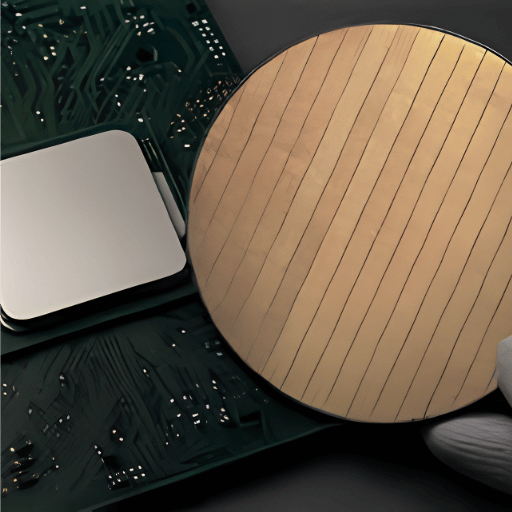
Once they pass through wafer fabrication, silicon wafers end up in nearly every electronic system. Their breadth of use is easy to underestimate:
- ✔ Logic and memory ICsmicroprocessors and DRAM/flash, where a single die can hold billions of transistors. The microprocessor is the marquee example.
- ✔ Power devicesdiodes, MOSFETs, and IGBTs that manage electricity in everything from phone chargers to grid inverters.
- ✔ Solar cellsphotovoltaic wafers convert sunlight directly to electricity and account for a huge share of global wafer area.
- ✔ MEMS and sensorsaccelerometers, pressure sensors, and microphones etched directly into silicon.
- ✔ Image sensors and photonicsCMOS camera sensors and silicon waveguides for optical data.
Solar is worth singling out because it’s the highest-volume use of wafer area by far, and it’s the most kerf-sensitive, which is why photovoltaic producers pushed diamond wire and thinner wafers first. Equipment that slices PV bricks, like a dedicated solar panel cutting machine, is engineered around squeezing more wafers from each kilogram of silicon.
Industry Outlook: Silicon Wafer Material in 2026
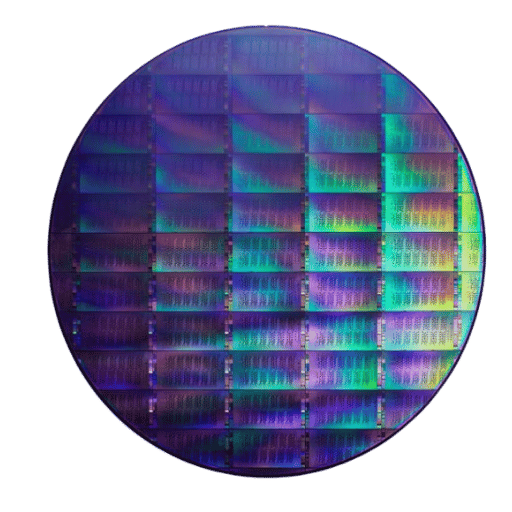
The wafer market is growing steadily rather than explosively. Estimates vary by scope, but Fortune Business Insights put the silicon wafers market at roughly $11.4 billion in 2025, rising to about $12.1 billion in 2026. BCC Research tracks the broader semiconductor silicon wafer segment from a $13.8 billion base toward $20.2 billion, a roughly 6.7% annual rate through 2030. Those numbers differ because the scopes differ, but the direction is consistent: single-digit, demand-led growth.
Three shifts are worth planning around in 2026. First, 300 mm consolidation continuesdriven by AI accelerators, automotive electronics, and edge computing, while 450 mm remains stalled in pre-production. Second, wide-bandgap materials are growing faster than silicon; SiC wafer demand in particular is expanding at a double-digit annual rate as EV and power applications scale, even though silicon stays the volume backbone. Third, slicing keeps getting leaner: thinner wafers and finer diamond wire are the main levers for cutting the kerf losses described earlier, and that trend is squarely about yield economics.
If you’re specifying wafers or capacity for a 2026 project, the practical move is to assume 300 mm for silicon volume work, budget separately for SiC or GaN if your design is power- or RF-heavy, and treat slicing yield as a line item rather than an afterthought, because at today’s silicon prices, kerf is real money.
Frequently Asked Questions
Q: Why are silicon wafers so expensive?
View Answer
It isn’t the sand. Cost comes from refining silicon to 9–11 nines of purity, the energy-intensive crystal growth, the slow slicing step (where a large share of the crystal is lost as kerf), and the lapping, etching, and polishing needed to hit sub-micron flatness. Tight defect and resistivity tolerances drive it further. The raw material is cheap; the precision is what you pay for.
Q: Which countries lead silicon wafer supply?
View Answer
Polysilicon and raw silicon production is concentrated in China, while a small group of firms in Japan (such as Shin-Etsu and SUMCO), Taiwan (GlobalWafers), and Germany dominate finished prime-wafer supply. The market is unusually concentrated: a handful of companies make most of the world’s high-end 300 mm wafers, and switching suppliers is slow because each fab qualifies wafers against its own process for months before production. That concentration, combined with the multi-year lead time to build new capacity, is why wafer supply security keeps showing up in industrial policy and why buyers increasingly sign long-term volume agreements rather than buying spot.
Q: How thick is a typical silicon wafer?
View Answer
Thickness scales with diameter, per SEMI M1. A 100 mm wafer runs about 525 µm, 200 mm about 725 µm, and 300 mm about 775 µm. Specialty thinned wafers for stacked or flexible devices can go far below 100 µm, but those need extra handling care because they’re fragile.
Q: Can silicon wafers be reclaimed or reused?
View Answer
Yes. Used prime or test wafers can have their surface layers stripped and re-polished into reclaim wafers, then reused as monitor or dummy wafers for tool calibration and process checks. It’s a standard cost-control practice in fabs and doesn’t touch the actual product wafers.
Q: What’s the largest silicon wafer size in production?
View Answer
300 mm (12 inch) is the volume standard. A 450 mm transition stalled on equipment cost and defect control, so 300 mm is the practical ceiling in 2026.
Q: How are silicon wafers cut from the ingot?
View Answer
A diamond wire saw slices the whole ingot at once using a web of parallel wire passes coated in diamond grit. It replaced older slurry sawing because it cuts a narrower kerf (around 60–80 µm versus 200–250 µm), runs faster, and wastes less silicon. After slicing, wafers are edge-ground, lapped, etched, and polished to their final finish.
Slicing hard, brittle crystals?
Kerf loss and as-sliced flatness decide your wafer yield. See how purpose-built diamond wire saws cut silicon, SiC, and sapphire with a narrower kerf and tighter TTV.
Why We Wrote This Guide
We design and build diamond wire saws for cutting silicon, silicon carbide, and sapphire, so we see the slicing step up close, including the kerf losses most wafer overviews leave out. Thickness, grade, and bandgap figures here are drawn from SEMI standards, published academic work on wafer slicing, and named market-research sources, with vendor marketing claims deliberately left out of our citations.
References & Sources
- Wafer (electronics)Wikipedia
- Czochralski ProcessWikipedia
- Float-Zone SiliconWikipedia
- Float-Zone Silicon for High-Volume Production of Solar CellsHarvard ADS (academic record)
- Progress and Critical Challenges in Slicing of Thin Semiconductor Wafers (MSSP, 2025)University of Strathclyde (Strathprints)
- Photovoltaics BasicsU.S. Department of Energy
- Czochralski Silicon (PVCDROM)PVEducation (Arizona State University)
- MicroprocessorEncyclopædia Britannica
- Silicon Wafers Market Size and OutlookFortune Business Insights
- Semiconductor Silicon Wafer MarketBCC Research
- SEMI M1, Specification for Polished Monocrystalline Silicon Wafers (SEMI International Standards)
Related Articles
- Silicon wafer cutting wire saw, how diamond wire slices ingots with minimal kerf
- SiC wafer cutting saw, slicing wide-bandgap silicon carbide
- Silicon carbide: properties, polytypes, and uses
- Sapphire cutting wire saw, cutting one of the hardest substrates
- Solar panel cutting machine, maximizing wafers per kilogram of silicon
![Polysilicon Material: Properties, Grades & Uses [Guide]](https://wiresawcutter.com/wp-content/uploads/2026/08/polysilicon-material-featured-768x512.webp "Polysilicon Material: Properties, Grades & Uses in Solar and Semiconductor Industries 13")

![Polysilicon Material: Properties, Grades & Uses [Guide]](https://wiresawcutter.com/wp-content/uploads/2026/08/polysilicon-material-featured-150x150.webp)