Get in touch with DONGHE Company
-
Phone: +86 181-1645-5490
-
Email: Sales18@DongheScience.com

Solar panel cutting machine
Solar Panel Cutting Machines: Diamond Wire Saws for Mfg & Recycling
Industrial Diamond Wire Sawing Solutions for the Solar Industry. The utility of these saws includes silicon ingot cropping, silicon wafering, and photovoltaic (PV) panel recycling (glass separation). Remarkable dimensional precision is achieved with minimal kerf removal.
6,000+
Cells/Hour Throughput
<1%
Cell Damage Rate
5-10%
Module Power Gain
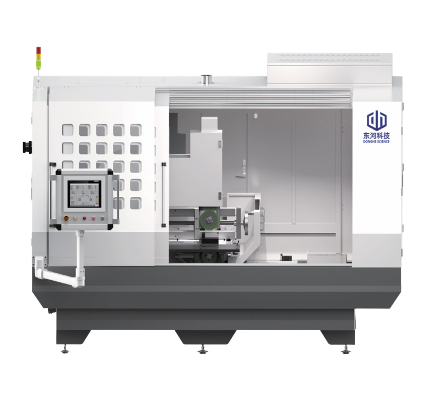
What Is a Solar Cell Cutting Machine?
A solar cell cutting machine (also called a solar cell cutter or cell scribing machine) cuts silicon photovoltaic solar cells into smaller segments (typically half-cells or third-cells) to optimize the efficiency and performance of solar modules.
A solar cell laser cutting machine has become one of the most critical devices in photovoltaic manufacturing today. Since solar cell manufacturers commonly use laser technology to cut solar cells in half, internal resistance losses can be reduced by up to 75%, producing 5-10% more energy from the same amount of solar energy than traditional full-cell panels.
Core Functions of Solar Cell Cutting Equipment
Laser Scribing
make accurate scorelines on the surface of the cell
Non-destructive separation
provides a way to separate cells while exerting very little mechanical stress on them
Automated Handling
provides loading, positioning, and unloading of cells
Quality Inspection
incorporate EL testing for defects as part of the integrated system.
Key Insight
The solar cell cutting machines are located upstream of the tabber-stringer on the manufacturing line. The quality of the cutting performed by these machines directly affects how well two or more cells are connected, as well as the reliability of a solar module.
Types of Solar Cell Cutting Technologies
When choosing a solar cell cutting machine, understanding of different cutting technologies is advantageous; each method confers a unique advantage in different PV manufacturing applications.
1. Laser Cutting Technology
Solar cell laser cutting machines use focused light beams to make precise vessel cuts with minimal mechanical load. Two major laser types are in use:
- Fiber Laser – Higher precision, better for PERC and TOPCon cells
- Diode Laser – Lower cost, suitable for standard BSF cells
2. Thermal Laser Separation (TLS)
TLS cutting technology is the most evolved method of solar cell cutting. It uses controlled thermal stress to affect a clean cut without material removal, thereby resulting in:
- No kerf loss (zero material waste at the cut edge)
- Superior edge quality with minimal microcracks
- 30% higher mechanical strength compared to ablative methods
- Ideal for next-generation HJT and TOPCon cells
3. Laser Scribe and Cleave (LSC)
The LSC method blends laser scribing with mechanical cleavage in a two-step process. This model offers a good balance of cost and quality for the mass production of half-cut cells.
Technology Comparison Table
| Feature | TLS (Thermal) | LSC (Scribe & Cleave) | Mechanical |
|---|---|---|---|
| Edge Quality | Excellent | Very Good | Good |
| Cell Damage Rate | <0.5% | <1% | 2-3% |
| Throughput (cells/hr) | 4,000-6,000 | 4,000-8,000 | 2,000-4,000 |
| Suitable for HJT/TOPCon | ✓ Yes | ✓ Yes | Limited |
| Equipment Cost | $$$ | $$ | $ |
Half-Cut Cell Manufacturing Process
Half-cut solar cell production has become the norm in the PV manufacturing industry, with more than 80% of newly produced solar cells fabricated using half-cell technology. For any manufacturer looking to implement half-cell production, a complete understanding of the process is essential.
Why Half-Cut Cells Improve Module Efficiency
When you take a solar cell and cut it in half, multiple performance advantages emerge when using a solar cell laser cutting machine:
Reduced Resistance Loss
By reducing the current flowing through the cell, you reduce I²R losses by 75%, thereby increasing the solar cell’s efficiency.
Better Shade Tolerance
Because the top and bottom sections of the solar cell operate independently, partial shading will affect less of the module.
Lower Operating Temperature
By having lower current flowing through the cell, less heat will be generated and thus improve the long-term reliability of the solar cell.
Equipment Requirements for Half-Cut Production
If you are upgrading your process to produce half-cut cell modules, there are several equipment considerations that you should keep in mind:
✓
Cell cutting machine with ≥4,000 cells/hour capacity
✓
Modified stringer for half-cell interconnection
✓
Updated lay-up station for 120/144-cell configurations
✓
Larger laminator bed size for extended modules
📈 Industry Trend
Future Market Share
CPIA projections indicate that in 2024, 85% of solar cells produced worldwide will be half-cut, and the share will continue to grow through 2030.
85%
Market Share by 2024
How to Choose the Right Solar Cell Cutting Machine
Selecting the optimal solar cell cutter for your production needs requires careful evaluation of several key factors. Here’s a comprehensive decision framework:
1. Production Capacity Requirements
50MW
3,000 cells/hr
100MW
4,500 cells/hr
200MW
6,000 cells/hr
500MW+
Multiple units
2. Cell Size Compatibility
166mm (M6) – Legacy format, declining share
182mm (M10) – Current mainstream format
210mm (G12) – Growing adoption, highest power density
Future formats – Consider machines with adjustable fixtures
3. Cutting Quality Metrics
| Metric | Acceptable | Good | Excellent |
|---|---|---|---|
| Edge Chipping | <100μm | <50μm | <20μm |
| Cell Breakage Rate | <2% | <1% | <0.5% |
| Position Accuracy | ±0.3mm | ±0.2mm | ±0.1mm |
| Microcrack Depth | <30μm | <20μm | <10μm |
4. Automation Level
Semi-automatic – Manual loading, automated cutting (best for <50MW)
Fully automatic – Integrated with magazine handling systems
Inline integration – Direct connection to stringer via conveyor
Solar Cell Cutting Machine Technical Specifications
Understanding key technical specifications helps you evaluate solar cell cutting machines from different manufacturers. Here are the critical parameters:
Key Performance Parameters
| Specification | Entry Level | Mid-Range | High-End |
|---|---|---|---|
| Throughput | 2,500 cells/hr | 4,000 cells/hr | 6,000+ cells/hr |
| Laser Power | 20W | 30-50W | 50-100W |
| Cell Sizes | 156-166mm | 156-182mm | 156-210mm |
| Cut Patterns | Half-cut only | Half + Third | Custom patterns |
| Automation | Semi-auto | Full-auto | Inline + AGV |
Laser Source Specifications
The laser source is the heart of any solar cell laser cutting machine. Key considerations include:
Wavelength
Typically 1064nm (fiber) or 532nm (green) for silicon cells
Pulse duration
Nanosecond for scribing, femtosecond for precision cutting
Beam quality (M²)
Lower is better, typically <1.3 for high-quality cuts
Expected lifetime
50,000-100,000 hours for industrial fiber lasers
Industries That Solar panel cutting machine Serve
Our solar panel cutting machines and silicon wafer manufacturing equipment serve diverse applications across the clean energy supply chain.
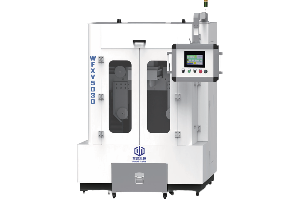
PV Module Manufacturing
Half-cut cell production, PERC, TOPCon, HJT cell cutting
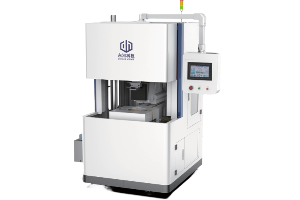
Silicon Wafer Production
Mono & multi-crystalline ingot slicing, ultra-thin wafers
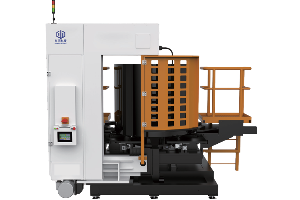
Semiconductor Industry
High-precision wafer cutting for electronics applications
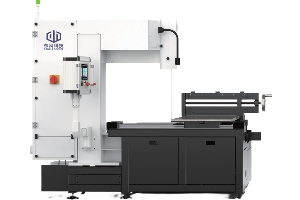
Solar Panel Recycling
End-of-life panel processing and material recovery
Solar Panel Cutting Efficiency Calculator
Estimate your production throughput and annual savings by upgrading to our high-speed solar panel cutting technology.
Production & ROI Calculator
Calculate how much more revenue you can generate by upgrading your cutting speed.
Current Parameters
Performance Uplift
Annual Revenue Increase
$0
with our machine (220 pcs/hr)
Kerf Loss & Yield Estimator
See how much material you save with our ultra-thin laser cutting technology vs traditional mechanical cutting.
Material Specs
Efficiency Gain
Material Saved Per Million Cuts
—
Our Laser Kerf: 15μm vs Standard: 40μm
Solving Complex Challenges
We leverage data-driven strategies and cutting-edge technology to deliver measurable outcomes.
Modernizing Legacy Banking Infrastructure
The Problem
A Tier-1 banking client struggled with slow transaction processing and security vulnerabilities due to fragmented on-premise servers, leading to a 15% customer churn rate.
Our Solution
Implementation of a Zero-Trust Hybrid Cloud Architecture. We encrypted all data flows and automated compliance reporting using custom AI-driven auditing tools.
40% Faster
Reduction in transaction latency and achieved 99.99% system uptime within 3 months.
Predictive Maintenance for Global Logistics
The Problem
Unplanned equipment downtime was costing a global manufacturer over $2M annually, creating bottlenecks in their Just-In-Time delivery model.
Our Solution
Deployment of Industrial IoT Sensors & Machine Learning models. We enabled the system to predict component failures 72 hours in advance, integrating directly with ERP.
$2.4M Saved
In annual operational costs along with a sustained 25% increase in production line efficiency.
Unified Patient Data Interoperability
The Problem
A hospital network faced critical data silos, making it impossible to secure share patient records across departments, severely impacting the quality of care.
Our Solution
Engineering of a FHIR-compliant Data Lake. This unified disparate records while strictly adhering to HIPAA regulations, giving clinicians real-time access.
100% Compliance
Passed all regulatory audits immediately and reduced patient administrative wait times by 35%.
Frequently Asked Questions(FAQs)
How is either a cutter or a laser cutter used in a solar panel cutter machine production line?
Depending on material requirements, the cutter can be a mechanical blade, a vibrating knife, or a non-detracting, scriptless, low-power laser ablation system. Use of concentrated infrared light enables crystalline silicon wafers or thin films to be processed in a cleaner, wear-free abrasion process, achieving very high-precision cuts at very high speeds. Later, mechanical blades or vibrating knives trim the backsheets or EVA layers. Modern equipment and plant layout integrate the production line and conveyor infrastructure to ensure efficiency and strict control of each module cut, enabling subsequent stringing and electrical welding.
What are the advantages of full automation with robotic arm solutions in photovoltaic manufacturing?
Robotic arm-integrated, fully automated manufacturing systems have improved output, repeatability, and safety. The robot arm can handle both mono- and poly-Si cells and orient them for stringer connections, and it directly feeds the OFC (Outfeed Conveyor) with cutting machines, solar stations, and testers. This substantially reduces human-induced defects in product handling, provides a cost-effective path to scale up PV manufacturing, and creates a significant opportunity for production-line traceability in solar panel production, enabling faster marking and testing cycles.
Should its cutting machine include an option to cut solar cells without inducing defects?
Indeed, advanced solar panel production solutions, such as non-destructive laser scribers and precision oscillating-blade cutting, are developed to minimize micro-cracks and defects in solar cells. Correct tool placement, enhanced process control, and proper materials are vital to maintaining clean cuts in crystalline silicon or film structures. Additionally, when testing and inspection are integrated into the product, densities are detected early and unwanted defects are eliminated, improving overall product quality.
What is the part played by the stringers and copper welding in the stage after cells have been cut?
Once the cells are cut and sorted, the stringer machine interfaces with the wafers to weld copper or silver-coated ribbons for stringing the cells. This is a crucial step to ensure that, as an essential component of solar panels, these strings remain correctly positioned on the conveyor, preventing undue stress on the fragile cells. Stringer operation bridges cutting and assembly operations, and, if needed, integrated testers use a diode test to verify electrical continuity in strings and identify defects before lamination.
How do solar panel manufacturing machines handle materials such as stainless steel frames and backsheet layers?
Solar panel manufacturing machines are equipped with appropriate tooling handling different raw materials: stainless steel frame components are cut, punched, and blanked with metal cutters, whereas backsheets and encapsulants are trimmed with oscillating knives or rotary blades. Layout planning and machine programming ensure each material is processed with appropriate feed rates and cutting profiles to ensure consistent fabrication and compliance with safety regulations and warranty requirements.
What features should I look for in a tester and marking system for PV production?
An efficient inline tester for PV manufacturing facilitates electrical IV curve tracing, insulation testing, and non-destructive imaging of hotspots or micro-cracks. To ensure traceability in the production plant, the identification system will be mandatory, with legible, permanent labeling that includes serial numbers and production data. The fitters and marketers should integrate with the assembly line, conveyor indexing, and line-solution software to ensure that PV solar panels are tested, marked, and traceable throughout manufacturing, minimizing defects and warranty claims over time.
How does layout and placement impact the economic production of solar panels?
A well-charged final motor with accurate position control will reduce handling time and material waste, improving efficiency and reducing costs. Proper plant layout in technology-defined processes, such as at the solar panel manufacturing machines, cutting, stringer, welding, lamination, and testers, will work wonders in terms of increased cycle time, leading to ramp-ups of mono-Si and poly-Si lines. A well-thought-out layout will lead to safer workflows and maintenance, reducing plant downtime.
What cutting machine options are available on the solar field that are good for smaller or laboratory-grade PV manufacturing?
Yes, there are several smaller solar panel manufacturing machines and desktop laser cutters adapted for research and small-scale photovoltaic production. They would be more flexible. You will be able to prototype certain areas: that is, actually cut solar cells and test assembly processes and materials without full production-line expenses. This is helpful for fabricators who are testing new layouts, materials, or single-robot arm routings before implementation.
![Polysilicon Material: Properties, Grades & Uses [Guide]](https://wiresawcutter.com/wp-content/uploads/2026/08/polysilicon-material-featured-150x150.webp)