Get in touch with DONGHE Company
-
Phone: +86 181-1645-5490
-
Email: Sales18@DongheScience.com

Filter
Showing the single result
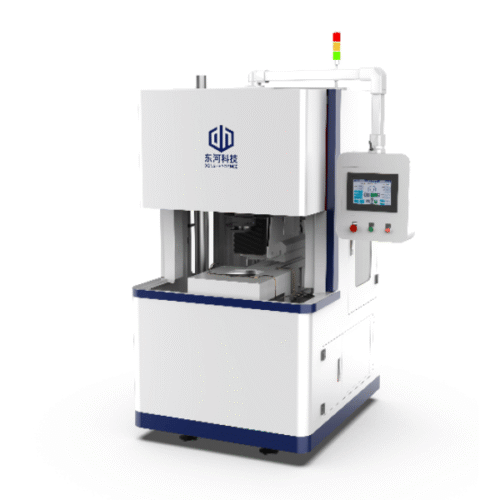
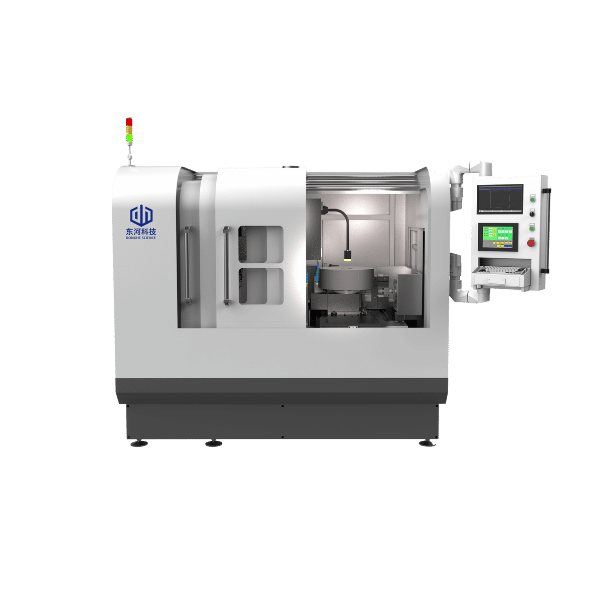
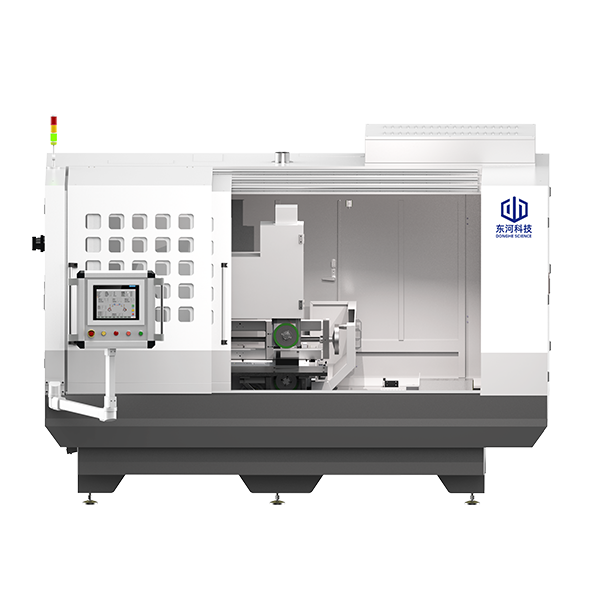
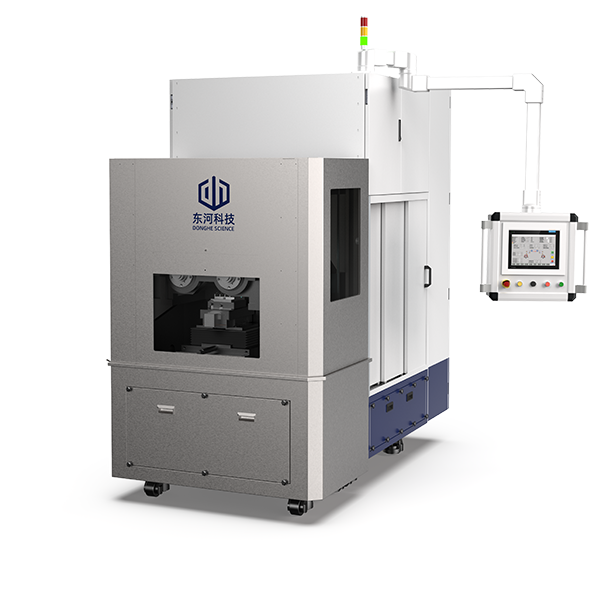
Vertical Internal Slicing Machine
Get Instant Quote
Vertical Internal Slicing Machine: The Complete Guide to Precision Wafer Cutting
Everything about wire saw technology for ID slicing of semiconductors, sapphire, SiC, and advanced materials processing. We offer unbeatable diamond wire saw cutting solutions that deliver super-precise results.
≤5μm
TTV Precision
<100μm
Kerf Loss
500+
Installations
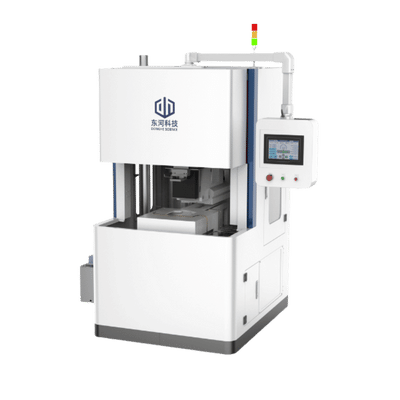
What is a Vertical Internal Slicing Machine?
The Internal Diameter Slicing Machine is also referred to as an Internal Diameter (ID) Slicer. It is a highly precise cutting apparatus for hard materials, capable of producing wafer thicknesses down to 0.1 mm. This peculiar diamond wire saw cutting machine cuts a wafer-thin, hard, and brittle material along an internal cutting edge or a diamond wire, respectively, at a very precise level of about 5 microns, achieving very high cutting precision with minimal material loss.
The phrase "internal diameter" points to cutting, wherein the cutting edge of the blade is nested inwardly to the inner circumference of the blade, such that the work to be cut is made to fit inside the blade ring itself. The benefits of the vertical configuration, on the other hand, are higher precision of gravity-based alignment during cutting and lower vibration.
The phrase "internal diameter" points to cutting, wherein the cutting edge of the blade is nested inwardly to the inner circumference of the blade, such that the work to be cut is made to fit inside the blade ring itself. The benefits of the vertical configuration, on the other hand, are higher precision of gravity-based alignment during cutting and lower vibration.
💡 Key Definition
A Vertical Internal Slicing Machine is a high-precision wafer-cutting machine that uses an internal-diameter cutting method for slicing and processing hard, brittle materials (semiconductor materials, Sapphire, SiC, etc.). The machine can cut hard and/or fragile materials with a TTV < 5µm and exhibits very low kerf loss.
Core Advantages of Vertical Internal Slicing
Ultra-High Precision
Achieve TTV (Total Thickness Variation) below 5μm with advanced tension control and vibration-dampening systems.
Reduced Material Loss
Minimize kerf loss by up to 40% compared to traditional methods, maximizing material utilization and reducing costs.
Versatile Processing
Process multiple hard and brittle materials, including Si, SiC, Sapphire, GaN, and optical glass, with consistent quality.
Compact Footprint
Vertical design requires less floor space than horizontal alternatives, optimizing your production facility layout.
How Does a Vertical Internal Slicing Machine Work?
It is essential to understand the functionality of a vertical internal slicing machine to optimize your cutting process and achieve the best possible results. The ID slicing process combines the best in precision mechanics, less-critical control systems, and optimized cutting parameters to deliver high-quality, sustained wafer production.
The Internal Diameter Cutting Principle
The traditional external ring cutting, for which the bar extends from the outside of the grind, is contrasted with internal ring cutting. In the form of annular blades, with the pressure being exerted on the workpiece internally, the inner ring profile imposes its tendrils of inherent advantages:
Reduced blade deflection
The blade is tensioned uniformly around its outer edge, minimizing bending during cuts
Better chip evacuation
Cutting debris naturally falls away from the cutting zone
Improved surface finish
Consistent cutting forces produce smoother surfaces
Enhanced precision
The geometry supports tighter tolerance control
Step-by-Step Cutting Process
1
Workpiece Mounting
A workpiece or ingot is clamped firmly between the precision spindles. Therefore, precise workpiece alignment is essential to meet exact TTV or bow/warp specifications.
2
Blade/Wire Tensioning
These should be tensioned to the specified values. Our tension-control system uses real-time sensing and automatically adjusts to keep your cutting conditions optimal.
3
Precision Feed
The workpiece is fed into the rotating blade or wire with feed precision. Feed rate optimization depends on material hardness, blade condition, and the desired surface finish.
4
Coolant Application
Coolant is supplied to the cutting zone of the workpiece, cooling it as it crushes through the cut zone, maintains a blanket lubrication on the blades to prolong their life.
5
Wafer Separation
After the wafer is released, it is carefully peeled from the workpiece. Automated collection systems can handle continuous wafering.
Vertical vs. Horizontal Orientation
The vertical configuration offers distinct advantages over horizontal machines:
✓ Benefits of Vertical Orientation
✔
Gravity assistance – Natural downward force helps maintain consistent cutting pressure
✔
Reduced vibration – Vertical alignment minimizes lateral forces that cause blade deflection
✔
Better chip removal – Gravity aids in evacuating cutting debris from the kerf
✔
Smaller footprint – Vertical layout requires less floor space in your facility
✔
Improved TTV – Typically achieves 30-40% better thickness uniformity than horizontal systems
Key Components of a Vertical Internal Slicing Machine
Understanding the key components of a dry etching system helps the evaluator assess equipment quality and make an informed purchase. All system components together enhance the precision, accuracy, and reliability of wafer slicing equipment operation.
Diamond Wire/Blade Assembly
The cutting element is the heart of any internal diameter slicing machine. Modern systems use either:
Diamond-coated annular blades – Traditional ID blades with electroplated or resin-bonded diamond particles
Diamond wire – Thin steel wire coated with diamond abrasives for ultra-thin kerf cutting
The choice depends on your material, precision requirements, and cost considerations. Diamond wire typically offers lower kerf loss (0.15-0.2mm vs 0.25-0.3mm for blades) but may have higher consumable costs.
Precision Tension Control System
Blade tension directly impacts cutting quality. Our advanced tension control systems feature:
Real-time tension monitoring with ±0.5% accuracy
Automatic compensation for thermal expansion
Programmable tension profiles for different materials
Predictive maintenance alerts for blade wear
Advanced Cooling System
Effective coolant management is essential for consistent precision wafer cutting:
Temperature-controlled coolant – Maintains ±0.5°C stability for thermal precision
Multi-stage filtration – Removes particles down to 1μm for clean cutting
Flow rate optimization – Adjustable delivery for different cutting conditions
Coolant recovery – Environmentally friendly recycling systems
High-Precision Motion Control
Sub-micron positioning accuracy requires sophisticated motion systems:
Servo motors with encoder feedback for precise feed control
Linear guides with preloaded bearings for smooth motion
Vibration isolation to minimize external disturbances
Real-time position compensation for thermal drift
Workpiece Mounting System
Secure, precise workpiece holding is critical for achieving target specifications:
Vacuum or mechanical clamping options
Auto-centering fixtures for quick setup
Multi-size compatibility (4" to 12" wafer capacity)
Optional automatic loading/unloading for production environments
Vertical vs. Horizontal Slicing Machine: Which One is Right for You?
The choice between vertical and horizontal slicers will depend significantly on the application requirements, production volumes, and desired precision. Let us analyze your requirements in detail to help you determine the right wafer dicing equipment investment.
| Feature | Vertical Internal Slicing | Horizontal Slicing |
|---|---|---|
| Cutting Precision (TTV) | <5μm achievable | 8-10μm typical |
| Bow/Warp Control | <15μm | <25μm |
| Kerf Loss | 0.15-0.25mm | 0.20-0.30mm |
| Floor Space Required | Compact (vertical layout) | Larger (horizontal extension) |
| Best For Materials | SiC, Sapphire, hard materials | General-purpose applications |
| Vibration Control | Superior (gravity-assisted) | Good |
| Chip Evacuation | Excellent (gravity-aided) | Good |
| Automation Options | Full automation available | Full automation available |
| Price Range | $80,000 - $400,000+ | $50,000 - $300,000+ |
💡 Recommendation
Choose a Vertical Internal Slicing Machine when:
Processing hard materials like SiC, sapphire, or GaN
Requiring TTV below 5μm
Space is limited in your facility
Maximizing material yield is critical (expensive materials)
Applications of Vertical Internal Slicing Machines
The versatility of vertical internal slicing machines frequently makes them indispensable across multiple high-tech industries. From semiconductor wafer cutting to LED sapphire substrate processing, these precision machines deliver consistent performance for very demanding applications.
Silicon Wafer Slicing for Semiconductor
Process monocrystalline and polycrystalline silicon ingots for IC manufacturing with exceptional precision.
TTV control <3μm for advanced nodes
Support for 4" to 12" wafer sizes
High throughput for production environments
SiC Wafer Cutting for Power Electronics
Silicon Carbide processing for EV power modules, 5G infrastructure, and renewable energy systems.
Optimized for ultra-hard SiC (Mohs 9.5)
Reduced subsurface damage
Cost-effective processing of expensive material
Sapphire Substrate for LED Manufacturing
Precision cutting of sapphire substrates for LED chip production and optical applications.
Crystal orientation preservation
Minimal surface damage for epitaxy
High yield processing
GaN Wafer Processing
Gallium Nitride wafer preparation for RF devices, power amplifiers, and optoelectronics.
Gentle processing for crack-sensitive GaN
Surface quality for epitaxial growth
Flexible thickness options
Solar Cell Wafer Production
High-volume silicon wafer slicing for photovoltaic cell manufacturing.
Optimized for cost-effective production
Consistent quality at high throughput
Minimal material waste
Optical & Advanced Materials
Process optical glass, quartz, gallium oxide, and emerging semiconductor materials.
Configurable for various materials
R&D and production capabilities
Expert process development support
How to Choose the Right Vertical Internal Slicing Machine
Investing in the slicing vendor already seems like a big decision. With our buying guide, customers will be guided to assess their requirements and select the most suitable vertical internal slicer for their application.
5-Step Selection Process
01
Define Your Application Requirements
Identify the materials you'll process (Si, SiC, Sapphire, etc.), required wafer sizes, thickness specifications, and precision targets (TTV, bow/warp). This determines the machine selection.
02
Assess Production Volume Needs
Review your production rate requirements – R&D/testing vs. production. Factors affecting the choice of automation level and machine capacity specifications include the production rate specifications.
03
Calculate Total Cost of Ownership (TCO)
Factor in not only purchase cost, but also consumables (blade/wire), maintenance, energy consumption, operators' training time and costs, and possible material savings realized through improved yields.
04
Evaluate Supplier Capabilities
Quality of technical support, availability of spares, training programs, and track record. A reliable supplier partnership is crucial to long-term success.
05
Request Samples or Demo
Request sample cuts from your actual material, or visit a reference customer, before making the final purchase; this will confirm machine performance for your application.
Price Range Overview
Understanding typical slicing machine prices helps with budgeting:
| Category | Price Range | Typical Features |
|---|---|---|
| Entry-Level / R&D | $50,000 - $100,000 | Manual operation, basic automation, smaller capacity |
| Mid-Range Production | $100,000 - $250,000 | Semi-auto, advanced controls, production-ready |
| High-End Production | $250,000 - $500,000+ | Full automation, highest precision, large capacity |
Smart Slicing Technology Optimizer
Calculate ROI, production capacity, and technical standards for Diamond Wire Sawing.
Economic Analysis
28.5%
Material Utilization Increase
+120
Extra Wafers Per Ingot (Approx)
*Based on comparison between ID Blade and Vertical Diamond Wire technology.
Throughput Calculation
~185,000
Estimated Annual Wafers
6.9 Hours
Cycle Time Per Ingot
*Calculated with 95% equipment uptime efficiency.
Quality Benchmarks
≤ 5.0 μm
Target TTV (Total Thickness Var.)
≤ 10.0 μm
Target Warp / Bow
Tech Insight: Vertical slicing significantly reduces TTV compared to horizontal methods by optimizing gravity distribution.
Vertical Internal Slicing Machine Specifications
Our internal-diameter cutting machine combines advanced diamond wire saw technology with precision engineering to deliver the best wafer-cutting performance for semiconductor and photovoltaic industrial applications.
Key Technical Features
- ✦ Vertical configuration for optimal coolant flow and debris removal
- ✦ High-precision servo-driven feed system with closed-loop control
- ✦ Advanced wire tension monitoring and automatic adjustment
- ✦ Integrated coolant filtration and temperature control system
- ✦ User-friendly HMI with recipe management and data logging
- ✦ Remote diagnostics capability for predictive maintenance
Compatible Materials
- ✦ Monocrystalline & Polycrystalline Silicon (Si)
- ✦ Silicon Carbide (SiC) substrates
- ✦ Sapphire wafers for LED and optical applications
- ✦ Gallium Nitride (GaN) materials
- ✦ Quartz, ceramics, and other hard brittle materials
Technical Specifications
Workpiece Diameter
2" - 8" (50mm - 200mm)
Wafer Thickness Range
0.1mm - 2.0mm
TTV (Total Thickness Variation)
≤ 5μm
Kerf Loss
< 100μm
Surface Roughness (Ra)
≤ 0.3μm
Diamond Wire Diameter
0.1mm - 0.3mm
Wire Speed
0 - 20 m/s
Feed Rate
0.1 - 5 mm/min
Automation Level
Semi-auto / Full-auto
Power Supply
380V 50Hz 3-phase
Machine Dimensions
1500×1200×2000mm (L×W×H)
Machine Weight
Approx. 2,500 kg
Frequently Asked Questions (FAQs)
How does a vegetable vertical slicer machine improve efficiency in slicing vegetables?
The vegetable vertical slicer machine, or vertical slicer, increases vegetable slicing efficiency by using a high-quality knife assembly, an optimized slicing area, and a continuous feeding system. The industrial models of these machines incorporate a conveyor system and pneumatic or hydraulic controls that maintain consistent cutting speed and thickness, reducing manual operation and increasing processing speed for home or commercial use.
How is an industrial vertical slicer machine different from a deli slicer machine?
The industrial vertical slicer machine is designed for mass production and continues to be operated in the same manner as other food-processing machines. Industrial vertical slicers feature heavy-duty circular blades or multiple blades, larger slicing areas, and large conveyors. Deli slicer machines are typically compact and designed for retail or light commercial use, often using a single circular blade that can be operated manually or semi-automatically. In comparison, industrial vertical slicers are designed for continuous operation and for maximum automation, resulting in a longer service life.
Can a compact vertical slicer machine be used for both home and commercial purposes?
Compact versions of the vertical slicer machine are available that bridge the gap between home and commercial use. These machines share the features of a commercial vertical slicer but are designed to fit the space constraints of a kitchen or operate in boutique food production environments. With high-quality knife systems, variable-width settings, and user-friendly controls, they deliver results comparable to a commercial machine while being easy to clean and safe to operate.
What types of cutters are available and how do they impact the speed in which the cutters slice vegetables?
Cutter options include circular blades, serrated knives, multi-blade assemblies, and specialized cutters designed for delicate items. The circular, high-quality multi-blade cutter typically delivers higher cutting speeds and more uniform slices. The material type and configuration of the blades, combined with whether they are operated pneumatically or hydraulically, will have the greatest impact on cutting speed and cut uniformity.
How can a vertical internal slicing machine be altered to accommodate different widths and cutting areas?
Adjustments to width and cutting area on a vertical slicing machine can be made using sliding guides to produce different widths and adjustable blade positions. Many industrial vertical slicing machines also offer an electronic control option that enables precise width adjustments. The compact version of the vertical slicing machine, on the other hand, typically has knobs or levers on the outside of the frame to make the same width and cut adjustments. All of these features enable customization of a range of product sizes, from thin deli-style slices to thick cuts of vegetables and fruit.
Is it challenging for an industrial operator to maintain a vertical internal slicing machine?
While maintenance requirements vary by vertical internal slicing machine model, industrial and state-of-the-art models are designed for ease of servicing. Typical maintenance tasks include lubricating moving parts, inspecting conveyor belts, checking pneumatic or hydraulic components, and sharpening or replacing knives. In addition, many manufacturers design machines with quick, easy access to the cutting area and modular parts to minimize downtime and enable continuous operation.
What are the safety features included with a high-quality vertical internal slicing machine?
The best vertical internal slicing machines typically include the following safety features: a safety guard, emergency stop buttons, interlocks that prevent the blade from operating with the guards open, and non-slip conveyor systems. (Pneumatic and hydraulic systems often include a pressure relief valve and a fail-safe valve.) Furthermore, many manufacturers have begun designing machines with ergonomic and safety innovations in mind, reducing operator fatigue and risk exposure in production settings.
Can a multi-functional vertical internal slicing machine cut different food items and produce?
Multi-functional vertical internal slicing machines can be designed to perform a variety of food slicing functions, including meat, cheese, bakery products, and vegetables. By simply changing blade styles (cutters), adjusting the width and cut speed, and configuring a specific conveyor setup, multi-functional machines can be very versatile, especially when used on a mixed production line. Some of the latest models are equipped with programmable recipes that let users quickly switch between product types while maintaining consistent quality.
Trending Blogs
![Polysilicon Material: Properties, Grades & Uses [Guide]](https://wiresawcutter.com/wp-content/uploads/2026/08/polysilicon-material-featured-150x150.webp)