Get in touch with DONGHE Company
-
Phone: +86 181-1645-5490
-
Email: Sales18@DongheScience.com

Ceramics diamond wire saw
Diamond Wire Saw for Ceramic Cutting: The Definitive Guide
Master accuracy in cutting alumina, silicon nitride, zirconia, and advanced ceramics, with final kerf width kept below 200 μm, surface Ra 0.3 μm, with three times the production rate through diamond wire saw cutting technology.
<200μm
Kerf Width
Ra 0.3μm
Surface Roughness
80 m/s
Max Wire Speed
30-50%
Material Savings
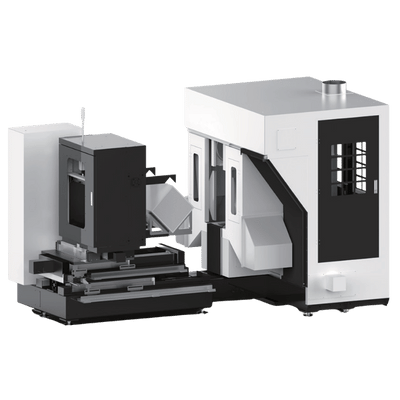
What is Diamond Wire Saw Cutting for Ceramics?
Diamond wire cutting is an advanced precision machining technique that uses a diamond-embedded wire to slice extremely brittle, hard ceramic materials. With diamond wire cutting technology, ceramics manufacturing processes are revolutionized for the production of advanced ceramic components, delivering greater efficiency and precision than conventional methods.
Contrary to conventional diamond blade saws or laser cutting, diamond wire cutting technology can realize extremely narrow kerf width (150-250 μm) and squelch surface finishes (Ra 0.3-0.5 μm) and minimal sub-surface damage, essential criteria for high-value ceramic applications in the semiconductor, electronics, medical, and aerospace industries.
Narrow Kerf Width
150-250 μm
Surface Finish
Ra 0.3-0.5 μm
Material Hardness
8-9.5 Mohs scale
Why Ceramics Need Specialized Cutting
Ceramic materials made of (though combining) alumina (Al₂O₃), silicon nitride (Si₃N₄), and zirconia (ZrO₂) are materially tough (8-9.5 Mohs scale) but are inherently brittle to break up the material support layer beneath. This unique combination leaves traditional machining highly inadequate — liquid-cooled, diamond-wire-saw-cutting machines enable controlled, low-thrust material removal.
Developed primarily for cutting silicon ingots for the electronics industry, diamond wire saw technology has since expanded to cut various technical ceramics, electronic ceramic substrates, and structural ceramic components. Modern endless wire-saw systems, specifically designed for diamonds, are sophisticated enough to handle anything from thin wafers to giant ceramic blocks, with the same precision.
How Diamond Wire Saw Cutting Technology Works
For cutting with a diamond wire saw, the process relies on the abrasive action of diamonds fused to a thin steel wire core. At wire speeds of 800-1600 m/min (typically used for ceramic cutting), diamond abrasives progressively grind away the material, helping to shape a precise cutting path with minimal mechanical stress.
The Cutting Mechanism
When cutting ceramics with a diamond wire saw, material removal occurs through two primary mechanisms:
Brittle fracture mode: At higher cutting forces, micro-cracks form ahead of the diamond grits, causing controlled material removal.
Ductile-regime cutting: At optimized parameters, material is removed through plastic deformation, resulting in superior surface quality.
Electroplated Diamond Wire
A single layer of diamond particles that is bonded to form a segment with its spacer bond. It offers faster, more efficient cut rates and a consistent kerf width. Extremely suitable and efficient in the production environments for cutting both alumina and silicon nitride.
Resin-Bonded Diamond Wire
Diamond-impregnated resin wears incrementally during processing, gradually releasing new abrasives. It results in a finer surface finish and is optimal for precision ceramic wafer slicing and laboratory use.
Brazed Diamond Wire
Diamonds are chemically bonded to the wire substrate, brazing in a high-temperature furnace. It is known for its highest diamond retention capabilities and long tool life in applications involving tough ceramics such as silicon carbide.
Critical Process Components
Wire drive system
Precisely controls wire speed and maintains consistent tension.
Workpiece positioning
Enables accurate feed rate control and multi-axis movement.
Coolant delivery
Provides lubrication, removes debris, and dissipates heat.
Tension control
Maintains optimal wire tension for straight cuts and extended wire life.
Types of Diamond Wire Saws for Ceramic Cutting
Selecting the most suitable diamond wire saw machine depends on productivity requirements, material systems, and precision specifications. Here is a broad comparison of the main types of ceramic cutting machines available:
| Machine Type | Wire Speed | Kerf Loss | Best Applications | Production Level |
|---|---|---|---|---|
| Endless Loop Wire Saw | Up to 80 m/s | 150-250 μm | Production cutting, alumina substrates, silicon nitride | High Volume |
| Reciprocating Wire Saw | 5-15 m/s | 200-350 μm | R&D, sample preparation, precision laboratory cutting | Low Volume |
| Multi-Wire Slicing System | 10-25 m/s | 100-180 μm | Wafer slicing, ceramic substrate dicing, batch production | High Volume |
| CNC Wire Saw | Variable | 150-300 μm | Complex shapes, contour cutting, automated production | Medium Volume |
Endless Loop vs Reciprocating: Which is Better for Ceramics?
For most ceramic cutting applications, endless diamond wire saws offer significant advantages:
Higher Cutting Speed
Wire speeds up to 80 m/s enable 3-4x faster cutting compared to reciprocating systems, dramatically improving throughput for production environments.
Superior Surface Quality
Constant unidirectional motion eliminates directional marks, producing smoother surfaces with Ra values consistently below 0.5 μm.
Simpler Maintenance
No need to alternate wire direction reduces mechanical complexity, minimizes vibration, and extends component life.
Lower Operating Cost
Shorter wire loops (2-10m) reduce consumable costs compared to long spool wire systems requiring 20-30m of diamond wire.
Ceramic Materials Suitable for Diamond Wire Saw Cutting
Cutting technology using diamond wire saws is a preferred method for fabricating advanced ceramic materials. Each material presents unique challenges that require specific cutting parameters and techniques. This guide provides the complete cutting process for ceramic materials using diamond wire saws:
Alumina Ceramics
Alumina ceramics are the most commonly used technical ceramics. When cutting is involved, processing parameters require meticulous optimization due to their high brittleness (Mohs 9) and their brittleness. Applications include electronic substrates, wearing components, and IC packaging.
Wire Speed1000-1400 m/min
Feed Rate0.2-0.4 mm/min
Surface Ra0.3-0.5 μm
Difficulty: Medium
Silicon Nitride
Diamond wire sawing technology excels at cutting silicon nitride because the material is strong and heat-resistant. The details include being used in bearings, turbine components, and cutting tools.
Wire Speed800-1600 m/min
Feed Rate0.1-0.4 mm/min
Surface Ra0.27-0.38 μm
Difficulty: Medium-High
Zirconia Ceramics
Zirconia machining requires special care to avoid disruptive transformation toughening. Eventually deployed in dental prostheses, hip implant inserts, and various precision mechanical parts.
Wire Speed900-1200 m/min
Feed Rate0.15-0.35 mm/min
Surface Ra0.4-0.6 μm
Difficulty: Medium
Aluminum Nitride
Aluminum nitride's water resistance enables the use of water-free coolants for substrate cutting. Important in thermal management for high-power electronic and LED substrates.
Wire Speed800-1200 m/min
Feed Rate0.1-0.3 mm/min
CoolantOil-based ONLY
Difficulty: High
Silicon Carbide
Silicon carbide's ultra-hardness (9.5 Mohs) makes cutting challenging; therefore, a diamond wire saw is a good choice for accurate SiC processing in semiconductors and power electronics.
Wire Speed600-1000 m/min
Feed Rate0.05-0.2 mm/min
Wire TypeElectroplated
Difficulty: Very High
LTCC / HTCC
Precise dicing without delamination is required for cutting low-temperature co-cured ceramics (LTCC) for electronic packaging. Diamond wire saw supplies the means for cutting through multiple ceramic layers cleanly.
Wire Speed1000-1400 m/min
Feed Rate0.2-0.5 mm/min
ChallengeLayer adhesion
Difficulty: Medium
Diamond Wire Saw vs Traditional Ceramic Cutting Methods
| Criteria | Diamond Wire Saw | Diamond Blade Saw | Laser Cutting | Water Jet |
|---|---|---|---|---|
| Kerf Loss | 150-250 μm | 300-500 μm | 100-200 μm | 500-1000 μm |
| Surface Ra | 0.3-0.5 μm | 0.8-2.0 μm | 1.0-3.0 μm | 3.0-6.0 μm |
| Heat Affected Zone | None | Minimal | Significant | None |
| Sub-surface Damage | <10 μm | 20-50 μm | 10-30 μm (thermal) | Abrasive embedding |
| Thickness Range | 0.1mm - 300mm+ | 0.5mm - 100mm | 0.1mm - 10mm | 1mm - 200mm |
| Material Waste | 30-50% less | Baseline | Low | High |
ROI Impact
A ceramic manufacturer processing 1000 pieces a month can save annually between $15,000 and $30,000 in material cost only by switching from blade sawing to diamond wire saw cutting on account of lesser kerf loss and lower scrap rates.
Industry Applications for Diamond Wire Saw Ceramic Cutting
Diamond wire saw cutting technology has critical applications in multiple high-tech-related industries. Here is how different applications use advanced precision ceramic cutting:
Semiconductor & Electronics
Dicing of ceramic substrates for IC packages, cutting of AlN and Al₂O₃ substrates for power modules, LTCC multilayer ceramic machining for 5G- and RF-applications.
Medical & Dental
Dental zirconia performance in the fabrication of dental crowns and bridges, bone-implant bioceramics manufacture, and hydroxyapatite manufacture for orthopedic applications.
Aerospace & Defense
Ceramic matrix composite (CMC) machining for turbine components, transparent ceramic cutting for armor and optical systems, and thermal protection system ceramics.
LED & Optoelectronics
Sapphire substrate cutting for LED manufacturing, optical ceramic processing, and fluorescent ceramic components for high-brightness lighting applications.
Industrial & Mechanical
Silicon nitride bearing components, ceramic cutting tool inserts, wear-resistant alumina parts, and precision mechanical components require tight tolerances.
R&D & Laboratory
Laboratory wire saw for material studies, sample segregation for SEM/TEM examination, prototype material development, and new determination of ceramic materials.
Ceramic Wire Saw Engineering Toolkit
Professional calculation and selection tools for precision ceramic cutting.
Cutting Efficiency Calculator
Results Estimation
Estimated Time:
-- min
Wire Consumption: -- m
Wire Consumption: -- m
RPM ↔ Speed Converter
Required RPM:
0 RPM
Tension Unit Converter
Kgf
--
--
Lbf
--
--
Wire Specification Wizard
Recommended Specification:
Click button to see recommendation
Engineering Precision: Ceramic Cutting Success Stories
Explore how our high-precision Diamond Wire Saws resolve complex challenges in slicing Advanced Ceramics, ensuring minimal material loss and superior surface quality.
Advanced Technical Ceramics
Eliminating Micro-Cracks in Alumina Components
The Challenge:
A medical device manufacturer struggled with edge chipping and micro-cracking when cutting high-purity Alumina rods using traditional circular saws.
Our Solution:
We deployed our Endless Diamond Wire Loop Saw with a 0.35mm diameter wire. The low cutting force significantly reduced thermal stress on the material.
Result: 98% Yield Rate
Surface roughness (Ra) improved to < 0.4µm, eliminating the need for secondary grinding.

Semiconductor & Piezo
Minimizing Waste in High-Value Piezo Materials
The Challenge:
For a sensor manufacturer, material costs were critical. Traditional cutting resulted in a wide kerf (cutting width), wasting 40% of the expensive piezoelectric raw material.
Our Solution:
Implemented ultra-fine diamond wire cutting (0.15mm wire diameter). This reduced the kerf loss by over 60% compared to previous methods.
Result: 30% Cost Saving
Material utilization increased dramatically, paying for the machine investment in 6 months.
Dental Zirconia
High-Throughput Slicing for Dental Labs
The Challenge:
A dental supply company needed to slice Pre-Sintered Zirconia blocks faster to meet market demand, but high speeds caused wire breakage.
Our Solution:
We customized a high-speed diamond wire saw with automated tension control. This maintained constant cutting pressure even at higher linear speeds (40m/s).
Result: 2.5x Production Speed
Achieved consistent slice thickness of ±0.02mm reliability at double the previous output volume.
Frequently Asked Questions (FAQs)
How does a diamond wire saw machine produce precise cuts in cutting ceramic?
A diamond wire saw cutting machine employs a continuous diamond wire or diamond wire loop with diamond particles embedded in a metal matrix to slice ceramic materials. Wire tension, feed rate, and cutting speed are all controlled by the machine as the wire moves relative to the workpiece, enabling precise cutting and high-quality cut surfaces. Wire saw machines typically include coolant systems and CNC control, which ensure consistent cutting parameters, reducing chipping in brittle advanced ceramics and extending the life of the diamond wire.
What are the advantages of using diamond wires and diamond wire loops in advanced ceramic cutting operations?
Diamond-cutting wires, cutting wires, and loops enhance cutting efficiency for advanced ceramics and difficult-to-machine materials while minimizing mechanical stress and heat. Wire saw cutting provides precise cutting with low kerf loss. It is ideal for cutting expensive materials such as quartz glass and semiconductor substrates. The wire's cutting speed depends on the diamond grain size, wire diameter, wire tension, and the material being cut.
Can we use a wire loop or an endless diamond wire saw to cut ceramic components used in semiconductor applications?
Yes. A diamond wire cut-loop saw, or an endless diamond wire saw, is standard in semiconductor and precision cutting applications where cut-surface predictability and tight tolerances are required. The CNC-controlled cutting machine uses optimized cutting tools to enable effective cutting of thin ceramics and other substrates, with a strict bypass-through-preventive-coolants system and proper wire tensioning to help prevent cracks in brittle materials.
How do cutting methods and cutting equipment influence the quality of ceramic cuts?
The actual cutting method will considerably regulate the cut quality - diamond wire cutting, versus blade or abrasive. Subsurface damage is diminished, and more difficult cuts are produced with the diamond wire saw, thereby optimizing cutting speed, feed rate, and wire diameter. Cutting equipment with stable wire-tension control, vibration damping, and precise feed systems improves cutting performance to meet specific requirements while maintaining consistent precision.
What are the factors determining the life of the wire when cutting ceramics by means of a diamond wire saw?
The service life of the wire depends on the diamond granule size, the number of coated particles per unit length, the wire diameter, the cutting speed, the feed rate, and the attainable abrasiveness of the ceramic material. Consequently, using the correct coolant, properly tensioning the wire, and avoiding excessive cutting tension ensure a long wire life. Continuous monitoring regarding the wear and timely wire replacement would further ensure cutting efficiency and reduce downtime in wire saw machines.
How would loop cutting compare with traditional cutting for brittle ceramics?
Diamond wire loop cutting often outperforms traditional cutting methods for brittle ceramics by reducing mechanical stresses and heat generation, which in turn produces fewer microcracks and yields better cut surfaces — making it the preferred method for precision cutting of brittle advanced ceramics and delicate workpieces. Additionally, continuous diamond wire systems provide more even wear, ensuring consistent performance over long cutting runs.
What are the typical applications to which diamond wire saws are subjected, and what cutting machines are they made from?
Typical applications include cutting ceramic substrates, quartz glass, semiconductor wafers, and advanced ceramics for electronics, optics, and tooling. From manual wire saws to high-precision CNC diamond wire saw cutting machines to wire saw cutting systems with automatic wire tensioning, coolant management, and programmable feed rates, there are cutting machines to meet specific needs, ensuring precision and efficient cutting.
What methods are available to operators who want to produce high-quality cuts with diamond wire saws on ceramics?
Operators are expected to select the appropriate diamond bead size and wire diameter, along with the corresponding cutting speed and feed rates. They should also consider keeping the right level of wire tension, the appropriate choice of coolant in place, and choosing the right machine, preferably CNC, for the replicating accuracy. Moreover, regular wire wear inspection and adherence to recognized wire-replacement practices would help ensure precise cutting, faster cutting rates, and longer wire life when cutting ceramics and other advanced materials.

![Polysilicon Material: Properties, Grades & Uses [Guide]](https://wiresawcutter.com/wp-content/uploads/2026/08/polysilicon-material-featured-150x150.webp)