
Get in touch with DONGHE Company
-
Phone: +86 181-1645-5490
-
Email: Sales18@DongheScience.com

Laboratory diamond wire saw
Laboratory Diamond Wire Saw:
The Complete Guide to Precision Sample Cutting
Master the art of precision cutting for semiconductors, crystals, ceramics, and advanced materials with expert insights on selection, operation, and optimization
Get Instant Quote
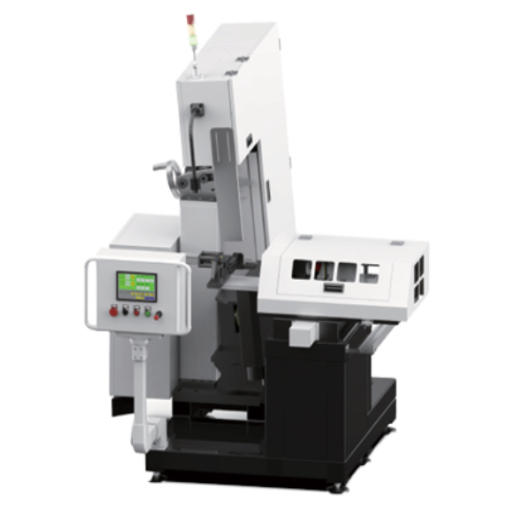
What Is A Laboratory Based Diamond Wire Saw?
Laboratory diamond wire saw cutting machines are a category of diamond wire saw cutting machines that offer higher precision. As opposed to industrial-class wire saws for activities such as quarrying and manufacturing solar wafers, laboratory wire saws are designed for sample preparation and research purposes. The industrial-type wire saws regularly employed in quarrying applications are not made for the precision cutting requirements of laboratory research.
Performed utilizing a thin steel wire (usually between 0.08 and 0.70 mm in diameter) which is coated with diamond particles-the machine exploits diamond wire cutting technology. This technology is capable of cutting through several hard and brittle materials, with both kerf and surface losses being almost zero. These features are very important in semiconductor wafer processing, TEM sample preparation, and failure analysis applications.
Key Advantages Over Traditional Cutting Methods
Minimal Kerf Loss
Kerf losses when using a diamond wire are in the order of only 0.2 to 0.5 mm. It can be critical for materials such as SiC wafers.
Zero Thermal Damage
Cutting at slower speeds with proper coolant flow can eliminate heat-affected zones and preserve the microstructure for accurate measurement.
Minimal Subsurface Damage
Gentle abrasive attack with a bit of subsurface damage and a mere increase in post-cut polishing requirements.
Material Versatility
One machine, with motors like SiC (Mohs 9.5) and soft polymers, works well with various materials across a range of parameters.
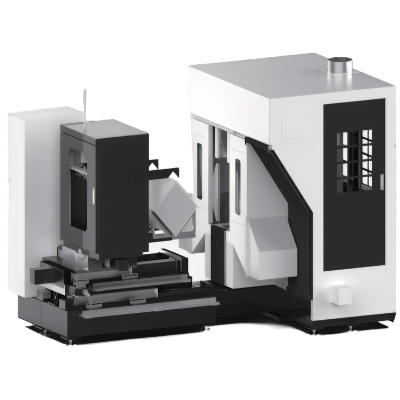
How Does a Diamond Wire Saw Work?
The very principle behind a diamond wire saw is just so simple, yet brilliantly effective. This is when a continuous loop or spool of quite thin steel wire that has been coated with diamond grit particles (30 to 100μm typically) is set into motion with controlled linear speed (5 to 15 m/s). The workpiece is fed into the cutting zone at precisely controlled rates.
Material gets removed mainly by a combination of micro-scratching and micro-fracturing as the diamond particles simultaneously abrade the material surface. The feed rate to wire speed (Vf/Vc ratio) is a critical parameter-when the ratio is low, smooth surfaces will result but at a cost of the cutting speed, while a high ratio could up throughput but at the cost of finish quality.
Generally, unlike with rigid blade cutting, the flexible wire easily conforms to the shapes of the sample, thus reducing induced stresses. That is why precision wire saw technology is the best-suited for cutting fragile crystals, multi-layer semiconductor substrates, and other various materials prone to chipping or cracking.
Key Components of a Lab Wire Saw
Diamond Wire
The cutting element, with diameters available from 0.08mm to 0.5mm having either an electroplated, resin-bonded, or brazed diamond coating
Wire Drive System
Motors and pulleys to maintain wire tension and linear velocity
Sample Stage
Precision XYZ position system with rotation capability for oriented cuts
Feed Mechanism
Having control over feed rate, which determines the rate at which the sample advances into wire
Coolant System
It delivers the cutting fluid used for lubrication, debris removal, and thermal management
Control System
From manual controls to complete CNC automation-all programmable sequences for cutting
Types of Laboratory Diamond Wire Saws
Laboratory Wire saws are classified according to different aspects such as wire configuration, control system, and cutting rate. Knowing these distinctions will guide you to the right diamond wire saw cutting machine for the intended purpose.
By Wire Configuration
Endless Loop Diamond Wire Saw
The endless diamond wire saw operates with a continuous loop of diamond wire moving in one direction without acceleration/deceleration cycles of reciprocating systems. The advantages include:
Higher speeds of cut, up to 25 metres per second.
No wire marks to be found due to change in direction.
The surface finish is more uniform.
Excellent for high-precision applications in laboratory.
Reciprocating Spool Wire Saw
It usually consists of long wire coils wound on the spools, which move back and forth. Although it is more expensive in terms of wire cost, reciprocating systems leave visible marks at change of direction points. It works best when:
The workpieces are larger and require long wire lengths.
Applications where surface blows can be cleaned up.
Budget laboratories.
By Cutting Capacity
| Category | Sample Size | Typical Applications | Price Range |
|---|---|---|---|
| Small/Desktop | Up to 2″ (50mm) | TEM samples, small crystals, IC analysis | $5,000 – $15,000 |
| Medium | Up to 6″ (150mm) | Wafer sectioning, material research | $15,000 – $35,000 |
| Large | Up to 12″ (300mm) | Full wafers, large samples | $35,000 – $50,000+ |
| Industrial | 24″+ (600mm+) | Ingot cropping, production cutting | $50,000+ |
By Control System
Manual Control
Simple hand setting operation, suitable for relatively straightforward cutting applications
Semi-Automatic
Programmable feed with automatic cutting operations-performance characteristics should be very balanced
Full CNC
3D digital control to provide automatic sculpting in a sequence of operating stages ordernot only going to be necessary for the more complex, repeatable cutting techniques
Advanced Laboratory Diamond Wire Saw Toolkit
Precision Cutting Configurator
Cutting Requirements
Recommended Technical Setup
—
Wire Speed–
Feed Rate–
Wire Type–
Material Savings Analysis
Cost Variables
Annual Efficiency Gains
Total Savings with Diamond Wire
$0.00
Based on kerf reduction from 1.0mm to 0.3mm [cite: 164]
Applications of Laboratory Diamond Wire Saw
Cutting machines for diamond wire saws are indispensable in different applications where precise cutting and the integrity of the samples are vital prerequisites.
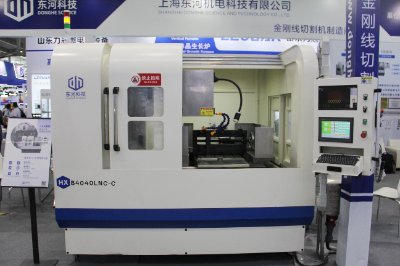
Semiconductor & Photovoltaic
Silicon wafer cutting, SiC and GaN substrate preparation, IC failure analysis sample prep. This is highly essential for the research and development in the power electronics and next-generation semiconductors.
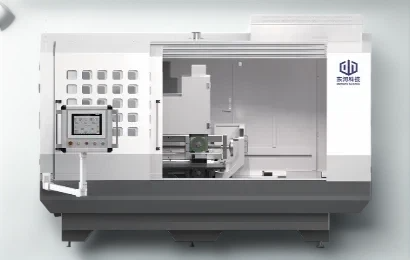
Materials Science Research
Transmission electron microscopy (TEM) sample preparation, cross-section inspection, initial characterization of novel materials. Especially useful for academic and research institutions conducting studies on material properties.
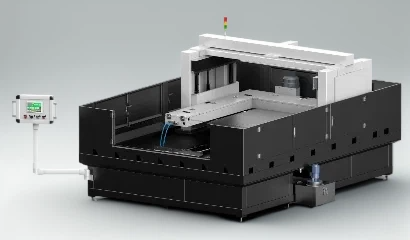
Optical & Optoelectronic
Sapphire crystal cutting for LED substrates, quartz frequency control components, precision sectionalization of optical glasses for lens creation.
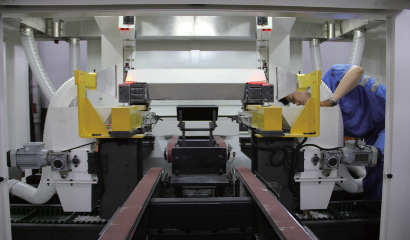
Advanced Ceramics
Ceramic cuts of engineered materials, like Al₂O₃, ZrO₂, AlN and piezoelectric materials, for electronic packaging, thermal management, and other specialized applications.
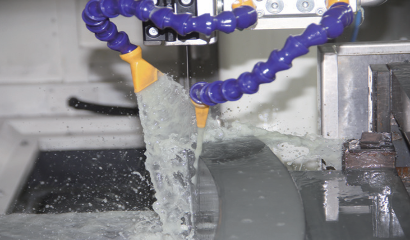
Quality Control & Failure Analysis
Metallographic sample preparation, IC package decapsulation and defect analysis: Used in the QC labs for incoming inspection and failure analysis.
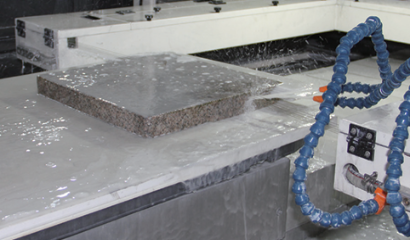
Geological & Mineralogy
Cutting of rock and mineral samples for thin section preparation, sectioning of core samples, and geological studies.
Material Cutting Parameters Guide to Laboratory diamond wire saw
Optimizing diamond wire saw cutting parameters for different materials is critical for achieving quality results. This material cutting guide provides recommended starting parameters based on extensive laboratory testing.
| Material | Hardness (Mohs) | Wire Diameter | Wire Speed | Feed Rate | Coolant | Notes |
|---|---|---|---|---|---|---|
| Silicon (Si) | 7 | 0.12-0.18mm | 8-15 m/s | 0.3-1 mm/min | Water-based | Standard semiconductor cutting |
| Silicon Carbide (SiC) | 9-9.5 | 0.20-0.30mm | 5-10 m/s | 0.1-0.3 mm/min | Water-based | High diamond concentration wire |
| Sapphire (Al₂O₃ crystal) | 9 | 0.18-0.25mm | 6-12 m/s | 0.2-0.5 mm/min | Water-based | Orientation-dependent cutting |
| Alumina Ceramic (Al₂O₃) | 9 | 0.20-0.30mm | 5-10 m/s | 0.2-0.5 mm/min | Water-based | Avoid edge chipping |
| Quartz Crystal | 7 | 0.15-0.22mm | 8-15 m/s | 0.3-0.8 mm/min | Water-based | Crystal orientation matters |
| GaAs (Gallium Arsenide) | 4.5 | 0.10-0.15mm | 3-8 m/s | 0.1-0.3 mm/min | Water-based | Very brittle – low speed! |
| Optical Glass (BK7) | 5-6 | 0.12-0.18mm | 5-12 m/s | 0.3-0.6 mm/min | Water-based | Minimize edge chipping |
| Zirconia (ZrO₂) | 8-8.5 | 0.18-0.25mm | 5-10 m/s | 0.2-0.4 mm/min | Water-based | Tougher than alumina |
⚠️ Important Notes
- Parameters are starting recommendations; optimize based on your specific requirements
- Always use appropriate wire tension (typically 10-30N depending on wire diameter)
- Ensure adequate coolant flow to prevent wire overheating and diamond damage
- For materials not listed, start with conservative parameters and adjust incrementally
Common Problems & Solutions of Laboratory diamond wire saw
Even experienced operators must confront challenges when using diamond wire cutting machines. Understanding common challenges and their solutions will help the user maintain cuts at the highest quality and extend equipment life.
Wire Breakage in Cutting
Symptoms:
Wire cuts through without any warning, especially in hard material cutting or changing directions (for reciprocating saws).
Common Causes:
Excessive wire tension, worn wire, feed rate too high, incomplete coolant, and wire fatigue at joints.
Solution
Lower the tension on the wire a little. Bring down the feed rate. Keep coolant flow going consistently. For reciprocating saws, if the wire is fatigued or has reached 50-100 cuts on silicon, replace it. Every other day or so, we must inspect the wire for loss of diamonds.
Poor Surface Finish/High Roughness
Symptoms:
Cut surface shows visible scratches, grooves, or uneven texture. Surface roughness exceeds specification.
Common Causes:
Wire speed too high, inadequate wire tension, worn diamond abrasive, contaminated coolant, vibration in the machine.
Solution
Consider decreasing the wire feed speed by 20%-30%. Raise the wire tension to safe limits. Replace the old wire with a new one. Clean the coolant tank or replace the coolant itself. Retighten all the mechanical connectors. For final cuts, consider using finer-grit diamonds in wire form.
Excessive Kerf Loss
Symptoms:
Kerf exceeds a wire diameter by more than 0.1mm. Also results in excessive material waste on expensive substrates.
Common Causes:
Whole in wire accompanied by bend or damaged wire, wire vibration/wobble, and worn guide rollers.
Solution
In simple terms, the higher the tension, the lesser the lateral vibration. Regularly inspect guide rollers. A thinner wire size will be feasible in a sample evaluation. One also has to reduce the wire speed to reduce damping if it causes vibration. Make sure all guide rollers are properly aligned.
Edge Chipping on Brittle Materials
Symptoms:
Tough materials create the chipping and micro-fractures seen at the glazed or semiconductor substrate boundaries.
Common Causes:
High feed rates, insufficient support, wire entering/exiting wrong at angle, sharp transitions.
Solution
Decrease the feed rate near the cut entry and exit points. Use backing materials to support the exit cut zone. Employ finer diamond grit wires. Make sure the sample is secured with no vibration and mounted in wax for fragile samples.
Subsurface Damage Layer Too Deep
Symptoms:
A considerable amount of grinding is needed to reach the non-damaged portion. Microcracks are observed in the cross-sectional analysis.
Common Causes:
Too aggressive rough cuts, too much force applied, or too much diamond grit wire.
Solution
Use a finer diamond grit wire (325 mesh or higher). Slow down the feed rate to remove ductile material. The tension wire is slightly lower. Instead, you can suggest a two-pass operation – a rougher initial cut followed by a cut with finishing/masking parameters.
Short Diamond Wire Lifespan
Symptoms:
Rapid deterioration in wire-cutting efficiency. Diamond sparkles are visible with magnification and a higher operational cost.
Common Causes:
Cutting too fast, inadequate cooling, wire rubbing on fixtures, and poor quality wire.
Solution
Optimize the cutting parameters per the material guidelines. Ensure there is sufficient cooling at the workpiece interface. Verify that the wire path is clear of obstructions. Only choose high-quality wire. Implement a wire-wear monitoring program.
How to Choose the Right Laboratory Wire Saw
Selecting a diamond wire saw for the required precision and accuracy essentially comes down to matching the application’s requirements to the equipment’s capabilities. Here is the recommended procedure based on the target criteria that should be followed:
1
Define Your Material Requirements
List all the materials that you would like to cut by indicating their hardness (e.g., Mohs scale or Vickers), brittleness, tolerance to stress, and thermal stability. Harder materials, such as SiC (Mohs 9.5), require tougher wires and lower machining speeds than silicon (Mohs 7).
2
Determine Sample Size Range
Determine the maximum feasible sample dimensions. Select a machine that is 20-30 percent larger than your most significant sample to accommodate appropriate fixturing and remain in a stable cutting mode.
3
Assess Surface Quality Requirements
TEM preparation:
Requires extremely low damage – excellent wire cut on up to 0.1-0.15 mm wire systems
Metallography:
Medium requirements – usually a normal wire cut on 0.2-0.3mm wire systems is quite enough
Production cutting:
Priority is on speed-choose a really high-capacity endless-loop system
4
Consider Throughput Needs
High-volume laboratories require CNC or other large-scale automation and endless-looping systems; lower-volume research applications require flexibility more than speed.
5
Evaluate Total Cost of Ownership
Consider equipment costs, consumables (e.g., wire and coolant), maintenance requirements, and training needs. The higher upfront investment usually yields a much better long-term return through longer wire life and lower labor costs.
Selection Quick Guide
University research lab
Desktop endless loop saw with CNC — balances precision, versatility, and budget
Semiconductor FA lab
Medium-capacity CNC system with microscope viewing option
Materials testing service
High-capacity automated system for throughput
R&D prototype shop
Manual/semi-auto system for flexibility with various materials
Real-World Precision: Client Success Stories
Discover how our Laboratory Diamond Wire Saws solve critical challenges in Semiconductor, Materials Science, and Failure Analysis.
Semiconductor R&D
SiC Wafer Slicing: Eliminating Breakage
The Challenge
Transitioning to Silicon Carbide (SiC) caused frequent wire breakage and surface roughness >5µm with traditional saws.
Our Solution
Deployed Endless Loop Wire Saw with 0.18mm electroplated wire and optimized tension (150g) specifically for hard materials.
Valid Results
- 50+ hours continuous cutting (Zero Breakage)
- Surface roughness reduced to <0.8µm
Academic Research
Fragile Perovskite Crystals: Reducing Waste
The Challenge
Rare, brittle crystals were disintegrating during cutting. High kerf loss was wasting thousands of dollars in synthesized material.
Our Solution
Implemented a gravity-fed Desktop Diamond Wire Saw with 0.08mm ultra-fine wire and custom wax mounting fixtures.
Valid Results
- 100% sample integrity (No fractures)
- Est. $15,000 material savings via reduced Kerf
Failure Analysis
TEM Prep: Sub-Micron Precision
The Challenge
Deep subsurface damage from blade saws increased ion milling time excessively, delaying critical IC failure analysis reports.
Our Solution
Used Benchtop Wire Saw with slow-speed cutting (<1 m/s) and non-aqueous coolant to prevent corrosion and smear.
Valid Results
- Success rate increased from 60% to 95%
- Reduced downstream polishing time by 40%
Frequently Asked Questions (FAQs)
What is zenith diamond wire saw and how does it work for cutting brittle materials?
A diamond wire saw is a precision cutting tool that uses a diamond-embedded wire (this wire is normally made up of a continuous loop) to slice samples with little mechanical stress. It is applicable for particularly fragile materials such as samples of sapphire, ceramics, or materials being used in research and development, mainly because the fine diamond wire dampens vibrations and deformation, reducing chipping and crack which would be caused by other sawing files.
How does a diamond wire work and what are the common wire sizes in mm?
As such, a cutting mechanism is accomplished on workpieces by the diamond wire, which is driven in a continuous loop over a series of pulleys—the most rational of all of the practical machines. The wire diameters are used in millimeters and normally fall in the very thin range (0.2 to 0.6 mm) for high-precision cuts, depending on the volume of material to be removed, whereas thicker wires are employed for mid-sized sections. The size in millimeters determines the cut size, material removal rate, and surface finish.
What advanced cutting capabilities and opportunities are featured on a modern machine?
Common, if not all, best practices in most, if not all modern laboratory-type diamonds saws presently often advocate for digital control of the feed, tension, wire speed, and programmable cutting cycle—a level of inherent automation. Digital control is generally established for repeatability in research and R&D and offers fine control in particle size and diamond make-up to lower heat build-up, raise cutting efficiency and, thereby, throughput.
What sample-stage and attachment options make the saw suitable for cutting various specimens?
Various custom-made sample stages and attachments—vacuum chucks, clamps, and rotary turntables—allow the machine to deal with samples across different sample sizes and shapes, from prisms, cubes, to wafers. Similarly, custom rulers have been developed for metallographic preparation, polishing, and careful trimming of delicate photovoltaic cells, making the saw suitable for cutting and post-cutting processing with minimal handling damage.
How does the mechanical structure of a wire saw maintain its rigidity under deformation to confer highly precise sec-tioning?
Rigid mechanical structures and precision guides offered by a wire saw would contribute to damping any vibrations and deflections that would be induced during the cutting of some sections, and then less deformation of sections with dimensionally more accurate results. This stability, combined with controlled wire tension and speed, enables cutting sessions that produce highly accurate bundles with minimal damage to heat-sensitive materials.
Could the wire saw used in the lab be used to section metallographic samples to minimize heat buildup?
Yes, wire saws are widely used for metallographic sectioning because they produce thin, clean sections, reducing the need for aggressive material removal. The combination of controlled feed rates, cooling fluids, and a thin diamond rope architecture helps prevent heat buildup, keeping picostructures undisturbed and avoiding artifacts in subsequent optical analysis.
What materials and industries these saws are perfect for cutting?
Laboratory diamond wire saws are useful for a wide variety of materials and industries such as semiconductor, photovoltaics, sapphire optics, material science, and jewelry. They are especially suited for use in cutting brittle ceramics, single crystals, glass, composite workpieces, where broken pieces have to be reduced to a minimum and dust has to be prevented as much as possible due to traditional sawing methods.
How does the endless wire segment and the wire length, up to meters, affect maintenance and operation costs?
The endless wire with replaceable segments permits continued running and reduces maintenance effort: segments wear down and could be replaced without stripping down the complete loop. Long wire lengths comprising the micrometer range fit diverse machine arrangements; the longer loops appropriately help in an easy installment and yet are highly prone to blemishes. Care must be taken to manage them to minimize waste and maintain effective cutting performance over time.
Which automation features and advanced functions could improve workflow without damaging the samples?
Automation features such as programmable multi-cut sequences, automatic feed control, and integrated coolant management increase capacity by reducing operator involvement and ensuring consistent set cutting parameters. Advanced sensors and feedback loops help prevent situations that could harm fragile specimens, ensuring consistent quality across high-volume research and manufacturing environments.
Trending Blogs

![Polysilicon Material: Properties, Grades & Uses [Guide]](https://wiresawcutter.com/wp-content/uploads/2026/08/polysilicon-material-featured-150x150.webp)