
Get in touch with DONGHE Company
-
Phone: +86 181-1645-5490
-
Email: Sales18@DongheScience.com

Filter
Showing all 2 results


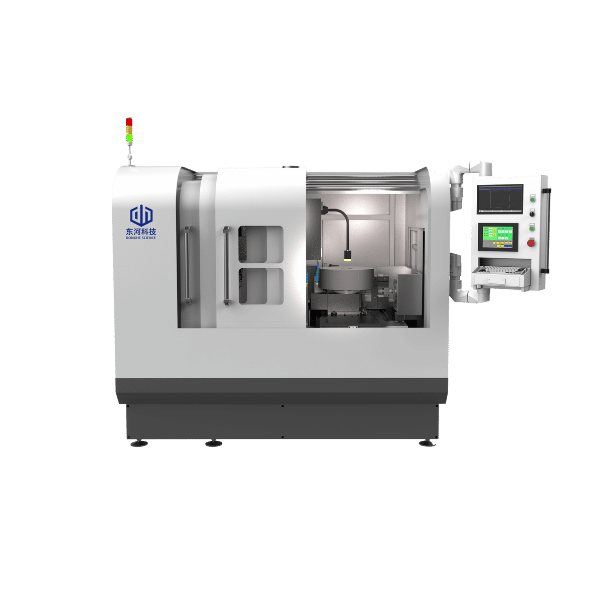
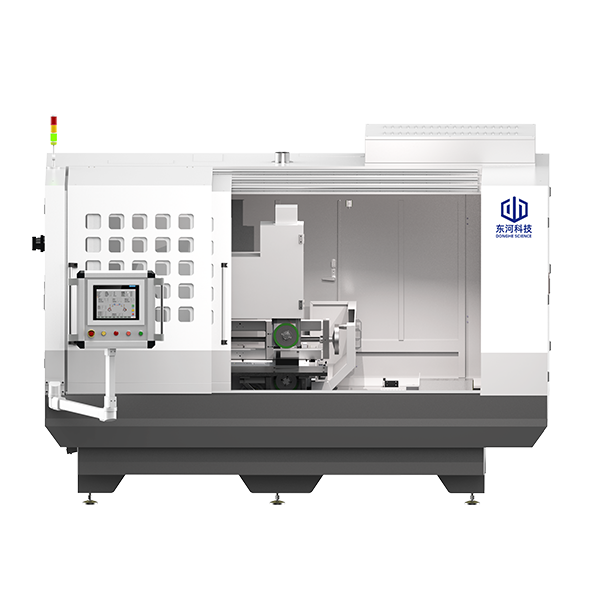
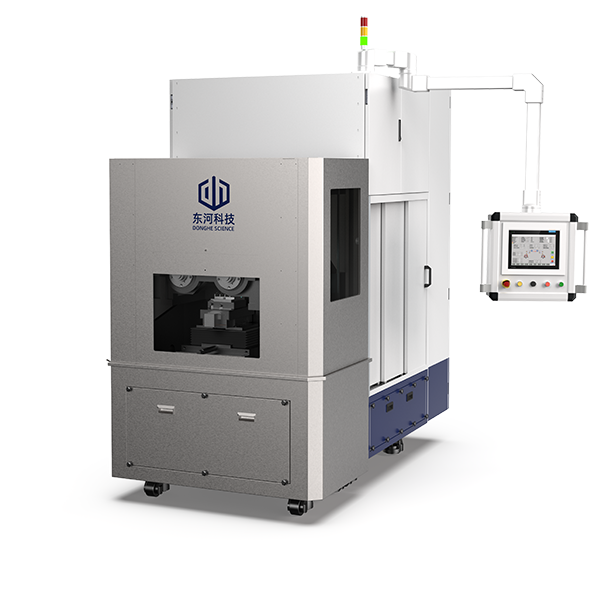
Single wire saw
Single Wire Saw: The Ultimate Guide for Precision Cutting
Everything you need to know about single wire saw machines, endless diamond wire technology, and how to achieve superior cutting results for silicon, sapphire, ceramics, and other hard materials.
Kerf Loss: 0.35-0.50mm
Tolerance: ±0.02mm
Wire Speed: Up to 80m/s
Factory Direct Pricing
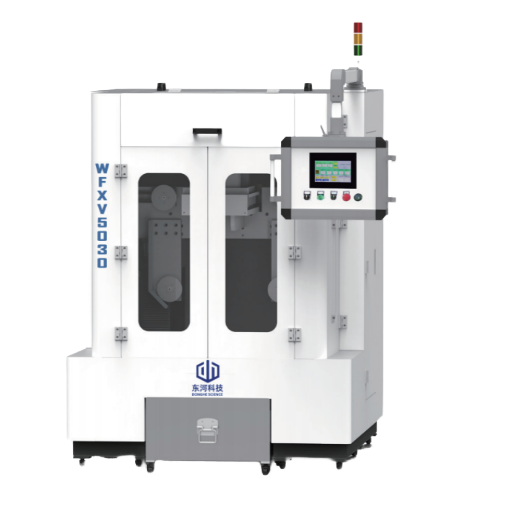
What is a Single Wire Saw?
The single-wire saw uses a thin strand of diamond grit wound around the material to be separated, which is pulled under tension by a motor in the machine, cutting with high precision and leaving an exceptional finish with minimal material waste.
Diamond wire saws have essentially obsoleted earlier ablation technologies for cutting hard, brittle materials such as advanced ceramics and porcelain. Unlike those of an inner diameter (ID) saw or a band saw, saw cuts with a wire are very thin, being less than 0.2 mm in thickness, with less surface roughness than 1 μm, and are chosen for high-grade slicing of semiconductor wafers, optical components manufacturing, and glass or ceramic processing.
< 0.2 mm
Cut Thickness
< 1 μm
Surface Roughness
80 m/s
Running Speed
There has been significant evolution in this technique since it first emerged. In contrast, today's endless diamond wire sawing systems use a continuous wire running at approximately 80 m/s and have driven unprecedented advances in turnaround and surface finish compared with earlier reciprocating designs.
Single Wire Saw vs Multi Wire Saw: Key Differences
| Feature | Single Wire Saw | Multi Wire Saw |
|---|---|---|
| Wire Configuration | 1 wire (endless loop or spool) | 100-1000+ parallel wires |
| Best For | Cropping, sampling, custom cuts, R&D | High-volume wafer production |
| Flexibility | ★★★★★ Excellent | ★★☆☆☆ Limited |
| Throughput | Lower (1 cut at a time) | Higher (hundreds of cuts simultaneously) |
| Setup Time | Fast (minutes) | Slow (hours) |
| Capital Cost | $30,000 - $200,000 | $500,000 - $2,000,000+ |
| Typical Materials | All hard & brittle materials | Primarily silicon wafers |
Key Insight
For most manufacturing plants that involve multiple materials or require frequent changeovers, a single-wire-saw system may be a better option for the best trade-off between capability and flexibility. Multiform wire-saw systems should be kept for high-volume silicon wafer production lines.
How Single Wire Saw Technology Works
Our diamond wire saw cutter features a loop system that allows the diamond wire to rotate continuously around precise guide wheels. The high-speed, diamond-coated wire cuts in a single direction and efficiently abrades the strongest materials, generating minimal stress and heat.
Continuous One-Way Cutting
Unlike the reciprocating saw, our continuous-loop cuts in one direction without reverse motion, preventing wire marks and boosting efficiency.
PLC Tension Control System
Advanced servo tensioning, using load-cell feedback, keeps wire tension steady throughout the cut and delivers consistent results.
Programmable Feed Control
The feed-rate control is set to optimize for different materials, as silicon applications differ from sapphire and ceramics.
Integrated Coolant System
Closed-loop coolant circulation removes debris and controls temperature, resulting in clean cutting with minimal thermal damage.
How to Choose the Right Single Wire Saw
When selecting the best Diamond Wire Saw cutting machine for your needs, you will need to consider the materials, thicknesses, volumes, tolerances, and budgetary constraints.
Step-by-Step Selection Guide
1
Define Your Material Requirements
List all materials you need to cut (current and future). Consider:
- Material hardness (Mohs scale)
- Maximum workpiece dimensions (diameter × length)
- Required surface finish (Ra value)
- Tolerance requirements (TTV, bow, warp)
2
Assess Volume & Throughput Needs
Calculate required capacity:
- Cuts per day/week/month
- Batch sizes
- Growth projections (2-5 year horizon)
- Single shift vs multi-shift operation
3
Evaluate Machine Specifications
Match machine capabilities to requirements:
- Cutting capacity (X, Y, Z axes)
- Wire speed range
- Tension control system (manual vs servo)
- Automation options (auto-loading, recipe storage)
4
Consider Total Cost of Ownership
Look beyond purchase price:
- Wire consumption rate
- Maintenance requirements
- Energy consumption
- Spare parts availability
- Training and support costs
5
Request Sample Cutting Test
Before placing an order, you can run free cutting trials on your actual material. That is the best way to confirm the machine's capabilities and obtain benchmarks for your specific application.
Key Specifications to Compare
| Specification | Entry Level | Mid-Range | High-End |
|---|---|---|---|
| Max Cutting Diameter | 100-200mm | 200-450mm | 450-1000mm+ |
| Wire Speed | Up to 40 m/s | Up to 60 m/s | Up to 80 m/s |
| Tension Control | Manual/Pneumatic | Servo-controlled | Closed-loop servo |
| Position Accuracy | ±50μm | ±20μm | ±5μm |
| Automation Level | Manual operation | Semi-automatic | Full CNC, recipe storage |
| Price Range | $30,000-$60,000 | $60,000-$150,000 | $150,000-$400,000+ |
Types of Single Wire Saw Machines
A diamond wire cutting machine may be configured for multiple applications, material sizes, and production requirements.
Vertical Gantry Wire Saw
The wire moves horizontally while the workpiece stands vertically. Suitable for cutting silicon ingots, large optical glass, and ceramic blocks. Cutting diameter: up to 450mm.
Horizontal Wire Saw
The wire runs parallel to the ground with a horizontal workpiece mounting plate. Best for slicing operations, sapphire-substrate cutting, and materials requiring gravity-assisted debris removal.
Benchtop Laboratory Wire Saw
A compact precision wire saw for R&D, sample preparation, and small-scale production. Perfect for use in universities, research labs, and quality control departments.
Custom/Special Purpose
Customized solutions for special uses: extra-large cutting (larger than 1000mm), production lines programmed to run automatically, or unique material geometries.
Machine Selection by Application
| Application | Recommended Type | Key Specifications |
|---|---|---|
| Silicon Ingot Cropping | Vertical Gantry (ESG Series) | 300-450mm capacity, auto-loading optional |
| Sapphire/LED Substrates | Horizontal Precision | High tension control, fine wire (0.35mm) |
| Optical Glass Slicing | Horizontal Multi-cut | Stackable cutting, rotary table option |
| SiC/Hard Materials | Heavy-duty Gantry | High power, robust wire tensioning |
| R&D/Lab Samples | Benchtop (ESV Series) | Compact, easy operation, low cost |
How Does a Single Wire Saw Ensure a Precise Cutting Surface?
Controlling the Cutting Process for Optimal Surface Finish
Achieving a high-quality surface is essential under various material-processing conditions, and single-wire saw machines are used for this purpose. These saws can produce exceptionally shiny, super-smooth surfaces by precisely controlling variables such as wire speed, wire tension, and feed rate. The inclusion of a coolant, etc., reduces friction and, by doing so, most reliably reduces thermal damage (and thus yields a better surface finish) and regularly eliminates the need for a final polishing step. Therefore, the ability to draw these settings precisely ensures the cutting of ideal material according to specific requirements in very challenging applications.
Factors Affecting Precision in Diamond Wire Cutting
The precision and overall performance of the diamond wire saw can be affected by several factors, including the quality and consistency of the diamond wire, the machine's stability and rigidity, and the appropriate selection of cutting parameters. Also vital is controlling and removing vibrations, as even slight vibrations can affect the actual cut. Proper maintenance and calibration must be ensured to ensure consistent cutting performance for a diamond wire saw. A well-maintained, properly configured diamond wire saw should consistently achieve cutting accuracy with minimal deviation.
Minimizing Material Loss with a Precise Cutting Process
In material-constrained or expensive industries, minimizing material loss is critical. To achieve this purpose, high precision in cutting or wire sawing is essential. The thin kerf of a diamond wire saw, which minimizes material removal along the cutting path, enhances yield and reduces waste. This 'lean thinking' on waste minimization is especially significant when dealing with valuable materials such as silicon wafers or rare-earth crystals, where even a small improvement in waste reduction would yield significant savings. The risk of chipping or cracking is minimized during cutting, reducing material loss.
Key Advantages of Single Wire Saw Technology
The Diamond Wire Cutting Machine Stainless And Gives Significant Technical And Economic Advantages Over Traditional Cutting Methods Like ID Saws, Band Saws, And Blade Cutting.
Minimal Kerf Loss
A wire with a diameter of 0.35-0.65 mm produces extremely small slots. Compared with blade cutting, kerf loss is reduced by 30-50%, helping to save costly material, especially for precision tasks such as sapphire, SiC, and high-purity silicon.
Superior Surface Quality
A surface finish of < 1 μm (Ra) can be achieved. Many applications require no post-cut polishing, thereby reducing total processing time and cost by 20-40%.
High Dimensional Accuracy
Total Thickness Variation (TTV) is below 10µm. Negligible bow and warp conditions. Precision for semiconductor wafer requirements is essential.
Low Thermal Damage
Cool cutting saves heat-affected zones. Highly important for materials sensitive to temperature, and maintaining the integrity of the crystal structure.
Exceptional Flexibility
Quick material and cutting size changing. Very important for job shops, R&D labs, and facilities that process multiple materials.
Lower Operating Cost
Decreased material waste + eliminated post-treatment + efficient wire utilization = 25-40% lower cost per cut than the traditional way.
Diamond Wire Saw vs Traditional Cutting Methods
| Criteria | Diamond Wire Saw | ID Saw | Band Saw |
|---|---|---|---|
| Kerf Width | 0.3-0.7mm | 0.8-1.5mm | 1.5-3.0mm |
| Surface Roughness (Ra) | < 1μm | 2-5μm | 5-20μm |
| Max Cutting Size | Up to 1000mm+ | Limited by blade | Medium |
| Material Stress | Very Low | Medium | High |
| Edge Chipping | Minimal | Moderate | Significant |
| Flexibility | Excellent | Good | Limited |
Single Wire Saw Smart Tools
Select a tool below to optimize production or calculate ROI.
⚙️ Cutting Parameter Calculator
Target Wire Speed:
- m/s
Feed Rate:
- mm/min
Tension Recommendation:
- N
💰 Yield vs. Traditional Sawing
Traditional Blade (1.0mm Kerf):
0 pcs
Single Wire Saw (0.25mm Kerf):
0 pcs
Extra Wafers Gained:
+0
Frequently Asked Questions (FAQs)
How does a single wire saw dice germanium and other brittle materials?
A single-wire saw dices germanium and similar brittle materials by running an abrasive-impregnated endless wire across the workpiece, while a slight feed rate slowly cuts through. The abrasive particles (often diamond) remove material as they move along the wire, producing thin, precise slices suitable for wafers and substrates. Use of controlled motor and associated PLC systems regulates wire tension, speed, and feed, keeping delicate materials like germanium safe and preserving slice quality, flatness, and integrity.
What wire diameter in mm is typical for a single-wire saw-dice operation?
Wire diameters, sometimes measured in tens to several hundred microns rather than millimeters, may still be specified in millimeters for setup tolerances and consumable lengths in specifications. Choosing the correct wire diameter affects kerf width, cutting speed, and the risk of breakage. Finer-wire technology results in lower material loss but greater reliance on controlled tension, which requires precise coordination of motors and PLCs.
Can a saw be used for both stone and steel with a single abrasive?
Single-wire saws can cut various materials, including stone and some steels, using the proper grit and heavy, endless wires or wire loops. Stone is typically cut with diamond abrasives to double cutting efficiency, whereas cutting steel requires coated abrasives and higher tension, stronger wire materials, and slower speeds. Abrasive matching, wire and machine settings, speed, and enhanced wire life are heavily dependent on this.
Which system is best for dicing wire loops, endless wire, and one-way polystyrene?
Either a wire loop or an endless wire is a continuous loop that moves around pulleys, providing one- or two-directional motion, depending on the drive design. One-way rotation systems drive the wire in a single direction across the workpiece, simplifying control and reducing the risk of wire twisting. The two-direction systems are designed with reverse feeding to compensate for wear on one side. The choice you make in the system determines wire life, cutting stability, and suitability for manual versus PLC-controlled processes.
How are slice thickness and lap angle controlled when cutting wafers with a single wire saw?
Cutting slice thickness and lap angle are controlled by an exact feeding rate, wire position, and the relative geometry between the feeding stage and chuck. Motorized stages with PLC feedback will provide an accurate, metered position for repeatable control of slice thickness to the micrometer scale. Adjusting the angle and lap parameters will improve cut quality and minimize chipping on brittle materials, such as germanium.
What type of regular maintenance is necessary to keep a single-wire saw easy and efficient for cutting wafers into pieces?
Regular maintenance includes checking the wear of wire loops or endless wire, the tension level on each wire (when applicable), lubricating the motor bearings and pulleys, and ensuring the cooling or abrasive systems are free of contaminants. Correct calibration of PLC control parameters and monitoring the single-direction rotation of individual components to improve uptime and productivity, ultimately creating a user-friendly machine with clear instructions to assist with routine maintenance.
Can the use of single-wire saw machines be suitable to cut very thin wafers in both manual and automatic environments?
Single-wire saw machines can be modified for use in both manual and automatic environments. Manual saw machines tend to be simpler and may therefore be more suitable for lower-volume or R&D operations, while saw machines that use PLC controls, have automatic tensioning functions, and motor-driven feed stages prioritize higher productivity and maintain the same slice thickness across multiple pieces. Furthermore, automation will help ensure efficient abrasive use and reduce variation among operators.
How does the speed of cutting (measured in m/min for wire cuts or motor rpm) affect the wear of the abrasive material and the final surface quality of the cut wafer?
The cutting speed (usually expressed in wire metres/min or motor RPM) directly affects wear on the abrasive surface, influencing the final surface finish and kerf width. Increasing speeds can improve productivity; however, it can reduce the service life of both the wire and the abrasive and generate excess heat, thereby reducing the quality of the finished cut. An optimal cutting speed will provide acceptable productivity while balancing the service life of the wire and abrasive. The cutting speed will be selected based on the material being cut (e.g., stone, germanium, or steel), the abrasive grit type, and the desired surface finish.

![Polysilicon Material: Properties, Grades & Uses [Guide]](https://wiresawcutter.com/wp-content/uploads/2026/08/polysilicon-material-featured-150x150.webp)