Get in touch with DONGHE Company
-
Phone: +86 181-1645-5490
-
Email: Sales18@DongheScience.com

Non-Metal Wire Saw Cutting
Non-Metal Wire Saw Cutting – Precision-Cutting Technology
Learn how to utilise diamond wire saw cutting technology for precision processing of silicon wafers, sapphire crystals, optical glass, advanced ceramics, and other hard brittle materials while minimising kerf loss and maximising surface quality and material yield.
Get Instant Quote →

What is Wire Saw Cutting using Non-Metal?
The Wire Saw Cutting using Non-Metal is a unique, precise, accurate way to cut an object made of non-metallic or non-utility materials. It is different from most other cutting methods because it uses a thin wire (either stainless steel or brass) that has diamond-sculpted abrasions on its ends, which provides extremely accurate and clean cuts on hard, brittle, non-metal materials with the least amount of waste possible.
Utilizing Diamonds in Wire Saw Cutting
Utilizing diamonds to produce the cutting wire has numerous advantages that enhance this method. First, the linear speed of electroplated diamond wire vs. plated copper wires has been increased significantly when compared to reciprocating saws; therefore, diamond wire saw systems have unlimited potential for increasing production rates.
01 / Faster Speed
From 3-4 Times Faster Than Traditional Reciprocating Saws. The continuous cutting in one direction with the use of endless wire saw systems provides less time required to complete the final cut and allows the cut to be made much more quickly due to the faster linear speed.
02 / Ultra-Thin Kerf
Little Waste. Due to the small diameter of diamond wire (<1mm), the kerf is as low as 0.2mm. The minimal kerf results in the maximum possible material yield from expensive substrate materials.
03 / Surface Finish
Exceptional Quality. With nanometer-level surface finish (< 1 micron), little to no subsurface damage is created. With reduced requirements for post-process cleaning for semiconductor and optical applications, no additional product loss due to cleaning is experienced.
04 / Environment
Eco-Friendly Benefits. The use of water-based coolants reduces the amount of toxic slurry waste generated and the use of diamond wire cuts significantly reduces the amount of environmental waste generated by the traditional slurry saw process.
Wire Saw For Non-Metallic Materials, we cut
Our diamond wire saw cutting machine solutions filtered across many hard and brittle non-metallic materials, ranging from semiconductors, optoelectronics, and advanced manufacturing industries.

Silicon Wafer Cutting
Mono- and polycrystalline silicon cutting destined for semiconductor and solar industries; can produce 180-160 microns thin wafers with fine TT-V control.
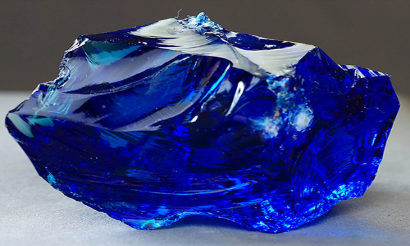
Sapphire Crystal Cutting
Sapphire cutting wire saw solutions specialized for precision cutting of LED substrates, watch crystals and optical windows. The crystals have C-plane, A-plane, and R-plane.
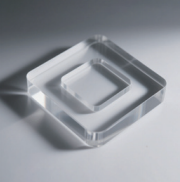
Optical Glass Cutting
Glass letter cutting machine technology with optical lenses, prisms, and specialty glasses for cutting, including borosilicate, fused silica, and quartz glass.

Advanced Ceramics Cutting
Specialized Ceramic Wire Saws for Cutting Alumina (Al₂O₃), Zirconia (ZrO₂), Silicon Carbide (SiC) and Silicon Nitride (Si₃N₄) Components.
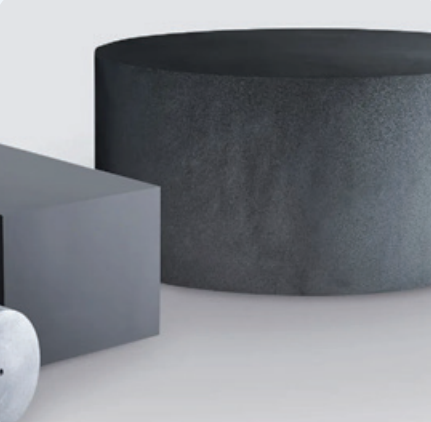
Graphite Machining Diamond Wire
This has the potential for EDM electrodes, semiconductor fixtures and battery components. With a clean cut and no contaminants.

Alloy Magnet Cutting
A safe and accurate NdFeB magnet-cutting wire saw technique used for rare earth magnets such as SampNI, neodymium, cobalt, and ferrite materials.
Silicon Carbide (SiC) Cutting
SiC wire saw cutting solutions for third-generation semiconductor substrates. Extreme hardness materials (Mohs 9.5) using specialized diamond wire.

Crystal & Gemstone cutting
Precision cutting of natural and artificial crystals, including germanium, gallium arsenide (GaAs), lithium niobate and precious gemstones.
Non-metal wire saw cutting
Why Diamond Wire Saw Cutting Machine?
Diamond wire saw technology has shown great advantages over other cutting methods such as blade sawing, EDM, or laser cutting in non-metal applications:
Ultra-High Precision
Achieve cutting accuracy of ±10μm and total thickness variation (TTV) as low as 10μm for demanding semiconductor applications.
±10μm Accuracy
Reduction in Material Waste
The narrow kerf width (0.35-0.50mm) minimizes material loss, saving thousands in expensive substrates like sapphire and SiC.
0.35-0.50mm Kerf
Superior Surface Quality
Often eliminating the need for additional polishing or lapping steps, diamond wire-sawing achieves surface roughness less than 0.3-0.6μm Ra.
<0.6μm Ra
Versatile Processing
A great advantage in the sense that the technology can cut any kind of non-metallic materials (regardless of its electric conductivity). Uniquely, shape complexity (3D shapes into multiple orientations) does not disqualify a material.
Any Non-Metal
Environmentally Friendly
This unique trait stays compatible with the strict environmental coping mechanisms developed by the welfare of society at large. The wire saw proves most productive by utilizing water-based coolants for a fast, clean process, minimal dust emissions, and no toxic byproducts.
Zero Toxic Waste
Complex Geometries
CNC-controlled wire saws allow for the cutting of intricate profiles, curves, and internal shapes that with traditional methods would be impossible.
CNC Precision
Technology Comparison
| Feature | Diamond Wire Saw | EDM | Blade Saw | Laser Cutting |
|---|---|---|---|---|
| Cut Non-Conductive Materials | ✓ | ✗ | ✓ | ✓ |
| Minimal Kerf Loss | ✓ | ✓ | ✗ | ✓ |
| No Heat Affected Zone | ✓ | ✗ | ✓ | ✗ |
| Cut Thick Materials (>50mm) | ✓ | ✓ | ✓ | ✗ |
| Low Surface Roughness | ✓ | Moderate | ✗ | Moderate |
| Mass Production Capable | ✓ | ✗ | ✓ | ✓ |
Free consultation • No obligation • Fast response
Free Professional Tool
Endless Diamond Wire Saw Cutting Calculator Cutting Calculator
Get optimized cutting parameters and calculate material yield improvement for your non-metal wire saw cutting applications.
Cutting Parameter Recommendations
mm
Recommended Cutting Parameters
—
Wire Speed (m/s)
—
Feed Rate (mm/min)
—
Wire Tension (N)
—
Expected Kerf (mm)
| Parameter | Recommended Value | Range |
|---|
Pro Tip: Start with lower feed rates and gradually increase while monitoring surface quality. Always ensure adequate coolant flow to prevent thermal damage.
Material Yield Calculator
mm
mm
—
Current Method Wafers
—
Diamond Wire Wafers
—
Additional Wafers Gained
Current Method Material Efficiency
—
Diamond Wire Material Efficiency
—
ROI Insight: The additional wafers from reduced kerf loss typically pay for the diamond wire saw investment within 6-18 months for high-value materials like SiC, sapphire, or optical glass.
Cutting Method Comparison
Cutting Method Performance Comparison
| Criteria | Diamond Wire Saw | ID Blade Saw | Slurry Wire Saw |
|---|
Recommendation: Based on your inputs, diamond wire saw cutting is the optimal choice for your application.
Need Custom Cutting Parameters?
Our engineers can provide material-specific parameter optimization and cutting trials for your exact application requirements.
Get Instant Quote
Industry Analysis
Non-metal wire saw cutting Challenges & Solutions
Common Problems in Non-Metal Cutting — It is crucial to recognize the drawbacks when cutting hard brittle materials because it will lead you to approve the right diamond wire saw cutting solution for your precise application.
Industry Pain Points
✕
Edge Chipping & Micro-Cracking
During the cutting of brittle materials, fractures arise which in turn lead to edge damage that causes yield rates to drop and necessitates further processing.
✕
High Material Loss (Kerf)
The cutting of the traditional blade type ends up in kerf loss of 1-3mm, which is a wastage of expensive silicon, sapphire, and ceramic substrates.
✕
Poor Surface Quality
The surface damage caused by cutting is very rough and the subsurface damaged area is very deep, therefore requiring a lot of grinding and polishing steps.
✕
Thickness Variation (TTV)
Non-uniform wafer thickness during processing affects both the performance and the quality of the final product in semiconductor manufacturing.
✕
Slow Cutting Speed
Conventional methods of slurry-based wire sawing are not only slow but also produce hazardous waste that needs special disposal.
Our Diamond Wire Solutions
✓
Optimized Cutting Parameters
Wire tension, feed rate, and linear speed settings are all specific to the material and this results in the least amount of chipping. Our engineers make parameter databases for every type of material.
✓
Ultra-Thin Diamond Wire
The diamond wire loop with a 0.3–0.5mm diameter results in a kerf loss of 70–80% as compared to blade cutting, thus maximizing the wafer yield per ingot.
✓
Controlled Abrasive Action
The use of electroplated or resin-bond diamond wires results in a uniformly finished surface. The values for Ra below 0.5μm are possible for optical applications.
✓
Precision Motion Systems
The servo-driven feed systems, along with the live monitoring of tension, can attain the height variation of ±5μm. The closed-loop controlling guarantees the achievement of the same results consistently.
✓
High-Speed Endless Wire
The technology of the endless diamond wire saw operates at a speed of 60-80m/s which is 2-4 times faster than cutting with a reciprocating system and no slurry waste is generated.
How to Choose the Best Wire Saw Machine
There are many different factors to think about when selecting an appropriate diamond wire cutting machine. To help determine which diamond wire saw is right for your needs, this guide provides answers to the below selection questions.
Selection Factors
1 Material Types
What materials do you plan on cutting? (Silicon, sapphire, etc.) determines the kind of wire required, speed range, and need for coolant.
2 Workpiece Size
What is the maximum size of your part? (X × Y × Z) determines travel and table size.
3 Production Volume
Are you cutting one item at a time? Producing prototypes requires single wire, while multi-wire saws are designed for production.
4 Precision Requirements
What level of tolerance and finish do you need? High precision generally requires a more rigid machine and better control.
5 Cutting Geometry
Is the cut a straight “slice”, profile cut or a complex “contour”? For complex cuts you will need a CNC capable machine.
6 Automation Level
Will you operate manually, or through an automated system? Automation levels determine how systems must be integrated and software needed.
Configuration Types
Vertical Wire Saw
Motion is vertical. Vertical wire saws work best when gravity helps remove excess material during the slicing process, thus making them popular for cutting silicon wafers or graphite.
Horizontal Wire Saw
Motion is horizontal. Used for cuts that utilize greater surface areas such as profiling or when cutting heavy items. Used in many applications, such as cutting optical glass and ceramics.
Gantry-Style Saw
Frame structure that will accommodate cutting extremely large materials. Typically used for large-scale industrial cuts for block sized products greater than 3 meters.
Multi-Wire Saw
Two or more parallel wires that are cutting at the same time. Multi-wire saws are essential to make a large number of semiconductor wafers in a single cutting cycle; multi-wire saws may cut several hundred individual wafers in one cut cycle.
Applications
Non-metal Wire Saw Cutting: Industry Applications
Precision non-metal cutting technology for high-tech manufacturing sectors.
01

Semiconductors
High-precision slicing of silicon ingots into wafers with minimal kerf loss and superior TTV control.
02

Solar PV
Efficient mass production of mono/poly-crystalline silicon wafers (<160μm) for photovoltaic modules.
03

Consumer Electronics
Precision contouring of sapphire glass and ceramics for smartphone displays and wearables.
04

Optical Components
Damage-free cutting of optical glass blocks, prisms, and lenses with excellent surface finish.
05

Aerospace & Defense
Processing advanced composite materials and thermal protection ceramics for extreme environments.
06

Advanced Materials
Cutting corrosion-resistant ceramics, quartz crucibles, and SiC components for chemical processing.
Precision Cutting Solutions
Unmatched Gantry Diamond Wire Saw technology for 6+ industries.
160μm
Thin Wafers
100%
Precision
Non-metal wire saw cuttingCustomer Success Stories
Find out how our diamond wire saw cutting machines have changed the ways of manufacturing for leading industries worldwide.
Precision Silicon Wafer Cutting: 99.7% Yield Achieved
The Challenge
The manufacturer produced 50,000+ wafers/month but faced critical issues with their Inner Diameter (ID) saw system:
- Kerf Loss: 280μm waste per cut.
- TTV Issues: Inconsistency affected lithography.
- Surface Damage: Ra > 0.8μm led to extra polishing.
- Low Throughput: Only 15 wafers/hour.
Our Solution: DWS-3000 MWAD
We implemented the DWS-3000 MWAD Diamond Wire Saw with:
- Wire: Electroplated, 80μm core, 25-30 m/s speed.
- Tension: Closed loop control, 22-25N constant.
- Process: Adaptive feed rate 0.3-0.5 mm/min.
- Ramp-up: 6-week optimization and training program.
99.7%
Wafer Yield
+5.5% Improved
180μm
Kerf Loss
Reduced by 100μm
0.3μm
Roughness (Ra)
45/hr
Throughput
3x Improvement
$2.1M
Annual Savings
“The transition to diamond wire saw technology was transformative… the ROI was achieved in just 8 months — far exceeding our expectations.”
Dr. Wei-Lin Chen, VP of Manufacturing Operations
Sapphire Crystal Cutting: Zero Edge Chipping Solution
The Challenge
Sapphire’s extreme hardness caused severe quality issues:
- Edge Chipping: 12% rejection rate due to damage >50μm.
- High Cost: Wire consumption 0.8m per wafer.
- Roughness: Ra 1.2μm requiring heavy polishing.
- Inconsistency: Difficulties across different crystal planes.
Solution: DWS-SP600
Sapphire-Optimized Saw with Anti-Chipping Protocol:
| Parameter | Before | After Optimization |
|---|---|---|
| Edge Chipping Rate | 12% | 0.8% |
| Wire Consumption | 0.8m/wafer | 0.35m/wafer |
| Roughness (Ra) | 1.2μm | 0.4μm |
| Cutting Speed | 0.15mm/min | 0.25mm/min |
Technical Innovation: Anti-Chipping Protocol
- Entry: Low speed (15m/s) for first 3mm.
- Main: High speed (22m/s) cutting phase.
- Exit: Gradual deceleration with feedback control.
“Edge chipping was our number one yield killer. The combination of specialized resin-bond wire and the Edge Protection Mode eliminated this problem almost entirely.”
Dr. Park Sung-Ho, Director of Process Engineering
Optical Glass Cutting: Achieving Sub-Micron Surface Quality
The Challenge
Processing fused silica, BK7, and specialty glass required extreme precision:
- Dimensional Accuracy: ±10μm on 200mm blanks.
- Surface Quality: Ra < 0.2μm required.
- Variety: 15+ different glass types.
- SSD: Sub-surface damage must be < 5μm.
Solution: DWS-OPT350
Optical-Grade System with Material Recipe Database:
- Ultra-fine Wire: 5-10μm diamond grit.
- Stability: Granite base (<0.5μm/°C).
- Monitoring: Laser interferometry for Real-time TTV.
- Database: Pre-programmed recipes for 50+ materials.
| Glass Type | Wire Speed | Surface Ra Achieved |
|---|---|---|
| BK7 (Crown Glass) | 18 m/s | 0.15μm |
| Fused Silica | 15 m/s | 0.12μm |
| Zerodur (Low CTE) | 12 m/s | 0.18μm |
70% ↓Polishing Time
<5μmSubsurface Damage
15 minRecipe Changeover
“The material recipe database was a game changer… Material switching takes just a few minutes and we can be confident in the outcomes.”
Dr. Klaus Hoffmann, Head of Manufacturing Technology
Alumina Ceramic Cutting: Removing Microcrack Defects
The Challenge
Extreme hardness and brittleness led to high rejection rates:
- Microcracks: 8% rejection rate.
- Edge Chipping: >100μm width, required grinding.
- Short Wire Life: Wire replacement every 200 cuts.
- Warping: Thin substrates (<1mm) bowed.
Solution: DWS-CER500
Ceramic-Optimized System with Acoustic Monitoring:
- Wire: Triple-layer diamond coating (3x life).
- Coolant: Cryogenic option (-10°C) to stop thermal damage.
- Monitoring: Acoustic Emission (AE) detects cracks instantly.
- Holding: Vacuum chuck with anti-vibration.
96% ↓
Microcrack Rejection
From 8% to 0.3%
225% ↑
Wire Lifespan
From 200 to 650 cuts
87% ↑
Cutting Speed
“Monitoring of acoustic emissions was the key breakthrough. We could finally ‘hear’ cracks forming and take action before they became a critical defect.”
Takeshi Yamamoto, General Manager
Silicon Carbide (SiC) Wafer Cutting: EV Industry Requirements
The Challenge
SiC (Mohs 9.5) hardness created a production bottleneck:
- Slow Speed: Only 0.05mm/min.
- High Cost: Wire cost $15.20 per wafer.
- Capacity: Stuck at 5,000 wafers/month.
Solution: DWS-5000 Multi Wire
High Power Multi-Wire System implementation:
- Drive: 15 kW spindle for constant speed.
- Wire: Nickel matrix with 40-50μm diamond grit.
- Multi-wire: Simultaneous 4-wafer cutting.
| Metric | Before | After | Improvement |
|---|---|---|---|
| Cutting Speed | 0.05 mm/min | 0.18 mm/min | 260% ↑ |
| Wire Cost/Wafer | $15.20 | $4.80 | 68% ↓ |
| Monthly Capacity | 5,000 | 35,000 | 600% ↑ |
600% ↑Capacity Increase
$3.2MAnnual Savings
68% ↓Wire Cost Reduced
“SiC cutting was our biggest constraint… The specialized diamond wire and multi-wire system transformed our operation. We went from struggling to fulfill orders to having excess capacity.”
Michael Roberts, COO
Ready to solve your cutting challenges?
Get in touch with our engineering team for a complimentary consultation.
Get Instant Quote
Non-metal wire saw cutting FAQs
How does a non-metal wire saw equipped with a diamond or studded wire work on those objects in words?
A non-metal wire saw works in this way: it can cut non-metal materials like marble and granite when an endless diamond wire or studded wire is put into the application of cutting. As the wire goes back and forth, the wire itself sharpens itself, and the abrasive acts on the materials due to the continuous hits. By either screwing a thread onto the wire, the speed of all the abrasive actions is determined, or these could be substituted with diamond-encrusted bits. The cuts are edged out proportionately and in reduction of mechanical wear relative to blade or holy tooth sawing tools.
What is the nature of the endless diamond wire cutting tool, and how is it different from traditional cutting blades?
Endless diamond wire contouring allows large marble/granite blocks to be cut more smoothly and precisely as compared to the conventional sawing methods. It is a faster alternative to any cutting blade installed in a big gang saw because of the wire’s inexhaustible length. Along with the slightly flexible nature of the wire, the diamond wire cuts straight through any block geometry with minimum exertion from cutting force. Its application is tailored for restricted kerf; hence, it will not generate much waste. Wire cutting has small vibrations compared with whirling cutting blades, leading to much better finish quality.
Can a stainless steel wire cutter be used for various stonework and wood-cutting operations?
Stainless steel wire cutter with diamond abrasion can be efficiently tailored for nearly any material, including marble and granite, although, in some cases, wood can undergo cuts without stopping as well. Either way, to optimize performance, it may use diamond grain distributions or it might be enhanced with specialized coatings to reduce clogging during wood cutting. Yet the same principle of precision wire works, and the cutting parameters from material to material depend on feed rates.
How do the precise wires affect accurate cutting in marble and hard rock?
The extremely safe working element allows these precision files, more often endless diamond wire or diamond-plated chain, also controlling kerf width and the surface finish achieved by the folder of the quarried stone. As the wire oscillates or reciprocates under strict control of tension and speed, cuts become more uniform with the minimum possible chipping, thus suitable for high-precision work, including stone building and square cutting blocks.
How long-lasting are wire ropes and stainless steel wires used in non-metal wire saw cutting?
Alstand correctly with plated layers to withstand corrosiveness and abrasion, enabling them to be shingled for a while. The service life of these is contingent on abrasive loading, cutting speed, material hardness, and maintenance. Unbonded diamond impregnated wires degrade slowly, thereby indicating predictable life; maintenance and regularly tensioning maintain improved performance, and safety.
What tips regarding safety and maintenance should be followed in the use of diamond impregnated wire for cutting?
The appropriate tension should be maintained for the wire, the pulleys should be well coated with oxide, and therefore cleaned on time. The diamond wire or cutting tool should be checked for wear from time to time. Guards must be installed;; otherwise, the instructions provided by the manufacturer should be carried out to prevent wire breakages. The life span of the wire could be much extended in these situations, in addition to diminishing possible risks and reducing the incidence of accidents, with all subsequent poor maintenance.
How does the wire saw manage different cutting directions? Does it only reciprocate or can it also oscillate?
These saw systems differ in configurations due to operation and being manufacturers’ specialty. The systems offer various building blocks to allow their inclusion into other operational processes, with reciprocating motion ensuring a linear back-and-forth cutting motion. Reciprocating motion is ideal for block cutting, while oscillating movement promotes cool work surfaces and less loading on the cutting teeth or diamond grains. Both cutting motions are suitable for endless diamond wire saws as well as precision-guided wire saw systems.
Are there restrictions posed by using a non-metal wire saw in wood cutting, as seen compared to stone such as marble and granite?
Certainly. Even though a non-metal wire sawing machine could be made to cut wood, it is necessary to address the fact that wood is fibrous and may need different diamond grit or specialized threads to prevent clogging and to get the desired finish. At this point, cutting speeds, cooling, and dust control behave completely differently. Marble and granite tolerably absorb diamond abrasives to the greatest extent, but wood has less commercial cutting and often requires many trials to optimize the cutter settings.
What are the applications in which the use of a non-metal wire saw is common?
Wire saws for cutting nonmetals are a favorite application in quarrying and fabrication for squaring marble and granite blocks, producing thin tiles, and imparting intricate contour cutting. They are simultaneously very useful in applications where utmost high precision is required like cutting meant to minimize wastage of material, with for these purposes, a smooth surface. Any imaginable non-metal material or shape can be cut by the same wire, encrusted with diamonds, to deliver consistent results.
Trending Blogs

![Polysilicon Material: Properties, Grades & Uses [Guide]](https://wiresawcutter.com/wp-content/uploads/2026/08/polysilicon-material-featured-150x150.webp)