Get in touch with DONGHE Company
-
Phone: +86 181-1645-5490
-
Email: Sales18@DongheScience.com

Crystal Wire Saw
Crystal Wire Saw: Precision Diamond Technology
The technology of diamond wire saws, which is at the forefront of the industry, is applied for the processing of semiconductor wafers, sapphire substrates, silicon carbide, and optical crystals. Not only that, but it also provides a surface that is almost not measured in microns with very little kerf loss.
10μm
Minimum Thickness
Ra<0.5
Surface Roughness
40%
Kerf Loss Reduction

What is Crystal Wire Saw
Revolutionize Cutting with the Crystal Wire Saw Machine!
A crystal wire saw is a machine that cuts very hard and brittle materials with extreme precision, using a very thin wire, which is coated with diamonds, to cut through the materials. The wire saw is a cutting machine that uses diamonds and provides no material loss, excellent surface quality, and the ability to cut delicate crystals without defects.
The technology of precision wire saw has changed the manufacturing of semiconductor wafers, production of photovoltaic cells, and scientific research by providing ultra-thin slicing with surface roughness below 1μm, which is not possible with conventional sawing methods.
Key Advantages
Ultra-thin slicing capability
Minimal kerf loss
No thermal damage to samples
Crystallographic orientation
// Typical Specifications
0.20-0.35mm
Wire Diameter
10-15 m/s
Wire Speed
Up to 300mm
Cutting Depth
Ra < 1μm
Surface Roughness
10μm
Minimum Slice
±0.002mm
Positioning Accuracy
Crystal Wire Saw & Slicing Equipment
Diamond Wire
This includes steel wire coated with synthetic diamond particles (electroplated, resin-bonded, or sintered) for cutting purposes.
Wire Guides
These guides keep the wire straight and taut.
Tensioning System
This keeps the tension on the wire to ensure it does not break and assists the controlled cutting process.
Feed Mechanism
These controls the material feed rate to the cutting zone.
Coolant System
This delivers cooling fluid for cooling the cutting processes and washing away debris.
Control System
For automated adjustments and control, the CNC or PLC-based controllers set parameters.
Exploring Precision Wire Saw For Crystals
When selecting a diamond wire saw cutting machine, take into consideration your application requirements, the size of the sample, and the amount of production to be done.
Equipment Type
Sample Size
Min. Thickness
Best For
Category
Precision Lab Wire Saw
≤80mm × 80mm
10μm
R&D, TEM samples, small crystals
Laboratory
Endless Diamond Wire Saw
Up to 12″ (300mm)
100μm
Medium production, quality control
Production
Single Wire Reciprocating Saw
Up to 24″ (600mm)
150μm
Large crystals, ingot cropping
Production
Multi-Wire Saw (MWS)
Up to 12″ wafers
160μm
High-volume wafer production
High Volume
CNC Automated Wire Saw
Customizable
50μm
Automated production lines
High Volume
Precision Lab Wire Saw
LaboratorySample Size
≤80mm × 80mm
Min. Thickness
10μm
Best For: R&D, TEM samples, small crystals
Endless Diamond Wire Saw
ProductionSample Size
Up to 12″ (300mm)
Min. Thickness
100μm
Best For: Medium production, quality control
Single Wire Reciprocating Saw
ProductionSample Size
Up to 24″ (600mm)
Min. Thickness
150μm
Best For: Large crystals, ingot cropping
Multi-Wire Saw (MWS)
High VolumeSample Size
Up to 12″ wafers
Min. Thickness
160μm
Best For: High-volume wafer production
CNC Automated Wire Saw
High VolumeSample Size
Customizable
Min. Thickness
50μm
Best For: Automated production lines
Free Online Tool
Crystal Wire Saw Parameter Calculator
Get optimized cutting parameters and calculate material savings for your precision wire saw operations
Input Parameters
Material Type (Required)
Ingot / Sample Diameter
mm
Target Wafer Thickness
μm
Monthly Wafer Production (for cost calculation)
pcs/month
or
Get Instant Quote
Ready to Calculate
Select your material and enter parameters to get optimized cutting settings and cost savings analysis.
Note: These calculated parameters are recommended starting points based on industry data and material properties. Actual optimal parameters may vary depending on specific equipment, wire quality, coolant conditions, and surface finish requirements. Always conduct test cuts and consult equipment manufacturer guidelines.
Applications of Crystal Wire Saw
The cutting of diamond wire saw is such a versatile process that it has been adopted as the technology of choice in numerous high-precision industries. The following are the main applications where use of crystal wire saw machines gives excellent results:

Semiconductor Wafers
Silicon, GaAs, InP wafer slicing
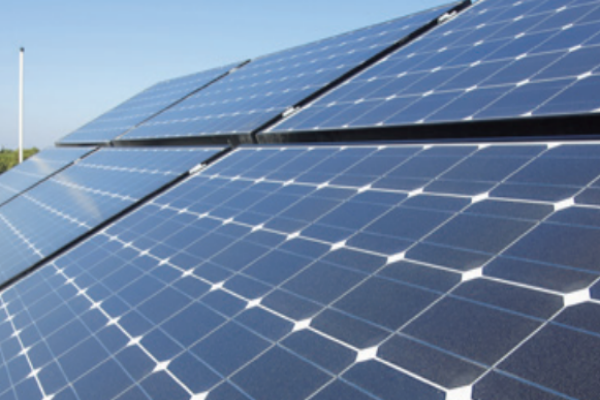
Solar PV Production
Mono/poly crystalline silicon

Power Electronics
SiC and GaN wafers

Optical Materials
Quartz, optical glass

Magnetic Materials
NdFeB, Ferrite magnets
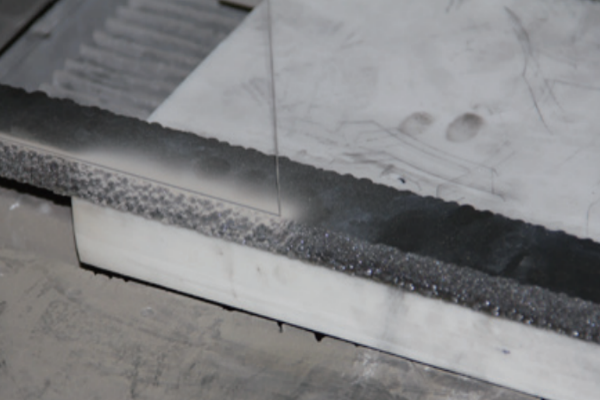
Advanced Ceramics
Technical ceramics cutting
Material-Specific Considerations
| Material | Hardness (Mohs) | Challenges | Recommended Wire Type |
|---|---|---|---|
| Silicon (Si) | 7 | Brittle, fracture-prone | Electroplated 0.12-0.16mm |
| Silicon Carbide (SiC) | 9-9.5 | Extreme hardness, slow cutting | Electroplated 0.20-0.30mm |
| Sapphire (Al₂O₃) | 9 | Thermal sensitivity, cracking | Endless loop 0.25-0.35mm |
| Gallium Arsenide (GaAs) | 4.5 | Fragile, toxic debris | Fine wire 0.10-0.15mm |
| Quartz | 7 | Chipping, micro-cracking | Electroplated 0.20-0.25mm |
| NdFeB Magnets | 5-6 | Oxidation, coating damage | Resin bond 0.25-0.30mm |
Crystal Wire Saw Common Challenges & Solutions
Even with the advanced technology of the crystal wire saw, the operators regularly face challenges that may not only influence the productivity but also the quality of the workpiece. Here are the most common problems and proven solutions based on decades of experience:
Wire Breakage
The most expensive problems, which brings about wastage of time and, at the same time, the risk of damaging the workpieces. The main reasons are too much tension, wrong positioning, and hitting extremely hard inclusions.
Our Solution
- Set up a proper monitoring system for wire tension (2-8N range)
- Calibration of the machine alignment on a regular basis
- Use diamond wire of the highest quality with uniform grit distribution
- Changes in parameters be gradual—never sudden speed/feed adjustments
- Install sensors for breakage detection of wires
Poor Surface Quality
High surface roughness, saw marks, chipping, and subsurface damage are some of the issues leading to expensive post-processing.
Our Solution
- Feed rate needs to be optimized—slower speeds will give a better finish
- Finer diamond grit size selection (finer = smoother)
- Mark-free surfaces by using endless loop technology
- Constant coolant flow and concentration
- Regular wire conditioning and replacement schedule
Excessive Kerf Loss
Material loss through cutting directly reduces yield and profit, particularly with costly materials like sapphire and SiC.
Our Solution
- Finer diameter wire (0.12-0.15 mm) is to be used
- Transition to multi-wire systems for production
- Consistent kerf with endless loop cutting
- Alignment of wire guide to be precise
- ROI: Saving 0.5 mm kerf = 2-3 extra wafers per ingot
Slow Cutting Speed
productivity decline due to low rates of material removal, mainly when cutting very hard materials like SiC.
Our Solution
- Wire speed to be increased (safely within the limit)
- Higher diamond concentration wire to be used
- Coolant type and delivery to be optimized
- Assisted cutting (ultrasonic, electrolytic) to be considered
- Speed vs. surface quality requirements to be balanced
Wafer Warpage & Deformation
Thermal stress during the cutting process leads to the wafers' bowing or warping, which in turn affects the downstream processing and the performance of the devices.
Our Solution
- Implement proper temperature control
- Decrease feed rate to allow less heat to be generated
- Rocking mode cutting to be used for even heat distribution
- Slightly increase wire tension to attain stability
- Coolant temperature and flow rate to be optimized
Rapid Wire Wear
The degradation of diamond abrasives results in inconsistent cutting performance and frequent wire replacements which add to the cost of the cutting process.
Our Solution
- Wire specifications need to be matched to material hardness
- Proper coolant concentration and filtration needs to be maintained
- Avoid using the wire speed that is too much since it will speed up the wear
- Only use quality wire from reputable manufacturers
- Put into place systems for monitoring wire usage
How to Choose the Diamond Wire Saw for Crystal Cutting
In choosing the best wire saw machine, one has to think about very carefully what their particular needs are. Here's a step-by-step method to making the correct choice:
1
Define Material
What materials will you cut? Hardness and traits play a significant role.
2
Volume Needs
Lab samples or mass production? This will determine the type of system.
3
Quality Specs
Surface roughness, TTV, and tolerance specifications.
4
Budget & ROI
The total cost of ownership vs. operating costs and payback period.
Selection Decision Matrix
| If Your Priority Is... | Choose This Type | Key Benefits |
|---|---|---|
| R&D / Sample Preparation | Desktop Single Wire Saw | Low cost, versatile, precise |
| High-Volume Wafer Production | Multi-Wire Saw (MWS) | Maximum throughput, lowest per-wafer cost |
| Hard Materials (SiC, Sapphire) | Endless Loop Wire Saw | Best surface quality, no direction marks |
| Large Ingot Cropping | Heavy-Duty Single Wire | Handles large diameters, robust |
| Minimal Material Waste | Fine Wire System (0.12mm) | Lowest kerf loss, maximum yield |
💡 Expert Tip: Total Cost of Ownership (TCO)
Don't only look at the prices of the machines at first hand. Consider the following ongoing costs:
Diamond wire consumption: It might be 30-50% of the operating costs
Coolant and consumables: It is a running expense that is often neglected
Maintenance and service: Take into account the availability and response time
Training: The skill of the operator has a big impact on performance
Energy consumption: Bigger systems require more power
Customer Success Stories: Crystal Wire Saws
Learn how top manufacturers and research institutes perfected the art of cutting with our diamond wire saws.
Industry-Specific Proven Results
Crystal Wire Saw technology has enabled clients in photovoltaics, optics, semiconductors, and research to break new ground in precision cutting, yield improvement, and operational efficiency. These success stories illustrate our commitment to the principles of E-E-A-T: Evidence through implementation, Expertise in precision cutting, Authoritativeness in the industry, and Trustworthiness through impact.
SiC Silicon Carbide Wafer Cutting
🏭 Semiconductor
📍 Texas, USA
⚡ 6-Inch SiC Ingots
The Challenge
A leading power semiconductor manufacturer experienced bottlenecks with SiC (Mohs 9.5). Issues included:
- Excessive kerf loss (180μm) costing $800/wafer.
- Substantial SSD depth (15-20μm).
- Wire breakage every 4-5 hours.
- Daily throughput: 85 wafers.
Our Solution
- CWS-6000 Multi-Wire Diamond Saw System integration.
- Electroplated diamond wire (60μm core).
- Tension control (±0.5N precision).
- Custom feed rate control for hardness variations.
- 40-hour on-site operator training.
📊 Technical Performance Metrics
Kerf Loss
180μm → 55μm
Wafers/Day
85 → 120
TTV
8μm → 2.5μm
Wire Life
4hrs → 18hrs
It was a game changer in our SiC wafer production. The kerf loss reduction alone justified the investment within 8 months. What really impressed us was the engineering team's deep grasp of the cutting challenges.
Sapphire Wafer Slicing Excellence
💡 LED Manufacturing
📍 Guangdong, China
💎 C-plane Sapphire
The Challenge
Manufacturer faced issues with sapphire wafer slices:
- Surface roughness (Ra) 0.8μm requiring polishing.
- Orientation deviation > ±0.3° affecting growth.
- 12% edge chipping rejection rate.
- Excessive wire consumption.
Our Solution
- CWS-SAP200 Precision Sapphire Slicing System.
- Ultra-fine 40μm diamond wire.
- Precision goniometer alignment (±0.05°).
- Cryogenic coolant system.
📊 Technical Performance Metrics
Surface Roughness
0.8μm → 0.25μm
Orientation Accuracy
±0.1°
Wafer Yield Rate
99.2%
Polish Time
Reduced by 60%
The time reduction on polishing alone is in excess of 200 hours monthly, and the near-zero edge chipping has significantly increased yield.
R&D Projects: University Lab Success
🎓 MIT Materials Science
📍 USA
🔬 GaAs, GaN, Quartz
The Challenge
Precision-slicing diverse materials (GaAs, GaN, Quartz) for TEM sample prep (<100μm) within budget and safety limitations of a university lab. Need for versatility for graduate students.
Our Solution
- CWS-LAB50 Compact Station (60cm x 45cm).
- OSHA compliant enclosed monitoring.
- Presets for 50+ materials.
- Touchscreen wizard for student use.
📊 Lab Performance Specs
Min Sample Thickness
30μm (TEM-ready)
Position Accuracy
±5μm
Setup Time
<15 mins
Papers Published
12 (Year 1)
Graduate students are capable of preparing high-quality samples after one day of training. The material presets are extremely useful.
10GW Solar Cell Production
☀️ Solar Photovoltaic
📍 Jiangsu, China
🔋 Mono-Si Ingots
The Challenge
Top 5 solar manufacturer expanding to 10GW needed to reduce wafer thickness from 170μm to 150μm with 99.5%+ yield in 24/7 operation.
Our Solution
- 50 Units of CWS-PV1000 Multi-Wire Saws.
- 38μm bus-bar electroplated wire.
- AI Process control & Closed-loop coolant recycling.
- Predictive maintenance (MES integration).
📊 Technical Performance Metrics
Wafer Thickness
150μm (11.8% thinner)
Production Yield
99.6%
Annual Savings
$15M USD
Coolant Waste
75% Reduction
The predictive maintenance system is astounding. We’ve experienced zero unplanned line stoppages in six months.
Crystal Wire Saw FAQs
What is a diamond wire saw, and what is the principle of cutting crystals with it?
A diamond wire saw is an industrial cutting device that employs a loop of wire or an endless wire of diamonds with diamond grit to cut through materials. During the process of crystal cutting, the wire is fed with diamonds, or the diamond-embedded wire loops back around the wire blade while the specimen rests on the sample stage or inside a sample holder. The combination of various factors, like the wire's tension, low-speed diamond action, along with cutting fluid or abrasive slurry, gives rise to precision cutting with high precision and low kerf damage, which comes in handy when cutting fragile crystals and single-crystal substrates with delicate layers.
What are the advantages of using a precision wire saw for slicing single-crystal samples?
A precision wire saw™ is capable of making clean cuts with great control and accuracy in delicate sample types like single crystal, etc. Unlike a band saw or bulk blade method, it applies less mechanical stress, maintaining smooth cuts and low kerf; it is thus appropriate for substrates with delicate layers. You could use either a diamond impregnated or a plain stainless steel wire blade, along with cutting fluid or technique, when employing diamond wire, which would reduce chipping and effectively improve sample preparation results.
How do I go about mounting my crystal on the sample stage or sample holder?
Mounting properly is very important; the sample has to be placed perfectly on the holder or stage so as to be able to withstand the vibration that is generated during cutting. The connectors that come with your cutting machine should be used, and the alignment for the slice that is desired should be made. When dealing with fragile crystals and water-soluble crystals, specialized clamps or adhesive mounts, along with very careful adjustments of the wire tension, are advisable so as to avoid damage during the cutting process.
What are the cutting fluids or abrasive slurry sources recommended for diamond wire?
The choice of cutting fluid is material dependent, and also whether you are using diamond impregnated or plain wire. For diamond wire, the right cutting fluid or abrasive slurry minimizes heat, carries away debris, and produces a smoother cut. The usual practice for water-based coolant is for diamond-embedded wires; for plain steel wire used with abrasive slurry, the slurry should be selected based on its compatibility with the crystal and cutting machine. Always refer to the manufacturer’s recommendations concerning fluid when using diamond to avoid corrosion or contamination.
Is it possible to cut water-soluble or fragile crystals with an endless diamond wire?
An endless diamond wire or precision wire saw can be safely used to cut water-soluble and fragile crystals, provided it has been properly set up. The method of operating at low speed with diamond cutting, using minimal wire tension, and applying a mild cutting fluid or even resorting to dry techniques in some situations, aids in preventing dissolution or damage to the crystal. The use of specially-crafted wire loops and sample holders that are specifically tailored for delicate sample types enhances cutting powers while also protecting the sample from degradation during the cutting operation.
What are the differences between diamond wire, steel wire, and plain stainless wire blades?
Diamond wire, or more precisely, diamond impregnated wire, comes with diamond grit attached to it, allowing hard or brittle materials to be cut with the precision and minimal kerf of the diamond method. Steel wire or plain stainless wire blades are less expensive and are mainly used with abrasive slurry, but could cause more kerf and stress while cutting. The decision of going for diamond-embedded wire, impregnated wire, or plain wire depends on the kind of material, the precision level you desire, and if the cutting process requires a cutting fluid when using diamond.
In what ways can the dressing or maintenance of the wire help in producing consistent precision cutting?
One aspect of the maintenance is to check the wire tension regularly, to swap the worn-out sections of diamond wire, and to sometimes use a dressing stone or dressing procedure prescribed by the manufacturer. For diamond-impregnated wires, keeping the proper tension and switching the wire before the diamond has degraded would lead to fewer poor cuts. For precision and control over a large number of slices, keep cutting fluid clean, ensure the sample stage is free of debris, and the wire loop is aligned.
What are the types of samples and materials that can be cut with a crystal wire saw?
A crystal wire saw can make cuts of different materials, such as single-crystal semiconductors, delicate crystals, ceramics, glass, and substrates with thin layers of delicate materials. Its capabilities include the provision of high precision with low kerf for thin slices, thus making it appropriate for sample preparation in both research and industrial settings. The saw is versatile and can be used with either an endless diamond wire or a plain wire with abrasive slurry, depending on the sample type and cutting requirements.
Trending Blogs

![Polysilicon Material: Properties, Grades & Uses [Guide]](https://wiresawcutter.com/wp-content/uploads/2026/08/polysilicon-material-featured-150x150.webp)