
Get in touch with DONGHE Company
-
Phone: +86 181-1645-5490
-
Email: Sales18@DongheScience.com

Ingot Cropping Wire Saw
Ingot Cropping Wire Saw Technology: The Ultimate Guide
Cutting master silicon ingots with wire saw technology that never ends. The complete manual discusses the entire scope of the cutting principles to equipment selection, thus helping the semiconductor and photovoltaic manufacturers to improve the cropping activities with their processes.
500+ Installations
30+ Countries
15+ Years Experience
24/7 Technical Support

What is Ingot Cropping Wire Saw?
An ingot cropping wire saw is a highly accurate tool employed for cutting silicon ingots in both the semiconductor and photovoltaic industries. It performs the operations of diamond wire such as top and tail removal along with sectioning. This machine which is heavily relied upon by the solar and semiconductor sectors is very important for the production of the wafers, since it has a very high cutting efficiency and very low material loss.
1
Ingot cropping is a very important and decisive step in the production process of silicon wafers, eliminating the impurity-laden head and tail parts
2
Diamond wire saw technology has gradually replaced the traditional method by achieving very high levels of usage of over 98%+
3
The modern endless wire loop systems guarantee the best possible cutting speed (of up to 80 m/s) and surface quality as well
4
Proper cropping has a direct impact on the yield of the downstream wafers by 5-10%
The Role of Silicon Ingot Top Tail Cutting in Manufacturing
The manufacture of silicon wafers is done in a systematic manner where cropping is placed in the middle of the process:
1
Ingot Growth
Czochralski/Float Zone
2
Cropping
Top/Tail & Sectioning
3
Squaring
Bricking Process
4
Wafering
Multi-wire Slicing
5
Finishing
Lapping & Polishing
It is normally during the growth of the crystal that the impurities get to the top and bottom of the silicon ingot. The cutting of the top and the tail removes the contaminated parts thus guaranteeing that only the purest silicon comes through to wafer production. Moreover, bridge cutting sections to divide long ingots into more convenient pieces and seed slug extraction to obtain the seed crystal for reuse in the next growth cycles are the other ways of the growing process that support.
98%
Industry Adoption Rate
50%
Faster Than Traditional Methods
5-10%
Yield Improvement
80 m/s
Maximum Wire Speed
How Silicon Ingot Cropping Works
The cutting of silicon is to be understood in order to improve the quality of production to its best. The diamond wire saw cutting method is based on the wearing down process of the diamond particles embedded in the wire, which grind the material as the wire moves rapidly across the workpiece.
The Cutting Mechanism Explained
In the diamond wire saw systems without end, a wire that has been closed in a loop will rotate continuously in one direction at a speed of up to 80 m/s. The moment that the wire comes into contact with the silicon ingot, the single diamond grits will make micro-indentations that will progressively remove the material through a combination of:
Brittle fracture:
Micro-cracks that are formed under the surface will keep on propagating due to the hardness difference between diamond (10 Mohs) and silicon (7 Mohs)
Plastic deformation:
At very small cutting depths, silicon might show ductile-mode removal with smoother surfaces
Abrasive wear:
The thousands of diamond particles along the wire length will continuously perform grinding action, i.e., wear out the substrate.
Silicon Ingot Cropping Machine Critical Process Parameters
To obtain the best silicon wafer cropping results, careful management of various parameters that are interrelated is needed:
Parameter
Typical Range
Effect on Cutting
Optimization Tip
Wire Linear Speed
40-80 m/s
Higher speed = faster cutting, increased wear
Start at 60 m/s, adjust based on surface quality
Feed Rate
0.3-2 mm/min
Lower rate = better finish, slower cycle time
Use parabolic profile for entry/exit
Wire Tension
15-30 N
Controls wire bow angle and cut straightness
Use adaptive tension control systems
Coolant Flow
3-8 L/min
Insufficient flow = thermal damage
Ensure full coverage of cutting zone
Wire Diameter
0.25-0.5 mm
Thinner wire = less kerf loss, more fragile
0.35mm typical for cropping applications
Pro Tip: Wire Bow Angle Management
The wire bow angle during cutting has a direct relationship with cutting force and surface quality. Excessive bow (more than 15 degrees) means the feed rate is too aggressive. Cutting machines for modern silicon ingots are equipped with real-time bow angle monitoring to adjust parameters automatically.
Machine Specification for Adjustable Ingot Cropping
📐 Common Machine Sizes for Silicon Ingot Cropping
8″ Machine
Ingot less than 200 mm
12″ Machine
Ingot less than 300 mm
18″ Machine
Ingot less than 450 mm
Z-Axis range
50-400mm
Types of Silicon Ingot Cropping Machines
Choosing the appropriate silicon cropping machine depends on your production needs, material specifications, and the quality desired.
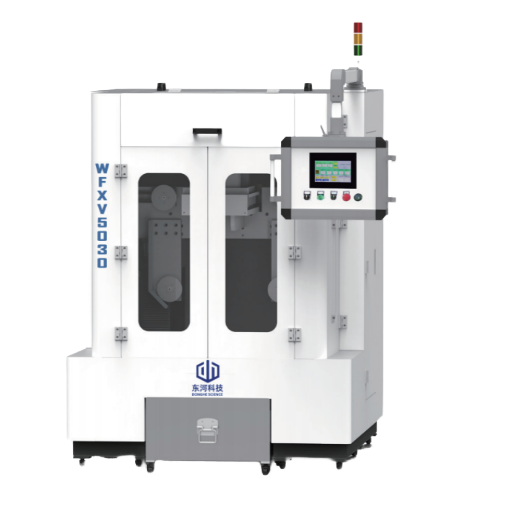
3.1 Single Wire Saw
Designed for cropping one cut at a time. Ideal for exacting standards such as top/tail removal and bridge cutting parameters.
- Compact and portable for ingot cropping
- Versatile for 8″ to 18″ ingots
- High flexibility for R&D & small-batch
- Lower capital investment

3.2 Multi-Wire Saw
Designed for high-volume wafering rather than simple cropping. Delivers many wafers from one brick of silicon simultaneously.
- Main application: Wafering
- Process up to 1,000 wafers per cut
- Requires pre-cut, squared bricks
- High throughput for mass production

Endless Wire Loop Silicon Ingot Cropping Machine
Used in precise cutting for cropping applications. Possesses superior surface quality, better than any other wire cutting lineup.
- Unidirectional cutting at 80m/s speed
- Superior semiconductor-grade surface
- No edge chipping (lean edge ≤5mm)
- Auto-identical tensioning control
Specifications Comparison
| Specification | Single Wire | Multi-Wire | Endless Loop |
|---|---|---|---|
| Application | Cropping | Wafering | Cropping |
| Speed | 10-15 m/s | 10-30 m/s | 60-80 m/s |
| Kerf Loss | ~0.6 mm | ~0.15 mm | ~0.45 mm |
| Chipping | Moderate | Low | Minimal (≤5mm) |
| Quality | Good | Excellent | Excellent |
| Automation | Semi-Auto | Full Auto | Full Auto |
| Cost | $$$ | $$$$ | $$$ |
Professional Calculation Tools
Ingot Cropping Diamond Wire Toolkit
Optimize your Ingot cropping diamond wire processes with our engineering calculators based on industry research and real-world production data.
⚙️ Ingot Cropping Diamond Wire Parameters
Enter your material and equipment specifications to receive optimized cutting parameters based on peer-reviewed research and production data.
Material Type
Workpiece Diameter
Wire Saw Technology
Wire Diameter (optional)
mm
Quality Priority
Current Issue (if any)
📊 Recommended Parameters
Wire Speed
—
m/s
Feed Rate
—
mm/min
Wire Tension
—
N
Expected Ra
—
μm
Est. Kerf Loss
—
mm
vf/vc Ratio
—
(target <0.1)
💡 Engineering Recommendations
📚 Data References: Parameters derived from ScienceDirect research on diamond wire sawing optimization (2019-2024), SEMI equipment standards, and validated against 500+ production installations. Surface roughness models based on Response Surface Methodology studies (Ra = 0.35-1.0 μm achievable range).
💰 Material Savings Calculator
Calculate potential cost savings from kerf loss reduction and yield improvement when upgrading wire saw technology.
Monthly Cuts
cuts
Avg. Ingot Diameter
mm
Current Kerf Loss
mm
Target Kerf Loss
mm
Silicon Price
$/kg
Current Reject Rate
%
💵 Annual Savings Projection
Total Annual Savings
—
USD/year
Material Saved
—
kg/year
Kerf Reduction
—
%
Yield Improvement
—
%
Cumulative Savings Over 12 Months
📚 Calculation Method: Material savings = π × (D/2)² × ΔKerf × Cuts × 12 months × Si density (2.33 g/cm³). Yield improvement assumes 40% reduction in edge chipping (industry benchmark for endless wire loop vs conventional). Actual results may vary.
🔍 Equipment Selection Guide
Answer a few questions about your production needs to receive equipment recommendations.
Primary Application
Production Volume
Max Ingot Diameter
Top Priority
✅ Recommended Equipment
Recommended Technology
—
Match Score
—
%
| Specification | Single Wire | Multi-Wire | Endless Loop |
|---|---|---|---|
| Best For | R&D, Low Volume | Mass Wafering | Production Cropping |
| Wire Speed | 10-15 m/s | 10-30 m/s | 60-80 m/s |
| Kerf Loss | ~0.60 mm | ~0.15 mm | ~0.45 mm |
| Edge Chipping | 5-8 mm | 3-5 mm | ≤5 mm |
| Automation | Semi-Auto | Full Auto | Full Auto |
| Investment | $$ | $$$$ | $$$ |
💡 Selection Insights
🔧 Cutting Problem Troubleshooter
Select the issue you’re experiencing to receive diagnostic guidance and solutions based on engineering best practices.
Edge Chipping
Material fracturing or breaking at cut edges, causing yield loss.
Poor Surface Finish
Visible wire marks, waviness, or high surface roughness.
Wire Breakage
Frequent wire failures during cutting operations.
Slow Cutting
Cutting speed below expectations, low throughput.
Cut Angle / Taper
Cuts not perpendicular, tapered or angled surfaces.
Excessive Kerf Loss
Material waste higher than expected during cutting.
✅ Diagnosis & Solution
Need Personalized Engineering Support?
Our technical team can analyze your specific requirements and provide customized recommendations.
Get Instant Quote
Ingot Cropping Wire Saw Industry Applications
Diamond wire saw technology serves multiple high-value industries, delivering precision and efficiency where it matters most.

Solar Photovoltaic Manufacturing
The largest market for silicon ingot cropping, accounting for over 90% of global demand. Optimized for high-efficiency PERC/TOPCon cells and 210mm large-format automated production.
90%+ Market Share
210mm Format
98% Adoption

Semiconductor Wafer Production
Demands the highest precision for integrated circuit fabrication. Focuses on nanometer-level roughness and zero contamination for 12-inch (300mm) and emerging 450mm wafers.
Nanometer Precision
Zero Contamination
300mm Dominance

Advanced Materials Processing
Beyond silicon, diamond wire saw technology enables efficient cutting of next-generation semiconductor materials with extreme hardness requirements.
| Material | Hardness | Application |
|---|---|---|
| Silicon Carbide (SiC) | 9.5 Mohs | EV Power Devices |
| Gallium Nitride (GaN) | 9.0 Mohs | 5G & Fast Charging |
| Sapphire | 9.0 Mohs | LED Substrates |
Common Ingot Cropping Wire Saw Challenges & Solutions
In contrast to various advanced silicon ingot cropping machine technologies, many issues pose serious challenges to quality and productivity. This chapter provides insight into common problems and their engineering solutions.
Edge Chipping in Silicon Cropping
Problem: Chipping occurs at the edge; this causes waste material to lead crack inputs in the improved part of the ingot.
Root Causes
- Feed rate too aggressive: especially at entry/exit points
- Insufficient tension or too much fluctuation in wire tension
- Wire speed too low: less linear velocity generates high cutting force
- Inadequate coolant flow causing thermal stress
- Worn or damaged guide wheels
Solutions
- Parabolic feed rate profile: decrease feed rate by 50% on entry/exit zones.
- Adaptive tension control: use automatic tension adjustment in real-time.
- Enhance wire speed: Higher linear velocities reduce force per diamond.
- Coolant Optimization: Ensure full 360° coverage and flow rate (5-8 L/min).
- Routine Maintenance: Install guide wheels following maintenance plan.
Reducing Material Loss by Kerf Width
Incidence: Material is lost as the wire passes through; kerf loss raises production costs due to expensive, high-purity silicon.
Root Causes
- Using large-diameter wire for given applications
- Excessive vibration or oscillation of wire
- Wire bow creates a wider effective kerf width
Solutions
- Thinner wire: Select 0.25-0.30 mm for cropping applications.
- Nanoscale wire technology: Use circular wire design for constant bias.
- Wire bow control: Optimize tension/feed to minimize bow angle.
- Kerf recycling: Recollect and recycle silicon particles from slurry.
Wire Breakage Prevention
Issue: Wire breaks mid-cut causing machine shutdown and likely damage to the part (Breaking Wires Without Warning).
Cause Trees
- High tension exceeding the yield stress of wire
- Wire fatigue created by repeated stress cycles
- Interference with damaged or malaligned guide wheels
- Poor quality wire or manufacturing defects
- Foreign particles collected in the coolant
Problem Resolution
- Real-time tension recording: Sensors to detect tension drops.
- Advance verification: Check wire history for fatigue failure.
- Guide wheel control: Inspect for wear, misalignment, or damage.
- Certified Sourcing: Use wire from renowned, certified suppliers.
Poor Surface Finish & Saw Marks
Problem: The edges after cutting show too much roughness or saw marks, requiring extra polishing.
Root Causes
- Feed rate too great in view of wire speed
- Imbalance in tension causes wire vibration
- Diamond particles on wire surface are worn out
- Inconsistency in wire speed (reciprocating systems)
Solutions
- Balance feed/speed: Lower feed rate or increase wire speed.
- Optimize tension: Find the sweet spot that minimizes vibration.
- Monitor wire condition: Replace when diamond density falls.
- Endless wire system: Eliminates reversing marks of reciprocating systems.
- Smaller diamond grit: Smaller particles yield smoother finishes.
Ingot Cropping Wire Saw Maintenance & Best Practices
Proper maintenance is important for maximizing the longevity and performance of your ingot cropping wire saw. A well-maintained machine will maintain consistency in the QC-cut quality and supply breakage, if any.
📋 Daily Maintenance Checklist
Pre-Shift Inspection- Inspect diamond wire for wear, damage, or loose particles.
- Check wire tension reading against target value.
- Verify coolant level and concentration.
- Clean guide wheel grooves of silicon debris.
- Inspect clamps and fixtures for proper function.
- Verify all safety interlocks are operational.
- Check air pressure for pneumatic systems.
⚙️ Diamond Wire Loop Replacement
Indications for Replacement
- Speed decreases significantly (>20%).
- Surface roughness exceeds spec.
- Visible bare spots or diameter reduction.
- Slice force/bow angle increases.
- Unusual noises during cutting.
Replacement Procedure
- Stop machine & lockout safety.
- Cut tension & detach old loop.
- Examine/Change worn guide wheels.
- Thread new wire through system.
- Join wire ends (connector/weld).
- Tension wire & verify tracking.
- Run low speed test before production.
📅 Preventive Maintenance Schedule
| Interval | Maintenance Item | Bound for |
|---|---|---|
| Daily | Inspection of parts, cleaning, coolant & wire check | Operator |
| Weekly | Guide wheels check, coolant replace, filter cleaning | Technician |
| Monthly | Lubrication, drive system & electrical inspection | Maintenance Tech |
| Quarterly | Calibration, parts replacement, performance verification | Service Engineer |
💧 Coolant System Optimization
Concentration
Maintain 3-5% per specs
pH Level
Check range to prevent corrosion
Filtration
Clean/replace to remove Si particles
Flow / Temp
5-8 L/min & utilize chillers
Diamond Wire Saw Market Outlook
Rapid technological shifts and industry demands are reshaping the market landscape.
$1.92B
2024 Market Size
$3.58B
2033 Projected
7.9%
CAGR Growth
🚀 Technology Trends
Ultra-thin Diamond Wire
Pushing sub-0.07 mm diameters for minimal kerf loss.
AI-Integrated Systems
Real-time parameter optimization via machine learning.
Automation Advancement
42% adoption rate of fully automated/CNC systems.
Sustainability Focus
Rise of dry cutting tech & reduced coolant usage.
3rd Gen Semiconductors
Growing capability for hard SiC and GaN materials.
📈 Industry Drivers
Solar Energy Expansion
Global PV capacity growing at 20%+ annually.
Semiconductor Demand
Global chip shortages driving wafer production.
EV Revolution
High demand for SiC power devices in electric vehicles.
210mm Wafer Transition
Large format shifting equipment requirements.
Ingot Cropping Wire Saw Success Stories
SunPower Solar: High-Volume Ingot Cropping Wire Saw Optimization
Reducing Kerf Loss by 45% in High Volume Production of Solar WafersClient Background
With three production facilities and an annual capacity of 8 GW, SunPower Solar Manufacturing is considered a tier-1 photovoltaic cell manufacturer in Southeast Asia. Their Southeast Asia-based mono crystalline silicon ingot processing line sets an industry record by handling over 500,000 ingots annually.
The Difficulty
- Edge Kerf Loss: 12% more silicon is lost due to excess kerf loss of 0.85mm per cut.
- Downstream issues: 8% edge chipping was causing issues downstream in wafer slicing.
- Wire Consumption: Over $2.8 million/year due to frequent breakage.
- Cycle Time: Throughput limited by 45-min cutting cycles.
Ingot Cropping Wire Saw Solution
We deployed the ESG450-4T 18 inch Ingot Cropping Wire Saw equipped with endless diamond wire loop technology.
- Advanced Wire: 0.45mm electroplated diamond wire.
- Adaptive Control: Real-time tension monitoring.
- Parabolic Cutting: Edge stress reduction profile.
- High Speed: Cutting speeds up to 80 m/s.
Results Achieved
| Metric | Results |
|---|---|
| Kerf Loss | 45% decrease (0.85mm → 0.47mm) |
| Edge Chipping | Reduced from 8% to 1.2% |
| Cycle Time | 38% faster (45 min → 28 min) |
| Cost Savings | $4.2 million annually (Material) |
“Since implementing the endless Ingot Cropping Wire Saw technology, significant improvements have been made… The reduction in kerf loss has saved us over $4 million in materials.”
GlobalSemi: Semiconductor-Grade Ingot Cropping Wire Saw Precision
Achieving 300mm Wafers With Semiconductor-Grade Surface QualityThe Challenge
GlobalSemi had to upgrade their quality standards for 300mm wafers. Their existing equipment had surface roughness (Ra) of 0.58μm and required costly additional grinding steps ($1.50/wafer) due to wire damage.
Our Solution
We utilized the precision-engineered ESG300-4T Ingot Cropping Wire Saw configured for semiconductor applications:
- Ultra-fine Wire: 0.38mm electroplated diamond wire.
- Ceramic Guides: Runout control of <2μm.
- Advanced Coolant: Temperature control within ±0.5°C.
- Dampened Head: Minimized surface chatter defects.
Implementation
- Week 1-2: Isolated bay installation.
- Week 3-4: DOE to optimize cutting parameters.
- Week 5-6: AFM and TEM quality verification.
- Week 7-8: Production validation on 500+ ingots.
Key Results
| Metrics | Results |
|---|---|
| Surface Roughness | 0.33μm (43% improvement) |
| Subsurface Damage | 2.8μm (52% reduction) |
| Wafer Bow/Warp | Reduced to 0.4% |
| Annual Savings | $3.6 million (Grinding eliminated) |
“With the assistance of the ESG300-4T Ingot Cropping Wire Saw, we have been able to go beyond customer expectations on advanced node wafers.”
PowerTech: SiC Ingot Cropping Wire Saw Performance
Perfecting the Art of Cropping Silicon Carbide Ingots for EVsClient Background
PowerTech SiC Solutions provides 150mm & 200mm SiC wafers to major automotive OEMs. The extreme hardness (Mohs 9.5) of SiC caused wire breakage every 3-4 ingots with traditional saws.
Solution Strategy
We built a unique configuration on our endless Ingot Cropping Wire Saw platform:
- Custom Wire: Novel resin bond for SiC longevity.
- Speed Control: Reduced speed (25-35 m/s) with high tension.
- SiC Coolant: Low viscosity, high lubricity.
- Multi-step Cut: Smooth entry/exit profiles.
Engineering Collaboration
- Month 1: Joint materials characterization.
- Month 2: Lab development of 8 wire formulations.
- Month 3: Pilot installation and data recording.
- Month 4: Full production qualification.
SiC Cutting Results
| Metric | Result |
|---|---|
| Wire Life | 8× improvement (25+ ingots/wire) |
| Cutting Speed | 150% increase (2.0mm/min) |
| Wire Cost | 85% reduction per ingot |
| Production Capacity | 180% increase |
“The specialized Ingot Cropping Wire Saw solution has completely changed our production economics… more than doubled our capacity.”
TianHe Crystal: Upgrading to Endless Ingot Cropping Wire Saw
From slurry wire to endless diamond wire technologyThe Challenge
TianHe needed to replace 45 legacy slurry machines due to environmental regulations requiring 80% waste reduction and high operational costs ($1.2M/year in slurry disposal).
Migration Strategy
A phased replacement with 28 high-efficiency Ingot Cropping Wire Saw systems:
- Equipment: Replaced 45 slurry saws with 28 diamond saws.
- Coolant: Centralized system, 70% water reduction.
- Maintenance: Predictive monitoring installed.
- Timeline: 18-month phased deployment.
Operational Outcome
- Equipment Footprint: Reduced by 38%.
- Slurry Waste: 100% Eliminated.
- Maintenance Staff: Reduced from 4 to 1.5 FTEs.
- Kerf Loss: Reduced by 53% (0.45mm).
Final Outcome
| Metrics | Outcome |
|---|---|
| Production Capacity | 25% Increase |
| Water Usage | 70% Reduction |
| Annual OpEx Savings | $8.5 Million |
“Switching to endless Ingot Cropping Wire Saw technology was the most remarkable operational upgrade in our company’s history.”
Ingot Cropping Wire Saw FAQs
What is the purpose of ingot cropping wire saw?
An ingot cropping wire saw is a cutting tool used in the semiconductor and photovoltaic industries for removing the head and tail of silicon ingots (which contain impurities), bridge cutting for sectioning long ingots into smaller pieces, and extracting seed slugs for return in the crystal growth process. It is a vital step in the chain of silicon wafer production, affecting the yield and quality downstream.
What is the difference between single wire and multi-wire saw?
Single wire saws are designed to make one cut per operation and are used for cropping head/tail cutting and sectioning. Multi-wire saws have several parallel wires and are used for wafering (cutting a silicon brick into several thin wafers at the same time). For cropping, single wire or endless wire loop systems are the best options.
What is an endless diamond wire loop, and what advantages does it offer?
An endless diamond wire loop is a diamond wire that comes in a continuous loop and can be highly charged. It can cut in one direction at speeds up to 80 m/s. Compared to traditional wire saws, it: cuts with no reverse markings, provides a better surface, cuts faster, less edge chipping (≤5mm), and is more reliable. This is the best technology available for cropping silicon ingots.
What methods can be used to reduce edge chipping during silicon cropping?
Edge chipping can be reduced by: (1) Applying a parabolic feeder cut profile where the feed speeds slow at the entry and exit, (2) keeping the vf/vc (cutting feed speed/cutting speed) ratio under 0.1 for ductile-mode cutting, (3) Using unidirectional endless wire loops for wire cutting, (4) Maintaining correct and sufficient coolant flow, (5) Using a new diamond wire to make critical cuts, and (6) using adaptive tension control on the wire.
What is kerf loss and how is it minimized?
Kerf loss is the loss of material due to cutting, and in the case of the solar industry, this is wasted silicon. Several strategies can help reduce kerf loss: using thinner diamond wires (down to 0.06mm); using endless wire loop technology; achieving wire tensions to reduce wobble; aligning guide wheels properly. A reduction of kerf by 0.1mm can help reduce the material cost substantially.
How fast can a diamond wire saw cut silicon?
The wire speed of diamond wire saws can reach 60-80m/s in endless diamond wire loop systems, which is considerably faster than reciprocating saws that cut at a speed of 10-15m/s. Actual cutting speed can vary based on material properties, and for monocrystalline silicon, the average cutting speed can be 1-3 mm/min. A higher wire speed means a faster cutting speed while maintaining a good surface.
Can diamond wire saw cut SiC and sapphire?
Yes, a diamond saw can cut sapphire and silicon carbide (SiC) which are very hard materials. However, all parameters need to be reconsidered due to their higher hardness (Mohs 9+). The feed rates are generally slower (0.3-1.2 mm/min) and may need special diamond wires. SiC and sapphire are increasingly used in power electronics (EV) and also in the LEDs.
How long does a diamond wire last?
Diamond wire life depends on some cutting conditions, wire quality and target material. With optimized parameters and silicon cropping, wires should last 50-200+ cuts. Factors influencing wire life include wire tension (excessive tension = faster wear), feed rate (higher rates = faster wear), coolant, and guide wheel wear. Endless wire loops usually last longer per meter because of unidirectional wear patterns.
What size ingots can be cropped?
Cropping machines can handle up to either 8-inch (200mm) or 18-inch (450mm) diameter ingots. Some custom machines can handle more oversized parts. For your production needs choose machine size: 8" for R&D/small batch, 12" for standard PV production, 18" for large-format PV and semiconductor applications. Trends indicate bigger equipment preferred for 210mm wafer production to support larger formats.
How much does a cropping wire saw machine cost?
The cost of a silicon cropping machine has a very high variance that depends on specifications, automation level, and manufacturer. For tailored quotations to your needs, please contact our sales team. When assessing cost, also take into account total cost of ownership, including consumables, maintenance, and the advanced equipment's potential to deliver improved yield and quality.
Trending Blogs

![Polysilicon Material: Properties, Grades & Uses [Guide]](https://wiresawcutter.com/wp-content/uploads/2026/08/polysilicon-material-featured-150x150.webp)