
Get in touch with DONGHE Company
-
Phone: +86 181-1645-5490
-
Email: Sales18@DongheScience.com

Graphene Wire Saw
Graphene Wire Saw: The Complete Guide to Precision Cutting Technology
Explore how diamond wire saw cutting machines achieve sub-micron precision while cutting semiconductor wafers, battery electrodes, and advanced battery materials. This expert’s guide comes straight from the chief graphene cutting equipment manufacturer.
Industry Leading Precision
Direct Manufacturer
Global Support
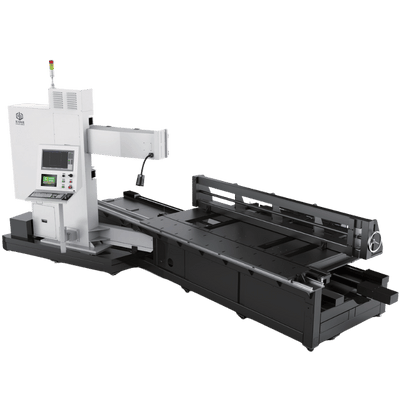
What is a Graphene Wire Saw?
The basic principles of graphene cutting technology can be explained alongside traditional cutting methods below.
Definition
A graphene wire cutting machine, which is often enveloped within a wire saw operated by diamond-coated wire (usually of 0.3-0.8mm in diameter), is necessary for cutting through graphene and advanced carbon materials with great precision. In addition to its zero or low kerf loss (up to 0.3mm), unmatched surface quality (Ra < 0.5 μm), and +0.01mm positioning accuracy, it is a significant requirement for cutting semiconductor wafers, manufacturing battery electrodes, and scientific research projects.
Graphene vs. Graphite Wire Saw: Understanding the Difference
Although slightly confusing, the differences are crucial for a better analysis between a graphene wire saw and a graphite wire saw application:
| Feature | Graphene Wire Saw | Graphite Wire Saw |
|---|---|---|
| Material Structure | 2D carbon sheets, ultra-thin | 3D bulk carbon material |
| Precision Required | ±0.01mm (nanometer-level) | ±0.1mm (standard) |
| Wire Diameter | 0.3-0.5mm ultra-fine | 0.5-0.8mm standard |
| Surface Quality | Ra < 0.5μm (mirror finish) | Ra < 3μm |
| Primary Applications | Semiconductors, Batteries, Research | Electrodes, Molds, Heat Sinks |
Key Components of a Graphene Wire Saw Machine
The modern graphene cutting machine consists of several precision-engineered systems functioning together:
Diamond Wire System
The ultra-fine diamond wire (Φ0.3-0.5mm) with diamond particles precisely distributed in resin bond to provide accurate and uniform cutting.
Tension Control Unit
Closed-loop-controlled systems ensure that the wire tension is maintained at a constant value (typically 15-30 N) to achieve uniform cut quality and extend wire life.
Precision Motion System
High-precision linear guides and ball screws, with positioning accuracies in the sub-micron range, ensure programmed cutting paths with intricate forms and extremely close tolerances.
CNC Control System
Advanced machine control with in-process monitoring is achieved through parameter optimization and automated cutting programs, resulting in accurate, repeatable results.
Coolant Management
The system for a precision delivery of coolants for temperature control, chip evacuation, and wire lubrication during the precision cutting process.
Process Monitoring
Integrated sensors to measure cutting force, wire wear, and surface quality in real time to predict the maintenance and control quality.
How Graphene Wire Saw Cutting Works
Understanding the diamond wire saw cutting principle and critical process parameters for optimal results.
The Cutting Mechanism Explained
The mechanism used by the graphene wire saw is abrasive cutting, where the micro-sized diamond particles embedded at the wire surface play the role of cutting points; as the endless diamond wire moves at high speed (typically 10-30 m/s for graphene applications), these diamond grits progressively remove material through a combination of:
- Micro-scratching: Diamond particles create microscopic grooves in the material surface
- Micro-fracturing: Localized stress causes controlled material removal at the atomic level
- Chip formation: Removed material forms fine chips carried away by coolant flow
Unlike traditional blades, which have sharp tips with toothy edges, the transition from one material to another is eliminated by a wire edge, which is applied with minimal mechanical stress. Mechanical stress is the primary driver of changes in graphene’s electrical and structural properties.
Critical Process Parameters
Achieving optimal results in graphene cutting requires precise control of several interrelated parameters:
10-30
Wire Speed (m/s)
0.5-2
Feed Rate (mm/min)
15-30
Wire Tension (N)
0.3-0.5
Kerf Width (mm)
Endless Diamond Wire vs. Reciprocating Wire
Two primary wire motion systems exist for graphene wire saw machines:
| Parameter | Endless (Loop) Wire | Reciprocating Wire |
|---|---|---|
| Wire Motion | Continuous unidirectional | Back-and-forth oscillating |
| Cutting Speed | Higher (up to 80 m/s) | Lower (1-5 m/s) |
| Surface Quality | Superior consistency | Good, may show direction marks |
| Wire Life | Longer (even wear) | Moderate (end wear) |
| Best For | Production, thick materials | Lab samples, thin materials |
For most graphene trimming applications, endless diamond wire saw systems are likely to deliver the best results in terms of surface quality and productivity. The continuous motion eliminates any directional marks, unlike other trimmed-wire processes, providing a more consistent finish across the entire cut surface.
Graphene Wire Saw Machine Specifications
Detailed technical parameters to help you select the right precision wire saw for your application.
| Specification | Lab Series | Production Series | Heavy-Duty Series |
|---|---|---|---|
| Max. Cutting Size (mm) | 100 × 100 × 50 | 300 × 300 × 150 | 600 × 600 × 300 |
| Positioning Accuracy | ±0.005mm | ±0.01mm | ±0.02mm |
| Surface Roughness (Ra) | < 0.3μm | < 0.5μm | < 1.0μm |
| Wire Diameter Range | 0.2 – 0.4mm | 0.3 – 0.6mm | 0.5 – 0.8mm |
| Wire Speed | 5 – 20 m/s | 10 – 40 m/s | 15 – 80 m/s |
| Control System | PLC + Touch Screen | CNC + HMI | CNC + PC Control |
| Automation Level | Semi-automatic | Fully Automatic | Fully Automatic + Robotic |
| Best Application | R&D, Sample Prep | Mass Production | Large-scale Industry |
Diamond Wire Specifications
The performance of your graphene wire saw depends heavily on selecting the right diamond wire type:
Electroplated Diamond Wire
Diameter
0.3-0.6mm
Diamond Size
30-60 mesh
Life
50-100 cutting hours
Best for: Fast cutting, harder materials
Resin-Bonded Diamond Wire
Diameter
0.2-0.5mm
Diamond Size
40-80 mesh
Life
80-150 cutting hours
Best for: Ultra-fine cuts, sensitive materials
Hybrid Diamond Wire
Diameter
0.35-0.55mm
Diamond Size
Mixed grades
Life
100-200 cutting hours
Best for: Balanced performance
Common Graphene Cutting Challenges & Our Solutions
Real problems engineers face and how our graphene-wire saw technology addresses them.
The Problem
High Material Loss & Kerf Width
Using conventional cutting methods, such as blade and laser cutting, yields a kerf width of 1-3 mm, resulting in material waste of 15-30%, which can significantly affect the high-cost production of Graphene materials ($500-2000/kg).
Our Solution
With its kerf as small as 0.35mm, the ultrathin diamond wire (Φ0.3mm) reduces material loss by up to 60% compared to conventional methods. Further optimization of cutting paths reduces waste and lowers consumption.
The Problem
Edge Damage & Surface Defects
The electrical properties of graphene are highly susceptible to the quality of its edges. Micro-cracks, chipping, or thermal damage from cutting can reduce device performance by 20-50%.
Our Solution
Precision-controlled wire-saw cutting with optimized parameters achieves a surface finish with Ra < 0.5 μm without a thermal-affected zone. Some cutting processes preserve material integrity down to the atomic level.
The Problem
Inconsistent Cutting Precision
Maintaining dimensional accuracy is challenging during production runs. Whether positive or negative by ±0.1 mm, such variations can cause assembly issues and quality rejects in semiconductor applications.
Our Solution
Closing the loop with a real-time servo compensation system can achieve a minimum geometric tolerance of ±0.01 mm. Automated calibration and in-process measurement assess the cut thousands of times for perfect, replicable results.
The Problem
High Operating Costs
Frequent wire breakage, high consumables costs, and extended maintenance downtime increase the total cost of ownership. Some users have reported losing 30% or more of production time to maintenance.
Our Solution
The advanced tension-control wire life cycle has increased by nearly 40%. Our modular design enables a quick wire change in less than fifteen minutes. Predictive maintenance alerts have reduced unplanned downtime by 70%.
The Problem
Lack of Technical Support
Process optimization for the new materials necessitates experience. Engineers will spend weeks trying to adjust cutting parameters to perfection and come away somewhat satisfied, as they did not achieve the results they expected.
Our Solution
Dedicated application engineering team with more than 15 years of experience in cutting graphene. We provide end-to-end process development support, parameter optimization, and on-site training to ensure customer success.
The Problem
Scaling Production Challenges
The once-easy transition from an R&D lab to large-scale industry faces unprecedented constraints: namely, the practical limits of geometric scalability and the real spread of technical and social interference.
Our Solution
Scalable machine platform from lab to production. Multi-wire capability for 5x throughput. MES integration, recipe management, and automated quality tracking for Industry 4.0 compliance.
Graphene Cutting Technical Hub
Production Inputs
Find Cutting Parameters
Select your specific Graphene application to see recommended machine settings.
Recommended Specs
Wire Speed:
–
Tension:
–
Feed Rate:
–
Wire Type:
–
*Parameters are for reference only. Actual settings depend on machine model.
Kerf Loss Visualization
See the physical difference in material waste between traditional blades and our diamond wire.
Why It Matters
- 70% Less Waste: Keep more of your expensive Graphene material.
- Better Surface: Lower cutting force means less edge chipping.
- No Heat Damage: Reduced friction prevents material degradation.
Graphene Cutting Methods: Wire Saw vs. Alternatives
Compare diamond wire saw cutting with other graphene processing technologies.| Criteria | Diamond Wire Saw | Laser Cutting | Plasma Cutting | Mechanical Cutting |
|---|---|---|---|---|
| Precision | ⭐⭐⭐⭐⭐ ±0.01mm | ⭐⭐⭐⭐ ±0.05mm | ⭐⭐ ±0.5mm | ⭐⭐ ±0.2mm |
| Surface Quality | ⭐⭐⭐⭐⭐ Ra<0.5μm | ⭐⭐⭐ HAZ present | ⭐⭐ Rough edges | ⭐⭐ Burr formation |
| Material Loss | Very Low (0.3mm kerf) | Low (0.1mm kerf) | High (2mm+ kerf) | High (1mm+ kerf) |
| Thermal Damage | None (cold cutting) | High (melting) | Very High | Low to Medium |
| Thick Material Capability | Excellent (300mm+) | Limited (<5mm) | Good | Moderate |
| Initial Investment | $$$ | $$$$ | $$$ | $ |
| Operating Cost | Low-Medium | Medium-High | Medium | Low |
| Best For Graphene? | ✓ Recommended | Thin films only | ✗ Not suitable | Simple shapes only |
Why Choose Diamond Wire Saw for Graphene Cutting?
For applications requiring both precision and material integrity, diamond wire saw technology offers the optimal balance:
No thermal damage
Cold mechanical cutting preserves graphene’s electrical properties
Minimal material loss
Ultra-thin kerf maximizes yield from expensive materials
Scalable
Same technology works from R&D samples to production volumes
Versatile
Handles various graphene forms — sheets, composites, 3D structures
Graphene Wire Saw Applications
Our graphene cutting machines serve diverse industries requiring precision material processing for advanced applications.
Semiconductor Wafer Cutting
Precision graphene wafer cutting equipment for semiconductor manufacturing with zero-defect edge requirements.
- Graphene-on-silicon wafer processing
- Transistor substrate preparation
- High-frequency device fabrication
- Thermal interface materials
Battery Electrode Manufacturing
High-throughput graphene electrode cutting solutions for next-generation lithium-ion and solid-state batteries.
- Graphene anode material cutting
- Cathode substrate processing
- Supercapacitor electrode fabrication
- Energy storage research
Research Laboratory
Versatile laboratory wire saw for graphene research with flexible configuration for experimental protocols.
- Graphene sample preparation
- Material characterization samples
- Prototype device fabrication
- Academic research support
Aerospace Composites
Advanced cutting solutions for graphene-reinforced aerospace composite materials and thermal management systems.
- Graphene composite panels
- Thermal spreader materials
- Structural components
- EMI shielding materials
Flexible Electronics
Specialized processing for graphene-based flexible displays, wearable sensors, and bendable electronic devices.
- Flexible display substrates
- Wearable sensor materials
- Transparent conductive films
- Printed electronics
Thermal Management
Precision cutting for graphene thermal interface materials and heat spreaders in high-power electronics.
- Thermal interface materials
- Heat spreader substrates
- LED thermal solutions
- Power electronics cooling
Solving Critical Graphene Cutting Challenges
See how our Precision Diamond Wire Saws help industry leaders achieve
sub-micron tolerances and maximize material yield.
Semiconductor Industry
Graphene Wafer Yield Optimization
Problem:
High kerf loss (material waste) and edge chipping when cutting $2,000+ graphene wafers using traditional saws.
Solution:
Implemented Endless Diamond Wire Saw with 0.12mm loop wire and closed-loop tension control.
Key Outcome
40% Less Waste
Reduced kerf loss significantly and achieved Ra < 0.8µm surface finish, eliminating secondary polishing steps.
New Energy / Battery
Mass Production of Graphene Electrodes
Problem:
Inconsistent thickness in batch cutting of graphene electrode blocks led to battery performance failures.
Solution:
Deployed Multi-Wire Saw System tailored for graphene, enabling simultaneous cutting of 20+ electrodes.
Key Outcome
200% Efficiency
Achieved 99.9% thickness consistency (CPK > 1.33) and doubled daily output capacity for the client.
R&D Laboratory
Precision Sample Preparation
Problem:
University lab needed one device to cut various fragility gradients (graphene composites, aerogels) without damage.
Solution:
Supplied a Laboratory Precision Wire Saw with adjustable wire speed (0-30m/s) and gentle gravity feed.
Key Outcome
0.01mm Accuracy
Enabled successful slicing of 200μm ultra-thin samples, supporting the publication of 3 major research papers.
Frequently Asked Questions (FAQs)
What is a graphite wire saw? How is it connected to the graphene wire saw?
A graphite wire saw is a cutting system for graphite blocks or graphite-containing composites that uses a moving cable or wire. When optimized for graphene production or multilayer graphene spalling, it is often called a graphene wire saw. These systems are designed to reduce material loss and achieve perfect-cut surfaces, enabling high situational control over graphite-cut precision or graphene spalling to a thickness of a fraction of a millimeter. Graphene wire saws have been developed to operate with conductive, high-temperature, and brittle carbon materials, and, in an adapted form, can be designed to reduce dust generation relative to a traditional wire saw system.
How is diamond wire saw different from graphite cutting for the production of graphene and CNT materials?
A diamond wire saw using diamond abrasive can cut a wide range of hard materials, with the best techniques, to a high level of geometric precision. Speedy and precise, wire diamond cutting is one of the best techniques for wire-based designs that enable continuous passage for mass production of specific CNT or graphite cuts. At the same time, the cost is relatively high and less than forgiving. Diamond wire cutting is said to yield high-quality flat surfaces with minimal debris. The technique provides reasonable control and precision for cutting slices thicker than 0.1 mm, up to several thousand micrometres. It causes significantly less mechanical damage to any randomly selected graphite block during macroscopic layered graphene stack cutting.
Can a wire saw machine automate the cutting of graphene and carbon nanotubes?
Indeed, present-day wire saw machines come equipped with automated cutting capabilities and are frequently integrated with CNC controllers, tension-monitoring devices, and feedback systems to perform automated cutting of graphite blocks, stacked graphene, and composite CNT materials. Automation enables uniform shape control, repeatability for mass production, and precise control of cutting speed and wire diameter, which is essential for minimizing kerf loss and achieving highly mobile, conductive slices for semiconductor or conductor applications.
What are the cutting efficiency and speed expectations on graphite for an endless diamond wire cutter?
Wire diameter (D), diamond grain size (G), linear feed rate (Vf), and cooling strategy are key factors that determine the efficiency of an endless diamond wire saw. Although higher cutting speeds usually improve throughput, they can also increase temperature resistance or introduce defects in highly oriented graphene or nanotube materials. It is crucial to set the appropriate cutting speed and tension to achieve an accurate cut and minimize material removal. Methods for controlling dust production should also ensure that the smooth surface properties and semiconducting or conducting characteristics of cut graphene or CNT slices are preserved.
How accurate can a graphite wire saw be in producing thin cuts from graphite?
A graphite wire saw can produce very accurate cuts with thicknesses ranging from 0.1mm to mm, depending on the type of wire used and how the wire saw is controlled (i.e., the spacing and tensioning of the cables). The ability to create more accurate cuts is enhanced by using fragile wires with precise tension control and stable, unidirectional motion. In addition, for nanoscale and microscale applications, including stacks of graphene and/or CNTs, cutting is performed without excessive material removal. It uses a dedicated setup to create smooth cuts with minimal mechanical damage and reduced dust.
What types of materials can be processed with diamond wire-cutting and graphite wire saw systems?
There is a wide variety of carbon-based and conventional materials that can be processed using diamond wire and graphite wire saw systems. Included are graphite blocks, multilayer graphene, carbon nanotube composites, metals (such as copper and silver) suitable for conductive configurations, and brittle ceramic materials. It is imperative to have effective diamond wire-cutting and graphite wire-saw systems when cutting high-mobility or high-bandgap-grade graphene. Composite materials and high-temperature-resistant substrates can also be processed.
How do modern-day graphite or diamond wire saws differ from older-style, abrasive slurry, or larger-diameter wire saws?
Typically, older-style abrasive slurry wire saws used larger-diameter wires than the current generation of graphite and diamond wire saws. As a result, older-style wire saws are generally less accurate than current-generation wire saws. In addition, older-style wire saws generate more dust than modern graphite- and diamond-wire saw systems. In contrast, modern-day graphite and diamond wire saw systems use special bonded diamond wire, are of an endless design, and have improved systems for controlling wire tension as well as cutting with a minimum of dust, to achieve the most accurate cut, the smoothest possible surface finish, and the least amount of material loss. These improvements make them ideal for cutting high-precision profiles, bulk production of thin slices, and applications requiring low kerf and controlled resistivity.
What are the quality and safety considerations that need to be accounted for while using a wire saw to cut materials such as graphene and carbon nanotubes?
First and most importantly, there is the need for effective dust control to prevent the release and inhalation of nano- and micro-particulates; the use of coolants, filters, and other similar types of equipment to minimize contamination; and the need to monitor cutting conditions to prevent excessive heating, which could result in changing the mobility of graphene or changing the properties of the CNTs. In addition, proper safety and personal protective equipment should be worn, and all conductive powders, including copper and silver, should be handled carefully due to their electrical conductivity. The quality control of the cut pieces should verify that their thicknesses are within specification (as defined by the user’s required thickness), their surfaces are smooth, their resistivities meet specifications for semiconductors or conductors, and they have adequate structural integrity per the user’s specifications.
Trending Blogs

![Polysilicon Material: Properties, Grades & Uses [Guide]](https://wiresawcutter.com/wp-content/uploads/2026/08/polysilicon-material-featured-150x150.webp)