
Get in touch with DONGHE Company
-
Phone: +86 181-1645-5490
-
Email: Sales18@DongheScience.com

Stone Wire Saw Machine
Professional Stone Wire Saw Machine Manufacturer
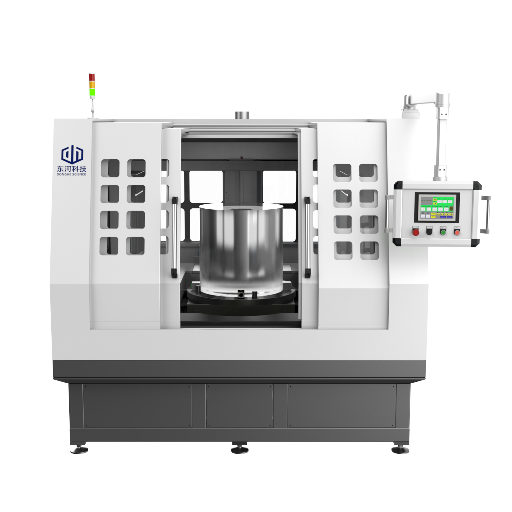
The stone wire saw machines in advanced editions are presented with the Siemens PLC and automatically tensioned for wire speed up to 40 m/s. Our diamond wire saw technology ensures cutting along ± precision limits, from 1-2mm--in minimal-wasted please grinding sections for granite, marble or concrete.
CNC Automated Control
CE & ISO Certified
24/7 Technical Support
0
+
Countries Served
0
+
Machines Sold
0
yrs
Experience
What is a CNC Diamond Wire Saw Machine?
A CNC Diamond Wire Saw Machine is a stone wire saw that uses diamond wire to cut stone materials precisely. It cuts stone materials with little to no wastage and maximizes operational efficiency.
Revolutionize Your Stone Processing
Our CNC Diamond Wire Saw Machine integrates state of the art automation and diamond wire cutting technology. The intelligent control system that is used in the machine cuts performs optimally by automatically adjusting parameters like tension, speed, and feed rate in accordance with the properties of the cutting material.
Intelligent Tension Control
Automatic wire tension adjustments for consistent cutting
Material Yield Rate up to 97%
Adjustable wire cutting technology results in less material wastage
One-Person Operation
The system is automated, allowing a single operator to control multiple machines
Versatile Applications
Ability to cut multiple materials. It works with marble, granite, quartzite, onyx and several industrial materials.
How Does A Stone Wire Saw Machine Work?
Understanding the cutting mechanism of diamond wire saw machines makes their performance more viable and also prolongs the life of the equipment.
Diamond Wire Loop
A continuous loop with diamond wire is threaded through the guiding pulleys. The wire has the diamond-bearing beads bonded at regular intervals for cutting.
High-Speed Rotation
The wire goes at the speed of 20-40 m/s, thanks to the main motor. The frequency inverter permits precision control of speeds for different types of stones.
Tension Control
The automatic tension controller keeps the wire at maximum tension throughout machining. It helps to prevent the wire from breakage, thus maintaining the quality of wire.
Coolant Application
Continuous water spray cools the diamond beads, washes away the stone particles, and thereby increases the life span of wire significantly.
Stone Wire Saw Machine Key Features & Benefits
Engineered for maximum productivity, precision, and reliability in demanding industrial environments.
High Cutting Efficiency
Achieve cutting speeds of 8-16 m²/hour depending on material hardness. Up to 3x faster than traditional gang saws.
3x Faster
Precision CNC Control
PLC-based digital control system with real-time monitoring. Automatic parameter adjustment for optimal cutting.
±0.5mm Accuracy
Superior Wire Technology
High-quality diamond beads with 50-200 m² lifespan. Smooth cutting surface requires minimal post-processing.
Extended Lifespan
Energy Efficient
Permanent magnet synchronous motor reduces energy consumption by 30-40% compared to standard machines.
40% Energy Savings
Safety & Reliability
Multiple safety protections including emergency stop, overload protection, and automatic fault detection.
CE Certified
Easy Maintenance
Modular design for quick component replacement. Remote diagnostic support available 24/7.
24/7 Support
Use Cases
CNC Wire Saw Machine Application Scenarios
Our wire saw machines are built for a variety of stone processing applications.
Quarry Mining
In granite and marble quarries, large stone blocks are mined and precisely cut.
Slab Processing
Stone blocks are processed and cut into slabs, which can be used for countertops, tiles, and architectural panels.
Luxury Stone
Onyx, jade, and rare quartzite are high-value materials, and we process them with minimal wasted materials.
Industrial Materials
We cut silicon, graphite, ceramics, and other advanced materials used for the tech industries.
Stone Wire Saw Machine vs Traditional Cutting Methods
Find out the ways a diamond technology wins out over the older stone cutting equipment.
| Feature | Wire Saw Machine | Chain Saw | Circular Blade | Flame Cutting |
|---|---|---|---|---|
| Cutting Precision | ±1-2mm Excellent | ±5-10mm Medium | ±3-5mm Good | ±20mm+ Poor |
| Material Waste (Kerf) | 8-12mm Minimal | 15-25mm High | 10-15mm Medium | 50mm+ Very High |
| Maximum Block Size | Unlimited | Limited by bar | Limited by blade | Unlimited |
| Complex Shapes | ✓ Yes | ✗ No | ✗ No | ✗ No |
| Noise Level | Low (70-80 dB) | High (100+ dB) | High (95+ dB) | Medium (85 dB) |
| Dust Generation | Minimal (wet) | High | High | Very High |
| Operating Cost | Low | Medium | Medium | High (fuel) |
| Hard Granite | ✓ Excellent | Limited | Good | ✓ Yes |
Applications of Laboratory Diamond Wire Saw
Cutting machines for diamond wire saws are indispensable in different applications where precise cutting and the integrity of the samples are vital prerequisites.
Semiconductor & Photovoltaic
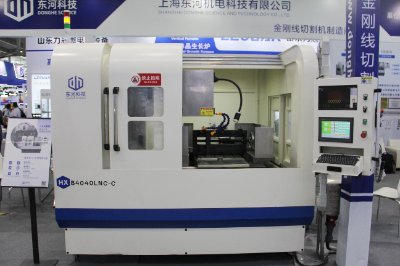
Silicon wafer cutting, SiC and GaN substrate preparation, IC failure analysis sample prep. This is highly essential for the research and development in the power electronics and next-generation semiconductors.
Materials Science Research
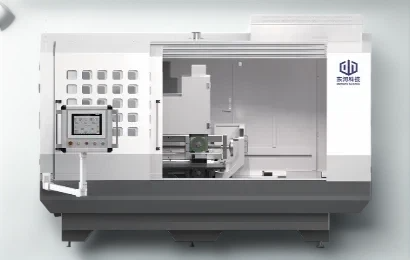
Transmission electron microscopy (TEM) sample preparation, cross-section inspection, initial characterization of novel materials. Especially useful for academic and research institutions conducting studies on material properties.
Optical & Optoelectronic
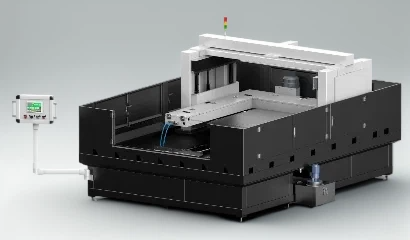
Sapphire crystal cutting for LED substrates, quartz frequency control components, precision sectionalization of optical glasses for lens creation.
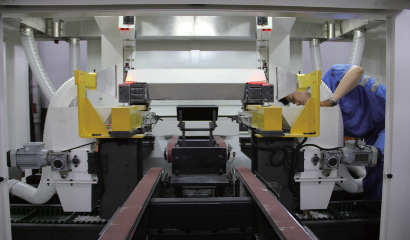
Advanced Ceramics
Ceramic cuts of engineered materials, like Al₂O₃, ZrO₂, AlN and piezoelectric materials, for electronic packaging, thermal management, and other specialized applications.
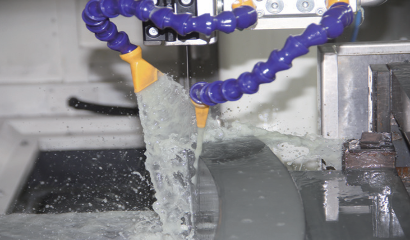
Quality Control & Failure Analysis
Metallographic sample preparation, IC package decapsulation and defect analysis: Used in the QC labs for incoming inspection and failure analysis.
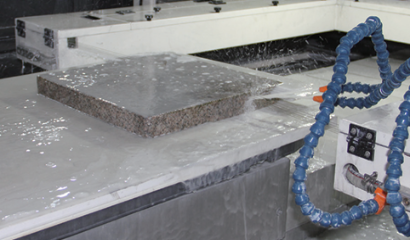
Geological & Mineralogy
Cutting of rock and mineral samples for thin section preparation, sectioning of core samples, and geological studies.
Material Cutting Parameters Guide to Laboratory diamond wire saw
Optimizing diamond wire saw cutting parameters for different materials is critical for achieving quality results. This material cutting guide provides recommended starting parameters based on extensive laboratory testing.
| Material | Hardness (Mohs) | Wire Diameter | Wire Speed | Feed Rate | Coolant | Notes |
|---|---|---|---|---|---|---|
| Silicon (Si) | 7 | 0.12-0.18mm | 8-15 m/s | 0.3-1 mm/min | Water-based | Standard semiconductor cutting |
| Silicon Carbide (SiC) | 9-9.5 | 0.20-0.30mm | 5-10 m/s | 0.1-0.3 mm/min | Water-based | High diamond concentration wire |
| Sapphire (Al₂O₃ crystal) | 9 | 0.18-0.25mm | 6-12 m/s | 0.2-0.5 mm/min | Water-based | Orientation-dependent cutting |
| Alumina Ceramic (Al₂O₃) | 9 | 0.20-0.30mm | 5-10 m/s | 0.2-0.5 mm/min | Water-based | Avoid edge chipping |
| Quartz Crystal | 7 | 0.15-0.22mm | 8-15 m/s | 0.3-0.8 mm/min | Water-based | Crystal orientation matters |
| GaAs (Gallium Arsenide) | 4.5 | 0.10-0.15mm | 3-8 m/s | 0.1-0.3 mm/min | Water-based | Very brittle - low speed! |
| Optical Glass (BK7) | 5-6 | 0.12-0.18mm | 5-12 m/s | 0.3-0.6 mm/min | Water-based | Minimize edge chipping |
| Zirconia (ZrO₂) | 8-8.5 | 0.18-0.25mm | 5-10 m/s | 0.2-0.4 mm/min | Water-based | Tougher than alumina |
⚠️ Important Notes
- Parameters are starting recommendations; optimize based on your specific requirements
- Always use appropriate wire tension (typically 10-30N depending on wire diameter)
- Ensure adequate coolant flow to prevent wire overheating and diamond damage
- For materials not listed, start with conservative parameters and adjust incrementally
Common Problems & Solutions of Laboratory diamond wire saw
Even experienced operators must confront challenges when using diamond wire cutting machines. Understanding common challenges and their solutions will help the user maintain cuts at the highest quality and extend equipment life.
Wire Breakage in Cutting
Symptoms:
Wire cuts through without any warning, especially in hard material cutting or changing directions (for reciprocating saws).
Common Causes:
Excessive wire tension, worn wire, feed rate too high, incomplete coolant, and wire fatigue at joints.
Solution
Lower the tension on the wire a little. Bring down the feed rate. Keep coolant flow going consistently. For reciprocating saws, if the wire is fatigued or has reached 50-100 cuts on silicon, replace it. Every other day or so, we must inspect the wire for loss of diamonds.
Poor Surface Finish/Roughness
Symptoms:
Cut surface shows visible scratches, grooves, or uneven texture. Surface roughness exceeds specification.
Common Causes:
Wire speed too high, inadequate wire tension, worn diamond abrasive, contaminated coolant, vibration in the machine.
Solution
Consider decreasing the wire feed speed by 20%-30%. Raise the wire tension to safe limits. Replace the old wire with a new one. Clean the coolant tank or replace the coolant itself. Retighten all the mechanical connectors. For final cuts, consider using finer-grit diamonds in wire form.
Excessive Kerf Loss
Symptoms:
Kerf exceeds a wire diameter by more than 0.1mm. Also results in excessive material waste on expensive substrates.
Common Causes:
Whole in wire accompanied by bend or damaged wire, wire vibration/wobble, and worn guide rollers.
Solution
In simple terms, the higher the tension, the lesser the lateral vibration. Regularly inspect guide rollers. A thinner wire size will be feasible in a sample evaluation. One also has to reduce the wire speed to reduce damping if it causes vibration. Make sure all guide rollers are properly aligned.
Edge Chipping on Brittle Materials
Symptoms:
Tough materials create the chipping and micro-fractures seen at the glazed or semiconductor substrate boundaries.
Common Causes:
High feed rates, insufficient support, wire entering/exiting wrong at angle, sharp transitions.
Solution
Decrease the feed rate near the cut entry and exit points. Use backing materials to support the exit cut zone. Employ finer diamond grit wires. Make sure the sample is secured with no vibration and mounted in wax for fragile samples.
Subsurface Damage Layer Too Deep
Symptoms:
A considerable amount of grinding is needed to reach the non-damaged portion. Microcracks are observed in the cross-sectional analysis.
Common Causes:
Too aggressive rough cuts, too much force applied, or too much diamond grit wire.
Solution
Use a finer diamond grit wire (325 mesh or higher). Slow down the feed rate to remove ductile material. The tension wire is slightly lower. Instead, you can suggest a two-pass operation - a rougher initial cut followed by a cut with finishing/masking parameters.
Short Diamond Wire Lifespan
Symptoms:
Rapid deterioration in wire-cutting efficiency. Diamond sparkles are visible with magnification and a higher operational cost.
Common Causes:
Cutting too fast, inadequate cooling, wire rubbing on fixtures, and poor quality wire.
Solution
Optimize the cutting parameters per the material guidelines. Ensure there is sufficient cooling at the workpiece interface. Verify that the wire path is clear of obstructions. Only choose high-quality wire. Implement a wire-wear monitoring program.
How to Choose the Right Laboratory Wire Saw
Selecting a diamond wire saw for the required precision and accuracy essentially comes down to matching the application's requirements to the equipment's capabilities. Here is the recommended procedure based on the target criteria that should be followed:
1
Define Your Material Requirements
List all the materials that you would like to cut by indicating their hardness (e.g., Mohs scale or Vickers), brittleness, tolerance to stress, and thermal stability. Harder materials, such as SiC (Mohs 9.5), require tougher wires and lower machining speeds than silicon (Mohs 7).
2
Determine Sample Size Range
Determine the maximum feasible sample dimensions. Select a machine that is 20-30 percent larger than your most significant sample to accommodate appropriate fixturing and remain in a stable cutting mode.
3
Assess Surface Quality Requirements
TEM preparation:
Requires extremely low damage - excellent wire cut on up to 0.1-0.15 mm wire systems
Metallography:
Medium requirements - usually a normal wire cut on 0.2-0.3mm wire systems is quite enough
Production cutting:
Priority is on speed-choose a really high-capacity endless-loop system
4
Consider Throughput Needs
High-volume laboratories require CNC or other large-scale automation and endless-looping systems; lower-volume research applications require flexibility more than speed.
5
Evaluate Total Cost of Ownership
Consider equipment costs, consumables (e.g., wire and coolant), maintenance requirements, and training needs. The higher upfront investment usually yields a much better long-term return through longer wire life and lower labor costs.
Selection Quick Guide
University research lab
Desktop endless loop saw with CNC — balances precision, versatility, and budget
Semiconductor FA lab
Medium-capacity CNC system with microscope viewing option
Materials testing service
High-capacity automated system for throughput
R&D prototype shop
Manual/semi-auto system for flexibility with various materials
Stone Wire Saw Machine Installation Guide
Further below is the warbling guide for sagging and cold wire saw diamond operations that ensure the wire runs up in no time and at peak performance.
Step 1
Site Preparation
Having a level concrete floor with good drainage, a 3-phase power supply, and the availability of rest for coolant.
Step 2
Machine Positioning
Position the Stone Wire Saw machine and crane or forklifter. Align the machine on rails and move it level by adjustable feet.
Step 3
Electrical Connect
The main power supply should be connected to the electrical cabinet, ensuring voltage, phase sequence, and grounding with the guidance from our engineer through video calls.
Step 4
Coolant System Setup
Connect the water supply and test the coolant circulation. Set up the water recycling tank and filter. Nozzle for spray should be adjusted.
Step 5
Diamond Wire Threading
Get the diamond wire and manually insert it through all guide wheels, ensuring that it goes in the designated path. The wire ends will be connected using the right crimping tools.
Step 6
Testing & Commissioning
While operating the machine without any load, ensure that all systems are in equilibrium. Take some cuts on sample blocks-then go and finesse the cutting parameters for your type of stone.
Wire Saw Machine Professional Tools
Comprehensive tools to help you optimize cutting parameters and diagnose machine issues efficiently.
Cutting Parameter Optimization Calculator
Get optimized wire speed, feed rate, tension, and coolant settings for your specific cutting conditions
Input Parameters
Recommended Parameters
Wire Speed
-
-
Feed Rate
-
-
Wire Tension
-
-
Coolant Flow
-
-
Performance Indicators
Estimated Cutting Speed
-
Wire Life Efficiency
-
Surface Quality Rating
-
💡
Optimization Tips
Select your cutting conditions and click "Optimize Parameters" to get recommended settings.
Need a wire saw machine with these optimal parameters? Get a quote now.
📝 Get Instant QuoteMachine Troubleshooting Diagnostic Tool
Identify and resolve common wire saw machine issues with step-by-step guidance
Diagnostic Progress
Step 1 of 3
What category of problem are you experiencing?
Select the option that best describes your machine issue
Solution Title
Medium
⚠️
Possible Causes
✅
Recommended Solutions
📋
Step-by-Step Repair Guide
Customer Success Stories: Innovative Stone Wire Saw Technology Solutions
Brazil Granite Quarry
Italy Marble Processing
Turkey Multi-Wire Line
Case Study 1: Transformation of Granite Quarry in Espírito Santo, Brazil
PROJECT OVERVIEW
Client Background
Granitos do Brasil has been operating in the stone industry for over 25 years, and the company is considered one of the mid-sized operators in the Brazilian granite quarrying industry. Granitos has three operational quarrying sites in the granite producing region of Espírito Santo, Brazil, and the company is engaged in the production and supply of raw granite blocks to processing plants across the South American continent, as well as exports to North America and Europe.
Granitos do Brasil exclusively used the traditional methods of drilling and blasting, along with chain saw cutting, before the company incorporated any new technologies. While these methods had served them for decades, the company had to change their approach because the market had started demanding more blocks of a higher quality that also had fewer internal fractures.
Challenges & Pain Points
- High Material Waste: Explosive blasting methods in quarrying caused Granitos to lose between 25% and 30% of materials, causing a significant loss to the yield of higher grade blocks (Grade A) that are generally targeted for the premium export market.
- Inconsistent Block Quality: Each block’s surface was not uniform, causing an increase in the cost of secondary processing, which was at $15 to $20 for every cubic meter that was being produced, due to the cut surface of the blocks that used chain saws.
- Safety concerns: Blasting activities involved significant risks. Safety precautions had a cost-again including the establishment of evacuation zones and the presence of specialized personnel.
- Environmental Compliance: The new resolution of IBAMA, the Brazilian environmental agency, poses a risk to the continuation of operations due to the newly implemented Brazilian noise and dust control regulations.
- Customer Requirements: Major customers in export markets such as Germany and Italy began to demand certifications on the methods of extraction used and showed preferences toward a more environmentally compatible method of quarrying.
Our Proposal: QWS-75H and Quarry Wire Saw Machine
Upon completion of the preliminary evaluation of site conditions and review of the site conditions with our engineers, the QWS-75H Quarry Wire Saw Machine was recommended: the QWS-75H is a heavy-duty diamond wire saw specialized for granite quarry operations with the ability to modify its blade for high-hard varietals.
Technical Specifications
Implementation Steps
Main Motor Power75 kW (100 HP)
Wire SpeedInfinitely Variable, Max 0-40 m/s
Max Cutting LengthUnlimited (Continuous Wire Loop)
Wire Diameter11.5mm Diamond Beaded Wire
Control SystemSiemens S7-1200 PLC with HMI Touch Panel
Cooling SystemIntegrated High-Pressure Water Spray
Horizontal Travel40 meters (Adjustable)
Vertical Cutting DepthUp to 12 meters
1. Site Assessment and Development of Site Plans (2 weeks): Our engineering team conducted in depth geological surveys and created optimized plans for quarry layouts to maximize the efficiency of the wire saw.
2. Equipment Delivery & Installation (4 weeks): Complete shipping from our factory to site, including customs clearance assistance, and on-site assembly by our certified installation team.
3. Operator Training (2 weeks): Intensive training for 8 quarry operators, covering machine operation, wire management, safety, and troubleshooting.
4. Production Optimization (4 weeks): Training for on-site technical support during the initial phase of production, adjusting the cutting parameters to optimal levels for the different varieties of local granite.
Results & ROI Analysis
| Metrics | Before (Chain Saw) | After (Wire Saw) | Improvement |
|---|---|---|---|
| Block Yield Rate | 70-75% | 92-95% | +22% |
| Grade A Block Ratio | 45% | 78% | +33% |
| Production Speed | 15 m²/hour | 25 m²/hour | +67% |
| Operating Cost per m³ | $28 | $18 | -36% |
| Workplace Accidents | 3/year | 0/year | -100% |
| Environmental Compliance | At Risk | Full Compliance | ✓ |
Financial Impact:
- Annual revenue increase from higher Grade A block output: +$320,000
- Annual cost savings from reduced material waste: +$185,000
- Payback period achieved: 8.5 months
“The wire saw machine revolutionized our operations in the quarry. From having to handle so many quality issues, we became a preferred supplier to the premium markets in Europe. The manufacturer support was outstanding—rather than just selling us machines, they helped us streamline our entire process of extraction.”
Case Study 2: Marble Processing Excellence in Carrara, Italy
PROJECT SUMMARY
Client Profile
Marmi Toscani is an Italian family-run business in its third generation, engaged in the marble processing business, located in the center of Carrara, Italy, one of the world’s leading marble industry areas. The company specializes in Statuario, Calacatta, and Bianco Carrara, and supplies luxurious slabs for prestigious architecture projects around the world, including five-star hotels, corporate offices, and premium residential complexes.
The company’s reputation is based on providing flawless slabs of marble of the same thickness and high surface quality. As demand grew in the Middle Eastern and Asian luxury market, Marmi Toscani had to dramatically increase its ability to produce while retaining the same quality.
Challenges & Pain Points
- Capacity Issues: The existing gang saw equipment and the capacity were not enough to meet the increasing order volumes, causing delivery delays of 6-8 weeks and the loss of contracts of €400,000 per year.
- Price Pressure: Statuario and Calacatta marble are extremely expensive ($200-500/m²), hence any loss of material or surface defects are very expensive from an economic perspective.
- Thickness Precision: The hospitality industry clients require a thickness tolerance of ±0.5mm, which is a common cut method.
- Skilled Labor Shortage: Production continuity was threatened if specialists in cutting marbles could not be recruited.
Our Solution: Marble Wire Saw Machine (MWS-55)
Equipped with adaptive motion control for ornamental stones of high value, we positioned two MWS-55 Marble Wire Saw Machines for premium marble block cutting. These machines include finely engineered wire tension control systems for the delicate, high-value ornamental stones.
Technical Specs
Key Technical Innovations
Main Motor Power55 kW (75 HP)
Wire Speed Range0-35 m/s (Variable Frequency Drive)
Cutting Accuracy±0.3mm Thickness Tolerance
Maximum Block Size3.2m × 2.0m × 2.0m
Wire Type7.3mm Precision Diamond Wire
Control SystemSiemens S7-1500 PLC with Remote Monitoring
Surface FinishRa ≤ 3.2μm (Polishing-Ready)
Cooling SystemClosed-Loop Water Recycling
Adaptive Tension Control: During a cut, consistent cut quality is maintained and block breakage is avoided by the smart mechanical control of tension for the wire of the block, with respect to the varying densities of different particles in the block.
Smart Cutting Parameters: Different marble (Statuario, Calacatta, and Bianco) varieties with varying wire speed and feed rate controls are optimized with pre-set programs.
Remote Diagnostics: Without the need for on-site visits, our service engineers can assist and assess problems through cloud-based monitoring.
Results and Analysis of Return on Investment
| Metric | Before (Gang Saw) | After (Wire Saw) | Improvement |
|---|---|---|---|
| Production Capacity | 800 m²/month | 1,400 m²/month | +75% |
| Thickness Tolerance | ±1.5mm | ±0.3mm | 5× Better |
| Premium Slab Yield | 62% | 89% | +27% |
| Wire/Blade Cost per m² | €8.50 | €5.20 | -39% |
| Setup Time per Block | 45 minutes | 12 minutes | -73% |
| Water Consumption | 2,000 L/hour | 800 L/hour | -60% |
“Here in Carrara, our reputation is everything. These wire saw machines enable us to meet the most exacting standards of our most discerning customers, while also greatly enhancing our margins. The level of precision is simply extraordinary; there are tolerances we now achieve that were previously unattainable.”
Case Study 3: Deployment of Multi-Wire Production Lines in Afyon Turkey
PROJECT DETAILS
Client History
Afyon Mermer has Turkey's largest marble processing facilities with a 45,000 m² production plant. Turkey is the 4th largest producer of marble in the world with Afyon Mermer exporting more than 60% of its production, which is around 8,000 blocks every year, to countries like China, Middle East, and Europe. The company has to continuously process and cut blocks at high rates to meet production schedule demands.
Challenges & Pain Points
- Volume Demands: Marble block orders from the Chinese market necessitated the processing of 50,000 m² (i.e., slabs) every month, which was greater than the factory’s capacity (i.e., single wire machine).
- Pricing: In order to be competitive in the market, the overall production costs of the slabs had to be reduced drastically due to the low production costs offered by the competing processors from Egypt and Greece.
- Consistency: Large hotel constructions and renovations spanning multiple countries required thousands of slabs of the same thickness.
Our Response (MWS-72M)
MWS-72M is a highly advanced multi-wire saw machine, engineered to meet the production challenges of high-volume marble slab businesses. Each of its 72 diamond wires can slice through multiple marble blocks at the same time which allows the machine to effectively process 73 pieces of slabs in one operation.
Technical Specs
Machine Description
Number of Wires72 (Adjustable: 20-72)
Main Motor Power160 kW (215 HP)
Cutting Capacity180 m²/hour
Slab Thickness Range15mm - 40mm (±0.2mm Tolerance)
Maximum Block Size3.4m × 2.2m × 2.0m
Wire Diameter5.3mm High-Performance Diamond Wire
Control SystemSiemens S7-1500 with Industry 4.0 Integration
Production Output1,200+ slabs/day
MWS-72M is a highly advanced multi-wire saw machine, engineered to meet the production challenges of high-volume marble slab businesses.
Each of its 72 diamond wires can slice through multiple marble blocks at the same time which allows the machine to effectively process 73 pieces of slabs in one operation.
Results & ROI Analysis
| Metric | Before (Gang Saw) | After (Multi-Wire) | Improvement |
|---|---|---|---|
| Daily Slab Output | 280 slabs | 1,200 slabs | +329% |
| Processing Cost per m² | $12.80 | $4.50 | -65% |
| Energy Consumption | 85 kWh/m² | 32 kWh/m² | -62% |
| Slab Thickness Variation | ±1.2mm | ±0.2mm | 6× Better |
| Labor Requirement | 12 operators/shift | 4 operators/shift | -67% |
| Monthly Revenue | $1.2M | $2.8M | +133% |
"Our export business changed with the multi-wire machine. We transformed from struggling to meet the Chinese order volumes to becoming the preferred Turkish supplier. The cost per square meter dropped so much that we can now compete with any producer in the world."
Frequently Asked Questions (FAQs)
What is zenith diamond wire saw and how does it work for cutting brittle materials?
A diamond wire saw is a precision cutting tool that uses a diamond-embedded wire (this wire is normally made up of a continuous loop) to slice samples with little mechanical stress. It is applicable for particularly fragile materials such as samples of sapphire, ceramics, or materials being used in research and development, mainly because the fine diamond wire dampens vibrations and deformation, reducing chipping and crack which would be caused by other sawing files.
How does a diamond wire work and what are the common wire sizes in mm?
As such, a cutting mechanism is accomplished on workpieces by the diamond wire, which is driven in a continuous loop over a series of pulleys---the most rational of all of the practical machines. The wire diameters are used in millimeters and normally fall in the very thin range (0.2 to 0.6 mm) for high-precision cuts, depending on the volume of material to be removed, whereas thicker wires are employed for mid-sized sections. The size in millimeters determines the cut size, material removal rate, and surface finish.
What advanced cutting capabilities and opportunities are featured on a modern machine?
Common, if not all, best practices in most, if not all modern laboratory-type diamonds saws presently often advocate for digital control of the feed, tension, wire speed, and programmable cutting cycle—a level of inherent automation. Digital control is generally established for repeatability in research and R&D and offers fine control in particle size and diamond make-up to lower heat build-up, raise cutting efficiency and, thereby, throughput.
What sample-stage and attachment options make the saw suitable for cutting various specimens?
Various custom-made sample stages and attachments—vacuum chucks, clamps, and rotary turntables—allow the machine to deal with samples across different sample sizes and shapes, from prisms, cubes, to wafers. Similarly, custom rulers have been developed for metallographic preparation, polishing, and careful trimming of delicate photovoltaic cells, making the saw suitable for cutting and post-cutting processing with minimal handling damage.
How does the mechanical structure of a wire saw maintain its rigidity under deformation to confer highly precise sec-tioning?
Rigid mechanical structures and precision guides offered by a wire saw would contribute to damping any vibrations and deflections that would be induced during the cutting of some sections, and then less deformation of sections with dimensionally more accurate results. This stability, combined with controlled wire tension and speed, enables cutting sessions that produce highly accurate bundles with minimal damage to heat-sensitive materials.
Could the wire saw used in the lab be used to section metallographic samples to minimize heat buildup?
Yes, wire saws are widely used for metallographic sectioning because they produce thin, clean sections, reducing the need for aggressive material removal. The combination of controlled feed rates, cooling fluids, and a thin diamond rope architecture helps prevent heat buildup, keeping picostructures undisturbed and avoiding artifacts in subsequent optical analysis.
What materials and industries these saws are perfect for cutting?
Laboratory diamond wire saws are useful for a wide variety of materials and industries such as semiconductor, photovoltaics, sapphire optics, material science, and jewelry. They are especially suited for use in cutting brittle ceramics, single crystals, glass, composite workpieces, where broken pieces have to be reduced to a minimum and dust has to be prevented as much as possible due to traditional sawing methods.
How does the endless wire segment and the wire length, up to meters, affect maintenance and operation costs?
The endless wire with replaceable segments permits continued running and reduces maintenance effort: segments wear down and could be replaced without stripping down the complete loop. Long wire lengths comprising the micrometer range fit diverse machine arrangements; the longer loops appropriately help in an easy installment and yet are highly prone to blemishes. Care must be taken to manage them to minimize waste and maintain effective cutting performance over time.
Which automation features and advanced functions could improve workflow without damaging the samples?
Automation features such as programmable multi-cut sequences, automatic feed control, and integrated coolant management increase capacity by reducing operator involvement and ensuring consistent set cutting parameters. Advanced sensors and feedback loops help prevent situations that could harm fragile specimens, ensuring consistent quality across high-volume research and manufacturing environments.
Trending Blogs

![Polysilicon Material: Properties, Grades & Uses [Guide]](https://wiresawcutter.com/wp-content/uploads/2026/08/polysilicon-material-featured-150x150.webp)