Get in touch with DONGHE Company
-
Phone: +86 181-1645-5490
-
Email: Sales18@DongheScience.com

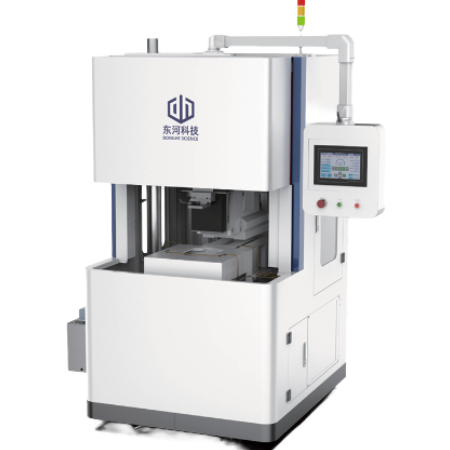
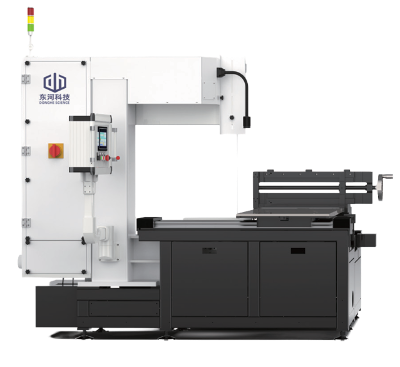
Hard and Brittle Material Cutting Wire Saw
Hard and Brittle Material Cutting Wire Saw | Precision Diamond Wire Saw Machine
Hard, brittle material cutting wire saws for silicon, sapphire, ceramics, and optical glass, precision diamond wire saws with minimum kerf loss. Best for semiconductor, solar, and LED manufacturing.
<0.3mm
Kerf Width
3-4×
Faster Than ID Saw
95%+
Material Yield
Ra<0.5μm
Surface Roughness
Wire Saw Transparent Image Placeholder
Introduction
What is a Hard and Brittle Material Cutting Wire Saw?
Diamond-coated wire is used for accurate cutting through the most challenging materials in the industry
The hard and brittle material cutting wire saw is one of the new technological advances in precision cutting machinery using diamond-coated wire to make cuts in materials with hardness and low coefficient of toughness. Unlike traditional methods of blade sawing or laser cutting, the diamond wire saw produces optimal results through abrasive action under tailorable conditions.
This technology is needed in numerous industries that require the highest level of precision cutting within little material loss. The cutting wire technology will allow manufacturers to fabricate expensive materials such as silicon carbide (SiC), sapphire crystals, and semiconductor-grade silicon with kerf losses as low as 0.15mm.
Minimal Kerf Loss
Wire diameter starting from 0.1mm will save up to 50% of materials compared to conventional methods
Superior Surface Quality
Achieve a surface roughness Ra < 0.5 μm without substantial post-processing
Zero Heat Affected Zone
Coolant-assisted cutting eliminates thermal damage to sensitive materials
Cutting Capabilities
Materials You Can Cut with Diamond Wire Saw
Our hard and brittle material cutting wire saw handles the most demanding materials across industries
Semiconductor Materials
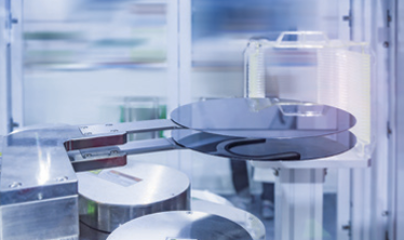
Precision-cutting silicon wafers for IC manufacturing and photovoltaic applications that include monocrystalline and polycrystalline silicon and compound semiconductors.
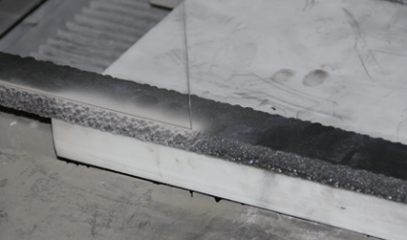
Silicon Carbide (SiC)
Advanced SiC wafer cutting solutions for third-generation semiconductor applications with a Mohs hardness of 9.5 are essential for EV power devices and 5G RF components.
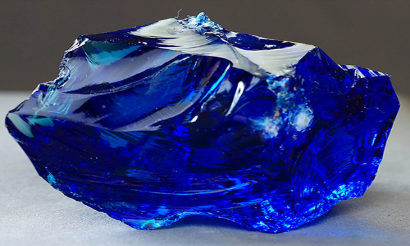
Sapphire Crystal
Proficient sapphire cutting machine services for LED substrates, optical windows, and watch crystals. Our machine is capable of handling c-, a-, and r-plane orientation process.
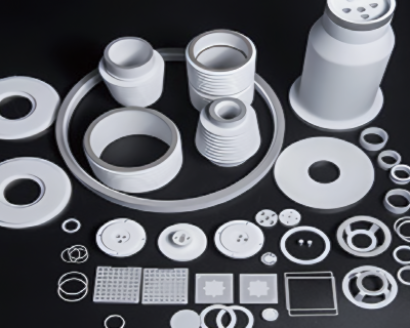
Advanced Ceramics
Complete milling and cutting solutions for technical ceramics, including alumina (Al₂O₃), zirconia (ZrO₂), aluminum nitride (AlN), and silicon nitride (Si₃N₄).

Optical Materials
Machine-grinding technology processing of optical glass and quartz crystal for lens, prism, and laser components towards achieving the highest optical-grade surface finish.
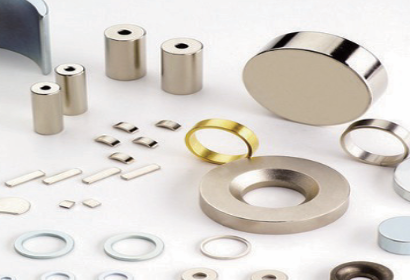
Magnetic Materials
Specialized treatment is necessary for NdFeB cutting and ferrite processing that go into the manufacture of myriad permanent magnets used in electric vehicle motors, wind turbines, and other applications.
Comprehensive Cutting Parameters by Material
The following table provides recommended starting parameters for diamond wire saw cutting of common hard and brittle materials:
| Material | Wire Ø (mm) | Wire Speed (m/s) | Feed Rate (mm/min) | Grit Size | Coolant |
|---|---|---|---|---|---|
| Monocrystalline Silicon | 0.10-0.12 | 15-25 | 0.3-0.8 | 40/50 | Water-based, pH neutral |
| Silicon Carbide (SiC) | 0.20-0.35 | 10-20 | 0.2-0.5 | 60/80 | Water + additive |
| Sapphire | 0.20-0.30 | 15-30 | 0.3-0.6 | 40/60 | Water-based |
| Optical Glass | 0.25-0.40 | 20-40 | 0.5-1.2 | 60/80 | Clean filtered water |
| Quartz | 0.20-0.35 | 20-35 | 0.4-1.0 | 60/80 | DI water preferred |
| Alumina Ceramic | 0.30-0.50 | 15-30 | 0.3-0.8 | 40/60 | Water + rust inhibitor |
| Zirconia | 0.30-0.45 | 15-25 | 0.2-0.6 | 60/80 | Water-based |
| NdFeB Magnet | 0.30-0.50 | 20-40 | 0.5-1.5 | 40/60 | Oil-based or water + inhibitor |
| Graphite | 0.25-0.40 | 30-60 | 1.0-3.0 | 40/60 | Dry cutting possible |
| Ferrite | 0.30-0.45 | 20-35 | 0.5-1.2 | 60/80 | Water-based |
Important Note
Parameters above are starting guidelines. Optimize based on specific material grade, required surface quality, workpiece dimensions, and equipment capabilities. Always conduct test cuts before production runs.
Technology
How Diamond Wire Saw Cutting Works
Understanding the precision cutting mechanism that makes brittle material machining possible
The Diamond Wire Cutting Mechanism
This technology is such that the whole diamond wire saw cutting mechanism operates using thousands of microscopic diamond particles adhered to a thin steel wire. As the thin wire quickly swishes past (10-25 m/s), these small abrasive particles chip the fly into controlled micro-fractures—channeling a remarkable material-removal accuracy.
When cutting hard and brittle materials, the material is worked in a ductile regime at a microscopic level in order to prevent catastrophic crack cluster development that would cause chipping. This is managed by setting all the cutting parameters: rotational speed, feed rate, and tension.
Wire Speed Control
Variable speed from 5-25 m/s optimized for each material type
Precision Feed Rate
Micro-controlled feed from 0.01-2.0 mm/min for optimal surface quality
Tension Management
Real-time tension monitoring prevents wire breakage and ensures straight cuts
Coolant System
Water-based or oil-based coolant for heat dissipation and debris removal
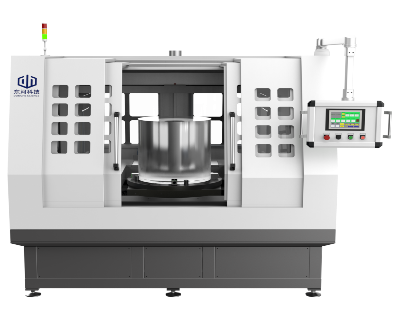
Key Cutting Parameters
Wire Diameter
0.1 – 0.5 mm
Wire Speed
5 – 25 m/s
Feed Rate
0.01 – 2.0 mm/min
Wire Tension
15 – 35 N
Kerf Width
0.15 – 0.35 mm
Surface Ra
< 0.5 μm
Equipment
How to Choose the Right Diamond Wire Saw Machine
Selecting the optimal diamond wire saw cutting machine requires balancing technical requirements, production needs, and budget constraints. Follow this systematic approach to make the right decision.
Step 1: Define Your Requirements
Material Considerations
What materials will you cut? (hardness, brittleness)
What are the workpiece dimensions (length × width × thickness)?
What surface quality is required (Ra value)?
What dimensional tolerances must be achieved?
Production Considerations
Expected volume (pieces per day/week/month)?
Batch production vs. continuous operation?
Level of automation required?
Available floor space?
Step 2: Match Machine Type to Application
| Your Application | Recommended Machine Type | Why |
|---|---|---|
| R&D / Prototyping | Single wire, desktop | Flexibility, low cost, easy operation |
| Small batch optical components | Gantry endless loop | Excellent surface quality, versatility |
| Silicon wafer production | Multi-wire saw | High volume, efficiency |
| Large ceramic blocks | Horizontal gantry | Large capacity, stability |
| Complex shapes | CNC contour system | Programmable cutting paths |
| Ultra-hard materials (SiC) | Ultrasonic-assisted | Reduced cutting force, better quality |
Step 3: Evaluate Key Specifications
| Specification | What to Look For | Why It Matters |
|---|---|---|
| Cutting Capacity | Max X × Y × Z dimensions | Must accommodate your largest workpiece |
| Wire Speed Range | 10-80 m/s typical | Higher speed often = better surface quality |
| Tension Control | Servo-controlled preferred | Consistent tension = consistent cuts |
| Feed System | Precision servo drive | Controls cut quality and speed accuracy |
| Automation Level | Manual to fully automatic | Impacts labor requirements and consistency |
| Coolant System | Flow rate, filtration, temperature control | Affects tool life and cut quality |
Step 4: Validate Before Purchase
✓ Pre-Purchase Validation Checklist
Cutting Test: Send sample material for trial cutting—evaluate cut quality firsthand
Specification Review: Detailed technical discussion with manufacturer engineers
Site Visit: See machines in operation at manufacturer or reference customer
Reference Check: Talk to existing customers in your industry
Support Assessment: Verify service capability, spare parts availability, response time
⚠️ Red Flags When Evaluating Suppliers
No cutting samples or test data available
Unwilling to provide customer references
Vague specifications or unsubstantiated performance claims
No local service or technical support capability
Extremely low price without clear justification
Pressure to purchase without technical evaluation
Industries
Wire Saw Applications Across Industries
Serving critical cutting needs in high-tech manufacturing sectors worldwide
35%
Semiconductor Manufacturing
Semiconductor wafer cutting from ingot to wafer for IC fabrication and power electronics
30%
Solar PV Industry
Solar silicon cutting for photovoltaic cell production, mono and multi-crystalline
15%
LED Manufacturing
LED sapphire cutting for substrate preparation, PSS processing
10%
Electronics & 5G
Electronic ceramic cutting for substrates, MLCC, and RF components
5%
Optics & Photonics
Optical glass cutting for lenses, prisms, laser components
5%
Research & Development
Laboratory wire saw applications for material science and sample preparation
Common Cutting Challenges & Our Solutions
Addressing the critical pain points in hard and brittle material processing
Edge Chipping & Cracking
The Problem
✓ Our Solution
Hard and brittle materials have low fracture toughness, causing edge chipping, micro-cracks, and high scrap rates during cutting. This is especially problematic with sapphire, ceramics, and optical glass.
Optimized low-stress cutting parameters
Ultra-fine diamond grit wire (40-60 μm)
Precision tension control system
Specialized fixturing with auxiliary support
Reduced feed rate algorithms for edges
High Material Loss (Kerf Loss)
The Problem
✓ Our Solution
Expensive materials like SiC, sapphire, and semiconductor silicon result in significant cost when kerf loss is high. Traditional cutting methods waste 0.5-1.0mm per cut.
Ultra-thin diamond wire (0.1-0.12mm diameter)
Kerf loss reduced to 0.15-0.25mm
Up to 50% material savings vs blade cutting
Optimized wire path planning
Extended wire life reduces consumable costs
Poor Surface Quality
The Problem
✓ Our Solution
Semiconductor and optical applications demand surface roughness Ra < 0.5μm and minimal subsurface damage. Poor surface quality requires expensive post-processing.
Achieve Ra < 0.3μm direct from cutting
Controlled ductile-mode cutting regime
Optimized coolant flow and filtration
Vibration-dampened machine structure
Reduce or eliminate lapping steps
Low Cutting Efficiency
The Problem
✓ Our Solution
Hard materials like SiC (Mohs 9.5) and sapphire (Mohs 9) are extremely slow to cut, creating production bottlenecks and high per-part costs.
High-performance electroplated diamond wire
Optimized cutting parameter database
Multi-wire options for volume production
Automated loading/unloading systems
24/7 unmanned operation capability
Frequent Wire Breakage
The Problem
✓ Our Solution
Wire breakage causes production downtime, material damage, and inconsistent quality. Often caused by improper tension, worn guide wheels, or parameter mismatches.
Real-time tension monitoring & adjustment
Automatic wire breakage detection
Premium carbide guide wheels
Overload protection system
Wire life prediction algorithms
Equipment Selection Difficulty
The Problem
✓ Our Solution
With multiple wire saw types and configurations, customers struggle to select the right diamond wire saw machine for their specific materials and production requirements.
Free material cutting trials
Application engineering consultation
Customized equipment recommendations
Process parameter development support
On-site installation and training
Expert Cutting Assistant to Hard and Brittle Material Cutting Wire Saw
Precision tools for Hard and Brittle Material processing
Process Configurator
Efficiency & ROI
1. Parameters Predictor
2. Quality Optimization
Line Speed:—
Feed Rate:—
Tension Suggestion:—
Coolant Type:—
1. Material Yield Calculator
2. Economic Analysis
Est. Kerf Loss:—
Material Recovery Rate:—
Slices (per 100mm):—
Waste Reduction:Optimized
Frequently Asked Questions (FAQs)
What is an Endless Wire Saw and How Does Continuous Loop Cutting Work?
An Endless Wire Saw is a machine tool that utilizes abrasive wire, typically made of diamond, to create a continuous loop of abrasive cutting material that is fed through the workpiece in order to perform high-performance cutting of hard and brittle materials. This design of continuous loops provides a constant tension and speed of operation, providing consistent results as well as less waste of the cut material. In addition to cutting hard materials like Monocrystalline Silicon used to produce silicon wafers, the endless wire saw allows for the precise slicing of these materials in the manufacturing process.
What is the Difference in Precision Cutting Between an Endless Wire Saw and a Single Wire Set-Up?
The main advantage of an endless wire saw over a single wire is the use of a continuously looped wire. This design allows for longer wire life with fewer interruptions for wire replacement, providing more efficient cuts and maximizing the amount of material used for production of these types of materials. In contrast, a single wire set-up is used for individual block cuts or experimental cuts.
Can an Endless Wire Saw be Used to Cut Multiple Types of Materials such as Monocrystalline Silicon and Photovoltaic Wafers?
The endless wire saw is commonly used to cut many different types of materials, including monocrystalline silicon for photovoltaic and semiconductor applications. The cutting performance of the endless wire saw can be optimized by selecting the correct diamond specification to produce the cutting abrasives as well as adjusting feed rates based on the material being cut. This allows users to achieve their desired cutting performance while minimizing material damage and cutting of costly substrates inefficiently.
What Role Does the Coated Diamond Wire Play for Precision Cutting on an Endless Wire Saw?
The coated diamond wire is the cutting element of many endless wire saws. The coated wire retains and maintains the diamond particles in order to produce a diamond cutting wire designed for precision cutting and precise cutting of hard materials such as monocrystalline silicon. Properly specified coated diamond wire provides improved cutting results, reduced knife-induced chipping, and a longer wire life and better utilization of sliced hard materials.
How often do I need to replace my diamond wire and what can I do to extend its usage?
The replacement frequency will depend on the type of material being cut with the diamond wire, length of the cut and the operating environment the wire will be cutting in. To maximize the cutting of the wire and increase the overall life of the wire use advanced wire technology, always check tension and lubrication levels, provide diamond grit for the specific cutting application and monitor your cutting process on a consistent basis. Following these guidelines, and performing regular maintenance and optimizing the cutting process will minimize downtime and reduce the cost of cutting precious wafers.
Does using an endless wire saw create less damage to the material and less material loss than other methods of cutting?
When set up properly, an endless wire saw can greatly limit both the amount of damage to the product you are cutting and the amount of material wasted when cutting. The continuous loop of wire and the fine diamond abrasives offer the ability to perform slow, controlled cuts which can limit kerf width and internal cracking reducing waste and improving yields in the production of silicon wafers and other hard brittle materials.
What are the usual cutting parameters and what are the recommended cutting parameters for different types of materials?
Every type of material has different cutting parameters for example; wire speed, feed rate, tension and the flow rate of the coolant. Depending on what kind of product you are cutting helps determine the cutting parameters. When cutting fragile photovoltaic or monocrystalline slices, to have better finished products you need to keep a low feed rate while using the correct diamond grit. By using advanced coating technology on the wire gives you a better chance of keeping the diamond cutting material functioning well throughout the entire cutting process through continuous monitoring.
Are there specialized endless wire saws or new diamond products designed for high-end cutting in production?
Yes, manufacturers are producing newer protective and high-performance diamond wire products specifically for precision cutting on thin silicon wafers and brittle materials. These may include a wider selection of grit sizes, reinforced core wires, wires that have been wound for additional strength, and engineered coatings that will enhance the life of the diamond wire and improve your material utilization rates while still meeting stringent customer safety and product performance requirements.
Trending Blogs

![Polysilicon Material: Properties, Grades & Uses [Guide]](https://wiresawcutter.com/wp-content/uploads/2026/08/polysilicon-material-featured-150x150.webp)