Get in touch with DONGHE Company
-
Phone: +86 181-1645-5490
-
Email: Sales18@DongheScience.com


nome
I write about cutting processes and the materials they work with. My articles compare concrete sawing approaches and explain silicon carbide heating elements for industrial furnaces. I focus on how the application changes the equipment question, so readers can distinguish a cutting task from a material or furnace component choice.
Concrete Cable Saw vs Wire Saw vs Wall Saw: Which to Choose for Your Project
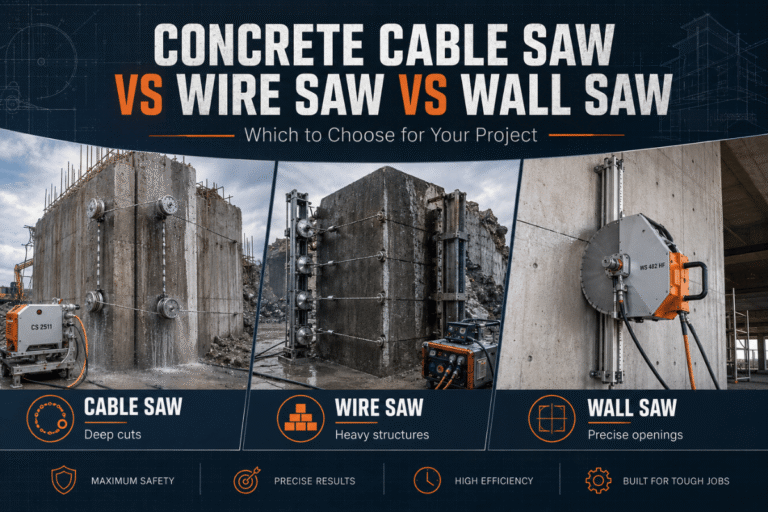
If you’re shopping a concrete cable saw vs wire saw vs wall saw for an upcoming project, the first shocker is that you’re comparing two machines, not three. In concrete cutting, “cable saw” and “wire saw” describe the same machine.…
Silicon Carbide Heating Element: Types, Specifications & Industrial Furnace Applications
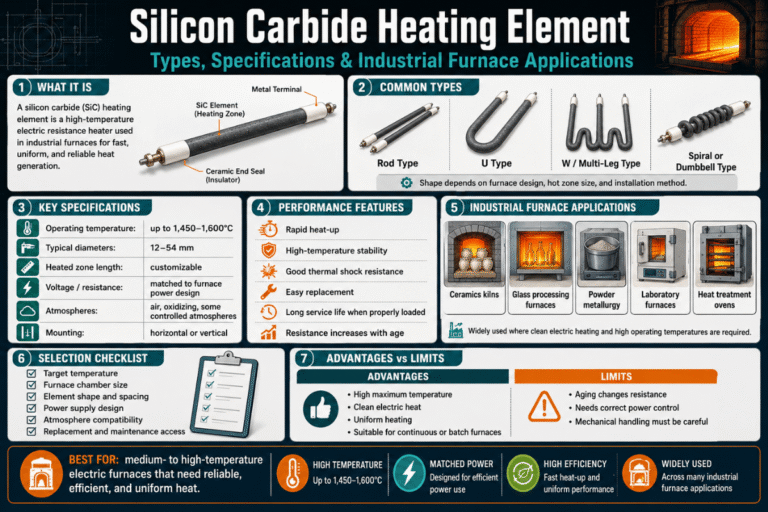
Updated June 2026 · Reviewed by the Shanghai Donghe Science and Technology technical team A silicon carbide heating element is a non-metallic ceramic resistor, made mostly of recrystallized silicon carbide (SiC), that turns electric current into radiant heat at temperatures…
Wafer Manufacturing Equipment: Complete Guide to Slicing, Lapping, Polishing & Inspection Machines
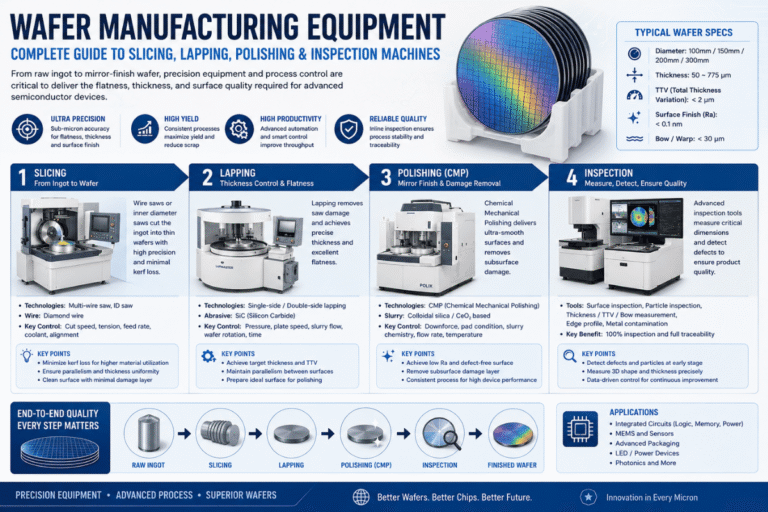
Wafer manufacturing equipment is the set of front-end machines that turn a grown silicon crystal ingot into a finished, polished bare wafer — the substrate a chip fab later builds circuits on. For most of us sourcing tools for a…
Diced Wafer Process Explained: From Sliced Wafer to Singulated Die
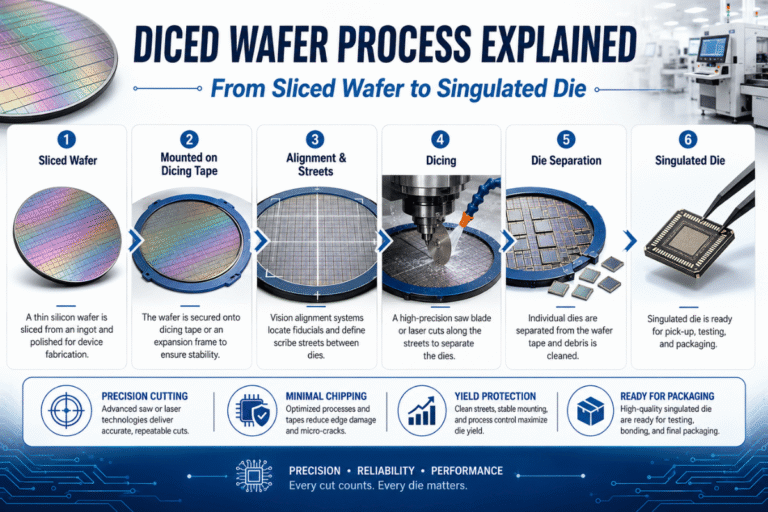
By the Shanghai Donghe Science and Technology Co., Ltd. technical team · Updated June 2026 The diced wafer process is the back-end step where a finished semiconductor wafer is cut into hundreds or thousands of individual dies, each one a…
Wafer Slicing vs Wafer Dicing: Process, Equipment & When to Use Each
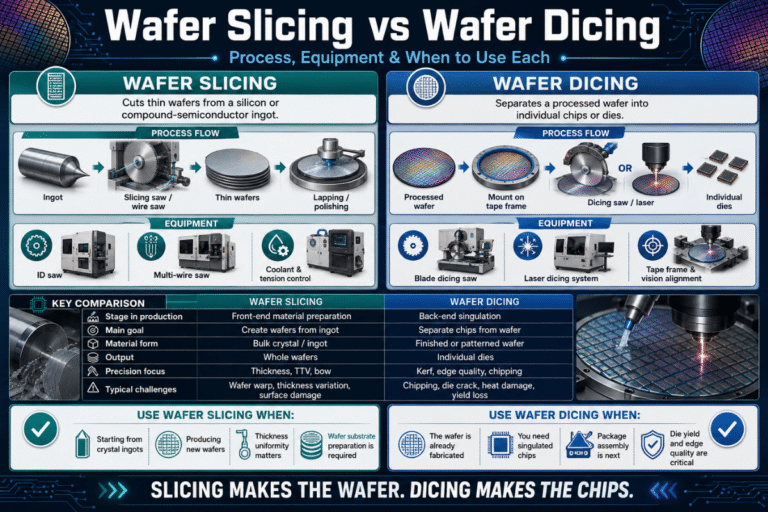
Updated June 2026 Reviewed by the Shanghai Donghe Science and Technology Co., Ltd. technical team The phrase wafer slicing vs wafer dicing sounds like a choice between two rival cutting methods. It’s not. Wafer slicing vs wafer dicing is really…
Silicon Carbide MOSFET: Why SiC Is Replacing Silicon in Power Electronics
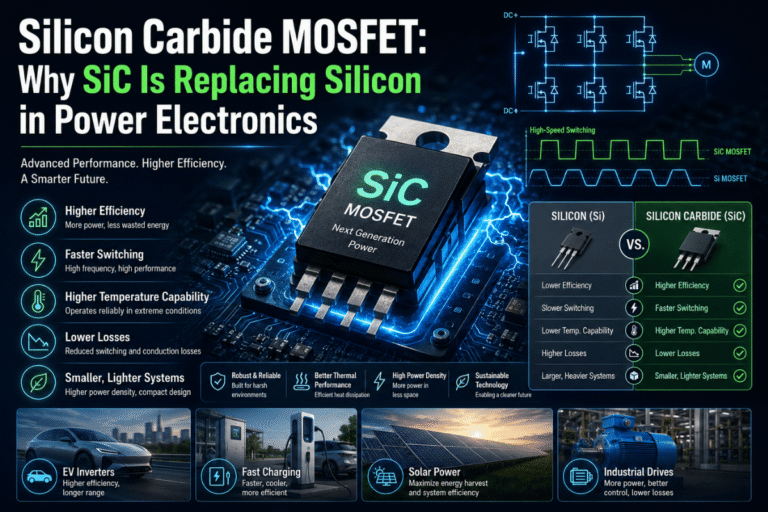
A silicon carbide MOSFET is a power field-effect transistor built on a 4H-SiC wafer instead of silicon, so it blocks hundreds to thousands of volts across a much thinner layer, switches faster, and runs hotter than a silicon MOSFET. That…
Natural Stone Manufacturing: Complete Process from Quarry to Finished Product
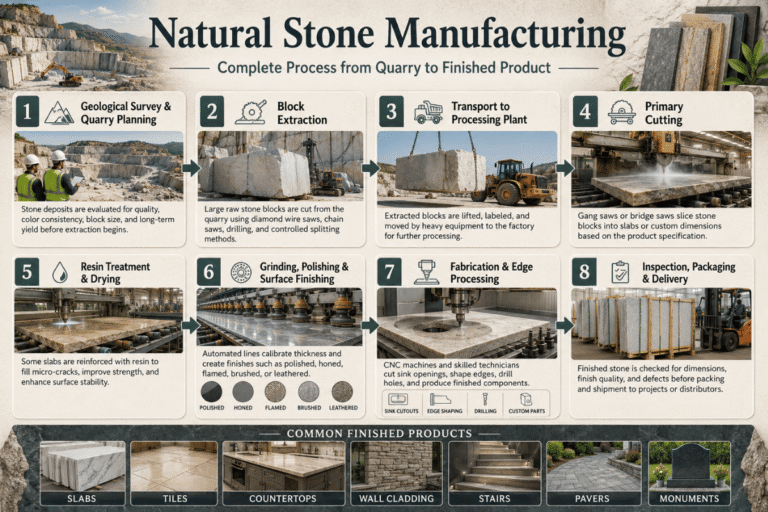
Natural stone manufacturing describes the sequence of operations which converts solid rock beneath the ground into polished slabs, tiles, and panels which you’ll have encountered on countertops or building faces. Unlike manufactured (or engineered) stone, which is cast out of…
Silicon Carbide Abrasive: Grit Sizes, Grades & Industrial Cutting Applications
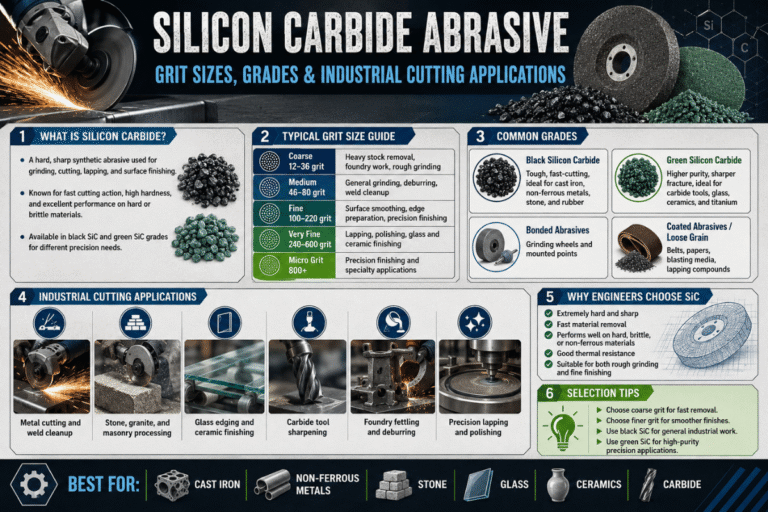
A silicon carbide abrasive is an artificial ceramic grain composed of silicon and carbon. It’s favoured for cutting, lapping, blasting, and polishing due to it’s extreme hardness for grinding application; it ranks about 9.5 on the Mohs hardness scale which…
Wafer Thinning Process: Back-Grind & Back-Lap Technology Explained
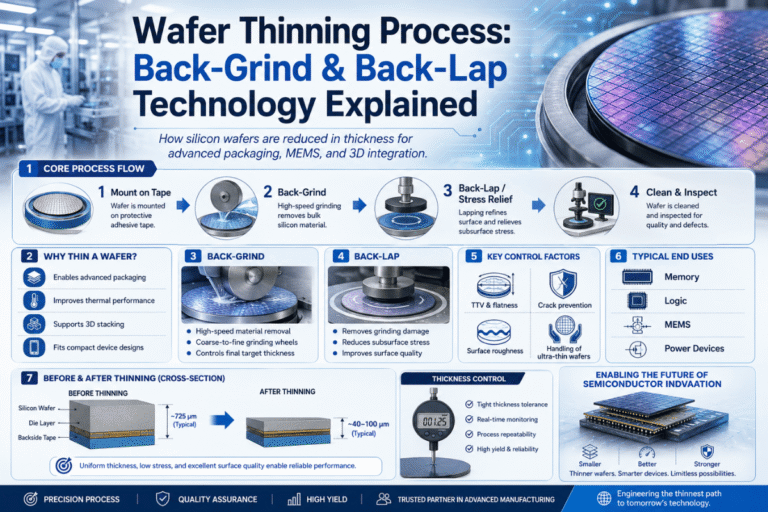
Wafer thinning is the back-end step where a finished silicon wafer is ground and polished down from its full handling thickness to a fraction of it. It rarely makes headlines, yet every stacked memory cube, every thin power device, and…
Aluminum Nitride (AlN) Substrate: Properties & Applications in Power Electronics
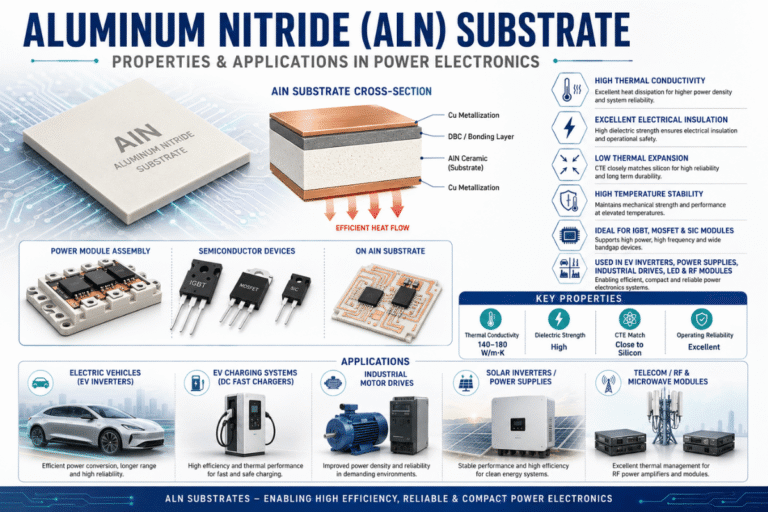
An aluminum nitride substrate is usually bought for thermal conductivity, electrical insulation, and dimensional stability. Cutting has to protect those values: low edge chipping, narrow kerf, controlled sub-surface damage, clean coolant handling, and enough process evidence for the next packaging…
Trending Blogs

![Polysilicon Material: Properties, Grades & Uses [Guide]](https://wiresawcutter.com/wp-content/uploads/2026/08/polysilicon-material-featured-150x150.webp)