Get in touch with DONGHE Company


A silicon carbide abrasive is an artificial ceramic grain composed of silicon and carbon. It’s favoured for cutting, lapping, blasting, and polishing due to it’s extreme hardness for grinding application; it ranks about 9.5 on the Mohs hardness scale which is one less than diamond and boron carbide (out of materials typically found in workshops); in this explanation we clarify what exactly the abrasive material is and why there’s two colour variants ( black and green ), decipher how to read FEPA numbers, discuss application usage, compare Silicon Carbide Vs Aluminum Oxide , and explain its relation to cutting brittle workpiece materials.
In one paragraph: Silicon carbide abrasive is angular, very hard (Knoop ~2,500–2,800 kg/mm²) and friable, so its grains fracture under load to expose fresh edges. That self-sharpening action makes it cut fast and cool on non-ferrous metals, cast iron, glass, stone and ceramics — but the same friability makes it a poor first choice on hardened steel.
Quick Specs: Silicon Carbide (SiC) Abrasive
| Mohs hardness | 9.2–9.5 (harder than aluminum oxide ~9.0) |
| Knoop hardness | ~2,500–2,800 kg/mm² |
| Density | 3.21 g/cm³ (lighter than alumina 3.95) |
| Thermal conductivity | ~120 W/m·K |
| Grain character | Sharp, angular, friable (self-sharpening) |
| Silica content | Silica-free (no crystalline-silica blasting hazard) |
| Common grades | Black SiC (~95–98.5%) & Green SiC (≥99%) |
What Is Silicon Carbide Abrasive?
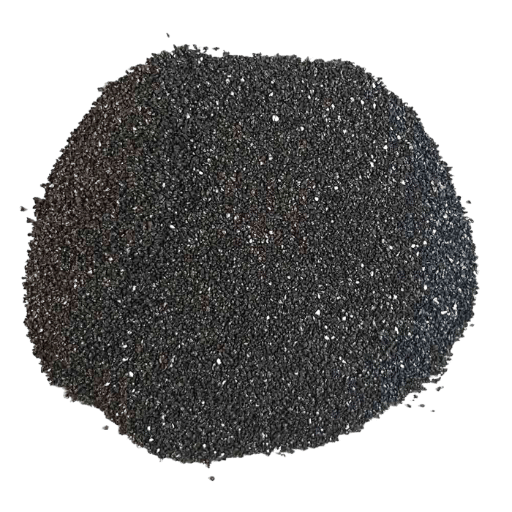
Silicon carbide abrasive is crushed, sorted silicon carbide (SiC), a synthetic compound of silicon and carbon used as cutting grit. Is silicon carbide an abrasive? Yes — it is one of the original manufactured abrasives, and per the Indian Bureau of Mines bulletin on abrasives, boron carbide, silicon carbide and aluminum oxide form the core family of manufactured (rather than natural) grains.
The practical risk is choosing blind: pick a grain because it looks the hardest and it can fail on the job, wasting cost. In practice, machinists reach for silicon carbide on hard, brittle, non-ferrous work held to tolerances of a few microns, where grit runs from about 1,320 µm coarse down to a 3 µm polish.
The Silicon Carbide grains are processed through an electrical resistance furnace whereby silicon, quartz, and petroleum Coke mixture are subjected to temperatures of between 2000-2400 °C to ultimately produce SiC crystalline. These crystals are thereafter processed by smashing and sieving them into defined grain sizes. The invention was initiated by Edward Goodrich Acheson, the method itself and it’s commercial product known by trade name “Carborundum” originate back in 1891 as cited in the university of Penn State, Pennsylvania for Carborundum information and history. Therefore, any grinder’s wheel previously stamped “carborundum”, is in fact a silicon carbide based abrasive.
At this stage it’s essential to address the material’s application as both an abrasive and as semiconductor ceramic; however this guide is focused on the Silicon Carbide grains used in the abrasives application and its cutting abilities, not silicon carbide for semiconductor manufacturing and it’s detailed properties and wafer production – to view that guide, follow link for [ Silicon Carbide Material information. ]
Why Silicon Carbide Cuts: Hardness, Friability & Self-Sharpening
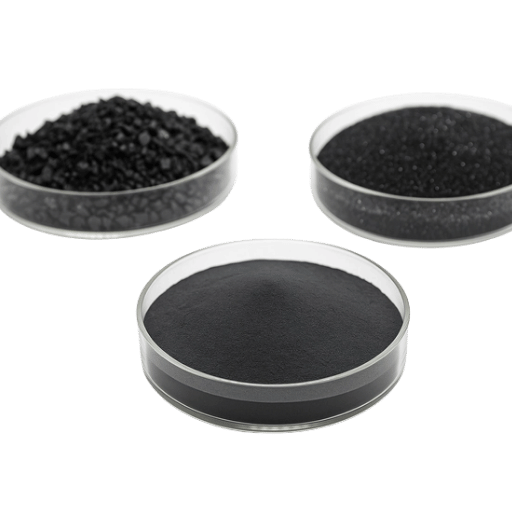
Two properties explain why this grit works. First, sheer hardness: it has a Knoop hardness around 2,500 kg/mm² and is “very friable,” per the ScienceDirect guide to green silicon carbide; other readings run as high as 2,800, above fused aluminum oxide (~2,000) and below boron carbide and diamond, consistent with academic hardness measurements placing ultra-hard ceramics at 24–35 GPa.
Second, its shape; because SiC fractures into splintered, angled bits instead of round particles, the grit cut aggressively. On the common scales that lands at about 9.5 Mohs and 2500 Knoop (its Vickers reading sits in the same band).
The Friability-First Selection Rule
The Friability-First rule says this: Choose SiC when you want a grit that razor sharpens itself as it cuts. When you want a grit that last through tough wear, choose a harder, stronger one. Because SiC is a friable mineral, the cutting tip on a SiC grain breaks as the particles chip away and reforms itself on every contact. As you know SiC breaks with a crisp, angular fracture whereas, a harder diamond like material deforms into a ball shape that grinds rather than cuts cool and fast in all brittle materials such as stone, glass, cast iron, etc. As is why it’s not very economical when used on high-tough steel and wear resistance. As the operators themselves often discuss silicon carbide in the rock tumbler world: ‘In use the particles tend to break up and crush instead of wear round… [making] the particles keep ‘generally always sharp’ ‘.
📐 Engineering Note
Friability is a characteristic of the abrasive, not a flaw. Possessing a thermal conductivity of close to 120W/mK, and a density of 3.21g/cm, making it around 19 percent lighter than alumina, while retaining an impressive 3,900MPa of compressive strength, SiC sucks heat out of the cut and reduces blast rig wear – and it remains hard up to roughly 1,600°C in operation, prior to oxidizing. You pay for the ability to achieve this better cut through greater consumption due to the abrasive’s short life cycle per particle.
Black vs Green Silicon Carbide: Which Grade?
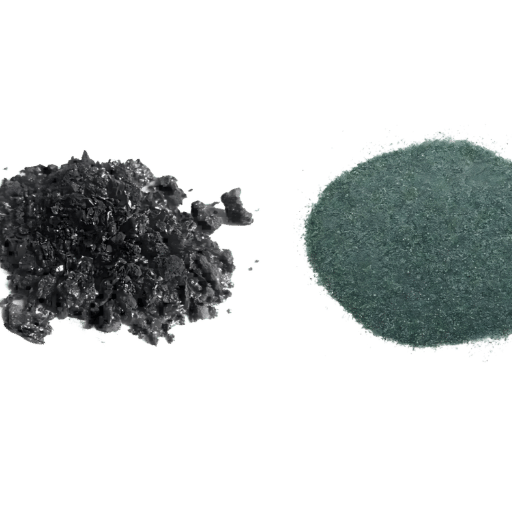
The grades are both silicon carbide, the distinction is in purity that alters the hardness, friability and the associated cost. Black silicon carbide has 95-98.5% SiC while green has 99% or higher, is slightly harder and more friable hence is more suitable for more demanding precision operations and high quality tooling.
The trade-off is cost: green is dearer because the extra purity and friability earn their keep only in precision lapping to sub-micron finishes, whereas in a production grinding shop black is the tougher, cheaper grain at roughly 95% the hardness for a fraction of the price. Independent powder-characterization studies of alumina, boron carbide and silicon carbide track the same grade-to-property link. In practice green runs about 99.2–99.5% SiC against 97–98.5% for black, a 1–2% purity gap that matters most at grits finer than F320 (under 30 µm).
| Property | Black SiC | Green SiC |
|---|---|---|
| SiC purity | ~95–98.5% | ≥99% |
| Relative hardness | High | Highest (slightly harder) |
| Friability | Tougher | More friable |
| Best for | General grinding, sandblasting, refractory, stone, cast iron | Carbide & PCD tool grinding, fine lapping, optics, electronics |
| Relative cost | Lower | Higher |
However in reality you aren’t often aiming at the hardest figure possible. SiC, black – For deburring castings, blasting rust, its cheap and work fine. SiC, green – for sharpening carbide inserts, lapping the face of a sealing ring to a mirror, where extra purity, more friability etc are required for the cost.
Silicon Carbide Grit Sizes Explained (FEPA Chart)
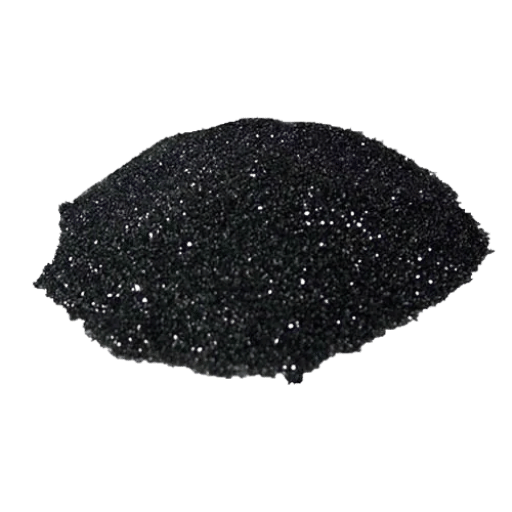
Grit number is just a sieve code: a higher number means a smaller particle and a finer finish. The catch is that several standards exist. Silicon carbide grit is graded mainly under FEPA — “F” numbers for bonded grain (grinding wheels) and “P” numbers for coated grain (sandpaper) — alongside ANSI B74.12 and ISO 8486, with JIS R6001 common in Asia. Coarse “macrogrit” sizes cover the heavy-removal end, fine “microgrit” sizes the polishing end, and older sieve charts still quote a mesh number for the same particle. The UAMA “Abrasives 101” primer explains why ANSI and FEPA grades differ, and why FEPA P (coated) and FEPA F (bonded) are not interchangeable at the same number.
| Grit class | FEPA F grit | ~Median particle (µm) | Typical job |
|---|---|---|---|
| Macrogrit | F16 | 1,320 | Heavy stock removal, coarse blasting |
| Macrogrit | F24 | 764 | Rust stripping, aggressive grinding |
| Macrogrit | F36 | 525 | Coarse grinding, stone shaping |
| Macrogrit | F60 | 260 | General grinding, primary lapping |
| Macrogrit | F80 | 185 | Medium grinding, blast finishing |
| Macrogrit | F120 | 109 | Fine grinding, surface prep |
| Macrogrit | F220 | 58 | Precision lapping, tolerance control |
| Microgrit | F320 | 29.2 | Polishing, honing |
| Microgrit | F500 | 12.8 | Fine polishing, sealing faces |
| Microgrit | F800 | 6.5 | Ultra-fine finishing |
| Microgrit | F1200 | 3.0 | Optical lapping, mirror finish |
Particle sizes are quoted as FEPA F median diameters (cross-referenced with published FEPA conversion tables).
What Grit of Silicon Carbide Should I Use?
Match the grit to the step, not to the material. Start coarse to remove stock, then step finer to refine the surface. For surface prep and rust removal, F16–F36 cuts fast; for general grinding and the first lapping pass, F46–F80; for precision lapping and tolerance control, F100–F220; and for polishing glass, optics or sealing faces, F320 and finer, finishing at F800–F1200.
That covers about 1,320 microns at F16 down to 3 microns at F1200, and a typical SiC blast setup runs at roughly 40–90 psi. Get this wrong and you waste time or leave scratches, because each step has to clear the last one’s marks; on the bench, a machinist typically steps F60 (260 µm) to F220 (58 µm) to F600 before polishing. A practical rule when wet-sanding or lapping: never skip more than one or two grit steps, or the earlier scratches will not fully clear. And always check whether a supplier quotes FEPA F (bonded), FEPA P (coated), ANSI/CAMI or JIS, the same “400” can mean different microns across those systems.
Forms of Silicon Carbide Abrasive & Which Process Each Suits
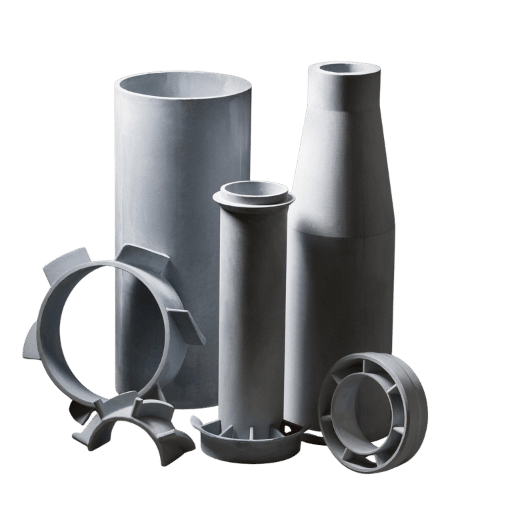
All these abrasive grits do many different jobs, although it’s form, and not necessarily grade, that determines method. The same loose abrasive behaves entirely differently as a bonded abrasive locked into a wheel or as a coated abrasive glued onto paper. Even the grains themselves are engineered for these forms, as patent literature on silicon carbide abrasive grains shows. Find the best match among the forms of abrasive in the map below.
The 5-Form SiC Abrasive Process Map
| Form | What it is | Process it suits |
|---|---|---|
| Loose powder / grit | Graded free grains | Lapping, free-abrasive slicing, tumbling, pressure blasting |
| Bonded wheel | Grains in vitrified or resin bond | Grinding non-ferrous metal, cast iron, carbide tools |
| Coated paper / disc | Grains on a backing | Wet/dry sanding, finishing, paint prep |
| Lapping compound / slurry | Grit in an oil or water carrier | Flat lapping, honing, valve seating, optics |
| Blasting media | Hard angular loose grit | Surface prep, deburring, glass etching |
A working example: In order to flat an iron lapping plate,you would be using F120-F220 free loose green SiC and a carrier- not a bonded wheel- to facilitate cutting flat using the free grit that rides the flat of the tool against workpiece interface. In order to deburr the edge of a casting, the identical green SiC will be most effective on a bonded wheel which may better maintain integrity at an edge.
What Silicon Carbide Abrasive Is Used For
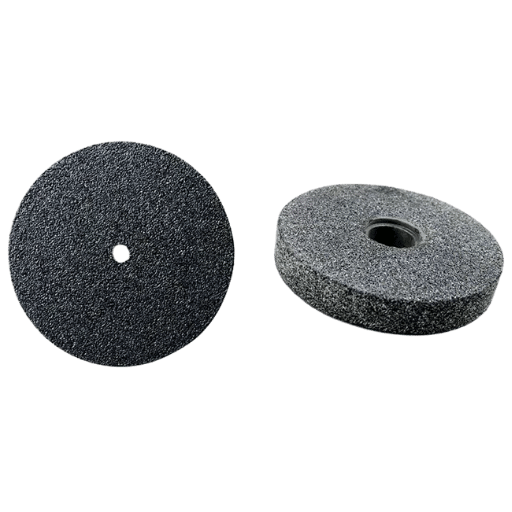
Silicon carbide abrasive is used for five main industrial jobs: grinding non-ferrous metals and cast iron, lapping and polishing, sandblasting and surface prep, cutting ceramics and stone, and sharpening. In cutting wheels silicon carbide works on non-ferrous alloys such as brass, aluminum and copper, gray iron castings, and cemented carbide cutting and drilling tools.
Silicon Carbide also cuts and grinds hard ceramic materials. In Lapping and Polishing In lap and polish work, micron-grade SiC slurry controls flatness and surface finish on optical elements, ceramics, sealing faces, and non-ferrous parts in aluminum, zinc, brass and titanium. in Sandblasting and Surface Preparation SiC grit has the sharp edges necessary to clean or prepare steel or iron surfaces, to strip scale and corrosion before welding or painting. Being silica-free, SiC eliminates crystalline silica dust hazards associated with sandblasting, one reason the national bulletin on abrasives lists silicon carbide among the core manufactured abrasives across these applications. Sawing and Dressing In the stone and tile industry silicon carbide will cut granite, marble and many hard tiles. Saw blades containing silicon carbide can also dress machine elements such as rolls and cutting and grinding equipment. History The original application of silicon carbide abrasives, sharpening stones – or stones called whetstones and carborundum bench stones- has never gone out of fashion, and silicon carbide remains a favorite stone among metal workers and machanists because it was the very first mass produced manufactured abrasive discovered at the end of the nineteenth century
💡 Pro Tip
“Hard and brittle” connects every one of these jobs. SiC will take the cutting job every time a part is harder, brittle or less heat-resistant than standard steel – which includes glass, rock, ceramics, carbide, alloys. The same applies when machining hard and brittle materials by using a wire saw.
Silicon Carbide vs Aluminum Oxide vs Boron Carbide vs Diamond
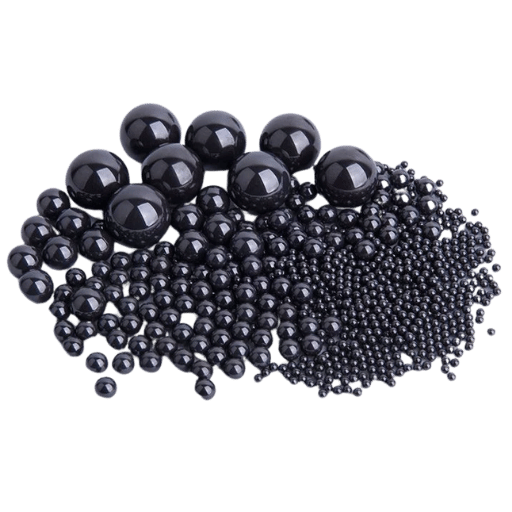
Select the grain family (often the biggest real question): Hardness alone provides the wrong answer; it’s all about the relative hardness of the grain and workpiece, and measured hardness ranges for these ceramics show how far apart the families sit(the compatibility between strength of abrasive and strength of workpiece).
| Abrasive | Knoop (kg/mm²) | Toughness | Best workpiece |
|---|---|---|---|
| Aluminum oxide | ~2,000 | Tough | Hardened/high-tensile steel, ferrous metals |
| Silicon carbide | ~2,500–2,800 | Friable | Non-ferrous, cast iron, glass, stone, ceramics, carbide |
| Boron carbide | ~2,800–3,500 | Moderate | Lapping hard ceramics, nozzles, very hard tooling |
| Diamond | ~7,000+ | Hard, low-friability | SiC & sapphire wafers, PCD, ultra-hard ceramics |
The Hardness-Gap Decision Test
Run the Hardness-Gap Decision Test before you buy: ask how hard and how brittle the workpiece is, then pick the grain one step tougher than it needs. Soft-but-tough work (mild or hardened steel) is best suited to aluminum oxide, since SiC would crumble. For hard-and-brittle work (glass, stone, ceramics, cast iron, carbide) choose silicon carbide. For an extremely hard ceramic that even SiC struggles with, step up to boron carbide. For wafer-grade or ultra-hard materials where finish and kerf matter most, go to diamond.
Is Silicon Carbide Harder Than Aluminum Oxide?
Yes, silicon carbide is meaningfully harder than aluminum oxide, roughly 2,500–2,800 Knoop versus about 2,000. But here’s the trap. Lapping specialists at Grind Lap and machinists on Practical Machinist make the same point: on durable, ductile steel the harder grain doesn’t win, because SiC’s friable grains fracture away faster and silicon and carbon have a chemical affinity for iron at the grinding interface.
So for high removal rates on hard, brittle work, silicon carbide is preferable; for a smoother finish and lower cost on steel, aluminum oxide is. Harder isn’t always better.
What Silicon Carbide Should NOT Be Used On (+ Safety)
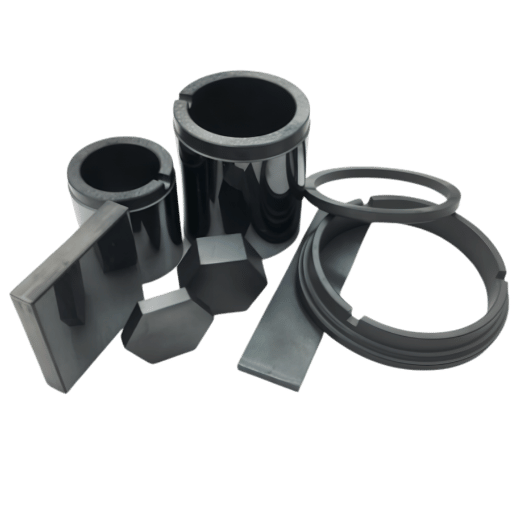
Silicon carbide shouldn’t be used on hardened or high-tensile steel. The most common mistake is to treat it as a universal “hardest abrasive,” but on tough steel it falls short: the friable grains break down before they’ve done much work, and the SiC, iron chemical affinity accelerates wear, so the wheel load and dulls.
For ductile, ferrous metals, aluminum oxide or CBN (cubic boron nitride) lasts far longer, consistent with the published behaviour of these abrasive ceramics. The rule of thumb that “harder grit always cuts better” is simply wrong on steel.
✔ Use SiC on
- Glass, stone, marble, granite
- Grey cast iron
- Non-ferrous metals (aluminium, brass, copper)
- Technical ceramics, carbide tooling
⚠ Avoid SiC on
- Hardened or high-tensile steel (use alox/CBN)
- Tough, ductile alloys where grain life matters
- Precision parts where SiC fragments could embed
Is silicon carbide sandpaper safe? Used sensibly, yes. SiC itself is silica-free, so it doesn’t create the respirable crystalline-silica risk of true sand blasting. But any dry abrasive process throws fine dust, and the dust from what you’re removing, old paint, coatings, the workpiece, can be the real hazard, so eye protection, respiratory protection and good extraction still apply.
How to Spec a Silicon Carbide Abrasive Order
- Grade: black (general) or green (precision/carbide).
- Grit + standard: e.g. “F220 FEPA F” — always name the standard.
- Form: loose powder, bonded wheel, coated, slurry or blasting media.
- Purity: minimum SiC % (it matters more than grit number for fine work).
- Packaging / quantity – and ask for a COA & TDS for batch control.
Loose SiC Slurry vs Fixed Diamond in Hard-Brittle Material Cutting
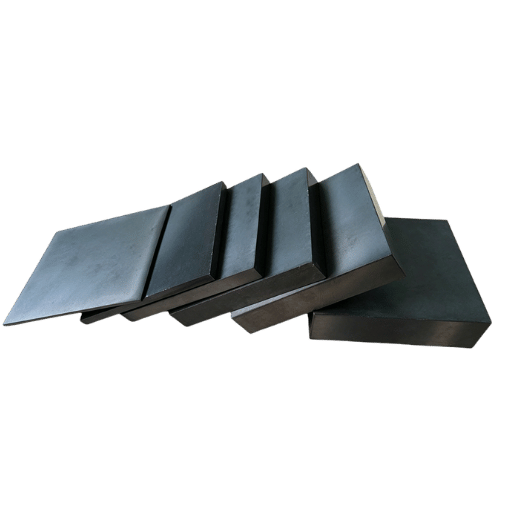
Silicon carbide abrasive does more than grind and polish, it has a long history as a cutting abrasive for hard, brittle materials. Is SiC slurry still used to cut silicon, sapphire and ceramics? Less than it once was, and knowing why is useful when you specify a process.
As a maker of wire saws for cutting hard and brittle materials, we’ve watched this shift across thousands of cutting jobs. For years, blocks and wafers were sliced with loose silicon carbide slurry: a free SiC grit was fed to a moving wire, which carried the grit to roll-cut the material. It worked, and it’s still used for some lower-cost lapping and slicing. The problem with loose slurry on production wafers is kerf and consistency: it widens the cut and the free grit wanders, because nothing holds each grain in place, so on a wafer line measured in microns the yield suffers. But for silicon and sapphire wafers, and for the hardest, most brittle ceramics, fixed-diamond wire has replaced much of that loose SiC slurry cutting, because the bonded grain give a narrower kerf, tighter thickness uniformity (TTV), higher throughput and far less consumable waste.
“Loose silicon carbide slurry still has a place in lapping and some cost-sensitive slicing, but for production silicon and sapphire wafering, fixed-diamond wire wins on kerf loss, surface quality and speed. The trade-off is that diamond wire is a capital-and-consumable decision, while SiC slurry is a low-entry-cost one.”
The practical takeaway: when you choose how to cut a hard, brittle workpiece, both the abrasive grade and the abrasive delivery matter. For the equipment side of that decision, see our overview of hard and brittle material cutting wire saws, the dedicated SiC wafer cutting saw, the sapphire cutting wire saw, and the ceramics diamond wire saw.
Industry Outlook: Where Silicon Carbide Abrasive Demand Is Heading
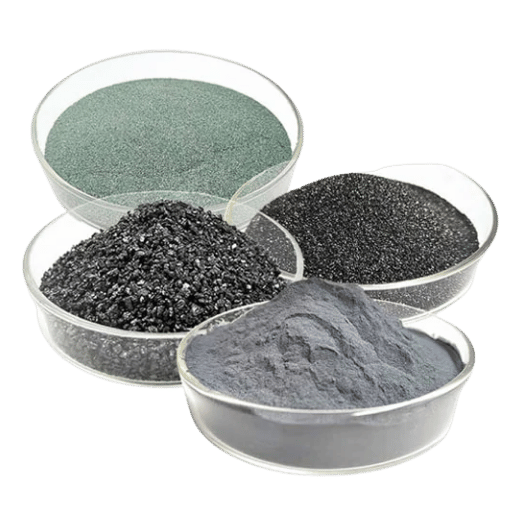
The biggest impact for buyers isn’t the cost of new SiC grit, supply is. With massive increases in SiC power electronics and EV inverters being produced there are more SiC wafer slices creating tons of SiC wafer cutting kerf. That kerf is being more systematically collected, reused and reconstituted as an abrasive grit – supply made from what was once waste material.
This isn’t just wishful thinking though, this is a genuine, live industry. A patented process (EP3043972B1) is in place for extracting silicon and silicon carbide from spent wafer-sawing slurry, a peer-reviewed paper exists that summarizes recycling of solar grade silicon from kerf-loss slurry, and Europe is home to its own in-situ SiC recycling operations via the likes of the RECOSiC project. For a buyer the risk is paying virgin prices for grit that performs like reclaimed, because grade documentation often lags the supply; in practice, specify a minimum SiC % and a friability target on any order over a few hundred kg. Broader market reports (directional only) project that worldwide demand for silicon carbide abrasives will follow double digit percentage growth right up until the mid 2030s, as it’s underpinned by that ever-growing electronics market once again.
What this means for 2026 buyers: Look out for more reclaimed and friability engineered SiC grades showing up at your front door – even “virgin” SiC from some suppliers, may surprise you. The key take action to note here, when issuing a purchase order, make sure to be very specific: Specify purity and friability on your order, not just a “ grit # .” Recycled grit can be the deal of a lifetime, IF graded appropriately. Should you anticipate high brittle, hard, precision cutting and lapping capacity for the next 2-3 years, make sure that your “decision” analysis looks at graded recycled SiC material. It could be a genuine “less expensive” path forward for your company.
Frequently Asked Questions
How is silicon carbide abrasive made?
View Answer
Produced via the Acheson process, the silica sand and petroleum coke (as the carbon source) is packed around a graphite resistor and fired in an electric furnace to approximately 2000-2400C. This process produces the silicon carbide crystals, that are then cooled, broken down, cleaned and sieved into sizes known as gritting sizes. This process, which was patented by Edward Acheson in 1891, is still the basis for production today.
Is silicon carbide the same as carborundum?
View Answer
Yes. “Carborundum” was the original trade name Edward Acheson gave synthetic silicon carbide in 1891, and it stuck as a generic term. An old “carborundum” grinding wheel or sharpening stone is a silicon carbide abrasive under a historic label.
What does green silicon carbide do that black doesn’t?
View Answer
Green silicon carbide is more pure than the black (99%+ vs around 95-98.5%). Green SiC is a little more brittle and slightly harder, which makes it the ideal choice when your work needs to be particularly precise, grinding tungsten carbide or diamond tools, lapping, or for creating optically-flat or highly-sensitive electronic components where the less-than-pure black SiC would leave too rough a finish. Black SiC remains the cost effective choice for everyday grinding.
Can silicon carbide grit be reused or recycled?
View Answer
Yeah, generally the coarser particles can be screened out and reused until they’re broken down a little too much, and today kerf made from silicon carbide in the wafer industry is even collected and used as abrasive in industry.
Does silicon carbide rust like steel abrasives?
View Answer
No. Silicon carbide is a ceramic, so it does not rust and it stays chemically stable in water, oils and most acids and alkalis. That stability is one reason SiC slurry and lapping compounds store and reuse so well in the shop.
What is the finest grit of silicon carbide available?
View Answer
Silicon carbide is available in very fine grades, with micron-grade powders running all the way down to only a few microns, around F1200 (roughly 3 microns) and finer micron grades below that, which is exactly why silicon carbide handles final lapping and optical polishing as readily as it handles coarse grinding and heavy stock removal. In other words, one abrasive family can take a workpiece from rough cut to mirror finish.
Cutting hard, brittle materials?
If you’re using silicon carbide abrasive anywhere in your workflow, the cutting method can matter just as much as the grit grade you choose. Contact our team about diamond wire saw machinery built for working silicon, SiC, sapphire, ceramic and other hard, brittle materials with a tight, repeatable kerf.
About This Guide
The above is our daily experience when designing and manufacturing wire saw for processing hard and brittle materials like silicon, silicon carbide, sapphire and ceramics when we’re deciding between free abrasive and fixed diamond processing. The hard and brittleness indexes are verified with the related abrasive references available on the market. The article was reviewed and updated by technical team of Shanghai Donghe Science and Technology.
References & Sources
- Green Silicon Carbide, engineering overviewScienceDirect Topics
- Carborundum: A Diamond in the RoughPennsylvania State University Libraries
- Bulletin on AbrasivesIndian Bureau of Mines
- Abrasives 101 (FEPA F/P & ANSI grit standards)Unified Abrasives Manufacturers Association
- Carborundum PowderInstitute of Making, UCL
- Method for recycling silicon carbide powder waste (EP3043972B1)Google Patents
- Recovery of solar-grade silicon from kerf-loss slurry wasteRenewable and Sustainable Energy Reviews (ScienceDirect)
- Ultra-hard materials: hardness of carbide and ceramic abrasivesUniversity of North Texas Digital Library
- Characterization of Ceramic Powders (alumina, boron carbide, silicon carbide)University of Tennessee TRACE
- Silicon carbide abrasive grains and slicing contamination (WO2018183585A1)Google Patents
![Polysilicon Material: Properties, Grades & Uses [Guide]](https://wiresawcutter.com/wp-content/uploads/2026/08/polysilicon-material-featured-768x512.webp "Polysilicon Material: Properties, Grades & Uses in Solar and Semiconductor Industries 13")

![Polysilicon Material: Properties, Grades & Uses [Guide]](https://wiresawcutter.com/wp-content/uploads/2026/08/polysilicon-material-featured-150x150.webp)