
Get in touch with DONGHE Company
-
Phone: +86 181-1645-5490
-
Email: Sales18@DongheScience.com

Two-Way vs One-Way Diamond Wire Saw Comparison

Precision producers have to decide between two-way reciprocating and one-way endless diamond wire systems, and it’s a big decision indeed. This analysis makes it clearer to see how the two different approaches affect cutting speed, kerf, surface finish, and cost-effectiveness.
so you can either increase output in photovoltaics, improve yield in ceramics, or keep the same tolerance in semiconductor materials. Choosing the appropriate parameters of wire speed, abrasive behavior, and machine design will not only shorten your evaluation time but at the same time increase your confidence in the procurement process.
Diamond Wire Saw Technologies Introduction

With a diamond wire saw, instead of cutting the material with a conventional steel wire, a wire embedded with diamond particles is used (one of the hardest materials). The diamond loop wire saw is a combination of the next methods of cutting: drawing, cutting fluid application, and cooling, which works together creating a very efficient cutting system.
The wire saw technology is divided into endless (one-way) systems and reciprocating (two-way) systems. Each method has its unique cutting speed, surface finish, and waste material capacity. Therefore, it is possible to apply it for precision cutting of metals, glass, silicon, and even quarry-scale stone.
Diamond Wire Cutting Overview
In diamond wire cutting, a metal wire or cable is transported with fixed diamond dust or sintered diamond particles for performing abrasive cutting. The cutting action of the wire is characterized by its high precision and a very narrow kerf, which results in less material loss compared to band saws.
Cutting machines control wire speed, tension, and cutting fluid flow to cope with heat, chip removal, and tool wear. Fixed-abrasive diamond wire gives the advantage of making not only faster but also more repeatable cuts than slurry saws. This cutting technology is now applied from microelectronics to quarryings, where the wire loop makes stable cuts across varied hardness ranges.
Key Advantages of Diamond Wire Cutting:
- ✓High precision cutting with narrow kerf
- ✓Less material loss compared to band saws
- ✓Faster and more repeatable cuts than slurry saws
- ✓Stable cuts across varied hardness ranges
Significance of the Right Wire Saw Selection
The choice of wire saw is of utmost importance as it has a direct impact on throughput, yield and the total cost of ownership. Endless diamond wire systems typically exhibit higher cutting speeds, lower vibrations, and better surface quality, while reciprocating saws are capable of lowering the total costs of consumables and are versatile with respect to the size of the workpieces.
Critical Success Factor: For aligning wire speed, cutting fluid strategy, and wire type with target tolerances to minimize kerf and stabilize the process, predictable maintenance cycles and improved capacity planning can be achieved.
Definitions: The Difference Between Endless and Reciprocating Diamond Wire Saws
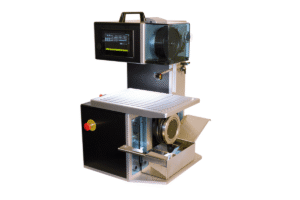
The endless diamond wire system employs a continuous wire loop that is driven in one direction, commonly referred to as a one-way or endless wire configuration. One-way systems provide constant abrasive engagement which results in steady forces and uniform surface finishing.
In contrast to this, the reciprocating saws effect an oscillation of the wire—alternating the direction of movement to return the grinding contact. The two-way movement could help to balance the wear and become more accommodating to specific cutting machines and geometries. Different industries and workloads have different wire speed profiles, kerf outcomes, and cost-efficiency.
| System Type | Wire Movement | Key Characteristics |
|---|---|---|
| Endless (One-Way) | Continuous unidirectional loop | Constant abrasive engagement, steady forces, uniform finish |
| Reciprocating (Two-Way) | Oscillating bidirectional motion | Balanced wear, accommodates varied geometries |
Performance Factors in Diamond Wire Cutting
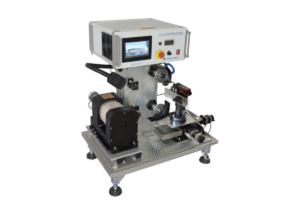
Performance evaluation of the diamond wire cutting necessitates a systematic comparison of the cutting speed, surface quality, and kerf in relation to total cost-efficiency. Extremely smooth and high-speed wire are the tricks of the trade for continuous cutting systems, whereas reciprocating systems are capable of controlling wear in both directions.
The one that is best suited depends on the hardness of the material, contour of the workpiece, and cutting fluid technique. Bring the cutting method closer to the application for acceding cutting, extending wire life, and generating superior yield.
Cutting Speed: Endless vs. Reciprocating
The one-way endless motion allows for high wire speed stability, efficient chip removal, and faster cutting when the process is high-volume since it reduces the losses due to acceleration. On the other hand, the reciprocating systems have the advantage of getting back the performance in short strokes and specialized fixtures, particularly when dealing with small cross-sections.
For materials such as large billets or quarry blocks, the endless wire cutting usually takes less time compared to the other methods. The choice of the right wire and diamond particles leads to even greater speed across the entire hardness range.
Speed Performance Comparison:
Endless Systems
High wire speed stability, efficient chip removal, faster cutting in high-volume processes, reduced acceleration losses
Reciprocating Systems
Better performance in short strokes, specialized fixtures, particularly effective for small cross-sections
Surface Finish Quality in Different Wire Saws
With the endless configurations, the wire is less likely to vibrate and chatter more, thus, the improvement in geometry control and Ra is noticeable against the systems that reverse load. The consistent process limits microchipping in brittle materials.
The reciprocating machines can achieve a similar finish with the optimized tension, stroke frequency, and abrasive concentration; however, the process windows are narrower. For the cutting of silicon and glass, endless wire would usually be the best choice as it gives more uniform surfaces and requires less post-process polishing.
Surface Finish Characteristics:
- Endless Systems: Less vibration and chatter, improved geometry control, better Ra values, limited microchipping in brittle materials
- Reciprocating Systems: Similar finish possible with optimized parameters, narrower process windows, requires careful tension and stroke frequency control
- Best for Silicon & Glass: Endless wire provides more uniform surfaces with less post-process polishing
Material Waste: Kerf Loss Comparison
Kerf is a direct yield-determining factor. Both endless and reciprocating configurations get the kerf thinner than band or slurry saws, yet in the case of the former, the latter is usually kept over long cuts due to the steadier tension and lateral oscillation being reduced.
However, the latter can match the kerf targets in short, controlled passes, but the reverse motion may cause wider kerf in deep cuts. The optimized selection of the wire loop leads to a reduction in material waste and rework.
| System Type | Kerf Performance | Best Application |
|---|---|---|
| Endless Wire | Steadier tension, reduced lateral oscillation, consistent kerf over long cuts | Long cuts, continuous production |
| Reciprocating Wire | Matches kerf targets in short passes, potentially wider kerf in deep cuts | Short, controlled passes |
| Both vs. Traditional | Significantly thinner kerf than band or slurry saws | |
Cost-Efficiency of Diamond Wire Saw Technologies
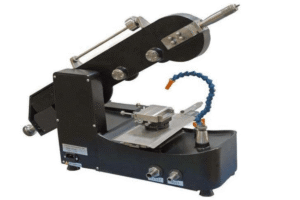
The cost-efficiency factor is mainly a matter of balancing the capital and operational costs plus the gain in yield that comes from the better finish and the less kerf. The systems with endless wire usually put forward the argument that their higher initial cost is justified in terms of faster cutting and consistent speed while the reciprocating saws come with lower initial cost and can be used for multiple sizes of work.
The rigors of abrasives, cutting fluids, and wire type can be to the extent that they not only have more throughput but also subject the total cost of ownership to lower limits.
Initial Investment vs. Long-Term Savings
Endless systems are generally upfront larger investments owing to elements such as precise drives, closed-loop tension, and sturdy frames. In the long run, cutting time, kerf drift, and lower quality escapes are the factors driving the long-term savings of continuous motion cutting.
Reciprocating saws are usually less expensive tools but they can reuse fixtures, while acceleration cycles might limit speed and raise maintenance. The amortization period of the endless cutting performance in high-volume, high-precision environments is often very short.
Investment Comparison:
| Factor | Endless Systems | Reciprocating Systems |
|---|---|---|
| Initial Cost | Higher investment | Lower initial expense |
| Long-Term Savings | Faster cutting, reduced kerf drift, fewer quality escapes | Fixture reusability |
| ROI Timeline | Short amortization in high-volume environments | Competitive for mixed production |
Operational Costs: Endless vs. Reciprocating
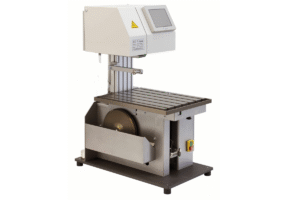
The cutting costs comprise mostly the diamond wire consumption, energy, cutting fluid, and maintenance. The uniform and steady speed of endless wire promotes even wear and increases the life of the wire, thus reducing the number of changeovers.
Reciprocating saws share the wear of their blades equally in both directions, but the forces acting on the mechanism during reversal can lead to increasing the frequency of guide wear and inspections. Both technologies minimize kerf waste when compared to band/slurry saws, but cutting energy consumption is still lower in endless systems which benefit from smoother motion and reduced idle cycles.
Operational Cost Factors:
- Diamond Wire Consumption: Endless systems promote even wear, extending wire life
- Energy Usage: Endless systems consume less energy due to smoother motion and reduced idle cycles
- Cutting Fluid Costs: Both systems require fluid management optimization
- Maintenance Requirements: Reciprocating systems may experience more frequent guide wear and inspections
Return on Investment in Precision Cutting Applications
In the case of semiconductor and glass, the platforms with endless wire technology swiftly reimburse their cost through higher yield and less polishing. They manage to have very low total cycle cost for faster cutting and stacked-over-all-these Process chains.
For job-shops with different kinds of parts, refracting saws can provide a strong ROI then their merits of flexibility and low capital outlay are considered, especially in the case of short strokes or small cross-sections. It is necessary to match the saw type and cutting fluid with the materials and quality targets so as to maintain the profit margins.
ROI Analysis by Application:
-
- Semiconductor & Glass Production: Endless wire delivers swift cost recovery through higher yield and reduced polishing
Related Posts


Trending Blogs

![Polysilicon Material: Properties, Grades & Uses [Guide]](https://wiresawcutter.com/wp-content/uploads/2026/08/polysilicon-material-featured-150x150.webp)