
Get in touch with DONGHE Company
-
Phone: +86 181-1645-5490
-
Email: Sales18@DongheScience.com

Types of Precision Diamond Wire Saws: Complete Classification Guide

Precision diamond wire saws have become integral to the manufacturing sector, providing the capability to slice brittle materials very accurately for the electronics, optics, and material science sectors. This comprehensive guide covers various saw types, process parameters, and applications to help you pick the most suitable tool, keeping in mind cutting accuracy, material compatibility, and core specs such as wire diameter and diamond particles.
Gaining Insight into Diamond Wire Saw Technology
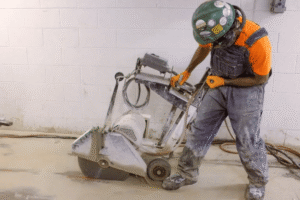
The diamond wire saw technology is a process wherein a continuous wire or wire loop that is fully embedded with diamond particles is used as the cutting tool, which then results in precision cutting with a very small kerf loss. Wire tension, feed rate, and dry/coolant conditions are optimized to provide high-precision slicing along with low kerf and surface damage.
What Is A Diamond Wire Saw?
A diamond wire saw is a cutting-edge machine that applies a steel wire or an unending wire impregnated with diamond particles to make superior quality cuts on substrates. The technology offers two primary wire variants:
Electroplated Wires
Yield fast, aggressive cutting with rapid material removal rates
Resin-Bonded Variants
Produce smoother finishes with enhanced surface quality
How Diamond Wire Saws Operate
During the working cycle a continuous wire is moving at a controlled speed and at the same time a calibrated tension is maintained across the guide pulleys. Thus, an abrasive interface with the material to be cut is created that is very stable. The factors of feed rate, wire diameter, and abrasive concentration are balanced and thus, throughput versus surface quality is controlled and chipping is minimized.
Key Operating Parameters:
- →Controlled wire speed for consistent cutting
- →Calibrated tension across guide pulleys
- →Balanced feed rate and wire diameter
- →Optimized abrasive concentration
Essential Elements of Diamond Wire Saws
The main elements comprise the wire loop or spool system, drive pulleys, and the precision stage for the specimen or substrate. Also, real-time tension control, efficient coolant delivery, and sensors are essential to ensure cutting accuracy.
| Component | Function | Importance |
|---|---|---|
| Wire Loop/Spool System | Provides continuous cutting surface | Primary cutting interface |
| Drive Pulleys | Maintains wire movement and alignment | Ensures stable operation |
| Precision Stage | Positions specimen or substrate | Critical for accuracy |
| Tension Control | Real-time wire tension monitoring | Maintains cutting precision |
| Coolant Delivery | Heat management and debris removal | Extends wire life |
| Sensors | Monitors operational parameters | Ensures quality control |
Different Types of Diamond Wire Saws

Choosing one of the diamond wire saw types has to do with the cutting material, accuracy, and rate of production. Each type offers distinct advantages for specific applications and operational requirements.
Endless Diamond Wire Saws
An endless diamond wire saw uses a wire that is constantly in motion, hence constantly over the drive pulleys that provide a uniform abrasive interface and unparalleled cutting accuracy. It is a vibration-reducing, splicing-minimizing machine that provides tight thickness tolerance and stable, higher-speed production.
Key Benefits:
- Uniform abrasive interface for consistent results
- Reduced vibration during cutting operations
- Minimal splicing requirements
- Tight thickness tolerance maintenance
- Higher-speed production capabilities
Wire Loop Diamond Saws
A wire loop diamond saw consists of a short wire loop on a compact frame that gives it excellent maneuverability for laboratories engaged in research and material sciences. It also allows for quick setup of small or irregular specimens with adjustable tension and feed for protection at the edges.
Ideal Applications:
- Research laboratories and material sciences
- Small or irregular specimen handling
- Quick setup requirements with adjustable parameters
Electroplated Diamond Wire Saws
Electroplated diamond wire saws use a diamond-coated wire, having the diamond particles bonded to the surface of a steel wire for cutting that is sharp and aggressive. These saws are perfect when speed is a priority and post-processing is allowed; applicable for both endless and loop setups.
Best For: Applications requiring rapid material removal where speed takes priority over the finest surface finish, with flexibility for both endless and wire loop configurations.
Diamond Wire Saws – Technical Specifications
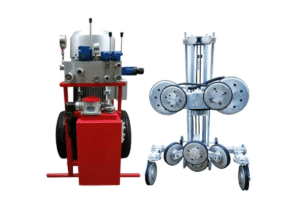
The technological specifications determine the precision cutting characteristics of a diamond wire saw among various materials. Take wire technology (diameter, grit, bond) and machine control according to substrate properties so that it is possible to lessen the kerf and maintain the protection of the brittle edges.
Cutting Speed and Accuracy
Cutting speed for a diamond wire saw is generally between 300 and 2,000 m/min, while accuracy is determined by the controlled feed rate and vibration damping. Finally, under 10 μm thickness tolerance is possible by adjusting wire speed, feed, tension, and coolant.
Performance Specifications
300-2,000
m/min Cutting Speed
<10 μm
Thickness Tolerance
Wire Diameter and Material Composition
The diameter of the wire usually falls in the range of 50-150 μm. The use of a thinner steel wire will result in a reduction of the kerf, while the use of thicker profiles will increase the stiffness for reinforced concrete or tough ceramics. It is important to select the correct diameter and grit according to the hardness of the substrate.
| Wire Diameter Range | Characteristics | Recommended Materials |
|---|---|---|
| 50-80 μm (Thin) | Reduced kerf, minimal material loss | Semiconductor wafers, delicate crystals |
| 80-120 μm (Medium) | Balanced flexibility and stiffness | Optical glass, composite materials |
| 120-150 μm (Thick) | Increased stiffness and durability | Reinforced concrete, tough ceramics |
Machine Configuration and Setup
The machine architecture is the factor that determines the stability and throughput. Endless wire systems provide a long contact length and uniform wear, thus being the most precise in production saws. All the setup conditions such as tension, alignment, coolant flow, and closed-loop sensing are accurate, which gives repeatable precision.
Critical Setup Parameters:
- Tension Control: Maintains consistent wire pressure for uniform cutting
- Alignment Precision: Ensures accurate wire path and positioning
- Coolant Flow Management: Regulates temperature and removes debris efficiently
- Closed-Loop Sensing: Real-time monitoring for repeatable precision
Applications of Diamond Wire Saws

The use of diamond wire in different sectors such as electronics, optics, and materials science has become a necessity due to the ability and advantage of the diamond wire saw to be customized into a blade-like interface which can cut sensitive materials. Different diameters and abrasives for different applications result in cutting costs and time while improving quality.
Use in Electronics Manufacturing
Silicon and silicon carbide substrates in semiconductor fabrication are cut only with diamond wire saws. Precision cutting of high-threshold slices is made possible by continual platforms that support the scattering of mere electroplated wires during polishing.
Electronics Applications:
- Semiconductor Wafer Slicing: Silicon, SiC substrates with minimal kerf loss
- Ingot Processing: High-precision cutting for maximum yield
- Substrate Preparation: Clean cuts ready for polishing operations
Applications in Optical Industry
Diamond wire has proved valuable in cutting very hard materials, including sapphire, optical glass, and crystals during the production of optical device where surface quality and subsurface damage are critical factors. The right combination of grit size and diameter decreases chipping while lapping afterwards is minimized.
Related Posts

Trending Blogs

![Polysilicon Material: Properties, Grades & Uses [Guide]](https://wiresawcutter.com/wp-content/uploads/2026/08/polysilicon-material-featured-150x150.webp)