
Get in touch with DONGHE Company
-
Phone: +86 181-1645-5490
-
Email: Sales18@DongheScience.com

What Can You Cut with a Precision Wire Saw?

Picking out a diamond wire saw that suits your work starts with recognizing your cutting requirements and properly matching them with the capabilities of diamond tools and machines implemented today. This comprehensive manual covers basic concepts, cutting machines, and rope construction to speed and diamond grinding behavior, enabling you to comfortably link equipment to materials such as granite, marble, and other hard substrates while maximizing production and safety.
Understanding Diamond Wire Saws
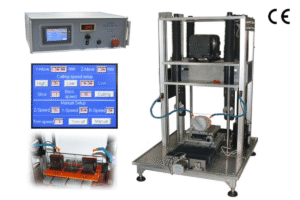
Diamond wire saws are sophisticated cutting machines that rely on a flexible wire saw with diamond bead segments as the main tool to make very controlled high-efficient cuts in every material at a wide range. A modern diamond wire saw cutting machine puts together a stable machine, an advanced drive system, and CNC or programmable controls for the right chopping speed, tension, and cooling flow. The technology is widely used in quarries as cable saws and in-stock wire saws in workshops, so the diamond abrasive hardness is used to its fullest degree, resulting in really clean low kerf cuts with very little waste.
What is a Diamond Wire Saw?
A diamond wire saw is a cutting tool that uses a wire or cable continuously that is fitted with diamond segments sintered or bonded by braze to cut very accurately through stone, concrete, and metals. Compared to a conventional diamond blade, the saw rope adapts to complex shapes thus allowing for very precise diamond wire cutting even in tight places. The wire saw machine manages the tension, cutting speed, and feed rate to get the best possible interaction of diamond abrasive and workpiece.
Essential Components of Diamond Wire Saws
⚙️ Flexible Wire/Cable
Diamond bead segments attached for cutting action
🔗 Bond Connections
Sintered or brazed diamond attachment methods
🎛️ Control Systems
CNC or programmable interfaces for precision
⚡ Drive System
Advanced tension and speed control mechanisms
Primary Uses and Applications
Machines for diamond wire saw are used for cutting granite in quarries, block squaring, and production of slabs, as well as for segmenting reinforced concrete, large metal ingots, and fragile composites. Stone fabrication shops deploy diamond wire saw cutting machines to execute complex profiles with CNC accuracy while construction teams use cable saw systems for controlled demolition with minimal vibration.
Key Benefits of Diamond Wire Saws
The main benefit consists of high cutting speed, less material loss due to the kerf, and better surface quality in comparison with many traditional systems of diamond saw blade. As the diamond abrasive gets worn out at a very low rate, operators consume less energy and hence, less abrasive is wasted thus the diamond wire saw equipment performance is overall improved.
Top Advantages at a Glance
⚡
High Cutting Speed
Faster processing times compared to traditional methods
📉
Minimal Material Loss
Low kerf reduces waste and maximizes yield
✨
Superior Surface Quality
Clean cuts with excellent finish quality
💡
Energy Efficient
Lower power consumption during operation
Critical Factors to Consider When Choosing
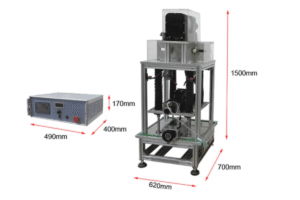
The first step in choosing a diamond wire saw is fully understanding your cutting needs and the operation’s performance indicators. Professionals should assess material hardness, which can range from granite and reinforced concrete to specialized metals, and accordingly select between diamond abrasive and the two types of bond that are used in diamond beads: sintered or brazed.
Identifying Your Specific Cutting Needs
Identify and map your wire saw requirements in the order of their full range; that is, the material, thickness, shape and tolerances of each saw for each cutting task. A diamond wire saw cutting machine with a uniformly high linear speed, stable torque and a diamond abrasive blend tuned to the hardness and abrasiveness of the substrate is necessary for cutting such hard materials as granite or dense concrete.
📋 Complete Assessment Checklist
- Material Identification: Determine hardness, abrasiveness, and composition of substrates you’ll be cutting
- Thickness Requirements: Measure typical and maximum cutting depths for your operations
- Shape Complexity: Evaluate whether you need straight cuts, curves, or complex profiles
- Tolerance Specifications: Define acceptable dimensional accuracy and surface finish standards
- Production Volume: Calculate daily, weekly, and monthly throughput requirements
- Budget Parameters: Set realistic cost per cut targets and return on investment expectations
Understanding Different Diamond Wire Saw Types
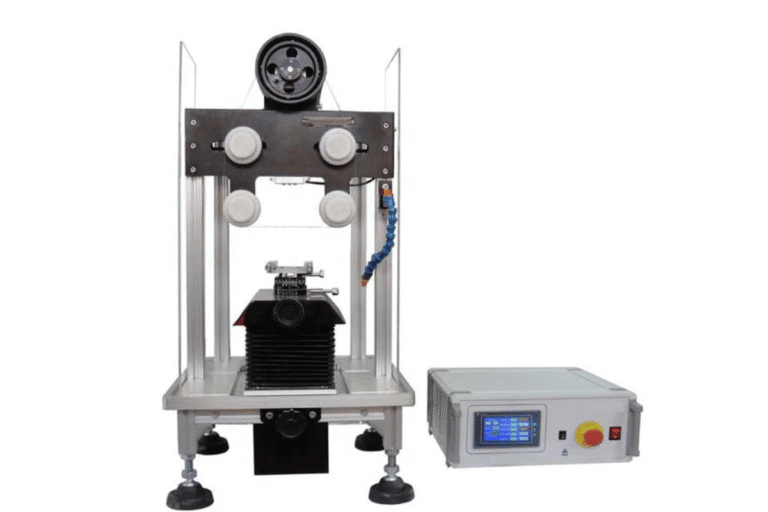
Different types of wire saws are suitable for different uses and depend on the machines’ design. Accurate stationary wire saws for cutting take the cake among the applications, due to their compact design, precise motion, and effective control of coolant that provide diamond wire saw cutting support on slabs and complex profiles.
Optimizing Cutting Speed and Performance
The diamond wire performance is dependent on the matching of the cutting speed, feed rate and tension to the material and the bead specification. A surface speed that is too high can cause glazing of the diamond while, on the other hand, a very low one causes increases in friction and wear of the bond. The use of advanced machinery enables the stabilization of torque and the maintenance of tension in the wire at a steady level.
⚠️ Critical Performance Warning Signs
- Glazing Effect: Surface speed too high — Action: Reduce RPM immediately
- Excessive Friction: Speed too low — Action: Increase feed rate gradually
- Vibration Issues: Tension instability detected — Action: Check and adjust tension settings
- Rising Amperage: Potential misalignment — Action: Inspect system immediately
- Poor Swarf Removal: Inadequate coolant flow — Action: Increase circulation rate
Comparing Diamond Wire Saw Systems
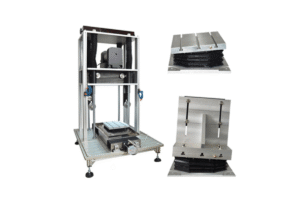
Experts in the field should attach the advantages of each machine to the set cutting needs and production measures when wire saws are put on the scales. A diamond wire saw cutting machine provides an exact cut by means of the controlled cutting speed, steady tension and proper coolant flow, whereas the quarry cable saws highlight the power and durability for cutting tough materials like granite blocks.
Cable Saw vs. Shop Wire Saw: A Detailed Comparison
A cable saw used in quarrying is very powerful, with large pulleys, heavyweight machines, and an abrasion-resistant saw rope coming as a significant factor behind the successful and even cutting of large granite blocks with slight vibration. On the other hand, a diamond wire saw cutting machine, which is shop-oriented employs CNC motion, wire saw machines with impeccable precision, and excellent coolant delivery for the slab with intricate contours and tight tolerances.
Recommend reading: Complete Guide to High-Accuracy Cutting Machines for Silicon Wafers, Sapphire, Ceramics & Advanced Materials
Cable Saw Systems
- ✓
High power output for demanding tasks - ✓
Large pulley systems for stability - ✓
Impact-resistant design - ✓
Long span cutting capability - ✓
Optimized for quarrying operations - ✓
Minimal vibration control
Shop Wire Saws
- ✓
CNC precision control systems - ✓
Smaller wire diameter options - ✓
Excellent coolant delivery system - ✓
Complex profile cutting capability - ✓
Tight tolerance achievement - ✓
Superior surface finish quality
Related Posts

Trending Blogs

![Polysilicon Material: Properties, Grades & Uses [Guide]](https://wiresawcutter.com/wp-content/uploads/2026/08/polysilicon-material-featured-150x150.webp)