
Get in touch with DONGHE Company
-
Phone: +86 181-1645-5490
-
Email: Sales18@DongheScience.com

Diamond Wire Saw Buying Guide: How to Choose the Right Equipment

Selecting a diamond wire saw that suits your work begins with identifying your cutting requirements and accurately matching them with the capabilities of diamond tools and machines available today. This manual covers basic concepts, cutting machines, and rope construction, as well as speed and diamond grinding behavior, so that you can confidently link equipment to materials such as granite, marble, and other hard substrates for cutting, while maximizing production and safety.
Understanding Diamond Wire Saws
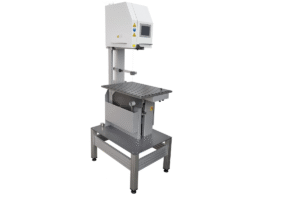
Diamond wire saws are sophisticated cutting machines that rely on a flexible wire saw with diamond bead segments as the main tool to make very controlled high-efficient cuts in every material at a wide range. A modern diamond wire saw cutting machine puts together a stable machine, an advanced drive system, and CNC or programmable controls for the right chopping speed, tension, and cooling flow. The technology is widely used in quarries as cable saws and in-stock wire saws in workshops, so the diamond abrasive hardness is used to its fullest degree, resulting in really clean low kerf cuts with very little waste. The first step in choosing the correct machine for your shop is a comprehensive knowledge of the cutting tool’s components.
What is a Diamond Wire Saw?
A diamond wire saw is a cutting tool that uses a wire or cable continuously that is fitted with diamond segments sintered or bonded by braze to cut very accurately through stone, concrete, and metals. Compared to a conventional diamond blade, the saw rope adapts to complex shapes thus allowing for very precise diamond wire cutting even in tight places. The wire saw machine manages the tension, cutting speed, and feed rate to get the best possible interaction of diamond abrasive and workpiece. The improvement in diamond wires and bead bonding has made the cutting of wire saws safe and performance has been increased, which is why it has become an integral part of industrial cutting processes.
Key Components
- Flexible wire or cable with diamond bead segments
- Sintered or brazed bond connections
- Advanced tension and speed control systems
- CNC or programmable interfaces for precision
Uses of Diamond Wire Saws
Machines for diamond wire saw are used for cutting granite in quarries, block squaring, and production of slabs, as well as for segmenting reinforced concrete, large metal ingots, and fragile composites. Stone fabrication shops deploy diamond wire saw cutting machines to execute complex profiles with CNC accuracy while construction teams use cable saw systems for controlled demolition with minimal vibration, thus making diamond wire the best for every application. Selecting the right diamond wire for each application guarantees cutting with the desired speed, surface finish, kerf, and even material.
| Industry | Primary Applications | Key Requirements |
|---|---|---|
| Quarrying | Granite cutting, block extraction, squaring | High power, impact resistance |
| Stone Fabrication | Slab production, complex profiles | CNC precision, clean surface finish |
| Construction | Concrete demolition, controlled cutting | Minimal vibration, safety features |
| Manufacturing | Metal ingots, composite materials | Variable bond options, flexibility |
Benefits of Diamond Wire Saws
The main benefit consists of high cutting speed, less material loss due to the kerf, and better surface quality in comparison with many traditional systems of diamond saw blade. As the diamond abrasive gets worn out at a very low rate, operators consume less energy and hence, less abrasive is wasted thus the diamond wire saw equipment performance is overall improved. The wire saw rope has great flexibility allowing to cut tight curves and big sections. Having the right R&D-driven wire selection (sinter or braze bonds, bead spacing, and cable construction) will give the user tool life, stabilized cutting machines, and the right diamond wire for making profits, predictable costs, and safer and cleaner operations.
Top Advantages
High Cutting Speed
Faster processing times compared to traditional methods
Minimal Material Loss
Low kerf reduces waste and maximizes yield
Superior Surface Quality
Clean cuts with excellent finish
Energy Efficient
Lower power consumption during operation
Factors to Consider When Choosing a Diamond Wire Saw

The first step in choosing a diamond wire saw is fully understanding your cutting needs and the operation’s performance indicators. Professionals should assess material hardness, which can range from granite and reinforced concrete to specialized metals, and accordingly select between diamond abrasive and the two types of bond that are used in diamond beads: sintered or brazed. Cutting speed, the thickness of the wire, and the structure of the sawing rope play their roles in determining kerf, surface finish, and life span of the tool. Wire saws with very tight tension control and CNC or programmable interfaces provide a great opportunity for repeated cuts, while the heavy-duty machines and the right cooling application help to maintain the cutting tool’s position even in the most challenging conditions. Therefore, using tools and machines that fit your needs will lower the cost per slab, raise the level of productivity and mitigate risks.
Your Particular Cutting Needs
Identify and map your wire saw requirements in the order of their full range; that is, the material, thickness, shape and tolerances of each saw for each cutting task. A diamond wire saw cutting machine with a uniformly high linear speed, stable torque and a diamond abrasive blend tuned to the hardness and abrasiveness of the substrate is necessary for cutting such hard materials as granite or dense concrete. If your processing includes both slabs and intricate profiles, then the priority should be given to a flexible saw rope and CNC control for precise profiles. For demolition using a cable saw, go for heavy-duty diamond wire saws and beads that can absorb impact. Set your targets for speed, edge quality, and cost, then select bead spacing, bond type, and diameter to balance throughput with wire life.
Assessment Checklist
- Material Identification: Determine hardness and abrasiveness of substrates
- Thickness Requirements: Measure typical and maximum cutting depths
- Shape Complexity: Evaluate straight cuts vs. complex profiles
- Tolerance Specifications: Define acceptable dimensional accuracy
- Production Volume: Calculate daily/monthly throughput needs
- Budget Parameters: Set cost per cut and ROI targets
Diamond Wire Saws of Different Types
Different types of wire saws are suitable for different uses and depend on the machines’ design. Accurate stationary wire saws for cutting take the cake among the applications, due to their compact design, precise motion, and effective control of coolant that provide diamond wire saw cutting support on slabs and complex profiles. The quarry and building cable saw systems give more emphasis to power, larger pulley sizes, and greater safety features when it comes to getting blocks out and executing controlled demolitions. Fine wire cutting is used by laboratories or master units for gentle cuts where the least kerf is the prime consideration. Go for sinter-bonded beads if wear resistance is your main requirement, and choose braze-bonded ones for aggressive starts, observing at the same time the compatibility of the machine and the availability of service support.
| Saw Type | Best For | Key Features | Bond Recommendation |
|---|---|---|---|
| Stationary Wire Saws | Slabs, complex profiles, shop work | Compact design, CNC control, precise coolant delivery | Sinter or Braze |
| Cable Saws | Quarrying, large blocks, demolition | High power, large pulleys, safety features | Braze preferred |
| Fine Wire Systems | Laboratory work, precision cuts | Minimal kerf, gentle cutting, delicate materials | Sinter for control |
Cutting Speed and Performance
The diamond wire performance is dependent on the matching of the cutting speed, feed rate and tension to the material and the bead specification. A surface speed that is too high can cause glazing of the diamond while, on the other hand, a very low one causes increases in friction and wear of the bond. The use of advanced machinery enables the stabilization of torque and the maintenance of tension in the wire at a steady level that is sufficient to suppress the vibrations that cause destruction of the diamond bead. One should keep a close eye on the power consumption, coolant circulation, and the removal of swarf to make sure the cutting tool remains in its most efficient zone. Take advantage of the manufacturer-recommended parameters that are backed by Research and Development studies to reduce cutting times and amp up the life of the wire.
⚠️ Performance Warning Signs
- Glazing: Surface speed too high – reduce RPM
- Excessive Friction: Speed too low – increase feed rate
- Vibration: Tension instability – check and adjust
- Rising Amperage: Potential misalignment – inspect immediately
- Poor Swarf Removal: Inadequate coolant flow – increase circulation
Comparison of Different Diamond Wire Saw Types
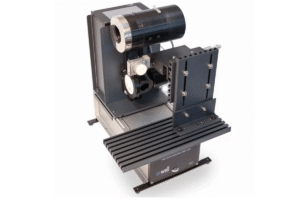
Experts in the field should attach the advantages of each machine to the set cutting needs and production measures when wire saws are put on the scales. A diamond wire saw cutting machine provides an exact cut by means of the controlled cutting speed, steady tension and proper coolant flow, whereas the quarry cable saws highlight the power and durability for cutting tough materials like granite blocks. The choice of the bond, wire diameter, and rope construction have a direct impact on the performance of the abrasive and the life of the tool. For sure, by scrutinizing the machinery architecture, control systems and the diamond wire development, one can confidently choose the right equipment.
Cable Saw versus Diamond Wire Saw
A cable saw used in quarrying is very powerful, with large pulleys, heavyweight machines, and an abrasion-resistant saw rope coming as a significant factor behind the successful and even cutting of large granite blocks with slight vibration. On the other hand, a diamond wire saw cutting machine, which is shop-oriented employs CNC motion, wire saw machines with impeccable precision, and excellent coolant delivery for the slab with intricate contours and tight tolerances. Both applications use diamond abrasive in the form of diamond bead segments but the cable saw gives priority to impact resistance and long spans while the right diamond wire for fabricating processes demands smaller diameters, responsive drive control, and clean surface finishes. Decide depending on the volume, accuracy needed, flexibility of setup, and cost of operation.
Cable Saw Systems
- ✓ High power output
- ✓ Large pulley systems
- ✓ Impact-resistant design
- ✓ Long span capability
- ✓ Quarrying focused
- ✓ Minimal vibration
Shop Wire Saws
- ✓ CNC precision control
- ✓ Smaller wire diameter
- ✓ Excellent coolant delivery
- ✓ Complex profile capability
- ✓ Tight tolerances
- ✓ Clean surface finish
Diamond Wire Performance in Different Applications
The performance of the diamond wire is determined by the matching of the abrasive specification to the hardness and geometry. In the squaring of granite blocks, aggressive braze-bonded beads can lead to an increase in cutting speed while sinter bonds will prolong the life of the tool during slow, long cuts. For the case of reinforced concrete, R&D-driven hybrid bonds assist in the managing of steel inclusions without making the diamond glaze. Semiconductor and precision labs opt for fine wire and low-tension cutting machines in order to safeguard delicate materials. Fabrication shops consider CNC-controlled feeds as the way to go in achieving smooth faces on slab edges with little chipping. The wire diameter, bead spacing, and coolant flow are the main factors determining thermal stability and swarf evacuation. By setting amperage, feed and surface finish as common parameters, the teams can select the right diamond wire and check the performance of diamond that meets the stringent cutting requirements.
| Application | Material | Recommended Bond | Priority Focus |
|---|---|---|---|
| Granite Block Squaring | Hard granite | Braze (aggressive cuts) | Cutting speed |
| Long Production Runs | Various stone | Sinter (durability) | Tool life extension |
| Reinforced Concrete | Concrete with steel | Hybrid bonds | Managing steel inclusions |
| Precision Laboratory | Delicate materials | Fine wire with sinter | Minimal kerf, protection |
| Slab Fabrication | Polished stone | Sinter with CNC | Surface finish quality |
Cost Factors
The total expense is not just the amount paid for diamond wire saw equipment. Better to think in terms of cost per cut: wire consumed, cycle time, power used, and re-thread down time. The cutting speed being optimized according to the hardness of the material decreases the wear on the abrasive and also reduces the amount of rework, which usually results in the cutting cost per slab being reduced by double-digit percentages. Sinter bonds might give an upper hand in terms of cost per meter on long and steady runs, while braze beads can take the first cut time in demolition or variable geology down to the minimum. The wire saw machines with stable tension control are not only protecting the diamond bead but also prolonging its life, thus the ROI is improved. Simulate the annual throughput, waste, and maintenance, and then confirm the assumptions with production trials.
Recommend reading: Complete Guide to High-Accuracy Cutting Machines for Silicon Wafers, Sapphire, Ceramics & Advanced Materials
Cost Per Cut Analysis
Wire Consumption
Track meters used per cut and compare bond types for your specific materials
Cycle Time
Measure total time from start to finish including setup and cooldown
Power Consumption
Monitor amperage and calculate energy costs per operation
Downtime
Account for re-threading, maintenance, and unexpected stops
Related Posts


Trending Blogs

![Polysilicon Material: Properties, Grades & Uses [Guide]](https://wiresawcutter.com/wp-content/uploads/2026/08/polysilicon-material-featured-150x150.webp)