
Get in touch with DONGHE Company
-
Phone: +86 181-1645-5490
-
Email: Sales18@DongheScience.com

Diamond Wire Types: Electroplated vs Resin-Bonded

Using the proper diamond wire type will bear a considerable influence on the cutting processes performance in different sectors. There are two main Diamond Wire Types and these are the resin-bonded and electroplated wires – each of these have their own advantages along with inherent disadvantages, hence an understanding of their properties and the relevant applications induces an amorphous need to carry out further analysis. This paper examines two technical types of diamond wires in question within the scope of the paper in order for one to understand which type of wire to use in operations for best results. Whether it is higher precision, greater durability, or lower costs, the extensive examination here will provide you with the tools to reach a wise conclusion.
Understanding Diamond Wire
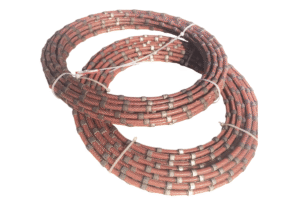
The tool possesses semi-focusing capability for cross-sectional cutting, made from wire invested with industrial diamonds for thickness control of various materials, including stone, glass, metal or semiconductors. The major role of this tool is to achieve a clean cut with minimum material wasted. Design of the diamond wire varies from wire loops to fixed wires and is dependent on the intended use. Diamond Wire Types and Installation – The main influencing factor in diamond wire usefulness includes grit size of the diamond, tensioning of the wire, and cutting rate. All these factors will affect the toughness, effectiveness, and specific liable application of the machine in question and therefore play an important role in the usage of diamond wire in both the precision engineering and general building fields.
What is Diamond Wire?
The most effective tool that can be used for various industries, in construction, semiconductor manufacturing, and also in the process of stone, is the diamond wire. It is a tensile steel wire which is embedded with diamond abrasives or it can be coated, specifically industrial diamond abrasives, to make it possible to cut hardy materials like granite, concrete, silicon, and even metal accurately and efficiently. The wire harnesses the strength of diamonds, known as the hardest material, to give neat and meticulous cuts, without creating too much wastage.
Wire based ideas are very popular due to their different purposes; for instance, some types focus on large grit, more agile grit sizes and higher speed of cutting or focusing on the actual wire overcoming all its tension and these formulas need to be properly used if one wants best performance from them. Advanced new forms such as electroplated as well as sintered diamond wires for the innovative solution of certain problems have been created for the application of speed cutting solids in bulk or very complicated textures. This means that the importance of using diamond wire tools in the industry where precision, performance and durability are important, is very clear.
Importance of Diamond in Wire Cutting

Being able to cut materials with a diamond wire is essential because of its high precision and longevity under appropriate external conditions, owing to diamond’s inherent physical and chemical mass aspects. Here are key points as elucidated below:
1. High Relative Hardness
Thicker harder materials such as diamond position itself because it is the strongest present naturally on earth. Because it is hard, no cutting edges will easily undergo any deformation and thus extending the life of the tool by not having to sharpen it more often.
2. Thermal Transfer
Additionally, because it is shown that the thermal transfer of diamond is greater, then such a diamond can carry away unwanted heat, generated during processing, reducing any chances of causing any damage to the wire or lysis of the material being processed. Such trait is very important especially if radical cutting of the material at high speeds is being performed in order to retain the shape of the structure.
Diamond is also very resistant to a great number of chemicals, which makes it applicable for use in different environments containing corrosive agents in them. This makes the diamond coated wire last longer and is more effective, even when working in harsh conditions.
3. Accuracy and Surface Finish
The attributes of diamond permit controlled and precise cut with minimal loss of material that is being cut. The small size of diamond grit enables achieving excellent surface smoothness without the necessity of a lot of processing afterwards.
4. Universal Application Across Different Types of Materials
It is possible to use a diamond wire for the purposes of cutting materials of varied hardness, from very hard ceramics to fragile glasses and high density metals. Owing to this, such types of treatment methods find applications in various industries, including electronics, aerospace and construction.
Therefore, this coupled with diamond wire cutting is a necessity in any modern industry, allowing for precision, good quality and cost efficiency of processes.
Overview of Types of Diamond Wire
Assessing the types of diamond wires, I take into account mainly the design and the size, and the structure of the abrasive part. There is of course something known as double diamond wire, said to have two most important working layers. These are electroplated diamond wires and resin bonded diamond wires. String and film, and later crust and cuticle elements are all components singly bonded during the usage of electroplated diamond wires. The single layer is more efficient and one that allows for the trimming of semiconductors precisely. Resin bonded diamond wire on the other hand is made of a complete matrix of an abrasives enhanced with the multiple layers of diamond present in resin structures. Such wire cuts well off, providing slick surfaces and behaving like ceramics and glasses. Every wire design is tailored to a particular part of the production process according to that specific industry needs barriers.
Types of Diamond Wire
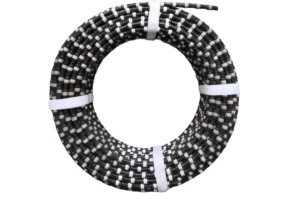
Diamond wire technology has evolved to encompass various processes that aid in the fabrication precision requirements of the present-day industries. A couple of the most advanced variants include electroplated diamond wire and resin-bond diamond wire.
Electroplated Diamond Wire
An electroplated wire has diamond abrasive particles distributed on the surface of the wire and are nickel or some other metal bonded to the wire. Such a configuration guarantees a significantly higher level of sharpness, wear resistance, and cutting effectiveness, which is why this technology finds an application in the precision industries such as semiconductor and photovoltaic industries. Electroplated wire performs best in situations where the material has to be minimized, the dimensions of the cut are crucial, for example, slicing of silicon ingots or hard crystal ingots.
Key Characteristics: Diamond Wire Types employ different cutting mechanisms which make them appropriate for different sawing characteristics. This wire is the more robust I work with as it cuts excellently, most especially when precision is required and only very little of the material is to be disposed away. The wire is highly strong, appropriately cools down, and the precision is not compromised due to excessive usage of that wire, its application is very applicable in the solar power industry as well as the semi-conductor industries.
Resin-Bonded Diamond Wire
Unlike electroplated wire has a single layer of abrasives, resin bonded diamond wire has multiple layers of abrasives that are bonded together using a resin. The main strength is to offer good smooth finishes combined with good bending properties thus making appropriate application for fragile and brittle materials example ceramic, glass and composite structures. Consequently, these advantages of Resin bonded wire enable to reduce the amount of damage to the surface during usage while supporting the working conditions, which retains a high functionality rate of the end product.
Key Characteristics: One type of wire that is referred to as “Diamond Wire Types” provides the use of wires with diamond grains attached to or within a resin bonded and firmly fixed core. This design is often preferred over other diamond wire types, mainly due to the flexibility of the wire among the rest. The increased production quotas, and also the current trends suggest that the highest demand for such colloidal resin bonded wires will be placed in industries which involve processes such as achieving a high level of sphericity, which is especially prevalent in the manufacture of precision lenses and high performance solar wafers.
Vacuum Brazed Diamond Wire
Due to advent of improved brazing procedure, Diamond Wire Types contains diamond grains on the surfaces bonded unlike the former single layer as in electroplated or reaction bonded wire for longer lasting performance even in adverse conditions. This is possible because the diamond grains are engaged with that efficient brazing wire for that reason is welded or soldered on the wire. And unlike the conventional plated or reaction bonded wires, devices or surfaces with wires are superior when cooling thus assist in cutting since it extends their life and quality.
Applications: It can cut materials such as reinforced concrete or composite materials and titanium alloys used in aerospace vehicles, construction and others. Subtractive fabrication’s rectilinear motion, useful for creating the needed size and shape as well as limiting and decreasing the waste of materials has become essential in every industry setting.
New information coming from the world of diamond wires has, like previous developments, focused on the hybrid designs. A hybrid wire is made of a combination of the elements present in an electroplated and resin bonded wires, which improves the strength and cutting efficiency of the wires. This innovation clearly shows the importance of diamond wires in various technologies especially those that deal with precision production such as solar industry and microelectronics.
Applications of Diamond Wire
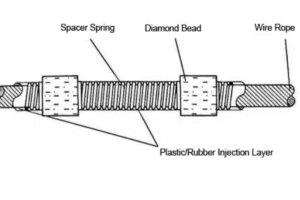
Diamond Wire Types are making significant inroads into many industries because of the level of precision and performance achieved. These industries span the following:
Semiconductors
Construction enables slicing of silicon wafers into wafer length crystals with the width of the cut reduced to any degree needed and for this function.
Photovoltaics
The use of diamond wire is effective for slicing silicon ingots to produce solar cells not only due to silicon cells but also for their environmentally friendly nature.
Civil Demolition
Owing to the large volumes of concrete, stones and other hard materials to be cut without much damage, the problem is simplified even further when most of the work has to be done in confined regions.
Composites and Automotive
Packages heat-resistant materials for press assemblies using composites, titanium, and precision parts.
Gem Cutting
Cut even the most fragile stones with ease and let the jewels remain rare and beautiful.
Concrete Cutting Applications
Concrete cutting equipment which includes diamond wire allows site operations and construction work to be done easily as per the design required as well as self-supporting rules – and in accordance with specific performance parameters. For example, with a use of diamond wires, it is possible to cut such objects as reinforced concrete slabs because vibrations are strongly damped and do not cause much damage to the other walls, and are therefore excluded from the demolition. This is probably more appropriate for larger structures like bridges, highways, or plants, where there are more pros than cons with the usage of such kind of cutting equipment. As for such spheres, requirements for demolition geometries are higher, new techniques have been more widely practiced in the absence of the usual tools without professional noise and dust production and this has increased in the last five years mainly for structural restoration and refurbishment. This assists with providing occupational health and safety and does not violate regulations thus enabling new methods of constructions.
Cutting Tools in Industrial Applications
As far as machine tools are concerned for particular machining applications, the aspects which come in focus are working accuracies, utilization rates and ability of tools to work on different materials. It has been also believed that the use of machines such as the laser cutters, plasma cutters and water-jet cutters becomes useful in condition where high range of accuracy and speed is required. For some reasons, some of the methods may be used e.g laser cutting can accurately be controlled and it is appropriate for metals unlike plasmas which can handle relatively thicker plates and water jet systems which does not cause any heat effect while cutting. Thus, where the constraints are specified, it is possible to assign the particular tool which shall be most effective in the given problem solving.
Other Industrial Uses
It’s worth noting that these particular tools are most importantly as used for the above and beyond cutting to further gratify activities such as etching, engraving or even prototypes work. Laser cutting is a more common term largely because it supports other features such as laser engraving which certain laser systems may not, most surfaces that are laser engraved. Furthermore, the cutting by water-jet include complex geometries or regions with features that would lessen erstwhile thickness of those. Besides industrial processes manufactures employ these machines leaving such designations as production of special parts or improvement of samples ultimately very effective and accurate for such operations.
Benefits of Different Diamond Wire Types
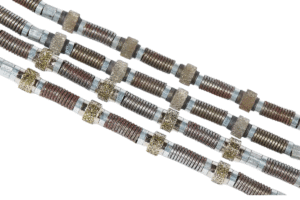
Diamond Wire Types and Their Benefits
- Electroplated Diamond Wire:
This diamond wire has a faster speed during the cutter action and a longer service life performance, and is commonly employed for the cutting of hard materials as granite and/or ceramic and even semiconductors. Because of a single layer of diamonds, any form of embellishments or portions carved can be made with precision and accuracy.
- Resin-Bonded Diamond Wire:
This can be understood as a smooth diamond wire in respect of cutting and hoisting devices, structure containing (or not) features of silicon wafers, and/or the ceiling of possible diamonds. This diamond wire is very flexible and can perform the job without harming the substance.
- Sintered Diamond Wire:
This variety of diamond wire is for heavy duty applications where long service life, hard well defined cutting surfaces, and consistent performance over the life of the product are the ones needed most.
Some tasks demand certain types of cutting, and cutting the correct material requires selecting a specific type from precision to robust cutting and vice versa in terms of the task at hand.
Advantages of Electroplated Diamond Wire
Precise Incisions
The use of these electroplated diamond wire discs allows for more precise work, especially in the instances where accuracy is very important. The diamond patterns of the wire are uniformly distributed and fluid, thereby achieving a clean cut and helping in the quality of the urban glass and silicon edges.
Economical Use of Materials
In its sharp form, this diamond wire lets one remove material quickly without any temperature rise. As a result, there is very little chance that the substrate underneath will suffer from the heat produced, and therefore the cutting pace remains unchanged.
Wide Industry Applications
The use of an electroplated diamond wire in the electronics, photovoltaic, communication, aerospace and other sectors is phenomenal. Its functions also span a wide range of materials from soft composites to hard ceramics.
Extended Tool Life
The longevity of the edges during the cutting process of the electroplated diamond wire is achieved by the application of single layer diamond coating. Consequently, it saves on replacement costs and downtime.
Minimal Kerf Loss
In a cutting instance, very high motion loss is reduced to a small extent because of the signature small diameter of the electroplated diamond wire. This is a critical feature in industries in which expensive materials are used including the manufacture of semiconductors, jewelry, and other very precise applications which are aimed at minimizing losses. This is a method to reduce the material usage.
Benefits of Resin-Bonded Diamond Wire
Advanced Capabilities in Cutting
Resin-bonded diamond wire has improved flexibility over electroplated ones. Exploiting this advantage, it is able to cut with particular accuracy into detailed curvilinear shapes.
Minimized Cutting Resistance
The resin bond ensures smooth functioning by minimizing the force needed during the cutting process. This in turn lessens the mechanical stresses imposed on both the wire and the material, therefore increasing the working life of the wire.
Improved Surface Finish
The softer resin bond provides a better polishing effect by helping the diamond abrasives act, which also results in a better-finished surface. This is especially important in applications where polishing interacts with electronic or optic components.
Extended Service Life Benefits
The resin-bonded diamond wires are meant for heavy duty applications since they release the diamond particles taken inside the resin in the course of its usage. This extends the longer replacement time of the wire thus eliminating further usage of new wires.
Minimal Damage from Heat
The amount of heat produced by a resin-bonded diamond wire during its operation is lower, thanks to the characteristics of the resin. This safeguards delicate materials, for instance, silicon wafers, against thermal contacts, thus ensuring the preservation of the material’s condition and quality.
Comparative Benefits of Vacuum Brazed Wire
Diamond Wire Types include two main categories: Electroplated wires, ornate/jewel like wires. These wires can also be differentiated based on their capability to retain the bond, the aggressiveness while cutting and the temperature range in which they can be used among a lot of other factors.
| Key Parameter | Electroplated Wire | Resin-Bonded Wire |
|---|---|---|
| Durability | High abrasion resistance | Moderate, wears gradually |
| Cutting Efficiency | Faster cutting speeds | Consistent but slower |
| Thermal Management | Moderate heat generation | Low heat generation |
| Particle Retention | Strong particle bonding | Gradual release of particles |
| Surface Finish | High precision finish | Smooth, anti-scratch |
| Lifespan | Long-lasting | Shorter lifespan |
| Material Suitability | Hard materials | Delicate materials |
| Cost-Effectiveness | Higher initial cost | Economical in the short term |
Choosing the Right Diamond Wire
Diamond Wire Types can be of help when deciding on the wire for intended use. However, in choosing diamond wires cuts, several factors have to be considered, particularly the kind of material, the usage and the precision required in carrying out cutting operations. This is owing to the fact that with carriers that are tougher, the like of silicon carbide, wires with a high intensity of diamonds are used to increase cutting power. But on materials that can easily wear the wires, such levels may need to be adjusted downwards. Ensure also that you consider the cutting rate of your work as well as the level of tension the wire in question would employ since this could influence the wire’s effectiveness and longevity. Lastly, ensure the equipment in use is conducive enough as to enhance cutting and achieving the desired results.
Factors to Consider When Choosing
- 1
The Cutting Capacity
Cutting capacity takes into account the level of material hardness. When cutting very hard materials like sapphire or silicon carbide, it is recommended to use a diamond wire with a very high concentration and with the strongest possible whereas when working with softer materials such as metals and plastics a diamond with a low concentration is used to eliminate wear and tear as well as actual cutting.
- 2
Wire Size
The diameter of the cutting wire is another factor which considerably affects its performance. Smaller diameters are used when finer or delicate cuts are needed while larger diameters characterise more durable structures and therefore can be used in larger scale constructions.
- 3
Wire Speed
In addition, so too does the wire speed affect performance of a given material. For instance, with all materials low electron mean free path (e.g., low density materials) the increase of wire feeding speed increases the cutting ability and vice versa; however, machining quality decreases when higher speeds are implemented. At diminishing speeds expect especially at cutting soft or ductile materials where low temperature is best because such materials can be pressed very hard.
- 4
Tensile Strength
The tension or strain a wire can withstand without breaking defines its tensile strength. Fitting wire with tensile strength proportions is essential in long cutting or heavy tasks comprised of loads for proper effective functioning.
- 5
Equipment Compatibility
In order for the machine to operate properly, make sure that the wire that is introduced has a reasonable thickness. Remember the wire feed mechanism, as well as the tensioning system and other parameters of the machine’s characteristics in order not to waste damage the wire or the machine.
How to Choose the Right Wire for Your Needs
The most suitable wires available are selected on the basis of the shortcomings or challenges posed by different factors and this usefulness is availed completely through the information sharing principles used by contemporary society:
💎 Appreciating the Element Codes of Conduct
For instance, the requirement for a particular wire in relation to the activity to be undertaken is strengthened because of the possibility of several designs of wires. Categorically in this context, harder materials granite and silicon need a diamond wire made of the highest abrasion resistant and such a material can be cut into thinner wires for cutting softer materials.
💰 Cutting Equipment Efficiency and Expense Considerations
Increasingly, there are needs for lower cost wires that do not compromise on quality cutting performance. It is better to analyze the long-term performance relations, such as cut rate and life span to plan for expenditure per cut and productivity. Spending a good sum of money to acquire a high cut wire cost much less in terms of operating expenses for an extended period of time.
✓ Manufacturer and Quality Measures Rating
Diamond wire types are essential, and in the words of leading search experts, they have to be selected from a good manufacturer who uses ISO standard wires or manufacturing practices, to be sufficient. These wires are of a high quality category, and they undergo thorough testing for mechanical properties, wear ability and tolerance, and therefore are trustworthy.
⚙️ Technology Integration
And since the emergence of these apertures, more and more end-users have been looking for wires that work in conjunction with machines that cut faster and accurately. Check if your wire is compatible with cutting technologies such as CNC systems and look for those with premium goods wires since they enhance the performance of the equipment.
🌱 Take Environment Friendly Solutions into Account
The latest search results on wires are showing that interest towards environmentally clean and friendly, as well as affective methods of manufacturing has grown. However, some consideration has to be given on how to reduce environmental impact and continue operations effectively. For this reason, on the other hand, an appropriate wiring supplied using green friendly production processes may help attain strategic objectives.
Looking into these aspects allows you to select an option that uses resources effectively, is long-lasting and copes up with the contemporary cutting needs. It is also very important to check data sheets, look for opinions of professionals to back your choice.
Common Mistakes to Avoid

Many pitfalls are visible when handling wires within industrial environments; these impact to a certain extent on performance, safety, cost and many others in one way or another. The current section serves to provide some of the common errors and their negative implications:
❌ Using Wrong Type of Wire
However good possible application of the wire among other purposes will not be met without the usage of appropriate wire or materials. This is because, as per the above point, there will be some wear and tear and hence, performance will be affected. One can give an example of carbon alloy steel wires considering such wires will be very violent on soft material thanks to their hardened nature. It is for this reason that it is best that the first step is assessing if the wire has the attributes that are expected for the particular applications or material.
❌ Exceeding Operational Parameters
The need for excessive and rough cutting is a guarantee as far as the attainment of breaking wire is concerned and this focuses on when and if even a single parameter is exceeded within a certain manufacture – tension, rate of progression even power was designed, etc. It is also put forward that the reach of the device is shortened, standing only by eighty percent whenever such levels are overstepped which also insinuates the risk of possibly losing such objects as well as reducing effectiveness.
❌ Forgetting to Take the Environment into Account
Operating under the same condition can corrode, interfere or break down a system prematurely because certain procedures are carried out in environments with high temperatures, pollution or other unfavorable surrounding conditions without taking any protective measures. To take into account the customs of statistics, in case of an uncontrolled ambient, the cables are up to 35 percent older than those enclosed to the level of occupation desired.
❌ Ignoring Appropriate and Scheduled Maintenance
Forget about maintenance work such as cleaning and physically inspecting the machine for any possible damage that may have occurred to it, and failures are bound to start coming up either sooner or later. For instance, when the guides are placed in the wrong positions or when debris is placed inside, there is a high tendency of having the wires being worn out fast thus living the wires with only half the protective life span. Doing inspections and checks on a regular basis eliminates this waste and allows the system to function as well.
❌ Cost Optimization at the Risk of Quality
Usually, attempting to cut costs by using substandard wires often rarely achieves anything in the end. For instance, a poorly made wire may be too weak or lacking in insulation, necessitating a replacement or repair of the wire or a complete redraw, which is a waste of important resources. Reports indicate that while high quality wires deliver the required duties for an extended period, poor quality wires work, for only 60% of the time hence very little reduction in costs.
Knowing this and making these corrections, businesses can make their operations more effective, ensure safe work environment, and increase the lifespan of the wires used in various sectors.
Frequently Asked Questions (FAQs)
Q: Is there a noticeable difference between electroplated and resin bonded diamond wires?
The differentiation is mainly in the mechanism of binding the diamond to the metal wire.
An electroplated diamond wire, on the other hand, is one that has a layer of nickel deposited upon it by means of electroplating which carries diamond particles at the core of the steel tube inside out. This leads to a very good representation of diamonds just on the surface hence it makes them cut using aggression right from the start.
On the other hand, resin-bonded diamond wire relies on a resin binder to retain the diamond crystals. These are distributed inside the matrix. As this cuts the resin wears thus exposing the diamonds. This type is not as aggressive as the electroplated one due to the resin and diamond properties.
Q: For which purposes are electroplated diamond wires recommended?
Hard materials comprising diamond wires require at an extreme accuracy and cutting speed generally using the wire type with an electroplate. Mainly the wires find application in:
- Silicon wafer cropping/ingot sawing – the reality of wires being grainy causes such wires to cut smoothly leaving no excess material.
- Cut composite and ceramic materials – the wires are very aggressive and always perform excellently on very hard engineering materials.
- Gem cutting – accuracy and thinner wires are helpful in expensive materials that need higher utilization rates.
Q: Under what conditions should I use diamond wires bonded with resin?
Resin-bonded diamond wires have better performance especially when working on cutting operations that have less tough or organic/brittle materials where surface finish is of critical importance. Such types of diamond wires would be useful in:
- Photovoltaic and display wafering – especially for soft grades of silicon or fragile crystal materials where the extent to the depth of damage is to be restrained.
- Glass and quartz cutting – It is important to note that this particular resin bond cuts with a soft touch in order to minimize the risk of chipping or micro-cracks in the process of machined work piece.
- Fine finishing – A part of the entire machine surface worth maximizing (Ra value) is the grinding operation.
Q: What are the main advantages of utilizing electroplated wire?
Electroplated wire offers several advantages:
- Highly Efficient: As the diamonds are ready to cut once exposed, no ‘run-in’ time is required.
- High Precision: The positioning of a single thick layer of diamond gives rise to use of a thicker wire to cut for longer periods hence high profile geometrical accuracy.
- Good heat management: The presence of a nickel metal bond dissipates the heat in the wire satisfactorily along with proper coolant to reduce the thermal stress developed during cutting.
Q: What about the drawbacks of utilizing electroplated wire?
In lieu of the efficiency, electroplated wires are intricate and such efficiency comes at a cost:
- Finite Life: Once the superficial diamond layer is used or removed, a wire is no longer functional. In contrast to resin or sintered bonds, there is no backup diamond content for further exposure.
- Surface Quality: When the cut is aggressive, the surface quality produced while cutting may be rougher than for the resin bonded choices.
Q: What is the relationship between the longevity of resin bonded and electroplated wires?
Resin bond offers a distinct type of wear and tear mechanism as opposed to electroplating. Unlike electroplated wire that ceases to function once its single coating is worn out, the resin bonded wire will still function in the presence of diamond octahedrons in the resin bond. The reason for that is because the resin is softer than the nickel. In aggressive environments, resin might wear out too fast causing the diamonds to fall out before their lifetime. Examples of such instances are extremely hard surfaces which wear out resin very slowly meaning new and very sharp diamonds are not available for cutting leading to clogging at the wheel. Hence, wear depends essentially on the bond’s hardness with respect to the workpiece.
Q: Can these wires be re-plated?
No, none of the electroplated wires can successfully be retroplated. The reason is such, after the removal of the diamond head or in other words diamond extensions from the wire, the wire is decommissioned. Since resin bonded wire is worn out, it cannot be easily reconstructed. All consumed coated wire is worn out to a fair degree and therefore cannot be “recoated.” Every operator should pay close attention instead to such technological variables as operations of wire usage in an attempt to extend their consumable life, i.e. using a single spool of wire in many jobs possible.
Q: What are the main heads of maintenance or operational practices?
Penned below are the tips for taking care of diamonds from the wires to avoid their premature breaking for either of them:
- Tension Management: Height Tension Maintenance Ensures That It Is Within The Limits Provided By The Manufacturers. The wire will snap on high tension but will sag under low tension causing uneven cuts.
- Coolant: The right type of coolant should be used. This coolant fluid should be clean and free of chips so that the wire is not abraded and lubricates and cools properly.
- Environmental Storage: The wire spools are to be kept in a dry place maintaining low temperature. Resin bonded materials, especially adhesives, usually fail if kept standing for a long period of time under excessive heat, humidity and ultraviolet irradiation.
- Avoid Impact Shock: A diamond wire is delicate in nature. Therefore during assembling care should be taken to prevent spools from being dropped or wire from experience impact shocks.
Q: How is “kerf loss” for these Diamond Wire Types?
Kerf loss or simply kerf is how much of the material is lost in the process. The economy is furthered significantly by the use of electroplated wires because they can be manufactured in a smaller circle because the buildup is very thin. This contributes to the economy of the process given some expensive materials like semiconductor level silicon and diamonds, whereby minimized kerf loss is very significant and affects the absolute economy of the material cutting. Since resin-bonded wires facilitate the use of several coats of diamonds, they may be thicker which may be a downside since, at a given weighted wire, the kerf loss may increase slightly.
Reference Materials
Following are some reference materials related to diamond wires, categorized into Electroplated and Resin-Bond classes:
Bond Diamond Selection Methods: focuses on mostly the comparison of tool performance and outputs of given bonding systems: metal bond, resin bond, electroplated bond, etc.
Diamond Grinding of Tools: Electroplated Bond vs Resin Bonded Wheels – Compares and contrasts Electroplated wheels with Resin for the purpose of such wheels, capabilities and the mission.
A Typical View of Different Diamond Wire Types and Uses: Explains how sintered diamond wires are made and used in the cutting of materials ranging from marble and granite all the way to concrete.
Explaining Diamond Wires: What Are They & What Makes Them Useful – Reviews the application of diamond wires in building materials including the cutting of concrete and reinforced structures.
Use of Diamond Wires – Types and Applications: Describes various types of diamond wires like Brazed Electroplated and Resin Bonded and their uses in cutting different types of materials.
Recommend reading: Hard and Brittle Material Cutting Wire Saw | Precision Diamond Wire Saw Machine
Related Posts

Trending Blogs

![Polysilicon Material: Properties, Grades & Uses [Guide]](https://wiresawcutter.com/wp-content/uploads/2026/08/polysilicon-material-featured-150x150.webp)