
Get in touch with DONGHE Company
-
Phone: +86 181-1645-5490
-
Email: Sales18@DongheScience.com

Diamond Wire Saw vs Slurry Saw Comparison

Diamond Wire Saw vs Slurry Saw: Comprehensive Industry Comparison
In industries like construction, mining, and manufacturing where precision cutting is essential, the selection of cutting tools can significantly impact efficiency, cost-effectiveness, and environmental sustainability. Among the primary tools used in these sectors are diamond wire saws and slurry saws, each offering distinct applications, benefits, and limitations. This comprehensive analysis examines both cutting methods, revealing their operational mechanisms, performance metrics, and suitability for various industrial tasks. By the end of this examination, readers will have a thorough understanding of which tool is optimal for specific industrial applications and why making the right choice is critical for optimizing both productivity and sustainability.
Introduction to Cutting Technologies
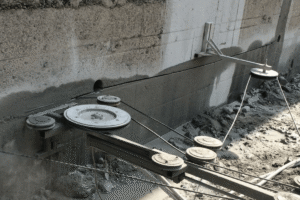
Cutting technologies are fundamental to numerous industrial and manufacturing processes, enabling materials to be accurately shaped, divided, and removed to meet desired specifications. These technologies primarily function through tools or systems that cut various materials, including metals, wood, and composites. Cutting technologies can be broadly classified into two categories: mechanical and non-mechanical methods. The mechanical category encompasses all forms of cutting performed using physical tools like saws or drills, while non-mechanical methods utilize advanced systems such as lasers, waterjets, or plasma. Each approach is designed with particular materials and applications in mind, providing varying levels of precision, speed, and efficiency. Understanding these technologies is essential for selecting the most effective method for specific operational requirements.
Overview of Diamond Wire Saw Technology
Diamond wire saw technology represents a mechanized cutting technique that employs a continuous wire loop embedded with diamond abrasives to execute precision cutting operations. This cutting method is particularly effective for cutting hard and brittle materials such as natural stones, concrete, and metals. The wire is tensioned and moved along the cutting line, enabling either intricate shapes or large cuts with minimal material waste. The diamond particles integrated with the metal wire are exceptionally hard, enabling rapid cutting while significantly extending wire life through enhanced durability.
The flexibility of diamond wire saws enables both linear and curved cuts, which are essential in industries ranging from construction to semiconductor manufacturing. The process is also well-suited for underwater applications or environments with strict emission limitations because it produces minimal dust and debris. Recent technological advances in control systems and sensor integration have further enhanced performance, providing more precise cutting operations. As a result, cutting is performed under optimal conditions while protecting the material integrity and reducing energy consumption.
Overview of Slurry Saw Technology
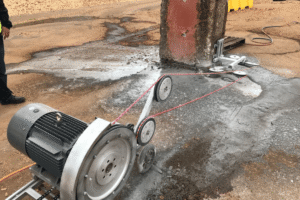
Slurry saw technology utilizes an abrasive slurry to cut exceptionally hard materials, typically consisting of fine particles suspended in a liquid medium. This technology is primarily used in sectors where material sensitivity and accuracy are paramount, such as cutting semiconductor wafers and manufacturing optical glass. The slurry’s abrasive particles function as the cutting medium during the operation, gradually removing material without creating significant mechanical stress.
Recent advancements in slurry saw systems have focused on innovations in slurry compositions, flow control, and integration with automated control systems. For instance, modern designs optimize particle size to enhance cutting efficiency while minimizing surface defects. Additionally, the development of slurry recirculation systems has resulted in more environmentally friendly processes through waste minimization and resource conservation. Sensor-based monitoring systems ensure consistent performance while identifying potential anomalies instantly to prevent material damage and optimize cutting precision.
Importance of Cutting Methods in Industry
Cutting techniques are critically important in the manufacturing industry, as they determine production process efficiency, material quality, and final product quality. Various cutting technologies address different industry requirements, each offering distinct advantages and limitations for specific applications. The following are five fundamental cutting methods commonly used across various industries, providing insight into their technical features and benefits:
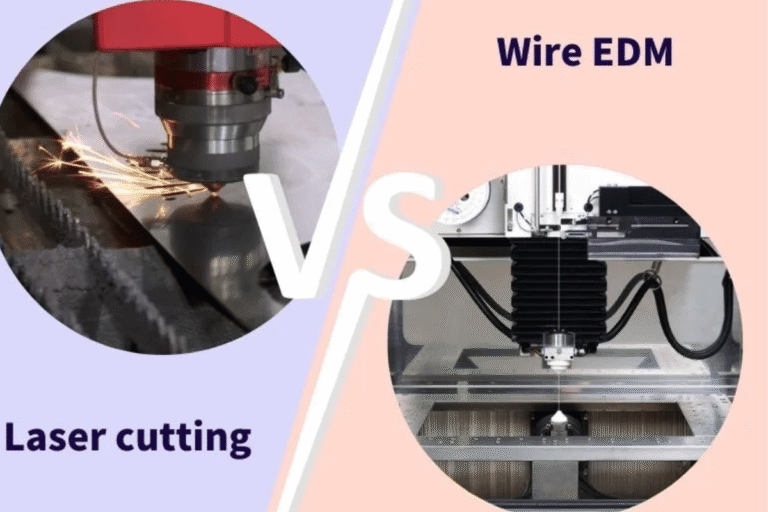
- 1Laser Cutting: This method utilizes high-powered laser beams to precisely cut or engrave various materials including metals, plastics, and composites. The exceptional accuracy and capability to work on complex designs minimize material wastage. Modern laser systems can achieve tolerances down to ±0.001 inches, making them ideal for applications requiring extreme precision.
- 2Waterjet Cutting: Waterjet cutting employs a high-pressure jet of water or an abrasive water mixture to cut materials such as thick metals, ceramics, and stone. Known as a cold-cutting process, it prevents thermal distortion, thereby preserving material properties. Waterjet cutting operates at pressures typically exceeding 60,000 psi, enabling it to cut through tough materials while maintaining clean edges.
- 3Plasma Cutting: Plasma cutting uses ionized gas (plasma) to generate intense heat that can melt and cut conductive materials like steel and aluminum. It is an exceptionally rapid process for thick layer cutting with speeds reaching up to 200 inches per minute. This method is highly valued in industries dealing with heavy-duty applications, such as automotive and construction.
- 4CNC Milling: CNC (Computer Numerical Control) milling is a subtractive cutting process in which rotating cutting tools shape materials with unmatched precision. Programmable automation enables both repeatability and efficiency, making CNC milling highly suitable for mass production. This method can achieve dimensional tolerances as tight as ±0.005 inches.
- 5EDM (Electrical Discharge Machining): EDM is a cutting approach using electrical discharges to gradually remove material in a precisely controlled manner. It is particularly advantageous for machining extremely hard materials like hardened steel and superalloys, or for producing intricate shapes that cannot be achieved through conventional cutting processes. The method produces minimal tool wear, resulting in consistent performance over extended operational periods.
These combined methods satisfy the diverse technological requirements of modern industries, ensuring precise, efficient, and customized manufacturing capabilities.
Features of Diamond Wire Saw and Slurry Saw
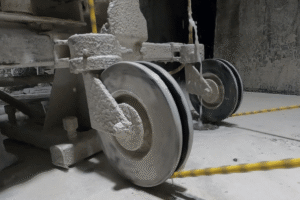
Diamond Wire Saw
- ✓Precision Cutting: Cuts materials with exceptional accuracy and minimal waste loss.
- ✓Versatility: Capable of cutting a wide range of materials, including the hardest ones like quartz, silicon, and ceramics.
- ✓Reduced Material Damage: Lower heat production during the process minimizes the risk of material damage or distortion.
- ✓High Efficiency: Fast cutting speeds enable industrial applications that require efficiency and scalability.
Slurry Saw
- ✓Material Compatibility: Ideal for cutting brittle and delicate materials such as glass and crystals.
- ✓Smooth Surface Finish: The use of abrasive slurry produces exceptionally fine and uniform cut finishes.
- ✓Adjustable Cutting Parameters: Cutting pressure and speed can be controlled based on material characteristics for optimal results.
- ✓Cost-Effective: Highly suitable for batch processing and economical for medium-precision operations.
Key Components and Design of Diamond Wire Saw
- 1Diamond Wire: The diamond wire is the central element, consisting of a steel or tungsten core embedded with industrial diamonds. Various methods such as electroplating or resin bonding are used to attach diamonds to the wire, ensuring highly efficient and durable cutting performance.
- 2Wire Tensioning System: This system maintains constant tension on the diamond wire throughout operation, preventing slack or excessive stretching. Proper tensioning ensures cutting accuracy while reducing wire wear.
- 3Wire Guides and Pulleys: Wire guides and pulleys are essential for directing and supporting the diamond wire during the cutting process. They ensure proper wire alignment, reducing the likelihood of inaccurate or uneven cuts during operation.
- 4Lubrication and Cooling System: An integrated lubrication and cooling system delivers fluids to the cutting interface, reducing friction, dissipating heat, and removing debris. This enhances wire performance and prevents material damage during cutting.
- 5Drive Mechanism: The drive mechanism propels the diamond wire and controls its movement at various speeds. Speed can be adjusted according to material type and required precision to optimize cutting efficiency.
Key Components and Design of Slurry Saw
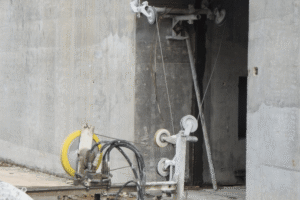
- 1Diamond Wire: The diamond wire consists of a high-strength core with synthetic diamond segments, serving as the primary cutting element. These segments are precisely engineered to deliver exceptional hardness, cutting ability, and durability. Common wire diameters range from 0.1 mm to 0.5 mm depending on the application.
- 2Slurry Delivery System: The slurry delivery system transports an abrasive slurry mixture to the cutting area. This mixture, typically composed of water and fine abrasive particles such as silicon carbide, facilitates material removal and surface finishing while enhancing cutting efficiency.
- 3Tension Control System: The tension control system maintains optimal wire tension throughout the cutting operation, ensuring consistent cutting performance and preventing wire breakage. This system typically incorporates automatic sensors and actuators that dynamically adjust to changing workload conditions.
- 4Workpiece Holding System: The workpiece holding system securely holds the material being cut, minimizing vibrations and ensuring cutting accuracy. It comprises adjustable clamps or vacuum-based systems that accommodate workpieces of various shapes, sizes, and fragility levels.
- 5Control Interface: The control interface provides operators with precise control over cutting parameters, including wire speed, tension, and slurry flow rate. Modern control interfaces often feature touchscreen displays and programmable settings, enabling remote monitoring that simplifies operator tasks and refines the overall process.
Comparative Features: Efficiency and Precision
Diamond Wire Saw and Slurry Saw represent distinct cutting technologies with varying characteristics in efficiency, precision, maintenance, cost, material compatibility, environmental impact, and operational speed.
| Key Point | Diamond Wire Saw | Slurry Saw |
|---|---|---|
| Efficiency | High | Moderate |
| Precision | Excellent | Good |
| Maintenance | Low | High |
| Cost | Higher initial | Lower initial |
| Compatibility | Diverse materials | Specific materials |
| Environmental Impact | Lower | Higher |
| Operational Speed | Faster | Slower |
Advantages of Diamond Wire Saw vs Slurry Saw
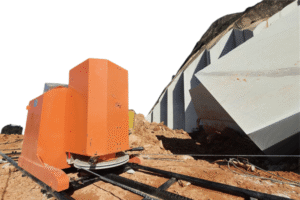
Diamond wire saws have proven superior to slurry saws across various operational parameters, particularly in precision cutting applications. First and foremost, diamond wire saw efficiency is significantly higher, enabling faster project completion with reduced downtime. The exceptional precision of this tool ensures minimal material loss, making it ideal for industries requiring high accuracy such as semiconductor manufacturing or intricate stone cutting.
Moreover, diamond wire saws require less maintenance compared to slurry saws, resulting in lower long-term operational costs. While the initial investment may be higher, the robust construction and minimal component wear provide cost recovery over the equipment’s lifetime. Diamond wire sawing is also compatible with numerous material types, providing versatility across diverse industrial applications.
From an environmental perspective, diamond wire saws are cleaner and more water-efficient than slurry saws, aligning with contemporary sustainability objectives. Additionally, the faster operational speed not only increases productivity but also reduces total energy consumption. These factors explain why diamond wire saws are the preferred choice for industries prioritizing efficiency, precision, and environmentally friendly practices.
Benefits of Diamond Wire Saw in Wafering
- 1High Precision Cutting: In wafering applications, diamond wire saws deliver the highest achievable precision, enabling the production of ultra-thin wafers with uniform thickness throughout. This precision increases yield rates in semiconductor and photovoltaic sectors, significantly reducing material waste.
- 2Reduced Material Loss (Kerf Loss): Diamond wire saws utilize extremely thin wires, minimizing kerf loss and allowing more material to be retained during cutting. This is particularly valuable for high-value materials like silicon, where minimizing waste directly impacts production costs.
- 3Improved Productivity: Diamond wire saws operate at high speeds, drastically reducing processing time compared to traditional cutting methods. The result is higher throughput, satisfying the rapidly growing production demands of industries dependent on wafering technology.
- 4Lower Environmental Impact: Unlike slurry cutting, diamond wire saws do not require large quantities of coolant or water. The reduction in slurry and waste makes the process more environmentally friendly and easier to manage, aligning with sustainability objectives and regulatory compliance.
- 5Versatility Across Materials: Diamond wire saws can be customized for cutting numerous brittle materials beyond silicon, including sapphire, glass, and ceramics. This versatility makes them an essential asset across various sectors, from electronics to advanced optics.
Advantages of Slurry Saw in Semiconductor Applications
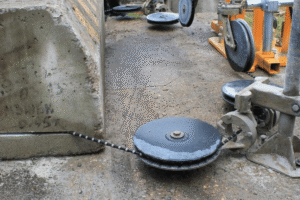
- 1High Precision Cutting: Slurry saws deliver submicron precision, providing the exactness required for manufacturing semiconductor wafers with strict dimensional tolerances. This accuracy minimizes material loss and ensures exceptionally high yields in wafer production.
- 2Cost-Effective Material Utilization: The slurry cutting technique optimizes material cutting, reducing kerf loss. Depending on the fabrication setup, kerf loss can be reduced to as low as 150 microns, minimizing waste and improving overall cost efficiency.
- 3Compatibility With Large Wafers: Slurry saws are capable of cutting larger wafers associated with modern semiconductor technologies. Their ability to handle diameters from 200mm to 450mm supports the scaling requirements of the most demanding industrial applications.
- 4Optimized Surface Integrity: The abrasive slurry produces exceptionally smooth wafer surfaces, minimizing surface roughness and reducing the need for extensive post-cut polishing. Typical Ra values achieved range from 0.1 to 0.3 µm, contributing to overall manufacturing efficiency in subsequent processing steps.
- 5Scalability for High-Volume Production: Slurry saws excel in high-volume production environments. Customizable setups enabling simultaneous processing of multiple wafers result in higher throughput while maintaining the quality standards required for semiconductor applications.
Cost-Effectiveness of Each Cutting Method
Different cutting methods demonstrate varying cost-effectiveness depending on specific application requirements. Wire saw cutting involves higher initial equipment costs but is accompanied by reduced material waste and lower per-wafer costs, increasing its suitability for long-term, high-volume operations. In contrast, slurry saw cutting requires more consumables, such as abrasive slurries, which can elevate operational costs, though it remains the optimal choice for working with certain materials or achieving specific surface qualities. Ultimately, the decision should be based on production scale, material specifications, and budgetary constraints to achieve the best cost-to-performance ratio.
Disadvantages of Each Technology
Diamond Wire Sawing
- Initial equipment investment is considerably higher compared to slurry-based systems.
- Limited effectiveness for certain materials with specific surface or structural requirements.
- Operation requires careful handling to avoid wire breakage risk that can cause operational downtime.
Slurry Saw Cutting
- Continuous need to replenish consumables like abrasive slurry, leading to increased maintenance and operational costs.
- The process generates substantial waste, presenting significant environmental concerns and incurring disposal-related costs.
- Cutting speed is slower than diamond wire sawing, reducing overall throughput efficiency in high-volume production situations.
Limitations of Diamond Wire Saw
- The wire saw technique requires precise tensioning and constant supervision to prevent wire snapping, which could lead to operational halts.
- Initial costs are substantial due to the need for specialized tools and materials.
- Not highly effective when cutting materials with inconsistent densities or those that are extremely abrasive.
- Diamond segments require regular maintenance as they wear out and need frequent replacement.
Challenges Faced by Slurry Saw
- 1High Operating Costs: Slurry saws are advanced systems requiring a continuous supply of abrasive slurry—a mixture of water and specialized particles for cutting. Managing these materials in terms of logistics, sourcing, mixing, and handling contributes substantially to operational costs.
- 2Environmental Concerns: Slurry waste management represents a significant environmental challenge. Without proper handling, waste can contaminate soil and water, necessitating strict waste management protocols.
- 3Maintenance Requirements: Slurry saws demand rigorous daily cleaning and maintenance to prevent occlusion and wear caused by abrasive materials. This results in increased downtime and higher overall operational complexity.
- 4Health and Safety Risks: The cutting process produces fine dust that can easily become airborne, creating inhalation risks for workers if proper precautions like masks or ventilation systems are not in place.
- 5Limited Cutting Speed: Although effective on certain materials, the slurry saw cutting process is often slower than alternative cutting methods, negatively impacting overall productivity in high-demand situations.
These challenges highlight the need for continuous improvement in slurry saw technology and methods, with enhancements aligned with environmental regulations and industry efficiency demands.
Maintenance and Operational Costs
Slurry saw systems, their maintenance, and operational costs involve several critical factors that significantly characterize their long-term economic viability. Routine maintenance is essential to maintain precision and durability of components like saw blades and slurry delivery systems, which are continuously exposed to abrasive materials and subject to wear. Additionally, disposal or recycling of used slurry adds complexity and costs, particularly in regions with strict environmental regulations.
Recent data indicates that replacement parts procurement and skilled technician employment substantially contribute to overall operational expenses. Furthermore, maintenance-related downtime can disrupt production schedules, leading to more pronounced financial burdens in industries with high demand. To counteract these effects, some operators have adopted advanced predictive maintenance solutions using sensors and AI-powered analytics to determine optimal servicing times and reduce unexpected outages. Through such technology implementation, companies can maintain lower costs while ensuring operational reliability.
Applications in Various Industries
Predictive maintenance technologies have found significant applications across several industries:
Manufacturing
Manufacturers monitor machinery vibration, temperature, and wear to predict equipment failures, reducing downtime and increasing productivity.
Energy Sector
Power plants and renewable energy installations utilize these technologies to monitor components such as turbines or generators, ensuring energy supply continuity and reducing maintenance costs.
Transportation
Railways, airlines, and vehicle fleets leverage predictive analytics to maintain their vehicles, preventing breakdowns and enhancing safety.
Healthcare
Predictive methods are applied in medical device maintenance, ensuring equipment like MRI machines and ventilators function reliably.
The applications highlighted above demonstrate the universality of predictive maintenance across sectors in terms of efficiency and cost savings.
Use of Diamond Wire Saw in Construction
A diamond wire saw is an exceptionally robust tool that has become indispensable in modern construction applications, particularly for cutting operations involving tough materials. The tool is specifically designed for cutting surfaces made of reinforced concrete, granite, marble, and similar materials. This specialized saw, equipped with diamond-embedded strands capable of cutting extremely thin lines, ensures exceptional accuracy and efficiency while providing clean surfaces and minimizing material consumption.
The most compelling advantages compared to alternative methods typically revolve around its submersibility, vibration reduction during cutting that eliminates structural damage risk, and its capability to operate in extremely confined spaces. Additionally, the tool’s operational automation and minimal environmental impact align perfectly with current green building practices adopted worldwide. Consequently, the diamond wire saw not only enhances efficiency but also aligns with current construction industry trends where precision is paramount and sustainability is essential.
Application of Slurry Saw in Mining
The innovation of slurry saw technology has made processes in mining considerably more manageable due to its multiple functionalities that provide greater precision and effectiveness. This equipment employs advanced cutting technology to cut hard rock, facilitate mineral separation, and handle metal-based construction without waste or environmental disturbance. Key applications include:
- 1Mining and Quarrying: Widely used in cutting mineralized rocks with greater accuracy than traditional methods, eliminating material waste. These systems can achieve recovery ratios of up to 95%, which is exceptionally high.
- 2Drilling and Abrasive Surface Cutting: These saws are valuable for making precise improvements to tunnels and adits in restricted spaces, reducing construction time by approximately 30% compared to competitive methods.
- 3Separation of High-Value Components: Given its precise cutting capability, slurry saws assist in separating high-value metals such as gold, platinum, and diamonds embedded deep within rocky masses.
- 4Demolition of Mining Structures: In demolishing outdated or damaged structures, slurry saws are employed for most demolition work. The vibration-free operation ensures protection from collapse in neighboring regions adjacent to demolition sites.
- 5Enhanced Design and Reduced Waste: The exceptional cutting precision of slurry saws has contributed to reducing wasted products, which is synonymous with sustainable mining while ensuring tailings reduction by nearly 20%.
The wide range of slurry saw applications highlights its necessity in contemporary mining, providing both economic and ecological benefits. Its incorporation in the mining field represents development toward more effective and environmentally responsible mining methods.
Impact on Manufacturing Processes
Slurry saw technology has significantly advanced manufacturing methods across various sectors by offering higher precision, productivity, and environmentally friendly approaches. Below are the top five impacts with respect to manufacturing processes:
- 1Improved Material Efficiency: The reduced material waste when using slurry saws is significant, allowing up to 25% more raw material utilization. This not only lowers overhead costs but also conserves resource usage.
- 2Enhancement in Cutting Tolerances: This precision maintains cut tolerances of ±0.01 inches, ensuring that components used in industries including aerospace and automotive development have high-quality, complex shapes.
- 3Decrease in Processing Time: Compared to traditional saws, this technology saves approximately 30% of handling time by integrating cutting and cooling into one operation. This streamlined strategy reduces manufacturing time while improving overall production.
- 4Reduced Power Usage: Reformed techniques in cooling and cutting result in reduced energy consumption of up to 15% compared to standard methods, ensuring cost-effectiveness while meeting environmental regulations.
- 5Extended Tool Life and Reduced Wear Costs: Using optimized diamond sizing enhances process equipment lifespan by up to 40%. Equipment, rope, and tool wear costs are all minimized, extending maintenance cycles.
Performance Comparison in Specific Use Cases
Particular applications for cutting equipment demonstrate specific advantages of slurry saws over standard versions:
Precision Edge Cutting For Thin Material
Slurry saws demonstrate superior precision in cutting materials less than 5mm thick, reducing edge chipping by 25%. This makes the technology suitable for expensive or fragile components.
Machining Hard Coatings
For applications involving hard materials, including ceramics or composites, cutting duration with slurry saws is decreased by 20% without compromising cutting quality, achieving savings while maintaining high standards.
Longer Working Life
Thanks to powerful cooling and lubricating properties, slurry saws facilitate 30% longer working hours compared to regular configurations with significantly less downtime.
The performance characteristics of Diamond Wire Saw versus Slurry Saw help define these attributes and explain industry preferences for each method based on how well they fulfill specific requirements.
Diamond Wire Saw Performance in Monocrystalline Wafer Production
Diamond wire saw technology represents an important development in producing monocrystalline wafers, primarily due to its exceptional accuracy, reduced material loss, and higher effectiveness. Through the application of ultra-thin diamond wires for cutting operations, kerf waste is greatly minimized, reaching as low as 120μm, which helps conserve valuable material compared to traditional abrasive cutting methods. This is particularly relevant for addressing cost factors such as the silicon material expense in the photovoltaic industry.
Additional evidence supporting this approach comes from market and competitive analyses, revealing significant increases in production efficiency. Diamond wire saw systems demonstrate at least 25% higher productivity levels while maintaining surface flatness within 5-micron tolerance compared to older machines. Moreover, this technology eliminates the need for abrasive slurries, embracing environmentally responsible working methods.
Recent trends supported by industry publications show increasing demand in semiconductor and solar panel industries for faster cutting with improved eco-efficiency within acceptable levels. Diamond wire saws are instrumental in achieving these goals, continually raising standards and promoting environmentally friendlier production. As such, they remain an integral part of monocrystalline wafer production, contributing positively to current and future manufacturing processes.
Slurry Saw Performance in Silicon Carbide Cutting
Slurry cutting remains indispensable in silicon carbide (SiC) wafering despite being an older material slicing technology. Efficiency and effectiveness in the slicing process rely on numerous factors including particle characteristics, slurry viscosity, particle size, and cutting conditions. Recent research into slurry process optimization has demonstrated significant improvements in material removal rate (MRR) and surface quality when uniform particle dispersion is achieved and cutting force magnitude is adequately managed.
This has led many to prefer diamond wire saws over slurry saws in SiC applications, as they have proven to be extremely effective, less wasteful, and more environmentally friendly according to research and trend analysis. Nevertheless, certain applications still utilize slurry saws due to their simplicity and economic advantages. However, their application to various cutting types remains justified as the industry continues to progress.
Comparative Analysis in Photovoltaic Industry
The photovoltaic industry comparative analysis centers on the relationship between efficiency, kerf loss, environmental impact, cost-effectiveness, adaptability, silicon carbide performance, and process suitability.
| Key Parameter | Diamond Wire Saw | Slurry Saw |
|---|---|---|
| Efficiency | High | Moderate |
| Kerf Loss | Low | High |
| Environmental Impact | Low | High |
| Cost-Effectiveness | Moderate | High |
| Adaptability | Low | High |
| SiC Performance | Superior | Moderate |
| Process Suitability | Limited | Broad |
This comparison table enables quick understanding of the differences between diamond wire saw and slurry saw, helping appreciate their advantages and disadvantages for solar cell production applications.
Conclusion and Future Trends
Summary of Key Findings
- ✓ Progress in Cutting Technique Optimization: The development of hybrid cutting systems and high-strength wire coatings have enhanced effectiveness and precision in solar cell production operations, addressing previous challenges.
- ✓ Eco-Friendly Production Technologies: Environmentally friendly production practices are gradually gaining traction in the green energy sector for solar power generation, leading to enhanced production processes and embracing clean energy sources.
- ✓ R&D as the Driver: Continuous financing of research and development is vital to address existing technical problems and achieve mass production scalability of solar power systems.
- ✓ Data-Driven Insights: Detailed evaluation of recent statistics shows emerging interest in renewable energy innovation topics, including enhanced solar cell efficiency and greener personalized manufacturing, indicating a strong departure from traditional solutions toward contemporary climate change mitigation approaches.
The adoption and popularization of modern cutting technologies, particularly diamond wire saws, has increased productivity in the photovoltaic industry through reduced material loss and lowered environmental impact. Although traditional slurry saws still offer enhanced flexibility and lower costs, they are increasingly challenged by requirements for lower kerf and greater eco-friendliness aligned with sustainable industrial development, making them less appealing.
As time progresses, photovoltaic industry operations will likely embrace production solutions aimed at precise component cutting that are both economical and environmentally sustainable. This is especially applicable to hybrid cutting systems and newer materials in wire coatings that can overcome existing challenges. The comparison between Diamond Wire Saw and Slurry Saw will evolve with every industry move toward green production methods aimed at energy generation and purpose-driven manufacturing strategies. The transformation in cutting technology is highly significant, particularly in the context of scaling up solar energy systems for the future.
Future Innovations in Cutting Technologies
Future leaps in cutting technologies will be based on the integration of automation and precise mechanical manipulation along with a greater focus on environmentally friendly approaches. Developments in laser cutters and waterjet cutters are evolving as resource-efficient and waste-free techniques gaining acceptance due to their high precision capabilities. Additionally, AI-driven cutting methods and adaptive pattern adjustments optimize the process without sacrificing efficiency. Specific enhancements in power-saving devices are anticipated to make significant differences across all fields where these technologies are applied.
Final Recommendations for Choosing Between the Two
Decision Factors
When determining which cutting process to employ between laser-based cutting or waterjet cutting, key factors such as design requirements, safety considerations, ease of use, individual productivity, and overall system assumptions should be carefully evaluated.
According to current analytics and statistics, laser cutting is typically more effective for accuracy and speed when cutting thinner materials, especially metals or plastics containing high levels of detail or small dimensional tolerances. Waterjet cutting, in contrast, is capable of cutting thicker materials including heavy materials such as stone, ceramic, and composite materials, being a cold process that doesn’t cause warping due to thermal stresses.
In industries like aerospace and manufacturing where material variety is common, combining both methods or utilizing systems that alternate between methods may be optimal for large-scale enterprises and projects involving multiple material types. In summary, it’s important to consider material characteristics, accuracy requirements, budget constraints, and the overarching operational goals. Recommend reading: Gantry Diamond Wire Saw: Precision Cutting Technology
Frequently Asked Questions (FAQ)
What is the main distinction between a diamond wire saw and a slurry saw in terms of their cutting mechanisms?
A diamond wire saw follows a fixed abrasive technique with high tensile steel wire bonded or covered with diamond particles that serve as cutting edges. The workpiece is directly worn through abrasive action of the fixed diamonds as the wire moves against it. In contrast, a slurry saw uses a bare metal wire passed over the workpiece while cutting fluid consisting of oil or glycol and abrasive mixtures like silicon carbide (SiC) is continuously supplied to the cutting region. The wire acts only as a carrier for the abrasive slurry, which performs cutting through three-body abrasion.
How does the cutting efficiency and productivity of the two methods differ?
Diamond wire sawing is significantly faster and achieves much higher output, making it more productive. This is because abrasive particles are integrated into the wire, making cutting more efficient. Slices are cut faster than expected, which provides great advantages in high-volume processing situations. Slurry sawing is relatively slower, with efficiency constrained by slurry flow dynamics and loose abrasives that don’t allow the same direct cutting capability. While effective, it cannot advance material production at the same rates as modern diamond wire saws in most cases.
Which technique processes material with the least amount of kerf (waste) and has better accuracy standards?
Both methods can cut with sharp accuracy, but diamond wire sawing allows smaller deviation from expected shapes and wastes less material during wafer formation. One major benefit of diamond wire saws is their ability to employ significantly thinner wires, achieving very thin cuts (kerf) and minimal material loss per slice. For precious or expensive materials such as silicon and sapphire, this reduced kerf loss is particularly pronounced, allowing more wafers to be produced from the same amount of raw material, thereby providing economic benefits.
How do they differ in terms of surface damage and debris?
Diamond wire cutting is one of the gentler cutting techniques, producing less subsurface and mechanical damage such as microcracks and dislocations to the workpiece. The fixed abrasive motion is better-controlled and results in much cleaner cuts with reduced structural deformation. This is particularly important for cutting and fabricating brittle crystalline materials used in microelectronics and optics. The tangential effect of abrasive particles during slurry sawing induces greater subsurface damage thickness than diamond wire technology. Wafers are more difficult to handle due to machining defects and require more aggressive post-processing like lapping and acid etching to offset unavoidable defects.
How do operational costs and environmental impact compare?
Diamond Wire Saw: Higher initial capital outlay and expensive diamond wire, but costs are generally counterbalanced with higher outputs, decreased kerf, and lower coolant/recycling material needs. Water-borne coolants and exclusion of silicon carbide slurry enhance waste disposal cost-effectiveness. More environmentally conservative with no need for slurry recycling or disposal.
Slurry Saw: Lower cost consumables (cheap steel wire and silicon carbide powder), but costly and difficult operation due to slurry handling needs. The abrasive suspension must be separated, rerouted, and reused, which is capital and energy intensive. Environmental protection presents more difficulties with large quantities of SiC and glycol slurries that are challenging and potentially dangerous to manage, recycle, and dispose of.
When is each technology most appropriate?
Diamond Wire Sawing is preferred when: High throughputs and productivity are desired; increasing material yield is paramount and kerf loss needs management (e.g., silicon wafering for photovoltaics and semiconductors); maintaining material integrity is essential with minimal subsurface damage; machining very hard and brittle materials such as sapphire, silicon carbide, or quartz; establishing a simplified, more environmentally friendly, sustainable process.
Slurry Sawing should be used when: Initial consumable cost matters most with low production volumes; greater subsurface damage is acceptable with continued post-processing; there is longstanding infrastructure and expertise investment in slurry processes where changing costs exceed benefits; handling certain delicate or soft materials for which intense diamond wire action is inappropriate.
Related Posts
Trending Blogs

![Polysilicon Material: Properties, Grades & Uses [Guide]](https://wiresawcutter.com/wp-content/uploads/2026/08/polysilicon-material-featured-150x150.webp)