
Get in touch with DONGHE Company
-
Phone: +86 181-1645-5490
-
Email: Sales18@DongheScience.com

Precision Diamond Wire Saw for Lab Applications

Overview: Precision diamond wire saw technology is redefining laboratory sample preparation with reliable high-precision results across numerous materials. the objective is achieving best outcomes for clients that involve reducing rework and increasing throughput with evidence-based guidance. Understanding the cutting process, machine design, and key terminologies such as diamond embedded wire, wire tension, micrometer control, and coolant management will help users grasp the fundamentals in selecting cutting machines for silicon, stainless steel, ceramics, and delicate wafers in materials research and industries.
Introduction to Precision Diamond Wire Saws

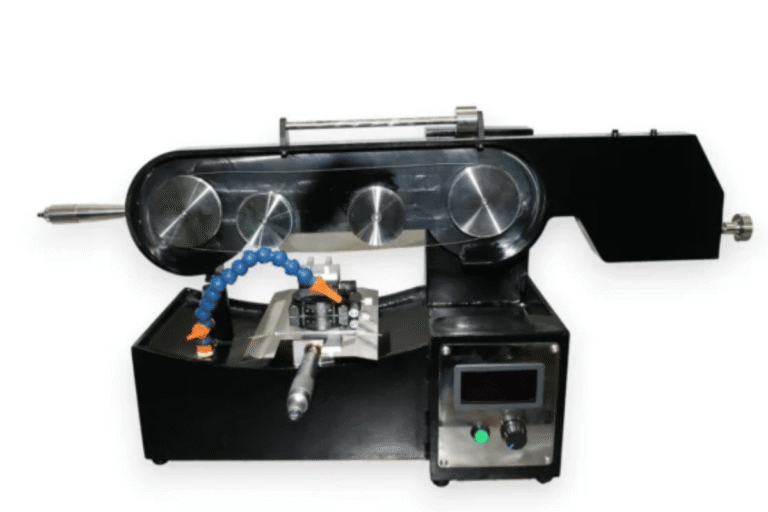
A Diamond Wire Saw is a device designed for consistent and precision cutting of almost any material through the use of a diamond-embedded wire as the cutting blade. The wire rotates around guide pulleys, helping to maintain an extremely controlled cutting thickness while keeping kerf production down to a minimum. The machine includes a design that offers stable wire tension, accurate cross-feed, and a rigid work table, ensuring the highest levels of precision are maintained, irrespective of the composition and diameter of the material being sectioned.
By selecting favorable cooling and abrasive slurry techniques, the wire saw accomplishes excellent processing features and has been used in wafering and sample preparation, thereby strengthening materials research and process development.
What is a Diamond Wire Saw?
Definition:
A diamond wire saw is a cutting machine that uses a continuous wire of precision diamonds to cut or section samples slice by slice with micrometer-level precision control. The diamond wire saw method of cutting exploits the hardness of diamond head grit embedded into a stainless steel wire which abrades the substrate, rather than shears it, for higher precision surfaces.
Configurations Available:
- Very low-speed diamond systems for delicate sawing
- High-precision instruments with programmable cross-feed
- Adjustable wire tension for clean cuts in silicon, stainless steel, glasses, composites, and multilayer materials
Importance of Precision in Cutting
Precision is needed to maintain microstructure, keep actual dimensions, and aid in thickness cutting control when cutting a wafer, thin section, or small-diameter rod. High precision cutting reduces subsurface damage, decreases time for polish, and improves the repeatability of measuring temperatures.
Key Precision Benefits:
- Calibrated Micrometer Feeds: Enables predictable cuts across the whole range of materials
- Stable Wire Tension: Maintains consistent cutting quality throughout the process
- Optimized Coolant Delivery: Ensures thermal stability and clean cuts
- Minimized Chipping: Particularly important for brittle materials like silicon chips
- Retained Flatness: Critical for stainless steel and other precision applications
This task-oriented precision cutting minimizes chipping on brittle materials and retains flatness in stainless steel—crucial considerations when applications require reduced damage repair and cost optimization.
Overview of Wire Saws in Laboratories
Diamond wire saws are incredibly precise and support wafering, section preparation, and sample preparation for materials research, failure analysis, and process validation under laboratory settings. Such systems come with features and options that allow operators to match the cut to the material or task at hand, including turntable stages with feed screws and multiple take-up systems with compression springs and spools.
Benefits of Precision Diamond Wire Saws
Using a well-engineered machine with diamond wire saw technology can significantly improve output in terms of precision, throughput, and sample integrity, with particular application in laboratories. Precision material processing is performed on various materials by utilizing diamond-embedded wire based on a highly efficient combination of wire tension mechanisms, accurate cross-feed, and a steadier worktable.
| Benefit Category | Key Advantages | Impact |
|---|---|---|
| Precision | Narrow kerf, uniform cutting thickness | Diminishes remachining and polishing time |
| Material Integrity | Abrasive substrate processing prevents microstructural distortion | Maintains sample quality for analysis |
| Versatility | Suitable for silicon wafers, stainless steel, brittle materials | Wide application range in laboratories |
| Control | Adjustable coolant flow, low-speed diamond cutting modes | Prevents geometric and diameter limitations |
Highly Precise Cutting in Laboratory Applications
The foundation of a precision cut is material-related mechanics and workable, reliable control. Goldsupplier.com’s Precision Diamond Wire Saw design combines a stainless steel wire core fixed with diamond grit to construct a precision diamond wire that abrades the substrate instead of fracturing it.
Precision Quality Features:
- Wire Tension Closed-Loop: Ensures consistent tension throughout the cutting process
- Fine Micrometer Cross-Feed: Provides precise control over cutting advancement
- Variable Rotate Settings: Adjustable for different material types and hardness levels
- Targeted Coolant: Reduces thermal load and maintains dimensional accuracy
- Optional Abrasive Slurry: Enhances cutting efficiency for specific applications
Precision quality sectioning in silicon, glass, composites, and stainless steel is achieved through these integrated features. Users appreciate tighter tolerances and enhanced metrological repeatability, ensuring authenticated measurements for advanced sample mounting and tough laboratory protocols.
Cost Efficiency for Laboratories
Total spending drops on consumables when wire saws are used, thereby reducing rework, polishing, and inspection cycle times. A wire saw with diamond precision cutting leaves behind narrow kerf and uniform cutting thickness, preserving material worth in expensive silicon or sapphire coupons or stainless steel.
Material Savings
Narrow kerf preserves expensive materials like silicon and sapphire
Reduced Rework
Double-digit waste reduction over typical year of operation
Lower Training
Simple fixtures and micrometer setups minimize training overhead
Optimization with cutting method settings—such as low-speed diamond passes on brittle substrates and evenly distributing cross-feed on tougher alloys—increases blade longevity and reduces consumption of wire coolant and abrasive slurry. These exceptional scalable cutting capabilities dovetail well into both academic and industrial laboratory scenarios, catering to budgets and throughput targets.
Compact and Easy to Use Designs
Modern compact designs bring cutting machinery within easy reach of easy controls, all without diminishment in precision. The wire saw system was designed to accommodate standard laboratory benches and is equipped with guided setup mechanisms for wire tension, rotating speed, and cross-feed.
User-Friendly Features:
- Easy switching between wafer, rod, and multilayer operations
- Clear coolant routing and quick changeover of blade
- Pre-calibrated micrometer adjustments reduce operator error
- Sturdy work tables and vibration-damped frames ensure high precision
- Rapid deployment with predictable performance and low maintenance
Despite their smaller sizes, wire saws handle a variety of materials and diameter ranges, ensuring high precision through robust construction. These factors have earned these machines a valuable place in laboratories worldwide.
Applications of Diamond Wire Saw Cutting
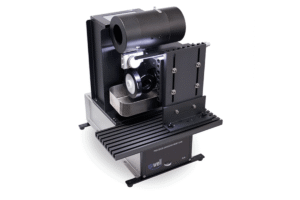
Diamond Wire Saw precision cutting extends applications from routine sample preparation to advanced wafering and section analysis using a broad range of materials. The invention of diamond embedded wire and controlled wire tension enables the cutting machine to support low-speed diamond passes in brittle substrate types and higher throughput on harder metal forms.
Wafer Cutting in Semiconductor Industries
Wafer cutting with a diamond wire saw has become the main concern for the fabrication of semiconductor materials, requiring the effective maintenance of cut thickness and circle diameter. The diamond wire saw cutting uses precision diamond grits over a stainless steel wire core for subsurface damage reduction, minimizing the polishing requirements of wafers and improving measurement accuracy.
Semiconductor Wafer Cutting Advantages:
- Edge Integrity: Maintains silicon-on-edge flatness and straightness after cutting
- Rotating Control: Precisely manages cutting speed for optimal results
- Specific Cooling: Targeted coolant delivery maintains thermal stability
- Optional Abrasive Slurry: Boosts quality with surface finishing procedures
- Repeatable Wafering: Enables strict processing windows and proper device function
Applications in Material Science and Research Laboratories
Wire saws are used in material research to section off heterogeneous samples, multilayer stacks, and composites that must be preserved free of artifacts. With microfeeds and a rigid work table, wire slicing ensures no alteration of microstructure while creating uniform thickness in sections for microscopy, spectroscopy, and mechanical testing applications.
| Material Type | Application | Benefits |
|---|---|---|
| Stainless Steel | Sectioning for metallurgical analysis | Greater throughput and data robustness |
| Ceramics | Sample preparation for testing | Reproducible experiments and calibration |
| Glass | Precision sectioning for optical analysis | Minimal subsurface damage |
| Composites | Multilayer stack analysis | Preserved microstructure integrity |
Researchers use diamond wires of varying grits with low-velocity coolant streams to safeguard all substrates. Client feedback confirms that cutting precise sections across stainless steel, ceramics, and glass results in noticeably greater throughput and data robustness, allowing experiments to be reproduced and enabling calibration comparisons in demanding laboratory applications.
Polishing and Finish Applications
Good polishing should start with precise cutting, which is crucial for geometrical accuracy and damage control. Diamond wire cutting controls damage in the substrate, reducing chipping and lowering residual stress in silicon wafers.
Polishing Time Reduction Statistics:
70%
Maximum Polishing Reduction
30%
Typical Polishing Reduction
Note: User data shows these reductions are achievable due to the one-step effect of wire sawing on silicon wafers and other materials.
With smooth wall surfaces produced by diamond-embedded wire and alignment through stable wire tension, subsequent lapping and CMP (Chemical Mechanical Polishing) steps can be accomplished in fewer cycles. Various parameters such as rotate speed, cross-feed, and coolant chemistry can be adjusted to match desired roughness properties with finishing requirements. This integration of capabilities during the finishing step sets surface finish specifications while enabling cutting efficiency against different materials in consistent, production-purpose utilization across industries.
High-Tech Cutting Technologies for Precision Diamond Wire Saw
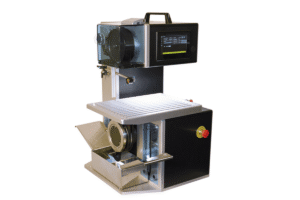
The comprehensive design of modern diamond wire saws encompasses advanced diamond wire, precision servo-controlled cross-feed, and closed-loop tension to deliver replicative outcomes with superior precision in each case. With vibration-damped frames and solid worktables, the effective frictional drive system allows smooth and consistent rotation.
Real-Time Monitoring Features:
- Sensors monitor wire load in real-time
- Wire temperature tracking prevents overheating
- Adjustments regulated according to sudden load changes
- Operators can configure coolant delivery and slurry
- Consistent wafer cutting thickness across many materials
This equipment demonstrates robustness and capability to perform traceable work for different user levels, right from research stage to routine sample preparation applications.
Cutting Edge Technologies
Diamond systems with entirely fresh precision levels feature wire saw cutting heads that offer extremely high performance in diamond bonds. Advanced technological components work together to deliver superior results:
| Technology Component | Function | Result |
|---|---|---|
| Nanoresolution Encoders | Provide technology for excellent rotary feed rates | Ultra-precise positioning control |
| Torque-Optimized Motors | Enable consistent power delivery | Smooth cutting operation |
| Enhanced Diamond Distribution | Stainless steels with exclusively formed diamond placement | Extra boost in grit retention and even wear |
| Predictive Control Algorithms | Track friction signatures to modulate parameters | Ensures edge quality in ultra-thin wafer sections |
| Integrated Cameras | Micrometer-calibrations for load carrier gripping | Confirms accurate setup |
| Modular Coolant Manifolds | Very near machine cut zone to modify flow | Optimized thermal management |
With these forms of innovations, higher throughput, lower kerf loss, and superior surface integrity have become realities among silicon, sapphire, stainless steel, and composite substrates.
Automation in Precision Cutting Machines
Automation enhances the precision of cutting through standardization of recipes, reducing operator variability. Programmable sequences set parameters for every substrate, including wire tension, cross-feed profile, and cutter rotate speed.
Automation Benefits:
- Barcode-Linked Fixtures: Recall validated parameters automatically
- In-Process Sensors: Adjust technique when load spikes occur, preventing wire blade damage
- Data Logging: All data logged for trackable visibility and continuous development
- Performance Improvement: Labs report 20-40% cycle time reduction
- Quality Enhancement: Less rework due to adoption of automated techniques
End user reviews confirm how controlled automation can improve cutting technology as well as consistency in variable laboratory applications and industrial setups.
Recommend reading: Laboratory Diamond Wire Saw: The Complete Guide to Precision Sample Cutting
Related Posts


Trending Blogs

![Polysilicon Material: Properties, Grades & Uses [Guide]](https://wiresawcutter.com/wp-content/uploads/2026/08/polysilicon-material-featured-150x150.webp)