
Get in touch with DONGHE Company
-
Phone: +86 181-1645-5490
-
Email: Sales18@DongheScience.com

Wire Saw vs ID Saw vs Laser Cutting: Comparison Guide

Effectiveness, price, and finish are three essential components that any cutting technology must balance in industrial and manufacturing settings. Wire saws, ID saws, and laser cutting each offer distinct advantages and serve different functions, though appreciating these distinctions requires careful examination. This comprehensive guide explores each cutting technique in detail, providing the numbers and facts needed to make informed decisions about precision, speed, material compatibility, and cost considerations.
Introduction to Cutting Methods

Various methods exist for sectioning materials into desired shapes or sizes, each employing different principles and mechanisms. These methods include mechanical cutting, thermal cutting, and laser cutting, among others. Mechanical cutting primarily involves the physical application of energy through sawing and drilling machines. Thermal techniques such as oxy-fuel or plasma cutting heat materials—particularly thick metals—to their respective melting or burning temperatures to achieve separation. Laser beam cutting supplies collimated light directly onto the material, allowing precise cuts without deflection. This proves optimal for production companies working with intricate shapes and minimal material waste.
Overview of Cutting Technologies

Technology has significantly modernized cutting tools through new materials, better mechanisms, and more accurate control systems that satisfy the demands of contemporary industries. Laser cutting has become essential in performance-sensitive sectors such as automotive and aerospace, where accuracy and speed are paramount. CNC (Computer Numerical Control) machining processes have proven invaluable for mass fabrication and rapid prototyping.
Plasma cutting continues gaining popularity for its ability to cut conductive metals such as steel or aluminum, particularly in thicker gauges. Meanwhile, oxy-fuel cutting maintains its niche in shipbuilding and construction sectors due to its effectiveness on very thick surfaces. Energy efficiency, safety standards, and environmental considerations have become universal concerns across global businesses and government policies regarding material transformation.
Advanced cutting methods must account for material characteristics, finished product requirements, and process repetition. Cutting-edge technology such as hybrid laser-plasma machines and software for automated intelligent cutting represents the industry’s evolution toward greater precision and environmental conservation.
Importance of Choosing the Right Cutting Method

Cutting methodology significantly determines production efficiency, cost management, and material finish quality. Among the major determinants for selecting the most appropriate cutting technique, five factors stand out:
1. Type and Properties of the Material
Materials such as metals, polymers, composites, and ceramics require specific cutting techniques due to their unique characteristics including hardness, brittleness, or heat resistance. Heavy gauge metal, for instance, may be better suited to laser cutting than water jet cutting depending on the specific application.
2. Accuracy and Tolerances Required
Demanding precision is essential where deviation risks are high. Precision techniques such as laser or electron beam cutting apply to cases requiring extremely high accuracy, particularly in industries with narrow tolerance ranges like aviation or electronics manufacturing.
3. Cutting Speed and Performance Rate
Maintaining rapid operation in both small and large-scale production areas encourages adoption of high-speed cutting techniques such as lasers or plasma. Selecting an appropriate technique boosts efficiency in completing tasks while meeting production deadlines.
4. Budget Considerations and Capital Expenses
Purchase and maintenance costs for certain cutting tools such as water jet or laser cutters are relatively high. Mechanical saws offer lower operational costs for less sophisticated work. Balancing effectiveness with budget constraints remains essential for successful project completion.
5. Environmental and Health Preservation
Organizations must construct measures for environmental efficiency, addressing pollution and health concerns. Water jet cutting, for instance, produces no toxic emissions or heat-related reactions due to low heat generation. Conversely, plasma cutting generates very high temperatures and necessitates proper safety protection.
Brief History of Wire Saw, ID Saw, and Laser Cutting

Wire saws emerged in the early 20th century, addressing practical needs for cutting stones, bricks, and other hard substances within the construction industry. The semiconductor industry later adopted this technology as wire coatings advanced, particularly with diamond-coated wires. Inner Diameter (ID) saws were introduced in the mid-1900s for precisely thinning materials and processing soft materials into wafers with minimal growth or loss.
Laser cutting utilizing beams for material separation developed in the 1960s, offering unprecedented speed and accuracy. This technology has since expanded considerably following the development of various laser systems, with different industries now utilizing laser technology extensively. Each production method has evolved over time to satisfy different aspects of manufacturing processes.
Comparison of Cutting Methods
Mechanical and laser cutting represent fundamentally different approaches, with each technique proving effective depending on material characteristics. Mechanical sawing demonstrates cost-effectiveness when cutting thick materials, though edge quality may not meet exacting standards and processing times can extend significantly. Laser cutting offers superior precision and minimizes material waste through consistent, accurate cuts. Complex designs and detailed work on various substrates benefit most from laser technology. However, laser cutting requires substantial initial investment, making cost considerations paramount.
Key Insight: Every method presents distinct advantages and disadvantages. Estimating suitability requires careful consideration of purpose, material characteristics, and production scale.
Diamond Wire Saw Cutting
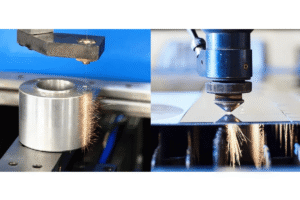
Diamond wire saws employ strands of wire fitted with diamond particles stretched along their length to perform cutting actions on materials including granite, concrete, and various metals. This sophisticated cutting mechanism proves useful in fields such as construction, mining, and precision silicon wafer slicing where extreme accuracy and minimal waste are critical requirements.
Beyond conventional applications, diamond wire saws demonstrate the ability to work with hard materials and customized geometries. Current practices incorporate vibration-minimizing capabilities, particularly valuable when cutting workpieces under applied loads. However, preliminary expenses related to this cutting technology remain high. Factors such as labor minimization, precision requirements, and material waste prevention must justify the investment in these advanced cutting methods.
ID Saw Technology
Compared to conventional cutting tools, ID saws offer enhanced productivity through exceptional precision. These machines enable precise cuts in materials while ensuring minimal waste and clean edge quality. Tasks requiring unique, intricate cuts that normal equipment cannot achieve benefit significantly from ID saw capabilities.
ID saw operation demonstrates particular benefits when working on delicate structures with minimum vibrations. While labor and precision factors often result in high initial costs, these tools remain invaluable for specific niche markets and specialized applications requiring uncompromising accuracy.
Laser Cutting Process

Laser cutting employs focused light beams to make cuts, proving particularly appropriate for thin metals and heat-treated materials requiring tight tolerances. The process generates heat by focusing a laser onto a surface until the material transitions from solid to liquid or vapor state. This typically occurs in conjunction with CNC machinery for precision implementation of required designs or shapes.
Assist gases such as oxygen, nitrogen, or compressed air facilitate the cutting process and clean away molten material from the cutting path. While laser technology can process various materials including metals, plastics, and similar substances, this high-end cutting capability makes laser-fabricated parts valuable across numerous industries.
Advantages and Disadvantages of Laser Cutting
Benefits
- Exceptional Precision: The process produces high-resolution designs with very fine lines and crisp shapes, achieving tolerances as tight as ±0.001 inch.
- Material Versatility: Handles metals, plastics, composites, and other materials meeting diverse industry needs including aviation, automotive, and electronics production.
- Clean Edge Quality: Assist gas usage completes cuts without defects requiring additional machining or finishing operations.
- Superior Speed: Faster than traditional mechanical saws, especially when processing projects with complex or repetitive shapes.
- Reduced Labor Requirements: CNC control capabilities enhance accuracy while reducing operator intervention and associated labor costs.
- Minimal Material Waste: Precision cutting ensures minimal material consumption, reducing production costs and environmental impact.
Disadvantages
- High Initial Investment: Equipment purchase and facility preparation require substantial capital, creating barriers for small businesses.
- Material Limitations: Certain reflective surfaces like polished aluminum or copper resist laser cutting, requiring specific laser configurations.
- Power Requirements: Operations can be costly and demanding due to high energy consumption, particularly during mass production.
- Safety Considerations: Improper handling can cause burns or toxic fume inhalation, requiring proper ventilation and protective equipment.
- Heat-Affected Zone: High temperatures during cutting can create heat-affected zones requiring additional treatment for certain materials.
- Maintenance Requirements: Regular maintenance and occasional component replacement add to long-term operational costs.
Pros and Cons of Diamond Wire Saw
Advantages
- Precision Finish: Provides exceptional accuracy for cutting materials such as stone and dense construction materials.
- Application Flexibility: Highly adaptive for diverse applications including construction, mineral extraction, and precision manufacturing.
- Reduced Vibration and Noise: Eliminates excessive noise and vibration compared to conventional cutting systems, resulting in smoother operations and lower structural damage.
- Efficient Hard Material Cutting: Diamond-coated wire represents the most efficient method for cutting hard materials without excessive waste, reducing cutting time in mass production.
Disadvantages
- High Initial Investment: Both machinery and diamond wire cost considerably more than conventional cutting tools, requiring substantial upfront capital.
- Wire Wear and Replacement: Diamond wire wears quickly on hard surfaces, necessitating frequent replacement and increasing operational costs.
- Training Costs: Operators require specialized training to prevent personal injury and equipment damage, extending the time before full productivity.
- Material Suitability: Most effective on harder materials; softer materials may not justify the investment compared to alternative cutting methods.
Diamond wire saws offer exceptional accuracy and versatility but operate within financial constraints that may prove challenging for some organizations. The technology’s applicability depends significantly on project requirements and available resources.
Benefits and Limitations of ID Saws
In manufacturing facilities requiring high precision with silicon and other valuable materials, achieving perfect surface finishes makes ID saws essential equipment. These tools provide extremely accurate cuts with minimal material consumption and high operational efficiency. ID saw technology handles numerous materials including abrasive and brittle substances like ceramics and silicon.
However, ID saws incur higher costs due to regular maintenance requirements and frequent blade replacement, especially during heavy use periods. Extended downtime for maintenance can disrupt production schedules. ID saws prove optimal when multiple project factors align, including precision requirements and budget considerations; otherwise, operational standards may not justify their use.
Detailed Comparison Table
Applications in Various Industries
Laser cutting finds extensive applications across diverse industries due to its precision and flexibility:
Automotive Sector
Cutting precise components such as airbag textiles, car body panels, and custom-made parts.
Aerospace Industry
Machining lightweight assemblies and forming complex structures for aircraft and spacecraft components.
Electronics Sector
Achieving accurate cuts ideal for miniature components such as circuit boards and microelectronic devices.
Healthcare
Fabricating surgical instruments, implants, and medical equipment with precise dimensions and tight tolerances.
Construction & Architecture
Transforming metal and glass materials into structural elements or artistic installations.
These versatile laser-cutting applications across different sectors promote innovation and cost-effectiveness in modern production methods. Laser cutting conserves energy by deactivating during non-cutting motions, making energy consumption favorable compared to alternative methods.
Use of Diamond Wire Saw in Construction and Demolition
Diamond wire represents an efficient and accurate cutting instrument primarily used for demolition, construction, and renovation purposes. Wire comprising industrial diamonds can cut through stone, steel reinforcement bars, and concrete without creating structural stress. This capability proves invaluable where conventional cutting might induce structural problems, as diamond wire saws operate with minimal vibration and structural interference.
Diamond wire saws enable precise cutting of concrete walls, floor slabs, and other hard surfaces during construction or retrofitting of existing structures. Similarly, in controlled demolition activities, these tools facilitate deconstruction in compact and sensitive areas requiring absolute precision. Recent advancements include state-of-the-art automation allowing remote operation, maximizing safety conventions.
Environmental Advantages
Recent industry data reveals significant interest in the environmental benefits of diamond wire saw technology. This stems from reduced debris generation, dry cutting capabilities with minimal water consumption, and support for growing environmental consciousness in construction and demolition sectors. Diamond wire saws represent significant advancement combining precision with environmentally responsible practices.
Applications of ID Saws in Manufacturing
ID saws function as essential mechanical tools in processes where precision and operational speed take priority. Their design and working systems enable slice production without component damage and with minimal material waste, making them indispensable across multiple industries. The following sections detail ID saw applications in manufacturing:
1. Semiconductor Industry – Wafer Production
ID saws handle significant portions of silicon processing from ingots to wafers. These saws cut ingots into equal-thickness wafers with extremely smooth surface finishes critical for microelectronic device performance.
2. Optical Component Manufacturing
ID saws typically cut various glass or crystal materials used in lens and optical component manufacture. Sharp edges prevent chipping, enhancing optical quality in products like cameras, microscopes, and telescopes.
3. Advanced Ceramics Processing
Precision cutting prevails in ceramic engineering applications. ID saws excel at shaping advanced ceramics for aerospace, medical implants, and electronics applications. These tools provide excellent cutting depth in harder, brittle materials without inducing surface microcracks.
4. Exotic Metal Alloy Cutting
ID saws machine exotic metals including tungsten, titanium, and molybdenum. Such materials find extensive application in aerospace and defense industries where dimensional accuracy and finished quality prove critical.
5. Solar Panel Manufacturing
Solar module production requires cutting silicon ingots into wafer-thin layers. ID saws perform this precise cutting mandatory for solar applications where strict dimensional limits apply.
These diverse applications illustrate ID saw flexibility and significance in modern manufacturing, particularly regarding precision achievement while encouraging environmentally responsible sector practices.
Laser Cutting in Automotive and Aerospace Industries
Automotive and aerospace industries increasingly adopt laser beam cutting as standard practice where processing fine details across various materials proves necessary. This technology supports work with metals, composites, and lightweight materials used in automobile components and aircraft structures. Its ability to produce intricate parts distinguishes it from operations cutting entire sections, which consume excessive material.
Non-contact laser cutting prevents material deformation, elevates productivity, and improves output quality for essential components. This approach proves particularly valuable for precision-critical applications in performance-sensitive industries.
Conclusion: Choosing the Right Cutting Method
Selecting appropriate cutting methodology requires consideration of multiple important factors including application requirements, material characteristics, desired finishing quality, operational speed, and budget constraints. As designs become more intricate and materials more delicate or prone to deformation, laser cutting emerges as the optimal choice for achieving detailed work without excessive waste. However, when tasks involve thick sections or relatively simple shapes, alternative techniques like plasma or water jet cutting prove most applicable and advantageous.
Optimal effectiveness results from matching technology to specific applications. No single cutting method exceeds all others universally, yet budget constraints must always receive appropriate consideration.
Summary of Key Differences
Wire Saw, ID Saw, and Laser Cutting technologies serve distinct purposes based on variations in current methodologies and applications. Laser cutting reserves itself for thin to moderately thick materials requiring high detail levels, particularly in electronics and aerospace industries. Plasma cutting excels with thicker conductive materials, offering reduced expenses through increased cutting speeds beneficial for mass production. Water jet cutting demonstrates high adaptability across different materials including metals, composites, and ceramics without heat-related complications, though at higher costs and slower operational rates.
Ultimately, selecting between cutting strategies depends on specific project requirements including material characteristics, precision demands, and cost parameters, ensuring technical operations align with practical operational constraints.
Recommendations for Specific Needs
Selecting appropriate cutting technology for specific applications requires matching technological capabilities with material requirements and project objectives. Where clean, non-destructive cuts are essential—such as aerospace engineering or medical device manufacturing—water jet cutting technology remains most suitable due to zero heat generation and preserved material properties.
When operational speed and cost prove critical while edge coaxiality tolerances remain less stringent, plasma cutter selection proves defensible. Laser cutting popularity stems from major industries targeting high geometric repeatability in products, particularly automotive manufacturers and electronics industries. This growth also reflects precise operation capabilities and compatibility with production automation, enhanced by fiber laser technology development reducing overall costs.
Successfully translating objectives into practical implementation requires effective, efficient, and economically sound execution planning.
Future Trends in Cutting Technology
Examining historical developments in cutting machinery reveals significant advances within automation technology. Artificial intelligence and machine learning increasingly integrate into cutting systems, producing faster, more accurate production with reduced waste. Robotic implementation has elevated operational effectiveness and safety levels considerably.
Recent laser and plasma cutting methods emphasize energy efficiency and environmental responsibility, reflecting improved industry standards. IoT infrastructure enables real-time interconnection and predictive maintenance expected to boost efficiency while minimizing operational delays. Based on current assessments, cutting technology will achieve process accuracy and scalability goals while helping mitigate environmental impacts.
Frequently Asked Questions
1. What are the core differences between Wire Saw, ID Saw, and Laser Cutting?
These three cutting methods employ different mechanisms and applications. Wire saws use diamond-abrasive wire to cut materials. ID (Inner Diameter) saws feature circular blades with cutting edges on their inner diameter, designed for high-precision cutting of brittle materials. Laser cutting utilizes focused, high-energy light beams that melt, burn, or vaporize materials, enabling non-contact and intricate cutting operations.
2. Which method is best for my particular material?
Material characteristics determine optimal method selection. Wire saws handle tough, large-scale materials such as stone, concrete, and metal. ID saws excel with silicon, ceramics, and crystals requiring minimal waste and high-precision cutting. Laser cutting offers versatility for metals, plastics, wood, and composites, though performance may diminish with highly reflective or extremely thick materials.
3. When should I choose laser cutting instead of conventional sawing?
Laser cutting proves optimal for situations requiring high precision, intricate shapes, and detailed patterns. Its non-contact nature prevents part deformation, making it ideal for fragile components. When decisions prioritize rapid production of complex shapes with superior edge finish quality, laser cutting surpasses mechanical sawing methods.
4. What are the main cost considerations for each technology?
Wire saws and ID saws require high initial machinery investment. Operational costs include frequently replaced wear components like diamond wire and blades, particularly during heavy use. Laser cutting demands substantial initial equipment investment with primary running costs covering energy consumption and assist gases. Regular optical component maintenance contributes to total operational expenses.
5. How do these methods compare regarding accuracy and material waste?
ID saws and laser cutting rank as the most accurate methods with minimal material waste. ID saws particularly excel at producing thin, uniformly shaped wafers with minimal kerf loss. Laser cutting achieves tight tolerances and narrow cut widths, maximizing material utility. Wire saws offer good precision though kerf width may exceed the other two methods.
6. Which industries primarily use each cutting method?
Wire Saw: Primarily employed in construction, demolition, mining, and semiconductor/solar industries for cutting large silicon blocks. ID Saw: Indispensable for semiconductor silicon wafering, optical component production, and advanced ceramics manufacturing. Laser Cutting: Universally adopted across automotive, aerospace, electronics, medical device fabrication, and metalworking industries due to its versatility and precision.
7. Are there major differences in safety and environmental concerns?
Each method addresses safety and environmental concerns differently. Wire and ID saws produce particulate matter and present mechanical safety hazards requiring proper protection. Laser cutting’s thermal nature generates potentially toxic fumes requiring proper ventilation, while intense light necessitates eye protection. Environmentally, minimal-waste technologies like laser and ID sawing demonstrate superior resource efficiency compared to conventional methods.
Reference Sources
- Technology Used in Cutting Materials with Wire: Present Stage of the Art
Source: ScienceDirect - Current Trends in Hybrid Cutting Techniques Involving Wire Sawing
Source: Springer - Newest Research on the Effect of Varying Cutting Parameters on the Qualities of Metal Surface and Kerf using Laser
Source: Springer - Recommend reading: Hard and Brittle Material Cutting Wire Saw | Precision Diamond Wire Saw Machine
Related Posts

Trending Blogs

![Polysilicon Material: Properties, Grades & Uses [Guide]](https://wiresawcutter.com/wp-content/uploads/2026/08/polysilicon-material-featured-150x150.webp)