
Get in touch with DONGHE Company
-
Phone: +86 181-1645-5490
-
Email: Sales18@DongheScience.com

Diamond Wire Saw Technology Complete Guide

This guide provides readers with an in-depth overview of diamond wire saws, offering detailed information on precise cutting techniques for both professionals and novices. The discussions emphasize the diamond wire saw’s contribution to quality concrete cutting, steel dismantling, and stone processing, with focus on performance, control, and efficiency.
Introduction to Diamond Wire Saw Technology
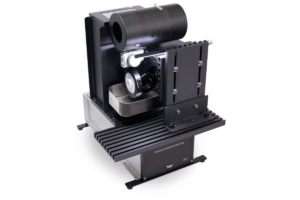
A diamond wire saw represents a paradigm of cutting technology where diamond abrasive grains are attached to a wire that loops around a drive drum and motor to cut various materials with utmost accuracy. The wire, composed of synthetic diamond segments, maintains sharpness for premium cutting power, enabling refined cuts through concrete, granite, marble, stainless steel, and other metals.
Key Features
- ✓ Adjustable feed support for wet and dry cutting
- ✓ Vertical and horizontal cutting capabilities
- ✓ Constant speed control for precise cuts
- ✓ Available in diameters from millimeter-sized beads to meter-long loops
What is a Diamond Wire Saw?
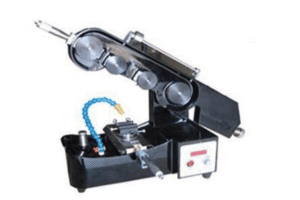
A diamond wire saw is a machine that utilizes a flexible wire embedded with diamonds for cutting thick, large, or very hard products with relatively small kerf loss. The diamond wire cutting method requires precise coordination of the saw’s guidance path, controlled feed, and high speed, adjusted according to the material being cut—whether concrete, steel, granite, or marble.
Main Components
The system typically consists of:
- Motor for power generation
- Drive drum for wire rotation
- Tensioning system for wire stability
- Guiding accessories for directional control
This technology proves invaluable where conventional blades struggle, delivering high-quality finishes across a broader range of material thicknesses with less vibration and energy-efficient operation.
Historical Development of Wire Saw Technology
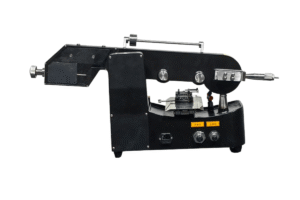
In quarrying, wire saw technology first emerged when wire was used with abrasives (small pieces of garnet suspended in slurry) for large block extraction. The transition to diamond wire—wire impregnated with synthetic diamond segments fixed along its length—marked a significant innovation away from loose abrasives.
| Era | Technology | Key Innovation |
|---|---|---|
| Early Period | Wire with loose abrasives | Garnet slurry cutting |
| Transition Era | Diamond-impregnated wire | Synthetic diamond segments |
| Modern Period | Optimized diamond wire systems | Speed regulation, controlled feed, advanced bead design |
This durable system enabled fast cutting of hard blocks, and manufacturers optimized designs through spindle speed regulation, controlled feed, and strategic bead selection and spacing. Today, diamond wire saw machines deliver high-level safety, incredible accuracy, and perfect cutting quality in both wet and dry environments.
How Diamond Wire Saws Work
Diamond wire saws operate by cycling a diamond-embedded wire around a drive drum, powered by a motor with constant speed regulated through a control box that manages wire speed and tension. The diamond grains remove material through grinding, providing a smooth, heat-free cut.
Operating Process
- Wire Positioning: Operators guide or track the wire with reference lines—vertical or horizontal
- Cutting Method Selection: Set the wire for wet or dry cutting according to material requirements
- Speed Adjustment: Adjust speed for variations in material strength or hardness
- Precision Control: Maintain constant support, proper wire choice, and accurate scaling of control elements
Applications of Diamond Wire Saws
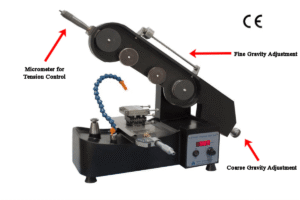
The diamond wire saw excels in precise cutting with rapid speed, minimal vibration, and superior finishes compared to traditional tools. This cutting technology allows large sections to be removed from concrete, steel, granite, marble, and stainless steel with minimal heat generation.
Cutting Different Materials
| Material | Application | Key Advantage |
|---|---|---|
| Concrete | Cutting through rebar without jamming | Clean cuts with minimal cracking |
| Marble & Granite | Precision stone processing | Maintains razor-sharp edge for clean cuts |
| Stainless Steel | Structural steel cutting | Minimizes burr and distortion |
| Complex Shapes | Detailed architectural work | Scales from mm to meter-sized segments |
Industry Applications
Construction
Bridge deck demolition, shaft sinking, and controlled demolition where access is confined and dust suppression is necessary.
Mining & Quarrying
Separating huge blocks carefully while minimizing waste through accurate direction and control.
Metal & Stone Fabrication
Precision profiling of complex forms and cutting through thick products with consistent flatness.
Power & Petrochemical
Safe decommissioning of steel and stainless vessels with constant speed control and wet/dry options.
Advantages in Construction and Manufacturing
- Fine Surface Quality: Less microcracking due to optimized speed and feed
- Faster Cycle Times: Enhanced productivity through efficient cutting
- Remote Positioning: Makes cuts feasible in restricted spaces at multiple angles
- Clean Operation: Minimal vibration with excellent automatic control
- Enhanced Safety: Protects adjacent materials and support equipment
Types of Diamond Wire Saws
Diamond wire saw systems range from standard concrete cutting machines to highly specialized equipment for steel beams and precision cutting. Motor power, design, drum geometry, and control systems largely determine performance. The composition, size, and spacing of beads along the wire influence effectiveness based on material hardness and size.
Standard vs. Specialized Wire Saws
| Type | Design Focus | Best For |
|---|---|---|
| Standard Wire Saws | General-purpose design for common materials like concrete and stone | Average speeds, standard lifetime, routine cutting tasks |
| Specialized Wire Saws | Robust frame, advanced controls, custom feed systems | Thick steel removal, underwater cuts, tight radius profiles |
⚠️ Selection Tip
Choose between standard and specialized based on the material to cut, geometry of the cut profile, and desired precision level to ensure quality production runs and optimal time consumption.
High-Quality Wire Choices
Outcomes and life-cycle costs depend heavily on selecting quality wires. Options include synthetic diamond beads with varying grit, bond, and spacing for tuning aggressiveness and finish quality.
Key Wire Selection Factors
- Bond Resilience: Keeps tips sharp and free from impact damage
- Grit Size: Smaller grit preferred for marble and granite finishing
- Wire Diameter & Length: Must match machine power, drum size, and target feed rate
- Material Matching: Proper wire-to-material pairing enhances feed rates and accuracy
Custom Solutions from Manufacturers
Leading manufacturers provide custom solutions encompassing machine design, control software, and accessory suites tailored to specific industrial sectors. Configurable packages include remote control panels, automated load-dependent speed and feed rates, and product-specific drums for stable wire guidance.
Steel Decommissioning
Custom towers for largest pieces with complex geometry
Custom towers for largest pieces with complex geometry
Stone Architecture
Adjustable wire and guides for enhanced curvature accuracy
Adjustable wire and guides for enhanced curvature accuracy
Performance Systems
Application data measurement for quality, speed, and safety improvements
Application data measurement for quality, speed, and safety improvements
Benefits of Diamond Wire Saws
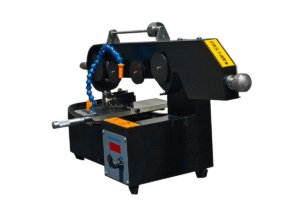
Choosing diamond wire technology improves quality, time efficiency, and cost-effectiveness across numerous applications. The system requires a robust motor, well-designed drum, fine setup of feed and tension controls for constant performance, combining wet-or-dry and vertical-or-lateral cutting capabilities with a small cutting width and smooth finish.
Accuracy and Efficiency
Accuracy stems from synthetic diamond positioning on the wire, providing a sharp and steady cutting force that processes materials at precisely controlled speeds. The machine maintains calibrated operation parameters from millimeters to meters, keeping feed rate and alignment at exceptional accuracy levels across vast product sections.
Result: Reduced reprocessing, faster cycle times in concrete cutting, architectural stone work, and steel projects.
Safety Features
| Safety Feature | Benefit |
|---|---|
| Remote Control | Keeps operators away from hazardous cutting zones |
| Automated Positioning | Reduces manual handling and associated risks |
| Low Vibration Operation | Minimizes operator fatigue and dust generation |
| Enclosed Drum Design | Protects against dust and debris exposure |
| Automatic Tension Tracking | Prevents blade kickback incidents |
Future Developments in Diamond Wire Technology
Recent advancements focus on wire design improvements, enhanced machine controls, and digital monitoring to increase technology reliability and efficiency. Manufacturers are finding optimal balances between cutting speed and wire life expectancy across various materials.
Innovations in Diamond Wire Design
- Multi-Layer Diamond Deposition: Extended cutting interface longevity
- Hybrid Bonds: Optimized bead spacing for sustained sharpness
- Variable-Diameter Beads: Tailored aggressiveness for different materials
- Low-Stretch Cores: Stabilize wire length and tension for straighter cuts
- Friction-Reducing Coatings: Improved wet and dry performance
Emerging Market Trends
IoT Integration
Remote diagnostics and control capabilities for enhanced monitoring and maintenance
Recommend reading: Gantry Diamond Wire Saw: Precision Cutting Technology
Related Posts
Trending Blogs

![Polysilicon Material: Properties, Grades & Uses [Guide]](https://wiresawcutter.com/wp-content/uploads/2026/08/polysilicon-material-featured-150x150.webp)