
Get in touch with DONGHE Company
-
Phone: +86 181-1645-5490
-
Email: Sales18@DongheScience.com

Single Wire vs Multi-Wire Saw: Which Do You Need?

In sectors such as semiconductor, photovoltaic, and advanced processing materials, the cutting education is very crucial. Two major categories of these types of machines are single wire and multi-wire saws where each of these technologies exhibits its strengths and weaknesses. This article describes the numerous constraints as well as the variations between the two models in order to facilitate an informed decision.
Understanding Wire Saw Technology
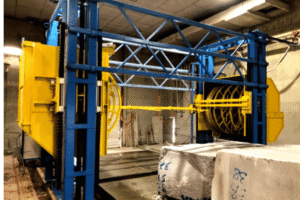
Single wire saws are designed for very precise cutting of the given block or a particular one out of a block. These exist, amongst others, in stone carving where building components are produced or other equally complex tasks due to the fact that they are quite maneuverable and cut with precision. Their structure makes them very easy to manage in handling materials outside such environs, hence allowing for applicability at small scale or specialized operations.
In the case of a different saw, there is the multi-wire saw that gives out much performance. These tools are meant for cutting slabs of material from one power in a single course, hence speeding up production. Such usages are common in areas such as stone slab manufacturing for which high production and consistency are required.
Key Consideration
In the debate of Single Wire vs Multi-Wire Saw, it is possible to state that single wire systems are more fatiguing than multiple wire systems in the sense that the material does not have to be cut to size faster than that. Think about the size of the cutting saw and the amount of accuracy needed and how efficiently you want to produce. Single wire saws allow for the versatile cutting of small shapes, and even multiple shapes if necessary, whereas multi-wire saws are better suited for high volumes of material processing.
What is a Wire Saw?
Wire saws are very powerful tools for slicing hard materials such as concrete, stones and metal layers and use a cable with an abrasive coat or diamond inserts for soft cutting. In general, the strongest cables are made of steel alloys. A wire saw may have a loop or be a continuous wire in a particular configuration. The cutting action involves the wire being pulled with a high tension, in motion and having aggressors that cut into the hard materials.
Undoubtedly wire saws have numerous practical application in industry embracing, for instance, quarrying, building construction services, semiconductor ingot cutting, auto parts manufacture, etc. These tools allow us to perform precise cutting without damaging the adjacent material or causing any additional stress on the surface. Such sophisticated machines tend to include a special cutting control system enabling speed regulation, assuring minimal material wastage and high quality services of production even with increased production capacity.
The Evolution of Wire Saw Machines
There have been remarkable changes in materials development and design of wire saw machines, more automation has been developed to improve machining processes and precision machining. Hand-held wire saws were the elementary cutting tools and though they helped, cutting penetration and precision were at their lowest. The equipment was just a plain metal wire with most of the cutting relying on abrasive slurry, which was uneconomical increasing the wastage of substrate materials.
In some types of equipment, however, there is an advantage of another kind. To clarify, instead of the usual bare wire, the latest diamond wire is used, which speeds up the cutting process and prolongs the working age of the wire. Furthermore, CNC technology introduced a great deal of enhancement in these machines compared to the simple ones that became available. Such enhancement was cutting and shaping different materials in an automatic manner. Additionally, enormous developments in abrasive technology, cooling elements, and other aspects have enhanced material wastage reduction and aided in better cooling of the wire among other operational aspects.
Environmental Impact
Studies have also demonstrated a strong association between environmentalism and the development of non-traditional wire saws that lessen power consumption and promote recycling of cutting implements. These kinds of wire saws are extremely functional in numerous equipment manufacturing, and it is because they are used to cut very thin slices of silicon that are used to produce solar cells thereby enabling sustainable sources of energy to be used.
Types of Wire Saw: Single vs Multi-Wire
When working with small parts, there is a possibility of using single wire saws which are more accurate than bead frame saws or band saws which consist of several wires. Nevertheless, the use of multi-wire saws assures high throughput especially in cutting hard materials like silicon and sapphire.
Technical Differences Between Single Wire and Multi-Wire Saws

Each of these is a single wire saw and it is employed when very precise and low volume cutting of various materials is necessary, most specifically because they are employed in scientific and sample manufacturing. These machines are slower, however, their performance economics include modification of energy consumption levels in favor of lower costs of purchase and maintenance, since other than cutting, there simply is nothing else to do with them.
As for multi-wire saws, they are considered best fitting when one is dealing with loads of materials and therefore needs very fast and effective systems. These machines are suitable for limited material types due to their increased energy consumption and a very active nature. This is not to suggest these kinds of saws do not have any associated costs, but it helps explain their application in a number of industrial processes that do not cause a lot of idle time and yet enable the systems to have higher capacities.
Design and Construction of Wire Saw Machines
The use of a wire cutting machine is first about the detail of performing the cuts and then follows the property of the material in question. Several tension forces within the operating wire, a variety of different support structure and numerous guiding ring positions all make a common inclusion of such systems. More often than not, these wires, which do the cutting, are covered with a diamond dust and there are different types of wires which are chosen within levels of difficulties caused by the temperature, surface characteristics as well as the abrasiveness degree of the treated material.
As seen from recent research in the field, technology has evolved in terms of AI and robotics integration within the wire saw machines. Development of such technologies is quite necessary to avoid the monotonous cutting operations, that lead to waste of resources among other things. Constructions of details made of modern, high tensile alloys or reinforced polymer are now commonplace in any industry producing machinery requiring high speeds of operation or able to withstand the loads. Furthermore, forced fluid cooling is employed where necessary to avoid any deformations or even damage to the material under machine operation.
Diamond Wire vs Traditional Wire
Differences between conventional wire and diamond wire blades are observed in aspects such as accuracy on cutting, life expectancy, pricing, what material can be cut and the ecology.
With its characteristic of high accuracy and resistance, diamond wire finds extensive use in cutting hard materials such as stone, glass or semiconductors, but the cost is far much higher compared to the other wires. Regular wire is instead inexpensive therefore, easier to apply on the less hard substances, although more is lost as waste and economic damages are further more.
Cutting Mechanisms: Single Wire vs Multi-Wire
Single wire slicing has its strengths in accuracy and lesser loss of material. The multi-wire slicing however is very efficient for mass-processing and for labor-time minimizing purposes.
Efficiency and accuracy are the hallmarks of single wire slicing in semiconductor fabrication. But, if large scale longitudinal cuttings for example in the production of photovoltaic wafers are needed, the multiple wires technique is the preferred option as many wafers can be simultaneously cut in one session.
Performance Metrics of Wire Saws

Various kinds of wire saw are available on the market with different level of performance and their limitation including different cutting speed, processing efficiency, extent of surface unfinishing and cutting material wastage. Cutting speed index is associated with how long it takes to cut which is crucial in most cases of processing and helps in raising output. The finish of the cut surface is called cut quality or simply the cut effectiveness and is usually important in some industries for example semiconductors, photovoltaic, and construction. Material waste refers to the waste content which is the wasted material during the cuts. To avoid huge economic losses, cutting efficiency is important to use.
Cutting Efficiency and Speed
Several complexities involved in the cutting efficiency and rate are the capacity of the machine, nature of the material in question and the operation techniques used. In any case, the optimal systems of saws include low diameter wires which increase the cutting velocity with lower abrasive usage while maintaining the tolerances needed among other factors. It is understood that the factors are important for both economic spheres and industrial settings where it is critical to enhance the efficiency of equipment and simultaneously assure the functioning of equipment.
Material Waste and Precision Cutting
Getting rid of the material wastes very often and for a very long time upscaling the effective dimensions of operation might be problematic when it comes to accurate manufacturing. Modern wire saws beat this scenario as extremely thin wires are used instead, since the tension is better managed, it is easier to enhance cutting speed and thus, reduce kerf losses. Besides, through interpretation of collected data at the time of cutting and machine learning, controlled cutting at this stage includes cutting parameters which adjust to the type of material being cut without affecting the quality in any way.
High-Volume Production Capabilities
The carrying out of activities with high supply and demand tends to the satisfaction of the demands of a myriad of industries, more particularly the semiconductor, solar, precision, and related ones. It is now possible for manufacturers to branch out very easily especially since the advancing of technologies has brought in the use of automation and robotics for manufacturing and other industries. The business that applies this method must satisfy certain conditions corresponding to consumer demand, and addition of new products.
Cost-Effectiveness of Single Wire and Multi-Wire Saws

While deciding between a single or multi-wire saw, one needs to have a clear understanding of why it is used in the first place and the level of efficiency one wants to achieve. In limited cases where such a wire is required, or where the utmost accuracy is needed, with kerf of the materials minimized, a single-wire cutting saw may be used. These saws might be less expensive initially, but their efficiency is usually best for low volume applications.
Slab cutting concepts are the exact opposite when it comes to the use of multiple parallel cutting wires. The demand of the efficient cutting technologies is extremely high and fast cutting is particularly important. These pieces of equipment are however highly priced initially, but the cost per piece made or produced is also lower which is called ‘economies of scale’. When a company decides to opt for the more cost friendly solution, it should include factors like the desired production volume, precision limits, and the budget in its consideration.
Initial Investment and Operating Costs
One of the priorities on the capital outlay for the multi-wire saws includes machines, installation, and supplementary devices. These expenses vary according to the production capacity and specifications of the technology with high-end models requiring more money capital for the initial investment. Running expenses include consumables such as wires, abrasives, coolants, raw materials energy and other operational costs such as maintenance costs. These expenses need to be compared by each organization to its scale of production as a means to understand how cost effective and sustainable it will be in the long run.
Long-Term Maintenance and Durability
It is important to follow a specific regime of servicing the equipment, as saving in this aspect will have a detrimental effect in the long run in the sense that it will be impossible to repair the machine later. Key components such as worn-out surfaces or precision components can be easily assessed over time for their wear and tear. Regular maintenance such as lubricating, cleaning, and calibration helps in ensuring extended operational intervals and breakdown proof operations. The durability of the equipment is also a function of the working conditions, for example, the temperature, humidity, and polluted air having dust makes the wear process much faster.
Return on Investment: Which is More Cost-Effective?
When choosing the optimal way to operate the equipment to achieve the goals it is essential to analyze the following. Maintenance that is preventive is more profitable than one that is reactive. A workplace that implements preventive maintenance greatly reduces the proportion of unforeseen or unanticipated equipment failures as a consequence of this, thus preserving a great deal of resources. Conversely, preventive measures guarantee avoided high repair expenses and no sudden breakdown of any machinery. Enterprises in which predictive maintenance technologies are employed go on to count as those concerned with cost leadership in the industry.
Choosing the Right Wire Saw for Your Needs

Selecting the most appropriate saw depends mainly on the nature of the work that requires the saw’s assistance. Good understanding of these determinants facilitates the choice of related wire saw particularly, what makes up a reasonable combination of efficiency and reliability.
Factors to Consider
- Material: Determine the material that has to be cut, for instance, wood, metal etc., since different materials are cut using different saws; those for soft materials are different from those for hard materials.
- Precision Requirements: Consideration should be made on whether there is a need for high and close tolerances in cuts in the project or not. Equipment with a very high level of precision are made for very detailed tasks.
- Wire Type: Ponder over the rigidity of materials and also the gauge of the wire for the consequence these bear on several things. For hard surfaces, diamond wires are the most aggressive tools.
- Machine Specifications: Look for the speed of the saw, its capacity in processing, and the power in the cutting process.
- Maintenance vs. Cost: Focus on attempting to weigh cost rational measures as opposed to servicing requirements, bearing in mind that some models which are of high quality can help extend the servicing interval and reduce downtime.
Key Considerations for Selection
1. Material of Construction and Wire Coating
The strength of the wire calls for the kind of wire, whether steel or tungsten carbide wire. Diamond coated wires provide enhanced performance since they reduce time taken when cutting hard substances such as granite or concrete reinforced with steel.
2. Efficiency of the Cuts and Work Rate
Determine how fast a wire saw functions and the precision it offers while cutting. Fast cutting ones are efficient in use, but there may be considerations regarding accuracy in performing precision cutting. Ensure the cutter addresses the cutting accuracy requirements.
3. Material Characteristics
Verify and ensure that the wire saw is designed to accommodate the materials for the cuts you intend to make. Some versions are designed to operate on soft materials like polymers; others are better at working with alloys and ceramics.
4. Easy Maintenance and Care
Cost consideration is determined by wire change intervals, longer wire cycle, or intervals for lubrication among other maintenance activities for the long term. They experience less downtime since the components and methods used in these machines are simpler.
5. Energy Use and Effectiveness
Take the wire saw recommended practical power need and match it up with the power requirements. The need for every model to consume better energy also helps in saving the environment and cost of energy use.
Industry Applications for Single Wire and Multi-Wire Saws
When it comes to sawing techniques, one can apply the single-wire saw, the multi-wire saw, or both, as long as such mechanized wires enable smooth cuttings of the hard and brittle cut elements along various continuous grids. Such applications of the technologies above are possible for a wide range of activities in various contexts:
Primary Applications
1. Wafer Preparation for Semiconductor Fabrication
In semiconductors wire machining, the best wire sawing technique would be to take even the thinnest slivers of silicon ingots to silicon wafers. In mass production, this accurate reduction helps with controls variation in the thickness of the parts and elimination of the scope of the waste material after processing.
2. Photovoltaic Panels Applications
In the construction of photovoltaic cells, multi wire saw blades are employed for slicing silicon ingots into wafers that are further incorporated into the assembling of solar panels. This improves their productivity as they are able to work on more than one sheet simultaneously – meeting growing demand for such power sources.
3. Construction and Stone Processing
While marble, granite, and various other types of stones are used for decoration, it is essential to cut them precisely. These stones are cut using either single wire or multi wire saws. Such saws perform fine cuts which result in good surface finish that eliminates or even minimizes the need for additional processing.
4. Optical Glass Market
The most common use for single wire saws is in profiling contours and lenses on optical glass with tight tolerances. They provide the assurance of getting the required optical finish.
5. Advanced Composite Materials
The application of multi wire saws has extended to cutting of ultra-modern materials like titanium based alloys, advanced ceramics, and several other composites. This helped in achieving superior cutting with negligible damages on the edges which is very beneficial in aerospace engineering and healthcare applications.
Future Trends in Wire Cutting Technology
Continuous enhancements in wire-cutting technology will concentrate further on reduction of labor, quality of performance improvement and expansion of materials’ scope. This will enhance these processes by employing Artificial Intelligence and machine learning techniques in the wire feeds, thereby reducing scrap wire generated although boosting performance. Many new wires with high productivity, smaller diameter and competitive prices will also be available in addition to modern composites and high speed steel wires and more efficient blades. These modifications will cater to the expansion practices of the aircraft building, electronics, alternative energy generation and other sectors technology.
Key Technological Advancements
- AI and machine learning integration for optimized wire feeds
- Development of high-productivity wires with smaller diameters
- Advanced composite and high-speed steel wire innovations
- Reduced material waste through precision controls
- Enhanced performance across aerospace, electronics, and renewable energy sectors
- Recommend reading: Hard and Brittle Material Cutting Wire Saw | Precision Diamond Wire Saw Machine
Frequently Asked Questions
What is the difference between single-wire and multi-wire saws?
A single strand of diamond coated wire is used in the process of making a cut with a single-wire saw. These types of saws involve a wire that is drawn into the stationary material. However, instead of one wire that forms a loop, the multi-wire saw operates with several wires (normally in hundreds) that are parallel to each other. Thus, the sawing of solid blocks into many wafers in an instant is possible.
Which type of saw is most often used for accurate cuts?
Precision is a feature that distinguishes both of the tools, nonetheless, the application of these is different in magnitude. Although single wire saw helps in creating complex designs and pieces, multi-wire saw uses several thin wires at once making it capable of cutting hundreds of pieces with great control in thickness and parallelism which is an obvious reason why such tool is used in quantity slicing wafers which demands precision and accuracy of the thickness of the wafers.
Why consider a single wire saw as an advantage?
The biggest advantage of a single wire saw is that it is easy to use to cut various shapes at cost that is quite low. The single wire cutting machine can accommodate cutting with various dimensions and weight of the concrete block, mostly large blocks, or any other difficult shapes. It is meant for cutting and forming of small number of parts, this involves active R&D combined with production. The machine is simple to operate and the integration of the machine to the system is efficient for the users.
What are typical applications for Single Wire vs Multi-Wire Saw?
Single-wire saw applications:
- Shaping and cutting blocks to specified size prior to manufacturing
- Cutting heavy or very irregular shaped parts
- Custom parts and design alterations
- Research and investigation with specific requirements
Multi-wire saw applications:
- Wafering of silicon ingot for semiconductor and photovoltaic industry
- Slicing hard and brittle materials like sapphire, quartz or ceramics
- High-volume wafer processing with reduced cost per unit
How do kerf losses compare between Single Wire vs Multi-Wire Saw?
One very significant factor to consider is the waste that arises from material removal which is known as kerf loss. To mitigate this, multiple wire saws are built using wires that are very thin, i.e. wires which are less than 100 microns in diameter, thus reducing the kerf loss per cut to a very low minimum. And although single wire saws are also equipped with fine wires, kerf losses in single wire saws performing the same task multiple times would be more than that expected in multi wire saws. That’s why it is usually more economical to use a multi-wire saw for cutting multiple numbers of wafers.
What are the operational complexities of each machine?
With the advancement in technology, operation of a single wire saw has become quite straightforward with simple controls for wire tension, speed and the cycle of wire cut. In contrast, using a multi-wire system is more complex. It is because the tension on hundreds of wires in a bundle has to be very precisely controlled, the delivery systems of the slurry are very complex and the wires are set very carefully or else the thickness of the slices will differ and the wires can break.
Making Your Decision
Understanding the differences between single wire and multi-wire saws is crucial for selecting the right technology for your specific application. Consider your production volume, precision requirements, material types, and budget constraints to make an informed decision that optimizes both efficiency and cost-effectiveness.
Related Posts

Trending Blogs

![Polysilicon Material: Properties, Grades & Uses [Guide]](https://wiresawcutter.com/wp-content/uploads/2026/08/polysilicon-material-featured-150x150.webp)