
Get in touch with DONGHE Company
-
Phone: +86 181-1645-5490
-
Email: Sales18@DongheScience.com

Laboratory Sample Preparation with Diamond Wire Saws

Introduction: Laboratory teams are now rapidly moving towards diamond wire saw technology to ensure precision and repeatability in their cutting activities. This article elaborates on the technique of cutting, its core components, and the extensive use of wire saws on a versatile range of materials—ranging from soft brittles to hard metals as well as composites. We explore how diamond cutting improves surface quality, avoids rework, and speeds up the sample-preparation process, highlighting the benefits of precise diamond saws in both cutting technology and certified instruments.
Diamond wire saw systems employ a diamond-wrapped wire, variable cutting speeds, and a stable sample stage to produce gentle cutting with minimal subsurface defects. In the lab, precision wire saws with automatic sample control provide top-notch cutting performance when compared to those utilizing abrasive wheels, especially in the cutting of thin slices and diamond wafering. Such saws feature controlled coolant flow, rigid fixturing, and precision wire movement to provide higher-quality cut surfaces with high repeatability.
What Is a Diamond Wire Saw?

A diamond wire saw is an intricate machine that uses diamond impregnated wire or diamond-coated wire as the cutting element to cut or section high-tech materials. Unlike traditional saws, a precision diamond wire saw uses low-normal-force cutting energy to prevent microcracks and provide excellent surface finish on crystals, ceramics, glass, and metals.
Optimal Laboratory Configurations:
- Wire saw with alignment of the safety stage
- Rotary choices of the sample for flexible positioning
- Adjustable feed for cutting capabilities
- Designed for successful microscopy and micromechanical testing
How Diamond Wire Saw Works
The diamond wire is in motion continuously and weaves around guide pulleys. Diamond cutting from the wire is performed in the form of micro-chipping and abrasion. At a controlled cutting rate, there is a balance with finish and prevention of thermal damage based on material hardness and uninterrupted coolant.
Key Operational Elements:
- Slicer Control: Manages the cutting process with precision timing
- Wire Alignment Systems: Ensures accurate wire path throughout the cut
- Rigidity Enhancement: Bolsters exam fixture and reduces vibration for smooth cutting
- Optimization Capabilities: Engineers can use wire guides to selectively optimize wire feed, tension, and path
These combined features create decent-quality cutting results with prescribed slice thickness across various materials.
Applications in Laboratory Sample Preparation
In laboratory sample preparation, a diamond wire saw with precision is the go-to tool for engineering of crystal boules, semiconductors, and composites containing biomaterials where minimal damage is crucial.
| Application Type | Purpose | Key Benefit |
|---|---|---|
| Diamond Wafering | Precision slicing of semiconductor materials | Minimal surface damage |
| TEM/SEM Preparation | Edge preparation for electron microscopy | Superior edge quality |
| Mechanical Testing Coupons | Sample preparation for failure experiments | Minimal post-dressing required |
| Crystal Sectioning | Parallel slicing and intricate patterns | Fine kerf control |
A wire saw slicing machine, with parameter-adjustability and rotary sample-holder capability, permits parallel slicing, intricate patterns, and fine kerfs. Precision cutting and coolant control enable laboratories to slice a variety of materials for reduced polishing time and consistent inspection-ready surfaces that deliver high analytical confidence.
Types of Diamond Wire Saws
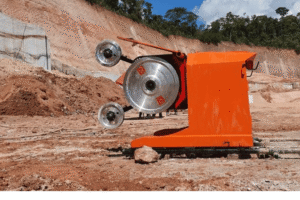
The selection of an appropriate diamond wire saw for laboratory sample preparation largely depends on the material, geometry, and the desired surface finish. Although in all systems the diamond-coated wire or diamond-impregnated wire is the working element, differences in stage design, feed mechanics, and coolant delivery mechanisms shape the cutting performance.
Key Selection Factor: The choice is between precision wire saws, which are engineered for sub-millimeter slice control, and universal laboratory wire saws, which are optimized for a variety of materials. Understanding wire movement dynamics, adjustable cutting speed, and the rigidity of the sample fixture enables smooth cutting, consistent dia-cutting capability, and reliable precision cut across broad applications.
Precision Wire Saws
Cutting mechanisms for micro-scale materials often prioritize low-force, micron-thick accuracy and improved surface finishes. The delivery of extremely thin sections of crystals, semiconductors, and brittle composites is specifically built into the design of a precision diamond wire saw.
Operator Control Parameters:
- Loads: Adjustable to material specifications
- Surface Speed: Variable control for optimal cutting
- Coolant Flow: Precision-controlled delivery
- Wire Path: Optimized for desired material characteristics
- Rotation Stages: For sample positioning and programmable motion
- Complex Geometries: Specifically needed for irregular sample configurations
These movements are combined with careful attention to the processing surface state and potential subsurface damage, allowing for effective use of this machine type. The precision wire saw is designed to accommodate delicate samples requiring the highest level of accuracy.
Laboratory Wire Saws
Laboratory wire saw machines allow a balance to be maintained between flexibility and productivity for routine sample preparation. These are set to make cutting with diamond wire through all materials possible, by combining a stable sample platform along with wire guidance.
Versatility
Broad range of adjustable cutting parameters for quick setup
Applications
Diamond wafering, sectioning metallic tracks, and much more
Ease of Use
Basic controls maintain smooth cuts without burdening operators
On-going coolant management and a cutting machine with basic controls maintain consistent finishing. When available alongside a secure sample fixture and clear safety features on a CE-certified platform, you have a reliable cutting system that proves dependable for single cut runs to daily workflow operations.
Top Lab Wire Cutters
Semiconductor manufacturers need to bring in tight-tolerance and easy-delivery-with-coolant systems with concise automation and intuitive touch screen solutions that lessen training time by up to 50%.
Advanced System Features:
- CE-compliant systems with precision-granted diamond wire saw
- Sophisticated moving-wire-tracking device
- Adjustable cutting speed ranges for various materials
- Wire saw with rotary sample positioning for sample stage flexibility
- Diamond-coated wire versions as well as diamond-impregnated media options
- Capability for cutting applications across hard crystal and ductile metals
CE-certified equipment with documentation of cutting process parameters ensures repeatable slice results, reduction of rework, and consequent enhancement of surface quality.
Key Features of Diamond Wire Saws
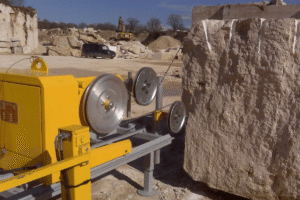
Modern diamond wire saw systems are made up of precise wire, sturdy mechanics, and intelligent controls to extract maximum cutting performance in the laboratory. Core features include accurate alignment, adjustable cutting speed, closed-loop tension, targeted coolant delivery, and uncompromised surface quality due to reduced polishing requirements.
| Feature Category | Components | Benefits |
|---|---|---|
| Wire System | Diamond-coated or impregnated wire with precise guidance | Consistent cutting quality and extended wire life |
| Control Systems | CE-certified controllers with operator monitoring | Track wire travel aligned with feed speed and temperature |
| Sample Protection | Controlled tension and feed parameters | Prolongs wire service life and gains good dimension options |
| Structural Design | Sturdy mechanics and rigid frames | Vibration reduction and improved cutting stability |
Cutting Capabilities and Technology
Cutting capability emanates from a diamond-coated wire, stable guidance, and precise feed mechanics. A precise diamond wire saw with programmable motion gives the capability to cut straight, angled, and contour paths with micron-level precision.
Advanced Cutting Technology Features:
- Continuous Cutting Process: Achieved by right speed and proper coolant flow that removes spatters and absorbs heat
- Torque Monitoring: Precisely monitors torque during cutting and adapts when required to protect delicate crystals
- Equal Material Removal: Maintains ease for control of kerf width
- Downstream Efficiency: Up to 30% reduction in downstream sample preparation requirements
- Higher Cutting Surface Quality: Integrated technologies ensure superior finish
Sample Stage and Fixtures
The sample stage keeps parallelism, slice accuracy, and precision clamping separate from vibration isolation. Modular sample fixtures provide solutions for delicate geometries such as diamond wafers and heterogeneous composites.
Sample Control Components:
- Well-protected edges through operative surfaces
- Micrometer stop-gauges for precise positioning
- Fast shifting adapters for quick alignment
- High quality assurance with reduced chatter
- Low-force operation throughout the cutting process
- Ensures diamond wire of the saw lasts aligned during cuts
Precision Cutting with Diamond Wire
Precision cutting relies on a firm grip of tension, feed, and path with continuous coolant delivery. Tension is critical and kept constant on a precision diamond wire saw to prevent the wire from bowing, while an adjustable feed rate keeps normal forces appropriate for brittle crystals or thin sections.
Precision Control Elements:
- Continuous Coolant Delivery: Pushes away dirt and provides lubrication for smooth operation
- Adjustable Dia and Cutting Speed: Matched to material hardness for efficient throughput and finish
- Tight Tolerances: High stage movement with feedback control to wire movement
- Results: Dial in tight thickness tolerances, clean edges, and supremely refined finish
- Benefits: Reduces polishing steps and retains microstructural integrity
Factors to Consider in Choosing the Right Diamond Wire Saw

You must match machinery capabilities with cutting requirements because wrong adjustments can compromise cutting performance. Evaluate cutting machine adjustments needed for safe handling of the cutting wire adjustment technology (CE), as well as innovations in software.
Critical Evaluation Checklist:
- Core Parameters Review: Surface finish, kerf width, and cycle time requirements
- Stage Specifications: Verify structured wire saw with sufficient stage rigidity, distance traversed by sample, and rotation capability
- Cutting Capabilities: Specify whether the saw can sustain desired kerf width and minimize damage in relation to diameter cutting ability
- Control Precision: Tension control precision and feed resolution control
- Coolant System: Focus on coolant providing clean lab setting with option for containing coolant waste
- Wire Compatibility: Look for machine compatible with both diamond-impregnated wire and diamond-coated wire
- Certification & Usability: Ensure control panel has CE-certification, clear operator interface, quick setup time, and supports repeatability across operators
- Safety Features: Verify cutting stage does not slip out of safety limit switches and prevents damage to wire once cut
Common Mistakes to Avoid
⚠️ Frequent Errors That Compromise Results:
- Oversized Equipment: Using equipment that doesn’t match application needs
- Wrong Fixturing: Inadequate sample holding leads to vibration and inaccuracy
- Speed Selection Unrelated to Hardness: Not matching cutting speed to material properties
- Omitted Coolant Filtration: Neglecting coolant filtration compromises wire integrity and surface quality
- Insufficient Wire Tension Calibration: Introduces bowed cuts and irregularities in slice thickness
- Poor Stage Alignment: Results in dimensional inaccuracies
- Not Matching Wire to Materials: Throttles cutting capacities and reduces efficiency
- Lack of Parameter Documentation: Prevents process optimization and troubleshooting
Solution: Eliminate these problems through standardization of set-up, validation of wire movements, and documentation of the whole cutting operation to ensure easy cuts and consistent results.
Application-Specific Recommendations
| Material Type | Recommended Configuration | Key Settings |
|---|---|---|
| Brittle Crystals/Semiconductors | Precision wire saw with high-stability stages | Low-force feed, fine tension control |
| Metals & Tough Composites | Wire saw cutting machines with robust coolant systems | Variable cutting speed, strong coolant flow, diamond impregnated wire |
| Smaller Lab Coupons | Compact lab wire saws with rotary sample holders | Versatile alignment, accurate slice control |
| Various Use-Cases | CE certified platforms with data logging | Quick-change sample fixture kits for enhanced material handling |
Recommend reading: Laboratory Diamond Wire Saw: The Complete Guide to Precision Sample Cutting
Related Posts

Trending Blogs

![Polysilicon Material: Properties, Grades & Uses [Guide]](https://wiresawcutter.com/wp-content/uploads/2026/08/polysilicon-material-featured-150x150.webp)