Get in touch with DONGHE Company
-
Phone: +86 181-1645-5490
-
Email: Sales18@DongheScience.com

The Complete Guide to Diamond Wire Saw Cutting of Ceramic Materials

Diamond Wire Saw Cutting of Ceramic Materials: Complete Guide
Machining of ceramics is a very arduous process due to the relative hardness, brittleness, and the ease with which stresses can be introduced during the cutting process. Classical cutting techniques do not perform well and often cause unacceptable levels of damage or remain unacceptably accurate. This is why diamond wire saw cutting has been developed with a tremendous impact on the machining of ceramic materials. Whether you are a professional who wants to enhance working effectiveness or a creative worker who seeks to discover complicated methods to cut difficult materials, this comprehensive guide justifies how such technology can be offered with consistency to users.
Introduction to Diamond Wire Saw Technology
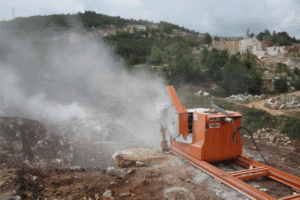
Diamond Wire Saw Cutting of Ceramic Materials represents advances in technology that make use of specialized wires with embedded diamond particles in order to cut hard and brittle materials like ceramics precisely. This method is exceptionally precise when cutting, minimizing the amount of component material wastage and the risk of the component breaking due to cutting.
The wire may be used in a continuous cycle or in a two-stroke cycle wire, thereby allowing both process reliability and stringent precision requirements while maintaining almost the same precision. It is considered one of the best material treatment solutions because it can take any form and has multiple applications.
What is Diamond Wire Saw Cutting?
Diamond wire saw consists of a wire encircled with industrial diamond particles and a breaking system capable of rotation over a large variety of materials with efficacy that cannot be compared with any other technologies or equipment. The beauty of diamond wire saw resides in the ability of diamonds to perform their basic function of cutting or designing materials including metals, ceramics, semiconductors, and even composites, which are all very difficult if not impossible to cut using ordinary tools.
The wire, which may function in a loop or move back and forth, allows making such precise cuts that there is practically no deviation, hence very intricate forms or finer parts can be cut without any difficulties.
Industry Applications
Modern studies show that diamond wire saw cutting has gained popularity in numerous fields:
▸ Aerospace and construction
▸ Electronics and photovoltaics
▸ Silicon wafer slicing for solar panels
▸ Manufacturing and research activities
Advantages of Using Diamond Wire for Cutting Ceramics
|
1
Focused Cutting With Zero Material LossDiamond wire cutting helps in executing precise cuts with narrow cut sizes. This lessens any waste of material considerably. This becomes useful in those industries where ceramic materials are costlier or rare and hence increases the cost of raw material’s optimal use. |
|
2
The Cuts Do Not Stress CeramicsDue to the presence of low heat and mechanical forces engraved on the sample once diamond wire cuts are made, the ceramic material is in its original state. This means that there are no micro fractures and defects in the ceramic which is very much needed when amazing performance and durability is required. |
|
3
Capability to Fit Complicated Form and CurveThe utility of diamond wire apparatus makes it possible to create more complicated cuts while maintaining flexibility in design. This means that there is a potential to use these tools in areas including those that specialize in aerospace parts, medical implantation devices, and circuits as well as board additives. |
|
4
High Efficiency and Reduction of Processing TimeThe high and enhanced speed of diamond wire saws reduces processing times without compromising precision, which increases the overall productivity. When it comes to production volumes it equals less costs of production and quicker timelines of projects. |
|
5
Suitability to Diamonds and Hard Containing CeramicsDiamond wire cutting of hard ceramics including materials with high densification such as silicon carbide, alumina, and other zirconia containing ceramics is dealt with highly efficiently. The capability to cut these difficult materials without causing much wear improves ease of use and repeatability even under high requirements. |
Overview of Ceramic Materials
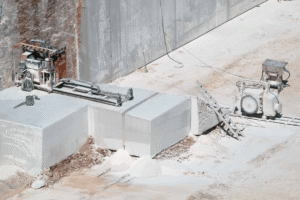
Ceramic derivatives are great materials due to moderately high operational working temperature, high resistance to wear, good compressive strength, and excellent corrosion resistance. Moreover, some of the ceramics most common in use are materials such as alumina, zirconia, and silicon carbide among the oxides, and these have significant applications in which the aim and reason for the ceramic is different.
There is no field that can work without these structural and thermal stable ceramics whether in the economic or industrial sectors: aviation, communication, healthcare to mention not a few. They are also widely used in precision-engineering manufacturing processes in cases where the strong materials are optimally formulated.
Cutting Techniques and Methods
Ceramics are known to be hard and brittle; this means they are difficult to work with unless certain unique and careful processes are used to cut them. In most cases, the processes involve, but are not limited to diamond wire sawing, waterjet, and laser cutting.
Diamond Wire SawingUses the principle of Diamond Wire Saw Cutting of Ceramic Materials which are thick and thin walls with very clean circles. Provides exceptional precision for complex geometries. |
Laser CuttingBeam of laser cutting is made in such a way to be able to cut the ceramics into even the most complicated and decorative forms and patterns. Offers high speed and precise cutting abilities. |
Waterjet CuttingSimple and achieved by feeding a high cutting force water jet into the liquid jet for abrasive cutting to cut ceramic surfaces without any temperature change occurring. |
Precision Cutting with Diamond Wire Saw
Diamond Wire Saw Cutting of Ceramic Materials is regarded as precision technique of using laboratory diamond saw blade for cutting of ceramic and other arduous materials. As the edges are very smooth, very little material is removed when cutting, due to its small kerf.
This is premised on the fact that the diamond wire is used to cut the material rotationally at optimal, controlled speeds to enhance precision and at the same time protect the cutting edges from damages, including chipping and micro cracks which are usually present in brittle materials such as ceramics.
Key Performance Factors
Diamond saws are the easiest way to meet all the elements of cost, speed, and quality of cutting that is required based on the circumstances. They provide the optimal balance for high-precision applications.
Comparison with Traditional Cutting Methods
Conventional cutting using abrasive saws or blade slicing cannot come near to the precision and economical use of diamond wire cutting. These regular offered methods require more time to cut and affect the workpiece due to thermal damage.
Applications of Diamond Wire Saw in Ceramics
The diamond wire saw is indeed an invention without which accurate and trouble-free machining of ceramics could hardly be done most of the time because it overcomes or minimizes inherent problems associated with the machining of a hard brittle material.
|
1
Wafer Slicing ProcessesSlices of thin ceramic wafers for electronic substrate or insulator applications are sliced from base ceramic blocks by means of diamond wire saws. This cutting operation reduces kerf losses to 100 microns or even less, while ensuring that surfaces remain as extremely flat as required for an electronic wafer. |
|
2
Machining Structural CeramicsDiamond wire saws are recommended for structural ceramics like silicon carbide (SiC) and alumina (Al₂O₃) which are notorious for wear resistance and high strength due to their brittle manner, thus making it possible to cut to the desired dimensions without experiencing thermal distortion. |
|
3
Aerospace and Space ApplicationsThe aerospace and defense industry is reliant on ceramics used in the manufacturing of components such as heat shields and thermal protection systems. Diamond wire cutting ensures a high-quality finish and tight tolerances that are essential in the use of such materials. |
|
4
Manufacturing Intricate Industrial ToolingDiamond wire saws enable the fabrication of complex contours from ceramics, which are usually necessary in the production of custom-designed industrial equipment or industrial molds. This function eliminates the demand for auxiliary machining operations and enhances productivity. |
|
5
Ceramic Materials in Medical UsesThe type of ceramics used in medicine – such as those found in devices used to replace teeth and bones – is characterized by extreme precision and high standards of biocompatibility. Diamond wire cutting offers the capability to machine medical components with the required dimensional accuracy and surface quality without compromising patient health and safety or product efficacy. |
Diamond Wire Saw Cutting Machines
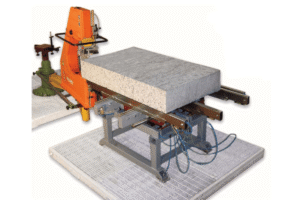
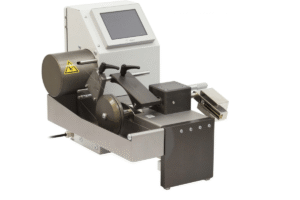
Diamond wire saw cutting machines help in manufacturing process by overcoming the hardness of any given material in minute detail or rather to the nano-level. The machines are called diamond wire saw or impregnated wire saw machines. Diamond wires are embedded into the machines to cut materials when a composite, a semiconductor, or even a ceramic needs to be processed.
Owing to their multifunctional use, they can be used in construction, medicine, electronics, and so forth; therefore, they are critical to every industry because they enhance productive and precise work.
Types of Diamond Wire Cutting Machines
|
1
Precision Cutting Machines with Permanent Fixation WiresUsed when the material is very hard which can cut very precisely. Diamond wires are not removable and are fixed which helps in maintenance and prevention of faster wear. Mostly used in semiconductor components and optical industries. |
|
2
Electroplated Diamond Wire Saw Cutting MachinesWire saw machines with electroplated wires achieve superficial diamond coating by implanting grains of diamond. Commonly used in cutting workpieces like glass and composite materials due to speed and durability. |
|
3
Multi-Wire Slicing EquipmentEquipment with multiple diamond wires used for slicing thin wafers such as silicon wafers. These technologies greatly economize on expensive materials and are extremely convenient for mass production especially when slim sections are required. |
|
4
Diamond Wire Blade MachinesThese construction shears use bands that are made up of loops of diamond wire coated by abrasives as effective blades for mechanical cutting. Significant for curved cutting and poor surface cutting in aeronautical sector and highly engineered industries. |
|
5
Diamond Wire CNC SawsContemporary diamond wire machines with CNC functionality enable hands-free control using programs to cut patterns. Cutting quality is best in intricate materials like medical devices and jewelry where there are many sharp edges that need lots of cuts. |
Key Features of a Cutting Machine for Ceramics
Increased Shape Alterations, Cutting AccuracyCeramic slicers increase shape change cut efficiency reaching degrees up to ±0.01 mm. This precision is necessary in electrical appliances, aviation, and healthcare as these production processes need to have exact sizes of the products. |
Better Mechanics and Bulky MachinesMachines come with very hard materials including steel and other iron-based alloys that offer very little corrosion or oxidation at higher temperatures, thus enhancing their durability. |
Advanced Cooling SystemCutting machines come fitted with a cooling system which increases the efficiency of cutting and prevents any possibility of overheating. This includes the use of water and other agents through which the wires cut through are kept at a safe temperature. |
Programmability RedefinedModern slitting machines are typically designed with programmable interfaces, often CNC-based. These interfaces aid in programming the cutting process by adjusting the path, speed, and depth to manage various ceramics and designs. |
Equipment Employing Minimum Waste TechnologyMachines are uniquely designed for minimizing unused material by using very tiny diamond wires, hence limiting the rate of kerf loss by 30% unlike normal cutting. Considering the cost of ceramics, these machines work well for companies. |
Maintaining and Operating Diamond Wire Saw Machines
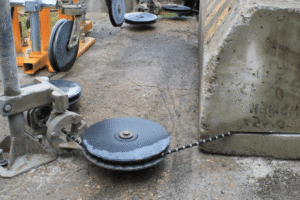
Meticulous concern and proper management of diamond wire saws is critical and cannot be undermined since it affects the performance of the apparatus and its longevity as well.
✓ Wire Inspection: Wires need to undergo scheduled inspections to check for deterioration and possible breakage because a weak wire affects cutting abilities and enhances safety protocols
✓ Tension Monitoring: The stretch on the wire has to be monitored and adjusted because severe stray offs or damages to the machine may occur if such adjustments are not made
✓ Regular Lubrication: Operator should regularly oil cylinders, guide wheels, and all other moving parts for easy movement that reduces friction
✓ System Cleaning: Ensure that waste materials such as ceramic dust are not allowed within the system by cleaning both inside and outside of the machine daily
✓ Maintenance Logs: Keep respective logs of maintenance and repair activities performed to record and avoid any malfunctions
Operating Guidelines
When handling the machine, the user must take care that the speed, feed, and pressure of the cutter do not exceed the levels recommended by the manufacturer. This is due to the fact that every foreign load, improper machine setting, or use negatively impacts the cutting efficiency and renders the machine susceptible to damage.
Machines should not be operated by a person who has not been sufficiently educated and trained in different components and their functions within the machineries.
Technical Considerations in Wire Saw Cutting
Material CompositionThe speed of cutting and amount of wear on the tool is determined by the hardness and abrasive properties of the material. More difficult materials often allow faster cutting but can lead to wire buildup, while more resistant ones need proper mechanisms to adjust their expectations. |
Wire TensionThe purpose of proper wire tension is to perform every batch with precision and accuracy. If the tension is not enough, the cut can sag. On the other hand, too much tension can make cutting more difficult or cause wire breakage during cutting. |
Cutting SpeedIt is advised to adjust the linear speed of a wire to improve the productive performance and increase working life. High-speed cutting saves time but there can be tendency of overheating or damage depending on circumstances. |
Coolant ApplicationProper application of the coolant helps to avoid friction and hence heat generation, restricting thermal damage to wire and workpiece. |
Wire TypeDiamond wire selection, especially its grit size and bonding material, should be as per material to cut. When these factors are in control, the operators greatly enhance the accuracy, longevity of machines, and efficiency of Diamond Wire Saw Cutting of Ceramic Materials. |
Wire Length and Loop Configuration
The method of cutting with a wire saw depends on the length of wire and the way it is looped. The maximal efficiency of wire length should go hand in hand with the dimensions of the cutting equipment and the size of the material to avoid unnecessary voids and stretching.
Extremely long wires can cause uneven wear, and consequently, the cutting accuracy will be compromised, whereas too short wires will break when not properly maintained. Closed-loop operation, which is exemplified by a system in a loop configuration, effectively reduces the time loss due to cutting wires since the primary replacement for the process is minimal and the cutting speed is fairly stable.
Modern Tensioning Elements
The advent of modern tensioning elements introduces the possibility of on-the-go adjustment for qualitative purposes, where cutting precision is enhanced to account for irregularities within a material or subsequent changes in the cutting environment. Focus on the need for tension monitoring and wear analytics in real time helps in controlling wire overuse, thus conserving consumables and minimizing vicinity wastage.
Material Removal Rates in Diamond Wire Cutting
Material removal rates (MRR) generated in diamond wire cutting depend on a number of important parameters such as wire speed, tension applied, and the abrasive ability of the diamond segments. To ensure cutting accuracy and minimal material wastage, such parameters are optimized.
By raising wire speed, one will more often than not raise the MRR; nonetheless, an overly-high speed lessens the precision of the process and increases wear on the diamond wire. What is more, it is very important to adjust the wire tension balance so that cutting sideways does not occur. As these factors are adjusted, operation becomes more effective and enhances the quality of output in industrial aspects.
Choosing the Right Cutting Tool for Ceramics
Ceramic materials are divided into classes, and for each class of ceramic, the selection or use of a tool would depend on the properties, primarily the hardness and brittleness, and the application. When dealing with ceramic material diamond cutting blades are commonly used because of their characteristic which is that they are very hard and provide an easy way of cutting through these hard ceramic surfaces.
Yet in the cases where there is need to cut precisely and fine, use of fine grit diamond tool helps reduce chipping and also provide a smooth finish to the surface. As another feature, it is also better to cool the tool either by water or lubricants while machining so that temperature increases can be checked and thus aid towards establishing longer tool life.
Future Trends in Diamond Wire Cutting Technology
With regard to environmental issues, it is anticipated that, in the future, techniques of diamond wire cutting will be developed in a more efficient and precise manner so as to ensure minimal waste.
Thin Diamond WiresCreation of thin diamond wires believed to reduce wastage of materials and enable very small cuts, which are very useful in high-value industries, for example, semiconductor manufacturing. |
AI and Automation IntegrationMore and more Artificial Intelligence (AI) and automation is being introduced in the process and allows cutting and most of the process significantly reducing the likelihood of errors and flaws. |
Environmentally Sustainable ProductionMethods in place like the employment of reusable substances and energy-efficient techniques. These advanced changes in diamond wire cutting are revolutionizing the industry’s definition of performance. |
Innovations in Diamond Wire Saw Designs
To eliminate many issues existing in the industry of cutting with diamond wires, there have been new technological and engineering advances introduced all the time. One of the most important advances in technology was the creation of extremely strong wires with an optimized diamond layer which spans the life and functional levels of the wire.
Key Innovations
▸ Fiber tension control auto-mode systems guarantee stable tension during cutting
▸ Sensors for real-time data retrieval help operators review cutting and change parameters
▸ Advanced slurry recovery systems for cutting waste fluids and materials
▸ Smart automation and green technologies designed for sustainable operations
Emerging Applications in Advanced Ceramics
The utilization of advanced ceramics is broadly applied throughout diverse industries due to their exceptional heat, strength, and corrosion resistivity qualities.
Electronics IndustryCeramics have been used in the designing of insulators, semiconductors, and structural materials such as substrates for the construction of durable and robust devices. |
Aerospace IndustryEmployed the use of ceramics to make surface coatings of their aircrafts to enhance heat resistance and make structures that are very light, hence saving a lot of fuel and performing exceptionally better in extreme conditions. |
Medical ApplicationsAdvanced ceramic technologies used in making implants and denture construction due to the properties of biocompatibility and strength. These applications help improve available technologies and meet societal needs. |
Environmental Impact and Sustainability Considerations
There is a certain level of comfort and stability especially enjoyed in the making of these heat-resistant ceramics. However, the manufacture of high-performance ceramics has its challenges as it discourages sustainable development in one way or another because it involves a lot of energy. This is because in many instances, there is need for use of high-temperature processing techniques which often cause pollution by gases.
Nevertheless, the material is durable and can be used in many different ways which results in energy savings through insulation and use of energy-saving materials, counteractive of their environmental damage. In addition, the issues have taken another form and the focus is on the search for modalities of more sustainable manufacture, for example searching for different raw materials or practice of recycling which will help to lessen their burden without necessarily losing the technologies and the good they offer.
Frequently Asked Questions
1. How Can Diamond Wire Sawing Be Effective as a Method for Cutting Hard to Cut Ceramics and Why?
Ceramics, especially technical ceramics as a class of materials, possess very high values of hardness and also tend to be brittle. Additionally, due to the use of different kinds of saws such as circular and band types of saws during the execution of the cut, there is the possibility of the introduction of considerable mechanical stress into the component.
Sawing using a diamond wire consists of a slim diamond bonded wire with a cutting action that does not require contact. Such design helps to eliminate stress on the ceramic material for it does not involve any force that is more than what the ceramic can handle even in thin-walled cases or larger components where breakage is more common.
2. What Are the Most Important Advantages of This Technology with Respect to Material Utilization and Tolerance?
There are two economic and technological advantages from Diamond Wire Saw Cutting of Ceramic Materials:
▸ Little Kerf Loss: Because of the use of very thin cutting wire (usually between 0.1 mm to 0.5 mm), such dimensions produce a small cut width (kerf) thereby reducing wastage of material significantly. This is especially important when working with high-cost engineered ceramics.
▸ Smooth Edges and Minimal Subsurface Damages: A procedure can provide smooth edges of cutting without significant SSD. The amount of work accomplished reduces expectations on the need for additional work such as grinding or lapping to make the surface finish to the final requirement.
3. What Are the Encountered Problems Caused by the Fact That Ceramics Have High Cutting Hardness?
The nature of ceramics being hard creates numerous critical issues in tool life as well as process reliability:
▸ Material Enhancement: Ceramic materials have a high degree of abrasiveness and can cause the diamond wire to maintain its matrix and behave differently
▸ Wire Bowing: When the feed rate is too high, the hardness of the ceramic will induce bowing or deflection to the wire, creating non-straight cuts
▸ Vibration: Incorrect tensioning and cutting speed can lead to vibration, which in many cases will chip off the edges of the brittle ceramic
4. What Criteria Does One Use in Selecting a Suitable Diamond Wire to Cut a Ceramic Material?
The process of choosing the appropriate wire should consider the speed of cutting and the quality of surface finish:
▸ The Grit Size of Diamonds: Coarser diamonds encourage a higher rate of cutting but provide a rougher surface. In most ceramics, it is an optimum balance, depending on the nature of the material and the hardness
▸ Bond Formation: Electroplating bond is desirable for construction of bonds with high contents of diamonds able to cut harshly. For fine finish, resin bonding or impregnated bonds may be employed
▸ Wire Size: To eliminate material wastage, narrow wires are preferred, but thicker wires possess high tensile strength and are difficult to break during cutting applications
5. What Is the Importance of a Coolant During Cutting of Ceramics and Which Coolants Are Most Effective?
Coolant cannot and should not be removed when cutting ceramics as cutting generates extreme heat at the tool insert area which causes severe problems:
▸ Thermal Control: Coolant flood carries out the function of preventing any temperature rise in a particular part of the workpiece or the tool
▸ Swarf Removal: The purpose of the coolant is to carry away the ceramic fine dust (swarf) that occurs out of processing. Failure to do so would result in blockage of the cuts and increase of heat and friction
▸ Type of Coolant: Typically water-based coolants contain certain additives which provide lubrication to reduce friction between the material and the tool in addition to enhancing heat removal
6. Can Diamond Wire Saws Be Used for Cutting Ceramic Materials into Intricate Shapes?
Yes, it is one of the great advantages that the cutting technology provides. Rather than being limited to flat cuts, as is the case with rigid circular type saws, the diamond wire can be bent and cut in any direction.
In combination with CNC (Computer Numerical Control) multi-axis machines, the diamond wire saw allows for complex contours, curves, and any imaginable geometry. Such is the precision that makes it possible to engineer complex ceramic structures for the aerospace, medicine, and semiconductor industries that are beyond the scope of traditional machining.
Reference Sources
▸ The Ultimate Guide to Cutting Ceramics with Diamond Wire: Explains through its diamond wire loop cutting method, which provides both benefits and real-world applications for cutting ceramic materials
▸ Diamond Wire Loop Saw for Cutting Ceramic: The document describes how continuous diamond wire cutting system operates with its associated speed and feed rate guidelines for cutting ceramic materials
▸ Precision Ceramic Tile Cutting with Diamond Wire Loop: The study evaluates both accuracy and suitability of diamond wire loop cutting method for cutting ceramic tiles
Recommend reading: Recommend reading: Diamond Wire Saw for Ceramic Cutting: The Definitive Guide
Related Posts
Trending Blogs

![Polysilicon Material: Properties, Grades & Uses [Guide]](https://wiresawcutter.com/wp-content/uploads/2026/08/polysilicon-material-featured-150x150.webp)