
Get in touch with DONGHE Company
-
Phone: +86 181-1645-5490
-
Email: Sales18@DongheScience.com

Laboratory Diamond Wire Saw – Complete Buying Guide

Purpose: This ultimate guide provides aid to laboratory managers, researchers, and procurement teams in selecting with confidence the most appropriate diamond wire saw. We cover precision cutting technology, m aterial wastage minimization, and reliable cutting performance on hard and brittle materials such as quartz and glass.
Introduction to Wire Saw Technology
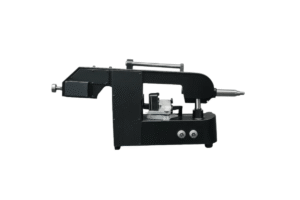
Diamond wire saws are specialized cutting instruments that use a wire with diamonds embedded within it to effectuate precision cuts accompanied by minimal kerf formation and limited material damage. These saws are effective in laboratory settings due to their control over cutting speed, tension maintenance, and efficiency in cutting difficult-to-cut materials.
The system integrity of diamond wire saws’ operation can produce pristine cuts, eliminating most of the production flow issues in comparison with conventional cutting tools. This wire-sawing technology, whether single or multiple wire saws, can maintain precise balance in throughput versus precision in support of prototyping, material science, and failure analysis via consistent, repeatable results.
What is Diamond Wire Sawing?
A diamond wire saw is a machine used to cut samples with diamond wires. As a saw type, this wire saw machine provides precision in laboratory applications. Endless diamond wire saws are continuously being upgraded with digitization to enhance stability and uptime. Moreover, diamond wire saws are assiduously applied in sawing brittle materials with high precision.
How Diamond Wire Saws Operate
Operation Process:
- The wire is held taut while being pulled at high speed over guide rollers inside the cutting machine
- The diamond-encrusted wire contacts the workpiece during cutting and relies on abrasion rather than conventional aggressive chip removal
- Speed, load, and coolant flow in diamond wire cutting can be adjusted to optimize removal rates and surface finishes
- Different specifications suit the wire to various material hardness levels, with a view towards specific target roughness and intended throughput for grinding productivity
Importance of Precision Cutting
Precision is one of the core components of laboratory outcomes that affect subsequent analysis, bonding, and optical measurements. Precision cutting with minimal material distortion is achieved by diamond wire-sawing techniques, supporting applications for quartz cutting, semiconductor preparation, and high-hardness materials cutting without micro-crack introduction.
Key Benefits of Diamond Wire Technology:
- Material waste minimization
- Narrow kerf width
- Geometry consistency
- Repeatability assurance
- Minimized corrective work requirements
Key Advantages of Diamond Wire Technology
Diamond wire cutting offers an effective path to handle larger material varieties while securing the narrowest kerf widths. The primary mechanism of diamond wire saw abrading rather than shattering enables solid-material cutting, particularly ceramics and quartz, with minimal deformation.
| Advantage | Description |
|---|---|
| Minimal Vibration | Diamond wires can cut granite and other materials without much vibration, improving finish and productivity |
| Adjustable Parameters | Operators can apply variable machine settings including cut speed, feed, and water for fine-tuning |
| Cost-Effective | Long-lasting solution with predictable costs and consistently good cuts compared to abrasive water-cutting methods |
| Versatility | Suitable for a wide range of hard and brittle materials including ceramics, quartz, and composites |
Comparison with Traditional Cutting Methodologies
Diamond wire saws deliver superior performance compared to conventional saw or other cutting machine counterparts:
Less Kerf Loss
Significantly reduced material waste compared to traditional blade saws
Lower Heat Content
Minimal heat generation protects sample integrity and reduces thermal damage
Dimensional Accuracy
Higher precision and better dimensional control for critical applications
A modern wire saw cutting machine is ideal for hard substrates, reducing rework and ensuring short cycle times with improved yield. The extremely flexible wire means clamping forces need not be too high, preventing damage to fragile samples. For brittle wafers, crystals, and composites, diamond wire saws maintain edge quality that would be greatly jeopardized by conventional blades.
Result: When laboratories choose the correct wire and the right diamond wire saw, they get cleaner surfaces, fewer microcracks, and put a valuable dent into material waste.
Applications of Diamond Wire Cutting
Research, quality control, and pilot-production are the major application categories. In laboratory-scale operations, diamond wire cutting excels in numerous specialized tasks:
Common Laboratory Applications:
- Quartz Cutting: High-precision cuts for optical and electronic applications
- Semiconductor Wafer Cutting: Clean, accurate slicing for semiconductor research
- Optical Glass Cutting: Precise cuts maintaining optical quality
- Core Drilling: Geological work requiring cylindrical samples
- Advanced Ceramics: Processing of hard, brittle ceramic materials
- Failure Analysis: Sample preparation for material investigation
- Composite Coupons: Production of test specimens from composite materials
The use of multi-wire machines can significantly increase production speed, while machines with endless wire capability afford long, uninterrupted cutting runs. Wire cutting is superbly suited for hard materials needing both precision and low residual stress. Control over the rate of removal and finish is achieved with an appropriate combination of wire grit, bond, and diameter.
How to Choose a Diamond Wire Saw
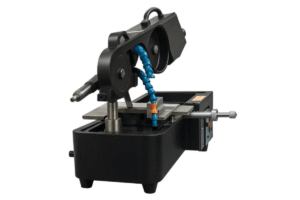
Effective selection of the correct diamond wire saw involves matching technical specifications with sample requirements, throughput needs, and budget considerations. A modern wire saw machine uses a wire embedded with diamond to provide precise cutting with minimal material waste; however, its performance depends on control of cutting speeds, stable wire tension, and flexibility with sample fixtures.
Selection Checklist:
- ✓ Determine whether you need single- or multi-wire saw for your workloads
- ✓ Ensure the cutting machine integrates interlocks for safety
- ✓ Verify proper coolant management systems are in place
- ✓ Confirm easy human-machine interaction interface
- ✓ Evaluate precision capabilities against your requirements
- ✓ Consider trustworthiness for reliable quality results
Main Selection Factors
During the process of selecting a wire saw, core performance, machine design, and total cost should guide an informed decision. Consider these evaluation points:
| Factor | What to Evaluate |
|---|---|
| Build Quality | High quality, rigid, and automated systems ensure excellent cutting performance consistency |
| Process Control | Look for systems with closed-loop tension control, wide cutting speed range, and programmable feed profiles |
| Sample Capacity | Maximum sample size envelopes and fixture options for quartz cutting, ceramics, and endless diamond wire compatibility |
| Mechanical Precision | Evaluate accuracy of spindles and guides, vibration damping, and wire performance at high speeds without chatter |
| Maintenance | Review coolant filtration, slurry containment, and access for maintenance to assure operational ease |
| Lifecycle Costs | Assess cutting wire consumption, uptime, and potential updates to select a machine with useful cutting-edge technology |
Selecting the Right Wire for Your Needs
In selecting the right wire, you must match diamond particles, bond type, and wire diameter to material hardness and finish targets. The wire selection directly impacts cutting performance and result quality.
Wire Selection Guidelines:
For Hard Materials: Coarser grits provide greater material removal rates
For Better Surface Finish: Using finer grits is recommended
For Extended Runtime: Set up endless diamond wire systems that limit splicing effects
Wire Construction: Consider different wire constructs, core flexibility, and wear-stabilizing coatings
Best Practice: Identify acceptable kerf, target roughness, and throughput, then perform prescribed trials to check performance. Combined with highly efficient grit and bond, the most appropriate wire guarantees first-rate cut performance with minimal material wastage.
Manufacturer Reputation and Support
A good manufacturer with solid performance is the foundation for reliability and risk mitigation. Always consider only manufacturers who have valid tracking data, clear specifications, and rapid service delivery.
Training & Installation
Proven installation training, calibration procedures, and availability of spare parts
Technical Support
Coverage of cutting parameters, wire material selection, and process optimization advice
Documentation
Case studies, uptime statistics, and proven figures for cutting brittle materials
A moderate to extended warranty, remote diagnostic services, and potential recommendations for consumables all signify a company that prioritizes customer satisfaction. These considerations make choosing the best option easier while maintaining precision cutting outputs.
Understanding Diamond Wire Saw Technology
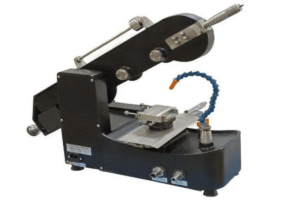
Diamond wire saw technology amalgamates innovative cutting technology with a controllable cutting procedure that enables specialized cutting in laboratory environments. During machine operation, a wire saw handles a moving wire acting as a cutting tool embroidered with diamond grains.
Overview of Cutting Technologies
Diamond wire saws, abrasive slurry systems, and blade saws are usually considered in testing for industrial laboratories. Of these options, the diamond wire saw cutting machine appears as the best compromise between accuracy, cost, and cleanliness.
Key Differentiator:
The fundamental characteristic that differentiates diamond wire saw cutting machines from other saw types is their focus on abrasion rather than bulk fracture. This produces very negligible microcracks and generates quite low amounts of heat.
Multi-wire saw platforms increase parallel cuts while endless diamond wire saws reduce splice interruptions. Wire saw cutting machines with adjustable cutting speed and feed parameters offer excellent efficiency for quartz cutting and other diamond-wire applications. The right model of diamond wire saw allows control of kerf and surface integrity when required.
Precision Characteristics of Modern Diamond Wire Saws
The new generation of diamond wire saw machines is precision-specific, incorporating advanced features for stable cutting operations:
| Feature | Benefit |
|---|---|
| Closed-Loop Tension Control | Maintains consistent wire tension for stable cutting |
| Robust Frames | Rigid guide rails with minimized vibration |
| Advanced Controllers | Programmable cutting speeds and feed rates protect fragile samples |
| Coolant & Filtration | Sophisticated setups assure excellent finish quality |
| Continuous Diamond Wire | Reduces joints, delivering great accuracy over long distances |
| Integrated Measurement | Monitors key control parameters to guarantee form accuracy and repeatability |
These advantages, along with adequate selection of wire diameter and grit indexing, allow diamond wire to remove maximum amounts of material from the hardest substrates with consistent edge quality for subsequent investigation.
Future Trends in Diamond Wire Cutting Machines
Present-day diamond wire saw technology is approaching integrated automation and cost minimization even further. Several emerging trends will shape the future of this technology:
Anticipated Developments:
- Predictive Analytics: Tension and wear analytics that facilitate real-time adjustment of processing programs, prolonging wire life and maintaining consistent production rates
- Hybrid Drive Systems: Providing much larger ranges of speeds for different wire materials and diverse substrates
- Quick-Change Systems: Ease-of-use improvements like quick-change spools and tool-less fixtures may reduce setup time by up to 30%
- Environmental Improvements: Greener coolants and better containment further reducing overall material waste
- Compact Multi-Wire Modules: Broader utilization of endless diamond wire cutting and compact designs to accommodate lab space needs while balancing precision and production requirements
Conclusions and Final Recommendations

Selecting a diamond wire saw cutting machine is contingent on alignment of precision necessities, sample geometry, and budget with the benefits of diamond wire solutions. The wire saw cutting platform that uses wire embedded with diamond permits sharp cuts, slight loss of material, and clean edges when cutting hard items.
Key Points Summary:
- Diamond wire advantages include minimal kerf, spectrum of applications for complex and brittle substrates
- Wire cutting machines stabilize the entire cutting process through controlled tension and high speed
- Continuous diamond wire cutting and multi-wire saw options minimize machine downtime
- Selection of cut wire grit, bond, and diameter is crucial for optimal performance
- Cutting machines with closed-loop controls, efficient coolant management, and rigid mechanics affect work outcomes
- Consider technological advantages, installation support, user training, and spare parts availability
Consistent outcomes over quartz, ceramics, and composites are ensured by adjusting parameters such as cutting speed, wire tension, and coolant. This guide stresses considerations for manufacturer support, automated features, and compatibility with endless diamond wire for keeping the machine functional.
Recommend reading: Laboratory Diamond Wire Saw: The Complete Guide to Precision Sample Cutting
Related Posts


Trending Blogs

![Polysilicon Material: Properties, Grades & Uses [Guide]](https://wiresawcutter.com/wp-content/uploads/2026/08/polysilicon-material-featured-150x150.webp)