
Get in touch with DONGHE Company
-
Phone: +86 181-1645-5490
-
Email: Sales18@DongheScience.com

Diamond Wire Saw Safety Guidelines for Laboratory Use

Laboratory teams worldwide rely on Diamond Wire Saws (DWS) as the ultimate cutting methodology for materials of extreme nature and traditional samples. This advanced technology enables precision cutting of hard and brittle materials in a controlled manner with minimal cutting forces, resulting in minimum edge damage and superior surface quality on parent materials.
What is a Diamond Wire Saw?
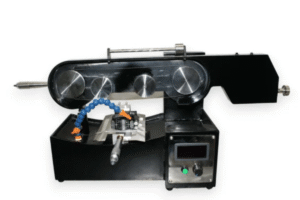
A diamond wire saw refers to wire saw machines utilizing diamond-embedded wires for cutting various materials including granite, marble, ceramics, stainless steel, and composite products. The wire moves continuously around a drum that is encrusted with sharp diamond grit, cutting through concrete, steel, or delicate laboratory samples at controlled pressure and speed according to specific requirements.
Key Advantages of Diamond Wire Saws
- Minimal Kerf Loss: Precise cuts with very little material waste
- Low Vibration: Clean process ensures dimensional stability
- High-Quality Finishes: Ideal for microelectronic samples and FIB-SEM work
- Versatile Applications: Cuts materials ranging from millimeter-sized specimens to meter-scale blocks
- Minimal Heat Generation: Prevents thermal damage to sensitive materials
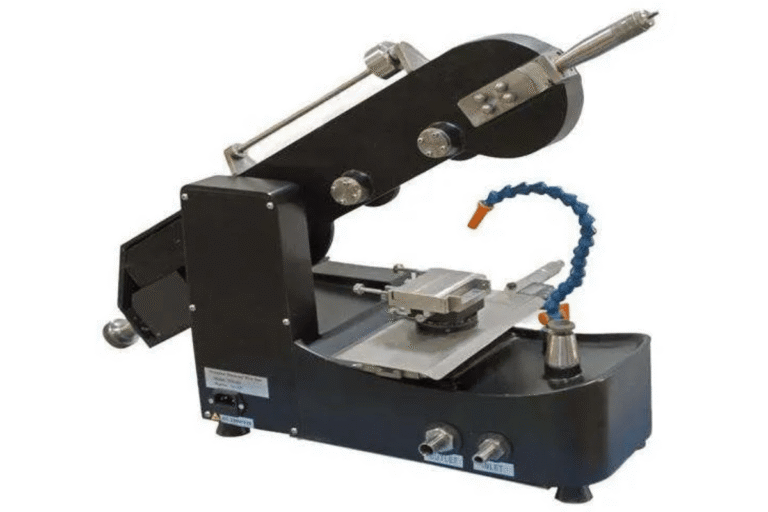
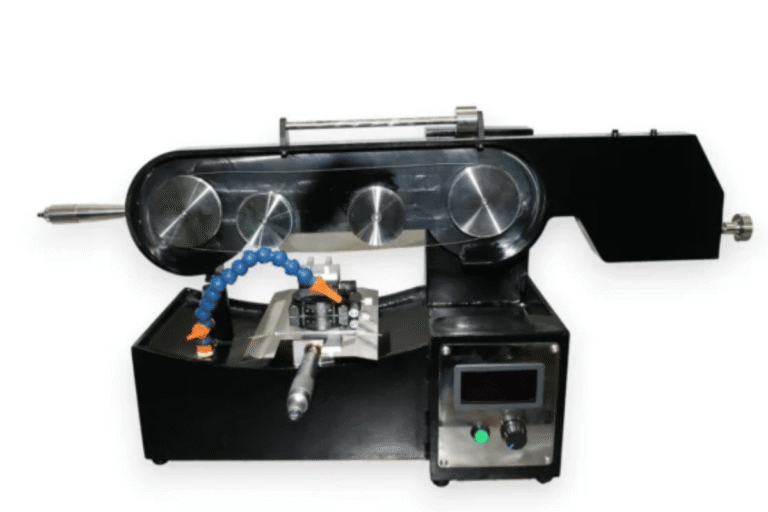
Core Components of Diamond Wire Saw Systems
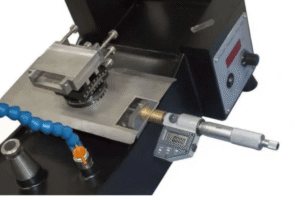
Understanding the essential parts of a diamond wire saw system is crucial for optimal operation and maintenance. Each component plays a vital role in achieving precision cuts and maintaining safety standards.
How Diamond Wire Saws Work: The Cutting Mechanism
The diamond wire saw operates through a controlled abrasion mechanism. The diamond-coated wire revolves at a controlled speed around the drum, making contact with the material being cut. As the wire advances, the diamond particles micro-cut the surface, achieving high accuracy while reducing heat generation and material distortion.
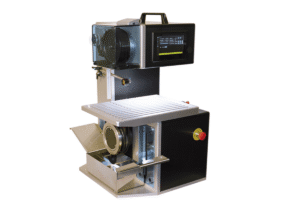
The process relies on a fine balance between several critical factors:
- Cutting Speed: Optimized based on material hardness and desired finish quality
- Wire Tension: Maintained consistently to prevent breakage and ensure accuracy
- Coolant Flow: Controls temperature and removes cutting debris effectively
- Feed Rate: Adjusted according to material properties and sample size
- Wire Selection: Size, length, and coating type matched to specific applications
With proper enforcement of drive-tension regulation, motor power, and cooling fluid delivery, the system achieves stable and consistent wire operation along with effective slurry management, resulting in precision cuts with excellent surface quality.
Critical Safety Measures in Diamond Wire Saw Operations
⚠️ Safety First: Essential Requirements
The safest diamond wire saw operation involves close regulation of process variables, disciplined use of equipment, and strict adherence to standard procedures. Motor and drum systems operating at high speeds require careful attention to support structures and cooling systems.
Personal Protective Equipment (PPE) Requirements
- ✓Safety Glasses: Protect eyes from flying particles and debris
- ✓Puncture-Proof Gloves: Shield hands from sharp edges and wire contact
- ✓Ear Defenders: Reduce noise exposure during high-speed operations
- ✓Safety Shoes: Ensure secure foot placement throughout operations
- ✓Respiratory Protection: Required when dry cutting methods are employed
- ✓Proper Clothing: Cuff sleeves and tie up long hair to prevent entanglement
💡 Best Practice: Wet Cutting Methods
Whenever possible, use wet methods to control airborne dust and maintain a cleaner process. Wet cutting significantly reduces respiratory hazards and improves overall cut quality by managing heat more effectively.
Pre-Operation Safety Inspection Checklist
Before beginning any cutting operation, conduct a thorough inspection to ensure all safety measures are in place:
- Diamond Wire Inspection: Check for damaged insulation (coating) and length irregularities between rubber spacers
- Machine Guards: Verify all guards and safety shields are properly installed
- Coolant Delivery System: Confirm proper water flow direction for effective slurry removal
- Alignment Accessories: Ensure wire guides and alignment tools are correctly positioned
- Sample Securing: Verify workpiece is clamped tightly and securely
- Parameter Settings: Set speed, tension, and feed conservatively for initial operation
Safe Operating Guidelines During Cutting

Critical Safety Rules
- Never reach near moving wire: Keep hands and body parts away from the cutting zone at all times
- Maintain good housekeeping: Keep work area clean and free of obstructions
- Control slurry effectively: Manage cutting fluid to prevent slippery surfaces
- Avoid force changes: Do not make drastic adjustments mid-process
- Monitor continuously: Watch for unusual sounds, vibrations, or performance changes
- Power down between cuts: Always shut off equipment before inspecting results
Common Risks and Prevention Strategies
Installation, Calibration, and Maintenance Protocols
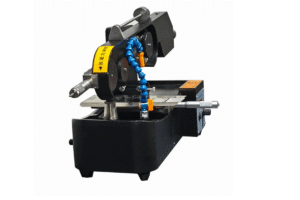
Effective operations and maintenance of a diamond wire saw in laboratory settings necessitate controlled procedural strategies, thorough inspection of all parts, and well-documented adherence to manufacturer’s instructions. The machine demands a clean and functioning installation with correct and uninterrupted flow of lubricants and coolants.
Initial Installation and Calibration Procedures
Proper setup is fundamental to achieving optimal performance and safety. The installation process begins with ensuring correct wire alignment, appropriate tension, and secure placement of enclosures for safe operations.
- ✓Wire Alignment: Verify proper tracking across drum and guides
- ✓Tension Calibration: Adjust to manufacturer specifications based on wire type
- ✓Feed Speed Setting: Configure according to material hardness and workpiece size
- ✓Coolant Flow Optimization: Establish adequate flow rate for effective cooling
- ✓Cut Direction Verification: Check and confirm proper directional setup
- ✓Fixture Rigidity Assessment: Ensure stable mounting of workpiece supports
- ✓Slurry Path Inspection: Verify debris removal pathways are clear
- ✓Parameter Documentation: Record all settings for future reference
Routine Maintenance Schedule and Requirements
Routine servicing maintains diamond performance and mechanical rigidity throughout the equipment’s lifespan. Regular maintenance prevents unexpected failures and ensures consistent cutting quality.
Recommend reading: Laboratory Diamond Wire Saw: The Complete Guide to Precision Sample Cutting
Related Posts

Trending Blogs

![Polysilicon Material: Properties, Grades & Uses [Guide]](https://wiresawcutter.com/wp-content/uploads/2026/08/polysilicon-material-featured-150x150.webp)