
Get in touch with DONGHE Company
-
Phone: +86 181-1645-5490
-
Email: Sales18@DongheScience.com

Crystal Wire Saw Price Guide: What to Expect in 2026

The market for crystal wire saws will shift in a profound way by the year 2026, the change will be prompted by the technological advances, the availability of raw material, and the demand in the strategic sectors such as electronics, dc and flat-bed, and precision engineering. Sound crystal wire saw price trend analysis is helpful to manufacturers, suppliers, and users of these materials so that they perform well in the market and choose the best possible alternative at the right time. The purpose of the present evaluation is to provide a comprehensive review of all the factors that can affect costs, such as technological improvements in the wire saw market, and the like commodity chains, and how the market is expected to play out.
Introduction to Crystal Wire Saw Technology
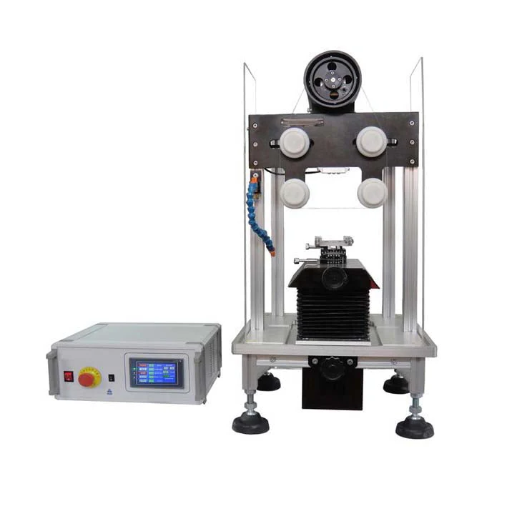
High-precision technology based on crystal wire is used to cut materials that are delicate and tough, like silicon, sapphire, and quartz. In this technology, the fine wire is ribbed with small particles, making it capable of precise cutting as well as less material consumption during cutting. Because of the critical importance of quality and productivity, this process is widely used in both the semiconductor and photovoltaic industries. Its main benefit is the chance to make accurate and neat incisions that are very important in the advanced sector of production.
Overview of crystal wire saws and their applications in the industry
Cutting tools with precision, high accuracy, designed for crystalline materials include crystal wire saws, which are known to effectively cut down materials like silicon, sapphire, quartz, among other hard materials. Usually with a thin line, often containing diamond particles or any other hard particles, bonding, which makes it possible for the operator to work the material on such minuscule levels. As the wire is smoothed out as it rotates, the entire assembly, including the tension, is controlled to prevent any erratic movements. Very little material is wasted, thus preserving costly material and enabling a higher upswing in production.
These particular types of saws play a significant role in industries like semiconductors, photovoltaics, and optics. As an example, in semiconductors, they assist in the manufacture and, most importantly, the slicing of wafers used for integrated circuits. In the same vein, photovoltaic wire saws are used for cutting the silicon ingots into wafers, forming solar cells that enhance power production. The optics sector equally makes use of such saws in cutting the likes of sapphire or quartz for the manufacture of lenses, LED, and even advanced display components.
The main benefits of using crystal wire saws include less cutting error, less material consumption, and a faster cutting speed, which is more agreeable than other methods. Furthermore, they can further cut materials that are difficult to handle, such as brittle and hard materials, which saves a lot of power consumption and time in the business world today, especially where the main concern is the profitable cost-effectiveness. It is worth noting that because of the technological improvements in the crystal wire saws, they can even go much thinner and offer much bigger tolerance cuts compared to the traditional skilled components with higher performance and better toughness. It is without a doubt that such a light crystal wire saw price reflects the higher expansion of such advanced applications.
Importance of precision cutting in scientific and industrial settings
Scientific and industrial practices require precision tools, especially when enhancing the accuracy, uniformity, and operation of various manufactured parts is targeted. Precision cutting is also most beneficial in science, where its use allows for fabrication and appraisal of delicate features, e.g., microelectronics, semiconductors, and nanotechnology, where any deviation will lead to poor performance. It ensures efficiency in the use of limited resources, quality products, and complex assemblies, where there is improved fitting, as in the aerospace, medical, and electronic industries. Among these enhancements are laser and waterjet cutting methods, and the use of crystal wire saws, which enable the control of dimensions and limits that have been held to a much higher scope owing to the present state of progress. The potential to create and reproduce such shapes is very useful and necessary, as it affects the performance and usefulness of the work that needs to be done in most cases.
Factors Influencing the Price of Crystal Wire Saws in 2026

The factors that will affect the future price of crystal wire saws in 2026 are expected to include, among others, improvements in production methodologies, changes in the cost of factors of production, and demand in industries such as the semiconductor and alternative energy spheres. Advances in technology that increase efficiency or reduce wastage in the manufacturing process are expected to lower the costs, but any shortages or rise in the price of, for instance, the diamond wires and/or certain essential alloys will increase the costs considerably. Furthermore, the market demand that is constituted largely by the industries that employ such cutting solutions for finer materials will affect the trends of pricing in a particular way. These include, but are not limited to, general economy, logistics management, and government policies regarding trade and taxation, among others.
Key components affecting costs, such as materials and durability
Cutting solutions utilizing precision technologies are described by the cost of the materials chosen and how long those materials last. In particular, ultrathin whipping devices require strong materials such as diamond filament, tungsten, and other exotic metal filaments, which, on the other hand, are cost-prohibitive to manufacture or obtain because very few structures can be made out of them. Furthermore, the lifespan of the tool itself is a crucial determinant of high costs. Consumables or rapidly moving tools cause breakdown in the process and incur extra costs to the business section of the organization.
Moreover, creations in the domain of material sciences, for instance, coatings and composite materials for wear resistance, may have a bearing on the costing. Despite the cost-saving in the long run resulting in the use of such high-end materials, therefore lowering costs, the materials are in possession of high initial costs. Such an interplay between quality of materials used, cutting durability, and cost of cutting thus highlights how crucial these aspects are in the determination of the crystal wire saw price as well as functionality.
Advancements in technology and their impact on pricing trends
The factor of strong impact that can be placed in many considerations is technology. There is a vibration cutting device knitted with nature environmental protection technology, taking as an example a sine wave vibration piezoelectric cutter. There are also the methods of ultrasonic machining; collision welding of the fitting workpieces through electric current welding processes or laser welding will allow reaching the dimensions, surface, and age-free. There are cobots – another way of reducing labor and, in some cases, costs, but they are both aware of each other. A lot of new, really effective materials are being invented at present, but at the same time, these materials are usually expensive to make and to buy. On the whole, as related to these modern technologies, the cost usually goes up; however, because they help to do things better and perform longer, it’s always cheaper in the long haul. Such factors have an everything-to-win determination in the level of market prices, particularly in light of evolving market and customer requirements.
Supply chain considerations and manufacturing scalability
The efficiency of the supply chain of advanced materials such as graphene and nanocomposites is dependent on the availability of adequate raw materials, quality assurance, and cost-effective logistics. A big challenge is the issue of scalability vis-à-vis ensuring the materials are available when needed, particularly in rare or custom inputs. To respond to these problems, manufacturers need to develop supplier collaborations, increase reliance on customer inventory, and use forecasts to estimate interruptions.
From a scalability perspective, production should move smoothly from the demonstration scale into the production scale. This is often capital-intensive due to the need for infrastructure installations, training, and improvement in processes. Cost-effective scaling can also be obtained with the help of the most advanced sense of robotic systems, as well as unified production procedures. Also, the expansion of production can be complemented with the incorporation of the elements of a closed-cycle production, such as recycling of the waste and rationalization of the usage of the resources, all of which can also help with the realization of the mission strategies, with the post-growth naysayers in mind.
Market Trends and Forecast for Crystal Wire Saw Prices in 2026

In the crystal wire saw market, the year 2026 will most likely be influenced by various configurations of technological development, by rising demand, especially in the semiconductor and photovoltaic sectors, and by the variations in the cost of inputs. It is anticipated that in response to the future high-precision needs in these industries, the crystal wire manufacturers will be able to produce more durable and more effective wires. Although there is 231 rising demand, there is every likelihood that customers will enjoy minimal cost increases because of the price wars inflicted by competitors within the industry and process efficiencies. Nevertheless, potential adverse effects of ceteris paribus, such as management of balanced scorecard, and economies of scale, will also prevail. More importantly, the crystal wire saw price in 2026 is expected to be a cross between value enhancement through creative destruction and price adjustment to market conditions.
Analysis of historical pricing data and current market trends
There seems to be a downward trend in crystal wire saws’ unit prices over the last ten years, mainly because of technological and competitive factors at play. For instance, prices fell by an average of 3-5% every year from 2015 to 2020 due to, explained, increased reliance on labor-saving and resource-saving technologies.
The market, as it stands now, is creating more and more room for the use of crystal wire saws in the semiconductor industry and the solar panels industry, given the widespread spread of various segments of the electronics industry and of green energy. More so, logistical issues, unpredictable changes in the costs of raw materials such as diamond and steel, and a surge in energy prices are factors that are pushing the prices higher. There are also technical enhancements in the wires to reduce the amount of breakage of them as well as in the capacity of cutting that provide a place for the price surcharges to the producers, proving that additional non-price product benefits are demanded, especially in the high-end of the market where high-tech solutions are sought.
The complexity of the issues suggests a dynamic but balanced equation of price, which implies, on the one hand, there is virulent pressure to reduce costs for ordinary wire saws, and on the other, the pressure to increase the value of sophisticated models. Therefore, it is necessary to conceptualize the mechanisms of these two forces so that effective methods of market prediction can be developed through a serious study of technological changes and macroeconomic factors.
Predictions for supply and demand in the coming year
With respect to available data on market patterns and market analysis for wire saws, the forecasted supply and demand curve regarding wire saws focuses on a number of important trends for the coming year. Notably, on the supply side, it is anticipated that the increase in production, particularly in Asia-Pacific, will be able to satisfy supply deficits, especially from the growing photovoltaic (PV) and semiconductor industries. Also, it is predicted that various disruptions, including a shortage of some raw materials, sanctions, among others, could also limit the supply, especially during the first half of the year. Since price is determined by the basic concept of piping supply and demand, the crystal wire saw price can reach sky-high numbers.
The need is expected to be strong due to the expansion of industries such as renewable energy and electronics, among others. Potential advancements in the PV industry, which allow for market penetration due to an increase in solar adoption, are expected to drive wire saw demand by a large portion of the PV industry. Moreover, the development of 5G and new chip-making techniques will enable the development of the semiconductor industry. This may increase the demand for high-accuracy wire saws that are developed for future use.
On the other hand, while the supply would at some points face logical difficulties, the market as a whole will be able to retain its upward movement with the help of technology development and clear energy investment policies. The ability to prevent overstock and understock during the high season will come from the constant monitoring of the stocks and planning new sourcing strategies.
The role of emerging technologies in shaping future price dynamics
The price dynamics in the modern market are largely defined by emerging technologies that ensure increased effectiveness, minimize expenditures, and encourage creativity. For example, advanced technologies in automation and artificial intelligence have facilitated the optimization of production mechanisms, thus drastically reducing the labor input and operational faults. Besides, with new wind and solar power technologies cropping up, the costs of producing these systems are expected to get even cheaper, alongside a lower per-unit cost of these systems. However, the use of the most modern technologies in, for example, the supply chain, involving blockchain, increases transparency and the degree of functioning, thereby contributing to the decrease in price uncertainty. Moreover, improvements in the use of new materials and manufacturing processes tend to result in better quality products at lower costs of production, and such developments tend to change the prices of the market gradually. All these examples demonstrate the importance of the factor of emerging technologies as those contributing to shifting the balance between the supply and demand and consequently reducing or freezing prices within given limits.
Top Manufacturers and Brands to Watch in 2026
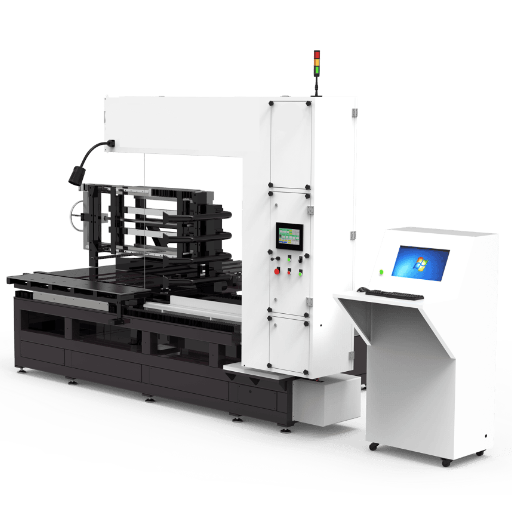
The field of production and development progresses rapidly every day, with several players projected to be in the lead of their particular industry by 2026. Examples of such businesses include Tesla, coupled with BYD that are at the forefront of the electric car manufacturing driven by innovations in the battery and renewable energy sectors. Likewise, in consumer electronics, Apple and Samsung will also be at the forefront of innovations with modern devices and improved device experiences. An upcoming industry like biotechnology may see great development from companies such as Moderna and BioNTech, who have been able to cement their presence given strong developments in mRNA technology. In addition, the industrial behemoths of Siemens and Honeywell are bound to take the concept of automation and smart manufacturing to the next level, strengthening their domination of the market. All such producers and manufacturers collectively indicate their position in the market due to sharing common, creative qualities and compliance with the current trends.
Comparative analysis of leading crystal wire saw manufacturers
First and foremost, while there are many crystal wire saw manufacturing companies around the world, three, in particular, come up more often than others within the context of product precision, enterprise cutting-edge product innovation, manufacturing scalability, and global reach. These are Meyer Burger, Logitech, and Diamond WireTec.
Meyer Burger
Meyer Burger has emerged as one of the world’s leading companies in supplying advanced cutting solutions, with a particular interest in sawing machines for crystalline materials. This type of technology is presented as a high precision, low kerf loss, energy saving, and main application is in the photovoltaic and semiconductor industries. Their capacity to deliver state-of-the-art products and comprehensive support after sales, owing to rampant in-house innovation, keeps Meyer Burger’s products on the cutting edge.
Logitech
Logitech is renowned for being among the leading experts in the field of development of highly accurate motion systems applicable for laboratory settings. They boast a range of crystal wire saw solutions, which are arguably some of the best in the market, as they can cut through a range of different materials that would otherwise be deemed fragile and even do that consistently. Furthermore, Logitech customers are able to acquire all the relevant training and tech support on various applications, which makes it highly preferable among academic and research institutions.
Diamond WireTec
Diamond WireTec is a specialist in high precision, high performance diamond wire saws, which cut efficiently with the least surface damage and in most cases without material loss. Their cut-off saws are designed for high technology industries and high industrial use, especially when components have to be made repeatedly and economically. Diamond WireTec provides custom support for such requirements, and this has turned out to be a huge benefit against its competitors.
Some have reached a level of excellence in certain aspects, such as cutting-edge technology, proficient craftsmanship, or custom services, and they are on top of the market because of the innovative solutions they provide.
Features, innovations, and price ranges offered by top brands
Leading producers of machinery and precision devices are characterized by more elaborate technical features and innovations, with competitive crystal wire saw prices being adjusted to different market requirements eventually. To give an example, the best ones apply systems with the use of lasers for cutting, use automation in the management process, and protocol breaking when action is in progress in order to enhance the performance of each member of staff in each skill and sector. When modifying existing products, this has also been seen, with solution kits from several manufacturers coming with LEGO designs and implementing systems that allow expansions and contractions of solution kits.
With these advancements aided by Artificial Intelligence for optimization, coupled with environmentally friendly practices, manufacturing tends to be more effective. Efficiency is also achieved in the products of premium labels since they include long-lasting materials and patented implements, which lower the overall cost of ownership over a longer period. Technological products come at a broad range of prices since the solution presented takes different degrees of complexity and depth. The crystal wire saw price range for an entry-level unit with localized priorities is about 10,000 US Dollars. On the top end, industrial systems with full robotic and precision functionalities have prices reaching in excess of 100,000 US Dollars. The combination of these systems offers room for the proliferation of niche markets as well as wide-scale industries, paralleled by either demand.
Insights into how competition drives affordability and performance
The level of rivalry that characterizes the industry of automation and precise systems plays a very active role in shaping the resolution of the price share and quality. The competitors are engaged in a form of business “arms race” in which they are seeking to offer the best consumer products through the employment of the most advanced technological instruments, such as AI-powered reports, IoT support, and extra precision systems. Such improvements in turn enhance the user’s confidence in the products and provide for higher cost-effectiveness. Additionally, when the market is competitive, manufacturers and service providers are forced to work on reducing production costs and optimizing logistics, which in the end results in cheaper products for the sellers. Cost-cutting is also attributed to technology development, which reduces the price of production as the years progresses hence improving the system performance of new systems that are manufactured without increasing the cost proportionately. However, all things being equal, competition leads to innovation as well as improvement in economic factors, where expansion and growth are experienced to the advantage of the customers as well as the sector.
The Impact of Global Regulations on Crystal Wire Saw Pricing

Trade policies and regulations have direct repercussions on the crystal wire saw price through the increase in costs associated with compliance, restrictive markets, and reorganization of operations. The imposition of strict environmental regulations affects manufacturing processes by requiring non-polluting production activities and the use of sustainable materials, thereby raising their costs. In addition, differences in laws from place to place may be seen as creating trade barriers, thereby restricting competition in certain regions and raising prices. On the other hand, making the rules universal can help to centralize production as well as make it easier to move goods. Costs are likely to drop. Regulatory regimes are therefore both a limiter and an incentive for market competition and pricing of crystal wire saws.
Examination of international trade policies and restrictions
International commerce strategies and limitations greatly affect the worldwide market dynamics of crystal wire saws from the supply side as well as market reach. Tariff brew imposed on the imported goods most of the time depends heavily on the country from where goods are received, as quite often these measures are employed by some countries to protect their local products. Likewise, trade restrictions in the form of various non-tariff measures, such as quantitative restrictions, licensing, and quality specifications, are challenging for the inter-country movement of products and introduce additional costs to the producers and sellers, respectively.
Export control regulations, as well as embargoes on the trade of certain products, are extremely important, as they may affect the supply chain by imposing sanctions on the more important sources of export. For example, limitations banning the export of rare materials, like rare earth metals, which are used in the wire saw manufacturing processes, and in case of deficiency, increase the total cost and even sources, often handling. However, these restrictions can easily be mitigated through free trade agreements (FTAs), which involve the lowering of tariffs and other trade barriers, achieving a common regulatory framework among the members, and fast-tracking of customs operations.
The ability to penetrate a given market becomes feasible only after fully conforming to internationally accepted standards such as ISO certifications. Nevertheless, aggravated by the fragmentation of the regulation across different boundaries, companies are forced to adjust their operations because of the need to comply with each regulation, occasionally increasing the total cost. With that said, even as trade policies cannot be entirely separated from economic growth objectives, they also have repercussions on the competition, in this case, affecting genuinely improved services, production efficiencies, and ‘building a better’ crystal wire saw price strategies.
Environmental standards influencing material costs and compliance
The need to adhere to environmental standards involves a significant increase in material costs and compliance strategies. To my understanding, these regulations request the use of sustainable and at times costlier raw materials, which in turn raises production costs significantly. It as well entails the introduction of cutting-edge technology and practices in reducing environmental impacts, thus contributing to the operational costs. Nevertheless, observing these standards is essential for complying with regulations, sustaining market access, and promoting long-term sustainability. Even though the costs at the start are high, they encourage creativity and improve the firm’s image for being able to meet the world’s ecological challenges.
The role of government incentives or tariffs on price stability
Government initiatives to support and tariffs designed to protect domestic manufacturers help to maintain prices in several markets by affecting the costs of production, supply chains, and market demand. Such initiatives as subsidies, tax allowances, or license improvements may cut the costs incurred by the producers. As a result, they can maintain or decrease prices of the products even in the volatile markets. Some sectors have elements of over-production, such as renewable energy, which regularly enjoy such incentives, keeping the prices low, and they are expanding within the market.
While on the other side, tariffs, also referred to as import/export duties, are levied to stabilize prices, or they may also lead to fluctuations in prices. They protect local industries by imposing a high cost on imports, which encourages finished products to be produced locally, settling prices inside the country. However, harsh and punitive tariffs can also disturb global or regional production change, and the eventual outcome can be an increase in prices because the domestic producers cannot be able to supply the demand. Therefore, the correct implementation of these measures is aimed at restoring the balance of interests and adequate development of the country, leaving the crystal wire saw price.
Reference Sources
“Sawing characteristics of diamond wire cutting sapphire crystal based on tool life cycle.”
The study focused on the sawing characteristics of diamond wire cutting for sapphire crystals, emphasizing the challenges posed by sapphire’s ultra-high hardness.
This research examined the surface characteristics of sapphire crystal wafers after sawing, considering the wear of diamond saw wires. It provided insights into optimizing cutting parameters for better surface quality.
Frequently Asked Questions (FAQs)
What determines the cost of a crystal wire saw?
The cost of a crystal wire saw is affected by such factors as the presence of diamond in the wire, the type of wire core used, and the length and thickness of the wire. It also includes whether the wire is packed with a diamond wire saw machine or sold separately, and additional water pumps, guides, or an automatic tensioning device, etc. The cost is also affected by the brand and quality, particularly as concerns the diamond wire for quarry, granite, marble, or concrete cutting. As you have seen, the place where one purchases the wire will also be an element of final pricing, as all the above will not be the same if one buys the wire from a local shop or a specialized store online.
Is a diamond blade used in the cutting of concrete superior to a diamond wire?
Diamond wires can be employed for such operations described above, with a scale of operation that traditional diamond blades cannot reach, particularly when working along a perimeter. The difference in thickness determines the blade to be chosen. Concrete cutting over large slabs is best done with ongoing cutting, circular motions, and vibration cutting measures, whereas the purchase and use of blades is recommended for concrete of medium or minimal thickness. When it comes to such applications, and also those which require large volumes of cutting, one should consider the use of either a wire for granite or stoning block cutting in the quarry, or a saw for slicing large blocks of stones while for detail or small slab cuts, the use of the saw with a diamond blade is easy.
What should be taken into account when studying the crystal wire saw price?
The growth of roofing sales will be accompanied by traditional elements, such as the possibility of attracting more sales to the upper and middle segments or a volume upturn in the already established customer base, the deployment of in-house counteroffers, the expansion of the best selling products into the new markets, and to the new customers on the existing markets, be it through horizontal or vertical sales growth. Among these factors, one of the few that relate to external-internal markets is organizational capabilities in population settlement and marketing.
Does crystal wire saw cut through granite, marble, and other stones?
In fact, such crystal wire saws are not uncommon today as they are quite desirable, especially in the quarry and workshop businesses other than the making of stones like granite, marble, etc. They provide very thin slices that are uniform, which is they are used on big square blocks. For granite when cutting, make sure that the diamond composition and also the necessary cutting machine which can cut in any direction if there is a need to do so. Mostly, the wire is used along with water (filling or recycled) as water allows cooling of the diamonds and also helps to remove the slurry of cut materials and thus, verify if there are on-site water pump mechanisms and a water recycling process and system.
Under what conditions can a slab saw be used instead of a diamond wire saw?
For accurate slab production in shop settings, during the processing of small parts, or when attention to detail is of paramount importance, it is advisable to use a slab saw with a diamond blade or a band saw. Band and slab saws are user-friendly in terms of cutting tiles repetitively. Diamond wire is preferred in the case of cutting very huge blocks, awkward geometries, and when material savings need to be optimized through the cutting process. In certain situations, such projects, in some cases, both instruments are used in combination: the wire cuts the block, and the slab sees finish processing cuts.
Related Posts


Trending Blogs

![Polysilicon Material: Properties, Grades & Uses [Guide]](https://wiresawcutter.com/wp-content/uploads/2026/08/polysilicon-material-featured-150x150.webp)