
Get in touch with DONGHE Company
-
Phone: +86 181-1645-5490
-
Email: Sales18@DongheScience.com

Diamond Wire Saw vs ID Saw: Complete Comparison

The cutting method employed in high-precision manufacturing settings directly determines yields, surface quality, and total cost of ownership. This comprehensive analysis focuses on hard-material cutting technologies used while processing silicon, quartz, ceramics, and graphite. Drawing from industry data and practical manufacturing experience, we explain how diamond wire saws differ from ID saws in terms of specific cutting processes, kerf dimensions, and productivity. This guide provides sound guidance to decision-makers aiming to enhance throughput, reduce kerf loss, and achieve precision cuts.
Introduction to Cutting Technologies
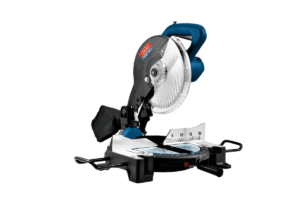
Present-day cutting technology seeks to achieve high precision, minimal material removal, and stable cutting processes. In a wire saw cut, a wire impregnated with diamond particles functions as the abrasive element for slicing. Conversely, an inner diameter saw uses a diamond-rimmed circular saw blade. Both cutting techniques can yield slices from materials like wafers and similar forms; however, cutting speed, kerf, and chip formation characteristics are distinct for these two processes.
Technology Foundation
Today’s technology for diamond tools, slurry management, and cutting machinery ensures excellent surface quality on brittle materials with little rework and higher efficiency. These advancements have transformed how manufacturers approach precision cutting in demanding applications.
Understanding Diamond Wire Saw Technology
Diamond wire cutting employs a continuous wire system to perform precision cutting with minimal kerf loss and outstanding accuracy. Guided under tension by machine-based diameter control, this cutting system is primarily directed at normally hard-to-cut materials such as silicon, ceramics, quartz, and graphite.
Key Operating Principles
Diamond wire saws function on endless machine arrangements for duplication of maintained cutting speed along with consistently performed cuts. This operational approach has significant implications over traditional methods by improving surface finish, reducing slurry usage, and achieving high workpiece output per slice.
Understanding ID Saw Technology
An internal diameter (ID) saw uses a circular blade with an inside diamond-tooled edge mechanism for precision cutting. ID sawing methods prove quite useful in numerous wafer slicing applications where tight control over dimensions, fine kerf, and sharp-edged sections are pivotal.
Structural Advantages
A rigid saw blade with a solid core permits maintaining blade geometry as it passes through the workpiece, making thickness and flatness uniform. Although ID circular saws have a larger kerf compared to ultrathin wire diameter types, they offer well-established options in traditional cutting, where repeatability and valuable process control are most favored.
Importance of Cutting Method Selection
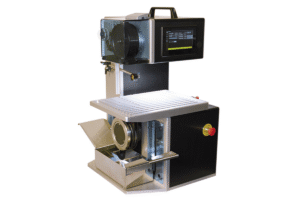
The decision to use a diamond wire saw or an ID saw influences kerf loss, cutting speed, cutting efficiency, and final surface quality. For brittle and hard materials, the right cutting method must limit chip formation and microcrack generation, so as not to compromise future polishing and inspection processes.
⚠️ Critical Decision Factors
Parameters like wire size, abrasive location, and casing size all equally affect kerf and generate the overall yield in volume per slice. Matching cutting tools and cutting methods to workpiece specifications cuts time for rework and cycle time while providing high precision at competitive costs.
Direct Comparison: Cutting Processes
An explicit comparison between cutting materials can be summarized through their ability regarding kerf, chipping actions, and cutting efficiencies on hard materials. Both technologies employ distinct approaches to achieve precision results.
Diamond Wire Saw Cutting Process
In diamond wire saw cutting, a flexible loop of diamond-embedded wire wound under controlled tension around pulleys is continuously manipulated by programmable systems for guiding feed force, wire speed, and slurry flow to maintain desired abrasive interaction and cutting speed.
Process Advantage: Wide slitting of silicon, quartz, ceramics, and graphite is accomplished with high precision, particularly on brittle surfaces where material removed is negligible. This equivalent action from start to end ensures an endless diamond wire saw minimizes kerf and chip-related surface defects across considerable cutting runs.
ID Saw Cutting Process
Inner diameter saws use a circular blade with abrasive fixed within its inner rim to guide the workpiece through a cutting process of fixed geometry. The aspect of blade rigidity is leveraged by the cutting machine for holding tolerances well and retaining flatness across each cut.
Process Characteristic: Typically, ID saws generate a wider kerf than fine wire saws, but the behavior of ID saws remains well-predicted for traditional cutting workflows. Slurry needs are often less than in legacy wire saw cuts, with diamond-rimmed tools being very stable for cutting silicon wafers with repeatable and well-checked blade lives.
Efficiency and Cutting Speed Analysis
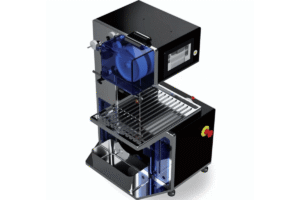
The efficiency of the cutting process reaches high levels when cutting speed, substance and wafer thickness, grain content, and cooling requirements are matched correctly.
Applications in Different Industries
Applications depend on the types of material, acceptable surface quality, and desired kerf size. The diamond wire sawing method is broadly employed for hard materials like silicon, ceramics, quartz, and graphite, mainly when minimal material removal and precision are considered essential.
Silicon Wafer Production
Diamond Wire Saw Approach
Helps reduce kerf waste and enhances cutting capability, allowing division of more wafers from one slice of ingot. Wire diameter and abrasive size are well-tuned to protect the fragile crystal structure and smooth the surface prior to polishing.
ID Saw Approach
Remains appreciated for precision cutting of particular wafer diameters where rigid saw blades provide consistent cuts. Many manufacturers settle with ID saws for existing processes demanding tight control and minimum opportunities for change.
Graphite Cutting Applications
Graphite may be softer than ceramic or quartz, but precisely this softness can increase lateral tearing and dust. Diamond wire saws use very gentle cutting action with small diamond particles, enabling perfect lines and thin kerfs on fragile and porous grades.
Processing Capabilities
- Wire sawing works effectively for variety of applications
- Wire saw cutting for non-standard graphite parts requires uniformity in blanking
- Diamond wire cutting typically offers excellent material yield and clean surfaces
Industries by Technology Utilized
Advantages and Disadvantages: Comprehensive Analysis

A careful appraisal of strengths and weaknesses of cutting methods serves as a base for matching cutting technologies with yield, cost, and quality objectives. This comparison analysis examines diamond wire saw and ID saw performance on hard materials including silicon, quartz, ceramics, and graphite.
Advantages of Diamond Wire Saw
- Reduced Kerf Loss: Reduces kerf size and kerf loss, consequently increasing material yield by 5–15% per slice compared to wider saw blades
- Gentle Cutting Action: Fine diamond particles enable gentle cutting that minimizes chip formation from silicon wafers, quartz, and ceramics
- Constant Speed: Continuous diamond wire interacts with material at constant speed, maintaining uniform abrasive contact for better precision
- Lower Consumption: Reduced slurry consumption generates better cleanings and thinner wire diameters improve cutting rate and productivity ratios
Disadvantages of Diamond Wire Saw
- Complex Control Requirements: Necessity to control tension, wire diameter, and slurry to prevent wire wandering and microline patterning
- Setup Challenges: More laborious setup and process tuning compared to traditional processes
- Higher Consumable Costs: Expensive high-performance diamond tools and frequent wire replacement in high stock-removal situations
- Flatness Limitations: May be inadequate for holding flatness over very stiff geometries compared to rigid blades
Advantages of ID Saw
- Excellent Dimensional Control: Circular blade rigidity and well-pronounced geometry ensure uniform thickness and flatness
- Easy Integration: Integrates into predetermined recipes with straightforward operator training and less process variance
- Controlled Slurry Use: Historically controlled better than traditional wire saws with uniform diamond rim abrasion
- Repeatable Performance: Delivers consistent results for high-necessity tight tolerances through well-understood cutting mechanism
Disadvantages of ID Saw
- Wider Kerf: Generates wider kerf compared to diamond wire saw, leading to increased kerf loss and reduced wafers per ingot slice
- Higher Chipping Rate: Potential for higher chipping rate on hard brittle materials if feed and cooling not meticulously controlled
- Blade Maintenance: Saw blades require periodic dressing with higher consumable consumption as diamond tools wear
- Limited Flexibility: Restricted capability for large or abnormal workpiece geometries
Recommend reading: Gantry Diamond Wire Saw: Precision Cutting Technology
Related Posts
Trending Blogs

![Polysilicon Material: Properties, Grades & Uses [Guide]](https://wiresawcutter.com/wp-content/uploads/2026/08/polysilicon-material-featured-150x150.webp)