
Get in touch with DONGHE Company
-
Phone: +86 181-1645-5490
-
Email: Sales18@DongheScience.com

What Is a Precision Diamond Wire Saw? Definition and Overview

The precision diamond wire saw is a cutting tool that effectuates high precision and minimum material loss by cutting different types of material, owing to its very thin steel wire covered with diamond particles. A precision diamond wire saw is built for performance, capable of cutting hard materials, and at the same time generating less material waste compared to traditional methods.
we emphasize the combination of efficiency and precision, leading to up to 50% reduction in project timelines for sample preparation and production slicing. Among the benefits of diamond wire cutting are precision cuts performed at a high speed with stable wire speeds, thus allowing for complex cuts of not only semiconductor wafers but also reinforced concrete and the hardest materials as well.

Conception of Diamond Wire Saws
Diamond wire saws are flexible cutting instruments that utilize wires with diamonds for high precision cutting with small kerfs and excellent surface integrity. Inside a wire saw, a continuous steel wire with diamonds is tensioned, and then, when controlled wire speeds are applied, an operator moves it through the workpiece.
The diamond wire saws allow slicing with the narrowness of the kerf, hence they are identified to cut different materials, from semiconductor crystals to reinforced concrete, with the least material loss. When compared to the conventional cutting methods, the diamond saws give off smaller heat affected zone and vibration, thus giving rise to effective cutting and stable cutting performance.
What Are Diamond Wire Saws?
Diamond wire saws are intended and made as cutting devices having diamond wire as the cutting tool and performing the clean and accurate cuts with repeatability. Each of these machines pulls a steel wire that is encircled by diamond particles over the pulleys, thus keeping tension and cutting speed to produce accuracy.
The intricate geometries cutting and slicing materials that were hitherto thought of as either too delicate or too hard for traditional cutting methods are among the capabilities of these wire saws. In practical scenarios, the diamond wire saws are utilized to make cuts in semiconductor ingots, ceramics, and composites, besides cutting through concrete and stone with minimum material waste.
Key Advantages of Diamond Wire Technology
- ✓High accuracy in cutting operations
- ✓Waste-efficient cutting with minimal material loss
- ✓Lower pressure on the cutting tool
- ✓Better surface quality on finished pieces
How Diamond Wire Saw Cutting Works
Diamond wire saw cutting relies on the movement of a steel wire which is abrasive and has diamond particles embedded in it and is moved over the work surface at predetermined tensions and wire speeds. The cutting process uses the diamond’s hardness to micro-fracture and grind tough materials, resulting in precise cuts but with lower forces than those used in alternative cutting methods.
A wire saw usually runs with a coolant that not only manages heat but also captures the debris, thus the cutting performance is improved while the wire life is extended. The operators are allowed to adjust the cutting speed, the feed rate, and the tension applied according to the physical characteristics of the material that is to be cut.
The diamond wire saw is capable of achieving a narrow kerf and hence less material waste and smoother surfaces are the end results, and thus the secondary finishing is reduced and the acceleration of sample preparation or production slicing is enhanced.
Types of Diamond Wire
The types of diamond wire differ with respect to core construction, diamond grit size, and bonding method, hence the applications in cutting are different for each type. The most common varieties are electroplated for aggressive speed on toughest materials and resin-bond or sintered for finer finishes and high precision slicing.
| Wire Type | Characteristics | Best Applications |
|---|---|---|
| Electroplated | Aggressive speed on toughest materials | Heavy-duty cutting, concrete, quarry operations |
| Resin-Bond | Finer finishes and high precision | Semiconductor slicing, delicate materials |
| Sintered | High precision and durability | Intricate cuts, semiconductor wafers |
| Coarse Grit | Quick material removal | Concrete cutting, stone quarrying |
| Fine Grit | Excellent surface quality | Brittle materials, semiconductor applications |
Advantages of Precision Diamond Wire Saws

A precision diamond wire saw is a cutting tool with capabilities that are hard to measure but do exist and are always there. It combines efficiency and accuracy and, at the same time, gives consistent results. When compared with the conventional cutting technology, diamond wire saw results in a very precise cut at the predetermined wire speeds, which brings down the heat, vibration, and material waste.
The usage of the cutting die that consists of a steel wire, on which diamond particles are placed, leads to the cutting tool getting stabilized within and on the surface of the material without losing its integrity. In the case of the semiconductor, ceramics, and concrete reinforcement projects, a diamond wire saw can perform faster, thinner, and cleaner cuts, and thus the sample will be prepared through fewer remaining operations.
Key Performance Statistics
30-60%
Throughput Increase
50%
Reduction in Project Timelines
15-25%
Cost Reduction Per Part
Diamond Wire’s Benefits
The use of diamond wire technology provides a very thin kerf that allows the wire saws to work with a variety of materials with very little loss of material and with less cutting force applied to the material. Diamond wires are thus embedded with diamond, the cutting machine is able to operate at a high speed while still controlling the tension and feed, and this results in cutting that is efficient and has the same quality as cutting done with the traditional methods.
Operational Advantages:
- Quiet operation with reduced noise levels
- Less demand for cooling systems
- Cleaner working conditions
- Extended tool life compared to abrasive alternatives
- Suitable for both field and laboratory settings
Cutting Capabilities with Precision
Precision cutting with a diamond wire saw is achieved by maintaining the wire speed at a stable level, proper grit selection, and the application of the correct tension in the closed-loop systems. The end product is a cutting tolerance of one micron, extremely low runout, and high-quality surface finish on semiconductor wafers, composites, and concrete cores.
Since wire saws can cut with a narrow kerf, engineers can demand high tolerances and parallelism while at the same time, performing complex slice operations without losing geometry. The cutting process destroys the heat and reduces chipping; thus, very delicate cuts can be made on a fragile substrate where the traditional methods are ineffective.
Cost Reduction and Material Savings

The cost efficiency is a result of three aspects: less waste of material, longer life of consumables, and quicker process times. Diamond wire saws are capable of making cuts with the thickness of only a few millimeters which results in the higher yield per ingot and thus the precious semiconductor materials are saved to a significant extent.
Cost Efficiency Factors:
- Reduced Material Waste: Minimal kerf width maximizes yield per ingot, particularly valuable for expensive semiconductor materials
- Extended Consumable Life: Controlled loading extends wire life beyond blade-based tools, reducing replacement costs
- Faster Processing: Efficient cutting reduces rework and secondary polishing requirements
- Labor Savings: Fewer passes required for large sections, reducing equipment wear and labor hours
Diamond Wire Saws Applications
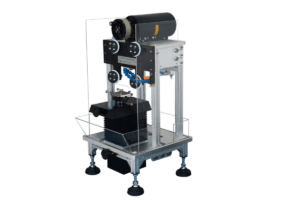
Saws with diamond wires are considered to be amongst the most efficient and cost-effective tools for the industries which need cutting with great precision, and this is done in such a way that the cost is predictable and the process is efficient. The reason for the acquisition of diamond wire technology in the laboratories and fields is because a diamond wire saw could cut different kinds of materials with less material wastage.
The typical sectors that apply these saws include the slicing of semiconductors, altering reinforced concrete, extracting from quarries, and breaking down composite parts. The process utilizes diamond particles mounted on a steel wire which can be directed with exceptional precision at different speeds.
Industrial Applications
In factories and other industrial establishments, wire saws are employed to perform the cutting of the semiconductor ingots and wafers, ceramic substrates, optical glass, and advanced composites where precise cutting and yield are the key factors.
| Industry Sector | Materials Cut | Key Benefits |
|---|---|---|
| Semiconductor Manufacturing | Silicon, SiC, Sapphire ingots and wafers | Minimal material loss, improved die counts per boule |
| Aerospace & Automotive | Carbon fiber laminates, hard metals | Intricate cuts without delamination |
| Metallurgy | Superalloys for coupon testing | Preserved microstructure integrity |
| Optics | Optical glass, ceramic substrates | High precision, excellent surface quality |
Client-Reported Results: Double-digit cycle-time reductions and fewer downstream polishing steps, proving the efficiency of diamond wire in high-precision production environments.
Construction and Demolition Uses
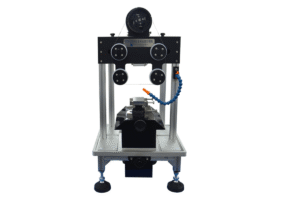
Among construction and demolition activities, diamond wire saws are employed in concrete cutting, controlled demolition, and structural alterations as long as safety and accuracy are major concerns. The crews utilize diamond wires for cutting through concrete and steel-reinforced beams, bridge decks, and thick masonry with the very minimum of vibration and dust when compared to the traditional cutting methods.
Construction Advantages:
- Reduced Vibration: Minimizes structural stress during cutting operations
- Lower Dust Levels: Cleaner work environment with improved air quality
- Versatile Operation: Works in submerged conditions and difficult environments
- Reduced Noise: Quieter operation for urban construction sites
- Lower Risk: Decreased micro-cracking and reduced labor hours
Research and Development
When it comes to R&D, a high precision diamond wire saw is the perfect partner for sample preparation, failure analysis, and prototype iteration where the requirement is very high precision and clean surfaces. Different kinds of laboratories are employing the use of diamond wire saws to cut the fragile crystals, multilayer composites, and even the novel ceramic matrices while at the same time they are maintaining the quality of the edges which is necessary for metrology and microscopy. Recommend reading: Complete Guide to High-Accuracy Cutting Machines for Silicon Wafers, Sapphire, Ceramics & Advanced Materials
Related Posts

Trending Blogs

![Polysilicon Material: Properties, Grades & Uses [Guide]](https://wiresawcutter.com/wp-content/uploads/2026/08/polysilicon-material-featured-150x150.webp)