
Get in touch with DONGHE Company
-
Phone: +86 181-1645-5490
-
Email: Sales18@DongheScience.com

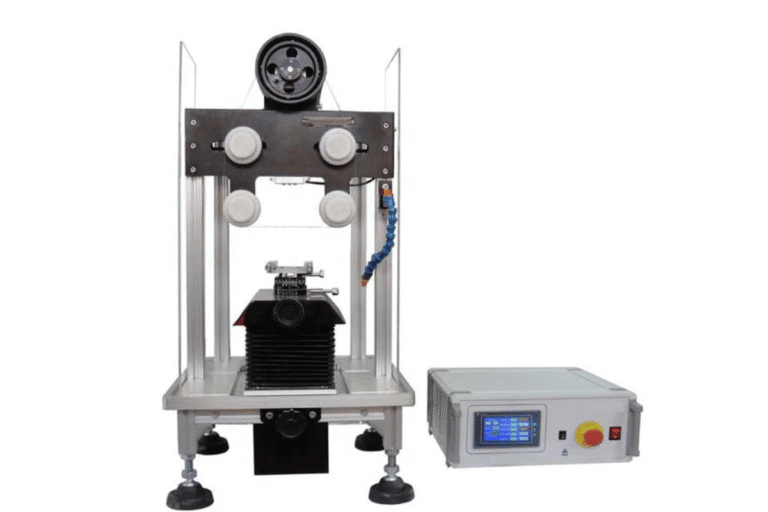
Complete Guide to Precision Diamond Wire Saw

Overview: In a precision diamond wire saw, the technology is employed in a cutting process that uses very thin diamond wire, which is a material suitable for cutting and separating the hardest materials. Diamond wire cutting technique has completely changed the cutting process of delicate and brittle materials. The method offers very precise diamond cuts and thus the results obtained from such processes are smooth, microscope-ready surfaces. gives you access to the latest cutting-edge technologies that help you choose the right wire saw solution, greatly reducing the setup time and obtaining bigger yield rate.
What is a Precision Diamond Wire Saw?
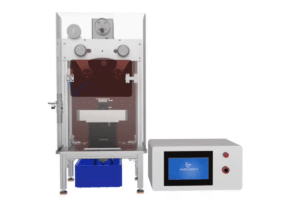
A precision diamond wire saw is a machine that cuts by creating extremely thin diamond wire and allows very precise and low-damage slicing of materials. The wire cutting reduces lateral forces and width of cutting allowing still very close tolerances in the cutting of fragile materials.
Core Operating Principles:
- Sample Holding: The holder holds the sample securely in position
- Wire Drive System: Precision wire saw drive rotates and guides the loop as per requirement
- Adjustable Parameters: Operator can set up cutting speed, wire tension, and coolant flow
- Precision Control: Cuts with highest accuracy for cross-sections that are contoured or meant for research
How Precision Diamond Wire Works
The cutting action of the diamond wire saw rests on the grits that are made up of diamond and are bonded to the wire loop. The looping of the wire is rotating continuously to expose the diamond particles to the surface which leads to microchipping and the amount of material removed is decided by hardness, size of grit, and speed.
Working Mechanism Details:
- Wire Rotation: The wire rotates in controlled dimensions to keep it straight and at proper position
- Coolant Function: Coolant helps in cooling the area, removing heat, and controlling temperature
- Parameter Adjustment: Highly adjustable parameters of feed rate, rotation speed, tension, and loop diameter
- Balance Achievement: Balance precision with least damage and highest accuracy in throughput
Low-Speed Diamond Settings
For materials like gemstones with high melting points, ensuring very low subsurface damage for microscopic inspection
Higher Cutting Speeds
For tougher alloys, while preserving dimensional accuracy and maintaining cut quality
Key Components of Precision Diamond Wire Saws
The main parts of the cutting system work together to deliver superior cutting performance and consistent results across various materials.
| Component | Function | Importance |
|---|---|---|
| Diamond Wire / Precision Diamond Wire | Primary cutting element with diamond grits | Determines cutting quality and precision |
| Rotating Drive System | Powers wire movement and rotation | Ensures consistent cutting speed |
| Precise Guides (Multiple Axes) | Controls wire position and movement | Maintains cutting accuracy |
| Strong Holder | Secures object being cut | Prevents movement during cutting |
| Tension Adjusting Unit | Keeps wire loop at proper tension | Critical for precision results |
| Coolant Delivery & Recirculation | Keeps cutting area cool and clean | Prevents thermal damage |
| Controller | Adjusts speed, feed, and position | Enables precision cuts according to requirements |
Critical Elements: The vibration-resistant frames, exact guides, and stable tensioning are very important for getting the high-precision results that can be repeated. The accessory kits are able to prepare thin sections and are suitable for cutting of various materials, thus assuring that using diamond wire provides the best diamond performance for intricate cutting with consistent, repeatable results across all materials.
The Cutting Process in Precision Wire Saws

A precision diamond wire saw follows a cutting process that is able to produce highly accurate results similar to those received from a diamond embedded wire loop, accurate axes control, and a stable holder for the sample. The wire moves in a controlled manner and is dynamically rotated, so that the diamond grits penetrate the work surface and cut through different kinds of materials with very little kerf produced.
How the Diamond Wire Cutting Mechanism Operates
Step-by-Step Operation:
- Wire Configuration: The infinite wire with diamond abrasives rotates around pulleys, creating a stable wire loop that holds its position along defined axes
- Movement Control: The wire moves at predetermined cutting speed while sample is in rigid holder, ensuring diamond particles engage with workpiece precisely
- Material Removal: Removal takes place through micro-chipping determined by hardness, grit size, and rotation rate, allowing low-force slicing
- Coolant Application: Coolant is dispensed to keep interface cool and cleanse area by removing debris, preventing thermal damage
- Parameter Optimization: Through adjusting feed and tension, operator can alternate between low-damage sectioning and high-throughput cuts without losing accuracy
The coolant used not only keeps the interface cool but also carries away swarf and can be recirculated to help keep the area clean. The choice of cutting speed, tension, and feed enables clean, repeatable sections even on fragile, brittle substrates with very little kerf. With the use of this cutting technique in laboratory and production environments, it becomes possible to have a higher level of performance, and at the same time, the cleaning surfaces that are ready for microscope inspection.
Advantages of Using Diamond Wire in Cutting
The use of diamond wire in cutting minimizes kerf and cutting forces, maintaining the integrity of the valuable material and the edge. The small diameter leads to practically no kerf loss, thus costly material is not being wasted during the wafering and section preparation process.
Key Advantages Summary:
- Minimal Kerf Loss: Small diameter ensures costly material is preserved
- Limited Cutting Forces: Fragile and brittle samples can be cut with intricate precision
- High-Precision Surfaces: Less post-processing required due to quality of cut
- Adjustable Parameters: Stable rotation allows wire to cut through complex geometries
- Effective Coolant Flow: Keeps wire cool throughout cutting process
- Versatile Applications: Works from laboratory prototyping to large-scale production
- Wide Material Range: Suitable for sapphire, crystal, stainless steel, aluminum, and tungsten
Result: The diamond wire saw has greatly increased quality and precision in cutting and at the same time reduced the variability of the processes.
Comparative Analysis: Diamond Wire vs. Traditional Cutting Methods
A precision diamond wire saw not only lowers mechanical and thermal loads but also enhances edge quality and reduces microcracks with respect to traditional methods like using abrasive wheels or saw blades.
| Comparison Factor | Diamond Wire | Traditional Methods |
|---|---|---|
| Kerf Width | Smaller kerf, minimal material loss | Larger kerf, more material waste |
| Tolerances | Tighter tolerances achievable | Looser tolerances |
| Surface Quality | Cleaner surfaces, less rework | May require more finishing |
| Mechanical Load | Lower mechanical loads | Higher mechanical stress |
| Thermal Impact | Lower thermal loads | Higher heat generation |
| Material Suitability | Excellent for brittle, fragile, hard materials | May damage delicate materials |
| Edge Quality | Enhanced edge quality, fewer microcracks | More edge defects |
Diamond wire has the advantage of eliminating challenges in cutting brittle, fragile, or hard material as it produces a smaller kerf, tighter tolerances, and cleaner surfaces. On soft materials, blades may cut faster, but diamond wire offers the same surface quality and less rework in the same time frame. The proper management of coolant systems and the recirculation of the cutting process contribute to the cleanness and coolness of the cutting line, hence ensuring consistency, accuracy, and precision in wafering, microscopy, and advanced research applications.
Applications of Precision Diamond Wire Saws
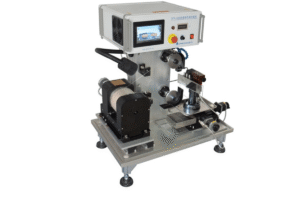
Precision diamond wire saws are found wherever high-accuracy, low-damage cutting is necessary for any material. The diamond wire saws use the diamond embedded wire and the stabilized wire loop, which allow these precision saw machines to operate with very minimal kerf and controlled application of force, thus keeping even the most fragile and brittle structures intact.
Performance Characteristics: The laboratories utilize the varied cutting speed to obtain sections suitable for microscopy, while the production lines use the same rotation control and coolant management to increase the throughput of their processes. The method provides a performance of the wafering that is cool, clean, and consistent throughout the whole range of applications in optics and semiconductors.
Industries Utilizing Precision Diamond Wire Saws
Electronics & Semiconductors
Foremost in precision cutting, relying on cutting of silicon, sapphire, and compound crystal substrates processed with crystal growth. Edge vicinity is protected and waste materials minimized.
Aerospace & Defense
Uses techniques to separate rotor blade alloys and tungsten parts without introducing micro-cracks, maintaining structural integrity.
Medical Implants
Employs slice-and-inspect methods using stainless steel and aluminum as working materials, provided by diamond wire solutions.
Material Science Research
Research laboratories use low-speed diamond settings for delicate samples, enabling precise analysis.
Optics & Photovoltaics
Endless wire system supports precise positioning and quality over complex geometries.
Advanced Ceramics
Benefits from precision cutting capabilities for hard, brittle ceramic materials.
Specific Use Cases and Success Stories
📊 Reported Results from Users:
Overall Performance: Users have reported a substantial reduction in material waste due to kerf and, at the same time, better tolerances by 15–40% when switching to diamond wire.
Industry Success Stories:
Optics Project
The use of a precision diamond wire saw for cutting sapphire and crystal blanks achieved dual benefits: decreased kerf loss by 40% while maintaining tight diameter tolerances—a very important aspect in optical ceramics applications.
Medical Implant Supplier
Adjustable feed and cutting speed made producing stainless steel test coupons more precise, reaching microscope-analyzable sections with no rework required.
University Laboratory
Modified cutting technique to expose microstructures in brittle composites, capitalizing on low speed diamond settings and steady rotation as a way of preventing chipping.
Photovoltaic Production Lines
Boasting consistent wafering of delicate cells where wire loop and coolant recirculate system keep the cutting process cool and predictable, improving yield and throughput.
Future Trends in Applications of Diamond Wire Technology
The greater degree of control, thinner wires, and automation will cause diamond wire processing to expand into battery manufacturing, advanced semiconductors, and additive manufacturing quality assurance.
Emerging Applications and Technologies:
- Real-Time Control: Precision diamond connector technology will involve real-time adjustments in positioning of axes, adaptive tension control, and optimization of coolant flow
- Battery Cell Production: Wider usage in battery manufacturing where slicing is capable of working on brittle electrodes
- Advanced Semiconductors: Further refinement of techniques for extremely fine wires and embedding of abrasive in the process
- Better Surface Integrity: Resulting surface integrity will be better at faster speeds
- Additive Manufacturing QA: Precision wire will be applied in workflows for multipurpose quality control
- Automated Systems: Automated holders and sensors maintaining position stability required across variety of materials
In time, as precision diamond solutions are developed, diamond wire will continue to provide quick rotation control, less waste, and more consistent and accurate sectioning results.
Advantages of Precision Diamond Wire Saws
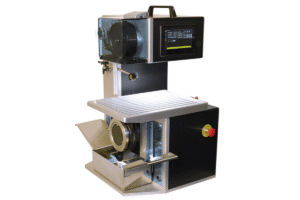
When a precision diamond wire saw is adopted, it not only enhances the quality but also increases the amount of material that can be processed and the yield of the material. Diamond wire that has a very small kerf cuts quietly, preserves expensive materials, and retains the necessary high precision in the geometric shape.
Related Posts

Trending Blogs

![Polysilicon Material: Properties, Grades & Uses [Guide]](https://wiresawcutter.com/wp-content/uploads/2026/08/polysilicon-material-featured-150x150.webp)