
Get in touch with DONGHE Company
-
Phone: +86 181-1645-5490
-
Email: Sales18@DongheScience.com

Types of Diamond Wire Saws for Ceramic Processing

Types of Diamond Wire Saws for Ceramic Cutting: A Complete Guide
Diamond wire saws enable precise ceramic cutting because their advanced technology provides exceptional cutting speed and operational flexibility for multiple applications. The advanced tools are designed to solve specific problems which arise when people work with extreme hardness and high brittleness properties of ceramic materials.
The blog post will study various diamond wire saw types which are used to process ceramics while showing their unique characteristics and their best applications. The complete guide provides information about different saw types which will help you choose the right equipment to meet your ceramic processing requirements.
Introduction to Diamond Wire Saws
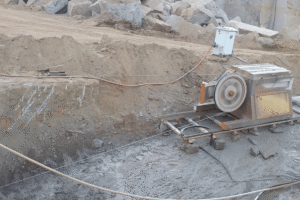
Diamond wire saws serve as precision cutting instruments which enable operators to cut through tough brittle materials such as ceramics with exceptional precision. The saws use a metal wire which contains industrial diamond abrasives to achieve efficient cutting results that require minimal waste and produce smooth surfaces. The saws use their abrasive wire to make exact cuts by pulling the wire through the material while maintaining specific tension levels. The equipment proves essential for electronics aerospace and advanced manufacturing sectors because it produces top-quality results while preserving the structure of the materials.
What is a Diamond Wire Saw?
A diamond wire saw is an advanced cutting tool that uses a wire coated with industrial diamond abrasives to achieve efficient and precise cutting of various materials. The wire consists of stainless steel and other strong materials which contain diamond particles that serve as cutting edges. The saws operate by using their diamond wire to penetrate materials while maintaining high wire tension through either continuous loop operation or reciprocating motion. The cutting process achieves optimal results by producing minimal waste which prevents micro-cracking while delivering precise and seamless outcomes.
Diamond wire saws are widely used in industries such as semiconductor fabrication that require cutting silicon wafers and in construction and quarrying which need to slice through stone and reinforced concrete. The modern diamond wire saws have advanced through technological progress because they now include features that help operators control speeds, maintain automatic tension, and manage cooling systems to achieve optimal performance during high-precision work. Their versatility and durability make them essential for industries that require both intricate and exact cutting results.
Components of a Diamond Wire Saw Cutting Machine
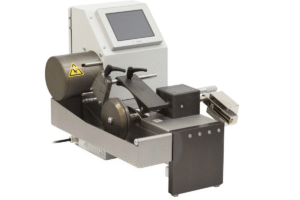
1
Diamond Wire
The main cutting part uses a steel core which contains diamond segments for industrial use to make accurate and long-lasting cutting operations.
2
Drive Wheel
The drive wheel system enables diamond wire to move through cutting operations at its required operational speed which guarantees effective cutting performance.
3
Guide Pulleys
The guide pulleys help maintain proper alignment of diamond wire while they help operators keep tension at correct levels which leads to stable and precise results.
4
Motor System
The system delivers required power to operate the wire which allows users to adjust its speed according to different material needs.
5
Tensioning Mechanism
The mechanism keeps diamond wire tension at a constant level which prevents slack from developing and maintains cutting precision.
6
Cooling System
The system uses water and other coolants to lower heat which occurs during cutting and to reduce wear on wires and machinery parts.
7
Control Panel
The system provides users with operational control to monitor system functions while they can adjust speed and tensioning and other parameters which will improve system performance.
How Diamond Wire Saws Work?

The diamond wire saws employ their cutting technique to achieve efficient operations which enable them to produce accurate cuts through difficult materials that consist of stone and concrete and metals. The process begins with operators using a continuous diamond wire loop which they extend across a pulley system. The saw’s motor drives the wire at high speeds while its industrial-grade diamond particles on the wire surface provide the ability to cut through all types of materials.
The diamond wire generates friction which creates the main operational function of the system because it grinds material through its contact with the workpiece. The tensioning mechanism maintains continuous pressure which keeps the wire at proper tension to prevent any driving errors that would decrease cutting performance or cutting precision. The system operates to decrease heat accumulation which protects both the cutting material from thermal damage and the operational life of wire and machine parts.
Diamond wire saws now use modern control systems which enable operators to change cutting speed while tracking wear and determining optimal performance based on material density and hardness. The adaptability features of diamond wire saws make them the most suitable equipment for use in mining operations and construction projects and industrial applications which demand both accurate results and long-lasting performance.
Types of Diamond Wire Saw Cutting Machines

Stationary Diamond Wire Saws
The machines stay in one place to cut through large stone and concrete materials. The machines provide high-precision cutting capabilities which function effectively in manufacturing environments and quarrying operations.
Mobile Diamond Wire Saws
The mobile units enable operators to perform onsite concrete cutting operations which include bridge repairs and demolition work. The equipment provides operational flexibility because it can be used in various work environments.
Horizontal Diamond Wire Saws
The machines use horizontal cutting functions to help quarrying operations extract stone blocks from their horizontal positions.
Vertical Diamond Wire Saws
Vertical diamond wire saws enable operators to execute vertical cuts which find uses in both quarrying operations and industrial sites for cutting large pieces into smaller parts.
The design features of coal wire saw machines exist to satisfy different operational requirements which enhance work performance and operational accuracy rights during specific work tasks.
Endless Diamond Wire Saw Systems
The diamond wire saw systems which Endless company developed represent a new cutting technology which enables operators to work continuously without needing to stop their work. The system uses a loop which contains diamond-embedded wire to run through multiple pulleys while the system maintains consistent wire tension and cutting accuracy. The endless systems which industrial sectors use demonstrate superior performance because they eliminate wire end connections and system maintenance needs which allow systems to run their maximum capacity while they cut brittle materials like ceramics and silicon and specific high-grade stone composites.
The main advantages of these systems are their reliability and their ability to produce consistent cutting results while reducing the time needed for operations to stop according to recent findings and search data. The diamond systems which use endless wire loops produce significantly lower kerf loss when compared to traditional methods, which results in reduced material waste. The modern systems which now include automation technology allow users to watch their process in real-time while the system automatically modifies its operations, which results in better cutting performance and precision throughout different business sectors. The endless diamond wire saw systems serve as the top choice for applications which need accurate results and environmentally friendly operations.
CNC Stone Cutting Wire Saws
CNC stone cutting wire saws function as sophisticated tools which provide operators with the ability to make exact cuts through various stone materials which include marble and granite and quartz. The systems achieve highly precise and steady cutting results through their computer numerical control (CNC) technology which minimizes material waste and enhances production efficiency. The system permits designers to create detailed designs through its ability to produce complex shapes while maintaining high standards of quality and operational dependability. The stone processing industry uses these saws to perform various tasks which include architectural element work and custom installation work because they deliver optimal speed and accuracy together with complete user control.
Concrete Cutting Applications
Concrete cutting serves as a critical process because multiple industrial sectors depend on it to deliver essential benefits which support their construction activities and their demolition operations and their renovation projects. The advanced concrete cutting equipment which includes diamond wire saws and wall saws and flat saws enables professionals to execute precise concrete cutting work which creates door openings and window openings and utility access points. The testing procedures used in building assessment enable building evaluation without damaging structural building components because it operates under limited testing capabilities.
All operational activities must prioritize safety which requires workers to wear personal protective equipment (PPE) while they operate systems that control ventilation for dust protection and they must use specific procedures when operating their cutting equipment. The project requirements determine the tool selection which permits workers to use handheld saws for minor tasks while they operate track-mounted saws for extensive industrial work.
Applications of Diamond Wire in Ceramic Processing
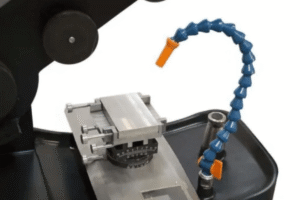
Diamond wire cutting tools serve as primary cutting tools for ceramic materials since they provide precise cutting capabilities and maintain high operational efficiency. The technology enables efficient cutting and shaping of intricate ceramic designs while producing minimal material waste and preventing material breakage. The technology works for producing ceramic tiles and semiconductor devices and advanced industrial components used in aerospace and electronics production. The diamond wire technology enables users to process hard and brittle materials which require both precise dimensions and smooth surface treatment.
Precision Cutting Techniques
Manufacturers use artificial intelligence (AI) and machine learning to create predictive models which determine optimal cutting parameters through analysis of material attributes and tool wear patterns and operational performance. The data-driven methods enable operators to adjust cutting speeds and feed rates and tensioning systems in real time which decreases equipment downtime and boosts production output. The use of big data enables optimal performance of diamond wire systems when they process high-precision materials such as semiconductors and aerospace-grade ceramics. The system implementation provides complete accuracy with decreased material waste which enables a business to maintain its advantage in producing precision-engineered components.
Specific Applications in Ceramics
The manufacturing process of high-performance ceramics depends on advanced cutting and shaping technologies which serve as essential elements. The materials find extensive use in applications that demand both exceptional hardness and thermal resistance together with high durability. The aerospace industry uses precision-engineered ceramic components in thermal protection systems and turbine engines because these components can survive extreme temperatures. The medical field uses ceramics for implants and prosthetics because they provide both biocompatibility and long-lasting durability. The modern cutting systems enable precise operations which results in decreased defects while enhancing system performance for vital tasks.
Comparison with Traditional Cutting Methods
The traditional cutting methods which include mechanical sawing and manual shaping demonstrate major shortcomings because modern precision cutting systems outperform them. The mechanical methods produce excessive material waste which results in microfractures and they fail to achieve the sub-millimeter accuracy which advanced applications require. The precision cutting systems which use computer-controlled automation achieve excellent accuracy together with exceptional edge quality and consistent output. The laser cutting methods achieve tolerances of ±0.001 inches while they create minimal thermal distortion and physical stresses on the material.
The traditional methods need extensive post-processing work to achieve application requirements which results in higher production costs and longer production times. The modern systems operate flawlessly with digital design files which accelerates the fabrication process while they deliver precise results for complex geometries and surface finishes. The evaluation of user needs based on search data shows that industries require efficiency and accuracy with minimal environmental impact which traditional cutting methods fail to provide thus proving that precision cutting technologies are superior to traditional methods in contemporary engineering and manufacturing.
Advantages of Using Diamond Wire Saws
High Precision Cutting
Diamond wire saws produce precise cuts which enable them to operate effectively in complex designs while they minimize material waste.
Versatility Across Materials
The saws possess the ability to cut through multiple materials which include metals stones composites and brittle materials such as ceramics.
Reduced Surface Damage
Diamond abrasives create smooth edges which produce minimal surface chipping and cracking, thus decreasing the requirement for extra finishing work.
Efficiency and Speed
Diamond wire saws work at faster speeds than traditional cutting techniques, which helps to increase production efficiency and decrease total processing duration.
Environmentally Friendly Operation
The process produces less waste material while it requires fewer coolant and slurry needs which supports sustainable manufacturing methods.
Improved Precision in Cutting
The adoption of advanced diamond wire technology has transformed all industrial sectors which depend on exact measurement. Diamond wire saws achieve their outstanding cutting precision because diamond particles spread evenly along the wire. The procedure preserves material quality while it permits advanced cutting processes which meet industrial standards required for semiconductor manufacturing and photovoltaic system design and aerospace development. The aerospace industry and semiconductor manufacturing sector and photovoltaic industry now use diamond wire saws because these tools provide precise measurement results and consistent cutting performance on hard materials. The production process achieves higher quality results through this method which also decreases material waste, thus creating a budget-friendly solution that meets current industry requirements.
Efficiency and Productivity Gains
Diamond wire saws operate at higher efficiency and greater productivity because they allow for quicker cutting operations and shorter times needed for equipment changes and maintenance work. The technology achieves its goal because it uses less material during cutting which results in increased operational output from each manufacturing procedure. The diamond wire saws provide reliable cutting performance that establishes production pathways while decreasing the requirement for extra machining work. The enhanced operational efficiency enables industries to complete their production tasks within strict time limits while keeping their expenses under control.
Cost-Effectiveness Over Time
The cost effectiveness of diamond wire saws becomes more evident with each passing day because their durability enables them to operate for extended periods without needing replacement. The diamond wire saws maintain their cutting accuracy throughout an extended operational period which results in reduced equipment downtime and decreased tool replacement costs. The system uses materials efficiently which helps to reduce waste and decreases production expenses in large manufacturing facilities. The combination of these elements with decreased maintenance requirements enables businesses that depend on precise cutting and processing methods to achieve substantial financial benefits over time.
Reference Sources
- The Ultimate Guide to Cutting Ceramics with Diamond Wire
Explains the precision machining process using diamond wire loop technology for ceramics. - Diamond Wire Saws
The article analyzes different diamond wire saw methods by demonstrating their one-way and two-way cutting capabilities. - Classification of Diamond Wire Saw Cutting Machines
The document describes different types of diamond wire saws which include equipment for cutting ceramics and concrete and marble and granite. Recommend reading: Diamond Wire Saw for Ceramic Cutting: The Definitive Guide
Frequently Asked Questions
1. What Are the Two Main Types of Diamond Wire Saw Systems That Are Used to Cut Ceramic Materials?
Diamond wire saws divide into two primary categories based on their wire driving mechanisms. The first type employs continuous systems which operate through endless loop operations while the second type utilizes oscillating systems which function through reel-to-reel operation.
Continuous (Endless Loop) Saws
These machines operate closed-loop wire systems which move wire in one direction at high speeds that reach 20 to 60 meters per second. The equipment achieves better results because it moves in one direction which reduces vibration while enabling faster feed speeds and superior surface finish results.
Oscillating (Reel-to-Reel) Saws
The systems feed wire through a supply spool which connects to a take-up spool before the system reverses its rotational direction. The systems process wire at lower speeds than endless loop systems but they can handle longer wire lengths which makes them ideal for cutting large ceramic blocks or ingots because closed loop systems would not work.
2. What Distinguishes a Multi-wire Saw from a Single-Wire Saw for Industrial Use?
The distinction exists because they produce different levels of output while their operational range differs from one another.
Single-Wire Saws
These machines function as multipurpose devices which perform block squaring operations and capacitate operators to execute complex 2D profile cutting together with their ability to cut through thick materials. The equipment functions most effectively in laboratory environments because it facilitates the production of both prototypes and limited quantities of products.
Multi-Wire Saws
The units use multiple parallel wires to make multiple cuts on one workpiece at the same time. The devices operate in high-volume mass production environments which require them to slice ceramic ingots into thin wafers or substrates. The multi-wire saws work at maximum efficiency while producing wafers that have consistent thickness throughout their entire production process.
3. What Distinguishes Electroplated Diamond Wires from Resin-Bonded Diamond Wires for Operation on These Machines?
The type of wire used in a diamond wire saw determines its operational capabilities because different bonding techniques create different wire types for machines.
Electroplated Diamond Wire
The product contains one layer of diamond grit which connects to the steel core through a nickel plating process. The product provides high diamond exposure which enables aggressive cutting and precise results. The product applies to high-value ceramic materials which need tight control over kerf waste during processing.
Resin/Sintered Diamond Wire
Diamonds are embedded into a matrix through these wires which use a multi-layer bond system. The bond material will release newly secured diamonds when it starts to wear. The engines deliver high durability which allows them to handle tough cutting tasks with abrasive ceramic materials while maintaining extended tool lifespan even though their cutting speed.
4. When Do Applications Require the Use of a CNC Diamond Wire Saw?
The application starts to need a CNC diamond wire saw when it requires advanced geometric shapes which go beyond basic straight cutting and slicing functions. The CNC systems enable wire and workpiece motion controls which use more than two axes for their operational needs. The setup enables ceramic parts to be cut into curved shapes and cylindrical forms and access intricate internal spaces without needing to create specialized tools for particular designs.
5. What Type of Saw Works Best for Precise Measurements in Laboratory Research and Quality Assessment?
For laboratory settings which involve failure analysis and metallography and sample preparation work low-speed precision diamond wire saws serve as the standard equipment. The systems normally use a compact desktop design which operates through a reel-to-reel mechanism or gravity-fed system. The systems operate at low speeds which apply slight force to keep the sensitive ceramic samples safe from thermal damage and micro-cracking. The systems protect microstructural integrity by maintaining cut surface protection while they produce at their highest rate.
6. What Effect Does Wire Diameter Have on Selecting Appropriate Saws for Ceramic Material Processing?
The specific saw must be compatible with the required wire diameter which directly impacts material yield.
Fine Wire Saws (0.1mm – 0.3mm)
The material enables the production of electronic ceramics and semiconductor materials which require machines to operate with precise tensioning systems that prevent wire breakage. The machines need to operate with systems that can give precise control of wire tension so that they can stop wire breakage from happening.
Standard Wire Saws (0.3mm – 0.8mm)
The material handles the cutting needs of general structural ceramics while enabling component shaping operations.
Heavy-Duty Saws (>1.0mm)
The equipment operates as a roughing tool which handles large blocks of refractory ceramics and abrasive industrial materials. The systems require wire structural strength to take precedence over kerf loss because they operate in heavy-duty applications.
Related Posts
Trending Blogs

![Polysilicon Material: Properties, Grades & Uses [Guide]](https://wiresawcutter.com/wp-content/uploads/2026/08/polysilicon-material-featured-150x150.webp)