
Get in touch with DONGHE Company
-
Phone: +86 181-1645-5490
-
Email: Sales18@DongheScience.com

Endless vs Reciprocating Wire Saw: Which is Right for You?

When precision cutting is in question, the choice of the right tool determines the quality of the results. Among the wire saws there are two main contenders with their own merits and areas for application: the endless wire saw and the reciprocating wire saw. But how do you determine which one better serves your distinct requirements? This article elucidates the technical differences, pros, and cons of the two saws, arming you with the necessary information to decide wisely. Be it the cutting of fragile materials with utmost precision or the more robust and versatile tasks, having the knowledge of the functional differences of these tools will direct you to the perfect point between the two factors of efficiency and performance.
Introduction to Wire Saws

Wire saws are highly accurate cutting instruments, which consist of an abrasive-coated wire that is under tension and is used to cut different kinds of materials. Minimal material waste is one of the main advantages of these tools along with making very clean and precise cuts. They are mainly used to cut brittle, fragile, or expensive materials like crystals, ceramics, glass, and metals. The operation of wire saws is achieved by the nonstop or reciprocating movement of the abrasive-coated wire depending on the type of design, and this results in a well-controlled and efficient cutting process. Their flexibility and accuracy classify them as the most important tools in the electronics, manufacturing, and construction industries.
What is a Wire Saw?
A wire saw is a very specialized cutting tool that employs a wire under tension, usually accompanied by abrasives like diamond particles, to make precise cuts in almost any material that is difficult to cut. The wire can move constantly or alternate in motion, which makes the cutting of the materials with the force so little. The current wire saws have been manufactured to very high standard of precision giving the user the ability to make cuts with not so much thickness lost (kerf loss) and material deformation (reduction in volume due tear, or compression). Their main application areas include semiconductor manufacturing where they are slicing silicon wafers with extreme accuracy, and also in buildings and quarrying where they can be used to cut through stone, concrete, and reinforced ceramics. The recent innovations corresponding to the industry research and search trends point out the automation and sensor technologies incorporation in wire saws as the primary cause of enhanced operational efficiency and remote monitoring for improved performance in industrial applications.
Overview of Diamond Wire Cutting Technology
The diamond wire cutting technology has been recognized as a major source for all industries when it comes to having the highest precision, efficiency, and versatility. By using the latest innovations such as the synthetic diamond wire and the automated control of the wire’s tension, the technology makes it very easy to segregate hard materials with very little waste. Aerospace, semiconductors, and premium construction are the main industries that benefit from this technology.
This is a clear indication of the increasing demand for solutions that not only speed up but also scale up the process without compromising on the accuracy of the very complex tasks. Moreover, the “diamond wire recycling” and “sustainability challenges” searches show another aspect of the trend which is the eco-friendly adaptation of these systems.
The technology that cuts with diamond wire has been selected as the one that operates with the least amount of loss, provides the best finish, and works with a wide array of materials such as metals, ceramics, and composites; these being the top user benefits coming from the search trends. Besides, its continuity towards automation and IoT integration for remote monitoring enables the different sectors to realize their cost-efficient, high-capacity solutions along the lines of today’s demand.
Importance of Choosing the Right Type of Saw
The process of choosing the right saw is very difficult and the main reason for cutting operation’s efficiency, accuracy, and quality. The different kinds of saws are made for certain material and functions, and an incorrect choice between them may lead to rising costs, material wastage, and even poor results. Here are five elaborated aspects to think about while selecting the saw type:
Material Compatibility
A different saw corresponds to different material types. Bandsaws are cutting metals, for example, while circulars are better to cut wood and thin materials. Diamond wire saws are the best option for hard materials such as ceramics and composites since they combine resistance to abrasion and cutting precision.
Cutting Precision and Quality
The saw selection has a direct correlation with the cutting precision and quality of the produced surface. Along with diamond saws, the minimum kerf loss and surface porosity is produced, making them perfect for tightening tolerance applications.
Cutting Speed and Efficiency
The different saw types will have different operational speed. For example, abrasive saws can do quick cuts even on the hardest or densest materials, while jigsaws are more time-consuming but they allow for cutting intricate patterns or making specialized cuts.
Operational Scalability
In most cases, the industries would need a saw that is capable of performing the cutting operation of high-volume hours. High-speed bandsaws or automated cutting systems such as those IoT-enabled will allow scalability without compromising either repeatability or efficiency.
Cost-effectiveness and Maintenance
Besides initial buying price, ongoing maintenance, energy consumption, and blade life must also be included in the analysis. For instance, diamond wire saws, although their upfront cost is higher, offer long-lasting use and fewer blade replacements thus becoming the most economical choice in the long run for certain industries.
The above-mentioned facts if taken into account would let the industries not only to improve their operational output but also reduce the loss in the process and at the same time keep the cutting precision, thus eventually leading to a greater resource efficiency and profitability.
Endless Diamond Wire Saw
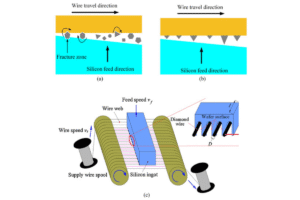
An Endless Diamond Wire Saw functions through the use of a never-ending diamond-studded wire to perform the cutting of the materials very accurately. This particular saw is ideal for hard, brittle, and even somewhat ductile materials such as silicon, quartz, ceramics, and specific metals. Among its qualities, the most important are that it produces minimal waste of material, keeps the cutting precision to a constant level throughout its operation, and is overall very efficient. Because of these features, it becomes the only option in processes like semiconductor, photovoltaic, and advanced material manufacturing, where precision and resources optimization are of utmost importance.
Mechanism of Endless Diamond Wire Saw
The endless diamond wire saw is a machine that uses a diamond-coated wire as a continuous loop that gets cut at high speeds between the protective pulleys and the motor. The wire is made of diamond particles used in the industry, which give the wire the power to cut through tough materials. The machine depends on accurately controlling the tension in the wire to provide the same pressure all over the workpiece and thus achieve precision.
In the cutting process, the friction, heat from the cutting and material melting are all kept to a minimum by the introduction of a cooling and lubricating slurry or fluid. The technology of modern times to for cutting wire has been able to keep abreast with the latest in its field. Thus, an automatic tension control system with dynamic monitoring to wire performance enhancement and lifespan extension is very much part of a modern diamond wire saw. Apart from that, the design reduces the possibility of both uneven wear and cutting inaccuracies, and hence the output is of consistent quality. Moreover, the environment being controlled means the kerf loss is low, thus, the process is economically viable, especially in the case of precious materials like silicon wafers.
The improvements in the engineering and control algorithms, as evidenced by recent data, have made the endless diamond wire saw even more efficient. The new developments include the application of AI-based process monitoring that predicts wear, automatically adjusts the machine or wire tension, or slows down the speed in real time. Also, the use of multi-wire setups for cutting several slices of material at once is becoming more common, which means that the saw’s capacity for industrial applications is scaling up even more.
Applications of Endless Diamond Wire Cutting
The vast application of endless diamond wire cutting is the precision, efficiency, and versatility that it offers. Below are five applications with detailed descriptions where this technology is most effectively used:
1. Semiconductor Wafer Production
The main reason for silicon wafer cutting in the semiconductor industry is the precision of the endless diamond wire cutting process that takes place. The wire of only 120 μm and skin loss of 100 μm is the case for this which leads to excellent material yield and extreme precision.
2. Photovoltaic (Solar Panel) Manufacturing
The slicing of silicon blocks into wafers is something that this technology does and it indirectly causes the creation of solar panels. The cutting process in which accuracy is the main parameter leads to the reduction of raw material waste through the traditional process by approximately 50%, thus creating a friendly environment and making the process less costly.
3. Optical Glass and Sapphire Cutting
Endless diamond wire cutting is instrumental for the production of high-quality optical components including glass and sapphire cutting. The application allows for very good surface finishes and also the reduction of further processing.
4. LED Chip Fabrication
Endless diamond wire saws are used by the LED industry to slice sapphire or silicon carbide substrates that are of high quality yet no damage is done to them and the throughput is maximized. Thus, the LED chips are of consistent quality and even the low-power ones used in various light and display technologies are mass-produced.
5. Manufacturing Advanced Ceramics
The cutting technologies of diamond wire are applied in the production of ceramics that are to be used in aerospace, medical, or industrial sectors again. The material keeps its properties and the outstanding geometries and tolerances are also created which are required for the high-performance components.
Advantages of Using Endless Diamond Wire Saws
✓ Precision Cutting
The use of endless diamond wire saws allows for extremely precise cutting with tolerances that can go as low as one micrometer. This is necessary for applications like silicon wafers or advanced ceramics that need to have very precise dimensions.
✓ Minimized Material Wastage
The kerf loss is greatly minimized by the use of thin wire and material waste can sometimes be less than 20% when compared to the traditional cutting methods. This is especially important in the sectors that deal with expensive or rare materials.
✓ Versatility Across Materials
These saws can cut through a vast variety of materials, which includes but not limited to metals, semiconductors, ceramics, and composites. This makes them suitable for several industrial applications.
✓ Improved Surface Finish
The diamond coating used on the wire is fine abrasive, which means that the cutting surfaces are smoothened to a great extent and there will be no need for secondary processing that would have otherwise occupied a lot of time in production.
✓ Energy-Efficient Operation
Endless diamond wire saws work with less operational forces which means they consume less energy and also cause lesser mechanical stress on the cutting machines. This is a win-win situation as it leads to cost savings and also longer lifespans for the machines.
Disadvantages and Limitations
- High Initial Cost: The initial outlay for the endless diamond wire saws could be considerable as a result of their unique design and materials, and this could be a reason for smaller operations to stay away from it.
- Maintenance Requirements: Regular care of diamond coating is going to keep the machine with high precision and integrity, but that will result in more time the machine is not working due to maintenance.
- Material Suitability: Not all the materials are suitable for these saws, which will limit the usage of such saws to certain industries and applications only.
- Training and Expertise: The operating and maintenance of this equipment would imply the employment of a skilled workforce, thus incurring the costs of either training or hiring.
Reciprocating Wire Saw

A reciprocating wire saw works with a very thin wire, made from a high-tensile material, that moves back and forth and cuts through the materials. This kind of saw is very useful for making very accurate and detailed cuts, particularly in the case of ceramics, composite materials, or brittle substances where regular saws might not be effective. The saw also has an advantage here, as it produces very little waste and gives a smoother finish than others. On the other hand, the saw’s excellent performance is very much dependent on the maintenance of the wire and the proper alignment during operation to prevent breakage or uneven cuts. These saws are very much incorporated in industries demanding delicate and accurate cutting solutions.
Mechanism of Reciprocating Wire Saw
A reciprocating wire saw mechanism is precision-driven where its design accurately cutting in complex applications is its main advantage. The cutting process is achieved by a thin wire that is the saw’s main part and usually coated with some abrasive material like diamond or tungsten carbide that moves in a reciprocating manner. The back-and-forth motion is produced by a drive system powered by the electric motor and controlled so as to maintain the same speed and torque all the time while oscillating. The wire is stretched across guide pulleys for stability and is positioned with the workpiece for an exact cut.
The high-end machines use CNC (Computer Numerical Control) technology to fully automate the cutting which means more accuracy, repeatability, and the freedom to work with very complicated designs. Due to the reciprocating nature of the wire saw, there is less heat generation and the thermal stress on the material is also minimized thus making it compatible with the most sensitive substrates. In addition, cooling devices, like water or air jets, are often included in the cutting process to cool and lubricate the contact point as well as to remove the debris, thus prolonging the cutting process and the lifespan of the wire.
This mechanism is the reason why the reciprocating wire saw is used across such diverse industries as aerospace, semiconductors, and medical devices where cuts have to be made with utmost precision and cleaned right away.
Applications in Industry
The reciprocating wire saw is very effective in such industries where high precision and little material damage are required. To give an example, it is the main player in the aerospace field for cutting tricky alloys and advanced composites. The tool of choice in the semiconductor industry is often the wire saw, which performs the task of slicing silicon wafers and other materials with micron-level accuracy, thus, being able to cut through even very soft materials. What is more, the manufacturing of medical devices often calls for the very accurate cutting of the saw, which is also the case for building complicated components such as stents and surgical instruments. These cases are indicative of the wire saw’s versatility and its essential position in the high-precision manufacturing processes.
Advantages of Reciprocating Wire Saws
✓ High Precision Cutting
Reciprocating wire saws can very precisely cut materials, up to the micron level, which is why they are used in the electronics and medical device manufacturing sectors. This very precise cutting technique results in extremely small amounts of wastage and very good quality of delicate and intricate components.
✓ Material Versatility
These saws can cut through a plethora of materials, such as ceramics, metals, composite materials, and even delicate wafers. The strength and versatility of this tool in processing different materials is particularly needed in the high-tech industries that have a wide variety of materials for specialized applications.
✓ Low Kerf Loss
Reciprocating wire saws work with a very thin wire which leads to the cutting loss (kerf) being drastically reduced, and as a result, there is almost no wastage of material. This is an important advantage when using the costly materials like silicon or advanced alloys, as it helps in contarcting the overuse of materials.
✓ Reduced Thermal Damage
An advantage of the reciprocating wire saws over the other cutting methods is that they produce very little heat during the cutting process. Thus, there is a greatly reduced chance of thermal damage occurring to the sensitive materials, and their structural integrity and functional properties are preserved.
✓ Enhanced Process Control
The modern reciprocating wire saws often come equipped with advanced control systems that allow for very precise adjustments to be made on the cutting speed, the tension, and the feed rate among others. This kind of control leads to a higher reliability of the operation and a consistent output even in the most challenging production environments.
Disadvantages and Limitations
- High Initial Investment: Due to the advanced design and integrated control systems, reciprocating wire saws impose a considerable initial investment which can be a hindrance for small-scale operations or those with limited financial resources.
- Maintenance Requirements: This type of saws uses high-precision components, and thus, regular maintenance is required to keep their performance at the highest level. If maintenance is neglected, it will lead to reduced efficiency and necessitate costly repairs.
- Material Limitations: When it comes to cutting really hard or dense materials, reciprocating wire saws, although being powerful in many applications, might need more time or tools or processes to get through.
- Processing Speed: The speed of reciprocating wire saws compared to other cutting methods might be slower, especially in high-volume industrial operations, and thus, might affect the overall productivity.
- Operator Expertise: The use of these saws in an efficient manner often calls for skilled operators who would oversee and control the equipment, thereby increasing training and labor costs.
Direct Comparison: Endless vs Reciprocating Wire Saws

Key Comparison Factors
Cutting Efficiency
The uninterrupted cutting action of endless wire saws generally makes them more efficient for continuous operations while reciprocating wire saws can be slow and difficult especially in dense or challenging materials.
Material Versatility
Reciprocating wire saws are more capable of handling a variety of materials and performing intricate cuts; endless wire saws, however, are better in performing uniform cuts across standard materials.
Maintenance Requirements
Due to their simpler motion, endless wire systems usually call for less frequent maintenance while reciprocating saws experience higher demand for maintenance because of their wear from back-and-forth motion.
Operator Skill Level
Reciprocating wire saws require higher operator skills pointed to exact control while endless wire saws are easier to operate and manage relatively.
Operational Speed
Endless wire saws usually work faster than their counterparts which makes them perfect for industrial use. Reciprocating saws, in contrast, are slower but more accurate in detail-oriented tasks.
Performance and Precision Cutting
In the evaluation of performance and precision in wire saw operations, it is very important to know the specific capabilities of the two types of saws: reciprocating and endless. On the other hand, wire saws with a reciprocating motion are more often sought after when precision and detail are required—for example in laboratory applications or specialty fabricating processes. This distinction is due to the reciprocating motion that offers finer control and the ability to impose intricate geometries. Therefore, the decision of which saw to use is dictated by the specific requirements of the task; endless wire saws are the choice for volume and speed, while reciprocating saws are the choice for nuanced accuracy and control in complex cuts.
Surface Quality and Finish
The quality and finish of the surface are significant factors in judging the appropriateness of a cutting technique for certain applications. The motion of the reciprocating saw which is very accurate and controlled usually gives the finest possible finish with very few surface flaws. That is why they are recommended for applications where the amount of post-processing is to be minimized or where high aesthetic standards are to be met. On the other hand, wire saws if correctly used are fast and efficient but still there is a chance of getting a surface defect that is barely visible due to the continuous interaction of the abrasive action and the material being cut. The development of new cutting paths and improved tension techniques have made it possible to nearly eliminate chipping and unevenness in cutting thus creating a great match between cutting solutions and the demand for superior surface integrity.
Efficiency in Cutting Brittle Materials
Brittleness material cutting efficiency is mainly determined by three factors: accurate adjustment of cutting parameters, novel abrasive technologies, and tool stability. If these factors are considered, it is possible to get cleaner cuts, less material waste, and shorter processing time, leading to a productivity increase of the whole process.
Summary of Key Differences

The cutting process with endless wire saws is based on a continuous wire loop, while the cutting process with reciprocating wire saws is based on a straight wire moving back and forth.
Which Saw is Right for Your Needs?
Choosing the proper saw is a matter of the particular application, type of material, and the level of precision needed. Circular saws, which are especially good at cutting wood and working with some soft materials, are the tool suggested for general-purpose cutting by the latest search trends and experts alike. When working on fine woodworking, jig-saws or scroll-saws are tools of choice for making precise cuts and producing intricate patterns. For instance, in the case of fragile materials such as glass or ceramics, a wet tile saw with a diamond blade is an absolute must as it eliminates chipping and cracking by applying water during the cutting process to cool and lessen the friction on the blade. Cutting-edge band saws or reciprocating saws are recommended for heavy-duty industrial processing because of their durability and ability to process bigger and denser materials. So, by taking into consideration the hardness, cut quality and scale of your operation, you will be able to pick the saw that will give you the best results.
Future Trends in Wire Cutting Technology
The wire cutting technology’s future developments will mainly revolve around automation, precision, and sustainability. The changes in machine learning and AI are probably going to result in systems that are completely automated and at the same time able to adapt in real-time to complicated cutting requirements. New materials and coatings for cutting wires are likely to increase the life and performance of the wires while reducing wear. Moreover, there will probably be a great deal of focus on the creation of eco-friendly processes, which will include cutting back on energy usage and waste, so that they can be in line with the global sustainability targets.
Conclusion
The cutting of brittle materials is more efficient when the integration of precise cutting parameters, advanced abrasive technologies, and robust tool stability is done really carefully. These strategies, when applied, not only guarantee higher-quality results but also minimize material waste and improve productivity in the entire manufacturing process. If industries prioritize these critical factors, then they will be able to not only fulfil the increasing demands for precision and surface integrity but also keep their operations efficient.
Reference Sources
Here are some sources comparing endless and reciprocating wire saws:
- A Analysis Of Reciprocating And Circular Diamond Wire Saw
Provides an in-depth analysis of the advantages and disadvantages of reciprocating and circular diamond wire saw techniques. - Surface Comparison Between Reciprocating Wire Sawing and Endless Wire Sawing
Discusses the surface quality differences between the two methods, highlighting machining accuracy and flatness. - Diamond Wire Cutting Saw Review
Explains the two general methods of diamond wire cutting: continuous (endless/loop) and oscillating (reciprocating), with their respective applications. - Endless Diamond Wire Saw: Revolutionizing Shape Cutting
Highlights the versatility, precision, and accuracy of endless diamond wire saws in cutting various materials. - Wire Saw Diamond
Discusses the motion types (continuous loop vs. reciprocating) and the use of diamond beads or embedded abrasives in wire saws. - Recommend reading: Hard and Brittle Material Cutting Wire Saw | Precision Diamond Wire Saw Machine
Frequently Asked Questions
What is the fundamental difference between an endless and a reciprocating wire saw?
The main difference is in the movement of the diamond wire.
Endless wire saw or loop saw makes use of a diamond wire that moves in one direction only and is comprised of a continuous loop. This motion can be compared to band saws in which a new cutting face of the wire is forever presented to the workpiece with no disturbance in the previous cut.
On the other hand, reciprocating wire saw utilizes a single wire that is hooked between two reels. The wire goes in and out on the workpiece in a swing-like motion. After every pass, the wire’s motion changes direction.
How do their operational principles affect cutting efficiency and speed?
The unidirectional cutting motion of an endless wire saw gives it a considerable edge in terms of cutting efficiency and speed. The movement of the wire in a constant direction allows it to be run at much higher linear velocities. Consequently, the rates of material removal are faster and processing times are shorter in accordance with that. The continuous supply of fresh abrasive gives the cutting action a more aggressive and consistent character that also operates at faster rates.
Reciprocating saws are characteristically slower. The operating cycle that involves the deceleration, stop, and reverse the wire’s direction at the end of each stroke restricts the maximum wire speed that can be achieved. This back-and-forth motion is also not so effective for material removal as the endless wire’s cutting action is continuous.
Which method delivers superior precision and surface quality?
Both methods are capable of high-precision cuts; however, endless wire saws generally provide superior surface quality and geometric accuracy. The unidirectional travel of the loop wire minimizes vibrations and eliminates the “saw marks” or directional lines that can be created by the reversing motion of a reciprocating saw. This results in a smoother, flatter surface with less subsurface damage.
The cutting accuracy of a reciprocating saw can be influenced by the wire tension changes and the vibrations that occur during the directional shifts. Although the saw is capable of precision work, producing a surface finish that is comparable in quality to that of an endless wire saw often requires more careful control of the parameters and could involve additional post-processing steps such as lapping or polishing.
How do the two methods compare in terms of material compatibility and applications?
Endless Wire Saws are preferred for:
- High-Speed Production: Their efficiency makes them ideal for slicing and sectioning in high-volume manufacturing environments.
- Superior Surface Finish: Applications where minimal subsurface damage and a high-quality as-cut surface are critical, such as in optics and advanced materials research.
- Cutting Large or Unusually Shaped Parts: The loop configuration can be adapted to large gantry systems for sectioning substantial or complex workpieces that are difficult to fixture for other methods.
- Brittle and Delicate Materials: The smooth, low-vibration cutting action minimizes the risk of chipping and fracture.
Reciprocating Wire Saws are typically utilized for:
- Multi-Wire Wafer Slicing: This is the most prevalent application, where hundreds of parallel wires are used to slice an entire ingot (e.g., of silicon) into thin wafers simultaneously. The reciprocating mechanism is well-suited for managing a large web of wires.
- Lower Volume or General-Purpose Cutting: For laboratory or R&D settings where speed is not the primary constraint, reciprocating saws offer a versatile and cost-effective solution for sectioning a variety of materials.
- Cost-Sensitive Applications: The machinery and wire consumption logistics can sometimes be less complex than those for high-performance endless wire systems, particularly in traditional wafering operations.
What are the main advantages and limitations of each technology?
Endless Wire Saw
Advantages: Higher cutting speed, superior surface finish, lower subsurface damage, and reduced vibration. Continuous cutting action leads to greater overall efficiency.
Limitations: The primary technical challenge is the durability of the wire joint in the loop; a failure at the splice point terminates the wire’s life. The length of the wire loop can also be a physical constraint for certain machine designs.
Reciprocating Wire Saw
Advantages: Well-established technology, especially for multi-wire wafering. The system uses a continuous spool of wire, eliminating concerns about a splice joint. It can be highly effective for processing entire boules in a single operation.
Limitations: Slower cutting speeds due to the oscillating motion. The reversal of direction can induce vibration and lead to a lower-quality surface finish compared to endless saws. The process is generally less efficient in terms of material removal rate per unit of time.
Related Posts

Trending Blogs

![Polysilicon Material: Properties, Grades & Uses [Guide]](https://wiresawcutter.com/wp-content/uploads/2026/08/polysilicon-material-featured-150x150.webp)