
Get in touch with DONGHE Company
-
Phone: +86 181-1645-5490
-
Email: Sales18@DongheScience.com

Optical Glass Precision Cutting for Lenses and Prisms

Precision Cutting of Optical Glass: Advanced Techniques and Applications
Exploring the fundamental processes, cutting-edge technologies, and industry standards that define modern optical glass manufacturing
The need for extreme accuracy across all optical fields has reached its highest point in history. Precision cutting of optical glass serves as the fundamental technique which produces reliable lenses and prisms through its specialized cutting method. This article demonstrates how research progress depends on advanced research methods and advanced equipment and advanced technological systems which exist in this specific field. The article presents readers with information about how precise measurements function as essential requirements for manufacturing processes which involve handling fragile optical materials while maintaining high-performance benchmarks.
Introduction to Optical Glass Cutting

Optical glass cutting requires the creation of specific shapes and dimensions from optical-grade glass because this technique produces material which meets stringent requirements for advanced optical uses. The system requires specialized tools and methods for operation which include diamond-coated saws and laser cutting systems that can process optical materials without creating cracks or other defects. The glass requires precise treatment because even the smallest imperfections will produce visual harm. The process of optical glass cutting serves as a fundamental procedure that manufacturers must follow to produce lenses and prisms and other components needed for healthcare and telecommunications and scientific research.
Importance of Precision in Optical Manufacturing

The optical design process requires precise optical manufacturing techniques because all optical components must deliver performance that meets the strict requirements used in medical and telecommunications and research applications. Optical systems experience operational problems because of precision defects which also result in additional expenses for material destruction or product correction.
1
Dimensional Accuracy
Optical components must meet exact dimensional specifications to function correctly within optical systems. Light paths become disrupted through deviations which exceed microns because they produce optical aberrations and decrease system performance.
2
Surface Quality
The scattering and distortion of optical elements depends on their surface smoothness and flatness which needs to achieve. The surface roughness of high-resolution microscope lenses needs to reach 1 nanometer through root mean square (RMS) measurement.
3
Refractive Index Consistency
Optical materials must exhibit uniform refractive indices to avoid irregularities in light transmission. The system experiences reliability issues because of beam divergence and focal point shifts which occur from system variations.
4
Edge Finishing
The correct edge finishing process protects against micro-crack development which can create large fractures during operational use. The necessary control level functions as the fundamental requirement for operating high-power laser systems.
The manufacturing processes require precise specifications which need accurate production methods that comply with strict quality assurance standards to ensure advanced optical equipment operates correctly while maintaining its operational conditions.
Overview of Optical Glass and its Applications
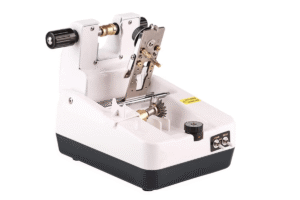
Optical glass is a specialized type of glass designed to manipulate light with high precision. It is primarily used in devices where exact control of light transmission, refraction, or reflection is required. Common applications include lenses for cameras, microscopes, and telescopes, where clarity and minimal distortion are critical. Additionally, optical glass is used in lasers, fiber optics, and advanced imaging systems for medical, industrial, and scientific purposes. Its unique properties, such as controlled refractive indices and low dispersion, enable the development of highly efficient optical systems essential for modern technology.
Types of Optical Lenses and Prisms
Optical lenses and prisms are essential in manipulating light for various applications, ranging from imaging to beam redirection. Below is a detailed list of five types of optical lenses and prisms, along with their specific functions and characteristics:
Convex Lenses
Convex lenses, also known as converging lenses, have surfaces that curve outward. They focus parallel light rays to a single point, known as the focal point. These lenses are widely used in applications such as microscopes, cameras, and eyeglasses for farsightedness. Their ability to magnify images makes them particularly valuable for close inspection and precision optics.
Concave Lenses
Concave lenses, or diverging lenses, feature inwardly curved surfaces that spread parallel light rays outward. They are often deployed in devices such as telescopes and laser systems to correct spherical aberrations or for beam expansion. These lenses are also used in eyeglasses for individuals with nearsightedness.
Plano-Convex Lenses
A plano-convex lens has one flat surface and one outwardly curved surface. This design enables the lens to focus light in collocated systems with minimal spherical aberration. Plano-convex lenses are extensively used in collimated light sources, projection optics, and imaging systems due to their optimized performance.
Right-Angle Prisms
Right-angle prisms are triangular-shaped prisms that reflect or redirect light through an angle of 90° or 180°, depending on their orientation. These prisms are commonly integrated into optical instruments for beam steering, image rotation, and total internal reflection applications, making them essential in alignment-sensitive systems.
Beam-Splitting Prisms
Beam-splitting prisms are designed to divide a single beam of light into two separate beams. This is often achieved through partial reflection and transmission at a coated interface. Such prisms are widely employed in interferometers, laser-based systems, and advanced imaging setups for tasks requiring simultaneous light paths.
Each of these optical components plays a critical role in modern scientific, industrial, and medical technologies, ensuring precision control and manipulation of light for a wide array of purposes.
Cutting Techniques for Optical Lenses
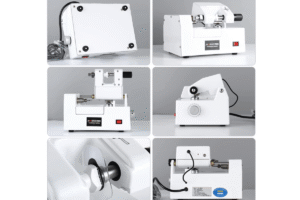
Cutting optical lenses requires precision processes to ensure accurate dimensions and surface quality. The most common techniques include:
- Diamond Cutting
Utilizes diamond-tipped tools to achieve precise cuts and maintain the integrity of the lens material, particularly for harder substances like glass or sapphire.
- CNC Machining
Computer-controlled systems enable high-accuracy shaping, allowing for intricate designs and consistent production.
- Laser Cutting
Ideal for delicate or complex patterns, laser cutting provides non-contact precision and minimizes risk of material distortion.
- Ultrasonic Cutting
Implements high-frequency vibrations to slice through brittle materials cleanly and reduce chipping.
Each method is selected based on the optical material, required specifications, and intended lens application.
Manual vs. Automatic Cutting Methods
Manual and automatic cutting methods differ in precision, speed, labor intensity, cost, and suitability for different materials.
Laser Cutting Technology for Precision Lenses
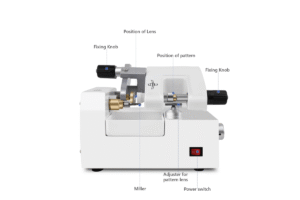
Laser cutting technology is a highly effective method for achieving precision in lens manufacturing. This technique utilizes a focused beam of light to cut through optical materials with exceptional accuracy. Its non-contact nature reduces the risk of contamination and material deformation, making it ideal for fragile or intricate lens designs. Additionally, laser cutting supports tight tolerances and smooth edge finishes, ensuring high-quality results required for advanced optical applications. The process is particularly suited for materials such as glass, acrylic, and specialized polymers, commonly used in lens production.
Introduction to CNC Cutting Machines
CNC (Computer Numerical Control) cutting machines are automated tools used to perform precise cutting, drilling, or shaping of materials based on pre-programmed instructions. These machines operate by following digital designs, ensuring consistent accuracy and repeatability. They are commonly employed across industries for tasks involving metal, wood, plastic, and composite materials. CNC cutting machines support a variety of cutting methods, including laser, plasma, waterjet, and traditional mechanical cutting, making them versatile and adaptable to diverse manufacturing requirements.
Quality Control in Optical Glass Cutting

Quality control in optical glass cutting ensures precision, consistency, and minimal material waste. Key practices include the use of advanced measurement tools, such as laser interferometers or optical microscopes, to verify dimensional accuracy and surface quality. Inspections at each stage of the cutting process help identify defects, including chips or scratches, which could affect the optical performance. Adhering to strict material handling protocols also avoids contamination or damage. By implementing these methods, manufacturers achieve the high standards required for optical glass applications.
Standards for Quality in Optical Lens Production
To meet the stringent requirements for optical lens production, industries adhere to internationally recognized standards, such as ISO 10110 for optical elements and ISO 9022 for environmental testing of optics. These standards specify precise tolerances for surface form, scratches, digs, and coating quality, ensuring the lenses meet functional and safety requirements across applications.
Advanced techniques such as computer-aided design (CAD) and computer-aided manufacturing (CAM) are integral to modern production workflows, allowing for micron-level precision. Furthermore, real-time monitoring during lens grinding and polishing, combined with automated quality control systems, minimizes production variances.
The incorporation of artificial intelligence (AI) assists in defect detection and process optimization, further enhancing the quality of finished products. By aligning with these standards and leveraging cutting-edge technology, manufacturers ensure that optical lenses serve critical roles in industries ranging from healthcare to aerospace.
Inspection Techniques for Optical Components
When inspecting optical components, advanced methodologies ensure precision and reliability. These include:
- Interferometric Analysis – For assessing surface flatness and wavefront distortions
- Surface Profilometry – To measure contour accuracy
- Spectrophotometry – To evaluate coating performance and optical transmission
- Visual Inspections – Under controlled lighting conditions to identify scratches, digs, or other surface imperfections
Combining these techniques allows for a comprehensive evaluation of the optical component’s quality and compliance with specified standards.
Common Defects and Their Prevention
Scratches and Digs
Cause: Poor handling during manufacturing, storage, or transportation.
Prevention: Employ proper handling techniques, use protective coatings, and store components in clean, padded containers to reduce contact with abrasive surfaces.
Coating Delamination
Cause: Improper application or environmental stress such as high humidity or temperature fluctuations.
Prevention: Utilize high-quality coating materials, ensure proper surface preparation, and conduct environmental testing to validate durability under expected conditions.
Contamination
Cause: Exposure to dust, oils, or other debris during production or assembly.
Prevention: Implement cleanroom protocols, wear appropriate protective gear, and thoroughly clean components during the manufacturing process.
Edge Chipping
Cause: Mechanical stress or mishandling during cutting or polishing.
Prevention: Use precision tools, minimize mechanical stress, and inspect edges regularly to identify and address vulnerabilities early.
By adhering to stringent quality control procedures and addressing these defects proactively, the performance and longevity of optical components can be significantly improved.
Industry Applications of Optical Lenses and Prisms
Optical lenses and prisms have become essential elements for multiple industrial applications because these devices permit precise control of light. The main area of application exists within the optics and photonics field which uses these optical devices to enhance imaging systems and laser technologies and microscopic methods through improved resolution and precision.
The medical industry depends on these components to power diagnostic equipment which includes endoscopes and surgical microscopes and optical coherence tomography (OCT) systems that produce high-resolution medical images needed for detailed medical procedures.
Optical lenses and prisms provide essential support to manufacturing operations while maintaining product quality through their application in metrology instruments and automation systems. The components provide aerospace and automotive engineering industries with technologies that enable precise measurement and part alignment and inspection activities which they use to assess complex components. The telecommunications sector uses prisms and lenses in fiber-optic systems to transmit and manipulate light signals across long distances while maintaining minimal signal loss.
Recent technological advancements demonstrate how essential optical lenses are to augmented reality (AR) and virtual reality (VR) technologies because they help produce realistic visual experiences. High-precision optical components enable telescopes and satellite imaging systems to observe celestial bodies and map terrains with unparalleled clarity which serves a vital purpose in astronomy and space exploration. The adoption of innovative materials and coatings further expands the functional capabilities of lenses and prisms which drives growth across these technological domains.
Use in Eyeglasses and Optometry
Eyeglasses use optical lenses as their core element because these lenses can correct different vision problems by bending light. The development of modern lenses has resulted in new coating options which include anti-reflective and blue light blocking and scratch-resistant coatings to improve visual comfort and product longevity.
The field of optometry uses these new technologies to create custom lens prescriptions for patients because they can perform digital eye examinations and wavefront optimization procedures. The public has shown increasing interest in progressive lenses and photochromic technology because people want products that provide both functional benefits and visual appeal. The combination of consumer preferences with advanced design methods creates ongoing changes in the field of vision correction.
Applications in Photography and Imaging
The progress of optical technologies in photography and imaging shows its evolution through better lens design and material development. The new technologies deliver superior visual results together with enhanced user satisfaction and expanded operational functions. The following list presents five important uses of the technology:
1
High-Resolution Lenses for Professional Cameras
High-resolution optical lenses are designed to reduce all aberrations while they maintain peak sharpness so that photographers can capture every small detail. The lenses use aspherical elements which reduce distortion and produce clearer images.
2
Photochromic Filters for Adaptive Lighting
Camera filters use photochromic technology to create filters that automatically adapt to different lighting situations. The system provides accurate exposure results with correct color reproduction during times when light intensity changes throughout the day.
3
Advanced Autofocus Systems
Modern autofocus technologies depend on accurate optical elements for both speed and precise focus achievement. The systems use either phase detection or contrast detection methods which function essential for both still photography and videography.
4
Infrared and Ultraviolet Imaging
Cameras use special lenses and coatings which allow them to record images within the infrared and ultraviolet light ranges. This ability enables scientific research and forensic investigations and artistic photography to show details which human eyes cannot see.
5
Lenses for Miniature Imaging Devices
Miniature lenses create high-performance optical solutions for smartphones and drones and medical imaging devices. The lenses use advanced technologies like molded glass and hybrid materials to produce top-quality results while remaining lightweight.
Optical technology solutions help different imaging needs which assist artists and scientists to reach their objectives.
Industrial Uses of Optical Components
Optical components function as crucial assets which enable precise measurement operations and efficient business processes and drive technological development that benefits various industrial applications. The next section contains five complete technology descriptions which show their operational capabilities within industrial settings.
1
Laser Cutting and Welding
The laser machining process of laser cutting and welding needs optical lenses and mirrors as essential equipment for its operations. The components enable precise laser beam focusing which produces clean cuts and strong welds for multiple materials including metal and polymer. CO2 laser systems commonly use zinc selenide (ZnSe) lenses because they deliver superior thermal handling capabilities.
2
Quality Control and Inspection
Quality control systems use optical components which include inspection cameras and microscopes for their testing operations. High-speed machine vision systems equipped with specialized optical filters allow manufacturers to detect microscopic defects in products, ensuring adherence to stringent quality standards in sectors like semiconductor production and pharmaceuticals.
3
Optical Communication Systems
High-speed optical communication systems rely on lenses and fibers and waveguides as their primary components which enable rapid data transmission while handling substantial data amounts. Communication networks have transformed because fiber-optic cables now use low-attenuation glass and advanced refractive index profiles to deliver faster and more dependable connections worldwide.
4
Precision Manufacturing
The semiconductor manufacturing process of photolithography requires intricate optical systems to achieve its operational goals. The combination of lenses and projection optics enables the creation of micro-scale patterns on silicon wafers which requires nanometer-level precision to produce integrated circuits.
5
Environmental Monitoring Systems
Environmental monitoring uses optical sensors and spectrometers to evaluate air quality and track pollution levels and measure water cleanliness. Laser-induced fluorescence technology uses precise optical systems to detect specific chemical compounds present in environmental samples with high accuracy.
Optical components function as vital industrial tools that drive progress across multiple industrial fields. The technological progress of these systems enables modern manufacturing facilities to accomplish new operational tasks.
Future Trends in Optical Glass Cutting
The future of optical glass cutting focuses on improving precision, efficiency, and sustainability. Researchers continue to develop advanced laser cutting technologies until they achieve sub-micron accuracy which results in reduced material waste and decreased post-processing requirements. The industry will benefit from automated systems because they will improve production efficiency through better quality control and faster output in manufacturing plants that produce large quantities of products.
Researchers are developing ultrafast laser systems that use femtosecond lasers to cut materials without damaging their optical properties. The environmental practices which industries use to decrease their ecological impact include energy-saving methods and the recycling of glass waste materials. The advancements in optical component technology aim to fulfill rising market demands while supporting environmentally friendly manufacturing processes.
Innovations in Cutting Machines and Technology
The manufacturing industry benefits from modern cutting machine technology, which enhances operational accuracy, processing speed, and production efficiency. Designers can produce intricate designs with exact accuracy through the use of high-speed CNC systems and ultrafast laser technologies. The cutting systems achieve improved performance through automation and AI integration which also decreases human mistakes and provides continuous system monitoring capabilities. The new technologies help production processes by increasing efficiency while supporting sustainable practices through energy-saving methods and waste management solutions which the industry currently pursues.
Sustainability in Optical Lens Manufacturing
The creation of innovative materials functions as the main factor driving sustainable methods to change optical lens manufacturing processes. Manufacturers are increasingly utilizing eco-friendly polymers and recyclable materials to reduce environmental impact. Manufacturers now use biodegradable materials as their standard option to replace traditional petroleum-based plastics because these materials help reduce production carbon emissions.
Materials science research has produced high-durability lenses which enable extended product life while reducing the need for frequent replacement and waste creation. The company uses sustainable materials to achieve two objectives which include meeting worldwide environmental targets and satisfying strict industry regulatory requirements.
The Role of Automation in Precision Cutting
The main element that enhances both accuracy and operational efficiency in precision cutting operations at present time exists through automation. Advanced technologies through computer numerical control (CNC) systems and laser-guided machinery create automated processes which produce reliable and precise cutting results. The automated systems operate production processes without any need for human workers while they reduce material waste and increase operational efficiency. Automation in manufacturing enables companies to produce complex products at high volume production standards. The use of automation in precision cutting operations leads to improved operational results which include better performance and enhanced quality control.
Frequently Asked Questions
1. What Makes Cutting Optical Glass Different from Standard Glass?
The optical glass consists of materials which exhibit specific optical characteristics of refractive index and dispersion used by scientists to design lenses and prisms. The cutting process must therefore minimize any induced stress, micro-cracking, or subsurface damage that could alter these properties or degrade performance. The optical properties of optical glass require precise control of both dimensions and material properties because complete dimensional and material property control is necessary for optical glass attributes.
2. What Are the Primary Challenges in Precision Cutting of Optical Glass?
The material challenges arise from its brittle properties and the strict standards that need to be met. The primary challenges include:
- Chipping and Micro-fractures: The cutting process creates small fractures which develop through the glass edges and surface areas, thereby compromising both structural integrity and optical performance of the component.
- Subsurface Damage (SSD): Micro-crack formation occurs below the visible surface when mechanical stress is applied. The damaged layer requires total elimination during the grinding and polishing process because initial damage reduction plays a vital role in achieving operational efficiency.
- Maintaining Geometric Accuracy: Prisms and aspheric lenses need precise angles, curves, and dimensions to function properly.
- Induced Stress: The combination of mechanical and thermal stresses from cutting operations produces birefringence, which leads to undesirable changes in light polarization through the glass, thus making it unsuitable for various applications.
3. What Cutting Techniques Are Utilized for Optical Glass?
Several specialized techniques are employed, selected based on the required precision, material type, and production volume.
- Diamond Wire Sawing: The cutting method enables precise cutting while avoiding harm to the materials. A fine wire embedded or coated with diamond abrasives moves through the glass, providing a gentle sawing action that minimizes chipping and induced stress. The method allows users to cut delicate materials with high value and complex shapes.
- Scribing and Breaking: The traditional method of glass cutting uses a diamond or carbide tool which creates a score line that lets controlled mechanical force propagate a crack along the line. The technique provides fast results, but it only works on flat, thin glass surfaces while delivering lower accuracy.
- Abrasive Waterjet Cutting: The method uses a high-pressure water stream combined with fine abrasive material to erode the target material. The method provides versatile capabilities, but it produces rough surface results that need extensive post-processing for optical purposes.
- Femtosecond Laser Cutting: The advanced method uses ultra-short laser pulses to create a controlled internal fracture plane without physical contact. The process produces highly accurate cuts which create minimum thermal effects and chipping, making it suitable for use in demanding situations.
4. What Role Does the Diamond Tool Selection Play in Achieving a Quality Cut?
The selection of tools determines how the cutting operation will be controlled. The two important parameters for diamond saws and grinding wheels are:
- Grit Size: The diamond grits of higher mesh number produce lower material removal rates which result in smoother surface finishes and less subsurface damage. The coarser grits produce faster cutting speed and create a rougher surface. The specific glass type and required finishing standards determine which grit should be used.
- Bond Type: The bond material (e.g., metal or resin) secures diamond particles in the tool, which determines its wear rate during operation. The proper bond specification guarantees that the tool will reveal sharp diamond edges during its operational lifespan, which allows for constant cutting efficiency.
5. How Is Subsurface Damage (SSD) Measured and Controlled?
The selection of cutting method and parameters starts SSD control through the application of finer abrasive grits together with reduced force during cutting. The initial measurement involves polishing the workpiece cross-section, followed by high-magnification microscopy examination. The depth of the damaged layer can be measured through techniques such as Magnetorheological Finishing (MRF) and acid etching. Effective control enables subsequent processing steps to eliminate all damaged material.
6. What Are the Best Practices for Handling Optical Glass During and After Cutting?
The proper handling procedures need to be followed because they protect the fragile material from any potential damage.
- Cleanroom Environment: A temperature-controlled clean processing environment creates protection against dust and debris contamination, which would otherwise lead to surface scratches.
- Specialized Fixturing: The experts use gentle force to stop vibrations and stress build-up while cutting requires components to be held securely. The process usually employs wax together with low-melting-point alloys and custom vacuum chucks.
- Coolant Application: The cutting interface requires continuous coolant flow to manage heat and remove cutting debris while providing lubrication, which helps prevent thermal shock and mechanical stress.
- Post-Cut Cleaning: The cleaning process requires components to undergo cleaning in ultrasonic baths with appropriate solvents, which remove all coolant and particle residue immediately after cutting.
This comprehensive guide demonstrates how precision cutting techniques, advanced technologies, and stringent quality control measures combine to produce optical components that meet the demanding requirements of modern applications across healthcare, telecommunications, aerospace, and scientific research. Recommend reading: Precision Glass Cutting Wire Saw for Industrial Excellence
Related Posts


Trending Blogs

![Polysilicon Material: Properties, Grades & Uses [Guide]](https://wiresawcutter.com/wp-content/uploads/2026/08/polysilicon-material-featured-150x150.webp)