Get in touch with DONGHE Company


Single Wire Saw Applications: What They Cut, Where They’re Used, and How to Choose
Quick Specs
| Wire Diameter | 0.20–0.50 mm (diamond-coated) |
| Typical Kerf Width | 0.35–0.50 mm (material-dependent) |
| Position Accuracy | ±0.01 mm (0.0025 mm resolution) |
| Thickness Tolerance | ±0.02–0.05 mm |
| Diamond Grit Size | 30–100 µm |
| Compatible Materials | Silicon, SiC, sapphire, ceramics, graphite, rare earth magnets, composites |
Wire saw, one of only a handful of cutting tools capable of breaking a 300mm silicon carbide boule into wafer thinner than a piece of paper, with no breakage of the boule. This is a ‘must have’ for industries whereby dimensional precision and surface finish determines the ‘pass’ or ‘fail’ of a component.
Below you will find information about what is the single wire saw machine working principle, in what kind of industries & materials, these machines are most beneficial and about what practical aspects affecting wire life, cutting speed and total cost. If you are looking for one single wire cutting machine for your laboratory or expanding production line, you will find value in the information provided in this paper.
What Is a Single Wire Saw and How Does It Work?
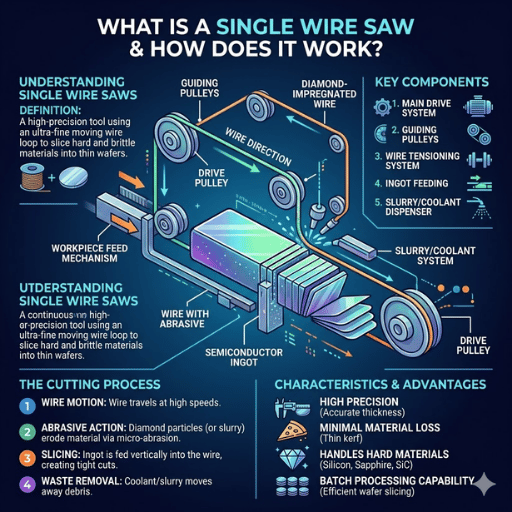
The single wire saw is a precision cutting tool that uses a single loop of diamond coated wire. Traditional saws and multi-wire systems use dozens of parallel wires to cut numerous wafers at once in batch operation, but a single wire saw takes advantage of using just one wire to produce slices. As a result, the operator maintains complete control over all cutting applications and parameters.
Material removal happens through abrasive action. An extremely fine steel wire — generally 0.20–0.50 mm diameter — is electroplated or bonded with synthetic diamond grit (30–100 µm particle size). The diamond-coated wire then runs as a continuous loop over a series of high-precision guide pulleys at a preset speed, and the work piece is fed in; separating the wire through the input.
📐 Engineering Note
Commercial single wire saw systems can attain a moving resolution of 0.0025 mm and positional accuracy of 0.01 mm according to published specifications of UKAM Industrial Superhard Tools. Kerf width is maintained at around 0.35-0.50 mm, determined by the diameter of the wire and the diamond grit configuration — delivering superior cutting performance with minimal scrap on high precision substrates.
Coolant (preferably deionized water or a water solution) passes over the cutting area in order to carry away debris, decrease heat from the process and increase the life of the wire. Waste heat control is important because of the thermal shock that hard materials such as sapphire and silicon carbide experience; even slight degrees of uneven heating can lead to micro-cracking of the finished part.
Key Applications by Industry
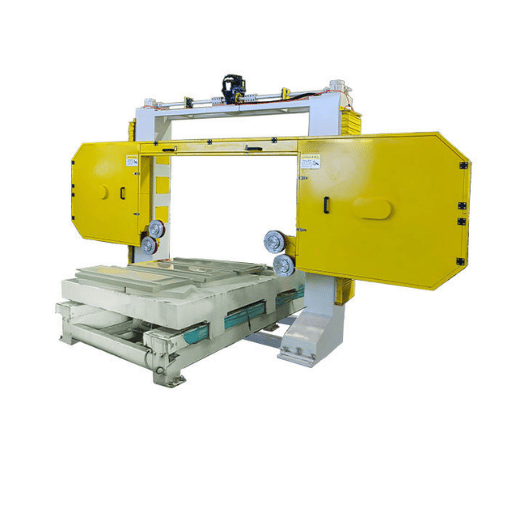
Single wire saws find cutting applications across a number of fields, each with different cutting needs and performance criteria. The table below highlights some of these applications, the range of materials involved and the tolerances that are attainable from published research and manufacturers’ data.
| Industry | Primary Materials | Typical Cut | Tolerance Range |
|---|---|---|---|
| Semiconductor & PV | Mono/poly Si, SiC, GaAs | Wafer slicing (150–300 mm dia.) | ±0.02–0.05 mm |
| Advanced Ceramics | Alumina (Al₂O₃), zirconia (ZrO₂) | Substrate sectioning, sensor blanks | ±0.03–0.05 mm |
| Optical Crystals | Sapphire (Al₂O₃), LiNbO₃, quartz | Window blanks, LED substrates | ±0.02–0.04 mm |
| Rare Earth Magnets | NdFeB, SmCo | Magnet block segmentation | ±0.05–0.10 mm |
| Geological / Lab | Rock cores, mineral specimens | Thin sections per ASTM E3 | ±0.05 mm |
| Aerospace Composites | CMC, C/SiC, glass-fiber laminates | Coupon extraction, failure analysis | ±0.05–0.10 mm |
Semiconductor and Photovoltaic Wafer Slicing
Now the leading technique to cut mono silicon ingots into wafers for microelectronic devices and solar cells is diamond wire slicing. A 2025 study published in Advanced Materials Technologies analyzed damage patterns on crystal during industrial diamond wire slicing of 300 mm silicon wafers and showed that surface waviness still remains the main study item when the industry transits into sub-100 µm wafer thickness.
For silicon carbide, which is an increasingly popular material for EV power electronics, single wire saws are producing 120–200 µm wide kerfs. This narrow cut is even more critical when the single SiC boule itself can cost thousands of dollars: each slice’s wastage has an impact on wafer yield and cost.
Advanced Ceramics and Oxide Crystals
For electronic substrates, sensor enclosures and wear-resistant parts, chips on alumina and zirconia must be made with limited chipping. A single diamond wire saw is used for cutting both materials at feed rates (usually 0.1–0.8 mm/min for sapphire, according to research published in MDPI Applied Sciences). A low cutting force minimizes subsurface damage, which is desirable for parts that are to be polished before gaining a optical-quality finish.
Geological and Laboratory Sample Preparation
Petrographic thin sections from rock cores, stone blocks, and natural stone specimens, along with metallographic samples, are routinely prepared using precision wire saws, typically according to the guidelines of the ASTM E3 Standard Guide for preparation of metallographic specimens, to prevent deformation features which can compromise microstructure observations under polarized light microscopy.
💡 Pro Tip
DONGHE has handled more than 10,000 cutting cases across semiconductor, ceramic, and advanced material applications since 2014. That dataset informs the process parameter recommendations we provide with each machine — covering wire speed, tension, feed rate, and coolant settings matched to your specific material and geometry.
Material Compatibility — What Can a Single Wire Saw Cut?
What a wire saw can cut material-wise depends on the diamond wire specification and cutting technology parameters. The typical parameters according to each substrate material and its hardness are listed in the table:
| Material | Hardness (Mohs) | Recommended Wire Type | Feed Rate Range | Typical Kerf |
|---|---|---|---|---|
| Monocrystalline Silicon | 7 | Electroplated diamond, 0.25–0.35 mm | 0.5–2.0 mm/min | 0.30–0.40 mm |
| Silicon Carbide (SiC) | 9–9.5 | Electroplated diamond, 0.30–0.45 mm | 0.1–0.5 mm/min | 0.12–0.20 mm |
| Sapphire (Al₂O₃) | 9 | Electroplated diamond, 0.30–0.50 mm | 0.1–0.8 mm/min | 0.35–0.55 mm |
| Alumina Ceramic | 9 | Electroplated or resin-bonded, 0.30–0.45 mm | 0.2–1.0 mm/min | 0.35–0.50 mm |
| NdFeB Magnet | 5.5–6 | Electroplated diamond, 0.25–0.35 mm | 1.0–3.0 mm/min | 0.30–0.40 mm |
| Graphite | 1–2 | Standard or resin-bonded, 0.25–0.40 mm | 2.0–5.0 mm/min | 0.30–0.45 mm |
Harder workpiece materials accelerate wire wear. Using a wire saw to cut silicon carbide (Mohs 9-9.5) wears the wire at about 3-5X the rate as a wire saw used to cut silicon (Mohs 7). This is the reason SiC is being sawn using thicker wires and lower feeds.
Similar to mechanical dicing blades, the cutting force is spread over a large contact area when a wire saw cuts silicon carbide, and a lot less sub surface damage is created than with conventional saw blades. This makes the wire saw for cutting hard and brittle substrates a preferred choice over mechanical dicing in laboratories and production lines alike.
💡 Pro Tip
If you are unsure whether a wire saw is suitable for your material, you may ask the manufacturer for a test cut. DONGHE offers free sample cutting tests with detailed parameter reports, so you can verify surface quality and dimensional accuracy before committing to a machine purchase.
Single Wire Saw vs. Multi-Wire Saw — When to Use Each
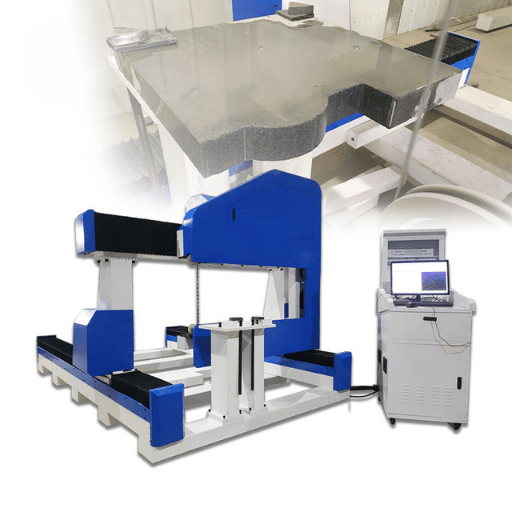
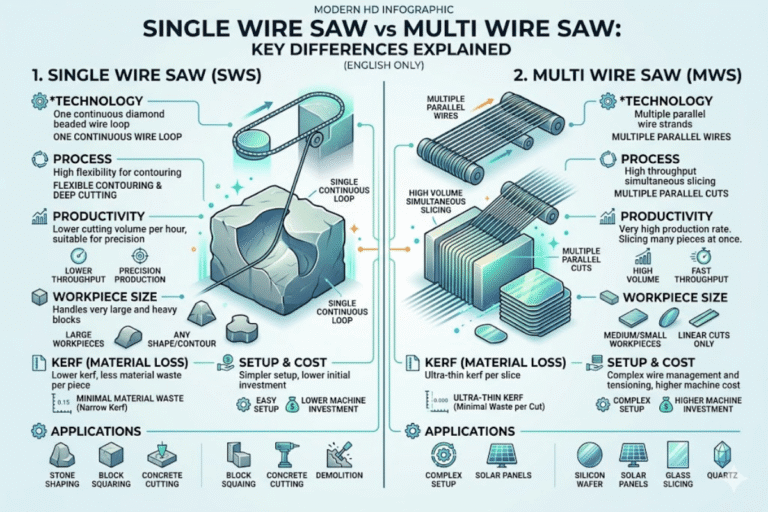
The decision between a single wire saw and a multi wire saw is based on three factors; volume of production, geometrical complexity and cost. Though both types of machines operate in the same range of the cutting process they are designed for different production levels and can lead to wasted capacity or investment.
✔ Single Wire Saw Advantages
- Full control over individual cut geometry and angle
- Lower capital investment ($15K–$80K vs. $200K+ for multi-wire)
- Ideal for cutting R&D samples, prototypes, and mixed-material workflows
- Quick changeover between different wire types and workpiece sizes
- Smaller footprint — fits in university and corporate labs
⚠ Single Wire Saw Limitations
- One cut at a time -which is not adapted to a production of large number of wafers
- Throughput (max) in between 1–5 cuts/hr (depending on the material and cross section)
- Wire wear monitoring is operator-dependent on basic models
| Factor | Single Wire Saw | Multi-Wire Saw |
|---|---|---|
| Cuts Per Pass | 1 | 100–1,000+ simultaneous |
| Kerf Width | 0.35–0.50 mm | 0.15–0.26 mm (diamond wire) |
| Capital Cost | $15,000–$80,000 | $200,000–$1,000,000+ |
| Best For | R&D, prototyping, mixed materials, complex geometry | Mass wafer production, PV cell manufacturing |
| Throughput Gain | Baseline | Up to 40% more yield per shift (5-wire setup, per Stone World) |
| Geometry Flexibility | Angled cuts, curved profiles, variable thickness | Parallel planar cuts only |
⚠️ Common Mistake
Investing in a multi-wire saw to support your R&D or prototyping projects. Multi-wire systems are best for batch processing a single material type in multiple parallel cuts. If your cutting tasks often involve switching material types, changing samples, or altering geometries week to week, than a single wire saw machine will provide much faster turn around, at a tenth of the price.
Check out our single wire vs. multi-wire saw comparison for an in-depth analysis.
How to Set Up and Operate a Single Wire Saw

Proper setup makes the difference between a smooth, consistent cut and various materials ending up as scrap from a broken wire or wasted workpiece. Please use this checklist to help you remember the basic procedures for safe, successful wire saw use.
- Hold the workpiece firmly. Clamp the workpiece in a fixture or vice that causes no way undue stress to the part. Check that the cutting plane is scheduled in keeping with the wire path.
- Mount and tension diamond wire. Lead the wire through the guide pulleys, allowing the wire to track in the groove with no lateral slack. Apply the initial tension as recommended by the wire manufacturer – I.e. 15-25 N for standard 0.3 mm on a hard substrate.
- Set the cutting conditions. Adjust the wire speed, feed rate and oscillation mode depending on the work material. When working with hard, brittle materials such as SiC, use a relatively low initial feed rate (0.1 to 0.3 mm/min) and increase progressively.
- Check coolant. Ensure flowing deionised water or cutting fluid is reaching the wire-workpiece contact zone. In the laboratory or production environment a lack of coolant is by far the most common cause of early wire breakage.
- Perform a sample cut. Test cuts should be carried out on a sacrificial piece of the same material, in order to check dimensions and finish.
- Observe the cut in progression. Pay attention to variations in cutting sound, wire tension indicator, or coolant color. Any sudden transition may be caused by the wire dulling, cracking the material, or debris accumulation.
- ✔
Wire tension verified before each cutting session - ✔
Coolant reservoir filled and filter clean - ✔
Guide pulleys (groove wear to be checked– replace if groove depth exceeds 0.1 mm) - ✔
Workpiece alignment confirmed with dial indicator or laser - ✔
Emergency stop accessible and tested
📐 Engineering Note
The wire tension for the wire saw obviously has a linear correlation with the kerf consistency. It has been proved by PMC (Fixed-Diamond Abrasive Wire-Saw Cutting Force Modeling) that the three main factors for cutting force are part feed rate, wire velocity and wire pretension. Proper guide wheel geometry is necessary to maintaining the constant of kerf width all along the cut depth.
Maintenance, Wire Life, and Cost Factors
Diamond wire represents the largest recurring expense — a 300-meter electroplated wire sells for around $800-$1,500, depending on the diameter of wire, the diamond grit grade and bonding method. The lifespan of wire considerably depends on the material sliced – while numbers should reach hundreds of meters when using graphite, wafering silicon carbide must significantly cut that number to an amount of about 20-50 meters.
$800–$1,500
Per 300 m wire spool
3–5×
Faster wire wear on SiC vs. Si
±0.02 mm
Achievable thickness tolerance
Beyond wire cost, the key maintenance items are:
- Coolant filtration: Change or clean filters at the very least every month, contaminated coolant adds abrasive particles which increase wire wear and reduces surface finish.
- Guide pulley inspection: Check groove depth and bearing play weekly. Worn pulleys cause wire tracking errors that increase kerf variation.
- Tension system calibration: check tension sensor accuracy quarterly against a gauge block or mass. Excessively high tension will cause wire breakage; low tension will produce waviness between cuts.
- Drive motor and encoder: monthly check of encoder signal stability; yearly check of motor brushes (if applicable). Even minute axis oscillations can affect wire speed consistency.
⚠️ Common Mistake
Poor maintenance of coolant system: field service reports show this to be the primary cause of premature wire breakage over operator error or material flaws. A 20-dollar filter change can save a $1,000+ wire. For guidance on evaluating total cost of your cutting solutions, see our wire saw machine selection guide.
Frequently Asked Questions

Q: Can a single wire saw cut metal?
View Answer
Yes. Diamond wire equipped single wire saws handle hardened steels, titanium alloys, and nickel superalloys. Feed rates for metals fall between 0.5 and 2.0 mm/min.
Q: How fast can a single wire saw cut silicon carbide?
View Answer
Feed rates for SiC fall between 0.1 and 0.5 mm/min. SiC sits at Mohs 9–9.5, so operators keep wire speed low to control diamond wear and protect surface quality. Expect 2–4 hours per cut on a 2-inch diameter boule. Thicker cross-sections or tighter tolerance requirements push that number higher — some 4-inch SiC ingots need 6+ hours per slice, which is why proper coolant flow and wire tension monitoring matter during extended runs.
Q: What is the typical kerf loss of a diamond wire saw?
View Answer
Slot width for single wire cutting ranges from 0.12mm (SiC with fine wire) to 0.55mm (sapphire with thick wire). This is a dramatic reduction in material loss compared to conventional multiple blade sawing which can produce a slot 1.0-3.0mm in width. Narrow slots are particularly useful when processing valuable or delicate substrates where maximizing number of wafers per ingot is critical.
Q: How often should a single wire saw be maintained?
View Answer
Wire tension: check before every session. Guide pulleys: weekly groove wear inspection. Coolant filters: monthly replacement. Tension sensor calibration: quarterly.
Q: What is the difference between a single wire saw and a multi-wire saw?
View Answer
A single wire saw supports one wire for individual cuts which can have varying geometry; a multi-wire saw supports hundreds of individual wires for simultaneous slicing which yield 40% more wafers per shift but only in parallel planar cuts. Single wire saws cost 15K-80K; multi-wire systems begin at 200K and may cost in excess of 1 Million dollars for semiconductor-grade equipment.
Q: What factors influence the cost of a diamond wire saw machine?
View Answer
Major cost components are maximum workpiece diameter, accuracy specification, level of automation, type of wire tension system, software options. A benchtop lab model with manual feed starts around $15,000, while a CNC-controlled production machine with automated wire management can reach $80,000 or more.
Q: Can single wire saws handle curved or angled cuts?
View Answer
Absolutely – this is one of the significant benefits compared with multi-wire systems. With the workpiece oriented at a angle, contour cuts, countersinks, stepped profiles, complex geometries are all executable on the CNC-enabled single wire saw provided your minimum bend radius exceeds that of your wire/operating tension combination.
About This Analysis
While wire saws are used in construction and demolition for cutting reinforced concrete, and circular saws handle general metal cutting, the single wire saw occupies a different niche — precise cuts on high-value substrates where surface integrity is non-negotiable. This handbook was published by the DONGHE engineering team who has over a decade of experience designing precision diamond wire saw solutions and preparing more than 35 national patents in wire cutting process technology. The cut guideline parameters and tolerance data shown in the publication has been derived from published papers and our own experiments with silicon based feedstock, silicon carbide, sapphire and advanced ceramic materials. If your material/geometry does not match the tool feedstock parameters listed herein, please contact the process engineering group for additional help on a custom parameter recommendations.
References & Sources
- Recent Advances in Precision Diamond Wire Sawing Monocrystalline Silicon — MDPI Micromachines (2023)
- Crystal Damage and Surface Morphology in Industrial Diamond Wire Slicing of 300 mm Monocrystalline Silicon Wafers-Wiley Advanced Materials Technologies(2025)
- Analysis of Wafer Warpage in Diamond Wire Saw Slicing Sapphire Crystal-MDPI Applied Sciences(2024)
- Experiment Comparative Analysis of Feed Rate with Velocity Control in Cutting Mono Crystalline Silicon-MDPI Micromachines(2024)
- Fixed-Diamond Abrasive Wire-Saw Cutting Force Modeling Based on Changes in Contact Arc Lengths– PMC(2023)
- ASTM E3: Standard Guide for Preparation of Metallographic Specimens
- Benefits to a Multi-Wire Saw — Stone World Magazine (2014)
Related Articles
- How to Choose a Single Wire Saw Machine: Selection Guide — covers key specs, material compatibility, and total cost of ownership
- Single Wire vs Multi-Wire Saw: Which Do You Need? — detailed comparison for production planning
- DONGHE Single Wire Saw Product Range — lab, benchtop, and production models
- About DONGHE-35 patents, ISO 9001:2015 and more than 300 clients worldwide.



![Polysilicon Material: Properties, Grades & Uses [Guide]](https://wiresawcutter.com/wp-content/uploads/2026/08/polysilicon-material-featured-150x150.webp)