Get in touch with DONGHE Company
-
Phone: +86 181-1645-5490
-
Email: Sales18@DongheScience.com

Ceramic Material Cutting: Challenges and Best Practices

Ceramic Material Cutting: Comprehensive Guide to Advanced Machining Techniques
Mastering the challenges of precision ceramic machining in modern manufacturing
Processing ceramic materials demands more than technical proficiency—it requires specialized knowledge and advanced equipment. As one of the hardest materials next to diamond, ceramics play crucial roles in aerospace, electronics, and medical device manufacturing where precision and superior surface finish are non-negotiable. However, the inverse relationship between hardness and fracture toughness creates significant machining challenges, including accelerated tool wear, component breakage, and surface roughness issues when inappropriate methods are employed.
Introduction to Ceramic Machining
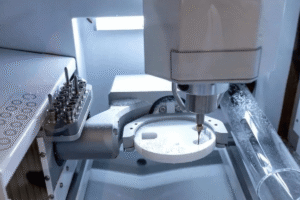
Precision processing of ceramic components requires executing specific tasks to achieve exact configurations. The primary limitation stems from the mechanical characteristics of these materials, which differ substantially from conventional materials like cement and brick. Traditional machining techniques often fall short, leading to excessive tool wear, surface cracking, and dimensional deviations. The evolution of machining technologies has introduced solutions such as diamond-coated drills and fine-grain grinding systems. Understanding the unique properties of each ceramic type is essential before application, as most operational challenges arise from material-specific characteristics.
Understanding Ceramic Materials

Ceramic materials primarily consist of inorganic non-metals processed through heat treatment to enhance their physical, thermal, and chemical properties. The infrastructure typically comprises multiple crystals bonded with glassy or crystalline phases. Grain dimensions, orientation, and bonding methods determine the material’s strength and heat resistance. Fine-grained materials generally exhibit higher mechanical strength and toughness, while coarse-grained variants demonstrate superior thermal shock resistance.
Material composition varies significantly based on application requirements. Major ceramic categories include oxide ceramics (alumina and zirconia), non-oxide ceramics (silicon carbide and boron nitride), and engineered advanced ceramic composites designed for wear resistance or electrical insulation. Advanced types are prevalent in aerospace, biomedical, and electronics sectors, utilizing different grain structures and phases to meet specific application demands. Understanding chemical and physical properties enables engineers to select optimal ceramics for strength and efficiency in harsh environments.
Importance of Cutting Techniques
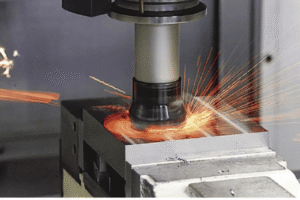
With advancing technology and the adoption of contemporary materials like ceramics and composites, optimal component manufacturing demands precise cutting methodologies. The right cutting approach encompasses more than physical appearance or heat resistance—it involves reducing production materials, minimizing labor hours, and maintaining machinery efficiency.
Industry-Standard Cutting Methods
1. Diamond Saw Cutting
Description: Precision cutting method using diamond-embedded material for hard substances.
Advantages: Minimal fracture risk and spalling prevention, ideal for ceramics and composites.
2. Laser Cutting
Description: Non-contact technology utilizing concentrated energy beams.
Advantages: High precision capability for complex or thin items otherwise difficult to process.
3. Waterjet Cutting
Description: High-pressure water jets (often with abrasive materials) for shaping various materials.
Advantages: Heat-free cutting preserves material properties.
4. Wire-Cut Electrical Discharge Machining (Wire EDM)
Description: Electrical impulses evenly erode electrically active materials to desired shapes.
Advantages: Unparalleled precision for intricate patterns with extreme tolerances.
5. Cryogenic Cutting
Description: Employs extremely low temperatures to enhance cutting precision.
Advantages: Minimizes thermal strain for heat-sensitive materials.
Identifying appropriate cutting technology requires analyzing materials, required tolerances, and work processes. This consideration enables manufacturers to produce efficient products at reasonable costs.
Overview of the Machining Process
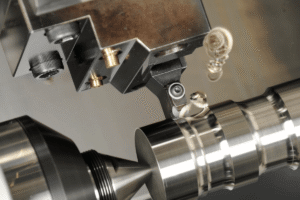
Manufacturing technology incorporates classical and modern technologies enabling precise material sizing, shaping, and cutting. Conventional techniques include turning, boring, and grinding, while non-conventional methods encompass laser cutting, waterjet fabrication, and electrical discharge processes. Every process involves mechanical force or heat application mechanisms.
Machining process discussions largely focus on efficiency, economics, machinability, and mechanical machining progress such as CNC technology. The industry advances toward alternative techniques enhancing efficiencies while ensuring precision applicable to contemporary materials including composites and superalloys. However, ceramic material cutting remains relatively underexplored.
Machining method selection depends on primary criteria including material toughness, design intricacy, surface finish levels, and production capacity. Incorporating automatic control systems and modeling analysis facilitates enterprises in continuously meeting performance conditions and cost limitations. The blend of classical craftsmanship with current technological advancement envisions future process capabilities and limitations.
Types of Ceramic Materials
Primary ceramic material classification includes traditional ceramics covering silicate-bearing objects such as clay, feldspar, and quartz used in pottery and bricks. Engineering ceramics comprise materials like corundum and silicon carbide with high mechanical strength. Advanced ceramics include zirconia, piezoelectric, and electrical ceramics encompassing larger contexts in electronics and medical device industries. These segments serve essential requirements across the ceramic material cutting industry.
Oxide Ceramics
Ceramic materials are fabricated primarily from metallic oxides including alumina (Al₂O₃), zirconia (ZrO₂), and magnesia (MgO). These substances possess high-temperature resistance, chemical stability, and electrical insulation properties, making them applicable across numerous uses. Alumina serves in electrical insulators, cutting tools, and abrasive components requiring hardness and insulation. Zirconia is applied in structural ceramics and dental prosthetics due to fracture resistance and biocompatibility. This combined mechanical and chemical strength renders oxide ceramics indispensable in electronics, bioengineering, and electricity production. Further improvements in material range and techniques will sustain their employability in high-end construction and engineering works.
Whiskered Ceramics
Advanced ceramics incorporate small needle-like crystals (whiskers) into ceramic matrices. Whiskers typically contain silicon oxide or aluminum oxide, strengthening the composite structure where ceramic material cutting is more essential. These ceramics demonstrate remarkable increases in impact resistance, tear strength, hardness, and heat resistance, making them highly wear and water-resistant. Whiskers arrest or displace stress without failure, making them suitable for sectors requiring precise material performance such as aerospace components, engineering ceramics, and coating layers.
Interest in whiskered structures stems from utilizing 3D printing and other approaches to overcome emerging engineering issues. Developments in whisker alignment and distribution techniques will improve material performance regarding stability and strength, allowing use in superior wearable devices in ceramic material cutting applications.
Comparative Properties of Ceramic Types
| Ceramic Type | Key Characteristics | Advantages | Limitations |
|---|---|---|---|
| Traditional Ceramics | Clay-based products for simple applications | Low cost, readily available | Weak, low heat resistance |
| Advanced Ceramics | Oxides (alumina) and carbides (silicon carbide) | Impressive mechanical, chemical, wear resistance | Complex manufacturing processes |
| Whiskered Ceramics | Whisker-reinforced composite structures | Superior fracture resistance, thermal shock resistance (1.5x improvement) | Higher production costs, specialized techniques required |
Traditional ceramics include clay-based products, offering low cost and market availability for simple items like bricks and pottery. Their major disadvantage is weakness and low heat resistance, making them unsuitable for high-strength applications. Advanced ceramics possess oxides like alumina and carbides like silicon carbide with impressive mechanical, chemical, and wear resistance properties. Manufacturing technique advancements have enhanced accuracy and dependability of these components. Whiskered ceramic materials use small crystal networks reinforcing the ceramic body, producing composites with far better performance regarding fracture, shock, and fatigue loading compared to conventional and high-technology ceramics.
Cutting Techniques for Ceramics

Ceramic materials are hard and fairly brittle, making them challenging to cut with ordinary tools and machines. Several specialized techniques are utilized:
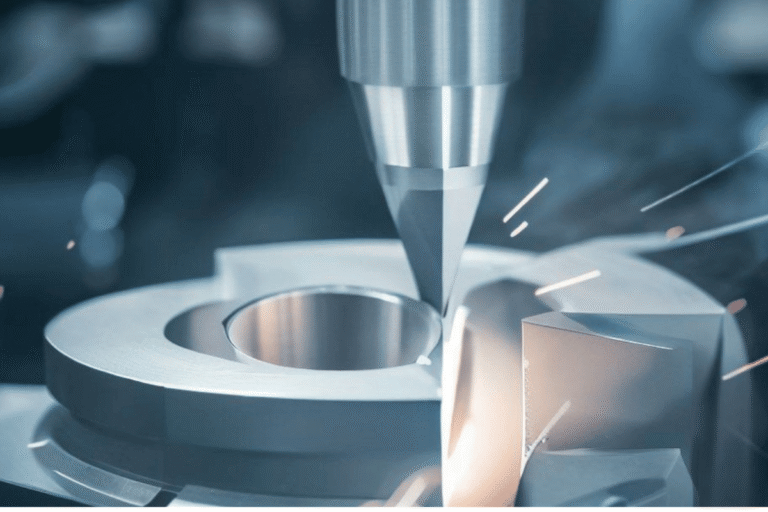
- Diamond Blades: Utilizes blade edges with diamond particles for cutting ceramics without risking chipping or breaking the material.
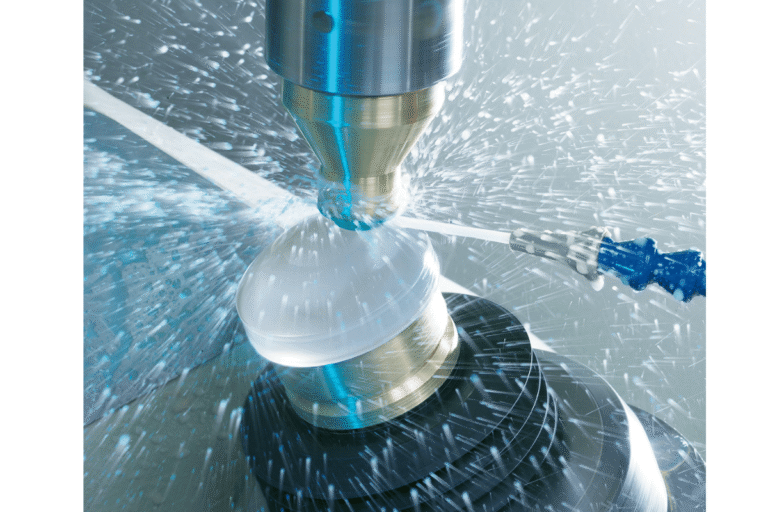
- Waterjet Machining: Employs high-pressure water and abrasive techniques for curve cuts without increasing piece temperature.
- Laser Cutters: Uses laser beams for localized cutting, particularly effective for soft or thin ceramics requiring precision.
- Grinding: Employs abrasive ceramic grinding wheels for cutting or finishing ceramics, typically used for complex forms.
These frameworks address different working demands in ceramics without affecting geometry or stability. Ceramic material cutting mainly involves correctly selecting equipment and operational methods. Each ceramic material requires consideration of class, thickness, and application particularities.
Conventional Cutting Methods
Ceramic material cutting can be executed through mechanical cutting, scoring, and drilling techniques. These processes engage standard tools as energy sources, operated via manual or semi-automatic equipment. For ceramic tiles where zirconium and alumina are present, mechanical cutting applies diamond-tipped blades. Holes are formed using machines with carbide inserts or diamond-tipped drilling bits for precise holes without material breakage. For clean-cut thinner ceramic sheets, scoring and chopping uses a tool to apply compressive force after scribing the work surface with a sharp edge.
Although these techniques work practically, they can undermine the brittle nature of ceramics by causing heating and stress fatigue. Selecting different cutting forces, tool applications, and speeds requires sophisticated consideration. Research has drawn important conclusions regarding traditional ceramic material cutting processes, relating to balancing material characteristics and tailored geometry to enhance effectiveness, precision, and minimize costs.
Advanced Cutting Techniques
Advances in cutting techniques have addressed problems associated with ceramic material cutting. Laser and waterjet cutter designs provide precision and reduce temperature effects. Laser-Assisted Machining (LAM) involves laser beam focusing on cutting areas to preheat ceramics, temporarily softening them for easier cutting. This process results in minimal fracture without compromising shape accuracy.
Waterjet cutting uses extremely high-pressure water containing abrasive particles, cutting ceramic material without exposing it to high temperatures and stress-relieving heat problems. Combining these technologies with proper tool designs and image-guided automatic systems prevents tool damage during operations. Evidence encourages implementation of such strategies where large-scale production requires adaptive cutting and wear measurement techniques, adding emphasis on prediction aspects. Data-driven machining methods and techniques enhance quality for firms working with ceramic material cutting.
Choosing the Right Technique for Different Ceramics
When deciding which method to use for different ceramic material cutting purposes, several factors about the material must be considered, including hardness, thermal conductivity, susceptibility to attack, and need for regulation or control. For harder ceramics, precision-focused methods such as precision grinding or laser processing are employed since these methods are less prone to fracture. Waterjet cutting (abrasive jet cutting) ensures the heat-affected zone in the material is kept at a minimum. Ceramic material cutting presents various approaches for each ceramic type being worked on with reasonable rate and high efficiency.
Tools and Machinery for Ceramic Cutting

Cutting tools for ceramic material cutting include laser cutting, waterjet machines, and precision diamond blade technology. Diamond blades are most common, with popularity attributable to durability and ability to cut tough ceramic materials while minimizing chipping. Laser cutting machines fabricate intricate geometry or extremely accurate small details from difficult materials including ceramics. Waterjet cutting machines are useful for heat-sensitive materials, using high-pressure water jets mixed with abrasives to cut through material without adding heat. These tools may be classified according to ceramic material types and corresponding applications to ensure efficiency and work quality.
Types of Ceramic Cutting Tools
Diamond-Coated Blades
Diamond saw blades enable successful cutting of almost all hard ceramic materials with precision. These thin blades are embedded with diamond particles, allowing cutting through hard and composite materials without cracking or chipping. Additionally, these blades maintain sharpness for extended periods.
Operating Speed: 3000 – 7000 RPM depending on ceramic material density
Waterjet Technology
The machine functions by projecting harsh materials using high-pressure water jets combined with abrasive materials, or sometimes with water only. Materials are jetted out devoid of heat transformation, preventing deformation. Waterjet cutting is advantageous when highly sophisticated geometry is needed or when processing thin materials.
Operating Pressure: 50 to 60 kpsi with tolerances of ±0.005 inch achievable
CNC Milling Technology
Ceramic material cutting can be enhanced by employing CNC milling machines—highly advanced machinery controlled by programmable computers. These machines achieve precision using abrasive cutting tools like diamond burrs instead of ordinary carbide burrs. Advantageous programs incorporate intricate designs and reproduce them for mass production where ceramic parts with customized shapes must be fabricated.
Wire EDM (Electrical Discharge Machining)
Wire EDM is valuable for wire cutting machines where etching parts are made of ceramics. While Wire cut CNC methods have been mainly used in machining metallic materials, ceramics like zirconia that conduct electricity make this process possible.
Tolerance Capability: Approximately 0.001 inch during machining
Ultrasonic Ceramic Material Cutting
This innovative technique prevents burr formation and inefficient utilization of abrasive tools in cutting ceramics, especially in high-frequency applications. The procedure involves utilizing a vibrating blade or tip which reduces elastic stresses, enhancing brittle or thin ceramic material cutting. The electronics industry, dealing with advanced ceramics, benefits from vibration-assisted cutting for enhanced results.
Operating Frequency: 20 to 40 kHz
Machine Specifications for Ceramic Machining
Machining ceramic material is best achieved when the machine is enhanced with oscillation frequencies between 20-40 kHz, reliable vibration attenuation, machine calibration, and machined-out defects and cuts without burrs. Ceramic material cutting users should understand that cutting this material requires frequencies higher than 20 kHz and optimal control of oscillations to completely remove burrs at specified cutting process parameters.
Innovations in Cutting Tools
Cutting tool technology has developed its performance, precision, and lifetime significantly in recent times for special machining operations. One useful enhancement is the application of ultra-thin Diamond Like Carbon (DLC) Coating. Tools are wear-free with extreme hardness during cutting, and DLC coating further increases tool hardness.
Another advancement is the invention of laser cutting tools incorporating highly advanced sensors. These tools can adjust cutting conditions for intended materials including ceramic materials and composites that are difficult to machine. Additionally, advances in additive manufacturing processes enabling 3D printing of tools have provided means to increase cutting geometries, reducing material waste and enhancing cutting functions.
Where cutting-edge analytics and machine learning application intersect, cutting tools have been enabled to foresee their own failure through predictive maintenance and performance monitoring systems. This eliminates maintenance problems by predicting breakdowns and avoiding them altogether. All these developments represent further breakthroughs in machining area design and operation.
Sophisticated integration of predictive maintenance with conventional analytical techniques for data acquisition and analysis helps sustain cutting tool efficiency long before negative effects related to tool failure occur during use. Machineries become more productive, assuring acceptable standards appropriately tailored to machine functions. Direct observation of technology enabling machining advancement has vast impact, especially in enhancing machining operation reliability.
Challenges in Ceramic Material Cutting
Ceramic material cutting is one of many challenged cutting processes. These hard and brittle materials are likely to develop cracks and fractures during processing. Their poor heat conductivity means heat concentrates in certain areas, potentially causing workpiece warping and rapid machined tool wear. These materials contain numerous hard particles that rapidly wear cutting instruments, necessitating frequent tool replacement. Such challenges are addressed by using diamond or CBN tools, manipulating cutting parameters, and adding cutting fluids to reduce heat.
Common Issues Faced in Machining Ceramics
One major challenge facing ceramic material machining is material hardness and brittleness combined with inability to conduct heat. This includes issues of micro-cracking and subsurface damage during the cutting process. These factors present potential threats of reducing performance and strength of ceramic components. Additionally, since ceramic toughness is low during cutting, these cuts are subject to easy shattering or chipping, especially due to inappropriate cutting or cutting equipment use.
Research revealed that updated interface thickness has potential for increase, complicating the situation. Machining ceramics differs from machining plastics and metals. When cutting ceramic workpieces, there are different outlets for heat from friction aimed at improving tool performance. Due to such situations, various innovative ideas have been utilized to curb this problem. For example, new cooling methods and use of fortification strategies like laser-assisted machining within industries are more common today. Similarly, cutting parameters including height, limit, advance distance, cutting speed, and settings for controlling fracture have crucial roles in avoiding tool creep imperfections. Process monitoring including machine learning technologies was activated to solve and diminish such issues.
Wear Resistance Challenges
Problems relative to wear resistance are particularly present in modern production processes, especially when machining sophisticated workpiece materials such as titanium alloys or ceramic material cutting. These materials are harsh on cutting tools because of their hardness, abrasiveness, and capability to chemically react at high temperatures. Part of the solution lies in applying novel coating methods like PVD and CVD that address the need for improved, better-performing tools over longer periods. Furthermore, improved productivity through cryogenic cooling integration decreased tool-induced wear by controlling heat input during cutting. With real-time processes controlled by machine learning tools, manufacturers can take insights about tool wear and organize better replacement cycles, avoiding disappointments during operations and increasing work efficiency.
Achieving Desired Surface Finish
Challenges involved in attaining expected surface finish in machining processes are many, covering all aspects of machine tools including tool geometry, cut-offs, the workpiece, and the environment. Machining and industrial engineering studies indicated that achievement of desired surface integrity is more efficient by varying process parameters such as tool feed rate, tool speed, and cut depth. Using TiN and AlTiN coatings is cost-effective because they improve surface finish by reducing friction and material stickiness during machining. Importantly, Minimum Quantity Lubrication (MQL) techniques also help retain surface quality without heat build-up within the workpiece or machine tool. Ceramic material cutting fluids are successful in helping chip-tool breaking, cooling, and securing the workpiece while enhancing work quality.
The cutting process is even more advanced with incorporation of machine learning models and sensors used inside fabrication processes. With such mechanisms it is possible to determine depth in real-time and use predictive analytics to estimate whether related dimensions are within required permissible limits. Innovations of this kind, if supplemented by appropriate post-machining procedures such as polishing, grinding, and deburring, ensure enhanced reproducibility in meeting any surface finish parameters set by customers.
Innovative Solutions and Industry Trends
The ceramic material cutting sector is growing thanks to widespread use of advanced automation technologies and environmentally friendly solutions. Innovations such as robotics in manufacturing and computerization adoption have reduced inefficiencies and enhanced productivity. Technologies like additive manufacturing or 3D printing have introduced material economy, realistic customization, and faster speed innovations. Internet of Things provisioning on machines has manifested in wireless management and live data documentation for decision-making. The transition has also been characterized by shifts toward incorporating energy-efficient solutions and waste management practices facilitating adherence to global practice laws. All these trends help depreciate costs while boosting production capacity and enhancing competitiveness.
Technological Advancements in Ceramic Cutting
In recent years, there has been a revolution in machining operations due to technology development, particularly in ceramic cutting. For example, Laser Anti-Clog Machining (LAM) development and newly developed diamond coatings have greatly contributed to processing recently manufactured high-performance ceramics previously considered untreatable materials. Furthermore, present advancement strengths assure that ceramic material cutting practice exists to shape stunningly exact dimensions without impairing machine performance.
Technological progress in artificial intelligence (AI) and machine learning (ML) enables introduction of static processes to observe cutting conditions in detailed manner, crucial for predictive maintenance and process optimization. For instance, advanced cutting equipment involves integration of IoT-based monitoring systems tracking temperatures, pressures, and wear ratios, enabling operational improvement in tool and product durability. Technology advances allow ceramic material cutting to respond to extreme demands of industries such as aerospace, automotive, and medical device manufacturing.
Future Trends in Ceramic Machining
Ceramic material cutting as a field is being expanded significantly due to increasing availability of automation, artificial intelligence, and material science. Innovation in these lines includes introduction of AI in process control, applying big data and machine learning models in determining best machining settings for metal cutting within shortest possible periods. Using this strategy, one can predict tool characteristics, check for product inconsistencies, and accurately adjust machining parameters. Due to this, corporations are engaging in ultra-short pulsed laser machining, prestressing the minimum and enabling construction of intricate designs and minute features used in various electronics and healthcare applications.
Technological growth also follows evolving sustainable development trends. Against environmental challenges, researchers have made efforts to develop edible lubricants and dry machining processes. Additionally, advanced techniques such as EDM and ultrasonic vibrations have assisted in machining ceramics in conjunction with conventional techniques. All these tendencies prove transition from hard labor, resource-wasting, and labor-intensive to more cost-effective and non-oral mechanistic methods which have become famous due to rising demands and ceramic material cutting applications.
Best Practices for Optimizing Ceramic Machining
Key Optimization Strategies
- Tool Material Selection: Ensure appropriate tool material selection, be it diamond-coated tools or CBN tools (Cubic Boron Nitride), reducing tool wear and providing accuracy.
- Precision Machining Methods: High-speed grinding, laser-enhanced machining, and similar precision methods enable efficient material removal with minimal surface damage.
- Process Parameter Calibration: Calibration of controllable process parameters including feed rates, spindle speed range, and cooling system improves performance and quality of ceramic material cutting.
- Predictive Maintenance: Employing predictive maintenance technologies and real-time monitoring systems minimizes machine downtime and detects possible anomalies, sustaining operation levels.
- Environmental Responsibility: Executing environmentally responsible measures like recycling coolant systems and using energy-conservative machinery is conducive to sustainable development while maintaining optimal accuracy and output levels.
For increased efficiency in ceramic cutting, a well-thought-out and data-oriented approach should be employed. Using technical strategies with newer concepts and research work, such as workout optimization through AI-learning models and reducing cutting tool changes, ceramic material cutting could be achieved at very high resolutions while minimizing cost and environmental harm.
Frequently Asked Questions
What are key barriers with regard to cutting ceramics technology?
Extremely hard, brittle ceramics such as alumina, zirconia, and silicon carbide present two major problems. The hardness itself results in rapid tool wear, requiring diamond or cubic boron nitride tools. The brittleness makes material vulnerable to micro-crack formation, chips, and subsurface cracks whenever excessive cutting or thermal loading is applied. This disadvantage must be eliminated to maintain final product integrity.
Why use diamond tools in ceramic material cutting?
Among the hardest compounds known to mankind, diamond is at the apex. For technical ceramic applications where ceramics are stronger, carbide-tipped cutting tools cannot be used. Diamond tooling has longer operational life, unaffected by premature wear rates, so parts do not easily consume clearances.
Can laser cutting be done on ceramics?
Yes, laser cutting techniques are useful for thin-structured ceramic parts. CO₂ and fiber laser cutting heat the surface to degrees where material can melt or vaporize. Since most ceramic material experiences thermal strain, there is also a risk of micro-cracking alongside the cut line when optimal laser cutting technique is used. Water jet-guided laser and ultra-short lasers among other techniques aim at minimizing Heat Affected Zone effects in ceramics when performing cutting operations.
How to prevent chipping of edges while performing ceramic material cutting?
Edge chipping is noted when the tool leaves the workpiece. To prevent this:
- Maintain proper feeds – reduce feed when the tool approaches final cutting stages
- Select the best grit – use diamond wheel with smallest grit at finish (larger grit means quicker cutting but more stress)
- Secure the workpiece properly – less chipping occurs with proper support and sacrificial backing material at edges
- Maintain tool condition – dull or glazed wheels cause increased cutting forces and edge chipping risk
What tolerance can be held during the process of ceramic material cutting?
This tolerance is determined by the specific process employed and ceramic property interactions. For basic diamond grooving of sintered ceramics, 0.5 thou (±0.0005 inches) tolerance is expected. Manufacturers typically achieve silicon wafers finished to high dimensional accuracies down to 0.00005″ (0.0005mm) level through lapping and polishing.
Is waterjet cutting viable for thicker ceramic plates?
When cutting thick plates where dimensional accuracy issues are not very important or when roughing any element, abrasive waterjet cutting of ceramics is a good consideration. This is ‘cold’ cutting in that no heat is generated, hence no heat-affected zone or thermal damage. However, taper of the cut edge is possible while diamond grinding gives better surface finish. This method is also used more often in ceramic material cutting, particularly for 2-D or armor plate-encased tile cut-outs for speed purposes.
Reference Sources
A list of sources related to the removal of ceramic material is provided below:
- A Guide to Ceramic Cutting Tools: Informative article on alumina and silicon nitride ceramic cutting tools
- Cutting Tools and Ceramic Machining Materials: Focuses on machining equipment introduction, especially with ceramic composites
- Manufacture of Cutting Tools: Considers core ceramic material properties when choosing appropriate ceramic cutting tools
- Recommend reading: Hard and Brittle Material Cutting Wire Saw | Precision Diamond Wire Saw Machine
Related Posts

Trending Blogs

![Polysilicon Material: Properties, Grades & Uses [Guide]](https://wiresawcutter.com/wp-content/uploads/2026/08/polysilicon-material-featured-150x150.webp)