
Get in touch with DONGHE Company
-
Phone: +86 181-1645-5490
-
Email: Sales18@DongheScience.com

Graphite Wire Saw Machines: Precision Diamond Wire Cutting Solutions

Introduction to Graphite Wire Saw Machines
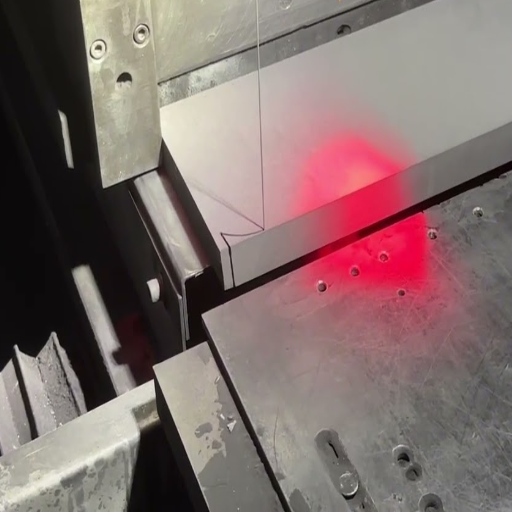
Graphite wire saw machines presume a limited purpose, which is related to precisely cutting such a raw material as graphite. Their work is based on the complex mechanics of a soil stick in the middle of the working component, the cutting element, which is partly surrounded by the complications of rubber-coated wires. This is almost the main reason why such machines are so valued, because they allow working with delicate graphite components without sacrificing their structure. Together with their performance, dependability, and accuracy, these machines are of great importance in today’s manufacturing operations that strive for excellence.
What Are Graphite Wire Saw Machines?
Graphite wire saw machines: special-purpose equipment that is intended for cutting hard graphite materials without any significant material damage. These machines mainly employ diamond wire as a means of cutting, which provides very accurate and neat cuts. Due to their high accuracy, which does not affect the mechanical structure of the graphite, they are utilized in industries such as electronics for the fabrication of semiconductors, metalwork where mold making is carried out, and aerospace, involving lightweight construction. Thanks to their advanced geometry, they decrease kerf loss, increase productivity, and permit flawless results, which makes them deployable in various applications where high precision of different dimensions and qualities is critical.
💻
Electronics
Semiconductor fabrication
✈️
Aerospace
Lightweight construction
🔩
Metalwork
Mold making
🔬
Research
Fine material shaping
Overview of Their Applications in Precision Cutting
The use of evolution technology is compelling in the modern world, especially in high-precision machining of glass and cryogenic ceramics. This has, in turn, caused the practice to encompass various industries. Among these is the manufacturing industry, precision cutting of components such as graphite wire saw machines, which are very useful in the automotive, aviation, and medical industries because the tolerances permitted in these activities are usually very tight, often to the range of microns.
As an example, laser cutting effectively employs a narrow beam of concentrated light, which produces a precise shape cutout in materials like metal, ceramic, and polymer with minimal heat effect on the master. Another way of achieving cutting of difficult-to-machine materials or shapes that cannot be attained by ordinary tools is by employing wire EDM, and it has found general application, especially in tool-and-die works and precision gear manufacturing. Special necessary tools in modern technology and abrasive-packed high-efficiency devices have become possible thanks to the evolution, development, and modernization of these processes.
Advantages of Using Diamond Wires for Cutting Graphite
Diamond-encased wire also provides enormous technical benefits, particularly in processes like graphite wire saw machines, so it is the tool of choice in all engineering cutting applications. Primarily, their renowned hardness facilitates prolonged use and lifespan in comparison to other tools, which enhances performance and reduces tool changeover to a remarkable degree. Also, with the sharpness of the diamond wire, graphite can be cut precisely and smoothly without the problem of unwanted edge chipping, which is essential when working with precise graphite pieces in the aerospace or electrical industries. In addition, the heat generated by the cutting is very limited due to effective material removal, eliminating the threat of thermal damage and deformation of the structure of the graphite. Moreover, diamond tools produce very little dust or residue, contributing to a safer working environment and ease of processing afterwards. All these aspects, the performance, the accuracy, and the economic life of the diamond wires make them the best option for cutting graphite.
⬥ Extended Tool Lifespan
⬥ No Edge Chipping
⬥ Minimal Heat Generation
⬥ Less Dust & Residue
⬥ Precision Cuts
⬥ No Edge Chipping
⬥ Minimal Heat Generation
⬥ Less Dust & Residue
⬥ Precision Cuts
How Graphite Wire Saw Machines Work
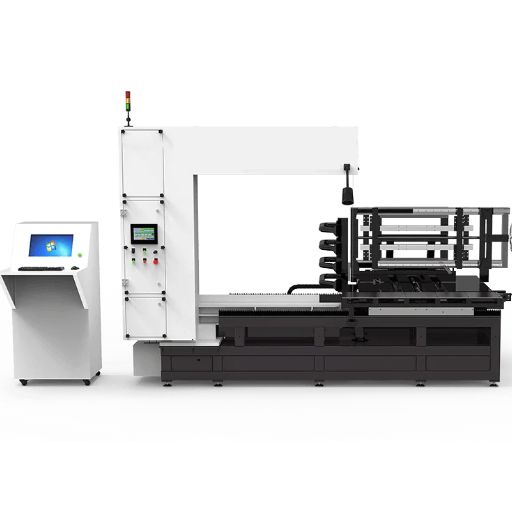
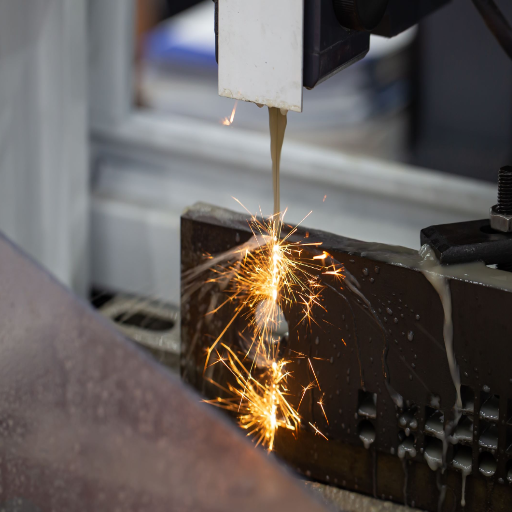
The cutting principle of graphite wire saw machines is based on the operation of an endless diamond-coated wire moving either permanently or reciprocally. The starting structure comprises securing a quotidian piece of graphite within its confines. The wire is driven with the help of motors and goes linearly along the cutting area. In simple terms, as the abrasive wire scratches the graphite, the material is taken out due to friction and scraping. Usually, some coolant or lubricant is used to enhance the process of cutting by reducing friction, preventing heat buildup, and ensuring that no graphite powder is released in the air. Using this method, a precise and controlled cutting process takes place while keeping excessive material use to a minimum, as the wire itself contains most of the abrasive material and all cutting aids.
The Mechanics Behind Diamond Wire Technology
The ‘diamond wire technology’ is based on the diamond-coated wire cutting technique: the wires are raised to cut the material intensely and in a controlled way. The wires are made mainly from high-strength steel or similar components with the addition of synthetic diamonds on the outer surface, the bonding mechanisms being either plated or resin-bonded. The diamond particles give an extremely hard abrasive edge that is able to cut through graphite, silicon, ceramics, and other difficult-to-machine materials.
During use, the wire is put under tension as it is drawn through the material by means of linear or circular motion, so the pressure is constant. The material is cut when the diamond grains rub against it, causing minimal surface abrasions even for sharper cuts. Heat generation from friction is curbed, debris and wire life are addressed with the addition of coolants/lubricants during operations. Diamond wire machines incorporate high strength, proper alignment, and optimized cooling units, all of which allow for high accuracy and repeatability of cuts even in semiconductor, aerospace, and solar cell industries.
Step-by-Step Process of How These Machines Cut Graphite
-
1
Material Preparation
Before cutting, the work table of the wire saw machine is clamped with the fixture, and the graphite block is vacuumed onto the work table of the machine. The application of the vacuum or other similar means, along with clamping of the conductive powder or workpiece, is to prevent any of the pieces from moving during the cutting operation. This is necessary in order to reduce the amount of vibration and to ensure cutting with the same efficiencies as intended.
-
2
Preparing the Diamond Section
The diamond impregnated wire is stretched between the specified mac jigs, slots, and gags on the machine. The machine wire positioning is a crucial part of ensuring a straight cut and preventing premature wire wear.
-
3
Switch On the Cooling and Lubrication System
Respective coolants or oils are furnished in the cutting area to counter the heat build-up due to the friction during cutting. This helps in providing cleaning of the generated swarf, in cutting, as well as in increasing the working life span of a diamond wire.
-
4
Cutting Process
The diamond wire makes a pass on the graphite material at an acceptable speed and controlled tension. The diamond particles eliminate and remove unwanted material very gently in order not to obliterate or ruin the property and structure of the graphite.
-
5
Instrumentation and Control
Throughout the cutting, some sensors keep the level of tension, as well. Some of the indicated tensions in the wire, as well as wire speed and submerged depth affixed to the wire and adjusted appropriately, exist throughout the cutting process.
-
6
After the Graphite Cutting
After they are cut, graphite products are detached from the devices, and guide bars are checked for debris and cleaned or adjusted as necessary. They are cleaned and examined for the quality and accuracy of the cut and lubricants applied as necessary on the cut end of graphite wires every time they are cut. Cost saving in this respect is also maintaining the machine where the wires are cleaned all the time, and wires are replaced when they wear off, or the wiring system is refilled with cooling lubricant when needed.
There is a reason why diamond wire cutting stands out when working on delicate materials such as graphite: extreme geometric precision of cut and minimal material consumption are possible with the described methodology.
Key Components and Their Functions
- 💎 Diamond Wire
A diamond wire, as the name suggests, is a steel wire with industrial diamond particles embedded in it and is the main cutting tool. As a machining tool, it is primarily used for cutting or grinding, specifically, machining the material in an organized manner with little force applied. The diamond particles which are used in the wire ensure longer life of the wire and hence can be used on even tough materials such as graphite, which is detailed to the bone.
- ⚙️ Wire Tensioning System
This part is used to apply adequate and constant tension on the diamond wire during cutting. No tension is most likely to cause wire breakages, which in turn makes it quite hard to achieve any straight cutting. The levels of tension are also very important for the dimensional accuracy of the entire operation since the conditions and tolerance may vary in every situation.
- ❄️ Coolant System
The coolant is used as a coolant in which the heat that is generated during the wire cutting and the material rubbing against each other is absorbed and removed. It also helps in removing the cut material particles and therefore reduces the cutting surface roughness and wear on the diamond wire.
- 🎯 Guidance Mechanism
The diamond wire is kept in control, and stabilization is provided by the guidance system to ensure that no diversion occurs when cutting takes place. This guarantees the accuracy needed in the formation of curves and pieces with many shapes.
- 🖥️ Control System
The control system sets and maintains such cutting parameters as speed, wire tension, and cutting depth at specific values. Modern controllers frequently incorporate computer numerical control (CNC) facilities to undertake and execute processes easily and, more importantly, with high precision, which is why they are compulsory for work where highly cutting systems are used.
Each of these parts is crucial in making sure that the diamond wire cutting system functions effectively, accurately, and reliably. They are used together to ensure that the material removal of graphite, for instance, is done within the limits as well as above the limits allowed by the design.
Applications of Graphite Wire Saw Machines in Industry

The various sectors, for example, have inculcated the use of the graphite wire saw machines because of the effectiveness and the accuracy with which the materials are cut. They are mostly used for photovoltaic cell production, where the graphite used in the construction has to be cut with utmost precision for optimal solar performance. Other industries, such as the aerospace and electronics industry, also find these machines valuable, as they are able to make molds, electrodes, and other parts from graphite, which requires high accuracy levels. The ease and perfection with which one can cut materials make these machines inevitable in precision and efficient work environments.
Role in Electronics: Semiconductor Fabrication
Every area of the electronics industry relies on the machining of graphite, especially in silicon wafer production. These include the manufacture of various high-temperature, e.g., crucibles and molds, required during the processes of the silicon crystal growth. The latter is due to the remarkable heat-conducting properties of graphite under the high temperatures during the wafer-making processes. They also include the utilization of graphite in the form of discharge electrodes during EDM, a machining process that uses electric discharge in shaping intricate semiconductor components with micron-sized accuracy. Such characteristics of graphite wire saw machines are important since they are used in cutting processes to achieve a consistent yield in terms of the minimum thickness and cleanliness of the substrate for current IC technology.
Contributions to the Aerospace and Defense Sectors
Its poor combustion propensity and immolance make Graphite suitable for gravitating elements used in many of the aerospace and defense industry applications. This explains why some structural parts employ graphite in the making of nozzles, heat shields, brakes, and the like, because of its ability to sustain more intense temperatures and pressures. Because thermocouples can be selectively removed during production and many other processes, they serve as energy power repositories and can spur missile and space-faring vehicles. Moreover, as an electro-conductive material, it is easily machined to manufacture components of defense technologies, ultrareliable in missions, and made of the most efficient high heat diffusion materials available. These characteristics can also support the reasons why it answers the growing need of the aerospace and defense markets in terms of making strategies, parts, and equipment that are efficient, durable, and accurate.
🔥
Nozzles & Heat Shields
🛑
Brake Components
🚀
Missile Systems
🛡️
Defense Technologies
Usage in Research and Fine Material Shaping
One of the main reasons for Graphite’s popularity in research and the design of fine materials is its wide range of properties. It has the ability to operate in even the most difficult conditions, like tests where the targets are without oxidation or elevated temperatures due to its high melting point, good heat conduction, or chemical resistance. It is also very suited for making molds that are to be used in casting complex objects, as it is machinable and holds fine textures and patterns. More so, it has an excellent electrical conductivity, which allows it to be used also in electrochemical processes, including advanced battery development. While one gets excited and focused around these elements, appreciating or even considering the role of graphite comes very naturally – it is clearly a material that belongs in advanced research and precision manufacturing.
Advantages of Diamond Wire Cutting in Graphite Machining

Wire saw cutting with diamond is known as an efficient process in the machining of graphite due to several aspects. In the first place, the high hardness of the diamond makes it possible to make cuts efficiently and cleanly with the least amount of material sacrifice, which ultimately means that the graphite properties are put to the best use. Furthermore, the technique further decreases the amount of dust and heat produced, two elements that are widely exhibited in conventional machining, without egregiously affecting the structure of the graphite or the dimensional precision of the surface. Also, more advanced diamond wire cutters outperform the more traditional machines in terms of the complexity and detail of the shapes that they can wire saw. The method has the advantage of reducing tool consumption, improving operational productivity, and encouraging precision in results, which is a requirement for high-technology applications such as electronics, aerospace, and the automobile industry.
Improved Cutting Accuracy and Precision
Enhanced accuracy and precision during the cutting process using diamond wire is attributed to the minimum interplay between diamond and the wire itself, such that performance is maintained throughout, even during operation on aggressive materials such as graphite. The cut remains contained by the wire due to its high tensile strength, and any deviations, which can be associated with other methods of cutting, are minimized. Also, the modern diamond wire cutting machines have the ability to regulate each and every aspect with great control, such that tolerance up to a few microns are readily achievable. Such capabilities are important in industries such as semiconductor processing and the manufacture of aircrafts where precision is the order of the day. Wire saw machines will include an automatic monitoring and feedback system, hence ensuring the cut is consistent, repeatable, and of high quality.
Less Material Wastage Compared to Traditional Cutting Methods
For instance, in most cases, diamond wire cutting reduces material wastage by a great margin compared to other techniques, such as saw blade or abrasive cutting. These procedures tend to have larger cutting tools or systems, leading to wider kerf losses. On the other hand, diamond wire has a very small diameter, which reduces the kerf size, hence allowing for enhanced cuts and also preserving the costly materials. The use of this method is inherent in industries that operate under high costs, like photovoltaic and electronics, because the recovery or wastage of materials is significant for profit margins. Further, diamond wire cutting is associated with micro vibration and less heat, which leads to less deformation of the remaining material and better usability of the cut parts.
Cost-Effectiveness and Efficiency
Diamond wire sectioning is very economical as it allows most of the material to be utilized and even gain there from. This high precision is translated into very thin kerf widths, which reduces the material loss on processing, and such save is very significant in cases where raw materials are high. Furthermore, this technique can be improved in terms of efficiency since it can be mechanized so that the process can be done very fast, and less labor would be required. Also, since diamond wires have a long life span and less maintenance is needed, the overall costs of operating the system are reduced, and it makes the system efficient for industries with high throughput and precision requirements. The integration of reduced wastage, increased efficiency, and minimized expenditures explains its applications in the scope ranging from small-scale industries to graphite wire saw machines for industrial use.
Diamond Wire vs. Traditional Cutting: A Comparison
Key Features to Look for in a Graphite Wire Saw Machine
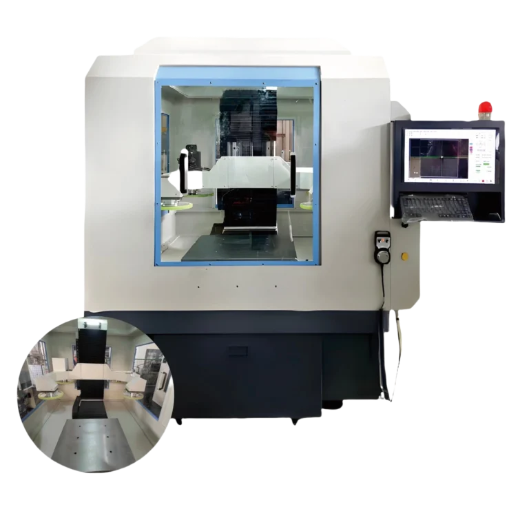
When selecting a graphite wire saw machine for industrial or precision applications, the following key features ensure optimal performance, safety, and long-term value:
🎯
Accurate Cutting
Look for the devices with a precision level of microns that can offer the ability to cut a product’s angles with perfect precision.
💎
Compatible with Long-Lasting Diamond Wires
Make sure it can take diamond wires of very high quality that can increase optimal performance, reduce material loss, and increase the shelf life of the cutting tools.
⚙️
Superior Tension Control
There must be a very good tension control that keeps the wire steady while working, which minimizes any chances of breaking and supports clean cuts.
🔄
Variable Cutting Speeds
Adjustable-speed machines are fit for working on different grades of graphite of different degrees of thickness.
🛡️
Mode of Operation and Safety
Operations management, such as programmed cuts and rapid shutdowns improve operations and operators’ safety while minimizing the hands-on activity by the users.
🔧
Ease of Maintenance
In most cases, these are made of materials that are resistant to corrosion and do not require much inspection and maintenance.
📐
Stiffness and Space-Saving Detailing
A compact, sturdy design leads to less noise and promotes better overall stability of the equipment, even when operating at full capacity.
Essential Features: Wire Tension Control and Speed Regulation
In a scenario where graphite wire saw machines are in operation, it is crucial that wire tension control and speed regulation must be taken into account. Wire tension control refers to the tension mechanism of machines that helps in making precise cuts, irrespective of area elongation or stress concentration, and also cutting without breaking the wire during the process. Additional tension dampening also helps to eliminate bending, a problem encapsulated in the necessity for accuracy in measurements. Correspondingly, one needs to manage the cutting speed as each material dictates a different cutting efficiency and surface finish. These modules are also responsible for achieving high RPS and stable PWS out of the machines, thus enhancing their use in heavy-duty scenarios.
Automation and Software Integration for Optimal Performance
To begin with, automation and software factors may be considered as the essential attributes for any modern-day high-tech industrial framework in order to achieve maximum productivity and effectiveness. Going through this concept, such technological advancements make it possible to synchronize the functioning of machines without unnecessary human interference, thus limiting the occurrence of erroneous outputs and guaranteeing even quality standards. Intelligent utilization of software is one of the ways of optimizing processes by observing measurable parameters, changing them with respect to the elements that are measured regularly, and raising productivity even in complex production processes.
Safety Features and Durability Considerations
Safety considerations are critical in the design of industrial systems so as to ensure that all the people and equipment are safe. The current technology in automation uses different strategies, such as emergency stops, guards, and failsafe features, among others, to reduce such incidents. Smart sensors are an assisting technology as they also do the work of monitoring the system for unusual activities and potential dangers, prompting immediate corrective action. Furthermore, there are safety standards, including ISO 13849 and IEC 61508, which provide for the design criteria meant to avoid any deviation from operational safety.
Durability is also a key concern, which necessitates the participation of high-standard materials and parts that can operate in hostile conditions. Maintenance programs, especially when infused with the tools above, prolong the usefulness of machines greatly. More so, especially where supporting equipment is standardized, the use of modules enhances the ability to repair and upgrade the system at all stages of its life cycle, which at the same time reduces operational downtime. Such factors contribute, if appropriately managed, to the more secure and durable construction of the industrial systems.
📋
Applicable Safety Standards
ISO 13849 and IEC 61508 provide the design criteria meant to avoid any deviation from operational safety in automated industrial cutting systems.
Conclusion
This work presents the operational functions of graphite wire saw machines beyond the appeal of curiosity to the manufacturers and fabrication purposes. You will certainly find how they harmonize precision adjustments with reliability and advanced technologies to satisfy the present day’s industrial requirements.
From micron-level cutting tolerances to reduced material wastage and long tool lifespans, graphite wire saw machines represent a compelling investment for any sector that demands excellence in precision machining — whether in aerospace, semiconductor fabrication, defense, or advanced research. As automation and smart software integration continue to advance, these machines will only become more capable, reliable, and indispensable to modern manufacturing operations.
Reference Sources
University of Northern Iowa – Electrical Discharge Machining (EDM)
This paper analyzes the performance of wire EDM machines, which may provide insights into wire cutting technologies.
NASA Technical Reports – Fabrication of Aluminum-Graphite Precursor Wire
This report covers the fabrication techniques involving aluminum-graphite wires, which could provide insights into related technologies.
Frequently Asked Questions (FAQs)
What does it mean when someone cuts graphite with a diamond wire? How do these diamond wire saws operate?
When cutting graphite blocks or boats with a diamond wire, referring to the process of cutting with a diamond wire, an endless diamond wire is used, which is wound onto the pulleys to achieve the cutting action. The cutting tool is the wire in which the diamond particles are embedded. The wire cutting is carried out by a wire cutting machine or CNC-controlled graphite cutting machine, allowing very fine, smooth cuts with very low wasted material and less dust as opposed to abrasive cutting.
How do graphite wire saw machines cut materials with supreme precision and without diminishing edges?
The stabilization of the wires, the precision of the CNC profiles, the development of diamond wire, and the structural components of machines produce high accuracy and performance. This is because the elements present allow for very little vibration, fine and sharp cutting, and most importantly, consistency in the edge quality, which is more efficient in cutting molds, electrodes, and semiconductors, among other components with reduced kerf.
Does an infinite loop of diamond wire facilitate the slicing of blocks without excessive dust and material wear?
By contrast, the endless diamond wire system is optimized for graphite mic, which slides steadily and smoothly without active vibration to produce less polluting and healthier materials, unlike abrasive or regular solid saws. The interference curves of the diamond wire result in a thinner barrel, and the size of graphite and material is retained while processing, all of which boosts the processing industry.
Can a wire cutting machine be used to slice ceramics, blocks of silicon, and graphite?
A wire cutting machine with a modern diamond wire is a typical solution for ceramic objects, silicon wafers, or precision graphite blocks. Feed rates, wire velocities, tensions, slurries or coolants, and CNC profiles can be adapted to machines so that optimal smoothness is achieved, and chipping is minimized.
Which is better: an automatic diamond wire cutting machine or a semi-automatic?
It depends on the scale of production, the level of accuracy, and also the cash available. The automated machines are more productive and allow for uninterrupted processes that guarantee stable quality for mass production or highly efficient lines. SEWA or string saw may, however, be preferred for either prototyping, small-scale, or custom-shaped workpieces, as they allow such customization and have lower investments.
How does one maintain a graphite wire saw machines and what other instruments are required for its operation?
Depending on the model, the first step would be to identify whether the diamond wire or the endless wire needs replacement due to wear and tear. Secondly, the pulleys need to be inspected for any misalignment. Then, the coolant as well as the filtration devices are also thoroughly cleaned to ensure the reduction in dust. Finally, the tension is checked, together with the guide bearings. Adhering to maintenance procedures and using the correct manufacturer’s tools helps to assure stability and efficiency of the machine for a longer period of time.
What social, efficiency, and health aspects are determined by modern machines for cutting using diamond wires?
With enclosed guards, diamond wire cutting machines of today offer safer operations, dust suppression adds, and environmental performance is enhanced by effective filters of the consumable slurry, resulting in a decreased number of released particles, and the metacity is increased with quick cutting cycles, continuous run, and accuracy that minimizes downtime. Also, these advances result in reduced vibration, easier gauging of section plates or sheets, and yield more, such as the application of stable graphite wire saw machines in their processing and manufacturing.
Related Posts

Trending Blogs

![Polysilicon Material: Properties, Grades & Uses [Guide]](https://wiresawcutter.com/wp-content/uploads/2026/08/polysilicon-material-featured-150x150.webp)