
Get in touch with DONGHE Company
-
Phone: +86 181-1645-5490
-
Email: Sales18@DongheScience.com

Magnetic Material Cutting Parameters Optimization

Magnetic Material Cutting Parameters Optimization: Complete Technical Guide
Advanced Strategies, Process Optimization, and Best Practices for Efficient Machining
To say cutting magnetic materials well and fast is key, would be too much of an understatement in today’s manufacturing systems. How long a material with a magnetic component will last owes itself to how properly it has been cut and shaped and not to the properties of the material. For once, this work discusses, the cutting speed, the depth of the cut, the speed of feed and the tools applied to cutting a magnetic material achieving more efficient and lower cost operations. These are the parameters which are basic knowledge regarding the making of magnetic material components. The paper also takes note of the cutting conditions, barriers in machining of the components and also, its effects on the procedure and strategic remedies for each also presented.
Introduction to Magnetic Material Cutting

The process of machining ferromagnetic materials is associated with their hard, their brittle, and their magnetic properties that need to be taken into consideration during the machining process. On the other hand, most of these properties may create significant challenges to the normal cutting processes that are characterized by wearing and tearing of tools, heat generation and poor surfaces. Such cutting processes require correct cutting tools application, working parameters optimization and also cooling mechanism if the need arises. The introduction of the applicable specific technology and material-based processes enables a company to carry out this activity efficiently and accurately without any risk.
Importance of Optimization in Cutting Processes
Enhancing the performance measures of production systems and the quality of goods or any service can only be explained in terms of how well every cutting process has been optimised. It thus enables optimisation of cutting parameters and procedures that are necessary for this purpose, thus reducing the amount of waste, the process wear, the consumables items and the process accuracy. The optimization of cutting processes can be addressed in these five areas.
1. Tool Wear Reduction
The primary cause of minimizing such stresses is that the feeding rates are changed, speeds and shapes of cutting as well as depths of the cuts are controlled in an attempt to improve the tools’ wear characteristics and thus prolong their use. For instance, several studies relating to this field have asserted that at varying levels of the said parameters, especially along with temperature considerations, the tools have a lifespan extended by up to 25%, and hence saving on costs as there are no chances of replacing such tools.
2. Enhancement of Surface Topography
One productive way of doing this is by controlling factors such as the use of lubrication when cutting and control of vibrations given the workpiece to provide better surface finishes. True to the research, most of machining takes steps forward so that roughness average (Ra) is reduced by as much as close to thirty percent among industries that have even stricter high industry standards.
3. Energy Efficiency
The tools used in the operation become more eco friendly due to reduced time of using each of these tools as their productivity ratio increases over time. Process optimization techniques are normally focused at reducing the cost of manufacturing and this is an area where it can be possible to reduce energy by more than 20 percent.
4. Cycle Time Optimization
Even though the phrase reduction of cycle time seems like an odd notion, the latter is a much broader ideology. The meaning of this sentence is that, in order for the length of the cycle to be cut down, the rate of production or output is raised. For example, CNC programming and machining processes enable reduction of the constant element of the total machining time by 15%.
5. Decrease in Temperature-induced Damage
It is necessary to stress the fact that the increase in temperature at the cutting surface may cause damage to the preferred workpiece. In such scenarios, enhanced cutting conditions together with cooling methods come in handy as they prevent any occurrence of thermal damage and the inalterability of material structures especially with the sensitive alloys.
Overview of Magnetic Materials

Some materials are affected by the magnetic field; such materials are termed as magnetic material meaning they exhibit some magnetic properties. Magnetic materials are mainly divided into two categories: ferromagnetic and non-ferromagnetic materials. Ferromagnetic Materials such as Fe, Co, and Ni exhibit magnetic behaviors due to their atomic construction. Unlike these materials which possess ferromagnetic properties, the rest are either very weak or have no ferromagnetic properties.
Magnetic materials are unique owing to various parameters among them; remanence where the material is still magnetized when the external field is removed, coercivity as well as permeabilities which explain their magnetic behaviour. All these are of great importance in electric motors, transformer cores, memory devices, and more advanced design such as magnetic sensors for a number of reasons. In the recent past, the discipline of material science has similarly helped in making a few of exotic particles for instance; the neodymium magnet which in essence is small and of more efficient design.
Applications of Laser Cutting in Magnetic Materials
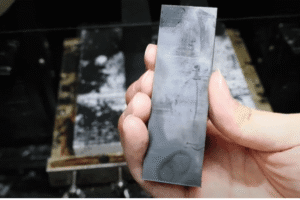
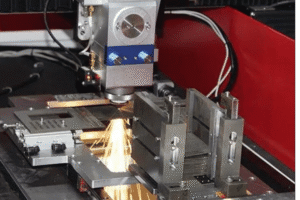
Laser machining has reached a useful precision in processing of magnetic materials especially in situations where complex shapes and dimensions are favorable. Five most important and typical ways in which laser cutting finds application in manufacturing are listed below:
1. Fabrication of Engine Parts
Laser cutting is used in making components such as laminations which are used in electric motors. Such laminations in views of maximization of efficiency and minimization of eddy current losses are usually etched with silicon steel.
2. Manufacturing of Transformer Cores
Laser cutting helps to maintain high precision in the manufacture of transformer cores by ensuring that no rough edges are left on the cores and that they occupy minimal volumes of the magnet, guaranteeing the most efficient transfer of the magnetic field in power transformers.
3. Components for Magnetic Shielding
Laser technology is employed for the precision segmentation of products meant for magnetic shielding, which must achieve close tolerances and high finishes. This finds a wide range of use in electronic equipment as well as most precision measuring devices.
4. Creation of Thin Film Magnetic Detector
For high-performance magnetic sensors, laser cutting enables the processing of thinnest magnetic films with very high precision. It is important for making sensors in automotive systems, aeronautics and industrial processes among others.
5. Manufacture of Magnetic Disc Storage
Rapid laser cutting is essential for manufacturing microscopic laser cut components for data storage such as hard disk drives. This allows for perfect read/write capabilities and increase storage capacity.
Challenges in Cutting Magnetic Materials
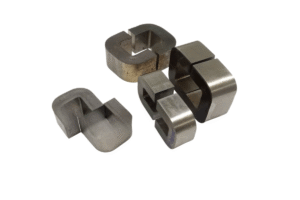
Processing magnetic materials is not an easy task because of several reasons associated with these materials. These materials are often very hard, therefore the conventional cutting methods are usually ineffective, and may require specialized equipment. There is also an issue where when the materials are cut, the magnetic fields which the materials generate affect the equipment. This leads to the equipment being not as precise as it should be and in a worst case scenario, the equipment may even wear out. Coolant is very essential, as overheating overcuts the part and changes the magnetic structure of the material and as a result, the function of the material is lost. To overcome such issues, a precise process such as laser cutting may be well adapted because it allows processing the material without compromising its physical integrity.
Impact of Magnetic Force on Cutting Efficiency
Whereas the importance of improving efficiency of cutting processes cannot be overemphasised, the cyclic nature of the cutting processes, coupled with varying efficiency of different cutting operations, some of which are even drastically affected by the introduction of magnetic force, warrants the introduction of the following five points:
Inaccuracy of Tool Path
Magnetic fields have the potential of interfering with the path of tool cut, whenever the cutting process is accurate, hence precision issues. Anomalies of this nature often spike in ferromagnetic materials handling as these are often thrown off the correct path by attraction or repulsion of the cutting points, leading to non-ideal dimensional results.
Tool Deterioration from Magnetic Interactions
Extended contact with magnetic fields during the machining process places the cutting tools under unseen stress causing premature wear of the tools in some instances. This mechanism stems from the concentration of magnetics in certain areas of cutting tool ends hence, upturns in wear levels.
Problem of Chip Removal
Magnetic materials frequently cause attraction of loose shavings and chips produced during cutting, this interferes with chip acceleration or evacuation. With time, such debris may cause increased friction, worsen the surface finish, enhance possibility of tool breakage which consequentially reduces the effectiveness of cutting.
Changes Due To Differences In Thermal Load
Magnetic fields present especially during cutting can lead to different heat dissipation levels in areas leading to localized thermal efforts. Changes in these physical conditions may affect the material to be cut and the cutting tool, thus reducing the reliability of the cutting process.
Effect on the Efficiency of Lubricants
Magnetic forces can interfere with the homogeneous distribution of cutting fluids or lubricants. Such changes in fluids caused by magnetic interaction or misplacement may lead to an increase in frictional forces, and wear of the tool, but a reduction in cooling.
Surface Quality Issues in Machining Magnetic Materials
When machining materials with magnetic properties, maintaining high surface quality can often pose a challenge due to the propensity of the material to attract magnetic particles when cut. Such foreign particles can cause defects on the surface of the machined material such as scratches and uneven layers, lowering the quality of the final product. Additionally, the presence of magnetic fields may also affect tools position and precision during the activities producing an out of tolerance component. To maintain good surface quality, it is usually necessary to precede and follow the machining processes with demagnetization of the material, use precision tools, as well as methods of keeping clean particles. Defects can also be exacerbated by a lack of regular checks to assess the cleanness of the system, which makes regular cleaning of the equipment extremely important.
Optimization Strategies for Cutting Parameters
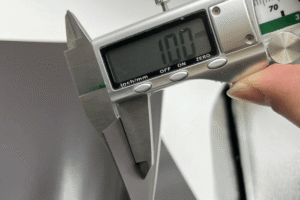
Cutting Speed
Choose the proper cutting speed considering the particular material hardness and the thermal conditions of the tool. The risk of overheating increases with very high speed and the efficiency losses are higher at very low speeds.
Feed Rate
Adjust the rate of feed such that the two objectives namely Material Removal Rate and the Quality of the Surface Finish obtained are achieved. This is because high rates produce more materials in a given time but precision is likely to be compromised.
Selection of Cutting Tools
Selection of proper tools for cutting the work according to the properties of the work materials and the way it behaves during machining. Tools with proper coatings will reduce faster wear and make better heat resistance.
Cooling and Lubrication
Ensure the provision of active cooling in such a way that the heat does not damage the structural shape and to avoid any deformation of the machine. Apply lubricants to restore the contact zone and at the same time minimize the wear of the tool.
Monitoring System
Install a condition based monitoring system to measure the cutting forces, temperature and the rate of wear of a tool. This will assist in making adjustments for achieving the optimum performance.
Such parameters are managed in a systematic way, these machining processes are more efficient, accurate, and conserve material in a better way.
Multi-Objective Optimization Techniques
The development of multivariate optimization does involve methods that seek to optimize many factors that often can be at odds, especially in engineering or manufacturing related works. The majority of these methods or approaches involve cutting-edge algorithms including Genetic Algorithm (GA), Particle Swarm Optimization (PSO), as well as the Multi-Objective Evolutionary Algorithm (MOEA). The aim of these methods is to generate the Pareto front of solutions. This what Pareto optima mean such that no heights or efficiency of any objective can be increased without limiting the movement of another.
For example, ML models which are developed for the processes of machining enable the user to carry out training of the model offline and also adjust the variables while running the machine in real-time by estimating the output of machining within the trained model. The execution of these types of data addition and optimization ensures that the nature of the existing is not only created and low-cost production but also it creates a supportable system.
Taguchi Method in Parameter Optimization
Enabling Magnetic Material Cutting Parameters Optimization is the method of Taguchi which, in particular, means increased vulnerability to changes of system parameters. Most aspects of Taguchi’s methods can be or are combined with the conditions that allow, require or are dynamic. Such newly arriving dynamics due to different industrial settings are usually observed from pattern analysis of conducted search and can be valid and useful in the DOE (design of experiments). With these raw data still in process of refinement, inclusion of design within parameters assists the users of such systems so as to improve this decision better and more precisely with suitably enough training to be applied with minimal wastage.
Grey Relational Analysis for Process Improvement
Cause-effect through multiple factors within the system can be evaluated and their effect can be optimised technique called Grey Relational Analysis (GRA). Responses to various variables are compared as part of the comparison process to determine the settings of the most favorable factors following certain pre-established principles of evaluation. One of the advantages of this technique is its high efficiency in situations of uncertainty or incompleteness of knowledge since it allows meaningful comparative assessment of performance for various ways of implementing the process. Its scope includes areas such as manufacturing, engineering, quality control, etc. and such sectors implementing the effective measures require favorable outcomes or results.
Case Studies and Examples
Successful Applications of WEDM in Magnetic Materials
The Wire Electrical Discharge Machining (WEDM) technology is mostly employed in the machining of the magnetic materials due to the high accuracy, flexibility enabling it to many intricate shapes, and invoked very negligible heating. As follows below, one will present five different examples of such successful implementations of WEDM in the processing of the said magnetic materials.
Five WEDM Success Applications
- Production of Magnetic Lamination: In cutting magnetic core laminations for different types of transformers or electric machines – WEDM is used quite regularly. The advantages of the process include the ability to achieve a reasonably good tolerance of dimensions and reduced deformation. Literature reveals that the WEDM machine can reach as little tolerances as ±5 µm which assists in getting proper alignment when stacking lamination.
- Design of Permanent Magnet Motors: WEDM is especially advantageous in the manufacturing of parts like rotor and stator cores in permanent magnet motors. This procedure accurately cut-outs complex shapes necessary for magnets to fit, thereby improving motors performance. Evidence suggests that torque attaining capability is higher by approximately 20% of those features manufactured in the conventional way.
- Rare-Earth Magnets Model Development: The WEDM in modeling of rare-earth magnets alloys (such as NdFeB, SmCo) for various power applications remains effective. Because the process is non-contact thermal distortions, micro-cracks or any other appreciable damage does not affect the temperature sensitive structure features of these advanced materials.
- Micro Components for Electromagnetic Devices: For small scale electromagnetics devices, WEDM enables the manufacture of small components such as micro-coils, magnetic actuators, etc. Studies show that the surface roughness achieved by the WEDM process is exceptional for precision components.
- Trimming of Soft Magnetic Material: Silicon steels and cobalt based iron need cutting without the risk of inflicting any damage. WEDM offers a service for cutting composites without introducing damages, thus reducing eddy currents and improving system performance. The tests indicated a 15% reduction in core loss in contrast to standard machining processes.
Comparative Analysis of Abrasive vs. Laser Cutting
The major difference between abrasive and laser cutting comes through the way the material is removed, the level of accuracy, the speed, the cost, and the setup. The following table provides a comprehensive comparison:
| Key Parameter | Abrasive Cutting | Laser Cutting |
|---|---|---|
| Material Removal | Mechanical erosion | Thermal energy |
| Precision | Moderate | High |
| Cutting Speed | Slower | Faster |
| Surface Finish | Rougher | Smoother |
| Material Versatility | Broad range | Limited (reflective) |
| Thickness Limit | Thicker materials | Thinner materials |
| Cost Efficiency | Lower initial cost | Higher setup cost |
| Maintenance | Moderately frequent | Low with proper care |
| Environmental Impact | Higher material waste | Cleaner process |
| Operational Setup | Simple equipment | Complex setup |
Frequently Asked Questions (FAQ)
1. When Cutting Magnetic Material, Which Parameters Are Most Important to Make Sure Efficient Machining?
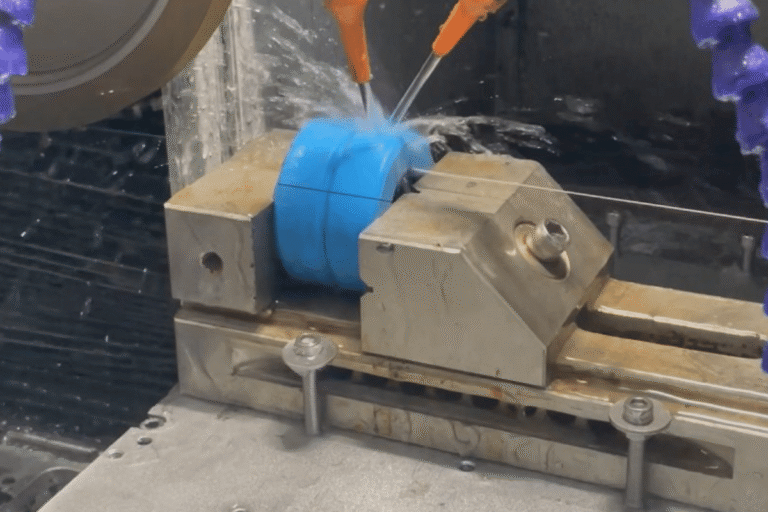
The most important parameters that are to be controlled include the linear wire speed (also called rpm of the wheel), the feed rate, and the tension of the wire. These are all critical when performing electrical discharge machining of sintered magnets, for example NdFeB or SmCo, because their surfaces can sustaining quite significant strain energy as compared to those of conventional magnets. Coolant flow rate and concentration also need to be adjusted optimally. These parameters must be controlled so as to reduce the extent of subsurface damage, avoid thermal shock and achieve geometrical precision of the workpiece.
2. In What Ways Does the Feed Rate Affect the Magnet’s Surface Conditions?
According to established principles, the feed rate, defined as the rate of advance of the cutting tool in the workpiece material, is inversely proportional to the quality of resulting surfaces. An increase in feed rate indicates an increase in mass of material cut per unit time without stopping for retooling, but this often causes a rise in surface roughness (Ra) and substantial damage beneath the cut surface because of the mechanical force involved. On the other hand, when the feed rate is decreased, the surface becomes smooth and the likelihood of micro cracks is low, however the cycle time is long. In order to optimize, it is therefore important to determine how high the feed rate can be before the surface requirements start to get compromised.
3. Why Is Wire Tension Important in Diamond Wire Sawing?
In diamond wire sawing, it is crucial to keep the wire under specific tension for quality purposes. If the wire is not sufficiently tensioned, it will bow or bend inside the cut causing dimensional defects such as taper or variation in thickness. Furthermore, this bending of the wire also increases kerf loss (unwanted material). On the other hand, if the wire is over tensioned, the chances of it snapping increases causing machine interruption. The tension needs to be at appropriate levels depending on the wire size and hardness of the respective magnetic alloy.
4. What Are the Adjustments for Coolant Parameters?
Optimizing flood coolant is not confined to the volume of liquid alone but also the pressure and even the angle. It must reach inside the cut in order to remove as much of the magnetic swarf (slurry) and heat as possible.
- Flow Rate: Should be such that the diamond tool does not load with the grit which comes off in the process.
- Viscosity: The function of a coolant with a suitable viscosity lies in the lubrication of the abrasive particles without causing hydroplaning.
- Temperature: Reducing the temperature of the coolant in a dramatic and consistent manner minimizes thermal expansion in both the workpiece and the machine parts, thereby maintaining accurate tolerances.
5. Which Techniques Are Used to Prevent Edge Chipping During the Machine Cutting Operation?
Edge chipping commonly occurs at both the entrance and exit ends where the tool enters and exits the block, respectively. To help stop this, operators customarily practice with a variable feed rate program. The feed rate is deliberately cut down when the tool is just getting into the material and right before it comes out of the block. This “soft landing” strategy minimizes the impact load on the brittle edge, thus not creating chips and cracks which would lead to a great amount of waste and defective parts.
6. To What Extent Does the Difference in Magnetic Grades Influence Parameter Choice?
Not all magnets have the same ability that allows them to be machined easily. One example is the fact that SmCo is not as hard as NdFeB and is even more susceptible to abrupt changes in temperature. As a result, SmCo cutting usually requires the change of the relevant parameters such as lowering the feed rates and applying more cooling so as to avoid cracks. Magnetic Material Cutting Parameters Optimization requires the use of appropriate parameters per the material in question and its density and other relevant features in the applied batch.
Reference Sources
- •Process Parameter Optimization in Electromagnetic Abrasion – Covers the role of input factors such as voltage, rate of rotation of the electromagnet and the mixed ratio of the abrasive in the purpose of enhancing the processed surface.
- •Improvements on the Use of Laser Cutting in Magnetic Material Cutting Parameters Optimization – Investigates performance and the question of optimum laser cutting parameters and how they affect magnetic induction intensity in cutting and other properties.
- •Optimization of Magnetic Surface Treatment Finishing Method – Delivers a plan with performance constraints of magnetic abrasive polishing for the improvement of surface finishing. Recommend reading: Diamond Wire Saw Cutting Machine for Magnetic Materials: The Complete Guide
Related Posts


Trending Blogs

![Polysilicon Material: Properties, Grades & Uses [Guide]](https://wiresawcutter.com/wp-content/uploads/2026/08/polysilicon-material-featured-150x150.webp)