
Get in touch with DONGHE Company
-
Phone: +86 181-1645-5490
-
Email: Sales18@DongheScience.com

Graphite Cutting Methods Comparison: EDM vs Sawing vs Wire Saw

Most skilled motions rely on void as well as graphite cutting. Accurate cutting of graphite involves the proper selection of the cutting technique. Each method of cutting, such as EDM (Electric Discharge Machining), sawing, and wire sawing come with its own advantages and disadvantages, the influence of which can significantly alter efficiency, the material make-up, and finally, the objectives of the project. This article answers that with a comparison of the three cutting methods in depth, as well as the main advantages and disadvantages of such factors as cutting accuracy, speed, cost efficiency, and use in typical applications. If you are an engineer, materials scientist, or production manager, you will find this article helpful in making the right choice for your work that will be in line with the technical and economic requirements specified.
Introduction to Graphite Cutting Techniques
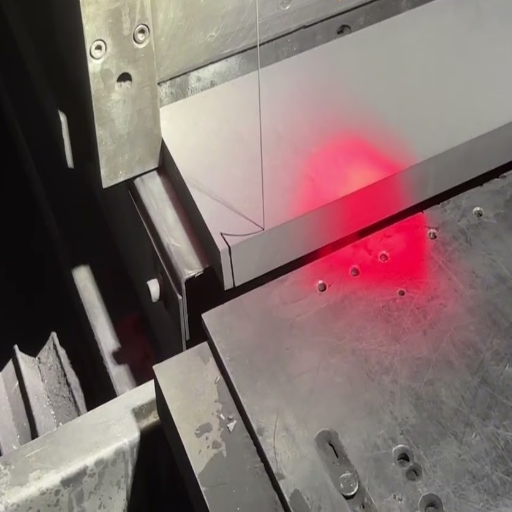
In the world of graphite cutting, there are three broad techniques: mechanical cutting, laser cutting, and waterjet cutting. Mechanical cutting entails the use of adjustable saws to create precisely needed cuts, a process that is simple for basic requirements yet prone to cutter wear. Laser cutting is based on the establishment of a beveled laser cut edge using light energy at a high-frequency level without waste. It is suitable for complicated forms but is too expensive to be commonly used. Waterjet allows for speed, value, and flexibility when cutting graphite using a focused waterjet stream that can be assembled with cutting abrasives. Each of these techniques is good at what it does, but the best one depends on a number of factors such as the nature of the project, its intricacy, the available budget, and the degree of accuracy needed, among others.
⚡ EDM (Electrical Discharge Machining)
Non-contact machining using electrical discharges to shape material. Ideal for complex geometries and ultra-high precision on hard materials like graphite, tool steels, and tungsten carbide.
🔩 Sawing
Conventional material removal using toothed blades under mechanical pressure. Economical and flexible, suited for rough sizing, straight cuts, and large or thick workpieces.
🔗 Wire Sawing
Uses a thin diamond-impregnated wire to trim material with very low kerf losses. Best for hard and brittle materials, ultra-thin wafers, and applications demanding minimal material waste.
Overview of the Importance of Precise Graphite Cutting Methods
Graphite is a material with a wide range of applications in many areas worldwide, such as those associated with the aerospace, electronic, and energy industries, which makes it necessary to pay close attention to the cutting of graphite. The accurate division of material will be less important for other materials (like steel or iron), but it is the critical factor in graphite cutting in terms of cost and ease of processing. Also, precision creates the convenience of using graphite in the optimal manner, as unwanted material and processes can destroy graphite inserts. Technologies such as CNC, EDM, and waterjet cutting are amongst the techniques that are capable of offering the level of precision that is required, whilst also allowing for the adjustment of the cutting process to suit the particular requirements of a specific project. At the same time, the need to make an informed decision as to the method that will yield the best results is crucial in terms of achieving the desired objectives, complying with the design requirements, and ensuring the proper operation of the production.
Brief Introduction to the Three Main Methods
⚡ Electrical Discharge Machining (EDM)
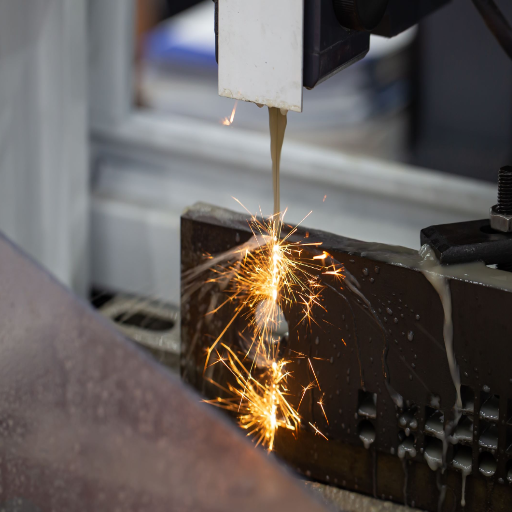
Electrical discharge machining (EDM) is a non-contact machining, which takes advantage of electrical discharges on the material to shape that material. It is perfect for producing difficult geometries, skin-surface details, and close-tolerance parts that are usually beyond the reach of traditional machining. EDM is also advantageous in machining very hard materials such as tool steels and tungsten carbide, with excellent finish quality and no mechanical stress on the workpiece. This process is highly effective for any aerospace application, medical device companies, and companies making die-casting molds.
🔩 Sawing
Sawing involves a conventional way of material removal with the help of toothed blades pushed through the workpiece by mechanical pressure. It is also used for rough sizing or separating pieces of material that are difficult to handle. Different sawing methods, such as band sawing and circular sawing, are used as per production needs, giving flexibility as the cutting accuracy can be tailored according to the material and the required finished product. Some people may appreciate the technology that is seen to have lower accuracy than sawing; however, sawing is still relevant for general applications such as rail yards, handling of large workpieces, and sawing lengths, as well as comparatively thick boards, and remains an economical solution.
🔗 Wire Sawing
Wire sawing involves the use of a thin, sharp wire composed of abrasives or a wire of steel with diamonds set into it, which helps trim the material with low kerf losses. This method is typically used for the cutting of hard and brittle materials, for example, silicon, quartz, or other crystalline substrates that need a high level of accuracy. This procedure is of great use in those processes where there is very little wastage of the material, for example, making ultra-thin wafers from substrates in semiconductor manufacturing. Furthermore, such technology enables the seizure of most of the cutting work done from the edge because, as expected, it can also enable a better cut.
What Is EDM Graphite Cutting?

EDM (Electric Discharge Machining) involves a dedicated process for graphite cutting, used during the production of graphite anvils for EDM applications. The EDM process calls for the precise cutting of the graphite while forming various shapes ultimately required for this process usually conducted at a CNC milling machine. Graphite is one of the best materials as it has excellent thermal resistance, is electrically conductive, and is easily machinable, hence making it an attractive choice for manufacturing high-performance EDM electrodes. The EDM process provides the highest degree of geometry wherein no dimensional errors are visible, making it less flawed, and its metal consistency is high, making it suitable for effective usage of such requirements.
Detailed Explanation of How EDM Works for Graphite
The performance of EDM generally undergoes a very significant improvement in performance by the virtue of the distinct and characteristic features of graphite. At high temperature and thermal conditions, graphite allows the electrode to resist the extremely high temperatures without losing its physical structure; it is highly conductive of current, thus helping in generating sparks without losing huge amounts of energy. In addition, the easy machinability of graphite enables its use and machining into complex designs of electrodes without changing any of the design’s features. This approach is particularly effective in the creation of details and finishes in hard-to-work materials, which may also require ultra-high precision to be met, and therefore, may be employed in aviation, automotive, and medical equipment designs.
Advantages, Applications, and Challenges of EDM for Graphite Cutting
✅ Advantages
- Technological features of EDM allow ultra-precision and complex geometries in cutting graphite.
- Non-contact characteristics make the cutting more precise and reduce the stress on the material to be cut, so as to avoid local bending.
- Graphite can withstand very high temperatures, meaning it can be efficiently employed in EDM.
- Enables the design of electrodes with surfaces that have minimum imperfections without the need for highly expensive polishing machines.
- Low electrode consumption — tools last for an extended period, thus saving costs.
🏭 Applications
- Aerospace: Used for turbine blades and nozzles requiring accomplished precision in complex forms.
- Automotive: Die sinking to create molds for the production of intricate geometrical forms.
- Medical: Creating intricate operational instruments such as microsurgical instruments and implants.
- Tool and Die Fabrication: Graphite electrodes produced by EDM play a great role in high-quality tool and die fabrication.
⚠️ Challenges
- Graphite is brittle, and any mishandling during processing can result in cracks or complete damage to the component.
- Residual graphite dust poses health concerns — dust control systems are mandatory.
- More steps are required compared to other materials, and effectiveness is highly dependent on proper parameter settings.
- Requires experts for electrode production and machine operation.
Industries That Commonly Employ EDM for Graphite Cutting
With its high level of precision and efficient performance on rigid materials, EDM (Electrical Discharge Machining) is a significant machining technology in the industry, and it is compatible for cutting graphite in several aspects. One of the key benefits of electrical discharge machining is that this tool can hold close tolerances easily and generate the desired part shape without imposing any mechanical stress on the workpiece. This advantage is particularly meaningful to applications that utilize more advanced or sophisticated designs, such as those that are within the scope of mold and die.
The lack of contact, which EDM is designed to aid, neutralizes the hazards of deformation, in the form of strain states or cracking originating from the machining of fragile materials such as graphite. In the aerospace, automotive, and electro-construction sectors, the EDM technique is actively used for the production of components where quality and precision are paramount. Also, graphite, with its massive processing capability, electrical conductivity, and a high melting point, has several potentialities that contribute to its immense popularity as an electrode in EDM activities.
There might be certain benefits derived from the use of EDM; however, getting technicalities right and performing miracles of finish is an ongoing requirement that requires a skilled operator. This points to the fact that using EDM for graphite machining is effective only in the presence of experts and modern machines.
Sawing Method for Graphite Cutting
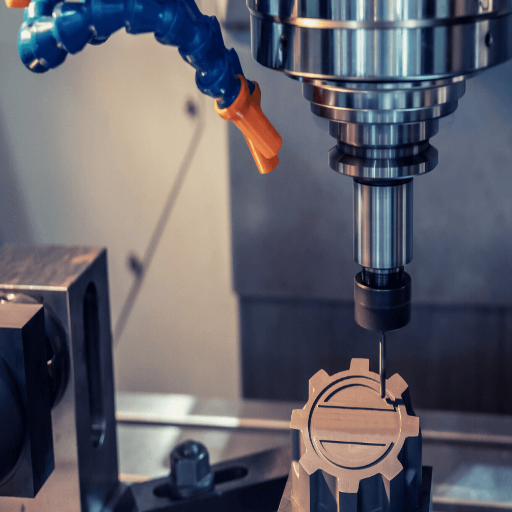
Cutting tools for graphite refer to the process of using a saw tool specifically made to match the brittle and harsh conditions of the material. They often need to use diamond-encrusted tools because of their rigidity and how little damage they cause when making thin and accurate cuts. It is also very important to set the cutting parameters (the speed of the cutting machine per workpiece, and cooling) in such a way that there is no cracking or rough edges on the machined surface. Moreover, it is equally important that adequate tension is applied to the blade, and there is enough disposal for the dust that is generated, for reasons that pertain to the safety of the personnel and the durability of the cutting equipment. This technique is most appropriate for boring with straight channels, which is widespread in the production of high-precision graphite components.
Description of Traditional Sawing Techniques for Graphite
Traditional old approaches for sawing graphite are not only less advanced, but they also have their benefits and downsides as well. In instances such as these, achieving a precise cut is possible even under specific circumstances, so long as adequate machining parameters, with special emphasis on the rates at which raw material is supplied and materials under consideration, including the blades, which in general can tolerate the extreme abrasion that is brought about by the graphite, reinforced with wet resin. These enhanced blades are highly durable and resistant to wrinkling on account of the enhancement.
But such insufficiencies in classical cutting become even more severe when certain factors are taken into consideration. It is not uncommon for the graphite’s abrasive chemistry to eat into the nozzles, hence necessitating extensive care and proving to be uneconomical in the long run due to additional costs. Also, when a high level of bond orientation, uniaxial anisotropy, and sample reinforcement exist in the material itself, the mechanical properties of graphite significantly decrease within the edges of a particular cut. Then, such worked-out areas need to be cooled with liquid nitrogen and replaced with fresh cutting using an oxygen jet. Despite their productivity, they are limited to rigid and rectilinear line cutting, and they certainly cannot be employed to cut complex forms, including ovals, circles, etc.
Tool Types and Configurations Used for Sawing
There are various tools and sawing techniques that can be used depending on the application and material being worked on. The most commonly used saws are hand saws, circular saws, band saws, and reciprocating saws. Cabinetry is made with handsaws with no help from electrical resources, making them perfect for trimming in case of wood or light housework. Circular saws, on the other hand, benefit from a motor between the cable and the blade, which spins the blade inside the material in the process of cutting, be it plastic or metal. The band saw works in a continuous loop made of metal with teeth, which works perfectly when cutting intricate shapes and preventing overflow inside the materials. Lastly, the reciprocating saw does not rotate but does make back-and-forth movements while pushed and is mainly used for taking down walls or making complex sectional cuts in large projects.
Designing a sawing system with proper blade settings and configurations is paramount in fabrication by ensuring blade dynamics, material help, and particular blade geometry for a given cutting edge. It is known that a crosscutting saw blade can effectively cut across the grain, whereas a rip-cutting saw blade is preferable for cutting parallel to the grain. Apart from these features, some types may have adjustments to the blade speeds, carbide teeth to improve on the issue of wear and tear, a lubrication tank for heat removal, and overall accuracy. Effective methodologies for choosing the correct instruments and their correct angles are essential for ease in working, accuracy, and the safety of the workers.
Advantages and Potential Drawbacks of Sawing for Graphite Applications
✅ Advantages
- Small proportions of material are lost, and very high cut accuracy can be attained, which is mandatory on jobs that require precise limits.
- Wide scope of operations, working all the way from the lightest to the heaviest plant of all shapes of graphite types and grades.
- With the use of new sawing technologies and diamond blades, effectiveness and tool resources are increased many times over when working with porous and abrasion-resistant types of graphite.
❌ Drawbacks
- The brittle character of graphite increases the chance for the generation and formation of chips and cracks, especially if the cutting speed is too low or the saw blade is not set up correctly.
- Sawing generates fine graphite dust, which can affect one’s health and damage mechanical equipment if the dust is not well managed using efficient extraction systems.
- Abrasion of the diamond tool during the cutting of harder graphite forms may mandate servicing or replacement to achieve desired functional and measurement accuracies.
Wire Sawing for Graphite Processing
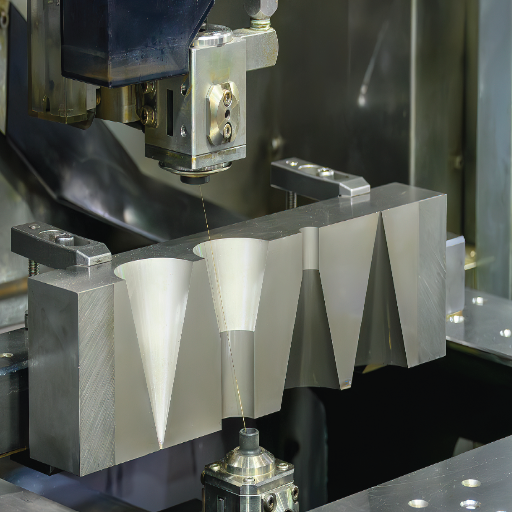
When tackling the possible constraints of the wire saw in handling graphite, it is crucial to look at three key factors:
💨 Dust Management
Utilization of active dust control devices is necessary in such operations to lessen the hazards of exposure to the hazardous fine graphite particles and maintain the longevity of the equipment. It is also advised to utilize high-grade filters and better ventilation systems in order to provide workers with safe and reliable conditions for equipment operation.
🔧 Tool Wear and Maintenance
Depending on the grade of graphite being cut, the rate of wear of the wires is higher, and hence there will be a need for frequent checks and timely replacement when necessary of the cutting elements. Diamond-impregnated wire saws cut smoothly and last longer than any other tool, and are rather useful as they help in reducing tool wear as well as preventing sub-precision machining.
🎯 Optimization of Technique
Adopting the techniques of wire sawing for graphite machining involves proper use of cutting tools, the detailed parting parameters, for instance, feed rate and wire tension, that will minimize any chance of failure and waste of material resources. Ensuring that the operations are monitored and the people who will do the work are well-trained will also be helpful.
By addressing all the above, the graphite wire saw operations can be optimized to achieve better results safely and efficiently.
Explanation of Wire Sawing and How It Differs from Traditional Sawing
Wire sawing implies the use of a thin diamond wire along with a driving mechanism to achieve the desired cutting effect. As such, wire sawing is a horizontal cutting process that pays considerable dividends in accurate lead and twist cutting. Rather, the destruction and cutting of these materials are strongly influenced by thermodynamic and mechanical aspects. At the same time, noticeable improvements have been engineered with spatial lead and twist cutting techniques, and a cable cutting method has significantly changed mess control when these techniques are executed. Broad innovation and usage of wire cutting when making rectangular holes in various engineered materials, including concrete, structural steel, and wooden beams/timber, helps in increasing the useful properties of a machine to the limit because, in the feasible case, it can significantly eliminate the effectiveness of inefficient methods of solving construction problems.
Typically, there are problems around temperature, energy loss, repercussions of vibrations, and overusing cutting materials as a result of conventional cutting techniques. Where wire cutting is concerned, however, it is less aggressive in that it may be utilized for high precision cutting demanding thin and quality edges. Moreover, this is attributed to the fact that the wire does not apply linear force like the conventional straight saw blades, but is rather flexible, hence making it possible to cut more innovative geometries. These dissimilar virtues make wire cutting very appealing for use in delicate fields like machine and electronics, where there is the need for zero tolerance in material distribution and inaccuracy.
Assessment of Its Effectiveness in Cutting Graphite
It has been discovered that wire sawing is extremely effective when it comes to cutting graphite. It is due to the accuracy, no excessive use of materials, and the ability to work with the brittleness of graphite that this polymorph of carbon can be cut without any pronounced complications. The diamond impregnated wire cuts with no difficulty and ensures that the cut edge is sharp and free of burrs, along with minimizing edge chipping and micro-cracking, which is very important to the strength of parts made of graphite. In comparison to the many other available methods of cutting/sectioning, it has to be noted that in any given situation, wire sawing is indeed the ultimate preference, especially as there is hardly any heat generated, and hence the very low chance for heat-induced cracking or warping to occur. Beyond the fact that it also allows for the making of difficult and very thin sections, wire sawing would be the most ideal procedure for manufacturers of hi-tech graphite components, such as those found in the aerospace, energy, and semiconductors processing and fabrication.
Applications Where Wire Sawing Excels
Among the different types of industries, wire sawing has become the primary choice due to the fact that it possesses a higher degree of sensitivity, faster cutting speeds, and can cut very fragile materials or materials that can easily be damaged by heat. In the case of aerospace, this method is used to produce very complicated elements made of thin and lightweight graphite that are used in thermal systems and construction. Wire saws are commonly used tools in the semiconductor industry, especially for wafering silicon wafers and preparing delicate graphite jigs needed for heat processing applications. Moreover, in the sector of power generation, it is used to manufacture bespoke nuclear core components and fuel cell systems and to prepare graphite electrodes in advanced battery cells. It is an absolute solution to wire sawing due to its capability to maintain all properties and provide the top surface finish, hence it is usually used within such high-technology branches of the industry.
Comparative Analysis of Graphite Cutting Methods

Graphite cutting methods are something that is relevant for a number of reasons, and rightly so. Among them, wire sawing is the form that is most preferred because of its superior accuracy and reduced material wastage, as opposed to traditional techniques like milling or grinding that use mechanical force. These methods tend to induce damage on the workpiece material, mostly accompanied by microcrack formation or the like process due to the action of the cutting tool on the materials. For instance, wire sawing does not come into contact with the workpiece and hence damages like microcracks and damage that result from cutting are minimal.
It is also worth noting that laser cutting, which does not use mechanical methods, is very accurate, but it has a definite drawback: it generates heat, and this is not good when making parts that are to have tight tolerances. Our robot machinery-based cutting service uses a slurry-coated wire to cut through the workpiece so that there is no heat distortion and no thermal degradation of the workpiece, uniformly scribing the workpiece and leaving a superior finish. In general, in comparison to most other methods, wire sawing is so advanced that it can be taken as the first choice substitution for any critical application, mainly for cases of such industries as semiconductor and power generation.
Performance Comparison Based on Accuracy, Material Wastage, Cutting Speed, and Cost
Wire sawing appears to be an inimitable approach when comparing environmental efficiency and capacity of work precision, in particular, in sectors of high-precision positioning, such as semiconductors. Although the traditional method of laser cutting can also achieve satisfactory precision, it faces the disadvantage of containing thermal distortions that may not be suitable in applications with stringent tolerances.
The third major use of wire saws, and one in which they display an advantage over other cutting methods, is in minimizing wastage of material. In most cases, the use of wire saws cuts a very small kerf that is about 0.1mm thin compared to most of the mechanical and thermal methods that cut materials using a path of about 1mm or more, with loss due to heat.
It is worth noting that the working speed can be very different depending on the type of work and the material used. Although it is safe to say that the cutting with a laser is pretty fast, especially when it comes to cutting thin metal, making intricate parts, among others, the sawing using a wire, for example, is slower but more accurate and produces a better quality surface finish, especially when hard or brittle materials are involved.
On the issue of cost advantages, the use of diamond wire saw technology requires significant investments, for example, in equipment, yet its application results in savings on labor, reworking, and material. As for laser cutting, it is much faster but can be expensive in the long run owing to electricity requirements and the need to prepare parts for further processing. Whatever the case may be, this conundrum continues to perplex engineers, especially those tasked with solving a given problem through the application of appropriate technology, as well as the managers, who take into consideration the cost-benefit analysis.
Pros and Cons of Each Method in Specific Scenarios
Given my analysis, the strengths and weaknesses of each of the technologies are largely dependent on the application and strategic context. For example, in situations when high precision and sophisticated shapes are the requirements, the laser cutting usually does a really good job with its excellent accuracy and neat cutting edges. Unfortunately, it falls short in terms of economics when working on large-volume projects, since the costs of energy consumption and potential post-processing are higher. Conversely, the most effective cutting method for purposes that require simple cutting operations, and even more when thicker materials are in use, is the cutting by means of sawing due to the high efficiency in utilisation and operating costs. The disadvantage lies in the fact that cutting in this way only results in unmanageable dispersion and inaccuracy as compared to laser cutting, and it cannot be used in the case of objects with intricate and fragile configurations. The technique that will be applied will be determined when these limitations are understood from a technical and financial perspective of the project.
🗺️ Quick Scenario Selection Guide
- Need ultra-precision with complex 3D geometry? → Choose EDM
- Working with large, thick graphite blocks on a limited budget? → Choose Sawing
- Cutting brittle graphite for semiconductors, nuclear, or battery applications? → Choose Wire Sawing
- Producing molds or electrodes for die sinking? → Choose EDM
- Need thin, precise sections with minimal heat and kerf loss? → Choose Wire Sawing
Scalability and Efficiency Considerations for Industrial Applications
When it comes to assessing the scalability and effectiveness of industrial applications, it is necessary to make it extensive. Above all, scalability is the ability to regulate manufacturing levels efficiently, without quality deterioration or non-conformance to any operational limitations noted. It includes equipment modularity, the ability of the process to be automated, and the system’s interface. Implementation, that is, responsible scaling, performance is significantly reliant on methods that limit the time taken to change setups, the period of time the equipment is not working, and what is produced at such times.
The efficiency component, on the other hand, deals with how well the resources are exploited, covering energy, material, and human aspects, among others. Such automation technologies as robots and AI-driven systems increase the rate of production and simultaneously decrease the likelihood of inaccuracy due to human interventions, and cut the costs of the work done. The use of predictive maintenance, in addition, prevents disruptions by avoiding the breakdown of machines and ensuring production flow.
In the industry, having solutions that can adjust to the business changes and are effective is the way to be competitive. Particularly, in the markets that have fluctuating demand and/or product life cycles. This is the diffusion of cost across more efficient systems for resource utilization, adapting to cost-effective growth and enhancing sustainability, enhancing such behaviors over time so that one’s multiple objectives are met.
Final Takeaway
Choose Your Graphite Cutting Method with Confidence
EDM delivers unmatched precision for complex geometries. Sawing provides a cost-effective, accessible solution for standard straight cuts. Wire sawing stands as the premier choice where minimal kerf loss, low heat, and preservation of graphite integrity are paramount — particularly in semiconductor, aerospace, and energy applications. The right method always depends on your project’s technical demands, volume requirements, and cost-benefit priorities.
Reference Sources
Recent Advances in Precision Diamond Wire Sawing
Key Findings: This paper discusses the precision and efficiency of wire saw cutting, particularly for monocrystalline materials. It highlights the method’s ability to produce thin slices with minimal material loss.
Wire Electrical Discharge Machining—A Review
Key Findings: This review highlights the benefits of Wire EDM (WEDM), including its efficiency, reliability, and ability to handle complex geometries. It also discusses the challenges associated with the process.
A Review on Optimization of Machining Performances and Electrodes in EDM
Key Findings: This study compares the performance of different electrodes (copper, graphite, and tungsten) in the EDM process, concluding that copper electrodes offer superior performance in certain conditions.
Frequently Asked Questions (FAQs)
What are the guides for cutting with graphite, comparing wire cut, ED Cutting, and sawing operation precision?
This inclusion of the graphite cutting project compares the references of using Wire Cut (Graphite Wire and Wire Saw Cutting) and EDM, Using Exclusively Graphite as Dielectric Material (And Wire EDM) Versus Abrasive saw cutting in Some Specific Applications of Graphite Machining. It also illustrates which parameters are affected by the cutting process (surface quality, ntolerances, kerf, and shape of workpiece), along with the geometrical tolerances that can be successful. Wire cut, wire edm is extensively used for cutting of intricate shapes with high precision, where distortion is minimized, wire EDM uses graphite & metal electrodes which removes the material by expeditious wearing off thereby leading to better controlled finish, and sawing and diamond wire cutting which uses physical a force to remove material and can cut larger blocks but with possible lower the finish.
Why is Edm wire cutting best used in high-precision cutting of graphite components?
The reason Wire EDM is such a successful machining method is primarily because of its advantage of high precision and tight tolerance. Electro discharge knitting with metal works particularly well on tiny graphite components used in electronics, semiconductors, and aerospace. It is capable of producing parts with nodular complex surface areas, and does so with such high quality that there is no measurable difference, such as adherence and friction. It is not the case when machining graphite for EOMs; clean, uninterrupted slots frequently call for reorienting the machining.
Why replace Wire EDM with abrasive cutting or wire saw cutting when manufacturing graphite blocks?
Highly attractive, both abrasive cutting and the endless diamond wire saw techniques are the most sought after when shops opt for a quicker and more efficient fabrication of graphite blocks at the expense of large material losses and the high cost of each cut. This method is frequently used in the automotive and general industrial sectors, where completion of the activity is not critical; on the other hand, moving at an extremely fast speed is. These types of mechanical finishing solutions are particularly advantageous in achieving a coarse cut, reducing machined area or kerf, and preparing the parts for further high-accuracy processing operations like EDM or precise grinding.
What about the Ra and the tolerance factors for the EDM machining of the electrode compared with sawing?
EDM-cutting, as usual, contributes to a surface finish that is better comparatively and is also attainable in those less tight tolerances. Material is gone as a result of EDM machining, resulting in a texture or shape, and the most popular use of EDM in machining involves the removal of material using graphite and dielectric materials. Even when abrasive or diamond wire sawing is employed, the surface finish still cannot be compared to that of wire EDM cutting, which results in a much shallower cut and significantly reduced material removal.
To what extent do these factors affect thermal and electrical conduction properties of graphite components?
In every cutting technology, there are some conditions speed of ion diffusion in the graphite near the surface increases, therefore increasing discrepancies in the structure and properties of the material. For example, even if the heat is provided not throughout the whole material, but only in some local appendages alone, it would be absorbed locally, requiring a sufficiently higher energy and increasing the temperature of that particular area. Paradoxically, one can infer that it is a case of hot machining as there is actually no heat generation within the material. In any radius, cutting technology caused different increases in the conductivity of the material in electron volt units.
What are the process parameters manipulations that enhance the generated deformation and net surface conditions?
Optimization of cutting parameters lays emphasis on the selection of the cutting tool and modification of feed rate, cutting speed, discharge energy (in case of EDM), the concentration of abrasive (in case of cutting with a saw), cooling, etc. Besides graphite, minimization of recast and surface damage is also achieved by ensuring a bore or a cavity is extremely clean, which is through a reduction of thermal energy in EDM, and performing proper fluid evacuation. As for ductile resins, chipping-resistant edges are the simplest means of possibly reducing surface and tolerance anomalies in re-close, no clearance, high precision machining. In wire cutting, the selection of the grit or wire mesh sizes and the tension reduces the width of cuts as well as flexural vibrations, thus enabling more exact and less deformed cuts on high-precision graphite components.
Related Posts
Trending Blogs

![Polysilicon Material: Properties, Grades & Uses [Guide]](https://wiresawcutter.com/wp-content/uploads/2026/08/polysilicon-material-featured-150x150.webp)