
Get in touch with DONGHE Company
-
Phone: +86 181-1645-5490
-
Email: Sales18@DongheScience.com

Laser Cutting Vs Diamond Wire for Magnetic Materials

Laser Cutting Vs Diamond Wire for Magnetic Materials: Complete Analysis
Precision Comparison, Application Guidelines, and Technology Selection Framework
While working with magnets which have got a pre-determined shape, considering the most appropriate techniques of cutting is particularly complex in order to avoid wastage of resources and time. There are many such methods but the two that stand out in particular are the laser and the diamond wire cutting methods. Therefore, this article provides an overview of the two processes, and discusses parameters such as precision, wastage of resources, effect of heat and the best materials for these processes in order to assist you in making a choice.
Introduction to Cutting Technologies
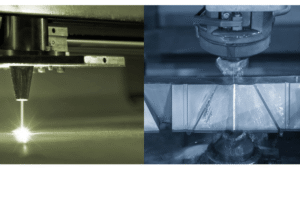
In manufacturing sectors, cutting technologies form an essential part and provide means of shaping, resizing or modifying the given materials for the intended application. Cutting technologies are not limited to the two main cutting techniques both namely thermal and non-traditional as opposed to the basic mechanical cutting. Cutting of materials such as wood involves the use of saw, drill, mill or some other mechanical procedure that causes material removal by the tool coming into contact with the material. More developed techniques of cutting like waterjet and laser cutting involve the application of higher energy for the purpose of precision and reduction of wastage.
Overview of Laser Cutting
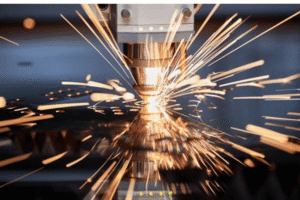
According to technological research experts, laser cutting involves the use of a high-powered laser beam to cut or engrave the material. In this process, a laser is employed for concentrating the energy to specific areas of the solid materials by using lenses, thereby burning, melting, and even vaporizing of materials. It is used in various materials like metals, plastics, wood, and composites because it performs the action without significant deformation of the material. It’s reliable and value added because it provides accurate, decorative cuts, and fostering quick manufacturing of prototypes and production. This method is employed in various manufacturing industries due to its versatile nature and assured performance.
Introduction to Diamond Wire Sawing
Wire saw techniques based on diamond abrasives on a particular wire to cut woods, concrete, metals and other materials is called diamond wire sawing. This technique has been enhanced because the wire contains diamonds, whose properties are precise and can cut objects without damaging them excessively. It is effective in demolition work as well as within heavy structures – as it is often the case in construction, processing and even manufacturing where its benefits include enhanced efficiency and comfort when performing challenging tasks.
Importance of Precision in Cutting
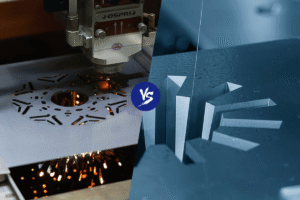
Ability to make precise cuts is of paramount importance in a number of industries because it affects the quality, speed, and safety of processes. The following are five main points in favor of the role of cutting techniques that are accurate:
1. Reduction in Material Waste
One of the advantages of accuracy in cutting is that it cuts waste of materials because ultimately every cut is made to the specified dimensions, thus minimizing the scrap generated in the process. It is reported that efficient cutting method can bring down the wastage of materials by approximately 20%; thereby saving a great deal of money.
2. Structural Integrity
Precision is required in order for parts to operate effectively and not fail due to a miss-match even a millimeter which could have been avoided. For instance, bridges and aircraft parts require precise fitting to function properly.
3. Cost Savings
Proper cutting enhances precision, thus eliminating rework, which otherwise would have resulted in additional costs such as labor and operational capital. This is especially true in industries, such as automotive manufacturing, where modest process tolerances must be adhered to.
4. Aesthetic Enhancement
High precision gives rise to sharp and clean edges which feature perfect finishing which is an imperative quality in sectors such as architecture and interior designing where final outlook is one of the most important aspects.
5. Time Management
Produced with a negligible error rate and minimum re-adjusting of parts, precision cutting facilitates fast manufacturing processes. For instance, introducing CNC machines ensures fast repeat machining while other interventions enhance manufacturing processes.
Comparison of Laser Cutting and Diamond Wire Sawing
| Parameter | Laser Cutting | Diamond Wire Sawing |
|---|---|---|
| Speed | High | Moderate to Low |
| Precision | Extremely High | Moderate |
| Material Loss | Low | Minimal |
| Suitable Materials | Metals, Plastics | Stone, Ceramics |
| Finish Quality | Clean, Precise | Smooth, Minimal Damage |
| Setup Cost | Moderate | High |
| Scalability | High | Low to Moderate |
| Application Volume | Large Scale | Small to Medium Scale |
Key Comparison Points
Material Variety
Laser cutters can be used to cut many types of materials, including metals, plastics and ceramics. Diamond wire sawing is good for hard brittle materials such as granite, silicon, and glass.
Accuracy of Cutting
Laser cut performs with high accuracy and satisfies the requirements for edges, especially when the material is thin. When diamond wire sawing is done, the surfaces are also typically good but small defects may be generated due to the abrasive process.
Heat Generation
Laser cutters apply a lot of heat while cutting which can affect heated materials. The saw-cutting technique by use of diamond wires operates at cold conditions, avoiding the formation of thermal damage.
Cost Impact
Using laser cutters is associated with more expensive apparatus hence more efficient in cases of mass production. Although diamond wire sawing is widely available and affordable, it may require changing the wire more often which will add consumable expenses.
Application in Magnetic Materials
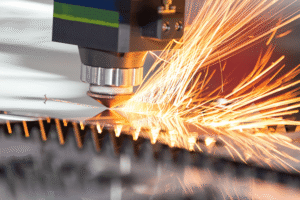
The use of laser cutting in the processing of magnetic materials is becoming ubiquitous because of its precision and flexibility. It is able to cut complicated shapes and reduce wastage, a benefit not without importance in the fabrication of high-efficiency magnetic materials. This technique works best with the production of thin silicon steel sheets and other magnetic alloys required in the manufacturing of transformers and motor laminations.
Laser Cutting of Magnetic Materials
There are many benefits of laser cutting such as high precision and accuracy regarding complicated shapes that are essential in modern-day magnetic materials’ manufacture. The non-contact mode of cutting does not put any stress on the surface of the material which is crucial in protecting the materials’ requirements such as permeability and core losses. It also has a minimum amount of heat applied on it unlike other processes, which avoids the danger of changing the composition of the alloy for example silicon steel. This then makes sure that they retain their functional capability as expected such as within electric motors and electric transformers and any other advanced energy generation devices.
Diamond Wire Sawing for Magnetic Applications
Sawing magnetic materials with a diamond wire is an extremely efficient method in cutting precision and conserving material. A very thin wire that has been dressed with diamond abrasives allows significant machinery to be fitted over it without putting too much strain on the object being cut. Such a technique is mainly beneficial for fragile magnetic alloys, because it doesn’t deform them and maintains some of their core characteristics like permeability. Its characteristics of accurate smooth cuts are utilized in the fabrication of electrical transformer cores and electric motor segments’ lamination where the material is required to be kept intact for optimal functioning.
Cutting Parameters and Techniques
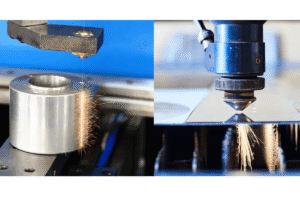
Optimal Settings for Laser Cut
To ensure the best possible laser cutting performance, it is important to adjust the following variables:
- ▪Output Power: The power level should be set based on the thickness and conductivity of the material, with harder and thicker materials demanding greater power while thinner or fragile materials do not require power in excess to prevent burning or deformation.
- ▪Speed of Cutting: Retain a moderate speed towards cutting the targets as slow speeds are better for details and edges while faster speeds can perform less detailed cuts due to the lack of accuracy.
- ▪Focus Precision: The laser needs to directly hit the surface of the objective. Out of focus may cause insufficient or inconsistent depths of cut.
- ▪Assist Gas Pressure: Cut more effectively and clean with less oxidation by using the appropriate gas and level of pressure, for example oxygen for metals and nitrogen for plastics.
- ▪Material Compatibility: The material should be cut using appropriate wavelength and energy intensity from the laser source to prevent damage to the material or creating any health risk.
Parameters for Diamond Wire Cutting
Six Critical Diamond Wire Parameters
- Wire Tension: The tension of the wire must be maintained in its optimum range to avoid wire loss and destruction during cutting. Excessive tension causes the wire to break while tension below necessary limits allows inefficient cutting.
- Wire Speed: The wire speed should be set appropriately for the material being cut since generally a higher speed increases productivity but may sacrifice surface finish whereas a lower speed can result in more accuracy.
- Coolant Application: It is important to apply enough fluid to the cutting zone to avoid overheating and thermal expansion while removing segmented chips.
- Cutting Force: Applying too much force on the wire can destroy the wire altogether or result in an irregular cut, while too little force reduces efficiency.
- Material Properties: Consider hardness and brittleness of target materials as these have influencing factors with cutting parameters and result in quality cuts.
- Material Removal Rate: Higher temperatures mean more aggressive operations which translates to better lubrication and improved tool performance.
Impact of Cutting Parameters on Material Integrity
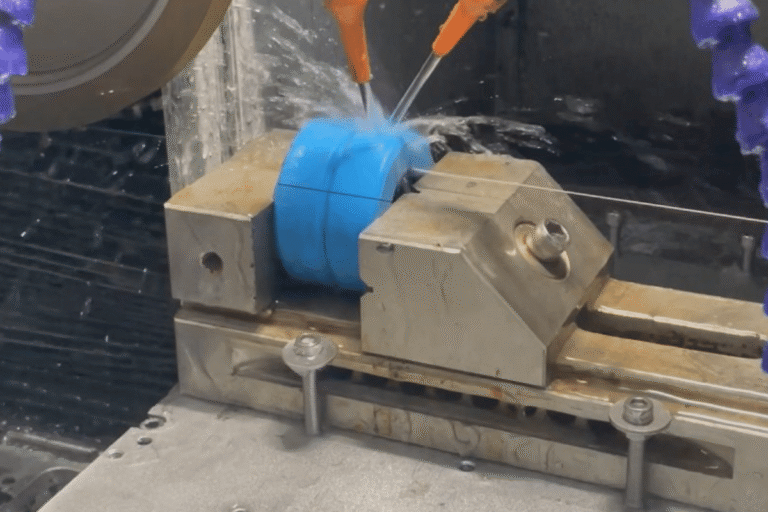
During diamond-wire cutting, cutting parameters affect the workpiece quality and assess the final performance of the workpiece. Exhaustive research determines the range of defects that can be incurred when the cutting parameters are not properly set. These defects include surface micro-cracks, chipping, thermal damage, or residual stress resulting in compromised performance of the material. The following five cutting parameters are pertinent to this:
1. Wire Speed
Faster speeds enable quicker cutting but present challenges in relation to surface temperature and might lead to thermal damage. Achieving the best wire speed is a compromise between cutting rate and surface quality.
2. Cutting Force
Too high force causes extreme wearing effect on the tool and causes cracking of the surface. While the force is too low, it will not accelerate cutting hence inefficient material removal. Managing the cutting force is important.
3. Abrasive Concentration
An elevated abrasive level can decrease the cut duration but adversely compromise the surfaces by making scratches. Low concentrations might lengthen the cycle but limit material aggression, resulting in precision of surfaces.
4. Coolant Supply
If there is not enough flow of the coolant, it will cause overheating due to thermal expansion. Coolant management is indispensable for dealing with temperature and wearing issues while maintaining cutting uniformity.
5. Wire Tension
Excessively pulling the wire may enhance the chances of the wire to break and cause fracture of brittle materials. The controlled cut, smooth and even can be achieved by tweaking tension in accordance with each material requirement.
Future Trends in Cutting Technologies
Contemporary cutting technologies of the present are advancing through use of methodology that is efficient, high precision and environmentally friendly. Efficiency is achieved through the use of artificial intelligence and machine learning to automate processes while also managing to enhance speed and reduce downtime. High precision levels are achieved through enhanced laser, waterjet and ultrasonic cutting techniques which also minimize waste. Furthermore, there is an emerging trend of sustainable practice aiming to reduce energy expenditure and employing eco-friendly methods and materials.
Innovations in Laser Cutting Techniques
A significant advancement in laser cutting technologies is in terms of accuracy, speed and efficiency. The following five innovations are noteworthy:
Advent of Fiber Cutting Systems
Cuts can be made more efficiently with fiber systems which have better power efficiency and speed capabilities. Research studies show its speed may increase by about 3 to 5 times in lower gauge mild steel and has minimized cost and maximized production.
Customization of Beam Profiles
This technology lets manufacturers customize the shape and pattern of laser beams. The ability to tune the properties of laser beams according to the material and thickness gives better edge cuts and minimizes heat affected areas.
Fully Automated Laser Cutting Mechanism
Integration of robots and laser systems helps construct fully autonomous work chains. Human oversight is reduced while possibilities of errors are limited and productivity is increased.
Ultrashort Pulse Lasers (USP)
Ultrashort pulse lasers produce very precise beams of femtosecond pulses ideal for precision work. These make USP lasers suitable for delicate processing in electronics, medical manufacturing and structural engineering.
Hybrid Laser Technologies
Hybrid laser tools employ laser cutting with other processes like milling or punching, such that a single machine can be used for multiple purposes. These multi-functional machines prove helpful in performing manufacturing operations in less time with high precision.
Frequently Asked Questions
1. What Is the Major Difference Between Laser Cutting and Diamond Wire Cutting for Magnetic Materials?
Cutting with laser is a thermal operation as it is based on high-intensity focused light to melt, evaporate or pierce the material. High-pressure assist gas cleans the cut path from molten material. Cutting with diamond wire is a mechanical operation where a thin steel wire with diamond abrasives cuts through it without much heat.
2. Which Method Minimizes Demagnetization Risk?
Demagnetization is least possible when using diamond wire sawing. This form of cutting is cold in nature. The small wire’s disposition with less friction, and substantial cooling done over the wire continuously, disperses heat so that the material never reaches its Curie temperature. Laser cutting is a hot operation where heat gets concentrated causing a broad heat affected zone with high magnetic damage risk.
3. Which Technique Works Best for Different Magnetic Materials?
Diamond wire cutting can cut almost all magnetic materials especially hard and brittle ones such as sintered NdFeB, SmCo, or hard ferrites. The mechanical action involves very low stress eliminating fracture risk. Laser cutting is most often used with soft magnetic materials like bonded magnets. For rigid sintered magnets, laser cutting poses risks of cracking because of thermal shock and demagnetization.
4. What Are the Main Advantages of Laser Cutting?
The fastest advantage of laser cutting is that it is non-contact therefore there is no tool wear-out. The major achievement is two dimensional cutting of various flexible sheets of magnetic materials which allows limited heat affected zones. This helps in making substantial numbers of materials as it is heavily automated and highly repetitive.
5. When Should Diamond Wire Saw Be Preferred?
A diamond wire saw in any hard and brittle magnetic material machining where magnetic properties must be kept intact is the best solution. When there is a need for quality precision cuts of rare-earth magnets, especially thin cuts or when sharp shapes are required, or when the magnet does not withstand heat or friction, diamond wire sawing is the method of choice.
Reference Sources
- •Is It Safe to Laser Cut Magnetism-Compatible Materials? – The paper is directed to laser cutting when it comes to soft magnetic materials whereas in the case of hard and fragile magnets, such as neodymium and ferrite, diamond wire is preferred.
- •The Similarities and Differences Between Diamond Wire Saws Versus Lasers – The ease of cutting thin materials and designing complicated structures through laser while similar emphasis is given to diamond wire cutting in instances of high precision work with decreased wastage.
- •Lasers vs Diamond Wire Cutters, Pros And Cons – Material versatility, precision, and applications of each technique are discussed, allowing for a fully comparative analysis. Recommend reading: Diamond Wire Saw Cutting Machine for Magnetic Materials: The Complete Guide
Related Posts


Trending Blogs

![Polysilicon Material: Properties, Grades & Uses [Guide]](https://wiresawcutter.com/wp-content/uploads/2026/08/polysilicon-material-featured-150x150.webp)