Get in touch with DONGHE Company
-
Phone: +86 181-1645-5490
-
Email: Sales18@DongheScience.com

Complete Guide to Crystal Wire Saw

When considering modern apparatuses for accuracy cutting in industries of high value, such as those dealing with the production of semiconductors, photovoltaic systems, and advanced materials processing, the crystal wire saw emerges as an essential apparatus. This cutting technology enables precise sawing of hard, brittle, and thin crystals without compromising the material’s performance or wasting any part of it. Whether you are an expert wishing to deepen your knowledge of its use or a beginner going through the basics of crystal cutting, this document aims to illustrate everything there is to know about the crystal wire saw. Its working principle, advantages, as well as operational and maintenance instructions will be provided to allow you to exploit this solution to its fullest.
💎
Materials Cut
Silicon, Sapphire, Quartz, Ceramics
🔬
Key Feature
Minimal kerf loss & smooth surface finish
🏭
Industries
Semiconductor, Solar, Optics, Aerospace
⚙️
Abrasive Types
Diamond, SiC, Fixed & Loose Slurry
1
Introduction to Crystal Wire Saws
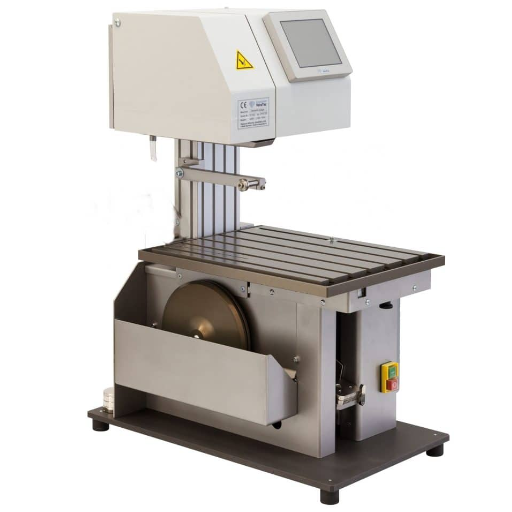
A crystal wire saw is a cutting apparatus with a precision of cutting through materials with crystals such as silicon, sapphire, and quartz, with as little waste as possible or at least at the highest accuracy. These machines use a very thin wire with abrasive coating for the purpose of making clean cuts, specifically in industries such as semiconductors and optics. Crystal wire saws’ main benefits are their smooth surface production, lower kerf loss, and improved cutting performance. These equipments are crucial where precise preparation of materials is needed while ensuring the use of the material is rationed to only what is necessary.
🔩 What Is a Crystal Wire Saw?
For materials that are hard and brittle, a crystal wire saw is a highly focused cutting device made for precision slicing. This includes such materials as crystals, ceramics, and semiconductors. This thin wire blade works on the principle of selective material removal due to the diamond abrasive particles embedded on its surface, which allows for precise machining of the materials. This technique finds an outstanding application because of the little losses of materials called kerf, polishing potential, and retaining the processed object in one piece. Industries that often require careful preparation of materials, such as processing semiconductors into chips, photovoltaic cells, and optics, are known for the extensive usage of crystal wire saws. Moreover, precision and high efficiency in these tools make them irreplaceable when strict specifications with regard to tolerances and material utilization are in place.
📜 Historical Development and Evolution
The wire cutting technology really has come a long way if we look at how it was at its initial stages and the advancements that have been made throughout the years in terms of materials and precision engineering needs. The first wire-cutting device is known to have been made in the middle of the 20th century, when it was all mechanical and included a wire with abrasive particles to cut the material, albeit not very precisely. Thus, with the emergence of electrical discharge machining technology and equipment in the ’60s, and to this date, the processes of wire cutting with good accuracy and speed have been made possible by the use of a crystal wire saw.
By the 1980s, the improvements in automation and computer numerical control (CNC) technologies further advanced wire-cutting capabilities in terms of precision and complexity. The introduction of CNC systems facilitated the implementation of complex cutting patterns with higher reliability, in tandem with the evolving needs of the aerospace, automotive, and electronics sectors. Integration of high-performance materials such as diamond-coated wires and the development of multi-wire cutting technologies have drastically increased the speed at which the technology operates and decreased the cost without compromising accuracy, thus making it an indispensable, convincing tool in modern industrial engineering.
🏭 Key Fields and Industries Utilizing Crystal Wire Saws
Because of their precision and effectiveness, the crystal wire saw finds varied use, and many high-precision industries benefit from it. In particular, in the semiconductor industry, these instruments are used to cut silicon wafers, which are very useful in the microchip and integrated circuit-making process. In the same way, crystal wire saws are used in the photovoltaic sector to cut silicon ingots into very thin wafers, which serve as the basic blocks for making solar cells and make use of the material to lower the materials cost. However, the equipment is more commonly used when manufacturing optical elements, which employs cutting crystals like quartz and sapphire in a precise way to get the material for laser processes. In automotive and even aerospace, the use of ceramic and non-ferrous processing devices also includes such saws because they allow making structural parts of non-conventional materials resistant to weight in advanced technologies.
2
How Crystal Wire Saws Work
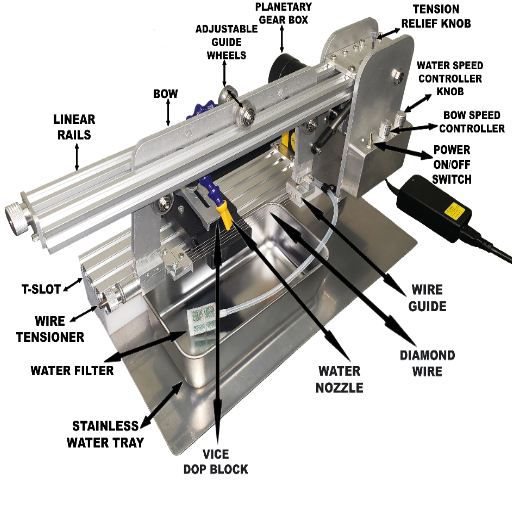
Crystal wire saws work by utilizing a wire under tension embedded with abrasives, which cuts through materials by abrasion. Commonly made of stainless steel or any other metals strong enough for the job, the wire is designed not only to be tough but also capable of cutting with precision. To achieve this, such a wire is coated with diamond or other similar abrasives, reflecting the material to be cut. During operation, the wire under appropriate tension is constantly sliding in and through the crystal material and is laved using special lubricating-cooling liquids to prevent it from becoming red-hot and causing friction. This process ensures a good few cuts are made on these hard or fragile materials with minimal thickness distortion of the sawn material, and therefore, the material is used very effectively. The strict mechanisms of movement and the abrasive properties of the devices, together with the cooling, are reasons why the crystal wire saw enables production of the cut without any flaws of an artefact, which shall not allow any distortions.
🔭 Overview of the Working Principles
The crystal wire saw is one of the state-of-the-art pieces of equipment used in the semiconductor industry for various purposes. In its core, it contains a string firmly held by means of two ends. The job is able to vibrate along the middle section of the string. Cutting is done due to abrasive polishing powders that are adhered to the external surface of the string. These powders produce micro-mechanical processing in the desired area. At one and the same time, a special fluid is employed to cool and lubricate the processed material so as to avoid its overheating due to friction and its deformation due to accumulated heat or mechanical damage. Summing up the above mentioned factors, it may be said that the machine works effectively, which makes a severe precision of applied procedures with a minimum material consumption; therefore, it is actively used in such areas as the semiconductor and solar cells industry.
⚡ Abrasive Technology & Tension Systems
Abrasive methods imply the use of granules, for instance, synthetic diamonds or silicon carbide, in subtractive machining. The inclusion of abrasives on the surface of the tool or a material warns them of the workpiece over a certain time, ensuring accuracy. It runs on a set of controlled variables such as force, speed, and the abrasive media used to achieve degrees of material efficiency damage below surface damage levels in temperature. Depending on the process, industries can use bonded abrasives or loose abrasives associated with slurries, such as in a grinding operation attached to a crystal wire saw.
If you look at tension systems, they are the opposite of the load systems. A crystal wire saw is one such piece of equipment. It is a complex device to work with. Tool deflection or misalignment is inevitable, thus requires being minimized by maintaining the desired tension. When the tension in a cable is right, the tool’s performance would be nothing short of stable, longer tool life caused by lesser wear and tear of the tool and a clean cut, which is usually preferred for intricate and high precision work, like in microdevices manufacturing or optics. Appearing as two separate mechanisms, they are actually complementary and allow the achievement of maximum precision and perfection in contemporary machining methods.
🔬 The Science Behind Precision Cutting
The level of expertise needed to cut holes or cavities into crystals and such hard materials has risen in tandem with the availability of procedural technologies that improve precision and the surfaces obtained. Competence enhancement for supporting these levels of cutting comes with the most use of diamond or the hardest cubic boron nitride (CBN) — cutting mechanisms because of their strength and heat resistance. These are tough enough to cut the material accurately with a little expectation of wearing out or the dressed surface becoming burnt.
Then comes the addition of the cutting medium. Most of the operations, especially wherever ultra-precision cutting of hard materials is advocated, take place in close-fluctuation control environments with reliable cooling and lubricant systems. Applying a thin layer of lubrication onto the cutting edge also enhances the temperature variation inside the materials; otherwise, cracks or bends would appear in the crystal wire saw elements.
In addition, CNC or computer numerical control technique eliminates most of these errors and allows the tools to reach a required accuracy level of a micron or so. Wire electrical discharge cutting and laser-cutting are other major methods that help in creating small incisions without affecting the material under consideration. Such methods also help achieve complex shapes for devices used in electronics, optical, and semiconductor sectors. In the end, the ability to achieve highly efficient cutting of materials and components comes from the use of high-quality equipment, favorable process conditions, and advanced cutting systems, in order to maintain the required dimensions of the substrates.
3
Types of Crystal Wire Saws
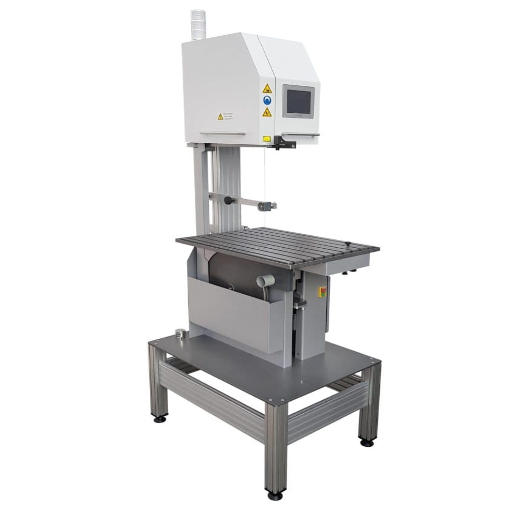
The classification of the crystal wire saw is based on the working principles, the wire material, and the application. Within this subcategory, several forms are predominant:
💎
Electroplated Diamond Wire Saws
Utilize a single wire over which diamond abrasives are plated. Utilized mostly in cutting hard crystalline materials due to the rugged and sharp diamond elements.
🔵
Resin Bonded Wire Saws
A kind of machine that uses the resin-bonded abrasive particles, which are improved for more recent, refined cutting, particularly in processes where there is no requirement for extra damage to the substrate.
⚙️
Fixed Abrasive Wire Saws
Consist of abrasive particles that have been embedded within the wire; this type enhances the cutting performance and is used in operations with high output.
🌊
Loose Abrasive Slurry Wire Saws
Make use of a wire loop and a slurry containing abrasive particles on the outer surface of the wire; in these cases, kerf loss as well as conservation of fine materials need to be minimized or avoided altogether.
Each kind is made best in order to get certain characteristics of the material and provide desired results; the cutting requirements are met for a range of industrial needs, which are regular, precise, and high quality.
⚖️ Single-Wire vs. Multi-Wire Saws: Key Differences
| Factor | 🔹 Single-Wire Saw | 🔷 Multi-Wire Saw |
|---|---|---|
| Cutting Device | One wire; optimum control and flexibility; ideal for lab and development | Multiple wires; enables simultaneous cuts and higher throughput |
| Area of Application | Finesse manufacturing; specific components; curved shapes | Mass production; wafer slicing for the semiconductor and solar industries |
| Wastage & Performance | Slower; more accurate for expensive or fragile materials | Less material loss per slice using thin wires; suitable for mass production |
| Cost & Complexity | Less complicated; smaller initial investment; ideal for labs | More expensive; complex operational procedure; justified at a large scale |
✅ Advantages of Each Type Based on Material and Cutting Requirements
One of the factors that significantly influences the choice of a wire saw between single wire and multi-wire types is the characteristics of the material and the nature of the work to be done. Single-crystal wire saws are most appropriate where highly brittle and precision-looking cuts need to be made, e.g., into semiconductors, gemstones, ceramics, or any other brittle materials where losing the material itself or the control of the process is not an option. It avails the cutting path or work to be done to suit the needs of the user’s work or activity, and is best for small or specific operations.
In contrast, multi-wire saws are better used for mass manufacture where, for example, silicon or solar materials are involved. The use of multiple cuts at once not only enhances the process of the production, but also achieves uniformity in large-scale activities. Many wire saw blades are provided to cut through tougher materials, hence enabling bulk slicing tasks to be implemented within a short time span with high accuracy performance of the machine.
Everything else considered, it is ultimately desirable for each type to consider and strike that golden balance between precision, material characteristics, production aspect, and efficiency, allowing industries to optimise their performance.
4
Applications of Crystal Wire Saws
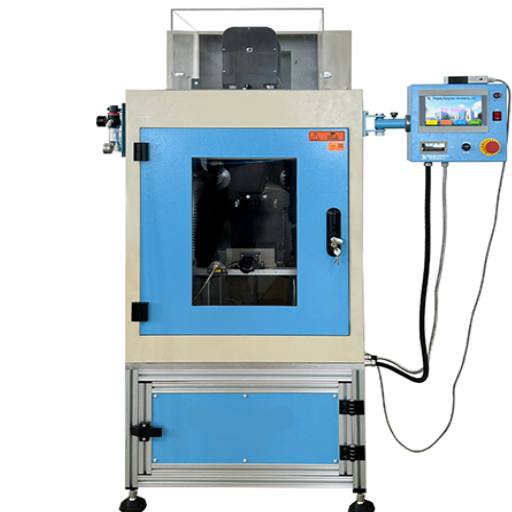
Over time, crystal wire saws became helpful in different precision-based industries because they provide a clean, accurate cutting operation without much wastage. They can be utilized in the micro-processing section in the semiconductor enterprise by cutting thin silicon wafers to enhance the production of chips with uniform thickness and good surface quality. The solar cell production sector also forces the use of such saws to cut silicon ingots into thin, polished sheets required for panel production. To add on, every scientific laboratory or place where they cut gemstones will employ a crystal wire saw to cut materials like quartz or sapphire, where strict dimensional accuracy as well as intactness is needed. In all processes where cutting is a serious concern, domesticating them is unavoidable due to their diversity and practicality.
💻 Electronics, Photovoltaics & Gemstones
Leading industries make intense use of crystal wire saws because of the variations in and the persistence in their application. In the manufacture of electronics, where silicon wafers are used for semiconductors and integrated circuits, it is the same crystal wire saws are employed to ensure effective cuts on a wafer without any wastage of the material and provide the same evenness. Crystal wire saws are also extensively used in the manufacturing of solar cells, as these also have silicon very thinly sliced in wafer form, which gives them great efficiency. Similarly, diamond, sapphire, or quartz can be cut very neatly using tricoat wires for the purpose of jewelry making. Their capability of keeping precision and avoiding any loss of material makes crystal wire saws a must-have in high-precision cutting of various materials.
☀️ Wafer Slicing for Semiconductors & Solar Panels
There is an importance to the use of crystal wire saws in the efficient slicing of semiconductor and solar panel wafers. These wire saws operate by using a fine wire with a coating of abrasive particles to be able to cut silicon blocks into very thin wafers, which are essential components for semiconductor manufacturing. Cutting is realised in such a way as to ensure that the loss of material around the cut, a kerf, is minimal. The manufacturing of solar panels, the crystal wire saws’ efficiency in wafer slicing helps create the output within a certain range of power, coupled with cost efficiency as well. In this context, crystal wire saws allow the manufacturers to produce thinner and thus less expensive wafers, with thickness uniformity and surface finish being important for light capture. It is the accuracy and proficiency offered by the wire saw mechanisation that is crucial in the quest for advanced high-performance semiconductors as well as greener and more eco-friendly production of solar power.
🔬 Applications for Research Fields
There is no doubt that the wire saw technique is indeed a significant factor in many scientific researches mainly for its cutting accuracy and ability to cut a wide range of materials.
- 🧊
Cryogenics: The technology is used in such cases for cutting materials that are very fragile and thin, which should be used for some cryogenic purposes since there shall not be any increase in temperature or decrease in material balance changes. The said equipment proves to be effective in the bounded slicing of such items as superconductors or insulators, which is important in the regulation of cold environments.
- 🔭
Optics: This tool has been used as a basic tool in the production of optical elements, including lenses, mirrors, and prisms. The machine’s sound capabilities in achieving smooth surfaces aid in enhancing the performance of transmitted light and reducing distortion, which often occurs in such areas as laser beams for testing and spectroscopy, among others.
- 🧪
Material Science: For high-end research on improved samples that are provided for the analysis of any fabrics, the research works are enhanced with the use of a crystal wire saw for samples, which are hard to get in any specific geometry. You would include composites, ceramics, and other exotic alloys, referring to aerospace or other industrial usages.
- 💡
Semiconductors: In addition to distributed energy generation, production of thin wafers for microelectronics, as well as computer and communication devices, plus integrated circuits, is achieved with a wire saw as well. The technical relief from the wire saw, with precision and material efficiency, makes it possible to move forward with research within any discipline that requires high technical accuracy and good material efficiency.
5
Key Components and Materials in Crystal Wire Saws

Designed with efficient engineering, crystal wire saws are built to handle enhanced material processing. Below are the key elements in the construction of these saws, and the corresponding materials that are used:
🧵
Cutting Wires
High tensile stainless steel or tungsten wires specially crafted to absorb high tension without bending.
💎
Abrasive Particles
Micro-scale SiC and diamond particles that prevent structural damage by cutting crystal exteriors accurately.
⚖️
Tensioning System
Wire tension controls ensuring the wire does not snap and even cut performance is maintained.
🎡
Guide Rollers
Tight-tolerant rollers enhance path-following for the cutting wire, reducing disturbing arcs and achieving beneficial cutting geometry.
💧
Coolants & Lubricants
Specially fabricated liquids reducing friction and heat generation, protecting the crystal structure from thermal damage.
🔌
Drive System
High-quality motor controlling wire movement with unparalleled accuracy when cutting hard and brittle components.
🔍 Essential Parts in Detail
🧵 Wire
The rather essential element of the crystal wire saw — the cutting wire — can be provided in the form of steel or tungsten. In order to remove the material, it acts as a barrier and is, in some cases, coated with abrasive particles that increase the cutting accuracy. The wire’s size, material, or treatment differs depending on the needs of the cut, so that there is only a small variation in the thickness of the cut and a high quality of surfaces.
💎 Abrasives
Abrasive grains, for example, diamond or silicon carbide, are fixed on the cutting wire or added to the slurry for more effective removal of the material. The abrasive should be selected in relation to the toughness and delicacy of the workpiece. The uniform dispersion and size of abrasive grains are very crucial since it affects the quality of the cut performed.
⚖️ Tension Devices
This is a collection of very precise tensioning devices that regulate wire tension during operation. This, in turn, is very important for straight and precise cuts of the wires. Devices of this kind reduce wire deflection, peripheral pressure uniformity, and, to some extent, the lifetime of the cutting wire by wear minimization.
💧 Cooling System
These units are installed overhead. It’s also crucial for a cool system that uses most probably water or similar fluids to dispose of the heat developed during cutting operations. This is important to prevent wire and material thermal expansion that may be responsible for loss of dimensions and degradation of sensitive clearances. It also helps with the debris during the cutting process to maintain the clean conditions of the cut.
💎 Diamond-Coated Wires vs. Alternatives
Diamond-coated wires provide unique benefits over other cutting methods. The clear advantage is their extreme durability and cutting capacity, especially for hard or brittle substrates. The diamond surface increases the propensity to wear out, has prolonged replacement time, and allows long-term cutting without any drop in performance. Precision is also enhanced by these wires, with minimal wastage of material and closer tolerances. There are other options, which include abrasive cut wires and even non-diamond wires, which could be a cheaper alternative but often compromise longevity and precision for more difficult tasks.
💧 Importance of Coolant Solutions
In regard to manufacturing, coolant solutions are essential for the smooth operation of the machines and the equipment. Among the common, the most important function of the coolants would be the proper withdrawal of heat from the operating process; overheating may cause deformation of the tool and subsequently reduction in the accuracy and performance, and later premature damage. On another note, their lubricating properties prevent the friction between the tool and the material, thus minimizing the wear and tear during the process, promoting the workpiece’s surface smooth finish, and enhancing the machining precision. Use of appropriate coolant solutions additionally assists in the proper removal of the chips or swarf and, therefore, keeps the working area clear and clean of any contamination, which may impact their efficiency.
Choosing the right water-soluble, synthetic, or semi-synthetic coolants and lubricants is a fundamental prerequisite for the effective operation of the machine tool, depending on the material and the speed of cut. As a part of machine tools maintenance and usage of cooling fluids, the issue of the coolant functional capacity or its extension arises, which causes a decrease in downtime, thus favoring cost reduction. This is mainly because effective management of coolant is very crucial in any manufacturing setup for efficient functioning and longevity of all components, whether tooling machines or the crystal wire saw.
✦ Key Takeaways
- ◆
Precision is the Core Value: Crystal wire saws enable micron-level accuracy in cutting hard, brittle materials — silicon, sapphire, quartz, and ceramics — with minimal kerf loss and superior surface finish.
- ◆
Four Saw Types, Different Strengths: Electroplated diamond, resin bonded, fixed abrasive, and loose abrasive slurry wire saws each serve different material and production needs — from lab-scale R&D to mass semiconductor manufacturing.
- ◆
Single vs. Multi-Wire: Single-wire saws offer greater flexibility and lower cost for precision, small-batch cutting; multi-wire saws are essential for high-throughput, large-scale wafer slicing in semiconductor and solar industries.
- ◆
Diamond Wires Lead in Performance: Diamond-coated wires deliver superior durability, prolonged tool life, and tighter tolerances compared to non-diamond alternatives — the preferred choice for demanding applications.
- ◆
Coolant Management is Non-Negotiable: Proper selection and maintenance of coolant solutions directly determines surface quality, tool longevity, dimensional accuracy, and overall operational efficiency in any crystal wire saw setup.
Reference Sources
Experimental Study on the Influence of Wire-Saw Wear
Available on PubMed Central (PMC), this study examines the impact of diamond abrasive wear on the cutting process and wafer surface quality.
Analysis of Wafer Warpage in Diamond Wire Saw Slicing
Published by MDPI, this paper uses finite element modeling to analyze thermal effects during diamond wire saw cutting of sapphire crystals.
Frequently Asked Questions (FAQs)
What is a diamond wire system, and what is the working principle of a diamond wire system?
A diamond wire has a single or loop wire impregnated or coated with a diamond grit to cut. This process relies on abrasive slurry or dry cutting instead of lateral waves like the friction sawing, to drag the wire across the workpiece and rub away the material. It is especially effective on hard and brittle workpieces, such workpieces as SiC, glass, GaAs, or most clean ceramics. The arrangement in a wire saw cutting machine can either be endless blades arranged Infantry Chin or a multi-unit loop wire of cut blades embedded into the beams. Such a machine is usually incorporated into a special machine, called a precision wire saw machine, or CNC-wirescution machine, and is subtle enough for clean cuts with a kerf of less than 50µm.
Why is a band saw used when working with very brittle materials and ceramics?
Diamond-consuming wire saws are advantageous due to the impressive hardness and abrasiveness provided by the diamond grit, which aids in the uniform cutting of the uncut and hard materials and those weak substrates such as single crystal wafers, graphite, and sapphire. The application of a narrow slicing wire and proper cutting methodologies minimizes the risk of burstage and breakage, therefore producing a smooth surface with nearly perfect cuts in terms of dimension, especially those that are aimed for the optics, electronics, or materials science.
What are the salient features of a precision wire saw compared to an ordinary cutting machine?
A precision wire saw contains a mechanism such as closed loop tension control, guide wheels, indexing, high speed operation, and a precision sample stage or sample holder for purposes of providing high precision cutting capability, enabling simultaneous cutting of more than one sample. Common cutting tools made from abrasive wheels or blades impede the process due to the need to stress the sample, or even end up causing fracture surfaces. Precision wire, however, presents a number of advantages, including reducing the kerf, reducing the material, and enabling efficient surface finish by controlling the cutting speed and the cutting fluid.
What kinds of materials can be cut using a wire saw cutting machine, and what are some of its common cutting applications?
The crystal wire cut machine is an apparatus that allows cutting of a wide range of work pieces, such as silicon, carbide, sapphire, gemstones, optics, ceramics, graphite, stone, and concrete. The most frequent cases include a single crystal wire saw for slicing wafers, a system for cutting and sample preparation for testing, cutting of gems, cutting glasses for optics, and cutting research or industrial hard constructions and components.
What role do parameters such as speed, tension, or abrasive broth play in cutting efficiency?
Many factors affect the cutting performance, width of the cut (known as kerf), and the finished condition of the surface whilst cutting: speed of cut, tension on the wire, the amount of abrasives in the slurry, and the speed of the cut. With higher cutting speed and optimized tension, some unwanted wear on the wire can occur, which requires more frequent replacement of the wire in high-speed operations. The abrasive slurry and cutting fluid should be employed efficiently for friction and heat reduction, which will enable smooth cutting and prolonged use of the wire. Closed-loop systems eliminate part of these uncertainties and also aid in the integration of the wire with CNC for machining purposes, thus achieving high accuracy of products.
What are the typical challenges associated with using precision diamond wire, and what can be done to address them?
Typical problems consist of wire snapping, excess heat, asymmetrical cutting, and chippings that characterize brittle material. Solutions include matching the diamond grit and type of wire to the material, keeping the guide wheel properly aligned, employing the correct cooling or cutting solution, adjusting the velocity and tension of cutting, and adequate sample clamping using either a sample holder or epoxy fixture with minimized vibration and indexing distortions.
In cases where more than one sample is cut using a wire loop or loop wire, is it possible, and how does the indexing work?
Sure, multi-sample slicing using the machine can be achieved by employing the use of a continuous diamond or stainless-steel wire with a series of specimens mounted on the sample holder and positioning the cuts accurately via indexing. This is because the most recent and advanced crystal wire saws have guide wheels and an indexing feature that permits one to change and position the cuts on the wire, such as spacing multiple cuts equally parallel to each other, and such applications are put in the laboratories for the cutting of multiple components, such as precision, high, and large-scale cutting in volume purposes.
Related Posts

Trending Blogs

![Polysilicon Material: Properties, Grades & Uses [Guide]](https://wiresawcutter.com/wp-content/uploads/2026/08/polysilicon-material-featured-150x150.webp)