Get in touch with DONGHE Company
-
Phone: +86 181-1645-5490
-
Email: Sales18@DongheScience.com

Types of Crystal Wire Saws Explained

Precision cutters, such as crystal wire saws, are handy tools used in industries where exact cuts are required — electronics, PV, and advanced materials. These machines can cut a variety of crystalline materials like silicon, sapphire, and quartz. Nevertheless, similar to other machines, there is no one size fits all for a crystal wire saw. Different variants of them exist and are advancely developed for different applications to avoid overlap. Also, there are differences in the standards that their manufacturing complies with.
This write-up seeks to find out the several types of wire saws available in the market and the features, as well as the merits and demerits of each type. Having understood these differences, one would have the right information that facilitates the selection of an appropriate wire saw without necessarily wasting time and resources.
🔬
Introduction to Crystal Wire Saws

Wire saws are precision tools used in the cutting of crystals, hard and composite ceramics, semiconductors, and other hard and brittle materials. They employ a thin, but resistant wire having grains bonded to it, which helps in making clean and precise cuts with very little damage to the material while cutting. The saws are highly useful in industries that demand precise application of cutting tools, such as electronic manufacturing or the production of optical components. Their effectiveness, as well as the ability to work with fragile materials, makes such tools indispensable for more advanced activities.
Brief Overview of Wire Saw Technology
Wire saws are considered advanced tools due to the delicate, bendable, usually diamond or some other abrasive substance impregnated wire, which acts as a saw for cutting different materials with ease and accuracy. One of these categories is appreciated by the numerous uses it provides, from cutting away hard materials such as silicon, sapphire, quartz, and ceramics with little waste thickness that would otherwise have been lost in the cutting operation, and also a thin layer of material being cut is not damaged as well. The wire is typically placed within or around a two-drum system, which allows endless revolutions and cutting, and the presence of a coolant or slurry is intended to control the temperature and enhance the cutting process.
This advancement can most commonly be seen in the manufacturing of silicon wafers, solar panels, or optical devices. The so-called wire cutting saw is able to function well both in a single wire, which makes the cuts, and the multi-wire variants, which allow fast work. This technology has achieved another level of development. For example, special methods of control over the tension of wire, abrasive wear rate, and optimal cutting speed have been developed, and as a result, it is extensively used in production where precise work, minimised waste, and increased output are required.
Significance of Precision Cutting in Crystal Processing
Accurate precision cutting is involved in the material processing of crystalline structures to great heights because they serve as raw materials in a number of industries. This includes semiconductor technology, photovoltaics, optics, and others, all of which require quite strict conditions for the crystals’ dimensions and structure. High-precision cutting prevents material losses, as the bulkier the crystals, such as silicon or sapphire, the higher the cost. Also, this eliminates any surface roughness and ensures uniformity, both of which are very important for components like wafers, LEDs, or lenses, which would otherwise impair their performance. In addition, such changes include laser-cutting methods and diamond disc sawing, which have significantly reduced the defect levels and increased productivity, thus enabling the ability to scale up the processes with a precision that never wanes. Even this advantage of maintaining accuracy as well as productivity is needed, and hence emphasizes the importance of precision cutting for modern-day technology applications.
Applications Across Industries
Industries have evolved to an extent where precision cutting has become more relevant than ever before; it is the reason industries have altered the way they work. Semiconductors and other industries that employ semiconductors have precision cutting in constructing their wafers and chips to maximize materials usage and save energy needed for production, as is the case with electronics. In the car market, for instance, they are employed in engineering such complex components such as engine parts and electric circuits within the vehicle. Likewise, in aeronautics, complex and high-strength lightweight materials for compartments of the plane and turbine engines become possible through precision cutting. Moreover, the medical industry makes use of precision cutting in the manufacture of very small surgical tools and implants, where every dollar of tolerance is vital to the customer. As illustrated by these applications, precision cutting performs the Principles of Innovation and Efficiency functions in almost all the present day industries.
Industry Applications at a Glance
| Industry | Application | Key Benefit |
|---|---|---|
| Electronics / Semiconductors | Wafer and chip fabrication | Maximised material usage, energy savings |
| Automotive | Engine parts, electric circuits | Complex geometry accuracy |
| Aeronautics | Plane compartments, turbine engines | Lightweight, high-strength material shaping |
| Medical | Surgical tools, implants | Micro-tolerance manufacturing for safety |
⚙️
Classification Based on Cutting Mechanism
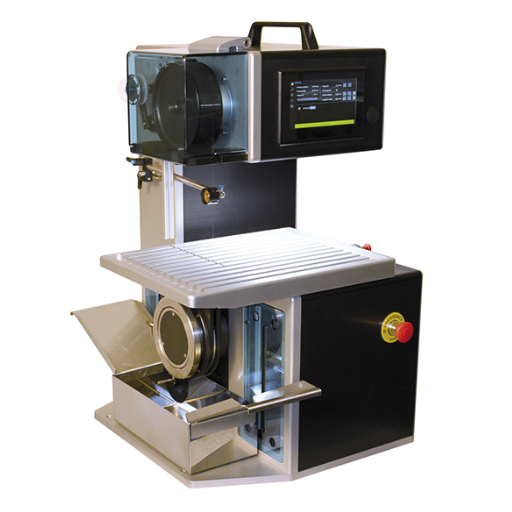
There are two main ways that tools perform cutting: mechanical and non-mechanical.
🔧 Mechanical Cutting
This method makes use of tools such as blades, drills, or saws to physically remove a given material. It includes machining through milling, turning, or grinding. These methods are very useful in the working of tough materials; however, they may be rendered ineffective where complex geometries and ultra-hard materials are involved.
⚡ Non-Mechanical Cutting
These techniques involve the use of energy in the removal of the material. They use energy means in lasers, water jet and plasma cutting to remove material. These methods have a high degree of accuracy and also versatility, such that they can be used in instances where almost no material deformation is required.
There are certain types of manufactured wire saws for chopping material of different shapes and industries.
Linear Wire Saws
High-precision cutting tools, such as linear wire saws, are mainly employed for hard-brittle materials that include silicon, quartz, ceramics, and some metals. The way this saw-cut operates is with an abrasive wire under a certain tension that is moved in a given material as per cutting requirements, which results in maximum production of wanted components with minimal components eliminated and a uniform cutting pattern. As such, to enhance the efficiency and longevity of the wire-saw cutting tools, diamond wires are used extensively these days, especially where complicated surface cuts are needed. Linear wire saws are used in the semiconductor industry, photovoltaics, and advanced material science, where these procedures are highly functional while maintaining the flawless surface of the cut. The reduced thermal and mechanical load these tools place on the cut areas makes them very useful when dealing with applications that require precision in cutting and maximum yield.
Continuous Loop Wire Saws
As the name suggests, a continuous type of wire saw employs a looped wire that revolves continuously on a series of pulleys that facilitate consistency and accuracy in cutting. This mechanism accommodates continuous cutting and also becomes very helpful in the case of mass production. Cutting a fully developed product into desired batches is easy because these saws are exceptionally effective in cutting easy-to-chip silicon, sapphire, ceramic, and several other high-strength composites, resulting in much less kerf. Since the wire is in a loop, there is no frequent change, and thus the production efficiency is increased. Used advanced forms, often these wires are diamond-coated for lasting performance and precision of cutting for a long period of time. Because of their solid construction and versatility, continuous loop wire saws are very useful in materials science, electronics, and the optical fabrication industry, where high-precision slicing is required.
Linear vs. Continuous Loop Wire Saws — Comparison
| Feature | Linear Wire Saw | Continuous Loop Wire Saw |
|---|---|---|
| Wire Motion | Reciprocating/back-and-forth | Continuous loop on pulleys |
| Best For | Precision single cuts, R&D, delicate materials | Mass production, high-volume slicing |
| Wire Change Frequency | Moderate | Less frequent — loop reduces interruptions |
| Typical Coating | Diamond or abrasive slurry | Diamond-coated for durability |
| Industries Served | Semiconductors, PV, advanced materials | Materials science, electronics, optical fabrication |
Analysis of Mechanical Design Differences Impacting Cutting Precision and Waste Reduction
The design of continuous loop wire saws, more specifically than any other type of wire saws, eventually affects cutting exactness as well as the extent of cuts. Machinery such as the tension control system, the wire guide system, and the design of the cutting platform are crucial. The wire tension control seeks to apply a constant load and maintain a straight cut, while dampening vibrations in the wire, which otherwise cause inaccuracies in precision. Modern designs utilize an automatic tensioning system that ensures the optimum tensioning of the wire at all times and for all types of blocks.
The wire guiding device is just as essential because the precise holding of the required position is done through it. This is due to many factors, which include the fact that guides of high precision, often fitted with hardened materials, cut down the lateral motion and hence kerf loss considerably. It is also worth noting that cutting platforms with adjustable axes and negative radial movement suppression techniques enable stabilization of the workpiece and, therefore, proper cutting resolution.
Material wastage relates to cost considerations of wire diameter and kerf thickness in processing materials. Newer designs favor the use of thinner wires and defined layers in other configurations, so as not to thicken the kerf but rather maintain its structural integrity. All these facilitate improved material utilization as well as reduced energy requirement in slicing, and in this case, lead to the offering of economical and environmental advantages as well. Accordingly, it is this very principle of introducing appropriate mechanical designs according to particular work functions that contributes towards achieving higher efficiency with reduced material wastage.
💎
Materials Cut by Crystal Wire Saws
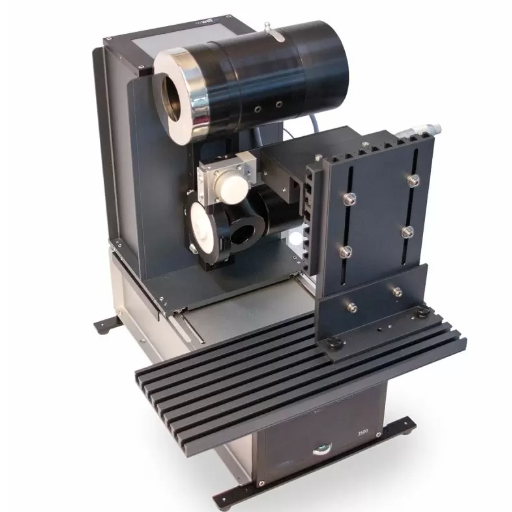
Crystal wire saws are multi-functional in nature, and their main application is to cut most hard and brittle materials. Among the most common materials are the following: silicon, sapphire, quartz, ceramics, different semiconductor wafers, etc. Perfect precision is very important in treating such objects as a result of their demands in the manufacture of certain products. For instance, electronic devices, solar cells, and optical systems. Crystal wire saws are particularly helpful in cutting hard materials like ceramic materials and in metal cutting, as their structure allows working pretty much like a knife, which makes sure that there isn’t much of the material being wasted as kerf loss simply doesn’t exist.
Cutting Hard Materials Like Silicon and Sapphire
Silicon and sapphire, for instance, are classified as both “hard” and “brittle” materials, requiring delicate tools and cutting methods to make sections of specified thicknesses. But this has been revolutionized by the use of wire sawing, which minimizes kerf loss and avoids the cutting process from damaging the structure. The cutting is done with a wire blade embedded with diamonds, which makes the cutting of even the most brittle materials extremely efficient. Also, there are instances where cutting the material without touching it is required, and in such cases, cutting the material with a laser beam is used, which completely removes any methodological cause of stress in the material. Such procedures as laser or wire-cutting, or a combination thereof, help to manufacture semiconductor wafers; provide high-quality optics and design elements; or create all types of thin film photovoltaic cells with close tolerances in the process.
Usage for Delicate Crystals and Brittle Materials
When handling fragile crystallized materials, one must exercise extreme care to avoid damaging the crystalline structure of the sample. Diamond wire sawing and laser cutting are among the most popular applications as they offer a means to avoid excessive physical damage. With diamond-wire saw slicing, there is minimal material loss and little heat, which is beneficial for silicon, sapphire, and quartz, particularly when they are thin. On the other hand, laser cutting allows contactless cutting, which guarantees that there won’t be any splitting and clamping, a process that comes in handy especially for items with structural irregularities. In addition, new ultrafast laser technologies enable making unobstructed cuts with no thermal distortion, which would have otherwise destroyed tiny objects. A person should be conversant with these methods, more so in the electronics, photonics, and high-precision manufacturing industries that require very accurate shapes and high-quality materials.
Challenges Associated with Different Material Types
When working with different kinds of material, one of the biggest challenges that comes with the principles lies in how much can be managed concerning their nature. With brittle materials like glass and ceramics, it is very important to minimize the size of microcracks and stresses for the purpose of damage control because such materials might shatter during the machining process. In the same way, metals, in particular, copper and its alloys, offer a challenge in their processing using laser because it will be difficult to go past the heat losses and the level of precision and efficiency desired. However, with polymers, when high-energy processes come into play, one may rather face a problem such as a material being burned or melted, therefore destroying the surface finishing or waiting for the part to relax in its original dimensions. Such problems may be addressed by the development of a different approach, which includes variation of cutting regimes, provision of enhanced cooling systems, or creating energy-absorbing treatments and equipment to allow processable materials in the process. Such challenges are the reason why modern technology has addressed the importance of introducing such types of wire saws.
Material-Specific Cutting Challenges and Solutions
| Material | Main Challenge | Recommended Approach |
|---|---|---|
| Glass / Ceramics | Microcracking and stress-induced shattering | Diamond wire sawing; minimal cutting force |
| Copper / Metal Alloys | Heat dissipation limits laser efficiency | Enhanced cooling systems; specialized wire grades |
| Polymers | Burning/melting at high-energy process contact | Variable cutting regimes; energy-absorbing treatments |
| Silicon / Sapphire | Hard and brittle — risk of structural damage | Diamond wire + laser combination for ultra-thin cuts |
✅
Advantages of Wire Saw Technology in Crystal Processing

There are many benefits of using wire saw technology in the processing of crystals, which can mostly be linked to precision and effectiveness. This approach allows one to precisely slice the shapes of hardened materials such as silicon, sapphire, quartz, etc., with minimal loss of kerf without wasting the material or processing it. It also involves the use of a thin wire with abrasive slurry or fixed diamond coating for easy machining purposes, and aids in cutting these kinds of materials with very smooth results, with fewer finishing operations. The low cutting forces associated with wire saws minimize the risk of micro-cracks or structural defects within the crystal, ensuring superior quality and reliability. In addition, these types of wire saws are very effective in using different counts of crystals and flexible qualities.
🏆
Superior Surface Quality and Minimal Kerf Loss
With the help of a wire saw, manufacturers worldwide have managed to produce components with better finishes and little kerf loss. Abrasive wires, which are calibrated under tension, minimize the deformation and maintain at most the original condition of the crystals on the cutting surface. Since the cutting is so clean, emphasis on finishing or cleaning is less, and efficiency is improved. One of the major cutting-related issues, called kerf-loss, is significantly reduced due to the very thin wire and the use of appropriate cutting parameters. Wire-based technologies offer an immense advantage over conventional methods in terms of scrap generation, which results in wastage of expensive material and adds to the overall cost. Hence, there are particular types of wire saws with various applications in different fields, e.g., semiconductors, photovoltaics, where material saving and surface finish are very important for the process and also the cost effectiveness.
💰
Cost Efficiency and Scalability
A significant cost advantage of wire sawing is that restricted amounts of material are wasted while the operation is accurate. Raw material yield is highly appreciated, as the cost of the product in the case of some industries is a key issue. Also, the improved quality and speed of the wires cut the cost of operations by limiting the change of tools and frequent breaks in the operation. In terms of its ability to accommodate growth, wire sawing can handle any production level. With its flexible structure and compatibility with robotic systems, production can be scaled up. In addition, there are types of wire saws that enable the cutting of large amounts of materials (in terms of both the size of the piece being cut and the number of cuts) with utmost precision, suitable for both precision and high volume jobs. This way, the concept of wire sawing allows for efficient and mass production long into the future.
🌱
Environmental Impact Considerations
Wire saws, despite being highly effective, have impacts on the environment, some of which are quite adverse. Firstly, the oils and coolants used in the cutting may cause pollution of soil and water if not well handled. It is thus necessary to apply filtration and recycling of recycled water in order to avoid these effects. Furthermore, the power consumption of most of the types of wire saws is very high, meaning that there is a need to incorporate alternative energy sources in a bid to lower the carbon footprint. Other wastes, which include slurry and dust by-spills, must be appropriately disposed otherwise, they have the potential to spoil nature. There are other developments, such as the use of biodegradable oils and machinery that utilizes low energy, that would enhance the environmental aspects of wire sawing processes without compromising the performance or the precision cutting capabilities.
🛠️
Choosing the Right Crystal Wire Saw for Your Needs

Several critical considerations ought to be made to make a selection on the crystal wire saw that is most effective for a given application. The primary factor to account for is the type of material as well as the toughness of the crystals, since it helps in the determination of the capability of the wire in terms of its diameter and the type of abrasive required. The next point is associated with the demands on the accuracy of a project, as greater precision can typically only be achieved by using tension control and compensation of the wire speed control systems. Consider also how big your production is, so that the throughput of the wire cutting machine that you choose corresponds to your processing capacity. On top of that, focus on the energy saving and green features, focusing on lower power consumption and environmentally friendly cooling systems, in order to achieve distant environmental objectives. Last but not least, take note of the right support provided by manufacturers, especially regarding repair and spares services. Paying attention to these aspects will let you choose a crystal wire cut and saw more efficiently and sustainably.
Key Selection Criteria
- 1
Material Type and Hardness — Determines wire diameter and abrasive type required (e.g., diamond wires for sapphire and SiC). - 2
Precision Requirements — Greater accuracy needs advanced tension control, wire speed compensation, and micron-level tolerance capability. - 3
Production Volume — Match machine throughput to capacity; multi-wire systems for high-volume industrial needs. - 4
Energy Efficiency and Green Features — Prioritise lower power consumption and eco-friendly cooling systems aligned with sustainability goals. - 5
Manufacturer Support — Evaluate after-sales service quality, spare parts availability, and repair responsiveness.
Factors to Consider Based on Material, Precision, and Production Volume
When picking up the most suitable crystal wire saw, you must consider the type of materials you are going to process, as this decides the appropriate wire and cutting conditions. In the cutting of crystalline structures, any symbols harder than sapphire, any symbols harder than silicon carbide, require the use of diamond wires of high durability, and on the other hand, less aggressive wires may be used for soft materials.
Let us suppose the main criterion is the precision, then look for the functional particulars of the device, such as wire treatment respects the initial tension, some sort of balancing or surge compensation system, and cutting speed fluctuation. High precision cutting machines, especially for electronics or optics, need sophisticated equipment which meets the tolerances generally associated with micron-level saws and the ability to cut therein thickness.
Another important aspect is outputs, since it affects wire saw dimensions, level of mechanization, and the amount of loads it can bear. Advanced design and the desire to produce a large amount, as well as the efficiency sought, would prefer computerized multi-wired systems rather than manual ones, for this reason. This is the equilibrium necessary to enhance performance, which is dependent on the activity in question.
Cost-Benefit Analysis of Different Types
Considering the different types of wire saws and how they affect the outlay costs versus the productive efficiency of the entire process: although high precision diamond wire saws are costly, they are balanced by the enhanced precision and minimized wastage to cost over a longer period. Where the budget is too tight or precision is not very intensive, conventional wire saws are quite cost-effective but suffer considerable wear on both materials and machines, necessitating regular servicing. Also, in multibladed systems where high-level production is necessary, such systems perfectly fit the need, although this comes with a higher price. Therefore, it is better to weigh each factor against the requirements of the projects and determine the most economical one.
Cost-Benefit Summary by Wire Saw Type
| Type | Initial Cost | Precision | Best Application |
|---|---|---|---|
| Diamond Wire Saw | High | Very High | Semiconductors, optics, PV, long-term ROI |
| Conventional Wire Saw | Lower | Moderate | Budget-constrained, lower-precision tasks |
| Multi-Wire / Multi-Blade System | Highest | High | High-volume industrial production, mass slicing |
Recommendations for Small-Scale vs. Industrial Applications
🔩 Small-Scale / Compact Use
For compact use, especially in things like modeling or architectural sawing, conventional wire saws may be better because of the low capital expenditure and flexibility. These can be employed even when the material and accuracy demands allow for longer processes and equipment services. Ideally, the blade should be tensioned appropriately for the thickness of the material being cut to prevent excessive or premature tool damage.
🏭 Industrial / High-Volume Use
Conversely, when it comes to industrial purposes, priority is given to equipment or process design that allows for the efficient flow of materials. It is particularly advised to apply multi-wire saw systems in these cases, as well as wherever there is mass production with high standards and minimization of scrap. The operations through these prove faster and a great precision of the cut, bringing down the loss of time and expenditure in the long run. Even though such types of wire saws are more expensive at the outset, the improved efficiency in terms of productivity and reduction of cost per unit in a volume production more often than not balances out the cost of the investment.
Summary & Conclusion
Selecting the Right Wire Saw — Efficiency, Precision, and Sustainability
Crystal wire saws represent a critical intersection of engineering precision and operational efficiency. Whether cutting silicon wafers for semiconductor production or sapphire substrates for optical components, the right wire saw — linear, continuous loop, or multi-wire — can determine yield, cost-per-unit, and environmental footprint simultaneously.
By matching the saw type to the material, precision requirement, and production scale — and by accounting for long-term costs over initial investment — businesses can unlock significant gains in quality, throughput, and sustainability across even the most demanding cutting applications.
Reference Sources
“Diamond wire machining of wood”
This document from the University of Michigan discusses three common configurations of diamond wire saws, including spool-to-spool wire saws, and their applications.
“Early Small Woodworking Saws”
This article from Crafts of New Jersey explores different types of saws, including specialized ones, which can provide context for wire saws in woodworking.
Frequently Asked Questions (FAQs)
In which ways do these cable saws form a major difference from other types of wire saws?
Specifically, these cable saws refer to those saw systems which, instead of inflexible blades, rely on a steel cable or wire rope with very tough diamond beads or abrasive segments bonded to it in order to cut something. Other knives, however, are strictly rigid, such that they are used to encircle or enclose larger concrete, some special-shaped stone, or steel-reinforced concrete structures which otherwise could not be handled by knives alone. They are applied in granite, stone, and block cutting in stone quarries as well as in demolition work because even the best quality wires, because of weight and length restrictions, cannot perform cutting any other than by the use of saws.
How are diamond wires particularly employed within a concrete and reinforced concrete cutting winynomial process?
When applied to concrete, diamond wire saws are the best choice. Even reinforced concrete can be cut with such a saw because of the use of diamond beads or sintered diamond wire segments on a looped steel wire for abrasion. More especially in the case of most structures made of concrete, wire saw machines keep the tension of the wire and position its diamond-inserted wire so that there is as little vibration as possible. The systems are used for controlled demolition, removal of parts, and where there is a need to make openings with lesser vibrations.
How many types of wire saws and other diamond equipment are there for use in demolition and strenuous cutting?
Among the types of wire saws, one may find monopoles or single-strand wires, often referred to as electroplated structures, and multi-wires that may either be sintered or bonded with beaded wire ropes. There are merit-fitted diamond beaded wire ropes and commercial application-specific diamond wire saw blades and cables with diamond wires. Precision electroplated diamond wire cutters handle small and precise cuts, but these other types of wires, such as wires with sintered beads and joint-free wires, are employed in heavy-duty cuttings involving stones and boulders, as well as concrete removal in busting and quarries.
In building construction, what are the types of wire saws, and what are the cutting applications for this equipment?
There is a wide variety of cutting applications that employ wire saws, such as demolishing concrete construction, cutting huge blocks of concrete, removing bridge sections, portals, and even saving operations. They are the best ways to cut objects that blades cannot reach, where one needs to cut without much vibration, or where large concrete objects are required to be cut into smaller sections. Wire saws find their usage in on-site constructions and the mining and rock cutting industries.
What are the types of wire saws available, and what is the significance of steel wire or looped steel wire in such cutting systems?
There are various types of wires used in saws, such as diamond-embedded wire ropes, diamond beads threaded on steel cables, or even just simple pieces of woolen threads. The steel wire is the element that provides the tensile forces for hard, applied workloads, while the diamond beads or sometimes bonded beads cut the material through an abrasive action. Such looped steel wire configurations assist in continuous cutting operations and lead to improved performance and increased durability compared to non-loop wire configurations.
What exactly is the relation between durability and effective cutting with respect to diamond’s performance in the use of wire saws?
The operation of diamond – its particle size, method of binding degree (woven vs brazed), and the overall manufactured diamond quality – influences cutting ability, cutting speed, and working life. Cutting of abrasive materials with diamond beads or wires of high quality does not wear them out too fast and can maintain efficiency when cutting through reinforced concrete or granite, thus increasing the output of such products. Selecting proper diamond tools with respect to the cutting process, the use of appropriate wire tension, and machine settings provides an optimum relation between speed and durability.
Related Posts

Trending Blogs

![Polysilicon Material: Properties, Grades & Uses [Guide]](https://wiresawcutter.com/wp-content/uploads/2026/08/polysilicon-material-featured-150x150.webp)