
Get in touch with DONGHE Company
-
Phone: +86 181-1645-5490
-
Email: Sales18@DongheScience.com

What is a Graphite Wire Saw? Complete Beginner’s Guide to Graphite Cutting Machines

Saws constructed from graphite wire are iconic in any field that engages in the precise cutting of graphite workpieces. They are specially designed equipment that guarantees exactness and efficiency to a wide range of activities, from making semiconductors to fabricating complex electrodes. Whether a novice or a professional seeking to broaden their knowledge, the following guide has all the information regarding graphite wire saws. What they are, what they are made of, and how similar to the invention of landscape architecture, these machines can change the landscape design industry, are all discussed in this paper. Those who wish to improve the processes involving graphite and how such tools are able to make precise cuts will find this paragraph worthwhile.
🔬
Introduction to Graphite Wire Saws
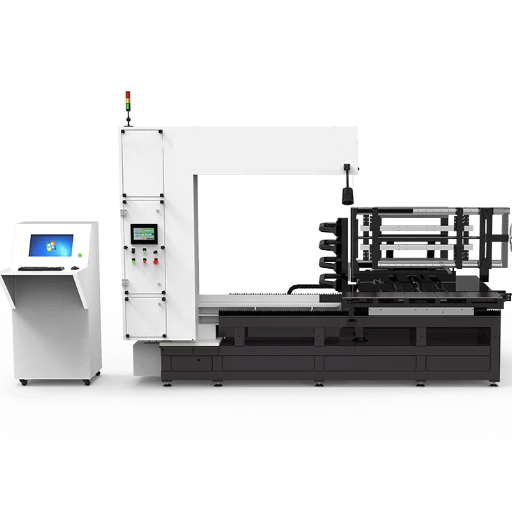
A graphite wire saw is a high-precision cutting instrument for graphite processing. It features a very fine steel cable covered with abrasives for the precise cutting of the material with very little waste. It is appreciated richly because it prevents any damage to the main body while separating the work pieces, which is perfect when precision and quality finishes are needed. The graphite wire saw finds its application in various industries, such as the electronics and aerospace industries, where they prove effective and efficient in intricate component manufacturing.
⚡
Importance of Graphite in Industry
Many industries cannot do without raw graphite due to the particular properties that it has, including high thermal and electric conductivity, chemical stability, and superb lubricating qualities. For example, the energy industry critically depends on graphite for lithium-ion battery production, where the material is found in the anode. Likewise, graphite is extensively used in the steel industry as a refractory material for its ability to withstand extreme heat and to cope with thermal shock. Moreover, the use of this material is also in the industry through the making of advanced carbon composites and the sectors of aerospace and defense. Graphite wire saw is arresting, but the application of graphite with power systems such as transport or alternative energy clearly manifests that drawing and processing this material is the future.
🔪
Overview of Wire Saws and Their Applications
Wire saws are extremely exact cutting instruments; they are frequently utilized for chopping out slices from numerous types of materials, with very little waste and at a precision level that is unparalleled. These saws normally consist of a simple thin wire, which is mostly coated with diamond abrasive, allowing them to effectively slice through hard, annoying, tough surfaces of silicon, quartz, and ceramics. Such saws are, graphite wire saw included, used for a host of applications where the need to cut a material cross-sectionally without slicing through the top surface causes the cutting tool to pull the abrasive wire across the workpiece surface, turning this surface into the cutting tool surface.
Across different sectors, these tools are put to use as well in many ways. As for the semiconductor sector, wire saws come in to cut silicon wafers incorporated into microchips and solar batteries. Also, they are used in construction or the stone business when the cutting of marble, granite, and reinforced concrete is required. Wire saws have their applications in labs where precise cutting is needed, as there is a need for cutting instruments, especially in materials science laboratories. With the development of technology, wire saws have been improved to deliver better efficiency in their operation, including less energy consumption and enabling very smooth surfaces, even in their high finishing.
💡
Understanding Graphite Cutting Technologies
Mechanical and non-mechanical processes are applied in graphite cutting with respect to its unique properties of brittleness and machinability. High precision with minimal waste material is the reason why, over the ages, mechanical cutting using diamond-coated tools is prevalent, and still is, where it is shown that such tools are beneficial for use. These tools also offer high integrity and high speed when applied in an industrial setting.
However, the graphite wire saw has become a favorite application for this purpose. The process involves the selection of materials for the construction of the component and the proper use of energy for cutting purposes. The wire EDM system eliminates any mechanical stress on materials, which many conventional shapes cannot avoid.
One more progressive innovation in the field concerns laser cutting, which employs powerful beams to cut graphite wire saw much more effectively. On the other hand, sharp edge finishing and precision detailing are only achieved through laser cutting and have an even better performance in practices characterized by extreme heat. Any technology is chosen according to the operational conditions, such as performance, material usage, and the quality of the surfaces. Thus, the development of technologies is aimed at maximum enhancement for industries that widely apply components made of graphite, namely electronics, aerospace, and metallurgy.
Diamond Wire Cutting vs. Traditional Methods
The use of diamond wire to cut is cutting-edge technology that carries several benefits over other cutting methods in terms of accuracy, performance, and retention of the work material. As opposed to abrasive or mechanical cutting techniques, diamond wire cutting utilizes an endless loop of a diamond-infused wire, giving a neater cut with minimal waste of the work material. This makes processes involving fragile or costly parts, such as cutting graphite, very appropriate to this approach.
| Feature | Diamond Wire Cutting | Traditional Methods (Abrasive / Mechanical) |
|---|---|---|
| Cut Quality | Neater cut, minimal material waste | Rougher edges, higher kerf loss |
| Heat Generation | Low — no thermal stress or structural weakening | High — causes thermal stresses and surface damage |
| Complex Shapes | Supports tight CNC-controlled complex geometries | Limited in handling intricate profiles |
| Processing Time | Shorter — higher throughput | Longer — lower efficiency |
| Environmental Impact | Less waste, less energy-intensive | Greater material loss and energy use |
| Capital Cost | Higher initial investment; quickly amortized by operational savings | Lower upfront cost; higher long-term operational costs |
During application, older techniques like sawing or abrasive cutting tend to be accompanied by the development of excessive heat, which causes thermal stresses and damage to the surface. However, with diamond wire cutting, temperatures are kept low; therefore, there is no danger of weakening in structure, and the edges remain well defined. Further, the use of diamond wire cutting allows for complex shapes and tight CNC-controlled functions that some of the other techniques would find hard to achieve. With respect to efficacy, the diamond wire saw offers shorter processing time and has less impact on the environment as waste is minimised, and it is less energy-intensive. In cases where the graphite wire saw is used, the capital cost is higher, due to the cost reduction in operation and better quality of work, the cost of the equipment is amortized easily, mainly in industries.
📐
Technical Specifications & Components

The graphite wire saw is designed to cut precisely with the least amount of wasted material. Salient features are as follows:
Technical Specifications at a Glance
| Specification | Value / Detail |
|---|---|
| Cutting Accuracy | ±0.01 mm dimensional accuracy |
| Wire Material | Diamond-coated wire for superior wear resistance |
| Cutting Speed | 1 m/s to 50 m/s (varies by material density) |
| Operational Temperature | 5°C to 40°C (avoids thermal expansion issues) |
| Material Compatibility | Soft to high-density graphite |
| Coolant System | Built-in coolant supply for heat relief and surface protection |
📌 Note: These specifications explain why the wire saw is able to perform to great standards in harsh working conditions while maintaining excellent accuracy and efficiency.
Components of a Graphite Cutting Machine
- 🔧
Wire Sawing Unit: This, being a critical part, is made out of strong materials, including but not limited to diamond wire, as these are effective in cutting even the hardest subjects. The cutting process is well controlled with tension, which is a notable enhancement in the cutting process as it minimizes the chance of damaging the material.
- ⚙️
Rollers: The function of these parts is to ensure the proper positioning of the wire during the cutting process to avoid any cutting errors and provide equal cutting performance of all pieces.
- 🔄
Wire Feeding Mechanism: The wire is activated through a motor-driven system. The wire operates at variable speeds, which helps cut different grades of graphite more flexibly, as this drive system allows for varying the wire speed.
- ❄️
Cooling Circulation Mechanism: This basically refers to the coolant application where a continuous flow of grease is maintained to keep the wire and the graphite cool and prevent the wire from getting hot.
- 🖥️
Controlling Device: The Control allows changes to settings like tension and speed, including the feed rate, by the operators involved. In certain controls, the interface sometimes makes use of a touch screen for precision and convenience.
- 🌀
Dust Suction Device: Glass containers or bottles are, in many cases, emptied of contents, often under vacuum extraction. Noise pollution due to glass dust is troubling; therefore, vacuum cleaners that carry out tasks in cool conditions are practical.
🏭 Combined Outcome: These aspects come together and allow for the construction of a complex system, which is, in this case, extremely efficient and effective in machining graphite in the most demanding areas/industries, such as aerospace, electronics, and manufacturing sectors.
▶️
How Graphite Wire Saws Work
A wire saw, which typically has diamond particles implanted on a wire of a certain diameter, is a good example of a graphite wire saw, as it cuts through the graphite material with a lot of precision and little effort. In the beginning, the wire is secured with proper tension, and movement inwards is caused by the action of pulleys, which are powered by the motor. The wire impregnated with diamond cuts the graphite component by continuously rotating at high speeds.
In the course of cutting, an active cooling and lubricating system lowers the amount of heat produced, reduces friction, and thus preserves the wire as well as the workpiece. Application of a cutting fluid in such operations also assists in removing chips found at the point of cutting, enhances the appearance of finished surfaces, and prevents damage to them as well.
It is essential for a graphite wire saw to have within the integration the control tools like a cutting speed, a tension, and a wire feed rate control system for proper functionality. This is in order to achieve cutting with accuracy, consistent operation, irrespective of the density and shape of the graphite to be cut or machined. All these likely combine to make the machining device useful as industrial equipment, as it can perform many operations effectively, for a long period of time.
Operational Flow: Step by Step
- 1
Wire Tensioning: The wire is secured with proper tension before cutting begins.
- 2
Motor-Driven Pulley Activation: Movement inwards is caused by the action of pulleys powered by the motor, driving the diamond-impregnated wire at high rotational speeds.
- 3
Cutting with Cooling: An active cooling and lubricating system lowers heat production, reduces friction, and preserves both wire and workpiece integrity throughout the process.
- 4
Cutting Fluid Application: Cutting fluid removes chips at the point of cutting, enhances finished surface appearance, and prevents surface damage.
- 5
Precision Control Integration: Cutting speed, tension, and wire feed rate control systems are integrated to achieve accurate, consistent operation irrespective of the density and shape of graphite.
🏆
Advantages of Using Graphite Wire Saws
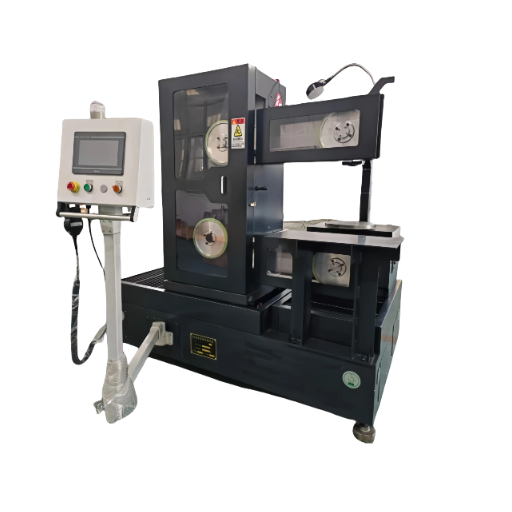
One of the major advantages of graphite wire saws is the ability to machine materials with precision. Such machines can assure the cutting of extremely intricate and difficult geometries, with no loss of tolerances. This level of detail is necessary for such industrial sectors as the wafer and aerospace industries. Furthermore, the thermal effect on the material during the cutting process is minimal with graphite wire saws, which diminishes the deformation possibilities and helps in holding fragile components. These measures usually result in less waste from fortification materials than conventional techniques, so less free-hand working and remanufacturing wastes are required afterward. At last, unlike other saws that may cost a lot to purchase but in the long run do not save any money, they are cost effective owing to they do not easily break down, their maintenance is cheaper, and they cause much less interruption while working, practically making graphite saw the preferred choice for professional usage.
🎯
High-Precision Cutting
Production cutting solutions are often highly precise to address the needs of productivity and manufacturing sectors. Such solutions often incorporate advanced technology such as laser-, water jet-, and diamond-coated cutting techniques, which assure micron-level cutting while enabling the structure of the cut component. Such techniques depend on the control of both the rate of cut and the application of energy to the target in order to avoid the much-dreaded distortions brought about by heating, excessive burring, and the formation of serrated edges upon removal of material. For instance, quite complex designs can be achieved by laser cutting with zero error, whereas waterjet would be best for materials that can degrade with extreme heat, for example, composites and some metals. Implementation of Automatic Control systems further diminishes variations and human intervention maintains high standards in the production line or process. In this way, different industries are able to avoid strict constructions of adulteration limits in terms of different machineries such as airplanes, automobiles, and age-related medical equipment, whereas the cutting technologies employed in the production preclude performance losses.
♻️
Efficiency & Reduced Waste
Modern manufacturing processes like CNC machining, laser cutting, fabrication, and additive printing have drastically increased productivity by eliminating human labor as well as simplifying intricate processes. These production technologies use the material effectively by ensuring accuracy, which lowers scrap production and allows for retaining the main shape of the product. Moreover, with the help of sophisticated tools for controlling processes and analytics in real time, it became possible to eliminate constraints and quality violations within the production process. This decrease in the use of raw material and energy results in operational savings and more environmentally friendly production methods. All these improvements render their importance for Industry 4.0, while allowing organizations to deliver when there is higher consumption without damaging the resources available.
🛡️
Enhanced Safety Features
In today’s age, the advancement of cutting technologies like laser and waterjet cutting has improved the safety of operators more than the traditional methods of using mechanical saws or manual means of cutting. Most of these cutting systems are performed in enclosed chambers, and their automation limits the direct contact between the cutting machines and their operators. Hence, the dangers of human mistakes, such as careless laminating blade injuries, are also decreased.
Moreover, it is noteworthy that the adoption of such technology can prevent the formation of unwanted artifacts such as dust, fumes, or heat whose presence is characteristic of the conventional cutting and which pose a threat to the health and safety of operators and others in the work environment. Case in point, Waterjet cutting creates no heat-affected zones (HAZ), therefore avoiding the occurrence of burns and deformation of parts, as is common with thermal cutting processes. Several machines also have sophisticated sensors installed and are engineered with emergency power cut-off mechanisms, which will stop the machine as soon as anything unusual is detected for the sake of the operators’ safety.
Certainly, owing to the high degree of automation and accuracy, as well as diverse safety features, these systems are ideal in environments where health and safety issues at work arise as a serious concern. This evolution benefits not just the employees’ health, but also cuts down on non-operational hours, including costs incurred due to injuries in the workplace.
🏭
Industrial Applications of Graphite Wire Saws

Graphite wire saws have found their primary utility in industries cutting very strong and fragile materials where precision cannot be compromised. The semiconductor industry could possibly be the main field where they are used for their primary function of cutting silicon wafers into pieces with little waste. Photovoltaic manufacturing uses them for cutting silicon ingots as well, which is essential for making solar cells. Graphite wire saws also find application in aerospace and in the engineering of advanced ceramics because they provide for the effective processing of advanced mechanical materials. The concerns are primarily cutting with clean edges and minimizing any burning on the material, which is the reason these saws are crucial in various sectors.
💻
Semiconductor Manufacturing
As semiconductor production advances and the use of sensitive components such as silicon wafers increases, graphite wire saws are essential because they offer accuracy while cutting this fragile material. Using these tools, one can even produce very thin wafers with very small kerf width, which reduces process waste and helps in minimizing cost. This is because the cuts made by such a graphite wire saw are so perfect to pass the inspection required in the semiconductor industry. This further helps when it comes to high-volume production, where surface damage is less and finishing processes give a very good yield. In addition, their capacity to be durable and efficient during the high-volume manufacture of devices renders graphite wire saw very important in the growth of semiconductor processes.
☀️
Solar Power Applications
The solar energy sector has become synonymous with the utilization of graphite wire saw for slicing silicon wafers for the making of photovoltaic (PV) cells. This thin cutting type of saw reduces material waste and increases the productivity of pure silicon, which is very important in producing high-quality solar cells. The ultra-smooth surface finish obtained from the saws can eliminate or lessen polishing and thus ensure a fast application cycle and cost reduction. This and more make graphite wire saw a very reliable and scalable tool for use in the energy sector because solar energy satisfies growing demands for higher productivity. The advancement in this technology has contributed to more efficient solar panels that are lighter and highly affordable, justified by the increasing need for clean energy.
🏗️
Material Processing in Various Industries
Material processing is an essential aspect of multiple industries; it entails converting raw materials into parts or products that satisfy particular functionality and structure-based characteristics. The automotive industry, the aerospace industry, and even electronics and construction industries make use of developed material processing methods to improve production, quality, and creativity.
As an instance, in the vehicle industry, processes such as casting, forging, and additive manufacturing make it possible to develop lightweight components that retain their strength, thus saving on fuel consumption. In the same vein, in aerospace engineering, reliance is on high precision machining together with composite materials to provide for structural strength at the loss of weight. In the electronic industry, it encompasses semiconductor manufacture as well as precise machining of parts so that small scales can accommodate big machines and enhanced performances. While at this time in the construction industry, the improvement of the durability and efficiency in the use of resources is possible through the application of sophisticated concrete technologies, reinforcement of steel, and fabrication of sections.
Additionally, the use of technology in the industries, integrating automation, artificial intelligence (AI), and the most recent machines, has enhanced ways of working with materials. With such technological improvements, it is easier for production companies to achieve specified goals, minimize losses on raw materials, comply with regulations and corporate obligations, and improve throughputs. These strategies allow the industries to stay relevant in the face of the changing needs of the market and in the face of advancing technology.
🔧
Maintenance, Efficiency & Troubleshooting

Maintenance and Efficiency Tips for Operators
- 1
Routine Checks: Ensure all equipment and machinery is inspected on a daily basis for any signs of rot, uneven spacing, or damage. Early remedies prevent breaking down and help extend the operational activities of the machine.
- 2
Greasing and Washing: Lubricate all joints where there is motion in order to decrease unwanted heat production in movement. Scrub machines and the parts within them so as not to allow the dirt, which diminishes the efficiency, to build up.
- 3
Realignment and Reconfiguration: Calibrating the sensors, the controls, and the sharp-edged elements should be done periodically to maintain precision. Disarranged configurations minimize productivity and spoil the finished goods.
- 4
Educational Programs and Policies: Engage every user on how the machines should be operated and controlled. It is important to stick to the instructions of the operation manuals and those from the manufacturers in order to avoid mistakes and damage.
- 5
Performance Evaluation: Leverage contemporary technologies that provide real-time remote monitoring and forecasting capabilities to evaluate the productivity as well as address inefficiencies discovered ahead of time. Taking action at the sight of deviation in metrics helps to minimize the breakdowns.
Best Practices for Maintaining Graphite Cutting Machines
Graphite cutting equipment is built to offer great performance with maintenance, reduced downtimes, and longer working life. The ensuing procedures are from credible sources and are stated authoritatively.
🧹 Principles of Cleaning
Graphite powder is known to destroy the machine’s parts as well as affect the precision in cutting. Use the work area’s filters and other relevant components to clean frequently. Vacuum systems and HEPA filters are recommended. Compressed air should never be used, as it will propel fine dust particles into protected areas.
⚙️ Lubrication & Checking
All the moving parts, like guide rails, spindles, or linear bearings, should be lubricated on a daily basis. Friction causes wear, and one should program the machine to avoid or at least control such situations.
🌡️ Cooling & Power Systems
Overheating during operations comes with high costs, both in terms of resources and labor, hence the presence of an electrical unit and cooling system. Check the condition and coherence of wires, liquid levels, and their respective circulation from time to time. The filtration of the cooling system is also important because good maintenance of the machine is always associated with a clean environment.
🔩 Replacing Tools & Consumables
Check the state of tools such as drills, cutting blades, and other consumables. Change them if they are used up to prevent damage to materials being cut and to achieve neat and even cuts. Only use premium consumables that are intended for graphite wire saw machining to enhance endurance.
📏 Adjustment & Calibration
The accuracy of the machine is dependent on recalibration, which should be done from time to time. In order to eliminate any possibility of rejecting parts due to deviations and premature wear from imbalance, the mechanical parts (spindle, cutting axis) must be correctly aligned in the machine.
📋 Documentation & Training
It is recommended that all operators have adequate training regarding the proper operation and maintenance of graphite wire saw cutting equipment. Create a comprehensive maintenance history that includes as much as service the machine, what particular things were done within each service, and what parts were changed, if any, as these will help a lot in decision making.
Common Issues and Troubleshooting Tips
| Issue | Cause | Recommended Action |
|---|---|---|
| Usual Deterioration of Equipment Components | Worn belts, pulleys, or bearings affecting process effectiveness | Check regularly and replace damaged parts well in advance; follow manufacturer’s maintenance instructions |
| Fluctuations in Graphite Quality | Variable input material not meeting required specifications | Implement enhanced acceptance tests and nesting operations before processing |
| Overheating of Equipment | Insufficient lubrication or cooling system failure | Lubricate properly, check cooling systems, and install temperature sensors to manage heat early |
| Blockage in Processing Units | Residue build-up from high-velocity flows | Inspect separators periodically; use automatic detection mechanisms for instant control |
| Use of Non-Calibrated Machines | Misalignment causing accuracy failures and product defects | Check alignment regularly; engage specialist technicians to recalibrate equipment when misalignment is found |
✅ Summary: Decreasing operators’ reliance on these core problems will, with its inherently associated action plans, improve graphite wire saw systems’ utilization.
Conclusion
Graphite wire saws represent the pinnacle of precision cutting technology, delivering unmatched accuracy, reduced material waste, and superior safety across industries from semiconductor fabrication to solar energy and aerospace. By understanding their technical specifications, operational principles, and maintenance requirements, operators and industry professionals can maximize performance, extend equipment life, and ensure consistent, high-quality results in even the most demanding graphite machining applications.
Reference Sources
LinkedIn Articles on Multi-wire Saw for Semiconductor Market
This article discusses the market trends, applications, and technological advancements in wire saws, including graphite wire saws, within the semiconductor industry.
Frequently Asked Questions (FAQs)
What is a graphite wire saw, and in what ways is it different from a diamond wire saw?
A solution for cutting graphite – made up of high-precision elements – is a graphite wire saw, which operates by cutting diamond-embedded cutting wires. In comparison with bandsaws and other kinds of saws, a diamond wire saw, especially an endless diamond wire-cutting or an endless diamond blade saw, has greater precision and less material wastage (kerf) and better surface finish, which is the reason for this technique’s extensive use in the manufacture of molds and electrodes, as well as lithium batteries.
What makes the endless diamond wire efficient in cutting precision graphite?
Ceaseless diamond wire offers uninterrupted cutting operation in a way that makes the wire cut stably and at a constant speed, and allows for high precision wire cutting utilizing diamond wire with low material loss. In conjunction with a diamond wire cutter, or with appropriate controls, it allows for the cutting of large graphite blocks or complex shapes to be achieved at the desired thickness within the tolerance range.
How is the cutting speed and performance efficiency of a wire saw for graphite dependent?
Many factors influence cutting speed and efficiency, including the speed of the wire, the type of abrasive attachment used (such as diamond grit, tension, and cooling of the wire, and the setup of the cutting tool. Loss of material can be minimized, heat dispersal optimized, and productivity improved substantially without compromising quality and rigidity in an automated operation of graphite cutting by using an endless diamond wire with its appropriate in-feed rates and wire cutting machines or their CNC counterparts.
And is it possible to integrate the graphite wire saws into a CNC/ automated system?
That happens to be true. CNC diamond wire cutting machines may involve the adoption of graphite wire saws that help in slicing blocks, shaping divisions, and creating novelty shapes for volume production. Automation is useful in various manufacturing processes because it enhances efficiency, eliminates variations, and is extensively used in foundry casting, the invention of the EDM electrodes, and the processing of lithium batteries.
When is the use of a band saw preferable to diamond wire cutting?
Band saws are mainly used for cutting coarse and generally fast cuts where the absence of kerf and any better surface quality are not desired. For instance, for materials such as graphite, where any tolerance is unacceptable, hence precision is required, the use of a continuous diamond wire saw as opposed to a brainless multi-diamond wire saw avoids some material sacrifice, poor performance, and also maintains a great work surface finish in the area of thin sheets or any fine details. For areas requiring such accuracy, an endless diamond wire saw becomes handy.
What is the best way to make graphite blocks with better surface quality and no kerf when cutting?
Optimal surface finish is ensured through the right selection of diamond grain size on the cutting wire, compressed wire of proper speed and tension, washing out the wire effectively, using the correct coolant, and using a diamond wire saw that maintains firm movement. Moreover, CNC control, as well as skilled operators who can manage such tools (or expert equipment manufacturers) contributes to preserving excess material and to making big blocks of graphite or thin plates to a very high level of accuracy.
Can intricate shapes and custom profiles be machined using a graphite wire saw?
Yes. The use of high-precision diamond wire, along with diamond wire cutting machines connected to CNC systems, enables a more flexible profile cutting of geometric shapes with less material consumption. In other words, the presence of endless diamond wire allows one to elaborate on the previous steps while making molds, final assembly electrodes, or any complex part with a confirmed accuracy level that meets the previous steps repeatedly.
What machine maintenance and operational strategies enhance productivity?
To improve high-efficiency and sustainable production, it is recommended to periodically check and replace worn-out wire segments, ensure correct tension, adjust cutting speed and coolant, and calibrate CNC controls. Engaging an experienced manufacturer or service provider helps in automating routines, optimizing cutting parameters, and ensuring long-term productivity for block and sheet manufacturing processes.
What Areas are Most Relevant for Wire Saw Cutting with Graphite and What Are Some of the Applications?
The graphite wire saw cutting method is commonly used in various industries such as metallurgy, EDM electrode manufacturing, lithium battery cells and other components, mold and dies making, and advanced graphite cutting operations, among others. It is useful in the machining of high-precision graphite electrodes, complex graphite forms, cutting large graphite blocks into thin slices, and almost any application that demands minimum material wastage, good surface finish, and quick cutting techniques.
Trending Blogs

![Polysilicon Material: Properties, Grades & Uses [Guide]](https://wiresawcutter.com/wp-content/uploads/2026/08/polysilicon-material-featured-150x150.webp)