
Get in touch with DONGHE Company
-
Phone: +86 181-1645-5490
-
Email: Sales18@DongheScience.com

Cutting Speed vs Surface Quality: Finding the Balance

Machining requires an accurate determination of cutting speed because it directly affects both surface quality and work efficiency. The junction between speed and precision creates a sensitive equilibrium that requires careful management because excessive speed will damage surfaces while insufficient speed will decrease work output. The article will examine how cutting speed interacts with surface quality to shape machining results while delivering practical guidance for finding the ideal balance. Understanding this connection becomes essential for achieving better surface results and extended tool lifespan and higher operational performance. Read on as we break down the science, strategies, and best practices that can revolutionize your machining process.
Introduction to Cutting Speed and Surface Quality
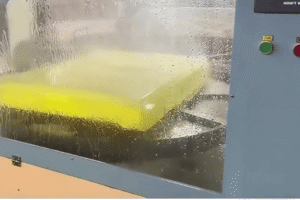
The relationship between cutting speed and machining processes shows their essential connection to surface quality. The term cutting speed defines the speed at which a cutting tool moves through material which industrial standards measure using surface feet per minute (SFM) and meters per minute (m/min) units. The production cycle decreases when cutting speeds increase because this leads to more efficient manufacturing processes. The process produces excessive heat which causes tool wear and thermal damage to materials that results in negative impacts on surface quality.
Understanding Cutting Speed
Cutting Speed Fundamentals
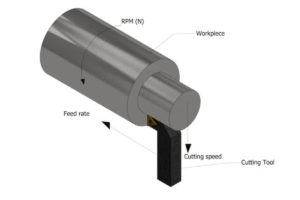
Cutting speed refers to the speed which the cutting tool operates when it moves against the material surface during machining. The measurement system uses surface feet per minute (SFM) and meters per minute (m/min) to express this measurement which serves as a vital element to evaluate machining results. The selection of cutting speed helps to reduce tool damage while it improves production efficiency and creates superior surface quality. The appropriate cutting speed depends on the material properties of both the workpiece and the cutting tool, as well as the type of machining operation being performed.
Importance of Surface Quality in Machining
The surface quality of machined materials includes multiple characteristics which include surface roughness and texture and dimensional accuracy and these characteristics create a major effect on how the machined part functions and performs and survives through time. The essential requirement for high-precision applications which need both accuracy and durability depends on high-quality surface finishes which decrease friction and wear together with the possibility of component failure.
1
Enhanced Mechanical Performance
The load-bearing capacity of a component improves through a smoother surface because it decreases stress concentrations. Aerospace and automotive components need to achieve Ra 0.4 µm surface roughness because this requirement improves their fatigue resistance.
2
Improved Corrosion Resistance
Rough surfaces create areas that trap both contaminants and moisture which results in faster corrosion progression. The component’s environmental degradation resistance can be greatly enhanced by reducing surface irregularities.
3
Better Component Fit
Precision machining delivers tighter tolerances which results in improved component matching that prevents operational issues caused by parts misalignment and excessive wear. The medical equipment manufacturing industry requires this requirement because it needs precise precision throughout all production processes.
4
Reduced Energy Consumption
Polished surfaces decrease friction during operation which results in better energy efficiency and extended operational life for moving components. The system efficiency improves because an optimized surface finish in gear mechanisms decreases friction losses.
5
Aesthetic Quality
The visual appeal of a product receives enhancement through high-quality finishes which serves as an important factor for industries that sell products directly to consumers such as electronics and automotive sectors. A polished finish reflects the manufacturer’s attention to detail and quality standards.
Cutting Speed and Feed Rate: The Core Relationship

The basic parameters which determine machining operations are cutting speed and feed rate because these parameters affect the rate of material removal and the durability of tools and the quality of surface finish. The definition of cutting speed describes the speed at which a cutting tool makes contact with workpiece material while feed rate measures the distance the tool moves during one complete revolution or designated time period.
How Cutting Speed Affects Surface Quality
Heat Generation and Tool Wear
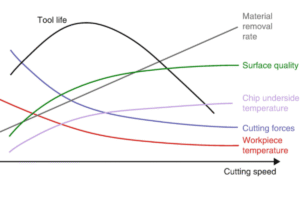
The surface quality of machined materials depends on cutting speed because it creates heat and causes tool wear and chip formation. The research demonstrates that increased cutting speed produces smoother surface finishes because it decreases cutting force while enabling continuous chip removal.
Excessive Speed Consequences
The use of excessive cutting speeds leads to multiple harmful consequences which include fast tool wear and thermal destruction of both the cutting tool and workpiece material and creation of possible surface imperfections.
Lower Speed Issues
The use of lower cutting speeds creates two problems because it raises friction levels and produces improper cutting which results in surface degradation. The optimal cutting speed requires adjustment according to material characteristics and tool design and machining parameters.
Influence of Feed Rate on Machining Results
The machining process depends on feed rate because feed rate controls both material removal rate and surface finish and tool wear performance. The method enables faster material removal when feed rates increase production efficiency but it leads to reduced surface quality and decreased precision measurements. The implementation of lower feed rates delivers superior surface quality and improved dimensional accuracy but it increases the necessary time needed for machining operations.
High Speeds vs. Surface Roughness
Material Properties and Cutting Speeds
The current study results together with modern computational techniques demonstrate that material properties function as the basic elements which establish optimal cutting speeds for machining procedures. The industrial standards which merge information from modern CNC machining processes show that material hardness together with thermal conductivity and ductility determines both tool performance and tool lifespan.
Material-Specific Cutting Speed Guidelines
Aluminum and Brass (300-500 SFM)
Operators can achieve cutting speeds above 300 to 500 surface feet per minute (SFM) when using carbide tools to machine aluminum and brass because these materials have high machinability indices and soft material properties.
Tool Steels and Superalloys (50-150 SFM)
The tool steels and superalloys require special treatment to control tool wear and work hardening and cutting zone heat generation which forces operators to use cutting speeds between 50 and 150 SFM.
Plastics and Composites
The manufacturing process for plastics and composites needs operators to use high-speed machining with low feed rates because active cooling systems protect against material deformation and surface defects.
Surface Speed Considerations
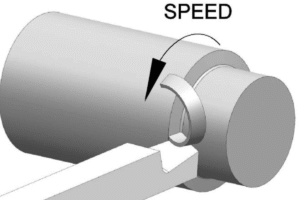
- Material Hardness and Composition: Hard materials such as stainless steel and titanium require lower surface speeds because excessive tool wear occurs at higher speeds while aluminum which is softer than these materials needs higher speeds because its cutting resistance is lower.
- Tool Material and Coating: The cutting tool material which includes high-speed steel HSS and carbide and ceramic materials determines the maximum surface speed which the tool can handle. Coated tools such as TiN or AlTiN can endure higher speeds because their coating materials provide better heat resistance and lower friction properties.
- Coolant Application: Proper use of coolant ensures effective heat dissipation during high-speed cutting operations. The absence of coolant or insufficient application may require reducing speed to avoid thermal damage to both the tool and the workpiece.
- Workpiece Dimensions and Features: The workpiece surface speed depends on its dimensions and its design. The lathe requires higher spindle speeds to achieve the same surface footage per minute SFM when machining smaller diameters than it needs for larger diameters.
- Machine Capability: The performance limits of the machine tool itself, such as maximum spindle speed and stability under cutting loads, directly restrict the achievable surface speed. Machines that lack adequate rigidity must operate at reduced speeds to control chatter while preserving accuracy.
Strategies for Optimizing Cutting Parameters
Cutting Speed Adjustment
The correct cutting speed needs to be selected because it determines both the efficiency of material removal and the rate of tool deterioration. Increased speeds boost output but they create too much heat which decreases tool durability whereas decreased speeds maintain tool condition.
Feed Rate Setting
The feed rate should balance operating efficiency and surface finish quality. Excessive feed rates create rough surfaces which damage tools but excessive feed rates create work delays.
Depth of Cut Selection
The depth of cut needs to be adjusted according to the characteristics of the workpiece material and the capabilities of the tools. Operators should use shallower cuts for finishing operations because deeper cuts deliver greater material removal during rough machining.
Use of Coolants and Lubricants
The application of suitable cooling or lubricating agents actually minimizes machining heat production which results in tool protection and workpiece protection from thermal damage.
Tool Condition Monitoring
The process of inspecting tools needs to occur at regular intervals because it helps maintain cutting performance while it protects against unexpected tool breakdowns which cause work delays.
Choosing the Right Cutting Tool
The process of selecting the correct cutting instrument needs complete knowledge about material characteristics and machining techniques and the required production results. The selection of tools depends on their material composition and protective coatings and tool design and ability to work with the specific material used in the project.
Reference Sources
- The Difference Between Cutting Speed & Feed Rate – The study demonstrates how cutting speed affects surface finish while showing the necessity to optimize these two factors.
- What is the Difference Between Cutting Speed and Feed Rate? The study explains how cutting speed and feed rate interact to determine machining quality.
- Recommend reading: Precision Glass Cutting Wire Saw for Industrial Excellence
Frequently Asked Questions
1. How Does Cutting Speed Fundamentally Impact Surface Quality?
The relationship between surface finish and cutting speed which the definition describes as the speed of cutting edge movement across the workpiece surface exhibits direct non-linear correlation. The Built-Up Edge (BUE) phenomenon which causes material to stick to the cutting tool shows decreased occurrence at higher cutting speeds. The process of shearing at higher speeds generates cleaner results which produce a finer final product. Excessive speed causes tool wear because it produces high temperatures which create thermal damage to both the tool and workpiece resulting in decreased surface quality.
2. What Is Built-Up Edge (BUE) and How Does Speed Mitigate It?
Built-Up Edge occurs when layers of the workpiece material adhere to the rake face of the cutting tool under high pressure. The built-up material changes the tool geometry into a dull and unstable cutting edge which tears through the material instead of producing clean shearing. This results in a poor surface finish. BUE is most prevalent at lower cutting speeds. The material will stick to the tool less when cutting speed increases because the cutting zone temperature rises which stops BUE formation while creating smoother surfaces.
3. Can Cutting Speed Be Too High for Optimal Surface Quality?
Yes. The BUE reduction caused by high speeds produces better finishing results until the material and tool combination reaches its defined speed limit. Excessive speed generates intense heat which can lead to rapid tool wear which includes both crater wear and flank wear while also causing thermal deformation of the workpiece. Tool edge degradation results in both sharpness loss and geometric inaccuracy which causes increased vibration chatter and a declining surface finish.
4. How Do Feed Rate and Cutting Speed Interact to Determine Surface Roughness?
The cutting speed determines how stable the cutting process remains while feed rate defines the surface roughness that will be produced. The feed rate creates a specific surface pattern which people commonly describe as “cusp height” or feed marks. Operators who want to achieve a better finish usually increase cutting speed for cleaner cuts while decreasing feed rate to reduce the height of these cusps. The two elements require tested control: high speed with high feed rate results in rough surface despite absence of BUE.
5. What Role Does Tool Material Play in This Balance?
The cutting tool material establishes the maximum cutting speed which can be maintained over time:
High-Speed Steel (HSS): The material operates at lower speeds because thermal limits of HSS decrease its strength which results in surface finishing problems when HSS operates beyond its thermal limit.
Carbide: The material allows higher temperature resistance which enables faster cutting speeds that result in better surface finishes when processing hard materials.
Ceramics and CBN: The materials enable “hard turning” of hardened steels through their design which supports extreme speed and heat resistance resulting in surface qualities that can sometimes match grinding results.
6. Does Vibration or “Chatter” Relate to Cutting Speed?
Yes, chatter is a regenerative vibration that creates distinct wave-like marks on the workpiece surface. The phenomenon happens at specific harmonic frequencies which exist within the system that includes the machine tool and workpiece. The primary method to eliminate chatter from the cutting process involves altering the cutting speed. The operators can stabilize the cutting process and restore surface quality by moving the speed out of the harmonic resonance zone which they can achieve through both speed increases and decreases.
Related Posts


Trending Blogs

![Polysilicon Material: Properties, Grades & Uses [Guide]](https://wiresawcutter.com/wp-content/uploads/2026/08/polysilicon-material-featured-150x150.webp)