
Get in touch with DONGHE Company
-
Phone: +86 181-1645-5490
-
Email: Sales18@DongheScience.com

How to Cut Sapphire Crystal with Diamond Wire Saw

The processing of synthetic sapphire glass is extremely difficult, thanks to its characteristics. Diamond wire has proven to be one of the most effective and dependable tools in this regard. This invention greatly changed the industrial application of mined and synthetic sapphire crystals, improving the cutting quality and reducing the amount of sapphire waste substantially. In the following pages, the reader will discover the basic phases and important points on how to cut the sapphire crystals using the diamond wires. Whether the reader is an engineer or a hobbyist interested in such developments, the content will elaborate on the concept, the machinery, and the proper operation for efficient execution.
Introduction to Sapphire Crystal Cutting
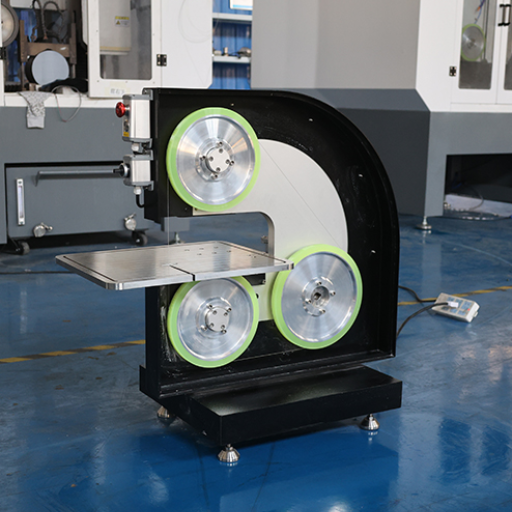
Industries such as electronics, optics, and watch production use sapphire crystal extensively. This is because it is an extremely hard and scratch-proof material. The hardness of the crystal is next only to that of diamond; a lot of tools are needed to cut it. The most appropriate tool is a diamond wire saw, as it cuts with precision and causes only minor damage to the material being cut. More often than not, this includes holding the sapphire in place, guiding the diamond wire into the material under monitored tension, and employing coolant to cool it off. In order to make neat and precise cuts which networks within the structure of the crystal, it is important that every other parameter of the equipment is set correctly.
Overview of Sapphire Crystals and Their Applications
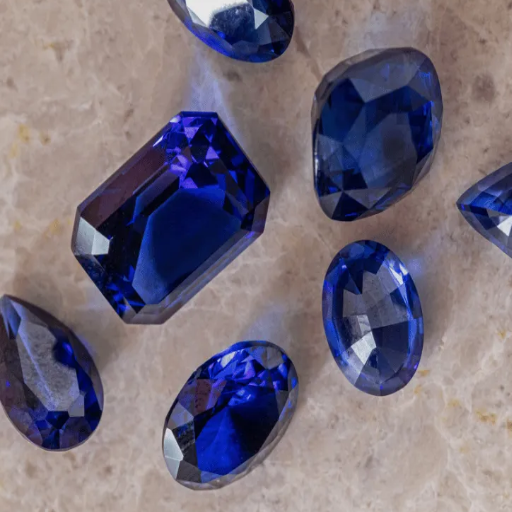
The mechanical, optical, and thermal capabilities of sapphire crystals are distinct for their excellence and, hence, highly sought after in advanced applications. Simply put, the crystalline structure of the material, sapphire (the oxide of aluminum, Al₂O₃), is hard, next only to diamonds on Mohs’ hardness scale, and practically immune to chemical and heat exposures. Attaining such properties can enable the processing of sapphire under daunting conditions.
Electronics
LED production via heat dissipation and lattice compatibility with gallium nitride
Optics
Windows and lenses transmitting UV to IR light wavelengths
Consumer Goods
Smartwatch dials, camera lenses, and high-pressure windows
Defence & Space
Laser optics and satellite tools require extreme strain resistance
Importance of Precision Tools for Cutting Sapphire
It is therefore necessary, while cutting sapphire, to use diamond-tipped equipment for the reason that the stone scores nine next to a diamond in a Mohs scale. Cutting the material through conventional means, though possible, is inefficient and damaging; consequently, in the event of any cutting, which can only be done using a diamond blade, thermal cutting, and ultrasonic cutting, these advanced, facilitated devices come into play. Where sealed cuts are required, these machines are used to provide clean cutting without chipping off the sides, and less sapphire material is wasted. This is very important, especially when dealing with products that need to be made with certain accuracy, like lenses and chips; any errors will highly, if not totally, affect their use. In addition to the above mentioned cutting methods, advanced technologies are also capable of cost reduction and bringing about effectiveness, accounting for the needs of technology-advanced sectors.
Why Use a Diamond Wire Saw for Cutting Sapphire?
A sapphire wire saw, sometimes referred to as a diamond wire saw, is a specialised apparatus employed in the cutting of sapphires. This type of equipment is more popular due to its exquisite accuracy, competence, and tiny material loss. The diamond-coated wire grit cuts through the sapphire precisely without damaging the edges. Its significance is important in manufacturing industries like electronics or optics, which enable the production of different products within strict specifications. In addition, in contrast to the usage of other cutting tools, it generates less heat, and less damage can be done to the sapphire by heating it thermally. Furthermore, because of the thin cuts, the waste is also minimized.
Understanding Sapphire Wire Saw Technology
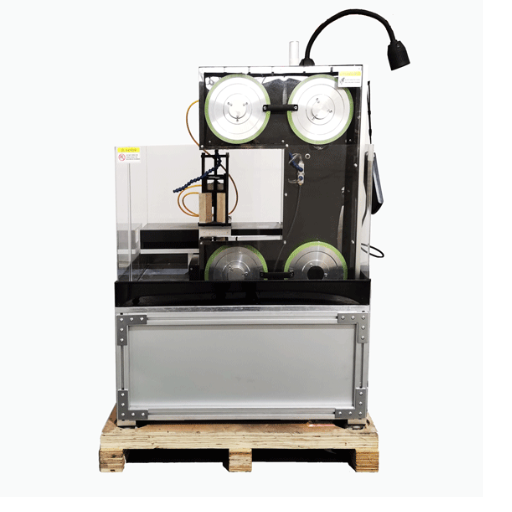
The sapphire wire saw cutting technology is very efficient and convenient when performed in practice, and implies the ordering of operations for the machining of sapphire. It works on the principle of using a diamond wire, resulting in high accuracy with low material wastage, as it produces kerfs that have very small gaps. Also, such a process gives less heat, which results in less likelihood of creating micro-cracking in stone, thus saving it from all kinds of damage and distortions. The fact that this method is precise, has less wastage, and is cost-effective speaks volumes of its relevance in industries where the quality of the materials being used is of paramount importance, such as electronics, optics, and semiconductor applications, among others.
Key Features of a Diamond Wire Saw
- High Power Cutting
Precision allows Thin Slab to be made by wire sawing, which is one of the main advantages of this process. It saves on material due to a much thinner kerf. This capability is especially important for industries such as optical and semiconductor, where even small variations may cause failure of the product. - Minimal Heat Affected Zone
In view of its effective cutting process, the diamond wire saw is designed to generate only a small amount of heat; hence, there is minimal risk of microfracture or thermal shock. This helps prevent damage to the items being cut, especially brittle materials like sapphire or silicon. - Multiple Applications
These saws function very well in cutting different or hard materials such as sapphire, quartz, ceramic, and even silicon. Due to this feature, they become a fundamental instrument for many industrial and research purposes. - Economy
Diamond wire saws help in reducing operational costs by lowering the percentage of material waste and ensuring accurate cutting technology. The cost of diamond wires also remains low, as they have a longer operational life than other wires. - Smooth Surface Finish
The cutting technique they employ leaves very few defects on the surface, thus reducing the amount of post-processing required. This is advantageous for applications that require high-quality and precision surfaces where a smooth finish is critical.
Explanation of the Cutting Mechanism for Sapphire
A sophisticated approach must be used to cut sapphire owing to its remarkable hardness, which is ranked at 9 on the Mohs scale, right after diamond. For this reason, the diamond wire saw, a technology, is widespread in the realization of these cuts. This involves tensioning a wire that is diamond-coated and then passing it through the material. The diamond is hard enough to abrade the sapphire while the wire moves at a very high speed, so as not to fracture the sapphire during cutting.
So that the cut is achieved well without heat affecting the sapphire wire saw process, lubrication is applied for cooling the surface and preventing overheating. There are need for very precise tensions, wire speeds, and loads which ensure the components do not chip but thread smoothly. This method is applied to produce thin synthetic sapphire wafers, which are used for microelectronics and optoelectronics applications in a way that ensures fast, cheap production as well as preservation of surface qualities.
Benefits of Using Diamond-Coated Wire in Precision Applications
- ✦
Impressive Accuracy: When it comes to cutting operations, the kind of precision offered by a diamond-encased cutting wire remains undisputed as it operates with the greatest accuracy while minimizing any material deformation, because of which, what you get afterwards is of the same dimensions with every cut. This level of accuracy is very important in many industries, like the manufacture of semiconductors, as well as optics, to name a few.
- ✦
Decreased Cut-off: The thickness variation of the diamond is consistent, making cut-offs cleaner and ideal in the processing of precious materials such as sapphire, silicon, among others, and high-performance sintered ceramics in most of the cases. Consequently, more materials are used while much less is wasted, costing less during production.
- ✦
Increased Life of Tool: Thanks to the unyielding toughness as well as the anti-wearing properties of diamond, the efficiency of diamond wire laser cutting remains largely unaffected for an extended period, bearing even harsh conditions perfectly well. As a result, there is a reduction in the amount of time required to replace tools as turnover cycles are extended.
- ✦
Improved Finishing: The abrasiveness of the diamond surface coating assists in the finishing of the cutting faces by polishing them to an extent at which extra processes are, in many cases, eliminated. The value of this aspect is very high whenever the quality of the surface is paramount to the proper function of the end products. This could be, for instance, the case of optical lenses or electronic devices.
- ✦
Handling of Various Materials: The diamond wire can cut a wide variety of hard and fragile materials such as glass, silicon, and quartz. This makes it a useful tool that can be used for many different industrial processes.
Preparation Before Cutting Sapphire Crystal
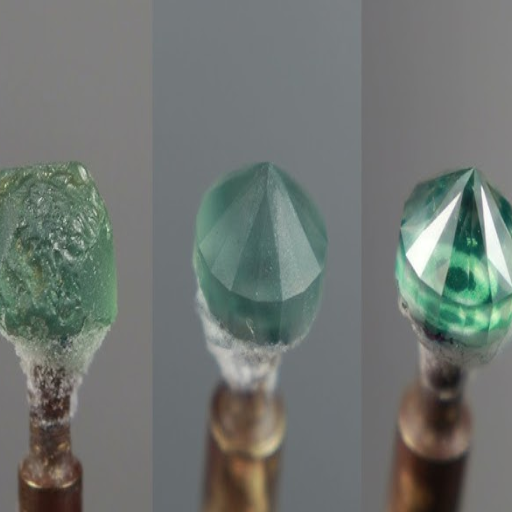
-
1Evaluation of the Material
Investigate the sapphire crystal to look for any defects, for example, scratches or pockets that might be detrimental to the cutting. The assessment is essential for achieving high precision and avoiding wastage of materials. -
2Calibration of the Equipment
Check and calibrate the diamond wire saw to ensure it will reach the required cutting parameters, such as wire speed, tension, and alignment. Calibration accuracy reduces failure and ensures cutting uniformity. -
3Coolant Selection and Utilization
Choose a proper coolant for managing heat during the cutting of the sapphire wire saw to prevent any thermal injury to the sapphire. Ensure even distribution of the coolant for the most effective results. -
4Accurate Preexisting Lines
Detail cut lines on the sapphire crystal with a precision marking device. This is done in consideration of the plan dimensions and to prevent errors during the process. -
5Environmental Adjustment
Check if the cutting area is steady enough, free of most vibrations, with proper temperature regulation, and well-lit to enable precise operations.
This systematic approach enhances the cutting process and promotes a more accurate and efficient cutting process, eliminating mistakes and material wastage in the cutting of sapphire wire saw cutting quartz.
Safety Precautions and Essential Equipment
Safety and processes for manufacturing sapphire should not be compromised without following strict protocols. This is why the operators must wear PPE, especially safety glasses, an apron, and a mask on the nose to prevent the particles as well as prevent the edges from cutting the hands or fingers off. These are some of the spotless and neat navigation techniques that help to control accidents at times. To ensure safety during the manufacturing process, machines fitted with suction systems have to be in place, and also fire extinguishers.
Some devices that are highly needed for this procedure include sophisticated saws with diamond blades and CNC machines for the purpose of attaining cutting capabilities, as noticed in sapphire, a hard material. There are also necessary tools, such as laser beams and calipers, among others, to help in keeping the right structure of the workpiece within the required limit. The existence of machines wears and tear free condition within a specific time, as long as a given operation is ongoing, is ensured through applications like care and servicing or precision and adjustment of machines.
Choosing the Right Diamond Wire Saw for Sapphire Crystal
Every sapphire wire saw has a specific dimension that can be which can be machined with a specific wire diameter. This should be based on the stud thickness and the type of wires that produce a certain cut quality. An agreement of favoring thin wires that increase precision but slow down cuts is observed in such a situation. Difficulties arise since the size of the particles must be chosen in accordance with the hardness of the sapphire, considering the need for high rates of working and high-quality patterns. The third point is that one has to remember that wire tension is an important element in the process because it influences the quality of the cut and also the number of times the wire will break on the job. Therefore, a saw must be designed with a very efficient cooling system, which minimizes the amount of heat that is produced during cutting, so as to prevent any thermal interference on the cut sapphire crystals. Lastly, a machine with cutting-edge capabilities, such as programmable and recess management, allows efficiency boosting in cutting. When these recommendations are taken into account, one can improve the processes while delivering outstanding outcomes during the machining of sapphire straightforwardly.
Steps to Set Up the Machine and Inspect the Sapphire for Optimal Cutting
Step-by-Step Process of Cutting Sapphire Crystal
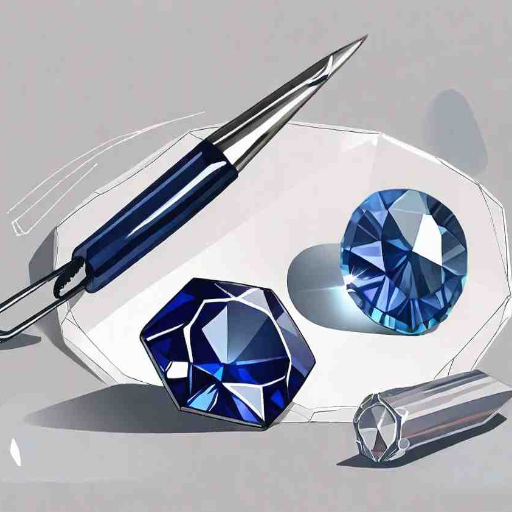
Step 1 — Material Preparation
First, the treatment of the surface of sapphire crystals should be such as to exclude any fragments or impurities that may affect the cutting operation itself. Such a surface should be sufficiently clean, which implies making use of cleaning agents that are appropriate for the application without contaminating the work.
Step 2 — Machinery Assembling Adjustment
The wire saw or the laser cutting machine should be adjusted to accommodate the dimensions required for cutting sapphire. In this case, the cutting speed, tension, and angle adjustment will be proper, as such parameters are required to enhance accuracy while cutting and avoid destroying the crystal.
Step 3 — Performance of Cutting
Start the process of cutting, keeping a close watch on the flow of coolant and smooth movement of wire or laser throughout the process. Make sure the process is on course and bounded by the set parameters.
Step 4 — Intermittent Inspection
From time to time, the process should be stopped to facilitate the observation of the cut surfaces and monitor for defects, including cracks, misalignments, or surface variations. Adjust the necessary parts of the tools as required so that the quality is preserved.
Step 5 — Treatment after the Cut Has Been Done
Upon cutting, the sapphire must be polished and treated so that the micro-cracks in the crystal, if any, and the rough edges, if present, are smoothed out so as not to affect its operation. Appropriate polishing techniques for this stage shall be used as well.
Step 6 — Final Quality Control Stage
Perform the complete quality analysis to determine whether the crystal fits within the specified dimensions, quality requirements, and surface finish standards. Such outcomes should be documented both for legislation and in accounting.
Position the Sapphire Crystal Securely
Prepare the mounting surface in such a way that it is as clean as possible before mounting sapphire, as dirt or dust, no matter how fine, may result in a stability or alignment problem. This can be done using adequate mechanical positioning systems that suggest the best positioning of the crystal into its corresponding socket or fixture. Use an adhesive application sufficient to the job in hand, for example, mechanically fastening, which adds strength, or, for clarity, using optical adhesives, which cure under UV light. Ensure that the crystal is not subject to any form of stress during operation, which may arise from temperature changes or vibration, etc. Inspect the crystal again at the end to ensure it is in its correct position, fixed in that position, and does not go out of the acceptable tolerances.
Adjusting Wire Tension and Speed for a Smooth Cut
In order to achieve an even and precise cut, the wires need to be placed at the correct tension and the speed of cutting measured carefully. Wire tension is critical because it ensures the wire does not bend or go astray during the cutting process; very low tension will cause the wire to droop and lead to an uneven cut, whereas excessive tension will cause the wire to break or bend. The required tension levels depend on the specific material being cut as well as the type of wire used, but within the workable range, vibration should be minimized while maintaining a steady forward motion.
The cutting rate, on the contrary, plays a major role in the achievement of the intended cutting speed and the quality of the surface achieved. Generally, the slower speed results in lazy finishes and little heat build-up, which is advantageous for soft materials. However, due to the toughness of the materials or the required performance, there is a need for high cutting speed; only then, wire stability and cooling systems have to be properly catered to. Always keep an eye on the tension and the speed in order to minimize the loss, precision, as well as the lifetime of cutting wire and the equipment.
Monitoring Temperature Control During the Cutting Process
As careful control of temperature is very important with regard to precision, and overheating is one of the issues that can occur during the cutting, it should be avoided. Building up too much heat leads to warpage or distortion of the item being cut, surface damage, and the quick wearing of the tools. For this reason, in addition to the cutter itself, and especially when there is a fair amount of cutting involved, the temperatures should be gauged and steps taken to cut down the use of any heating; replace these with measures such as cutting liquids or air circulation. At such positions, sensors are used to measure the temperatures and, in response to a certain threshold, change cutting and/or indexing speed as well as coolant. Along these lines, adequate lubrication also serves to lessen the amount of friction and resultant heat so as to increase performance while preserving the cut formed. Maintenance practices such as nozzle washing or the filling of fluids likewise aid in ensuring temperatures stay at a constant level for extended periods.
Common Challenges in Cutting Sapphire and Solutions
| Challenge | Problem | Remedy / Resolution |
|---|---|---|
| Hardness Property of Material | Since sapphire is very hard with a Mohs hardness of 9, it can cause wear easily, and it is not easy to cut with various cutting implements. | Employ diamond coated cutting-aids, making good use of the fact that diamond is stronger than sapphire edges. Make use of advanced equipment with basic CNC to avert waste and make fine details. |
| Thermal Strain | Occurrence of very fine cracks or thermal impairment after subjecting the sapphire to high temperatures during the cutting operations. | Use systems that provide constant cooling; for instance, utilization of water or other specific coolants, and check temperatures with thermal sensors to eliminate overheating. |
| Breakage of Chipped and Subsequent Surfaces | During the tenoning operations, in case the tools are not properly aligned for cutting work or there is improper application of techniques, the edges may become chipped or internal cracks formed, deleteriously affecting the material. | Integrating stresses imparted to the workpiece by limiting the feed rate and maximizing the tool path. For further accuracy and the application of minimal mechanical forces, either ultrasonic machining or laser beam cutting may be recommended. |
| Enhancement in Surface Quality | Such surfaces can be difficult to produce, given the inherent hardness and brittleness of sapphire. | Employ diamond powder with very fine particles for the polishing procedure and take care of the devices used to polish the workpiece since their blades need to stay sharp and so cut effectively for a long. |
| Tool Wear | Sapphire is hard, and as such, it wears down the cutting tools, thereby reducing their efficiency and increasing the cost of operations. | Change the necessary portions of the tools and check their status to avoid damage in time. Where possible, apply the strategies of the advancement of coatings for diamond cutting tools, as they will assist in controlling the wear of the respective tools. |
In sum, knowing the current problems and taking appropriate improvement steps together with applying specific techniques and adopting supplementary equipment and materials, producers can cut costs and enhance the quality of sapphire cutting.
Identifying and Preventing Chipping or Cracking
Chipping and cracking are defects often encountered during the cutting of sapphire, occasioned by excessive weight being exerted on the tools, improper speed of cutting, or cooling systems that fall short in sufficiency. Thus, they must check regularly for any possible microcracks on the finished surfaces of the cut sapphire wire saw, as well as the level of wear of the cutting tool and possible misalignment. The cutting tools applied are highly accurate with technologically advanced diamond-coated segments in order to reduce the stress and or minimize the occurrence of cracks.
To avoid such issues, cutting capabilities should be able to match the strength of the material being cut with the adjustment of speed and feed rates. Moreover, provide a cooling system that prevents over-heating as cracking due to thermal expansion is common. Also, it is advantageous to use anti-vibration devices, which reduce stresses and prevent chipping or cracking. In incorporating these principles into the system, there is better precision in cutting, and the products will last longer.
Handling Irregularly Shaped Sapphire Specimens
All things considered, some degree of specific precautions is generally required when cutting such irregular-shaped sapphire blanks. To begin with, I use a special-purpose fixture to hold such workpieces without any tendency of deforming them. Making sure that all machining specifications are adhered to, while also ensuring the fragility of such machines because of their materials characteristic are always an area of great concern. There is one major drawback to this method, and it is that although it speeds up the process, it has also rendered this type of cutting, with a relatively high level of precision, almost impossible. As a means of making sure no mistake is made during the wire cutting operation, the relevant parts are carefully assessed.
Resolving Overheating Issues During the Process
During the process of machining, overheating can affect not only the structural durability of the workpiece but also the quality of the sapphire wire saw. To manage this properly, these high-pressure coolant systems are used to reduce the heat generated and keep the cutting temperature within healthy limits. However, this can be controlled by a wise selection of materials with high thermal conductivity for cutting purposes, and low speeds of operation, while selecting the cutting tool. The application of interrupted cutting and even stopping at every short duration to continue helps to eliminate the local overheating of suspended cutting. It is important to observe tool wear as dull edges can heighten friction, thus raising the temperature of the material being cut. All these methods can be used to control overheating so that the specimen will be machined without any trouble and without violating its physical structure.
Key Takeaways
Summary: Cutting Sapphire Crystal with Diamond Wire
- Diamond wire saws offer unmatched precision for cutting sapphire, minimizing material waste and thermal damage.
- Sapphire’s Mohs hardness of 9 demands diamond-coated tooling and advanced CNC-guided machinery.
- Thorough preparation — including material inspection, machine calibration, coolant setup, and trial runs — is essential before cutting begins.
- Managing wire tension, cutting speed, and temperature throughout the process are the three critical control variables for quality output.
- Common challenges such as chipping, cracking, and tool wear can be mitigated through proper tooling selection, cooling, and anti-vibration measures.
- Post-cut polishing and thorough quality control ensure the final product meets dimensional and surface finish specifications.
Reference Sources
Iowa State University – Mechanics of Wire Saw Machining Process-Mechanics of the wire saw machining process: experimental
Discusses the wire saw machining process for cutting brittle materials, including sapphire, with experimental insights.
University of Arizona – Precision Cutting Tools-Precision Cutting Tools
Provides detailed information on cutting tools, including diamond wire saws, and their applications in precision cutting.
Academia.edu – Diamond Wire Sawing Technique-Developed a diamond wire sawing technique with high
Explores advancements in diamond wire sawing techniques, which apply to materials like sapphire.
Frequently Asked Questions (FAQs)
In what way is the sapphire wire saw different from the other sapphire cutting machines in terms of achieving the most accurate cut?
The sapphire wire saw may be described as a low-tension or velvet wire saw, since it is based on the cutting principle similar to that of the traditional “bow saw,” where diamond-impregnated wire–an infinite wire blade or endless wire blade–is used for cutting hard materials, e.g., sapphires and glass. The cutting wire, which contains a fine diamond grain (normally up to 0.3mm thickness), is rotated by high-speed motors under PLC control, where the speed of the wire, its oscillation (or reciprocation), as well as working speed are also controlled. This system results in better cutting accuracy, less kerf loss, better cut finish, and less surface damage, unlike conventional cutting, a reason why fine diamond wire is the best for window saps, wafer saps, and cutting-edge saps used in complex applications.
How does wire cutting, in the cutting of sapphire and ceramics, differ from traditional methods of cutting the same materials?
When performing cutting using conventional instruments such as blades or die-sinking electrical discharge machining, they are outcompeted by wire cutting machines. The materials that are considered super hard, hence difficult to cut (sapphire- about 9 on the Mohs scale), and a range of other materials that are utilized in cutting, occur as brittle, thus wire cutting techniques, which include the use of diamond wire machines or diamond wire loop saws, prove quite advantageous. Due to internal torsion, there is also less distortion due to smaller heat-affected zones, thus reducing warping, shrinking, and metal deposition more drastically than older cutting technologies. These machines have much better precision and less damage in cutting conductive and non-conductive substrates, especially sapphire and mixed chemical elements with different hardness compositions.
How about providing a list of cutting equipment and tools used with the sapphire wire saw technology?
Sapphire wire saw technology includes miniature embedded diamond wire loop saws for jewellery cutting solutions, to heavy-duty wire saw cutting solutions, retractable type and non-retractable type for chip making and the glass industry. The list of components includes the cutting wire ( this can be diamond cutting wire), the spools, guide rollers, mechanisms to maintain tension and change wires, servo motors for controllable speed of the wire, oscillation or reciprocation mechanism, cutting machines with PLCs and touch screens for process control and coolant application. However, appropriate cutting tools and machines have to be chosen according to the particular case – how large the substrate is, how accurate the cut has to be, or what the surface looks like.
How does a diamond wire loop contribute to the work with sapphire and wafers?
A diamond wire loop, also referred to as a diamond wire loop saw, is an endless loop of wire bearing diamond abrasives for the purpose of slicing substrates, wafers, or gemstones with even tension and stability. In the optical and semiconductor industries, the diamond cutting wire assists in maintaining a constant cutting speed and thin kerf, which enhances the regularity of the cutting and minimizes wastage. Manufacturers with expertise in the production of sapphire would normally choose loop-type wires for prolonged use because replacing the wires becomes an easier task, all the while ensuring a continuous cutting process.
What is the impact of the cutting parameters, such as the wire/cutting speed, on the surface roughness and material removal rate?
The following factors directly affect the surface quality, degree of productivity of cutting, and the amount of wasted material: wire speed, cutting rate, tension in the wire, and oscillations. With faster wire velocities and optimized feed speeds, it is possible to both increase the cutting rate and productivity; however, this should be carried out with caution because high productivity might result in thermal damage and additional crack formation in the workpieces. Specifically, thinner diamond wire with a diameter of over 0.3mm, alongside sophisticated numerical control machines allow for the reduction of waste material and creation of finer surfaces. Efficient implementation of PLC control with servo motors and appropriate coolants and abrasives is necessary to improve the surface finish or at least minimize the consumption of the material, taking this proposition into account.
Does any sapphire wire saw intended for both semiconductor and optical materials exist?
Absolutely. There are particular diamond wire cutting machines and wire saw cutting machines designed for cutting semiconductor wafers, optical windows, and sapphire substrates. These devices incorporate mechanisms for accurate diamond wire processing, such as automatic change of wire, programmable wire oscillation or reciprocation, touch screen displays for parameter setting, function logs for monitoring quality built into a PLC, and tanks for control of both the cutting fluid and chips. These devices help achieve the level of accuracy expected of optical or semiconductor devices with less material removal.
What should you do to maintain the sapphire wire saw machine and replace its wire?
When using a saw machine, the cutting process requires regulation of diamond wire consumption, correct tensile capacity of the wire presetting, keeping the guide rollers and the system for transporting the coolant clean, and planning for wire changes so as to enable precision cutting. The time interval for wire changes is dependent on the workload, the nature of the material being cut, and the cutting distances; serious industry players in the sapphire and semiconductor production business must perform their equipment regularly to avoid any detrimental drops in quality without notice. A cutting wire in good condition and replaced before unnecessary usage keeps high performance in cutting, lessens material loss, and saves surface roughness.
Related Posts

Trending Blogs

![Polysilicon Material: Properties, Grades & Uses [Guide]](https://wiresawcutter.com/wp-content/uploads/2026/08/polysilicon-material-featured-150x150.webp)