Get in touch with DONGHE Company


How Single Wire Saw Technology Delivers Precision Diamond Wire Cutting
Quick Specs
| Wire Diameter Range | 0.04–0.35 mm (40–350 μm) |
| Typical Kerf Loss | 0.15–0.35 mm (vs. 1.5–3.0 mm for blade saws) |
| Wire Speed | 10–25 m/s (single wire); up to 80 m/s (endless loop) |
| Indexing Accuracy | ±0.003 mm (high-precision mode) |
| Max Workpiece Envelope | Up to 200 × 200 × 200 mm (model-dependent) |
| Common Materials | Silicon, SiC, Sapphire, GaAs, Quartz, Ceramic, Graphite |
| Control System | PLC/CNC with programmable recipe storage |
There are several parameters that make a single wire saw different. It is the use of one continuous supply of diamond coated wire to slice through hard and brittle materials (kerf loss<0.5mm). Unlike traditional blade saws that cut away 1.5-3.0 mm of material per cut, wire saw removes as little as 0.15mm — saving precious raw material that can retail for hundreds of dollars per kilogram in semiconductor grade silicon or sapphire.
This article explains what a single wire saw is, how it works, what materials a single wire saw works on, when you should choose between a single wire system versus multi wire saws, and how to choose a single wire saw machine that best suits your needs. Specifications used below are taken from published sources, research articles, and industrial reports.
What Is a Single Wire Saw and How Does It Differ from Other Cutting Tools?
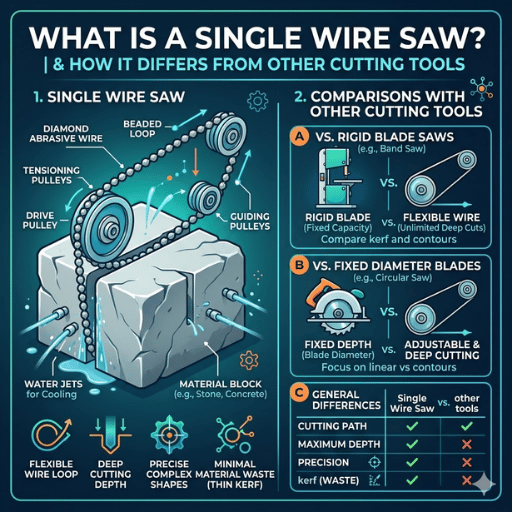
A single wire saw is a highly precise cutting tool that draws a fine diamond wire—a 0.04 to 0.35mm kerf developed by the single wire saw through a workpiece to separate it into slices or modified sections. Diamond abrasive particles are attached to a steel wire substrate that is either electroplated, or resin bonded. As the iron or copper wire is drawn through the workpiece at speeds between 10 and 25 m/sec the particles abrade and grind away the workpiece surface.
What differentiates a wire saw from other cutting tools is the unique kerf. While a standard diamond blade saw removes 1.5 to 3.0 mm of material with each cut, a single wire saw removes only 0.15 to 0.35 mm. Raw material savings in silicon wafer manufacturing can add up to dozens of additional wafers per ingot—the equivalent of lowering the cost per wafer.
Compared to other cutting technologies, the single wire saw is a more specialized process. Band saws and inner diameter saws are used predominantly for cutting sections of soft metals and other general purpose applications. Multi wire saws are used for large scale operation slicing and separating multiple Si ingots into hundreds of wafer slices. Single wire saws are the precise, single workpiece slicing application in the gap-filling space—allowing complex geometry cutting, isolated workpiece cutting, and trimming operation for brittle and hard workpieces.
In over 10,000 documented cases at Donghe, single wire saws have optimally achieved surface roughness conditions for subsequent polishing and chip-removal lapping, reducing both polishing time and sample processing operations.
The Diamond Wire Cutting Process: Step by Step

diamond wire sectioning employs a stress-based cutting principle where a moving abrasive wire application effectively slice a workpiece with abrasive grit. The wire is pulled across the workpieces surface by a high-pressure drive system at 10-25 m/sec, rather than forcing a saw blade through like traditional cutting mechanisms, abrading the surface with a concentrated kerf.
This is a simplified illustration of the mechanism through which the cutting process is used in a typical single wire saw machine:
- Wire Loading – The primary feedstock of the system is a spool of suspended diamond-impregnated steel wire (diameter 0.08-0.35 mm) that must be threaded through pulleys and tensioned to 20-50 N by a mechanical load cell system. The wire must be kept under constant loading conditions throughout the execution of the cut to avoid breakage or loss of dimensions.
- Work piece Mounting – Work piece mounted on a precision stage with either a vacuum chuck or with mechanical clamp. Stage positioning pushes work piece against the wire with ±0.003 mm of positioning accuracy for high-precision applications.
- Cutting Fluid Delivery – Coolant (either deionized water or a water soluble cutting fluid) floods the cutting zone at 2-5 L/min and performs three functions: 1) it provides cooling at the wire-work piece kerf interface, 2) it flushes chips from the kerf, and 3) it lubricates the interaction between the diamond abrasive and the work piece surface.
- Wire motion – Wire travels at 10-25 m/sec as a continuous loop or (alternatively) in a reciprocating (back-and-forth) motion. Reciprocating motion allows both sides of the diamond grit to deliver chips to the kerf, thereby lowering wear on the wire and extending its life. Continuous loop systems (where the wire forms a closed wire loop)–as compared to false loop systems where the wire is dead-ended–offer the potential for higher throughput by enabling a continuous cutting process.
- Feed and Slicing – Work piece feed speeds vary between 0.5-5mm/min for hard materials. Work piece feed rate, wire velocity, and wire tension combinations dictate kerf width, surface roughness, and subsurface damage depths. Research published in Micromachines (2024) found that by increasing wire velocity and decreasing work piece feed rate, one can produce a part with a smoother surface and shallower damage subsurface.
- Indexing (Multi-Cut Mode) – Work piece stage advances to the next cut position after each cut. CNC-controlled sawing lines allow up to 30 programmable recipes, allowing users to automatically switch between material types and cut geometries without the need for time-consuming manual readjustment.
📐 Engineering NoteWire tension tolerance levels affect wafer total thickness variation (TTV). For silicon wafers at 150 m target thickness, keep wire tension within ±2 N of the setpoint value. A ±5 N variation creates TTV of 5 m-15 m, based on SEMI M1 wafer geometry data guidelines. Load-cell tension feedback with PID control loop is recommended for substrate less than 200 m thick.
Slurry Wire vs. Diamond Wire: Two Cutting Methods Compared
There are two main processes in wire sawing: slurry wire cutting and diamond wire cutting. Slurry wire saws use plain steel wire with loose abrasive particles (most often silicon carbide grit) suspended in a slurry. diamond wire saws employs a steel wire with diamond grit permanently bonded to the surface-a fixed abrasive methodology that does away with loose abrasive slurry.
Photovoltaic manufacturers led the switch from slurry to diamond wire cutting technology in the years 2015-2020. Their motivation was simple: diamond wire cuts at least 2-3 faster and yields 30-40% less material losses than slurry wire, judging by industry uptake data from major wafer producers.
| Parameter | Slurry Wire | Diamond Wire |
|---|---|---|
| Abrasive Type | Free SiC particles in suspension | Fixed diamond grit (electroplated/resin-bonded) |
| Kerf Width | 0.10–0.20 mm | 0.15–0.35 mm |
| Cutting Speed | 5–12 m/s | 10–25 m/s (up to 80 m/s endless loop) |
| Throughput (relative) | 1× (baseline) | 2–3× faster |
| Material Loss | Higher (wider effective kerf from slurry spread) | 30–40% lower |
| Surface Finish | Smoother (rolling abrasive action) | Rougher but improving with finer grit |
| Wire Diameter | 0.10–0.16 mm (bare wire) | 0.04–0.35 mm (with coating) |
| Coolant | Abrasive slurry (SiC + PEG/oil) | Water-based cutting fluid |
| Environmental Impact | Higher (slurry disposal required) | Lower (water-based coolant, recyclable wire) |
⚠️ Common Mistake
Decision to specify slurry wire cutting for those materials that could gain from fixed-abrasive diamond wire. Although slurry wire remains advantageous for certain delicate crystal types where the rolling abrasive action creates less damage to subsurface structure, it has been announced that industry volume production using diamond wire will dominate for silicon, SiC and sapphire crystalline materials due to the throughput and material savings thereof. If your application involves any hard crystalline (Mohs 8+), then you should seriously consider choosing diamond wire.
Materials That Single Wire Saws Cut: From Silicon Wafers to Optical Components
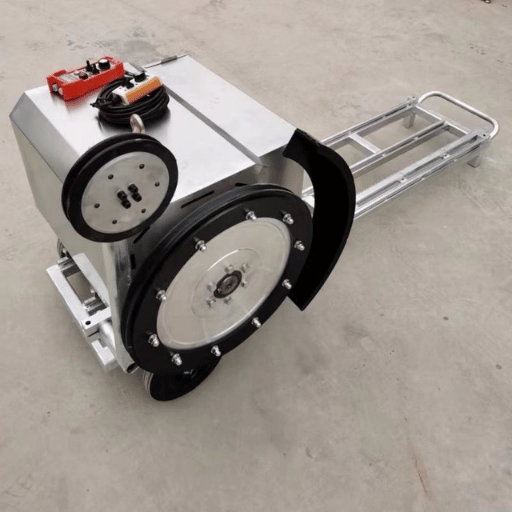
Single wire saws are designed for cutting hard and the most common brittle materials that crack, chip, or shatter under the normal force exhibited by a blade saw. Managed low-force grinding steps from the diamond wire enable the slice of materials with Mohs hardness between 5 (normal glass) and 9.5 (silicon carbide) with no catastrophic fracturing.
Typical cutting parameters for common hard and brittle materials processed by single wire saws for hard and brittle materials are shown below:
| Material | Mohs Hardness | Recommended Wire ∅ | Typical Kerf | Achievable Wafer Thickness |
|---|---|---|---|---|
| Monocrystalline Silicon | 7 | 0.04–0.12 mm | 0.15–0.25 mm | 100–180 μm |
| Silicon Carbide (SiC) | 9–9.5 | 0.15–0.30 mm | 0.25–0.35 mm | 200–350 μm |
| Sapphire (Al₂O₃) | 9 | 0.12–0.25 mm | 0.20–0.30 mm | 150–500 μm |
| Gallium Arsenide (GaAs) | 4.5 | 0.08–0.15 mm | 0.15–0.20 mm | 100–350 μm |
| Quartz / Fused Silica | 7 | 0.10–0.20 mm | 0.15–0.25 mm | 200–1,000 μm |
| Germanium | 6 | 0.08–0.15 mm | 0.15–0.20 mm | 150–500 μm |
| Ceramic (Al₂O₃, ZrO₂) | 8–9 | 0.15–0.30 mm | 0.20–0.35 mm | 300–2,000 μm |
| Graphite | 1–2 | 0.20–0.35 mm | 0.25–0.40 mm | 500–5,000 μm |
Demand for increasingly thinner wafers in the semiconductor industry is enormous. According to a 2025 study from the University of Strathclyde, a projected reduction in the average thickness of n-type TOPCon monocrystalline silicon wafers from 140 m to approximately 115 m by 2034. silicon heterojunction (SHJ) wafers are expected to approach 100 m. Realization of these targets requires a diamond wire diameters less than 50 m, along with tight control of wire diameter and feed rate. The diamond wire precision cutting offered by a dedicated single wire saw is the optimal platform to meet these specifications in silicon wafer cutting.
Extreme hardness of silicon carbide (Mohs 9-9.5) encountered in SiC wafer cutting necessitates the use of diamond wire of high grit density and high tension up to 40-50 N. A single wire saw provides the operator with the ability to change these parameters for each wafer – a feature absent in fixed-parameter multi-wire systems and particularly useful when machining spent SiC substrates costing $200-500 per wafer.
Single Wire Saw vs. Multi-Wire Saw: When to Use Each
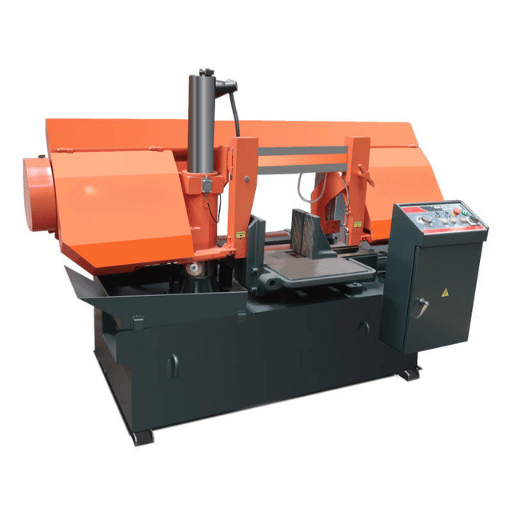
Deciding whether to use a single wire saw or a multi wire saw in industrial applications hinges upon three variables: throughput requirements, desired cut geometry, and material cost per slice. Both machines rely on diamond wire cutting technology but that is where their similarities end.
✔ Single Wire Saw Advantages
- Cuts complex geometries (angled cuts, curved profiles)
- Adjustable parameters per individual cut
- Lower capital cost ($30K–$150K vs. $200K–$1M+)
- Quick setup changes between materials
- Handles workpieces up to 200–300 mm diameter
- Ideal for R&D, sample preparation, and low-volume production
⚠ Single Wire Saw Limitations
- One slice per cut cycle (throughput limited)
- Not economical for slicing entire 300 mm ingots
- Wire consumption higher per wafer than multi-wire
- Slower for straight parallel-cut applications
| Factor | Single Wire Saw | Multi-Wire Saw |
|---|---|---|
| Cuts per Cycle | 1 | 100–1,000+ simultaneous |
| Throughput | 1–20 wafers/hour | 200–2,000+ wafers/hour |
| Cut Flexibility | Any angle, profile, or geometry | Parallel straight cuts only |
| Setup Time | 5–15 min per material change | 30–120 min (wire web threading) |
| Capital Cost | $30K–$150K | $200K–$1M+ |
| Best For | R&D, prototyping, sample prep, custom cuts | Mass production of wafers/slabs |
A practical throughput benchmark: according to Stone World magazine, one fabrication shop gained 40% more yield in the same eight-hour shift by switching from a single-blade saw to a five-wire multi wire saw. Their single saw completed one cut in 10 minutes; the multi-wire machine took 25 minutes per cycle but produced five cuts simultaneously.
For laboratory sample materials, R&D prototyping, and precision cutting of costly substrates requiring individual inspection, the single wire saw retains an advantage in flexibility. Donghe supplies both single wire saw systems and multi-wire platforms, and engineers have surveyed facilities operating both, noting that optimal results come from facilities operating both machines simultaneously.
Key Specifications for Selecting a Wire Saw Machine

Start with the saleable wire saw specifications. Match your machine’s technical parameters to workpiece material, material cost, number of cuts per workpiece, and required standard of precision. Six specs are especially important when choosing industrial wire saws in hard application environments.
- ✔
Cut Envelope — Verify the maximum workpiece dimensions. A machine rated for 200 × 200 × 200 mm will not accommodate a 250 mm boule. Measure your largest anticipated workpiece and add a 20% margin. - ✔
Wire Diameter Range — Machines supporting 0.04–0.35 mm wire cover the full spectrum from ultra-thin silicon wafer cutting to thicker ceramic sectioning. If your work involves substrates below 200 μm, confirm the machine handles wire below 0.10 mm diameter. - ✔
Wire Tension Control — Look for load-cell feedback with PID control. Constant-tension systems maintain ±2 N accuracy, which is necessary for TTV below 10 μm on thin wafers. Gravity-weight tension systems are adequate for general cutting but insufficient for semiconductor-grade precision. - ✔
Computer Numerical Control (CNC) Integration — CNC machines with recipe storage (30+ recipes) eliminate operator-dependent variability. Programmable feed rate, wire speed, and indexing ensure repeatability across production runs. Manual machines are acceptable for occasional laboratory work but introduce variation at higher volumes. - ✔
Wire Speed Range — Standard single wire saws operate at 10–25 m/s. Higher speeds improve throughput but increase wire wear. For SiC and sapphire (Mohs 9+), speeds above 15 m/s with high-tension capability (40–150 N) are recommended. - ✔
Total Cost of Ownership (TCO) — Purchase price accounts for 30–50% of the five-year TCO. Wire consumption, guide wheel replacement, coolant costs, and maintenance costs account for the rest. Request wire consumption rates (meters per cut) for your target material before purchase.
⚠️ Common Mistake: Ignoring Wire Consumption in TCO
Diamond wire for a precision diamond wire saw costs 1-5$ at retail per meter of diamond wire. A single pass through a 150 mm SiC piece of work needs between 50-200 meters, based upon diamond wire hardness and wire diameter. At 3$ per meter, that totals 150-600$ of diamond wire per cut. Customers who evaluate machines based on purchase price alone often overlook diamond wire cost.
Industry Applications: Where Wire Saws Are Used
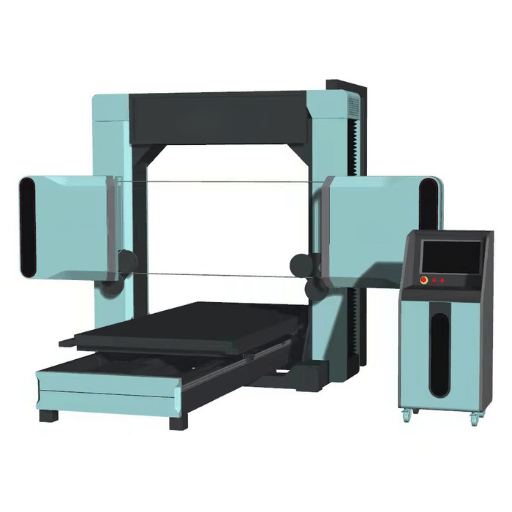
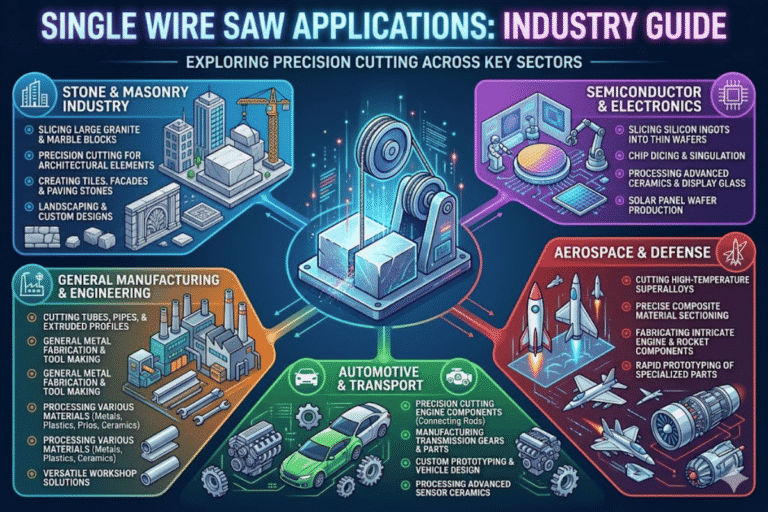
wire saws are applied in five key industries, each requiring different types of cut. According to IMARC Group, the global diamond wire market was valued at USD 1.5 billion in 2024 and is projected to reach USD 3.2 billion by 2033 (CAGR 8.94%) largely driven by semiconductor demand. This is so despite the growing impact of photovoltaic applications.
$1.5B
Diamond Wire Market (2024)
$3.2B
Projected by 2033
12.3%
SiC Segment CAGR
Semiconductor Manufacturing
Single wire saws is the most common diamond wire used for silicon wafer cut in chip manufacturers fabs. Wafer manufacturing wire saws are used by Wafer fabs to slice silicon, GaAs and germanium Ingot into substrates for integrated circuits, MEMS devices and power electronics. Chip manufacturing requires surface roughness < 1 m and subsurface damage depth < 10 m – current state of the art, modern diamond wire saw achieve routinely with wire speeds > 15 m/sec and feed rates < 2 mm/sec.
Photovoltaic (Solar) Cell Production
Photovoltaic accounts for the largest share of diamond wire consumption globally. PV cell manufacturers slice silicon ingots into wafers with typical thickness of 140-180 m with either single or multi-wire diamond wire saws. The industry trend of minimizing wafer thickness – and thus the quantity of silicon used – per watt has resulted in the use of finer diamond wires (after 50 m diameter) and closer tension control. Donghe’s wire saws for photovoltaic applications are built for this segment. Today we need diamond wire with a slim profile, high wire tension and optimum depth of cut. Today we need Donghe.
Optical and Laser Components
Most optical component sections are cut using wire saws made of sapphire, quartz, and fused silica. Because these have to be scratch-free for optical clarity and the polishing process requires very little workpiece pre-treatment, a diamond wire with a gentle cutting action is ideal.
Laboratory and R&D Sample Preparation
Laboratory diamond wire saws are used for sample preparation in material science and geotechnical laboratories, and work on virtually all substrate types – from fragile crystals and thin film structures, to bulk ceramics. Their use is becoming more prevalent for electron microscope specimen preparation, failure analysis and research because substrates are cut with minimal micrometer (subsurface damage).
Stone and Construction
Massive-diameter wire saws in quarries to cut marble and granite blocks weighing several tons. Portable diamond wire saws are used by construction crews to cut concrete with Blade saws in areas inaccessible for the demolisher with large wire saws – underwater, thick reinforced walls, small spaces. Although big wire saws use a different wire size (1-11 mm) and different construction methods than small, precision systems, the cutting technology remains unchanged.
💡 Pro Tip
The market for SiC diamond wire slicer is the fastest growing, at USD 150 million in 2024 and forecast to grow to USD 400 million by 2033 (CAGR 12.3%). This growth is associated with ( ….) where SiC semiconductor’s are displacing silicon in electric inverters and in vehicle onboard chargers. If your chip plant used SiC substrates, compare a SiC rated diamond wire with 40 N tension in a single wire saw and in the expanding market.
FAQ — Single Wire Saw Technology
Q: How does single wire saw technology work?
View Answer
A single wire saw propels a thin diamond coated wire (0.04-0.35 mm for diamond away from the workpiece at velocities of 10-25 m/sec. The bonding between the grit to the wire provides fixed abrasive points which grind through the work. standard (0.15-0.35 mm for kerf) kerf is produced. The wire tension ( 20-50 N) is maintain use feedback from load cell and the cutting interface is lubricated by the use of abrasive cutting fluid.
Typical subsurface damage beneath standard Mo in semiconductor materials is less than 10 m.
Q: What is the difference between a single wire saw and a multi-wire saw?
View Answer
A single wire saw uses a single wire to make a single cut at a time, giving control for each slice – best for R&D, custom geometries, and expensive substrates. Multi-wire saws use hundreds of parallel wires to cut a whole ingots into wafers in one cycle (200-2000+ wafers/hr). Single wire saws are in the $30K-$150K range, multi wire are $200K-$1m+.
Know whether you want single wire or multi wire because of the flexibility at low volume or whole lotta wafers.
Q: What materials can a single wire saw cut?
View Answer
Single wire saws could cut material which fallen on Mohs 1 to 9.5:silicon, SiC, sapphire, GaAs, germanium, quarts, ceramic, glass and graphite. another construction wire saws capable to cut stone and concrete.
Q: What is the kerf loss of a diamond wire saw?
View Answer
diamond wire saws have kerf losses of 0.15-0.35 mm depending on wire diameter and material. Conventional blade saws have 1.5-3.0 mm kerf of 0.55-2.65 mm, a savings of 5-20. For silicon wafer production, kerf savings directly translates into a higher product yield.
For 200 mm ingot sliced to 150 m wafers, reduced kerf results in 50-100 more wafers per ingot than blade cutting – a substantial cost savings considering semiconductor grade silicon costs between $50-200 per kilogram.
Q: Is single wire saw technology safe to operate?
View Answer
Yes. Modern single wire saws are equipped with a wire enclosure dividing the cutting chamber from the rest of the machine, eliminating human contact with the sawing wire. In the event of a wire-break, dual wire-break detection sensors engage, stopping the machine in milliseconds, while CNC interlocks serve to block operation while the door is open.
wire saws associated with coolant are equipped with coolant containment to eliminate splashing. Noise level does not exceed 75 dB, less than a normal human voice. There are no sparks or free airborne particulates in the universe like blade saws have.
Personal protection equipment (PPE) includes safety glasses and closed toe shoes. Quite a few shops will report the wire saws as the lowest danger cutting equipment in their facility’s safety audit documentation assuming lockout/tagout procedure is followed while replacing the wire.
Q: How long does a diamond wire last?
View Answer
Wire life is related to material hardness, the wire diameter, and the cutting parameters. For silicon at 7 (Mohs), one spool of diamond wire (normally 100-500 m) will sustain 6 to 30 cuts before the diamond grit falls below cutting depth. For SiC at 9.5 (Mohs), the wire life drops to 3-10 cuts per spool.
Operators can mitigate the effects of short wire life through careful control of feed rate, tension and reciprocating motion which will balance wearing away of both sides of the wire.
Q: How much does a single wire saw cost?
View Answer
Single wire saw machines range from $30,000 (entry level laboratory devices) to $150,000+ (advanced CNC machines with automated indexing, load-cell tension control). The up-front cost is 30-50% of the five-year Total Cost of Ownership. Consumables -primarily diamond wire costing from $1-5/m and guide wheels replaced every 500-2000 hours- often cost as much as or more than the initial purchase price of the machine over the five years.
In search of one wire saw that will fit your material and accuracy specific needs?
About This Analysis
This handy reference was written by the engineers at Shanghai Donghe Science & Technology Co., Ltd., who have been making diamond wire saw machines since 2014. It is based on over 10000 cuts documented in semiconductor, photovoltaic, and advanced materials processing, with significant experience providing cutting solutions in all of those industries. In addition to commercial success, Donghe has received 35 much-needed national patents for wire saw technology and it has ISO 9001:2015 approval of its manufacture.
Any third-party data referenced is listed as such with a date of publication inline.
Related Articles
References & Sources
- Experiment Comparative Analysis of Feed Rate with Velocity Control in Cutting Mono Crystalline Silicon Using a Diamond Wire Saw (2024) — Micromachines / MDPI
- Progress and Critical Challenges in Slicing of Thin Semiconductor Wafers (2025) — University of Strathclyde
- Diamond Wire Market Size, Trends, & Growth Forecast 2033 — IMARC Group
- Benefits to a Multi-Wire Saw (2014) — Stone World Magazine
- Wire Saw — Wikipedia
- Diamond Wire Sawing Process for Single-Crystal Hard and Brittle Materials: A Full Review (2024) — Journal of Manufacturing Processes / ScienceDirect



![Polysilicon Material: Properties, Grades & Uses [Guide]](https://wiresawcutter.com/wp-content/uploads/2026/08/polysilicon-material-featured-150x150.webp)