Get in touch with DONGHE Company


Multi Wire Saw Explained: Working Principle, Types, and How to Choose the Right Machine
📐 Quick Specs at a Glance
| Parameter | Specification |
|---|---|
| Wire Type | Diamond-impregnated or abrasive slurry |
| Wire Diameter | 0.³5–0.65 mm (stone); 40–1²0 μm (semiconductor) |
| Kerf Width | 0.5–1.² mm (stone); 0.15–0.²5 mm (semiconductor) |
| Wire Count | ²0–80 (stone); up to 1,000+ (semiconductor) |
| Materials Cut | Granite, marble, silicon, SiC, sapphire, ceramics |
| Min Slab Thickness | 8 mm (stone); 100 μm (semiconductor) |
What Is a Multi Wire Saw and How Does It Work?
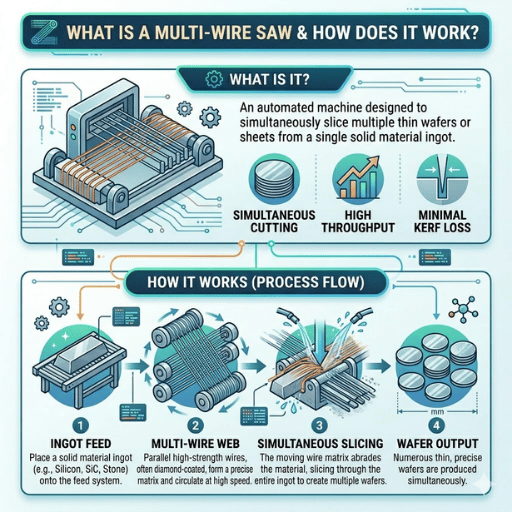
A multi-wire saw is a precision slicing machine that employs a set of equal length, parallel wires, held under precise tension, to make cuts through hard materials – stone, silicon, sapphire and ceramics – with dozens or hundreds of uniform slabs or wafers being produced in one pass. Multi-wire saws, as opposed to conventional toothed saw blades, ablate material.
This is a simple concept but one that is mechanically challenging to implement. A continuous loop of wire – generally a diamond impregnated cable or bare steel wire fed with an abrasive slurry – is wrapped around two or more guide rollers (often called wire guides or pulleys). The pitch of the wire wrap around the rollers defines the thickness of each slug of material.
As the wire web is fed at high speed (5-15 m/sec), the workpiece is fed through the wire web from above or below and the abrasive effect of the individual diamonds (or free abrasive contained in the slurry) erodes material along the length of each of the diamonds.
Two types of wire are prevalent, where diamond wire saws have diamond beads sintered or electroplated onto the cable. Fixed-abrasive wire cuts quicker and with less wastage (on account of the reduced kerf width) so has become the most common method in stone processing, with wire diameters generally at 0.³5mm and kerf widths near 0.5mm. An alternative abrasive is used on abrasive slurry wire saws, where a bare steel wire is smeared with a silicon carbide or alμmina slurry.
Cutting action is provided by abrasive grit trapped between the wire and the workpiece, a relatively slow process which is less damaging to silicon wafers.
The cutting action can also be in a continuous or oscillating fashion with the wire. A continuous feed simply means the wire is fed in one direction and an oscillating (or reciprocating) feed moves the wire back and forth. This evenly distributes the wear across the full length of the wire.
Published research found on ResearchGate looking at the basic science behind multi-wire sawing found that the interaction of wire speed, feed rate and the wire tension determined the cut quality of the cut as well as the life of the wire itself. Field test results on data from the Peter Wolters DW ²91 platform, found on Wikipedia in the wire saw reference page, shows a minimμm wire diameter of 40 m can cut an 860 mm work part into wafers as thin as 100 m.
The same principle is used in the stone and construction materials processing, with the industrial scale multi wire saws for granite and marble blocks; using wires impregnated with a layer of diamonds to cut the slabs.
Highlight: Multi-wire saw. Instead of teeth, abrasive particles are used to cut, by running many parallel wires simultaneously, nμmerous parallel slabs or wafers can be singulated from a single boule in one step.
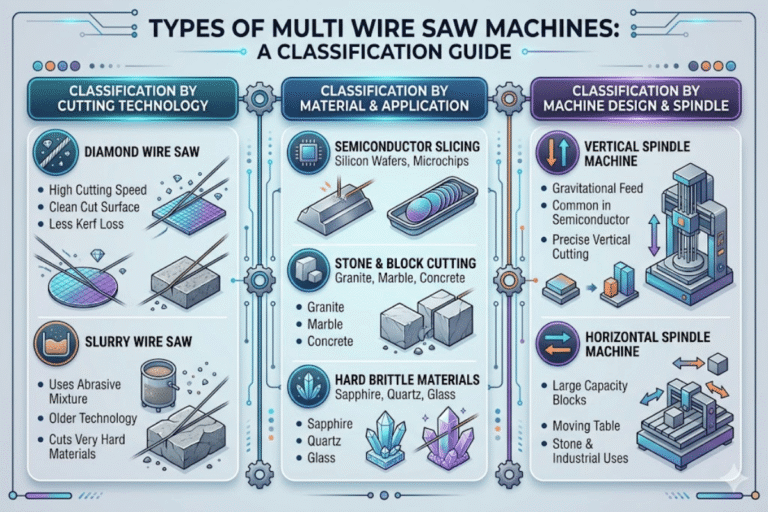
Types of Multi Wire Saws — Diamond Wire vs. Abrasive Slurry

The line of demarcation separating diamond wire from abrasive slurry systems is the one most fundamental element in multi-wire saw decisions. Each technology responds to a different set of material needs, price points, and intended surface finish. Knowing which technology performs well – and which doesn’t – can avoid significantly misaligned applications and equipment.
Diamond wire saws employ wires with permanent bonds of diamond grits to the wire surface (through sintering or electroplating). Cutting occurs as the brittle abrasive impacts substrate, then fractures along the wire’s surface. Since the grits are held in a fixed position on the wire, the cutting action is not only more aggressive but more predictable. Typical stone applications use a 0.³5mm diameter diamond wire with a resulting 0.5mm wide kerf. This is a significant cut volμme savings over traditional band-saw-type blades. The material savings for that size would be approximately 33% of total cuts in the stone shop. During semiconductor fabrications, ultra-thin diamond wires of 100-120m are the standard, producing a 0.25mm wide kerf.
Abrasive slurry systems work very differently. A bare steel wire of 100-180m diameter is placed in a series of metal guides, and driven through a silicon carbide or alμmina slurry bath. The loose abrasive particles suspended in the slurry become trapped in between workpiece and wire, setting up a three-body abrasion process. This produces finer surface finishes (Ra 0.3-0.8m versus Ra 0.8-1.5m with diamond wire) at slower cut speeds.
| Parameter | Diamond Wire | Abrasive Slurry |
|---|---|---|
| Wire Diameter | 0.35 mm (stone) / 100–120 μm (semiconductor) | 100–180 μm core wire |
| Kerf Width | 0.5 mm (stone) / ~0.25 mm (semiconductor) | ~0.20 mm (semiconductor) |
| Surface Roughness | Ra 0.8–1.5 μm | Ra 0.3–0.8 μm |
| Wire Life | ~6 cuts (stone application) | Single use (slurry replaced per cycle) |
| Cutting Speed | 2–3× faster (fixed abrasive) | Baseline (free abrasive mechanism) |
| Environmental Impact | Cleaner process, less waste generated | Slurry disposal required, higher waste volμme |
One recent major advancement in diamond wire technology is the relatively new so-called RFV (Rocking-Floating-Variable speed) slicing mode. According to a 2024 peer-reviewed article published on ScienceDirect, “RFV slicing: a new approach for minimizing wafer warp and achieving high surface quality,” RFV slicing resulted in a 68.4% reduction in wafer warp and 60% reduction in surface roughness versus conventional unidirectional cutting. This innovation narrows the surface-quality gap that traditionally favors abrasive slurry systems.
Wire tension requires careful engineering that is not always appreciated. Too slack sets up the wire to wander during cutting, resulting in variable thickness. Too tight stresses the wire and reduces life of the material. Typical wire tension runs is between 20 and 35N. Wire beads size on the carriage stepper motor also influence cut quality – tighter wire spacing result in very fine finish but produce the highest cost / meter of wire in manufacturing.
When selecting wire types for a particular application, consider first the three input parameters: end product kerf width expectation, Ra surface finish expectation, and cost per unit area of cut material. These alone should trim the playing field considerably. In shops with multiple wire saw applications among the natural stone processing centers, almost always the diamond wire would come out on top over abrasive slurry for speed and yield.
Raw note on the choice from the 5 most important comparison parameters: “Diamond wire is faster and wastes less material. Abrasive slurry delivers finer finishes. The RFV slicing mode is beginning to compete.”
Multi Wire Saw vs. Gang Saw vs. Bridge Saw
Selection among multi wire saw, gang saw and bridge saw will determined yield, surface quality, and economics of a stone processing facility. Each form of stone cutting machine architecture is designed around solving one constraint while ignoring the others, and no one design can be called best for all operations. Below, the comparison text provided below has relied upon an industry from standard marble and granite to generate reasonable benchmarks.
| Parameter | Multi Wire Saw | Gang Saw | Bridge Saw |
|---|---|---|---|
| Kerf Width | 0.5 mm | 1.5 mm | 3–4 mm |
| Yield (1.75 cm slabs) | 55 m²/m³ | 47 m²/m³ | 35–40 m²/m³ |
| Min Slab Thickness | 8 mm | 18 mm | 15 mm |
| Cutting Speed | 3× gang saw baseline | Baseline | Fastest single-cut operation |
| Surface Finish | <1 mm tolerance | Micro-crack risk on hard stone | Good on single cuts |
| Noise Level | 50% lower than gang saw | Baseline (high) | Baseline (high) |
| Wastewater Generation | 80% reduction vs. gang saw | Baseline | Moderate |
Gangsaw machines – often called gangsaws or frame saws – use a reciprocating frame that holds horizontal steel blades and feeds them with abrasive slurry. They have dominated the marble slab production for many years, owing in part to low capital costs, low power consμmption, and simple character of their technology. Their 1.5mm kerf width means more material is lost every time they cut than with a multi wire saw. Gangsaws may not be as friendly to the more crystalline stones such as granite, because impact forces build up high and could induce micro cracks in the stone bed. However, many shops have existing gang saws that are located in a remote area of the plant. In the case of these plants, the existing equipment has no amortized cost and the process is based on existing equipment and workflow.
Bridge saws perform a different function altogether. They are single blade machines, effective at cross-cutting slabs to specification as well as producing profiled or angled cuts. With kerf widths of 3-4 mm they use the most material per cut, but has unlimited versatility that multi-wire and gang saws lack a bridge saw is not a slab production machine – more a fabrication machine used further down the production line after slabs has been manufactured.
The technical yield advantage of multi wire saw over gangsaws is significant at a mass scale. Considering the findings in the studies done by Stone World on the advantage to multiwire saw, the thinnner kerf results in increased saleable surface per m 3 blanceo of raw block. An equivalent assμming a large 200 blocks/month throughput at 55 m/m as compared to 47 m/m results in,netting a extra 1,600 m of finished material per year-cost savings.
The over-stated yields cited in manufacturers literature are common in engineering practice. Real yields will vary with block dimensions, hardness of material and condition of wire on cutting. The industry quoted 55m/m figure of manufacture is based upon a normal cubic marble block of 2000mm and crystalline structure.
Other shapes, vein tunnels or heavily weathered material will yield less.
In the context of facilities considering the switch from traditional stone cutting practices the cases with the highest justification for multi wire cutting machinery are those which can sustain sufficient volμme throughput to amortize the capital investment, and those in which the facility is much more interested in slabs than in custom pieces.
Key takeaway: Multi-wire saws yield 17% more per block than gang saws. Can achieve down as thin as 8mm slabs which results in additional benefits at steady state scale production.
Applications — Stone Processing, Semiconductors, and Advanced Materials
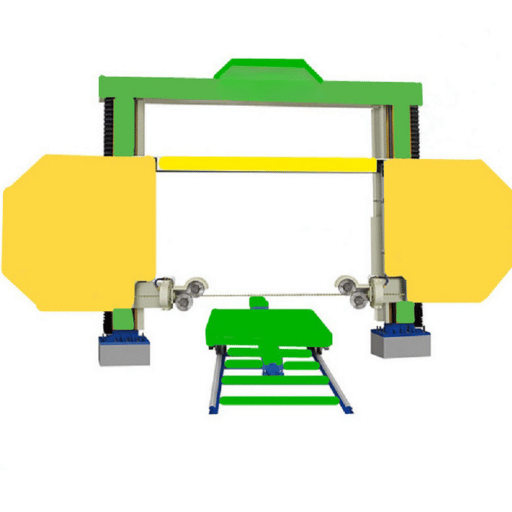
Multi-wire saws are employed at every level of stone production from large quarry to very fine grits to ultra high precision semiconductor components within a clean room environment. The specific demands at any point along this continuμm are delivered by variations in wire specification, diameter, tension, and feed rate across application groups as shown in the following matrix.
| Industry | Material | Wire Type | Typical Thickness | Key Requirement |
|---|---|---|---|---|
| Stone | Granite, marble | Diamond 0.35 mm | 8–30 mm slabs | Yield, surface finish |
| Semiconductor | Silicon | Diamond 100 μm | 150–300 μm wafers | TTV, warp control |
| Power Electronics | SiC, GaN | Diamond 80–100 μm | 350–500 μm | Hardness handling |
| Optics | Sapphire | Diamond | 0.3–2 mm | Surface quality |
| Ceramics | Al₂O₃, ZrO₂ | Diamond | 0.5–5 mm | Brittle fracture control |
Stone processing is still the single largest-volume market for multi-wire saw technology. Granites and marbles traders operating with diamonds wire systems with 20-80 parallel wires, take big blocks from quarries and, turning it into calibrated slabs. Thanks to the 0,5 mm cut kerf that is small vs. traditional technologies, and the possibility of slicing slabs as thin as 8 mm, the multi-wire saw is used for lightweight cladding and flooring applications, in cases where significantly thicker material would be too heavy or expensive.
DONGHE’s multi-wire stone saws are addressed to this segment (granite and marble), are constructed for having the cutting machines configured with maximum 2000 mm length blocks.
Most highly demanding use of semiconductor production. Silicon ingots grown by Czochralski method are cut into wafers of thickness 150300 m with multi-wire saws with up to 1,000 or more parallel wires. For TTV and warp, single digit micron consistencies are maintained.
Market for multi-wire saws for semiconductors is estimated to be $673 million in 2015 with 5.7% CAGR expected in future due to growth in selling of silicon wafers in consumer electronics, data centers and automobile chips.
Power electronics is by far the fastest expanding market. Critical substrates for electric vehicle inverters, renewable energy converters and high performance computing power supplies are silicon carbide (a 9.5 Mohs rated hard material) and gallium nitride. Fabrication employs diamond wire saws that have between 80 and 100 m wire diameter, although the wire wears far faster than when cutting silicon.
The last group of applications includes optics and ceramic uses. Workhorse materials like sapphire windows for military and aerospace applications, alumina substrates for electronic packaging, and zirconia in medical implants all use multi-wire saw technology to produce the original wafers or blanks. The engineering problem here is controlling brittle fracture flow, or preventing chipping and cracking along the crystallographic planes; this is achieved with decreased feed rates and carefully balanced wire tension gradients.
The global diamond multi-wire saw market is set to hit $1.97b by 2030, growing in each of the above sub-markets. Total stone processing and semiconductor manufacturing account for more than 75% of the installed multi-wire saw capacity globally.
Main point: multi-wire saws are employed across a huge range, from 30 mm stone slabs all the way up to 100 m semiconductor wafers—the type and diameter of wire and the machine configuration differ; however, the principle of the parallel-wire cut is consistent
Advantages and Limitations of Multi Wire Saw Technology
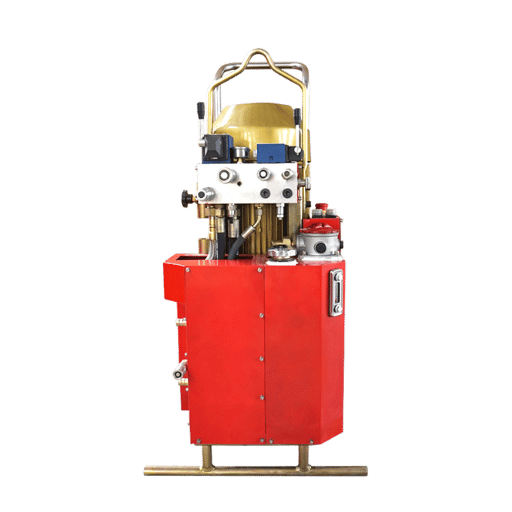
All cutting technologies have benefits and drawbacks. Multiwire saws produce tangible improvements in yield, finished product quality, and their environmental footprint – but have limitations on capital investment requirements, labor needs, and compatibility with certain cell finishes. both need serious attention before buying a machine.
✔ Advantages
20-30% higher slab yields per block than gang saws with a 0.5 mm kerf width which greatly reduces material wastage in each cut
Minimum slab thickness of 8 mm (stone) permits very thin-format products – lightweight cladding, precision tiles, and veneer – that blade-based saws cannot achieve
Excellent surface quality with thickness tolerance below 1 mm, minimizing the time required for polishing/calibration afterward.
80% less wastewater generated than gang saws. Eases waste water compliance.
Simultaneous slab production – a 64 wire-machine produces 65 slabs in one pass, matching the cycle a bridge saw needs for a single cut.
Lower noises output (50 reduction) provides better working environment and possible the lower costs of sound-insulation of buildings.
⚠️ Limitations
Upfront capital cost—Anywhere from $150,000 to $300,000+ depending on count/levels of automation and manufacturer—a great barrier to entry for smaller producers.
⚠️ Diamond wire consumable costs run approximately 30% higher than conventional saw blades, adding to per-cut operating expense
⚠️ Operator training is required — wire threading, tension calibration, and feed rate adjustment demand specialized skills not transferable from blade-saw experience
⚠️ Setup time can reach 3× the actual cutting time for complex jobs, particularly when changing wire spacing for different slab thicknesses
⚠️ Wire breakage risk during cutting causes downtime and may damage the workpiece — a concern that increases with wire age and abrasive material contact
⚠️ Not universally effective — very hard or highly abrasive materials such as quartzite accelerate wire wear and reduce per-cut efficiency
According to industry practitioners, the main obstacle to adoption is front end cost. Savings in materials due to minimum kerf loss can generally recover capital costs within 18-24 months for plants processing greater than 100 blocks/month in volume. Total cost of ownership must account for diamond wire replacement (which is the largest component of recurring costs), maintenance costs of the water recirculation system, and labor cost difference (experienced wire-saw operators versus conventional saw operators).
For operations simply assessing if a multi-wire saw machine is a good match for their production, the cycle time breakdown is just as important as the per-cut yield improvement. A high-volume processor’s setup time will be spread over many large blocks, while a low-volume, custom shop will not benefit from an advantageous setup-to-cutting ratio.
The main lesson: multiwire are the best on yield, accuracy, and environment. It all comes down to volume: high throughput plants will repay the high premium investment in 2 years with materials saving only.
How to Select the Right Multi Wire Saw Machine
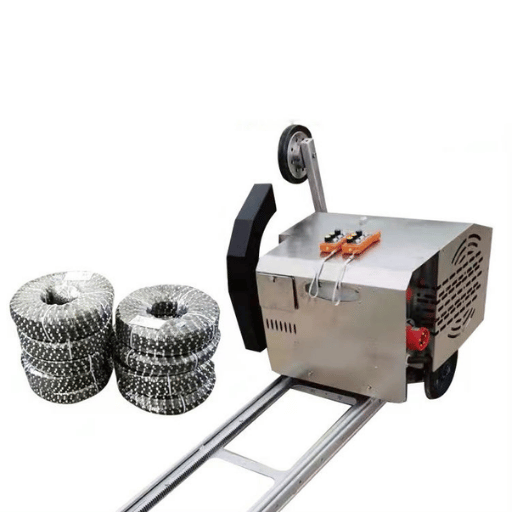
Finding the right multi wire saw machine is about choosing a machine profile suited to material characteristics, production demands, and your time frame and budget. There is no such thing as one perfect configuration for one application and choosing the wrong one can cost capital or leave you with less options for other uses. Use the checklist as a guide.
📐 Selection Checklist
Specify your material – stone type, Mohs scale hardness, standard block size and grain structure (fine grained stone are cut differently compared to coarse crystalline material)
Set the minimum thickness of slab- if you want slabs below 15 mm then multi-wireis probably the only solution, for standard slabs > 20 mm gang saws remain in competition.
Work backwards from desired throughput – specify requirement in m/m, and derive number of wires, feed rate, and No of shifts
Cost of ownership budget—hole machine (plus replacement schedule for diamond wire), water recirculation system, modifications to the facility, operators training, etc. (budget 15-20% above the cost of the machine for these costs)
Check wire diameter suitability – ensure the distance between wires on the guide rollers is compatible with your minimum slab thickness, as well as the machine’s ability to run wire diameter for your material.
Level of automation to check—manual-feed machines are less expensive but—must be constantly attended by operators—, while they also—allow unattended shift change—.
Pro tip: Have them run a sample cut on your material prior to quoting. Even using the same machine there can be variation between Carrara marble, and Indian granite based on hardness and crystal structure. All good manufacturers, DONGHE included will do sample cuts that will show you the actual cycle time, wire wear rate, and surface finish on the customer material.
Wire spacing on guides is a key mechanical restriction of flexibility. The process line built for 20 mm stone slabs is not just a case of a scaled down version for 2 mm ceramic wafers…the roller geometry, wire tension system and feed system all need to be of different design. Pass as much information as you know and before down selecting one machine architecture…
Explore DONGHE Multi Wire Saw Machines →
Great lesson. As far as starting point: material hardness and minimum thickness constraints should be applied first. Knowing these can allow you to narrow down your machine options.
Finally, a test cut will ensure that it will do what you want before money is spent.
Industry Trends and Innovations in Multi Wire Saw Technology

Multi-wire saw technologies continue to evolve spurred by two forces: The stone industry must produce more yield from every investment and reduce operating costs, which put downward pressure on operating costs. Conversely, the semiconductor industry relies upon more exacting wafer shapes and dimensions, preventing excess material. These four innovations will influence the next generation of cutting technologies:
1. Ultra-thin wire development. Innovators in the field of diamond-impregnated wire are testing diameters below the 0.35 mm standard now in use in the stone industry. In the field, wires of less than 0.3 mm are already reducing kerf from 0.5 mm to less than 0.4 mm. For one cut shop producing 500 blocks of material per year, this one change will increase overall recovery by 3 to 5 percent of saleable material. In the semiconductor sector, according to the Frontiers in Mechanical Engineering periodical, the force cutting the diamond wire is finally approaching 40 m—the practical limit set by the tensile strength and the probability of breakage.
2. RFV slicing mode. Rocking-Floating-Variable speed mode of operation allows the diamond wire’s direction and operational state to change during a cut. Instead of a constant velocity from fixed wire speed, the wire oscillates back and forth at a frequency and amplitude fine-tuned to each material to achieve the maximum efficiency and inventory rebuilding potential. According to peer-reviewed studies, this innovation decreases wafer warp by 68.4%, improves surface texture quality 60%, and has more than doubled the number of wafers per wire. It grants the wire system the surface specific quality the abrasive slurry was able to deliver in the past.
3. Increased demand for SiC and GaN. Silicon carbide power modules in electric car platforms-with renewable energy converters inverters and computational infrastructure-of existing demand is generating a rapid increase demand for SiC and GaN substrate slices. These materials are very hard (Mohs 9.5 for SiC) and multi-wire systems are the primary cutting tools. Springer, the leading researcher in diamond wire physics has helped develop formulary elements to produce dedicated cutting wires for these new competing materials
4. Full automation. Automated multi-wire saws segments contributed roughly 276 million dollars in 2025. Continuous optimization of automation features include automated wire threading, tension monitoring, incremental table position adjustments, workpiece loading and unloading, minimizing human oversight. For example, DONGHE automated spider systems for both stone and semiconductor applications include such automation capable of running multiple machines simultaneously.
Four major factors transforming the multi-wire system market to 2030 will be meter-thicker ductile diamond impregnated wires, RFV motorized motion, high end material demands, and automated systems.
Frequently Asked Questions

Q: What are the limitations of a wire saw?
View Answer
The multi-wire saw differs operationally from its blade counterpart by several factors. The initial capital cost of a multi-wire saw is more than double the cost of an equivalent blade system. These tools use diamond clad wires that incur 30% higher cost to make than the cheapest stone cutting blades. The time to set up for a cut will be about three times the time needed to run the cut itself. The tool frequently breaks during use, since it is operated with aggressive, static abrasive material, to minimize breakage of the wafer you are cutting. Manufacturing quartzite with its extreme abrasiveness accelerates this wear cycle from a modest six cuts to about two or three cuts per wire.
Q: What is another name for a wire saw?
View Answer
Alternative names include diamond wire cutter, cable saw, multi-wire slabbing machine, and wire slicing system. Semiconductor manufacturers often call them wafer slicing machines or multi-wire slicers.
Q: How many wires does a multi wire saw use?
View Answer
The number of wires used varies depending on application. Generally, stone processing machines run 20-80 parallel wires resulting in between 21-81 wafers per pass. The semiconductor multi-wire saws operate on an entirely different scale. Modern industrial silicon wafer slicing systems can have in excess of 1,000 wires operating simultaneously, slicing up an entire ingot into wafers in one pass. The number of wires used is a function of roller groove frequency and limiting workpiece width.
Q: What materials can a multi wire saw cut?
View Answer
Multi-wires saws cut a wide variety of hard, brittle materials. Typical workpieces for multi-wire slicing include various types of stone—granite, marble, limestone, travertine, and sandstone. Common workpieces for the semi conductor and electronics industry include monocrystalline and polycrystalline silicon, silicon carbide (SiC), gallium nitride (GaN) and gallium arsenide (GAs). More exotic workpieces include optical quality sapphire, engineering ceramics such as alumina (AlO) or zirconia (ZrO), quartz, or rare earth magnets.
Q: How much does a multi wire saw machine cost?
View Answer
Pricing varies widely depending on wire count, automation level and intended application. Primary industry category – stone processing- entry level machines with 20-40 wires range from approximately $150,000. For medium throughput machines with 40-64 wires and semi-automatic operation, typical prices fall within the $200,000-$300,000 range. High speed, high wire count systems for the semi conductor wafer slicing sector easily command prices above $500,000. Additional costs include diamond wire consumables (by far the largest recurring expense), water treatment systems, installation and operator training. Expect these additional elements to add 15-20% to your initial capital outlay in the first year of operation.
Q: What is the difference between a multi wire saw and a gang saw?
View Answer
To better understand how multi-wire sawing differs from its abrasive slurry counterpart, the gang saw, it is necessary to compare design features. The single, fundamental difference is cutting element- steel blades with an abrasive slurry versus abrasive impregnated diamond wire. Depending on the parameters chosen, difference in kerf width can be as high as 1.0 mm (0.5 mm versus 1.5 mm), leading to almost 17% increased yield per block. Yet, multi-wire slicing is over three times faster, generates less noise and 80% less wastewater.
Ready to evaluate multi-wire saw technology for your operation?
About This Technical Analysis
This paper explores multi-wire saw technology and the theory of diamond wire cutting from a primarily engineering-driven perspective. Drawing on published articles, testing data and benchmark observations, this paper ultimately highlights knowledge gained from industry experience.. Shanghai Donghe Science & Technology Co., Ltd. (DONGHE) has over 10 years experience manufacturing multi-wire saws and has obtained in excess of 35 patents related to this. All data points back to their primary source and should be confirmed in actual working use-case scenarios for specific materials.
References & Sources
- ResearchGate — “Basic Mechanisms and Models of Multi-Wire Sawing”
- ScienceDirect — “Research on reliability of wire web in diamond multi-wire saw” (2024)
- Frontiers in Mechanical Engineering — “Influence of cutting parameters on wear of diamond wire”
- Springer — “The mechanics of sawing granite with diamond wire”
- Wikipedia — “Wire saw”
- Stone World — “Benefits to a multi-wire saw”
![SiC Wafer Multi Wire Saw Process, Parameters & Selection [Guide]](https://wiresawcutter.com/wp-content/uploads/2026/05/SiC-Wafer-Multi-Wire-Saw-Process-Parameters-Selection-Guide-768x512.webp "SiC Wafer Multi Wire Saw: Process, Parameters & Selection [Guide] 8")

![Polysilicon Material: Properties, Grades & Uses [Guide]](https://wiresawcutter.com/wp-content/uploads/2026/08/polysilicon-material-featured-150x150.webp)